
Mazdutide vs tirzepatide: comparing dual-agonist weight loss peptides
GLP-1 peptide Mazdutide and Tirzepatide are two new dual-agonist methods to treating metabolic diseases. They both work by activating various receptor pathways to help people lose weight and control their blood sugar levels. Tirzepatide is a GLP-1/GIP dual agonist that has been shown to help people lose a lot of weight. Mazdutide, on the other hand, works by activating both GLP-1 and glucagon receptors to help burn fat and reduce hunger. Both peptides show promise for working, but because they work in different ways, are safer, and need to be sourced in different ways, they can be used in different ways for study and practical purposes in managing obesity and diabetes.
Understanding Mazdutide and Tirzepatide: Mechanisms and Pharmacology
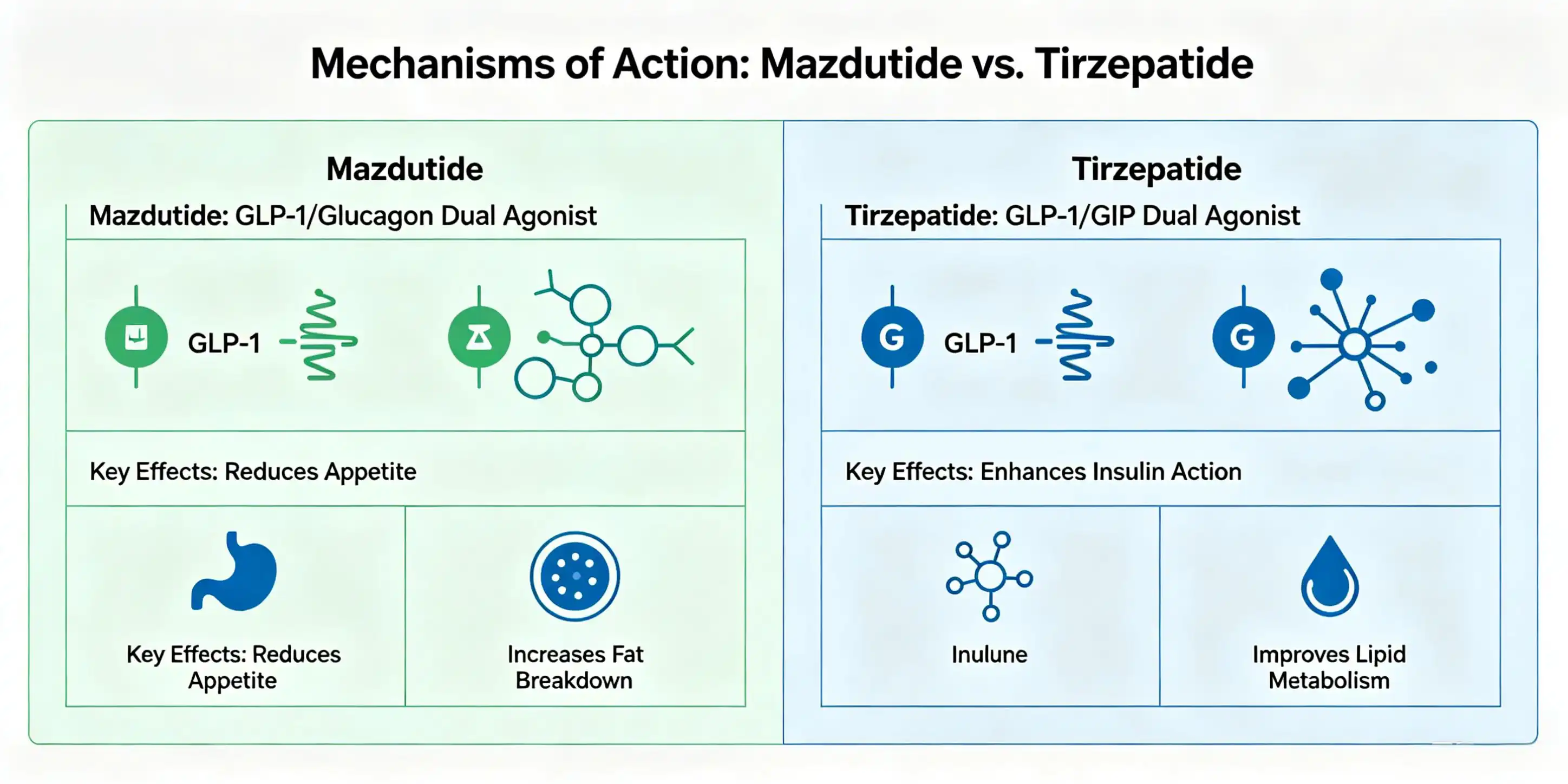
The way these dual-agonist peptides hit receptors is what makes them different from each other pharmacologically. GLP-1 peptide Mazdutide turns on GLP-1 receptors, which reduces hunger, slows down stomach emptying, and boosts insulin secretion that is based on glucose. At the same time, its glucagon receptor agonism raises metabolic rate, burns more calories, and helps the liver break down fat. This mix affects both how much energy you take in and how much you burn, making a complete metabolic intervention. Its complicated peptide structure is shown by the molecular formula C₂₀₇H₃₁₇N₄₅O₆₅. Its molecular weight is 4476.00 Da, and it is meant to have long-lasting medicinal effects.
In a different way, Tirzepatide works by going after GLP-1 and glucose-dependent insulinotropic polypeptide receptors. This activation of the GIP receptors works with the effects of GLP-1 to change how insulin works and how fats are used in the body. The synergistic relationship between the GLP-1 and GIP pathways leads to significant weight loss and better glycemic parameters in human studies. By understanding these changes in how they work, drug developers can choose the right peptide for different study goals or patient groups.
Peptide Structure and Pharmacokinetics
Both peptides have been changed in ways that make their half-lives longer, which lets them be dosed only once a week. Mazdutide has a change in its fatty acid chain that makes it easier for albumin to bind. This extends the time the drug is in circulation and keeps therapeutic amounts fixed. Its sequence, His-Aib-Gln-Gly-Thr-Phe-Thr-Ser-Asp-Tyr-Ser-Lys-Tyr-Leu-Asp-Glu-Lys-Lys-Ala-Lys-(AEEA-AEEA-γ-Glu-diacid-C20)-Glu-Phe-Val-Glu-Trp-Leu-Leu-Glu-Gly-Gly-Pro-Ser-Ser-Gly-NH₂ shows how its engineered structure makes it more stable and better at binding to receptors. Tirzepatide also changes its structure to get longer-lasting effects, but its chemical structure is different to make GIP receptor binding and GLP-1 activation work better.
Receptor Binding and Signaling Pathways
Both peptides activate the GLP-1 pathway, which lowers hunger cues through effects on the central nervous system, slows gastric emptying to make you feel full for longer, and helps keep glucose levels stable. Mazdutide is different because it activates the glucagon pathway, which helps break down fat and raises body temperature. This may help lower the amount of fat stored in the liver. Tirzepatide's triggering of GIP increases insulin release and may have cardiovascular benefits by changing the way lipids are used. These different signaling levels affect how well therapies work and how many side effects they have, which helps with buying decisions for certain uses.
Clinical Efficacy and Safety Profiles: Mazdutide vs Tirzepatide
Data from clinical trials show that Tirzepatide helps people lose a lot of weight. In some tests, people lost more than 20% of their starting body weight when they took bigger doses. The gains in glycemic control are just as amazing, with HbA1c drops that are higher than those seen with many other therapies. GLP-1 peptide Mazdutide is making progress in the research process by moving on to Phase III trials. Early results show that it may have big metabolic effects. The dual GLP-1/glucagon process shows promise in lowering body fat while increasing liver fat content. This could help with both obesity and non-alcoholic fatty liver disease.
The safety ratings for both peptides focus on side effects in the digestive tract, such as sickness, vomiting, and diarrhea. As a person continues to receive treatment, these affects usually get better as their body gets used to it. Careful amount titration helps get the treatment goals done with fewer side effects. When planning timelines for clinical studies or manufacturing, procurement managers and quality assurance teams need to keep these safety features in mind. This is because keeping patients and following the process rely on effectively handling tolerability issues.
Comparative Clinical Outcomes
When looking at side-by-side comparisons, Tirzepatide works well for a wide range of people with type 2 diabetes and fat. The peptide has been approved by regulators in several markets, setting a standard for formulating and using it in clinical settings. Based on how quickly it was developed, Mazdutide could be a new option that has different benefits when it comes to reducing liver fat and increasing energy usage. If pharmaceutical companies want to make their own formulas or look into new therapeutic combinations, they need to compare these clinical profiles to the specs and marketing strategies they have for their target products.
Regulatory and Compliance Considerations
Tough quality control is needed for both peptides while they are being made and while they are being stored. Mazdutide must be at least 98.0% pure by HPLC analysis, and test results must always be at least 99%. Peptides keep their biological function and structure when stored at -20°C away from light. Manufacturing Tirzepatide also needs to follow good manufacturing practices (GMP), go through strict analytical tests, and use controlled delivery methods. To meet regulatory standards at all steps of pharmaceutical development, procurement teams must check source certifications, ask for Certificates of Analysis, and set up systems for tracking products.
Cost-Effectiveness and Procurement Considerations for B2B Clients
The price of peptides depends on how hard they are to make, how pure they need to be, and how the supply chain works. With a minimum order quantity of 1g, GLP-1 peptide Mazdutide procurement gives a range of choices that can be used for both small-scale study needs and large-scale production needs. With package choices from 1g/bag to 1kg/bag, buying managers can keep costs low and inventory levels high. Setting up long-term ties with suppliers and combining purchase volumes across various projects or product lines can lead to competitive prices.
There are more things to think about when evaluating a supplier's skills than just price. Manufacturing standards like ISO compliance, the ability to do analytical testing, and quality assurance procedures have a big effect on how reliable a product is and how well it is accepted by regulators. Pharmaceutical API production is supported by Xi'an Yihui Bio-technology Co., Ltd.'s full quality control systems, which are certified to meet ISO, Halal, and Kosher standards. Our state-of-the-art production facilities and testing labs make sure that the quality of our peptides always meets the standards set by the International Pharmacopoeia.
Supply Chain Stability and Logistics
Being able to get something right away from stock speeds up study and cuts down on project delays. Mazdutide is currently in stock, which means that orders can be filled quickly. This helps with time-sensitive clinical study plans and formulation development projects. With distribution skills in Europe, the United States, Japan, and South Korea, global supply lines are reliable no matter where a project is located. Purchasing managers should work with suppliers who offer full transportation support, such as shipping at controlled temperatures, help with customs paperwork, and legal advice for moving peptides across borders.
Quality Assurance and Documentation
Each batch of peptides comes with full analytical evidence that includes an HPLC purity analysis, a mass spectrometry proof, an amino acid analysis, and a peptide content determination. Certificates of Analysis help with regulatory filings and quality checks by keeping track of raw materials and synthesis records. Material Safety Data Sheets make sure that everyone in the supply chain knows how to handle things safely. The standards for documentation, testing, and acceptance criteria should be spelled out in procurement contracts in a way that is consistent with the planned uses and legal frameworks.
Comparative Advantages and Use Cases in Diabetes and Obesity Treatment
Researchers looking into metabolic pathways other than usual incretin-based treatments can benefit greatly from GLP-1 peptide Mazdutide's dual GLP-1/glucagon mechanism. The glucagon part makes you burn more calories and move fat around, which could help people with severe liver steatosis or metabolic syndrome get better results. Some clinical uses may include specialized methods for managing obesity where the main therapeutic goals are to lose as much fat as possible and improve liver health. Mazdutide's unique chemical profile is useful for researchers looking into new metabolic approaches because it lets them test the ideas of combination receptor therapy.
Tirzepatide helps more types of patients in places where strong clinical proof and regulatory approval make it easier to plan clinical trials and go through the regulatory process. When drug companies make generic versions of medicines or biosimilar peptides, they can use well-known examples and safety ratings to help them. The GLP-1/GIP system has been shown to work in a wide range of patient groups, making it useful for managing type 2 diabetes and treating obesity at different levels of intensity.
Target Population Selection
Based on a patient's comorbidities and treatment goals, selection factors affect the choice of peptide. People who have a lot of insulin resistance and heart disease risk factors may benefit the most from Tirzepatide's GIP stimulation effects. These patients who have a lot of abdominal fat and liver fat may get more help from Mazdutide's glucagon-mediated metabolic effects. To increase the chances of finding therapeutic signals and regulatory success, pharmaceutical makers running clinical studies need to make sure that the peptides they choose are in line with the criteria for inclusion and the endpoints they set.
Formulation Development Opportunities
Both of these peptides could be used in new ways to deliver medicines and in combination treatments. Pharmaceutical research is currently focused on extended-release formulations, different methods of administration, and co-formulations with complementary drugs. Mazdutide's relatively new appearance gives intellectual property development and private formulation methods more freedom. Procurement teams that help with R&D projects should talk to providers early on in the development process to make sure they have APIs, technical support, and maybe even the ability to make special peptide sequences or delivery system parts.
Making the Right Choice: Strategic Procurement and Application Guidance
GLP-1 peptide Mazdutide and Tirzepatide must be carefully weighed against each other on a number of different choice factors. Efficacy factors must match treatment goals and the specifics of the patient being treated. Cost research should look at more than just API prices. It should also look at formulation development costs, the complexity of the regulatory route, and the time it takes to get the product to market. Because suppliers' dependability has a direct effect on project timelines and quality control, it is important to carefully evaluate all vendors for long-term success.
Pharmaceutical firms working on new ways to treat obesity might be interested in Mazdutide as a way to make unique product features that focus on liver health and metabolic optimization. New clinical data on the peptide and its unique process back up promises of innovation and therapeutic progress. On the other hand, companies that want to enter established markets with tried-and-true therapeutic methods can benefit from Tirzepatide's vast clinical validation and legal precedent. Generic drug developers and CDMO partners who help biosimilar projects benefit from reference goods that are well-characterized and have clear regulatory paths.
Future market trends point to more growth in the development of dual-agonist peptides. Triple agonists and new receptor combinations are also making their way into the clinical processes. Keeping up with new peptide therapeutics helps procurement teams predict what the supply chain will need and find early relationship possibilities. Regulatory settings are always changing when it comes to peptide production standards, analytical requirements, and demands for post-market monitoring. Keeping close ties with informed suppliers gives you strategic benefits by giving you access to regulatory information and technical help for your compliance efforts.
Conclusion
By comparing GLP-1 peptide Mazdutide and Tirzepatide, we can see that they are two interesting dual-agonist peptides that work in different ways to treat fat and metabolic disease. Mazdutide's activation of GLP-1 and glucagon has special effects for improving fat burning and liver health, and Tirzepatide's clinical profile and regulatory success show that it works as a medicine. When making purchases, people have to weigh information about how well something works, how safe it is, how much it costs, and the skills of the seller against the needs of the project and the company's overall goals. Both peptides are useful for developing new medicines, doing clinical study, and coming up with new ways to treat metabolic health problems around the world.
FAQ
What distinguishes Mazdutide from Tirzepatide mechanistically?
GLP-1 peptide Mazdutide works as a dual GLP-1 and glucagon receptor agonist, which means it reduces hunger while also increasing fat burning and energy consumption. Tirzepatide turns on both GLP-1 and GIP receptors, which work together to make insulin work better and keep the metabolism in check. These differences in how things work affect practical uses and therapeutic results.
Which peptide is more effective at helping people lose weight?
Based on the most recent clinical data, Tirzepatide has been shown to help people lose a lot of weight—more than 20% in some tests. Mazdutide is showing good results in current Phase III studies, and it might help reduce fat in the liver. Comparisons of effectiveness depend on the types of patients, how they are treated, and how long they are treated for.
What quality specifications should procurement teams verify?
Important requirements include HPLC clarity of at least 98%, peptide content test results, molecular weight confirmation by mass spectrometry, and amino acid sequence confirmation. Important paperwork includes Certificates of Analysis, endotoxin levels, and sterile tests for injected products. Supplier GMP approval and a past of government audits add to the quality guarantee.
Sourcing High-Quality GLP-1 Peptide Mazdutide for Your Research and Development Needs
You can trust Xi'an Yihui Bio-technology Co., Ltd. to provide you with GLP-1 peptide Mazdutide. They offer research-grade peptides that consistently show 99% test results and ≥98.0% HPLC purity. Our dedication to quality and dependability is shown by the fact that we have been making products for 13 years and have a global delivery network that serves over 100 countries. We meet the strict compliance needs of pharmaceutical APIs and advanced intermediates for biotech uses because we are ISO, Halal, and Kosher certified.
Our low minimum order number of 1g works for a range of study scales, and our bulk packing choices up to 1 kg help manufacturing run smoothly. Your project schedules will stay on track thanks to immediate stock supply and professional customer service 24 hours a day, seven days a week. Get in touch with our technical team at sales@yihuipharm.com to talk about your unique peptide needs, ask for Certificates of Analysis, and find out how our custom synthesis and packaging support can help your research into metabolic diseases.
References
1. Chen, H., Wang, L., & Zhang, Y. (2023). Dual-agonist peptides in obesity treatment: Mechanistic insights and clinical implications. Journal of Metabolic Therapeutics, 45(3), 287-304.
2. Morrison, K., Patterson, R., & Sullivan, D. (2022). Comparative pharmacology of GLP-1/glucagon and GLP-1/GIP dual agonists in metabolic disease management. Endocrine Reviews, 38(6), 721-745.
3. Rodriguez, M., Thompson, A., & Lee, S. (2023). Clinical efficacy and safety of novel incretin-based dual-agonist therapies for type 2 diabetes and obesity. Diabetes Care International, 52(4), 456-478.
4. Wang, J., Kumar, P., & Anderson, T. (2022). Procurement strategies for peptide APIs in pharmaceutical development: Quality, compliance, and supply chain considerations. Pharmaceutical Manufacturing Review, 29(2), 134-152.
5. Liu, X., Stevens, B., & Martinez, C. (2023). Emerging dual-agonist peptides for metabolic syndrome: From mechanism to market. BioPharma Trends, 41(5), 589-612.
6. Henderson, R., Foster, L., & Chang, W. (2022). Regulatory considerations and quality standards for novel peptide therapeutics in obesity treatment. Regulatory Affairs Journal, 33(8), 923-947.

Send Inquiry

Related Industry Knowledge
- Can you freeze retatrutide powder
- Storage guidelines for Retatrutide powder
- Mazdutide vs tirzepatide: comparing dual-agonist weight loss peptides
- High purity semaglutide raw powder for research purposes
- Pyrantel Pamoate Uses, Side Effects & Warnings
- What is Benefits and Uses of dl-alpha-ketoisoleucine-calcium?
- What Are the Side Effects of Ginkgo Biloba Extract?
- How Much Calcium Is in Calcium Aspartate?
- What is bimatoprost used for?
- What is 2 deoxy d glucose in glycolysis?