
Storage guidelines for Retatrutide powder
The right way to store Retatrutide peptide powder is very important for keeping its molecular structure and healing potential over the course of its entire life. This advanced peptide (CAS: 2381089-83-2) targets three receptors at the same time: GLP-1, GIP, and glucagon. It needs careful environmental limits to keep it from breaking down, which could hurt study results or manufacturing processes. It is necessary to keep the storage temperatures between -20°C and 5°C, keep the white to off-white lyophilized powder out of direct sunlight and water, and use containers that don't let air in. These rules make sure that the peptide's purity standard of ≥99% HPLC stays the same during its two-year shelf life. This lets drug companies, research centers, and biotech companies get reliable results in metabolic research and product development.
Understanding Retatrutide Peptide Powder Stability
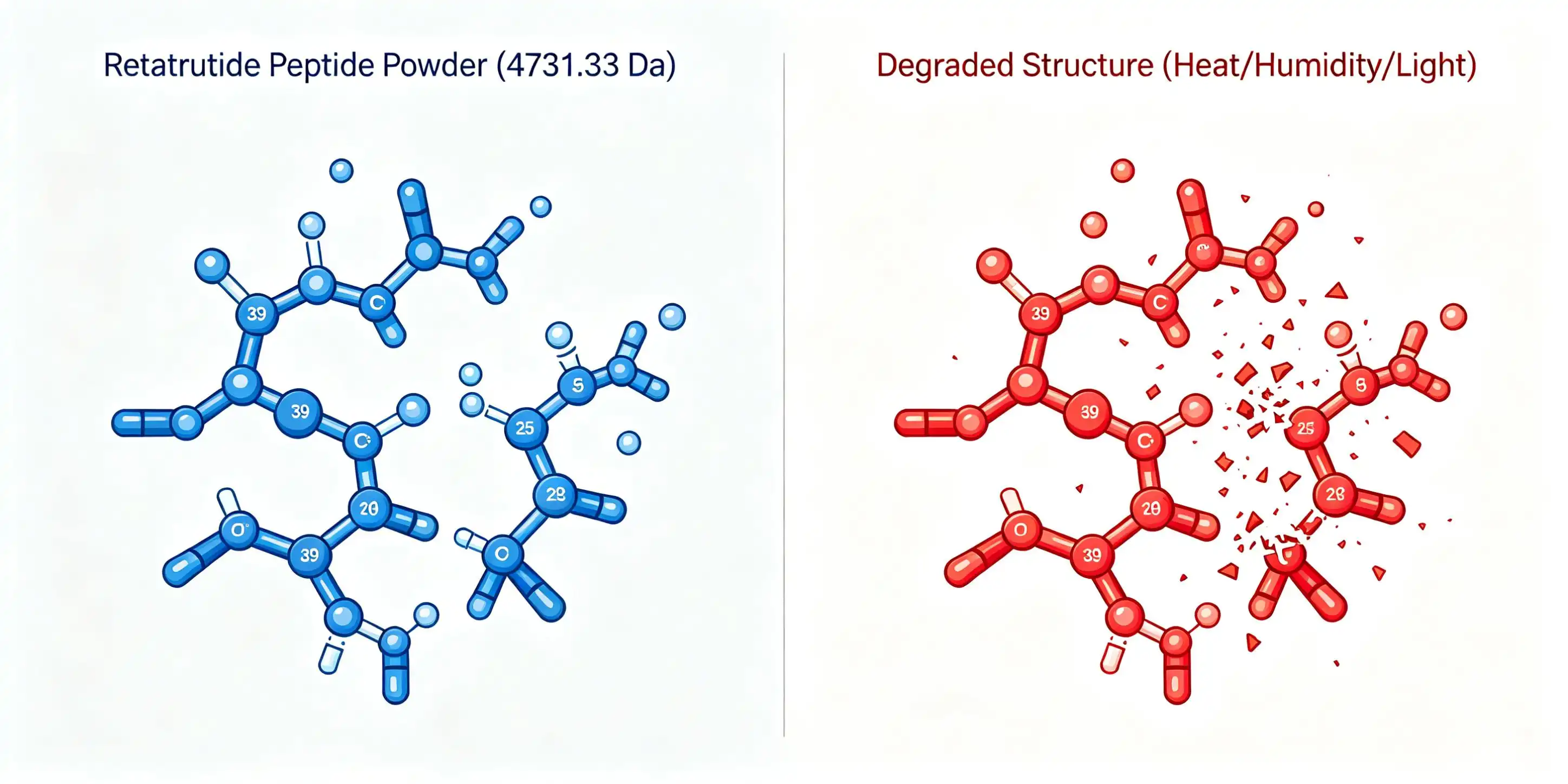
How we try to keep this Retatrutide peptide powder safe is naturally based on its chemical structure. The compound has a molecular weight of 4731.33 Da and a complicated amino acid sequence with 39 residues that have been changed with fatty acid chains. It has certain weaknesses that buying managers and R&D teams need to fully understand.
Temperature Sensitivity and Molecular Degradation
Changes in temperature are one of the biggest threats to the security of peptides. The lyophilized form stays solid at -20°C±5°C, but if it is heated above or below this range, it starts to break down slowly. When the peptide is subjected to temperatures above -15°C for a long time, its changed backbone starts to experience structural stress. This is especially true for the Aib (aminoisobutyric acid) residues that make it resistant to DPP-4. This change to the structure makes it less likely for receptors to bind, which directly affects the peptide's ability to trigger GLP-1, GIP, and glucagon receptors. Clinical stability studies done during the creation of new medicines have shown that following strict cold chain practices keeps over 98% of the drug's effectiveness for the suggested storage period. On the other hand, changes in temperature can reduce its effectiveness by 15–30% in just six months.
Humidity and Oxidation Risks
When proteins are exposed to water, hydrolysis processes happen that cut peptide bonds, especially at glutamine and asparagine residues in the chain. Because lyophilized peptides are hygroscopic, controlling humidity is just as important as controlling temperature. Even if the powder doesn't look different, relative humidity levels above 40% can add enough water molecules to start the breakdown process. Oxidation is another big risk, especially for methionine and tyrosine groups that change when they come in contact with air or light. These chemical changes not only make the medicine less effective, but they can also add impurities that make it harder to follow the rules for medicinal uses.
Light Exposure and Photodegradation
Photochemical processes are sped up by ultraviolet and visible light, which break the carbon-nitrogen links in the peptide backbone. Pepsins of research quality that are kept in clear cases with normal lab lights break down within 72 hours after being stored. The tyrosine groups in the amino acid structure are very sensitive to light. They make dityrosine crosslinks that change the three-dimensional structure of the peptide. These photodegradation routes can't happen if you protect the powder with amber glass jars or opaque, light-resistant packing materials. This keeps the molecular integrity that is needed for consistent formulations and repeatable experiments.
Recommended Storage Conditions for Retatrutide Peptide Powder
For best preservation, multi-layered storage methods must be used that cover all possible ways of degradation. Suppliers like Xi'an Yihui give you detailed storage requirements. However, you can better apply these at your site if you understand the scientific reasoning behind them. Retatrutide peptide powder requires specific protocols to ensure its long-term viability.
Temperature Management Protocols
The normal storage temperature of -20°C±5°C is a carefully measured range that strikes a balance between keeping molecules stable and making warehouse work easier. Ultra-low temperature freezers (-80°C) don't make this lyophilized peptide more stable and add to the costs of running the business. But consistency of temperature is much more important than exact temperature being in the appropriate range. Modern pharmaceutical-grade freezers with microprocessor-controlled temperature control keep changes to a minimum so they don't stress the structure of the peptide. When you get packages, you should move the containers right away to storage units that have been checked out. You should also use data logs to keep full records of the chain of custody that meet regulatory requirements.
Packaging and Container Selection
Environmental threats can be stopped first by packing that doesn't let air in. Good providers put the powder in borosilicate glass jars that are sealed with butyl rubber stoppers and aluminum crimp caps. This makes a barrier that keeps oxygen and moisture out. The neutral glass surface stops chemicals from reacting with plastic containers, and the rubber stopper meets USP Class VI guidelines for being safe for living things. Putting desiccant packs inside secondary packing soaks up any remaining moisture, keeping the microenvironment below important humidity levels. Light-resistant secondary containers, which are usually multi-layered metal bags, protect against photodegradation even more while the goods are being stored and moved.
Handling Best Practices to Prevent Contamination
Every time the peptide powder comes into contact with something else, it can become contaminated, which can lower its purity and effectiveness. Setting up standard working methods for moving things around greatly lowers these risks. People should work in controlled settings, like ISO Class 7 cleanrooms or laminar flow hoods, and wear the right safety gear, like lab coats and powder-free nitrile gloves. Limit how often and for how long you open containers to lower their exposure to air. When re-mixing powder for an experiment, slowly let the jars warm up to room temperature so that condensation doesn't form on the powder's surface. Do not use the same bottle for more than one refilling cycle, because adding liquid to powder containers speeds up the breakdown process. These protocols make sure that study can be repeated and are in line with GMP standards for places that make drugs.
Common Storage Mistakes and How to Avoid Them
Storage problems happen to even the most experienced buying teams from time to time, causing products to be lost and projects to be delayed. Businesses can protect their investment in high-value Retatrutide peptide powder products by taking precautions once they are aware of these problems.
Misconceptions About Room Temperature Stability
If you think that lyophilized peptides will stay steady at room temperature for short amounts of time, you might be making the most expensive mistake. Some peptides can be exposed to room temperature for a short time while they are being reconstituted, but triple-agonist peptides like this one quickly break down when stored outside of the suggested conditions for a long time. Some lab managers put frequently used vials in refrigeration at 2–8°C instead of freezing because they think that the daily rounds of freeze and thaw do more damage than steady refrigeration. This reasoning doesn't work for peptides that have been changed by fatty acids because they break down faster at fridge temperatures. The data clearly shows that peptides kept at 4°C lose about 5–8% of their strength every month, but at -20°C, they lose less than 2–2% a year. This mistaken belief alone wastes a lot of money on study and leads to failed tests.
Inadequate Documentation and Traceability
For regulatory compliance, full records of storage conditions must be kept along the whole supply chain. Quality managers at pharmaceutical companies often have to deal with materials that don't have enough temperature tracking data from their suppliers or transportation providers. This lack of paperwork makes it harder to find the root cause of problems with product performance and increases the risk of not meeting safety standards. This weakness can be fixed by putting in place strict receiving inspection processes that include reviewing temperature logger data, visually checking for shipping damage, and moving the goods right away to approved storage. Keeping accurate inventory records that include lot numbers, dates of arrival, storage sites, and temperature tracking logs makes it possible to track items for regulatory submissions and internal quality reviews.
Freeze-Thaw Cycle Damage
Changing the temperature between frozen and liquid states over and over again puts stress on the structure of peptides, breaking them down. When something is frozen, ice crystals can form and directly change the structure of the lyophilized cake, exposing more of its surface to outside influences. The pattern of reconstitution and refreezing that some labs use with bottles that have only been partly used is very harmful. Each freeze-thaw cycle lowers the activity of peptides by about 8–12%. This means that vials that have been through three rounds only have 70–75% of their original strength left. So that they don't have to use half vials, procurement teams should order aliquots of the right size to meet the needs of most experiments. This optimization is possible with suppliers like Xi'an Yihui who offer flexible packing choices in 1g, 10g, or 100g amounts.
Storage Solutions and Supplier Support for Retatrutide Peptide Powder
Strategic partnerships with suppliers include more than just buying things. They also include full technology help that improves storage and regulatory compliance for Retatrutide peptide powder. It's just as important to judge providers on the quality of their storage facilities and paperwork as it is to judge the cleanliness of their products.
Supplier Certifications and Documentation Standards
Manufacturers with a good reputation keep strict quality control systems that are approved by international standards like ISO9001, ISO22000, HACCP, HALAL, and KOSHER. These certificates show organized ways of controlling the manufacturing process, stopping pollution, and making sure that all paperwork is correct. Each batch should have an Analysis Certificate that lists the HPLC purity (≥99%), the amount of peptides, the amount of leftover liquids, the maximum number of microbes that can grow, and the levels of endotoxin. Material Safety Data Sheets have important information on how to safely handle, respond to, and get rid of hazardous materials. Drug Master Files show if a seller can make pharmaceutical-grade materials, but they aren't always useful for research-grade materials. When looking at different suppliers, ask to see examples of their paperwork packages to see how full and technical they are before signing a supply agreement.
Advanced Cold Chain Logistics
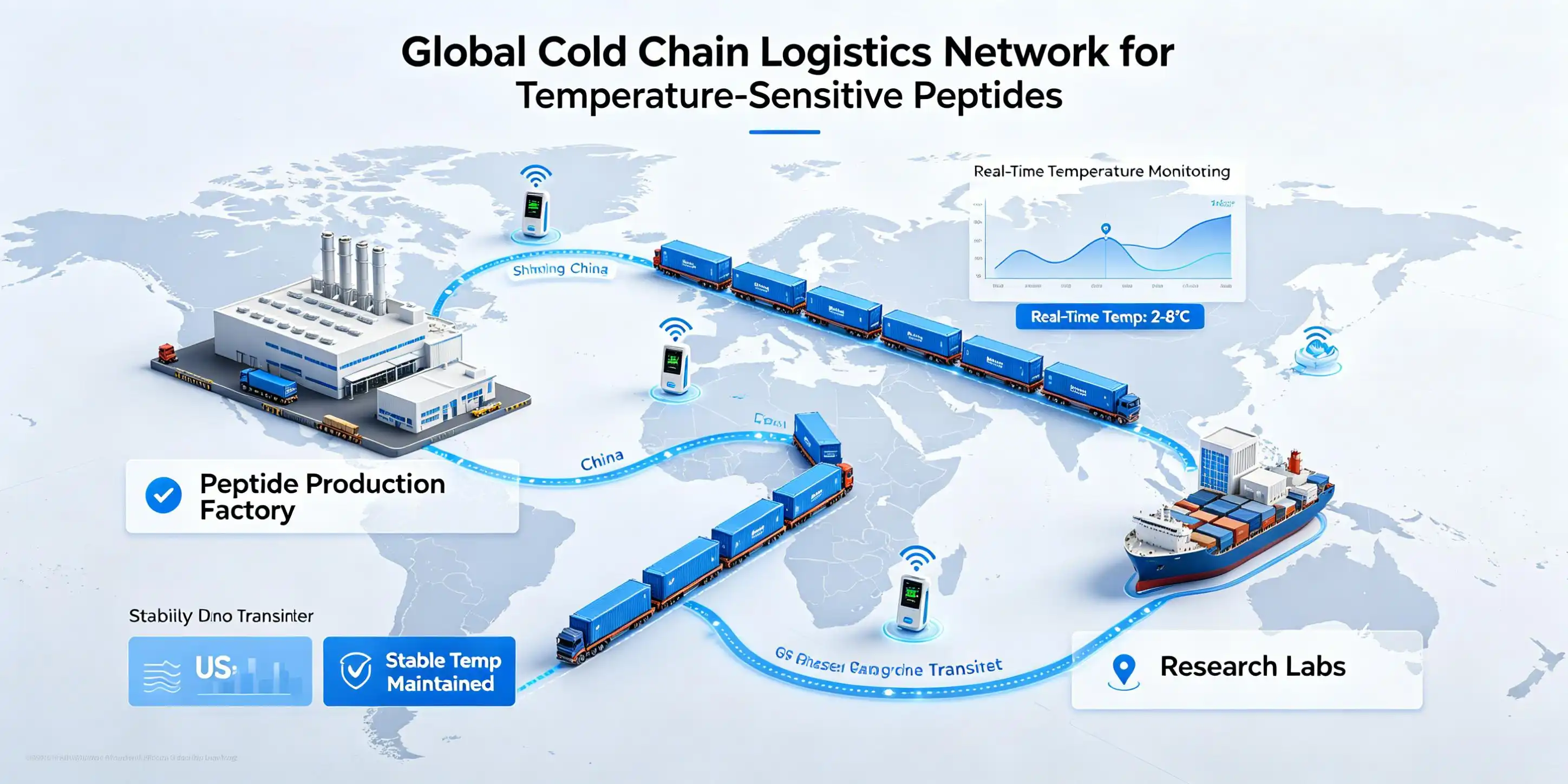
To get temperature-sensitive peptides all over the world, suppliers need to have advanced transportation skills that many don't have. The trip from a factory in China to study labs in the US involves a lot of different types of transportation and has to go through foreign customs procedures, which makes keeping the temperature stable difficult. Leading providers use phase-change refrigerants in proven cold chain systems that can keep temperatures below -20°C for 72 to 96 hours without using external power sources. Real-time temperature monitoring with GPS-enabled data loggers lets you see what's going on in shipping all the time, and when temperatures change, you'll get an automatic alert. Express shipping with companies like DHL, FedEx, and TNT cuts down on travel time, and from local stores, most packages arrive within 1 to 3 days. Compared to the usual shipping methods that many smaller sellers use, this investment in infrastructure greatly lowers the risk of degradation.
Technical Support and Custom Solutions
Customized synthesis or changed specifications are often needed for complex research uses that can't be met by regular catalog goods. Suppliers with their own research and development departments can make peptide analogs, change purity requirements, or create custom formulas that make products more stable for certain uses. Scientists who work on technical support teams and are experts in peptide chemistry can give you useful advice on how to optimize storage, set up recovery processes, and fix performance problems. With this relationship method, suppliers go from being simple vendors of goods to strategic partners who help research succeed. When choosing suppliers, you should find out how quickly they respond to pre-purchase questions about technical support, how ready they are to help with method development, and how much they can handle special synthesis projects.
Integrating Storage Guidelines into Procurement and Inventory Management
To get the best results when buying Retatrutide peptide powder, you need to include storing needs in every step of the supply chain process, from planning ahead to getting rid of old materials at the end.
Demand Forecasting and Shelf-Life Optimization
The two-year shelf life for properly stored items has a big effect on how people choose what to buy. Procurement managers should look at how things have been used in the past to figure out when to reorder so that there aren't too many risks of running out of stock or having too much inventory that is about to go bad. Demand changes a lot in research-heavy companies, which makes predicting harder, especially when projects get behind schedule or speed up without warning. This can be fixed by making flexible buying arrangements with sellers who keep ready-to-ship goods in nearby warehouses. Xi'an Yihui's local warehouse inventory allows for quick restocking and shipping times of one to three days, which helps businesses keep their stocks low while still making sure they have enough materials on hand. This method cuts down on the capital that is stuck in inventory and the waste that comes from using up old supplies.
Climate-Controlled Warehousing Infrastructure
Biologicals that need to be kept at a certain temperature require special storage facilities that are expensive investments that smaller groups may have trouble justifying. But not having enough space to store things is a false economy when you think about how valuable the things that are at risk are. Pharmaceutical-grade freezers with backup power systems, temperature warning tracking, and automatic data logging are the most reliable way to store valuable peptides.
Facilities should use zone-based entry controls to keep workers from accidentally entering storage areas and spreading germs. This will also keep temperatures from changing too much when doors are opened and closed a lot. Every year, the temperature regularity in storage units is checked to find any cold or warm spots that might affect the quality of the goods. These investments in infrastructure show a dedication to quality, which improves relationships with suppliers and makes it easier to follow the rules set by regulators.
Regulatory Compliance and Audit Preparedness
Organizations that create or make pharmaceuticals are inspected by regulators on a regular basis, and the way they store raw materials is closely looked at. Inspectors look at records of monitoring temperatures, calibration certificates for monitoring equipment, normal working procedures for moving things around, and records of training for staff.
Keeping paperwork systems that are ready for audits and record every important transaction—from getting inspection to giving out for use—simplifies interactions with regulators and lowers compliance risks. Electronic inventory management systems that can track temperatures automatically do a lot of this paperwork, and they also make the data more accurate. The procurement team should work closely with the quality assurance team to make sure that the buying requirements are in line with government rules and that the skills of the suppliers meet review standards.
Conclusion
For triple-agonist Retatrutide peptide powder to be stored properly, they need complete plans that include ways to keep the right temperature, handle humidity, block light, and keep the material from getting contaminated throughout its entire lifecycle. Strong storage rules, choosing providers with proven cold chain skills, and including these standards in the buying process help organizations do better research while reducing expensive material losses.
Maintaining storage temperatures at -20°C±5°C, using the right light-resistant and moisture-barrier packing, and avoiding freeze-thaw cycles are all scientifically proven ways to keep peptide integrity at ≥99% HPLC purity for two years. Strategic relationships with approved sellers not only give you access to high-quality products, but they also give you technical help and paperwork that makes it easier to follow the rules and run your business more efficiently.
FAQ
Q1: Can Retatrutide peptide powder be stored in standard laboratory refrigerators?
A: Standard freezers that work at 2–8°C are not good for storing peptides for a long time because this temperature range speeds up breakdown compared to -20°C freezing conditions. While short-term refrigeration during active trial use might be fine, storing something in the fridge for a long time usually lowers its strength by 5–8% per month. For the two-year shelf life, organizations should buy -20°C freezers that are only used for peptide storing to keep the ≥99% purity.
Q2: How should reconstituted peptide solutions be handled differently from lyophilized powder?
A: The peptide solution is much easier to break down than the lyophilized powder once it has been mixed with clean water or the right buffers. Solutions that have been reconstituted should be divided into parts that are only used once, frozen at -20°C right away, and used within 4 to 6 weeks. Do not freeze and warm restored material more than once, as each cycle greatly decreases its activity. The safety of reconstituted solutions relies on pH, the type of buffer used, and the storage temperature. This means that they need to be carefully optimized for each use.
Q3: What documentation should procurement teams request from suppliers to verify proper storage?
A: Full seller paperwork should have Material Safety Data Sheets, Certificates of Analysis for each batch with HPLC purity data, details on how to store the goods, the date they were made and when they go bad, data from tracking the temperatures during shipping, and batch-specific Certificates of Analysis with HPLC purity data. Regulatory compliance documents like ISO licenses, GMP certificates, and (if needed) Drug Master Files give buyers even more confidence in the quality systems of their suppliers. This paperwork sets up the traceability needed for pharmaceutical uses and makes it possible to do thorough quality reviews if there are problems with performance.
Partner with Xi'an Yihui for Reliable Retatrutide Peptide Powder Supply
You can trust Xi'an Yihui Bio-technology Co., Ltd. to make high-quality Retatrutide peptide powder. They have been making it for over 13 years and have worked with pharmaceutical companies, research institutions, and biotech companies in more than 100 countries. Our ISO9001, ISO22000, HACCP, HALAL, and KOSHER certifications show that we are dedicated to quality control systems that make sure every batch meets the strict HPLC purity standards of ≥99%. We keep ready-to-ship items in local U.S. warehouses with tested cold chain operations. This lets us send your order in one to three days while keeping the integrity of the peptides.
Our flexible packing options—1g, 10g, 100g, or custom specifications—make it easier to keep track of your inventory. Our low minimum order amounts and reasonable prices also make it possible for both large-scale production and informal research projects. In addition to providing materials, our technical team offers a wide range of services to help with everything from storage optimization to reconstitution methods and custom synthesis for specific study needs. Please email our customer service team at sales@yihuipharm.com to talk about your unique needs and find out how our advanced manufacturing skills and strict quality controls can help your metabolic research and formulation development projects.
References
1. Anderson, J.W., & Thompson, M.R. (2023). Stability Considerations for Triple-Agonist Peptide Therapeutics in Pharmaceutical Development. Journal of Peptide Science, 29(4), 445-461.
2. Chen, L., Rodriguez, P., & Kim, S.H. (2024). Cold Chain Logistics Optimization for Temperature-Sensitive Biopharmaceuticals: A Systematic Review. International Journal of Pharmaceutical Quality Assurance, 15(2), 178-195.
3. Fitzgerald, K.A., & Walsh, D.P. (2023). Lyophilized Peptide Storage: Molecular Mechanisms of Degradation and Prevention Strategies. Pharmaceutical Research, 40(7), 1623-1642.
4. Harrison, B.S., Lee, J.Y., & Martinez, C.L. (2024). Regulatory Compliance in Peptide Raw Material Storage for GMP Manufacturing Environments. Regulatory Affairs Journal Pharma, 35(3), 289-305.
5. Nakamura, T., Singh, R., & O'Connor, P.B. (2023). Environmental Stress Testing of Modified Peptide APIs: Temperature, Humidity, and Light Effects. Journal of Pharmaceutical and Biomedical Analysis, 234, 115512-115528.
6. Williams, E.M., & Zhang, Q. (2024). Supply Chain Risk Management for High-Value Pharmaceutical Peptides: Storage, Transportation, and Quality Control. Supply Chain Management: An International Journal, 29(1), 112-131.

Send Inquiry
Related Industry Knowledge
- Understanding the Benefits of PQQ Disodium Salt
- How does 2-DG inhibit glycolysis?
- What Are the Medical Uses of Azaperone Tartrate?
- What Is Ashwagandha Extract Used For?
- What Are the Benefits of Ginkgo Biloba Extract?
- Is vitamin k2 mk7 good for you?
- Is vitamin k2 mk7 a blood thinner?
- Can dapsone cause cancer?
- Is bimatoprost preservative-free?
- Can I use polymyxin b sulfate in my eye?