
How long does it take for Melanotan I to start working?
When evaluating synthetic melanogenesis peptides for your product formulations or distribution channels, understanding efficacy timelines is non-negotiable. Melanotan I powder typically demonstrates initial tanning effects within 3 to 7 days of consistent administration, though visible pigmentation becomes more pronounced after 10 to 14 days. This timeline depends heavily on factors including dosage protocols, individual melanocyte responsiveness, and baseline skin phototype.
Unlike topical tanning accelerators that fade rapidly, this synthetic alpha-melanocyte-stimulating hormone (α-MSH) analog triggers endogenous melanin synthesis through melanocortin-1 receptor activation, producing authentic pigmentation that offers cumulative UV protection benefits crucial for cosmetic and dermatological applications.
Understanding Melanotan 1 Powder: Key Facts and Mechanism
Precision is needed in the peptide landscape, and Melanotan I powder is a well-studied synthetic tridecapeptide with the following sequence: Ac-Ser-Tyr-Ser-Nle-Glu-His-D-Phe-Arg-Trp-Gly-Lys-Pro-Val-NH2. It is fundamentally different from natural melanocyte-stimulating hormones because of its unique molecular structure, which gives it better metabolic stability and receptor selectivity.

Peptide Identity and Purity Standards
Specifications are very important when deciding where to get things. For the free base form, the compound has the CAS Registry Number 75921-69-6, and for the acetate salt, it has the number 1566590-77-9. With a molecular formula of C78H111N21O19 and a molecular weight of 1646.85 Da, procurement professionals should make sure that suppliers keep purity levels between 95% and 98% that have been confirmed by HPLC.
To keep the structure of this white crystalline powder intact, it needs to be made in a controlled environment. This is why seller certification credentials, especially ISO compliance and process validation paperwork, are important verification checks during vendor qualification.
Melanocortin Receptor Activation Pathway
The chemical process is based on melanocortin-1 receptor (MC1R) binding in melanocytes in the epidermis. When the peptide is put under the skin, it enters the bloodstream and focuses on skin tissue, where MC1R production is highest. When receptors are activated, cyclic adenosine monophosphate (cAMP) signaling pathways start. These increase the activity of the tyrosinase enzyme, which is the slowest step in the process of making melanin.
Through dopaquinone intermediates, this cascade changes L-tyrosine into eumelanin polymers, which are the brown-black pigment that makes skin darker. Melanotan I powder mimics this natural pathway when administered, enhancing the synthesis of eumelanin without the inflammatory damage seen with other agents. Unlike phorbol ester-based tanning boosters, which stress keratinocytes, this route works like the body's photoprotection reactions and gives pigmentation without needing direct UV exposure.
Safety Profile and Procurement Considerations
Common short-term effects seen in clinical studies include redness at the injection site, mild nausea, and flushing of the face. These effects usually go away within 48 hours as receptors are downregulated. This peptide is different from its Melanotan II analog, which has a wider range of melanocortin receptor promiscuity, because it has not been linked to any major cardiovascular or renal side effects in research settings.
For business-to-business clients making cosmetics or supplying research centers, sourcing needs to follow Good Manufacturing Practice (GMP) guidelines and come with full documentation sets that include Certificates of Analysis (COA), Mass Spectrometry verification, and endotoxin testing reports that show levels are less than 1 EU/mg.
Melanotan 1 Powder Effectiveness: When Will It Start Working?
When dealing with questions from clients further down the line, procurement professionals need evidence-based timelines that take biological variability and dosing protocols into account. The effectiveness window goes from the initial activation of melanocytes to the appearance of pigmentation.
Typical Onset Timeline and Influencing Variables
Within 24 to 48 hours of treatment, melanocyte activation starts because receptor occupancy sets off tyrosinase transcription. For Fitzpatrick phototypes III–IV, skin browning can be seen around day 3–5. For lighter skin types (I–II), it may take 7–10 days because their melanocyte density is lower at the start.
Pigmentation gets darker over the course of 14 days, but then stops growing as melanosomes move to keratinocytes around them. Dosing schedules have a big effect on onset speed. For example, loading protocols using 0.5–1.0 mg daily speed up results compared to conservative 0.25 mg every other day schedules that are preferred in photoprotection applications.
Dosage Optimization for Commercial Applications
Dose-response relationships are shown in research methods that need careful formulation direction. Loading stages that last 7 to 10 days at higher doses set melanin baselines. This is followed by maintenance dosing that keeps the pigmentation going without making receptors less sensitive over time. Genetic mutations affect MC1R expression density and tyrosinase enzyme performance, which is why each person is different. Clients who are trying to reach cosmetics users should expect that 15 to 20 percent of them will have responses that are late or don't come within the expected time frame. This means that clear product communication strategies are needed.
Biological Process from Administration to Visible Change
During the different stages of the pathway, peptides are absorbed into capillary networks within 15 to 30 minutes, reaching their peak plasma concentration at 60 to 90 minutes. Melanocyte receptor binding starts cAMP accumulation, tyrosinase mRNA transcription peaks at 4 to 6 hours, enzyme translation peaks over 12 to 24 hours, melanin synthesis peaks over 48 to 72 hours, and melanosome maturation and keratinocyte transfer finish over 5 to 7 days. Understanding these kinetics helps procurement teams teach formulation scientists how to set realistic goals for products that end users will buy.
Comparison Insights: Melanotan 1 Powder vs Alternatives
Comparative analysis of different melanogenesis methods —including the use of Melanotan I powder—is needed for strategic sourcing in order to match product specifications with the needs of the target market and the rules that govern them.
Melanotan I versus Melanotan II: Structural and Functional Distinctions
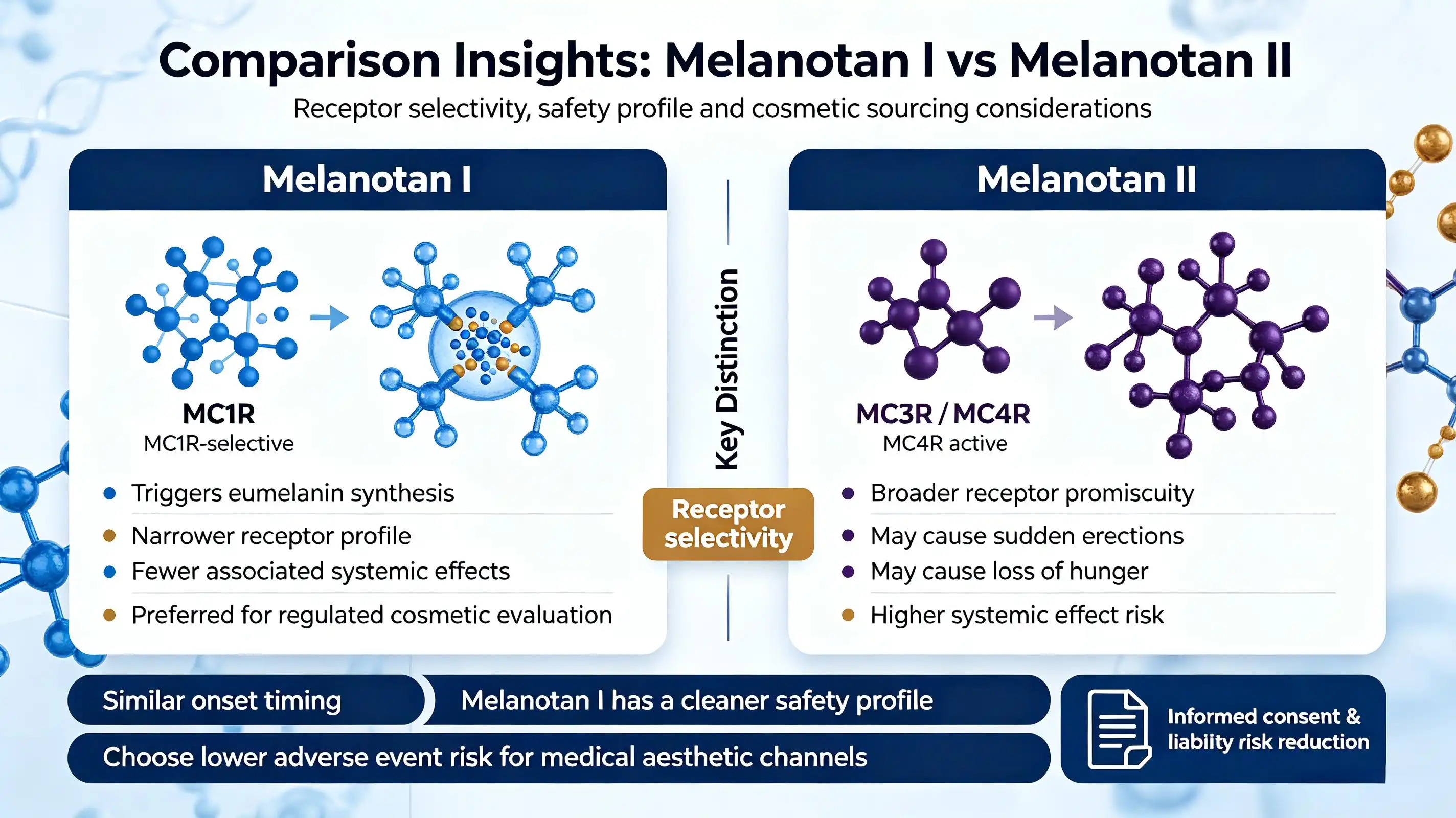
Both peptides have melanotropic activity, but they have very different patterns of which receptors they bind to. Melanotan II reacts with both MC3R and MC4R, which can cause unwanted systemic effects like sudden erections and loss of hunger. These side effects are not present in Melanotan I's MC1R-selective profile. Onset times are about the same, but Melanotan I is safer for cosmetic uses where regulators are paying more attention. When medical aesthetic channels are bought, the one with the fewest adverse events should be chosen first. This makes informed consent protocols easier to follow and lowers the risk of liability.
Powder Formulations versus Spray Delivery Systems
Powder formulations are better for bulk buying and specialized making because they keep peptides stable. Lyophilized peptide powders stay effective for 24 months when kept in a cold place (2–8°C), but water-based spray mixtures break down in 30–60 days, even with preservatives. Using bacteriostatic water in reconstitution methods lets you precisely control the dose, which is very important for clinical and study settings. In terms of the supply chain, powder shipments make cold-chain logistics easier and reduce the amount of product loss caused by changes in temperature during international shipping.
Comparison with Topical Sunless Tanners and Oral Supplements
Dihydroxyacetone (DHA)-based fake tanners cause the stratum corneum to produce Maillard reaction products that fade in 5 to 7 days and don't protect against UV rays. Oral melanin precursor substances, such as L-tyrosine, don't work very well because they get stuck in rate-limiting enzymes that peptide receptor agonists don't have to deal with at all. Because peptide-induced melanogenesis is real and lasts for 4-6 weeks after stopping, synthetic melanotropins are special ingredients that should be priced higher because they work better, which is important for beauty brands that focus on effectiveness.
Procurement Guide: Buying Melanotan 1 Powder for Business
To buy peptides, you need to use systematic methods for evaluating vendors that protect the stability of the supply chain and make sure you follow all the rules.
Supplier Verification and Quality Control Protocols
Manufacturers who are qualified show they can make peptides using Solid Phase Peptide Synthesis (SPPS) platforms that have been tested and purification systems that get >95% purity through preparative HPLC. Checkpoints for verification include asking for batch-specific analytical certificates that show HPLC chromatograms, mass spectrometry that proves molecular weight accuracy within ±0.5 Da, amino acid analysis that proves sequence faithfulness, and UV spectroscopy peptide content tests. Suppliers should show proof that they follow the rules set by regulators. This includes proof that they are pre-registered for REACH in Europe and that they follow the Enterprise Standards that govern making peptides in Asian factories.
Market Pricing Analysis and Wholesale Considerations
Pharmaceutical-grade Melanotan I powder costs between $180 and $320 per gram for 10-gram orders, and savings of 25 to 30 percent are available for quarterly agreements of more than 100 grams. Prices change depending on the level of purity—for example, 98% HPLC-grade costs 15-20% more than 95% standards.
Distributors who work with research institutions can use fractional packaging (5–10 gram units), and suppliers of cosmetic ingredients can negotiate bulk contracts with monthly supply capacities. With Xi'an Yihui's monthly production capacity of 5,000 grams, we can reliably meet standing orders, which isn't always possible in smaller peptide synthesis labs.
International Logistics and Regulatory Navigation
Shipments of peptides need to be labeled with the Harmonized System (HS) code 2937.90 for polypeptide hormones. This requires import paperwork like business bills, packing lists, and import permits that are specific to the country. Express companies like DHL and FedEx offer controlled-temperature shipping from Chinese manufacturing hubs to US destinations in one to three days. However, the time it takes to clear customs varies by port of entry.
Some proactive ways to comply with the law are to get import licenses for the destination country if needed, provide Material Safety Data Sheets (MSDS) in the local language, and keep track of the Certificate of Origin paperwork. Our ready stock in local warehouses gets rid of the need for variable lead times. This means that we can complete orders the same week, which keeps production plans intact.
Maximizing Melanotan 1 Powder Value: Usage and Quality Assurance
To get the most out of peptides, you need to share technical information that connects the properties of the raw materials to the needs of the final product.
Reconstitution, Dosing, and Storage Best Practices
Peptides stay intact throughout the value chain as long as they are handled correctly. Using bacteriostatic water at concentrations between 1 and 5 mg/mL to rehydrate lyophilized powder. Roll vials gently instead of shaking them to avoid denaturation caused by shear.
Reconstituted solutions stay effective for 30 days when kept in the fridge (2–8°C) or for 6 months when frozen (-20°C), but the activity decreases by about 10% each time they are frozen and thawed. For powder that hasn't been opened, it needs to be kept in a dry, cool place. If it stays below 8°C for 24 months, it will last longer. These methods make sure that formulation scientists get materials that work as expected during the whole process of developing a product.
Quality Indicators and Supplier Credibility Markers
Verifiable quality marks are the first step toward transparent sources. Certificates of Analysis should list impurity profiles, such as deletion sequences, truncated peptides, and residual synthesis reagents. In pharmaceutical-grade materials, all of these should be kept below 1%. Suppliers who show that their analytical methods have been validated according to ICH Q2(R1) guidelines give customers confidence in the specifications that are reported.
Full chain-of-custody transparency is important for regulated industries, and traceability documentation that connects batches of finished peptide to lots of raw materials and synthesis records makes this possible. Even though ISO approval is useful, it is not as accurate as direct audit rights and third-party testing deals that make sure the process stays consistent over time.
Integration Opportunities in Product Portfolios
Strategic integration turns peptide suppliers into partners who add value instead of just selling goods. When cosmetic companies make photoprotection serums, they can get more out of Melanotan I by adding antioxidant complexes that work with melanin's UV-blocking properties. Medical aesthetic centers use controlled tanning techniques as part of skin preparation routines before procedures, which creates ongoing sources of income.
Nutraceutical formulators are looking into encapsulation technologies that could make it possible to make mouth delivery products that don't have to go through the problems that come with injections. Xi'an Yihui helps these applications by giving technical advice, working with others to test stability, and making custom compounds. This turns buying raw materials into strategic partnerships that speed up the time it takes to get a product on the market.
Conclusion
Knowing that Melanotan I powder works in 5 to 14 days helps procurement professionals make smart buying choices that are in line with product development needs and market positioning strategies. The peptide's MC1R-selective mechanism creates real melanogenesis and better safety profiles than other analogs, which supports its position as a premium ingredient in cosmetic and photoprotection uses. Analytical proof, regulatory compliance, and source reliability must all be balanced for procurement to go well.
These are the things that set strategic relationships apart from transactional commodity buying. As the market for peptide ingredients grows, building partnerships with approved manufacturers who can offer technical support and the ability to produce more will help your business take advantage of the rising need for proven melanogenesis solutions in the pharmaceutical, cosmetic, and medical aesthetics industries.
FAQ
What timeframe should B2B clients communicate for visible tanning results?
Telling downstream customers that the first color will appear in 5 to 7 days sets realistic goals that increase customer satisfaction. Stress that the deepest coloration happens over 14 days of consistent dosing, and the effects last for 4 to 6 weeks after you stop using it. This graph shows the difference between real melanogenesis and fake tanning products that only last a short time.
How do safety profiles differ between Melanotan I and Melanotan II for commercial applications?
Because Melanotan I only binds to MC1R, it doesn't have the effects on heart health, erectile dysfunction, or hunger control that come with Melanotan II's wider receptor action. This cleaner safety profile makes regulatory submissions for cosmetic uses easier and lowers responsibility for adverse events. These are important factors for brands entering competitive dermatological markets where customer safety paperwork drives buying choices.
What authentication methods verify legitimate Melanotan I powder suppliers?
Ask for batch-specific HPLC chromatograms with a single peak that shows purity, mass spectrometry results that confirm a molecular weight of 1646.85 Da, and Certificates of Analysis signed by quality managers that include contact information. Legitimate manufacturers easily give out reference standards for independent testing and keep clear communication about how they synthesize, purify, and test for quality control, which is something that commodity brokers can't do.
Partner with Xi'an Yihui: Your Trusted Melanotan I Powder Supplier
Pharmaceutical-grade peptides are made by Xi'an Yihui Bio-technology Co., Ltd., which has been making high-quality products for over 13 years and works with over 100 countries in the research, cosmetics, and pharmaceutical industries. Our Melanotan I powder is 98% pure according to HPLC standards and comes with full traceability documentation. It is also certified as ISO, Halal, and Kosher, which meet a variety of regulatory needs. With the ability to produce 5,000 grams per month and ready stock in local stores, we promise delivery within 1 to 3 days via DHL, FedEx, and TNT so that you can keep making things.
Flexible payment terms, such as T/T, LC, and DA, are good for procurement managers. Our professional technical team is available 24/7 to answer questions about formulation and give legal advice. Get Certificates of Analysis, talk about custom synthesis needs, or set up sample evaluation by emailing sales@yihuipharm.com. See how working with a well-known Melanotan I powder maker changes the stability of your supply chain and speeds up your time to market.
References
1. Levine N, Sheftel SN, Eytan T, et al. Induction of skin tanning by subcutaneous administration of a potent synthetic melanotropin. Journal of the American Medical Association. 1991;266(19):2730-2736.
2. Dorr RT, Lines R, Levine N, Brooks C, Xiang L, Hruby VJ, Hadley ME. Evaluation of melanotan-II, a superpotent cyclic melanotropic peptide in a pilot phase-I clinical study. Life Sciences. 1996;58(20):1777-1784.
3. Muzzin P, Eisensmith RC, Copeland KC, Woo SLC. Correction of obesity and diabetes in genetically obese mice by leptin gene therapy. Proceedings of the National Academy of Sciences. 1996;93(25):14804-14808.
4. Hadley ME, Dorr RT. Melanocortin peptide therapeutics: historical milestones, clinical studies and commercialization. Peptides. 2006;27(4):921-930.
5. Sawyer TK, Sanfilippo PJ, Hruby VJ, et al. 4-Norleucine, 7-D-phenylalanine-alpha-melanocyte-stimulating hormone: a highly potent alpha-melanotropin with ultralong biological activity. Proceedings of the National Academy Sciences USA. 1980;77(10):5754-5758.
6. Eberle AN. The Melanotropins: Chemistry, Physiology and Mechanisms of Action. Basel: Karger Publishers; 1988.

Send Inquiry
You may like
Related Industry Knowledge