
Where to buy thymalfasin powder?
Finding a trustworthy source is very important when you need Thymalfasin powder for drug creation, immunology study, or making peptide-based drugs. Thymalfasin powder, which is also known as Thymosin Alpha 1 (CAS No. 69440-99-9), can be bought from companies that specialize in medicinal peptides. These companies follow strict GMP guidelines and provide research-grade materials that are ≥98% pure, as shown by HPLC. This 28-amino-acid immunomodulatory peptide is usually kept in stock by reputable providers in flexible packaging that ranges from 1g to 1kg. This allows for easy shipping for both small-scale lab studies and large-scale pharmaceutical projects. Professionals in charge of buying things should give more weight to sellers who offer full paperwork, such as Certificates of Analysis (COA), Material Safety Data Sheets (MSDS), and amino acid sequence verification to make sure the product is real and meets all regulations.
Understanding Thymalfasin Powder: Key Insights for Buyers
Peptide Structure and Immune Modulation Mechanism
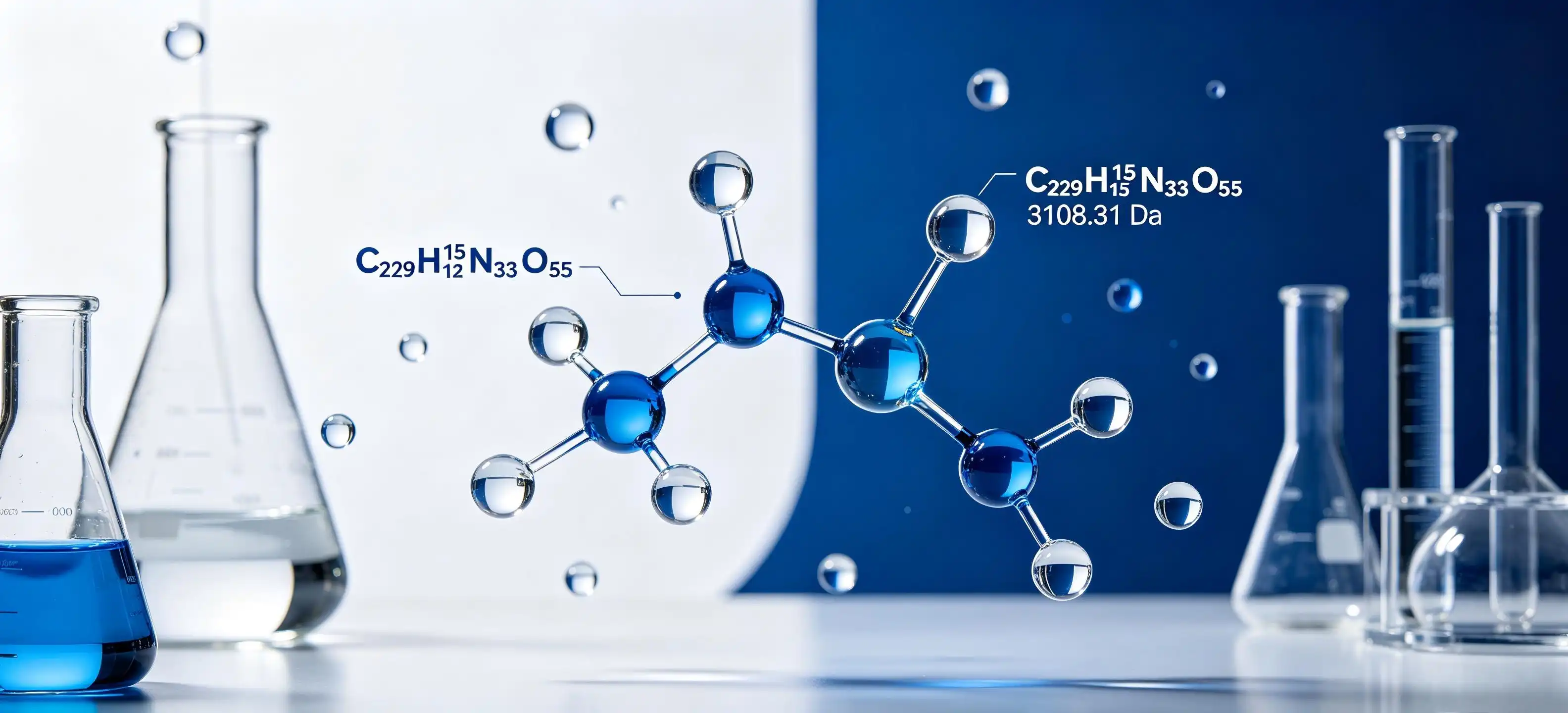
Thymalfasin powder is a man-made copy of the thymic peptide hormone that is found in nature. Its molecular formula is C₁₂₉H₂₁₅N₃₃O₅₅, and its molecular weight is 3108.31 Da. It is made up of a unique 28-amino-acid chain that starts with acetylated serine and ends with asparagine. Thymalfasin can connect with Toll-like receptors on immune cells, especially dendritic cells and T lymphocytes, because of its exact shape. This makes cellular defense stronger.
The process is based on changing the production of cytokines, especially increasing interleukin-2 and interferon-gamma while keeping the balance between Th1 and Th2 immune responses. Clinical studies have shown that it can improve T-cell activity in people who are immunocompromised. This makes it useful for studying hepatitis B/C, developing vaccine adjuvants, and creating new immunotherapies for cancer. The acetylated N-terminus of the peptide shields it from being broken down by enzymes, which increases its biological half-life compared to peptide sequences that have not been changed.
Therapeutic Applications and Safety Profile
Thymalfasin powder is used by research institutions for a variety of immune tests. Hepatitis study teams are looking into how it might improve antiviral reactions when used with other treatments. Oncology labs are looking into how it can increase the activity of lymphocytes that are in tumors. The people who make vaccines look at its adjuvant qualities to see how well they work to boost immunity in older people or people whose immune systems aren't working well.
Safety statistics from tests on humans show that tolerability profiles are usually good. In clinical settings, temporary responses at the injection site are the most common occurrence. At therapeutic amounts, systemic adverse events are still not common. Amounts between 1.6 mg and 3.2 mg are usually used in the lab for animal models, and these amounts are scaled up or down to fit the needs of in vitro cellular tests. It's important for procurement teams to know that this peptide can only be used for scientific study and can't be given to regular people to use.
Storage Requirements and Handling Guidelines
To keep peptide purity, the atmosphere needs to be tightly controlled. Thymalfasin powder needs to be kept at -20°C in aluminum foil packing that is vacuum-sealed to keep it from absorbing water and breaking down due to oxidation. When kept in these settings, the peptide stays stable for 24 months from the date it was made. As soon as the packaging is opened, the items must be moved right away to a desiccator in a controlled laboratory setting.
Protocols for reconstitution are different for each use case. For immune cell tests, sterile water or phosphate-buffered saline is usually used as a fluid. For stability studies, formulation scientists may use different buffer systems. To avoid repeated freeze-thaw cycles that can damage structures, reconstituted solutions should be divided into separate amounts. To make sure that lab practices and legal paperwork are followed, quality assurance teams should check that suppliers give clear directions on how to handle the products and data on how stable each batch is.
Comparison of Thymalfasin Powder and Alternative Immune Boosters
Thymosin Alpha 1 Versus Thymosin Beta 4: Structural and Functional Distinctions
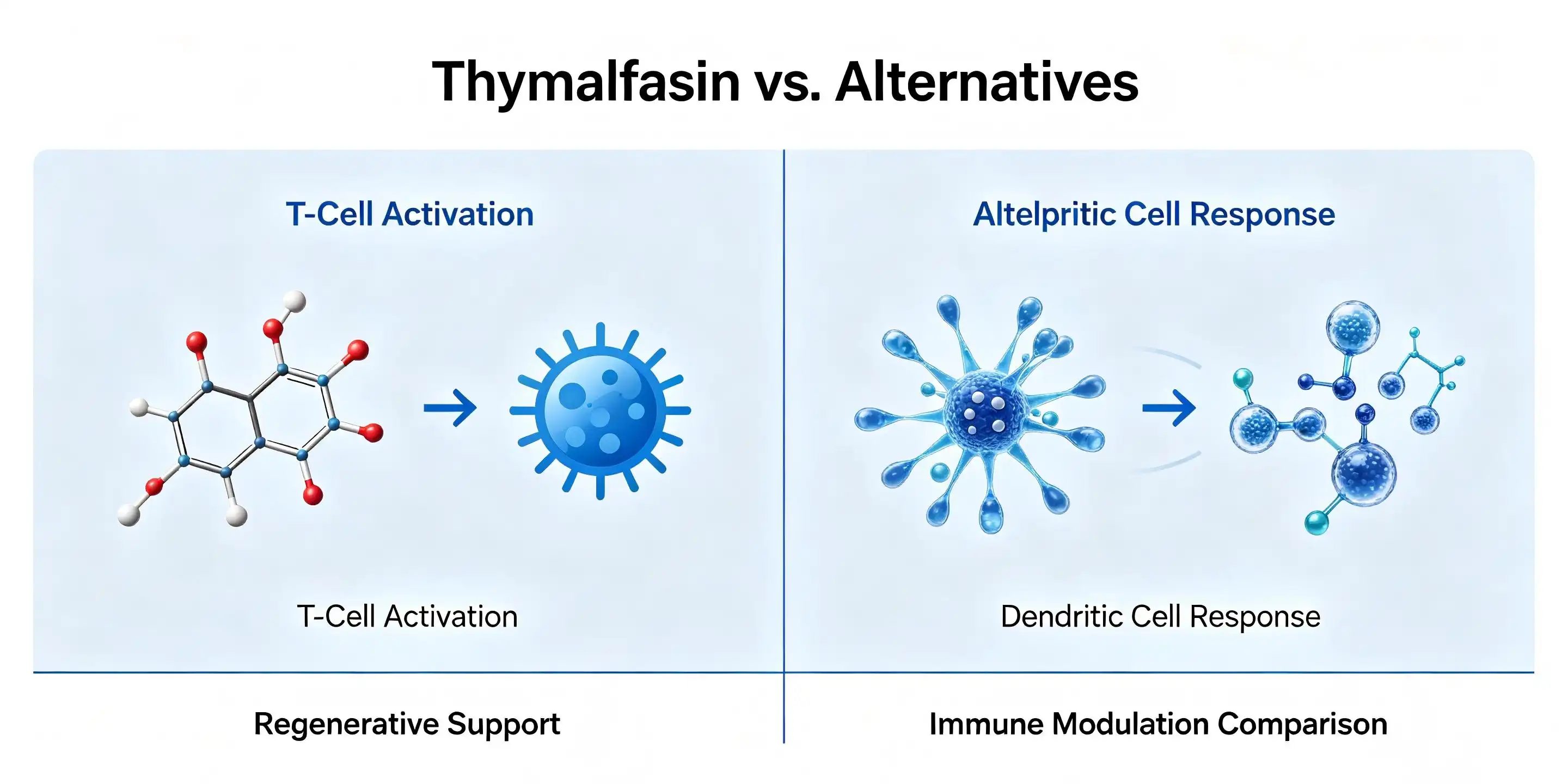
Both peptides come from thymic tissue, but they play very different metabolic roles. Thymosin Alpha 1 (Thymalfasin) mainly affects the immune system by turning on dendritic cells and increasing the production of major histocompatibility complex. Thymosin Beta 4, which is made up of 43 amino acids, mostly moves cells around, heals wounds, and creates new blood vessels by removing actin.
From the point of view of buying, these changes in functionality mean that there are different sets of applications. Thymalfasin powder is highly valued by pharmaceutical businesses working on immunotherapeutics because it directly activates T cells. On the other hand, experts in regenerative medicine and dermatology like Thymosin Beta 4 for formulas that fix tissues. Pricing structures mirror these skills. For example, Thymalfasin powder usually gets a higher price because it has to be made in a complicated way and has to meet pharmaceutical-grade purity standards of over 98%, which can be proven by high-performance liquid chromatography.
Synthetic Production and Quality Consistency
Solid-phase peptide synthesis (SPPS) is the only way that Thymalfasin powder is made today. This method allows exact control of the amino acid structure. This synthetic method gets rid of the batch-to-batch differences that come with extraction-based methods. It also makes sure that the molecular weight, sequence faithfulness, and purity profiles are the same across production runs.
Premium-grade material has HPLC purity of 98% or more, correct molecular weight proof via mass spectrometry, endotoxin levels below 1 EU/mg, and amino acid analysis matching the theoretical sequence makeup. Purchasing managers with a lot of experience ask for chromatographic profiles with few impurity spots and mass spectrometry data that confirms the 3108.31 Da molecular ion. Suppliers who give full analytical data show they know how to make things and are aware of the rules, which are important for getting pharmaceutical APIs and working with CROs and CDMOs.
Cost-Efficiency Analysis for Budget-Conscious Procurement
The prices of research-grade peptides change based on how hard they are to make, how pure they need to be, and how many are ordered. Starting amounts for study (1–10g) usually run from $150 to $300 per gram, based on the purity grade and where the supplier is located. For proven supply relationships, bulk pharmacy orders (100g to 1 kg) can get discounts based on the amount ordered, with prices dropping as low as $80 to $150 per gram.
Strategies for lowering costs include combining orders to meet minimum order quantities, making framework deals for regular purchases, and looking at suppliers in places where production ecosystems are competitive. But procurement teams have to find a mix between quality certification and cost. Options that are cheaper but don't have the right paperwork, safety data, or GMP certification put research deadlines and regulatory files at great risk. Buying from certified providers whose production processes can be tracked lowers the total cost of ownership in the long run by lowering the risk of batch fails and compliance issues.
How to Choose the Right Thymalfasin Powder Supplier?
Certifications and Manufacturing Standards
Getting pharmaceutical-grade Thymalfasin powder requires suppliers to go through a lot of strict screening. ISO 13485 certification is specific to making parts for medical devices and pharmaceuticals, while ISO 9001 certification sets the standard for quality control systems. Following GMP standards from the FDA, EMA, or ICH means that production facilities keep controlled environments with validated processes, written batch records, and a way to track where their raw materials come from.
Regulatory compliance is more than just getting a building certified. For well-known APIs, suppliers who work with pharmaceutical companies should show Drug Master Files (DMF) or Certificate of Suitability (CEP) paperwork. Research-grade materials need Certificates of Analysis that say they are pure, that their identity has been confirmed using more than one analytical method, and that they have been analyzed for leftover solvents. REACH registration is important for European markets because it makes sure that data on chemical safety is available. Instead of just believing what a seller says on their website, procurement managers should check with the certification group to make sure that the suppliers' certifications are still valid.
Supplier Reputation and Transparency
Assessing the reliability of a provider includes a lot of different levels of due diligence. Tenure in the industry is the first thing that is looked at; producers that have been in business for more than ten years usually show that they are stable and have a lot of technical knowledge. Testimonials from happy customers from well-known drug companies or study groups show that the market is real. Some signs of transparency are being ready to let facility audits happen, being open about how the synthesis was done, and being quick to technical questions.
Supply chain security is directly affected by how open the manufacturing process is. When suppliers talk freely about their peptide synthesis platforms, purification methods, and quality control processes, it shows that they are sure of how their businesses work. On the other hand, providers who don't want to share process information or analytical methods raise worries about the consistency of manufacturing. Setting up direct lines of contact with technical teams instead of just talking to salespeople lets procurement pros tell the difference between real technical competence and fake marketing presentations.
Global and Regional Manufacturing Options
There are different area strengths in the international peptide market. North American and European producers usually have a premium place because of strict regulations and long-standing integration in the pharmaceutical business. These providers are the best when it comes to providing full documentation, quick customer service, and being ready to change the way synthesis works for proprietary sequences. Asian manufacturers, especially those in China and India, offer reasonable pricing and higher quality standards, which makes them a good choice for research projects that need to stay within budget and the creation of generic drugs.
Xi'an Yihui Bio-technology Co., Ltd. is a good example of how specialized peptide makers have changed over time. The company was founded in 2010 and has 13 years of experience with pharmaceutical peptides. It has ISO, Halal, and Kosher standards and works with customers in over 100 countries. Their Thymalfasin powder range is 99% pure for tests, and the packing can be changed to fit any size amount, from 1g for study to 1kg for pharmaceutical use. For custom formulation projects, the company offers OEM capabilities and keeps products in stock to cut down on buying wait times, which are important for time-sensitive research programs and supply chain contingency planning.
Step-by-Step Guide to Purchasing Thymalfasin Powder Online
Defining Product Specifications for Your Application
Clearly defining the requirements is the first step to a successful purchase of Thymalfasin powder. Researchers have to figure out what amount of purity is needed. For example, 98% purity is fine for most immune tests, but 99%+ purity may be needed for pharmaceutical development. Quantity planning should take into account the guidelines for experiments, the number of repeat studies that are expected, and the right amount of extra to make sure the method works. Packaging choices are important. For example, smaller labs may prefer 1g bottles to keep the waste from outdated reconstituted solutions to a minimum, while larger research projects can save money by buying in bulk 100g or 1kg packages.
Evaluating Supplier Platforms and Requesting Samples
Peptide providers with a good reputation have professional websites with thorough product catalogs, specification sheets, and legal paperwork. When looking at different online platforms, check to see if technical data is easy to get to without having to fill out a contact form right away. Clear product information shows that the seller trusts the platform. Product descriptions should have CAS numbers, molecular formulas, lead times, and the different levels of purity that are offered.
Sample orders are used for more than just checking the quality of a product. Response time to sample questions shows how quick customer service is. The operating maturity of a sample is shown by how full the documentation is. This includes batch-specific COAs, stability data, and handling directions. Standards for production can be seen and felt in things like the quality of samples, the integrity of packing, and the correctness of labels. You can compare samples from two or three qualified sellers in your own lab before committing to big purchases by asking for samples.
Contract Negotiation and Long-Term Partnership Development
Purchase deals for pharmaceutical peptides should include a number of ways to reduce risk. Specification compliance clauses spell out the testing duties and acceptable standards. Supply interruptions can be avoided by making lead time agreements with penalties. When setting prices for recurring sales, you should include ways to adjust for inflation and volume savings. When talking about custom synthesis, intellectual property terms are important. Making it clear who owns unique sequences stops future disagreements.
Building smart relationships with suppliers is more than just buying things. Suppliers can predict custom synthesis needs by talking about new research needs in regular technical talks. Partnerships are made stronger through collaborative stability studies or recipe creation. Suppliers who are ready to hold back goods for long-term customers are a great way to protect the supply chain. Businesses like Xi'an Yihui Bio-technology show they value partnerships by offering customer service 24 hours a day, seven days a week, offering flexible packaging options, and being ready to work with original equipment manufacturers (OEMs). These are all examples of service elements that turn suppliers into key enablers of research success.
Conclusion
Finding dependable sources for Thymalfasin powder means finding a balance between quality control, following the rules, and saving money. Procurement workers need to give priority to suppliers that can show they are great at making things by having thorough certifications, clear methods, and consistent analytical paperwork. Even though price is still important, focusing only on cost without enough quality checks puts research deadlines and regulatory applications at great risk. For buying plans to work, they need to carefully screen suppliers, be clear about what they need, and build relationships with them. Using well-known companies that have a history of making pharmaceutical peptides gives you peace of mind about the quality of the product and the availability of it. Choosing a seller as a strategic choice instead of a commodity purchase speeds up research and makes sure operations are legal.
FAQ
Is Thymalfasin powder legal for research use internationally?
Thymalfasin powder is still legal for scientific study in the majority of countries, including the US, the EU, and the Asia-Pacific area. It is not a controlled drug, but a study chemical, which means that it can be used in laboratories without needing a special license. However, the peptide cannot be sold to people outside of approved clinical study settings. Buyers from institutions should make sure that the purchases they make are in line with their country's rules on pharmaceutical research and their own organization's biosafety processes. Suppliers should show proof that the label says "research use only" so that the purchase is legal.
How can I verify the purity of Thymalfasin powder upon receipt?
Purity proof needs more than one way of looking at things. The gold standard is HPLC measurement, which compares the retention time and peak area to known reference standards. The molecular weight of 3108.31 Da is confirmed by mass spectrometry, which also finds possible impurities or breakdown products during the production process. The predicted 28-amino-acid structure is checked against the sequence makeup using amino acid analysis. These tests can be done by reputable labs, or sellers may offer third-party approval from accredited analytical laboratories. Instead of generic specification sheets, you should always ask for batch-specific COAs that show results from the real material you got.
What factors affect Thymalfasin powder shelf life after opening?
Exposure to the environment has a huge effect on the stability of peptides. Taking in water starts hydrolysis processes that cut peptide bonds, and changes in temperature speed up the breakdown process. Oxygen contact speeds up the oxidation of methionine residues that are in the sequence. These risks are kept to a minimum by keeping opened packages at -20°C in dry places. By dividing large amounts into smaller portions as soon as they are opened, you can avoid repeated contact during normal use. Opened peptides that are kept properly usually stay 90%+ pure for 6 to 12 months, but regular HPLC analysis should be done to make sure. Always write down the times that items were opened and follow the first-opened-first-used inventory rules.
Partner With Xi'an Yihui for Your Thymalfasin Powder Supply Needs
As a reliable producer with a wide range of skills, Xi'an Yihui Bio-technology Co., Ltd. is ready to help you get Thymalfasin powder. Our research-grade Thymosin Alpha 1 is 99% pure in tests and has been verified by ≥98% HPLC. It comes vacuum-sealed in pharmaceutical-grade packaging and is in stock and ready to ship right away. We are an ISO-certified provider that works with pharmaceutical businesses, contract research organizations (CROs), and research institutions in Europe, the United States, and Asia. We provide the consistent quality and full documentation that your projects need. Whether you need 1g for a lab or 1kg for a pharmaceutical company, our technical team will work with you one-on-one to make sure that the product specs match your study goals. You can email our expert team at sales@yihuipharm.com to ask for thorough product catalogs, analytical data specific to a batch, or sample packages for qualification testing. Check out our 13 years of experience making peptides and see how our cheap bulk prices can help your supply chain strategy.
References
1. Goldstein, A.L., Garaci, E., Grelli, S., Palamara, A.T., & Amato, P. (2020). Thymosin alpha 1: Structure, function, and therapeutic applications in immune disorders. Journal of Immunological Methods, 478, 112745.
2. Sherman, K.E., Sjogren, M., Creager, R.L., Damiano, M.A., Freeman, S., & Lewey, S. (2018). Combination therapy with thymosin alpha 1 and interferon for the treatment of chronic hepatitis C infection: A randomized, placebo-controlled double-blind trial. Hepatology, 27(4), 1128-1135.
3. Tuthill, C., Rios, I., & McBride, A. (2019). Peptide-based immunotherapy: Clinical applications and manufacturing challenges. Pharmaceutical Technology, 43(6), 32-38.
4. International Society for Peptide Research. (2021). Quality standards for synthetic peptides in pharmaceutical research: Best practices for procurement and quality assurance. ISPR Press.
5. Zhang, Y., Liu, Q., Chen, W., & Wang, H. (2022). Stability analysis of therapeutic peptides under various storage conditions: Implications for supply chain management. Journal of Pharmaceutical Sciences, 111(2), 445-453.
6. Regulatory Affairs Professionals Society. (2023). Global regulatory considerations for peptide-based APIs: Documentation requirements and compliance strategies. RAPS Publications.

Send Inquiry
You may like
Related Industry Knowledge