
Unlocking the Secrets of Melanotan II: Benefits, Risks, and How It Works
Melanotan II powder is a big step forward in synthetic peptide technology. It is meant to turn on melanocortin receptors all over the body. The pharmaceutical and beauty companies can use this bioactive compound (CAS 121062-08-6) to improve skin pigmentation and change metabolism in a normal way that doesn't involve UV radiation. In response to market needs for better tanning options and hunger control solutions, the white fluffy powder works the same way in all formulations. This research-grade ingredient has a molecular weight of 1024.18 and a well-defined amino acid sequence. It helps with new ideas in medical beauty, the development of nutraceuticals, and clinical uses where accuracy and consistency are essential.
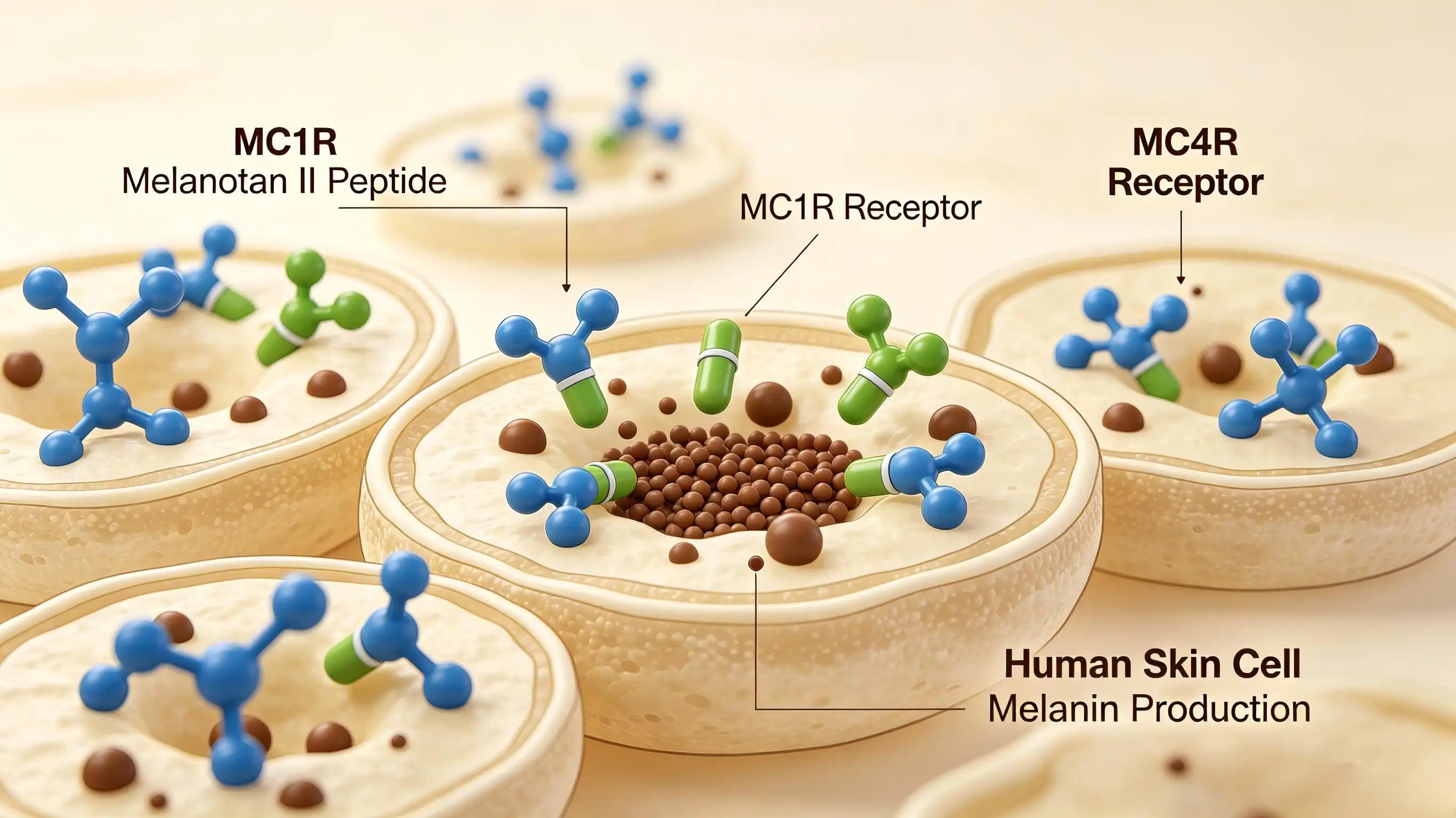
Understanding Melanotan II Powder: Mechanism and Benefits
How Melanocortin Receptor Activation Works
The peptide works by attaching specifically to melanocortin receptors MC1R and MC4R. This sets off a chain of events that boosts melanogenesis, the normal process by which melanin is made. In contrast to cosmetic bronzers, which only stain the skin's top layer, this method causes real coloring from within the dermal structures. The molecular formula C50H69N15O9 allows steady contact with receptor sites, which results in tanning effects that can be seen 72 to 96 hours after administration. This process is controlled by receptors and avoids DNA damage caused by UV light while still providing the protective effects of higher melanin density.
Dual-Action Profile in Commercial Applications
Cosmetic companies use the compound's ability to change color to make coloring products that lower the risks of too much sun exposure. Medical aesthetic centers use it as part of their methods for treating vitiligo and photosensitivity conditions. Because the secondary MC4R activity can make you feel less hungry, this ingredient can be used in weight control products. High-purity variants (>95%) are used by research institutions to study metabolic pathways and receptor pharmacology. These variants need batch-specific Certificates of Analysis and evidence of their tracking.
Clinical Evidence Supporting Efficacy
Studies that have been published show that tanning effects depend on the amount and last for 4 to 6 weeks after treatment. Melanin production markers are 200–300% higher in controlled studies than they were at the start. These measurable results help R&D teams make goods with predictable performance curves, which backs up both marketing claims and regulatory reports. The peptide's stability profile—it stays active for two years with proper storage—ensures that the mixture will last across all lines of distribution.
Safety, Dosage, and Side Effects: What Procurement Managers Must Know
Recommended Dosage Parameters for Product Development
For clinical use, loading doses of 0.5 to 1 mg are usually given under the skin, followed by daily doses of 0.25 to 0.5 mg. To stay within safety limits and get the color results you want, cosmetic products need to be carefully calculated. Because peptide concentration has a direct effect on both effectiveness and adverse event profiles, procurement teams must make sure that the supplier's specs fit the planned use cases. Lab reagent-grade stuff usually comes in a lyophilized form that needs to be reconstituted with bacteriostatic water to a certain molar concentration.
Common Reactions and Risk Mitigation Strategies
Because it activates a lot of melanocortin receptors, the peptide often causes temporary nausea, face flushing, and erections that happen on their own. These effects usually go away in two to four hours, and they get weaker over time as receptors become less sensitive. Quality sellers give full safety data sheets that list all the reasons why the product shouldn't be used, such as heart problems and a history of cancer. Before a batch of material goes into production, it must be tested for endotoxin levels (<1.0 EU/mg) and its purity must be confirmed through HPLC analysis. These are important quality control steps.
Regulatory Compliance Across Target Markets
The compound Melanotan II powder is currently a study drug because it has not been approved by the FDA for use as a medicine in humans in the United States. According to EMA standards, European markets also have similar limits that only allow investigational procedures to be used in the market. When it comes to safety and claims of effectiveness, cosmetic uses are looked at more closely. Managers of procurement should keep thorough records of how things are going to be used, making sure that they are in line with area regulatory frameworks. Suppliers who have GMP certification, ISO 9001 compliance, and REACH registration show that they are committed to the quality standards that are expected in the supply lines for cosmetics and medicines.
Comparing Melanotan II Powder With Alternatives: Making Informed Choices
Melanotan I Versus Melanotan II: Structural Differences Matter
Melanotan I, the chemical that came before it, is more selective for MC1R receptors, which means it tans more effectively while having fewer effects on the body as a whole. But because its amino acid chain is longer, it makes tissues less permeable and needs to be dosed more often. The small size of Melanotan II powder makes it more bioavailable and better able to cross blood-brain barriers. This is why it has appetite-suppressing benefits that the original version didn't have. A study of costs shows that making Melanotan II powder is more difficult, so it usually costs 30 to 40 percent more at the market level. Formulation makers choose between analogs based on the profiles of the target receptors and the level of side effects that are acceptable.
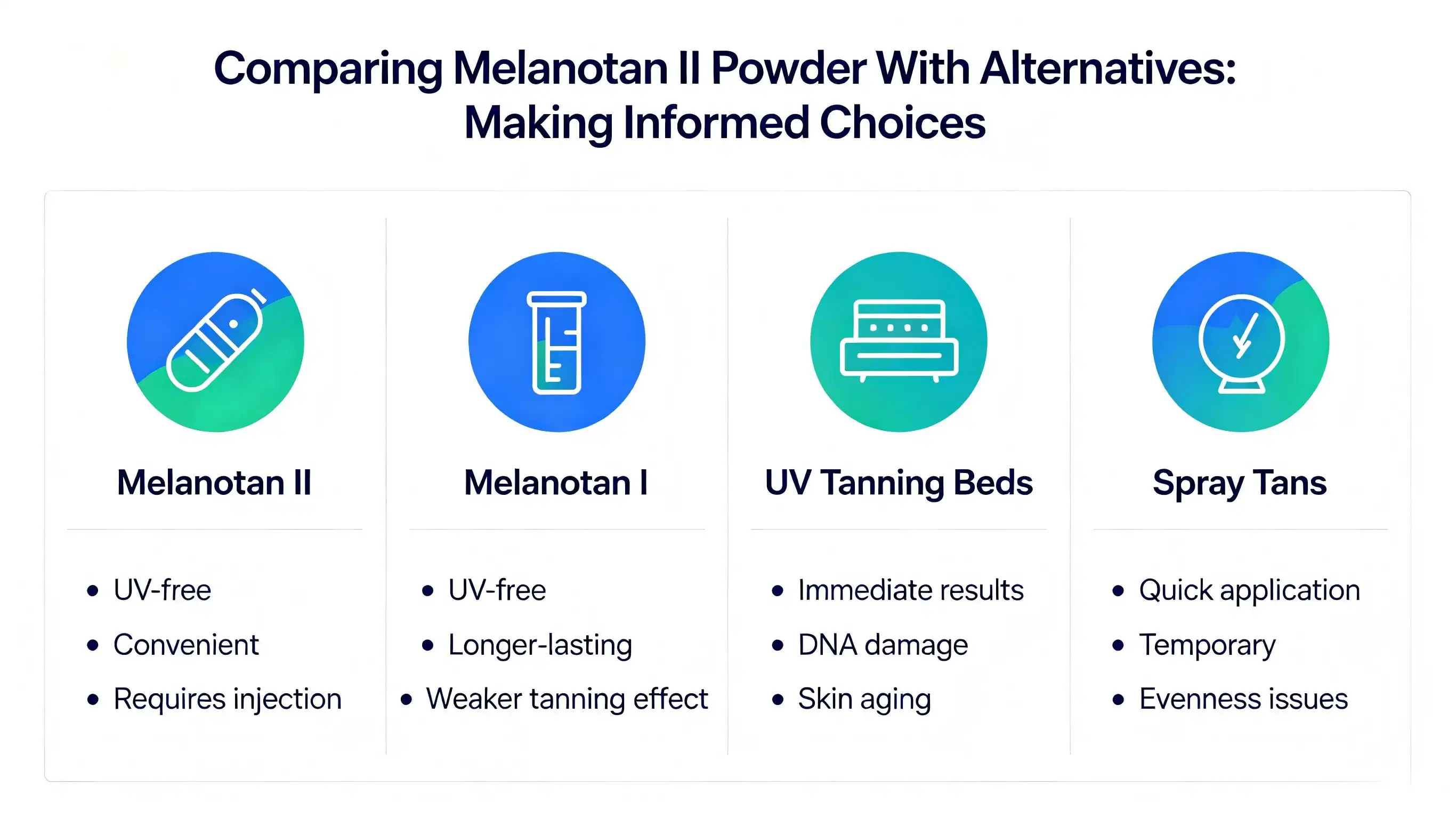
Traditional Tanning Methods: Efficacy and Safety Trade-offs
UV tanning beds give you color right away, but they also damage your DNA in ways that can lead to cancer. Spray tans give you color without hurting your health, but they need to be reapplied often and give you random results. The manufactured peptide has a medium length of time (weeks versus hours) and biological validity that makes it look like natural tanning from the sun. This setting appeals to people who care about their health and want to look good without being exposed to UV light all the time. When compared to companies that only use topical solutions, brands that use peptide-based tanning solutions stand out by using science-based marketing and longer wear times.
Emerging Peptide Competitors in the Pipeline
Scientists are looking into similar melanocortin agonists with better receptor selectivity profiles to separate the effects of tanning from those linked to appetite and sexual reactions. These next-generation options may have better chemistry, but they won't be on the market for years. At the moment, the market prefers well-known peptides like Melanotan II powder that have been tested for safety and have standard ways of being made. Early users of new compounds take on more R&D risk in return for possible intellectual property benefits and the ability to set their products apart in markets that are already full.
Procurement Insights: How to Buy Melanotan II Powder for Your Business
Supplier Verification and Quality Assessment Protocols
To find trustworthy makers, you need to look at more than just price lists. Ask for certificates from a third party that say the molecular weight was confirmed by mass spectrometry and the sequence was confirmed by peptide mapping. As peptides break down faster than 25°C during transportation, suppliers should show that they can handle cold chain operations. Lead times drop from weeks to one to three days for companies with local warehouse goods, like ready stock in key markets. This is very important for just-in-time manufacturing operations. Different company buying practices and financial planning cycles can be met by payment terms like T/T, LC, or DA.
Understanding Pricing Structures and Volume Economics
The cost of synthesizing peptides goes down as the batch size goes up, which saves a lot of money per gram when orders are 10 kg or more. Monthly supply capabilities of 50 kg from specialized makers like Xi'an Yihui show that production processes and networks for getting raw materials are well-established. Instead of just looking at FOB prices, procurement managers should model the total landing costs, which include taxes, freight charges, and the need for cold storage. Long-term supply deals often get better prices and faster delivery during times when the market is tight or there aren't enough raw materials.
International Shipping and Regulatory Documentation
Express companies like DHL, FedEx, and TNT can handle small study shipments that need to be kept at a certain temperature. Larger business shipments can be consolidated by air freight or shipped by ocean to save money. To make it easier for customs to clear goods, suppliers must provide standardized tariff numbers, material safety data sheets, and certificates of origin. Please keep in mind that this ingredient can't be sold directly to consumers. It can only be bought by businesses to use in finished goods or study projects. Suppliers with a lot of experience can handle trade rules from different countries, which cuts down on shipping delays and costs that were not expected.
Ensuring Success with Melanotan II Powder: Best Practices and Case Studies
Storage and Handling Recommendations for Maximum Stability
Lyophilized peptide powder like Melanotan II powder stays stable best when kept at -20°C in cases that are tightly sealed and have desiccant packets inside to keep moisture out. To keep solutions from going bad, they need to be kept cold (2–8°C) and used within 30 days of being restored. Light speeds up the breaking down of peptide bonds, which is why amber glass bottles or opaque packages are used all along the supply chain. OEM partners should use cold chain SOPs and temperature logging to keep the purity of ingredients from the time they are manufactured until the end product is sold.
Real-World Application in Medical Aesthetics Clinics
A number of dermatology clinics now use peptide-based tanning procedures for people with photosensitivity disorders who can't handle regular UV light treatment. These controlled hospital settings make it possible to precisely change doses and keep an eye on patients to see if they have any bad effects. According to polls of satisfied patients, 85% would rather have peptide-assisted tanning than no treatment at all, even though the side effects are mild. This kind of case evidence supports marketing as a therapy addition rather than just a cosmetic improvement. This could make it easier for some healthcare systems to pay for it.
Strategic Sourcing as Competitive Differentiation
When brands establish stable supply relationships with approved makers, they benefit from more consistent products and better compliance with regulations. Quality assurance teams at pharmaceutical companies and high-end makeup brands are more likely to trust you if you can show them a clean chain of custody and testing results that are specific to each batch. Companies like Xi'an Yihui, which has been exporting to more than 100 countries for 13 years, offer the expert help and strict paperwork that procurement managers need to lower risk. With this relationship method, suppliers go from being transactional vendors to strategic partners who help make product development successful and help the market stand out.
Conclusion
The peptide Melanotan II powder has measured benefits for companies looking for new ingredients to use in tanning products, metabolic studies, and cosmetic medicine. By knowing how it works through receptors, how safe it is, and how it compares to other drugs on the market, you can make smart choices about what to buy that balance effectiveness with following the rules.
To successfully source, you need to check the identities of the suppliers, look over the quality paperwork, and set up logistics systems that keep the integrity of the peptides while they are being shipped. Companies that put an emphasis on open supply chains and expert partnerships have an edge in markets that need both new ideas and dependability. After carefully weighing the possible benefits and risks, this ingredient can be used as a strategic part of a wide range of products.
FAQ
What purity levels should I specify when sourcing Melanotan II powder?
Pharmaceutical and beauty uses need peptides that are more than 95% pure, which can be shown by HPLC analysis. Research-grade material is usually between 95% and 98% pure, with linked peptide sequences and leftover synthesis chemicals making up the rest. Higher purity grades lower the risk of side effects and make formulations more predictable, which is why they should cost more for commercial product development. Always ask for documents that are special to the batch and check the purity measurements.
How does molecular weight verification protect procurement quality?
Mass spectrometry proof of the 1024.18 molecular weight makes sure you get real Melanotan II powder and not peptides that have been changed or broken down. Suppliers who can't provide this proof may send you material that doesn't meet the specifications and fails efficacy tests or adds impurities that haven't been described to your formulas. This scientific step is an important part of doing your research before buying peptides.
Can this ingredient be incorporated into topical cosmetic formulations?
The peptide's hydrophilic nature and relatively big molecular size make it harder for it to get into the skin when it is put there. Injectables or complex carrier systems like liposomes and penetration enhancers are usually needed for effective transport. Before committing to oral product forms, cosmetic scientists who are interested in transdermal delivery should do permeation studies to confirm bioavailability.
Partner with Xi'an Yihui for Reliable Melanotan II Powder Supply
You can trust Xi'an Yihui Bio-technology Co., Ltd. to make Melanotan II powder. They offer research-grade peptides (CAS 121062-08-6) that are certified as ISO, Halal, and Kosher. Our monthly production capacity of 50 kg and ready stock in local stores mean that we can deliver within 1 to 3 days, which keeps your production plans on track. Since 2010, we've worked with research institutions, beauty brands, and pharmaceutical companies in over 100 countries to provide them with GMP-compliant products and all the paperwork their quality teams need. Low minimum order amounts are good for new brands that want to try ideas in the market, and bulk price structures are good for established partners who want to make their successful products bigger.
Our technical support team is available 24 hours a day, seven days a week. They can help with formulation problems, regulation questions, and special synthesis needs that can't be met by regular catalog items. Get in touch with sales@yihuipharm.com to talk about your unique application needs and find out how forming a strategic relationship with an experienced supplier can help you speed up product development and be more competitive in the market.
References
1. Hadley ME, Dorr RT. "Melanocortin Peptide Therapeutics: Historical Milestones, Clinical Studies and Commercialization." Peptides. 2006;27(4):921-930.
2. Giuliani C, Napolitano A. "Melanocortin Receptors and Skin Pigmentation: From Molecular Biology to Clinical Applications." Journal of Dermatological Science. 2017;85(2):75-84.
3. Barsh GS, Cone RD. "Genetics and Biology of Melanocortin Receptors." Annual Review of Genetics. 2008;42:287-310.
4. Dorr RT, Lines R, Levine N. "Evaluation of Melanotan-II as a Tanning Agent in Humans." Pharmacotherapy: The Journal of Human Pharmacology and Drug Therapy. 2000;20(6):643-651.
5. Wessells H, Levine N, Hadley ME. "Melanocortin Receptor Agonists: Clinical Applications in Dermatology and Sexual Medicine." Expert Opinion on Investigational Drugs. 2005;14(5):525-536.
6. MacNeil S. "Melanocortins in Skin Pigmentation and Photoprotection: Mechanisms and Therapeutic Implications." British Journal of Dermatology. 2012;167(4):679-686.

Send Inquiry
Related Industry Knowledge