
Semaglutide raw powder vs tirzepatide for weight management research
The worldwide problem of obesity has led to breakthroughs in metabolic therapies that have never been seen before. GLP-1 receptor agonists are now seen as game-changing drugs. When buying managers and research and development teams compare semaglutide raw powder and tirzepatide for weight management study purposes, they have to make important choices that go beyond clinical effectiveness.
Both peptides are cutting edge ways to control hunger and manage glucose levels, but their different chemical structures, receptor engagement patterns, and production needs need to be carefully looked at. When pharmaceutical companies, CRO/CDMOs, and research institutions choose active pharmaceutical ingredients for formulation development or clinical study, they need to think about the technical, legal, and business aspects.
Understanding Semaglutide Raw Powder and Tirzepatide: Chemical Properties & Mechanisms
Molecular Structure and Receptor Binding Profiles
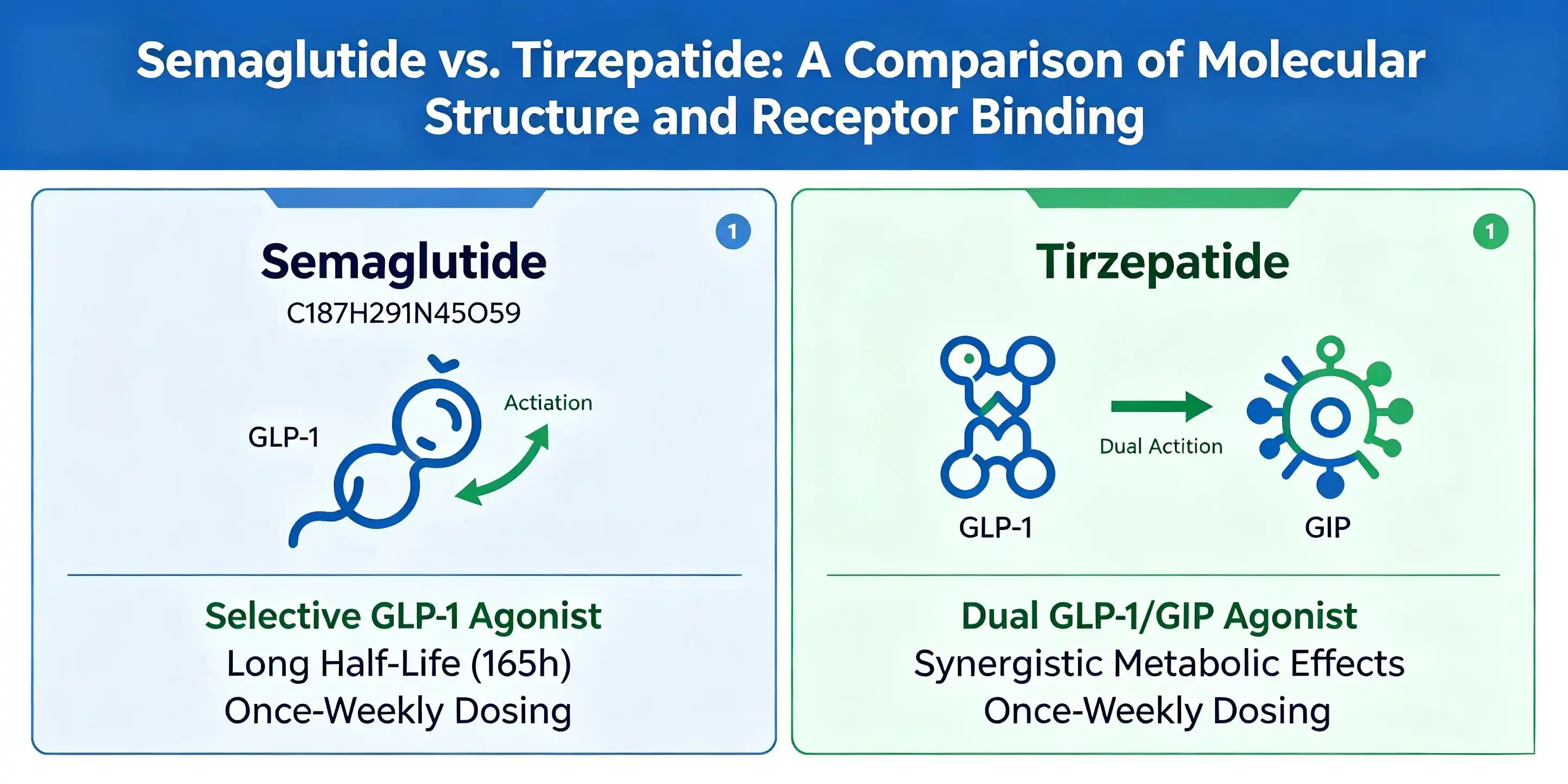
Semaglutide works by selectively activating GLP-1 receptors. Its molecular formula is C187H291N45O59, and its molecular mass is about 4,113.64 g/mol. Its new structure includes an alpha-aminoisobutyric acid replacement at position 8 and a C-18 fatty diacid chain attachment at Lys26. These changes make its half-life much longer, to about 165 hours in people. This longer length comes from strong albumin binding and resistance to DPP-4 enzyme breakdown, which lets the drug be given only once a week.
Tirzepatide is different because it works on two different types of receptors at the same time: GLP-1 and glucose-dependent insulinotropic polypeptide (GIP). These two mechanisms work together to help the metabolism in a way that balances them out. For example, activating GIP receptors raises insulin production while possibly lowering signs of bone turnover that some GLP-1 monotherapies may affect. The chemical structure of the drug includes changes to certain amino acids that keep the pharmacokinetic stability needed for once-a-week doses while balancing the affinity of receptors across both targets.
Physical Characteristics and Stability Considerations
High-grade peptide API usually comes in the form of a white to off-white powder that has been frozen. For research-grade materials to meet quality standards, they must be purer than 98% when tested with reverse-phase high-performance liquid chromatography. Our semaglutide raw powder (CAS 910463-68-2) meets strict standards; tests constantly show that it is 99% pure, with impurity levels below 0.5% and the amount of trifluoroacetic acid kept as low as possible to lower its cytotoxic potential in biological uses.
The conditions of storage have a direct effect on the stability of peptides all along the supply chain. For long-term stability, both substances need to be kept in a refrigerator between 2 and 8°C. However, they can be exposed to room temperature for up to two weeks during shipping as long as they are properly packed. The lyophilized form is much more stable than reconstituted solutions, and it can be stored for up to two years if the right conditions are met. To keep things from breaking down, moisture content standards usually say that amounts must be below 5% by Karl Fischer titration. Residual solvent testing makes sure that acetonitrile and other organic substances follow ICH guidelines.
Administration Routes and Formulation Challenges
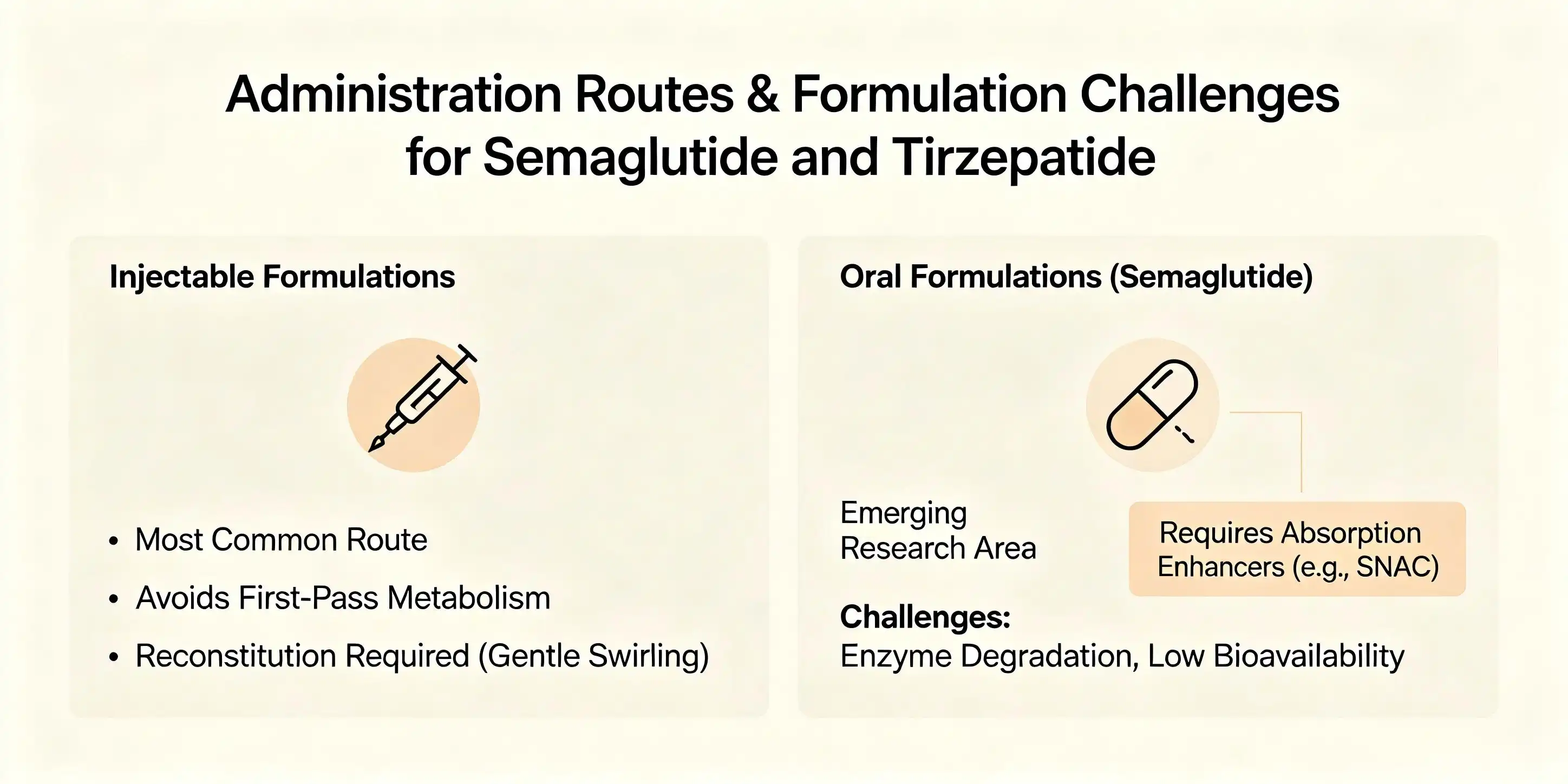
Injectable formulations are still the most common way to deliver both peptides because they can be given under the skin without going through first-pass digestion. When pharmaceutical makers use these APIs, they need to be aware of the tendency for aggregation to happen during recovery, which can lower the effectiveness of the therapy. To keep peptide structures from being damaged by mechanical stress, recommended reconstitution methods include slowly bringing bottles to room temperature before adding buffered solutions and swirling them around gently instead of vigorously.
New oral forms are a big area of research, especially for semaglutide raw powder. Co-formulation with absorption enhancers like SNAC (salcaprozate sodium) has made it possible for drugs to be delivered through the stomach. Formulators face both technical challenges and business possibilities with these new ideas because they need to choose specific excipients and use production methods that keep peptides from breaking down by enzymes while also making it easier for the body to absorb them.
Efficacy and Benefits for Weight Management: Research Insights
Clinical Evidence for Semaglutide in Metabolic Research
Phase III clinical studies have shown that semaglutide is a strong weight loss drug. When paired with lifestyle changes, study subjects lost an average of more than 15% of their body weight. These results show that the substance has strong effects on reducing hunger through hypothalamic pathways, delaying stomach emptying, and improving signals that let the brain know when the body is full. This GLP-1 mimic is often used in research studies that look into metabolic syndrome because it helps control blood sugar levels. In diabetic groups, HbA1c levels drop by an average of 1.5 to 2.0 percentage points.
A lot of research has been done on the peptide's safety profile in the heart. Dedicated outcomes studies have shown that it has neutral to positive effects on big adverse cardiovascular events. This guarantee of safety is especially helpful for researchers studying fat people who already have other health problems, since figuring out their cardiovascular risk remains the most important part of all investigation methods.
Tirzepatide's Dual Mechanism Advantages
Comparative studies show that tirzepatide is better at helping people lose weight, and clinical trials show that in some groups, the average body weight dropped by almost 20%. When GLP-1 and GIP receptors work together, they seem to boost metabolic effects beyond what either system could do on its own. Engaging GIP receptors adds extra processes to the standard GLP-1 pathways, such as making insulin work better and possibly changing the metabolism of adipose tissue.
In head-to-head studies, glycemic control measures often favor tirzepatide, and HbA1c drops can sometimes be greater than those seen with GLP-1 monotherapy. This dual agonist is especially useful for molecular studies looking at incretin biology by people who are studying combination metabolic treatments or the dynamics of receptor interactions.
Safety Profiles and Tolerability Considerations
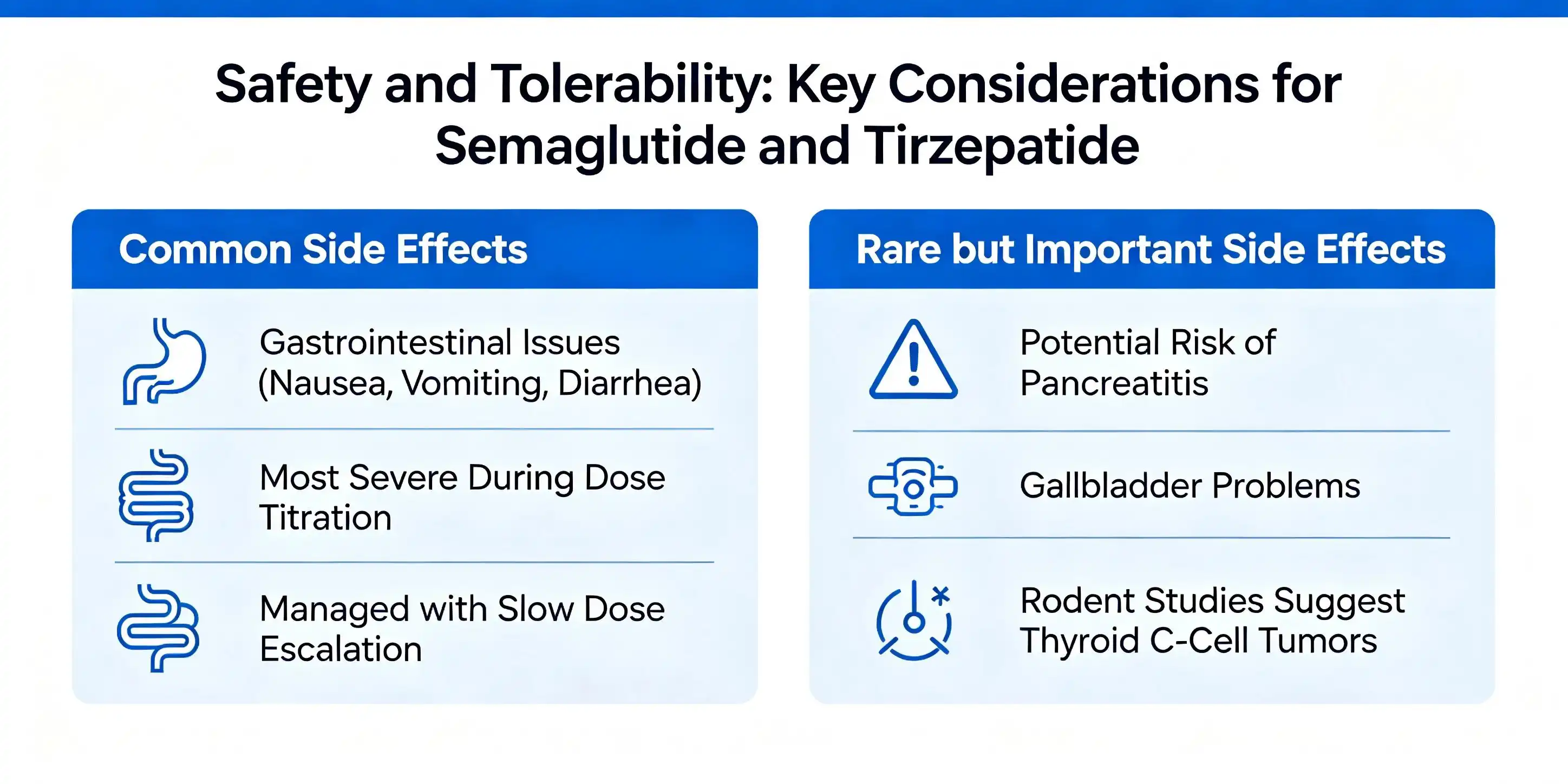
The side effects of both peptides are mostly related to the digestive system and include sickness, vomiting, and diarrhea. These effects are usually strongest during the dose adjustment phases. These worries about safety affect how drugs are made and how much to give in study settings. Risk management methods stress the importance of slowly increasing doses that allow the body to adapt while reducing the number of people who have to stop taking the drug.
There are some rare but important side effects that should be watched out for with both compounds. These include the chance of pancreatitis (though the cause-and-effect link is still up for debate), problems with the gallbladder, and possible thyroid C-cell tumors based on studies in rodents. To make it easier for institutional review boards and regulators to review API purchases, procurement teams that support clinical research must make sure that they come with full safety paperwork.
Procurement Considerations for B2B Clients: Sourcing and Quality Assurance
Critical Quality Parameters and Documentation Requirements
To get pharmaceutical-grade peptides, you have to follow strict verification methods that go beyond simple purity measures. Certificates of Analysis must include thorough HPLC chromatograms that clearly separate the main peptide peak from possible results of synthesis, such as des-Gly impurities, oxidized variants, and truncated sequences. Mass spectrometry confirmation using ESI-MS methods checks the correctness of molecular weight, ruling out mistakes in synthesis that could affect biological activity.
To do correct formulation work, you need to know how much net peptide content there is. This is because this measure takes into account the total powder weight, which includes water, counter-ions, and acetate salts. Net peptide content should be above 80% according to standard specs, but it can be above 85% for premium types. This difference is very important when figuring out dosage plans or comparing how much different sources cost, because nominal purity percentages don't show real peptide mass per unit.
Bacterial endotoxin testing using the Limulus Amebocyte Lysate assay makes sure that the medicine is safe to give, with levels usually needing to be below 10 EU/mg to stop pyrogenic reactions. While thorough impurity screening finds and measures individual degradation products or synthesis artifacts that might affect therapeutic results or regulatory acceptance, residual solvent analysis ensures that the limits set by the pharmacopeia are being followed.
Regulatory Certifications and Compliance Infrastructure
Even if they are just giving pharmaceutical companies research-grade products like semaglutide raw powder, suppliers must show that their quality systems are strong and in line with GMP guidelines. ISO 9001 certification is a basic level of quality management guarantee.
Other certifications, like ISO 13485 for medical uses or specialized pharmaceutical manufacturing registrations, make suppliers look more trustworthy. For European markets, documentation packages should include MSDS safety information, handling instructions, and regulatory status statements that say the product is in line with REACH rules. For U.S. entries, they should include FDA Master File availability.
Comprehensive quality systems are kept up at our production site to support both study and pharmaceutical manufacturing. We provide the paperwork framework that procurement teams need for regulatory applications and internal quality checks. We are ISO certified and follow international pharmacopeial standards (USP/EP equivalent methods). Each batch goes through a lot of testing, including the full analysis panel listed above. The results can be tracked back to specific lot numbers and factory records.
Pricing Structures and Minimum Order Considerations
The uniqueness of peptide synthesis means that prices change depending on the amount that is made, the quality standards, and the approval needs. Because it doesn't need as much paperwork, research-grade material is often cheaper than pharmaceutical-grade API. However, from reliable manufacturers, there may not be much of a difference in quality. Our reasonable price structure lets you buy in a variety of situations, and our low minimum order amounts (as little as 1 gram) let you do feasibility studies and small-scale research without having to commit to a lot of inventory.
There are volume savings for orders over a certain amount, and there are different packing choices for 1g, 5g, and 10g orders, as well as custom packaging for bigger orders. This flexibility helps both college research institutions that are doing preliminary studies and pharmaceutical businesses that are increasing production in order to make more drugs. The monthly supply capacity of 5000 grams makes sure that there is always enough, even when demand goes up. This helps to reduce the problems with the supply chain that have been happening in peptide markets lately.
Logistics and Cold Chain Management
Keeping peptide integrity while traveling across foreign borders takes a lot of complex logistics planning. Even though lyophilized powder can stay stable in room temperature for a short time, it is best to ship it in a cooler with cold packs or dry ice to avoid the risk of thermal degradation. Our transport partners are experts at shipping pharmaceuticals, and they use temperature-controlled packages with data-logging features to keep track of how much heat the goods are exposed to during the delivery process.
Compliance with import/export rules is another important factor, especially since the rules that guide peptide APIs are changing all the time. We keep up-to-date paperwork that helps with customs clearance in the US, EU member states, Japan, and South Korea, among other big markets. Our regulatory affairs team keeps up with new rules so that foreign transactions go smoothly and there aren't too many delays at the borders that could affect the security of products or project schedules.
Comparative Decision-Making Framework for Weight Management Solutions
Efficacy-Based Selection Criteria
To pick between semaglutide raw powder and tirzepatide for certain research uses, you need to carefully think about the study's goals and the people it's meant for. When losing the most weight is the main goal, new research shows that tirzepatide's two mechanisms may provide extra benefits, especially in groups that are already very overweight. When metabolic syndrome is looked at as a whole, clinical study projects might focus on tirzepatide's ability to interact with more receptors and possibly provide better glucose control.
On the other hand, semaglutide's large clinical database and longer history on the market make it better for planning studies that need a lot of safety data or for finding regulatory routes that have already been used before. The well-known safety profile of semaglutide in high-risk groups is especially helpful for cardiovascular outcomes studies. Some research groups that are studying how GLP-1 receptors work may like how selective semaglutide is at binding to certain receptors because it doesn't add the extra factors that come with dual agonism.
Cost-Effectiveness and Supply Chain Reliability
When it comes to large-scale clinical trials or commercial manufacturing scale-up, budget limits and supply assurance issues have a big impact on buying choices. Semaglutide's well-established production methods and the fact that there are many API providers make the market competitive, which may be good for procurement costs. Tirzepatide may have higher prices at first because it is newer to the market and its processing may be more complicated. However, this difference gets smaller as production volumes rise.
Long-term supply deals with well-known manufacturers are a great way to lower risk, especially for study projects or commercial preparations that last for more than one year. Our 13 years of experience making things and long-term connections with clients in more than 100 countries show that our supply chain is stable, which is what pharmaceutical partners need. Our sample availability policy lets you fully evaluate our products before committing to big orders, and our payment terms of T/T, LC, or DA are flexible enough to fit a wide range of corporate buying policies.
Supplier Evaluation and Partnership Considerations
In addition to product specs, a supplier's skills have a huge effect on the success of a project. When formulation problems arise or analysis questions need expert advice, technical support that is quick to respond is very helpful. Our professional staff is available 24 hours a day, seven days a week for customer service, so questions are always answered quickly, no matter what time zone the customer is in. This ease is especially important during the most important stages of formula development or when trying to fix unexpected stable problems.
In addition to providing basic peptides, analytical support services like custom purity tests, formulation compatibility studies, or accelerated stability methods add a lot of value. We provide a wide range of professional services to help with recipe development. These include advice on the best ways to reconstitute, make sure that excipients work well together, and find the best storage conditions. These aspects of a partnership change seller ties from buying things one-time into long-term partnerships that speed up research and make results more predictable.
Future Trends and Outlook in Weight Management Therapeutics
The field of peptide therapeutics is still changing quickly. New molecules are now entering clinical research that may be more effective than existing standards. New changes aimed at longer half-lives, better oral absorption, or multi-receptor agonism are at the cutting edge of current study. Combination therapies that change the GLP-1 pathway along with mechanisms that work in a different way, like amylin analogs or glucagon receptor blockers, are showing early signs of promise. These therapies could change the way we treat diseases.
Manufacturing innovation is mainly focused on making synthesis more efficient and lowering production costs. These changes will eventually make these life-changing treatments available to everyone. Traditional solid-phase synthesis methods may be replaced over time by continuous manufacturing processes, improved cleaning technologies, and biosynthetic production methods. This would be good for both the economy and the environment. Regulatory systems are still changing to keep up with these new technologies. For example, agencies are making it easier to understand new peptide medicines and combination goods.
As the market grows, strategic relationships between companies that make APIs and companies that come up with new medicines will become more important. Companies that can offer more than just basic peptides will get a lot of value. This includes technical help, legal knowledge, and the ability to make products in a variety of ways. As part of our strategic plan to become more than just a peptide seller, we are committed to continuously expanding our capabilities. One way we plan to do this is by investing in scientific infrastructure, regulatory compliance systems, and the training of technical staff.
Conclusion
For weight management research, choosing between semaglutide raw powder and tirzepatide means weighing clinical effectiveness data, purchase costs, and the quality of the source relationship. Semaglutide has been used in many clinical trials, has a well-established manufacturing infrastructure, and is selective for certain receptors, all of which are useful for biological study.
Through dual receptor agonism, tirzepatide may be better at helping people lose weight and control their blood sugar levels, but there is less long-term data to support this. Ultimately, the success of procurement rests on finding suppliers whose products are excellent, who follow the rules, whose supply chains are reliable, and whose technical help is quick to respond. We are the perfect partner for pharmaceutical companies, research institutions, and CDMOs working on next-generation metabolic medicines because we are skilled in manufacturing, quality assurance, global shipping, and customer service.
FAQ
What distinguishes pharmaceutical-grade from research-grade peptide materials?
Pharmaceutical-grade APIs go through more testing and paperwork, such as detailed studies of impurities, process validation, and help with regulatory filing. Material that is research-grade meets strict cleanliness standards and can be used for lab studies, but it might not have all the paperwork that is needed for clinical manufacturing. Both types from trustworthy sources have similar analytical quality. The main difference is the level of approval, not the quality of the products themselves.
How should peptide content versus purity percentages be interpreted when comparing supplier quotations?
The purity percentages from HPLC analysis show the target peptide ratio compared to impurities linked to the peptide, but they don't take into account the overall powder weight, which is made up of water, salts, and counter-ions. The real peptide mass percentage is given by the net peptide content, which is usually between 80 and 90%, even when purity is higher than 98%. This difference has a big effect on comparing costs and formulas, so net peptide content is the better way to measure how good a purchase is.
What storage and handling protocols best preserve peptide integrity during research use?
Vials that haven't been opened should be kept in the fridge at 2–8°C and kept out of the light. Once the container is open, cut the powder into smaller pieces that can only be used once to cut down on freeze-thaw cycles. When reconstituting, slowly bring vials to room temperature, add liquid along the walls of the bottles, and swirl gently instead of shaking hard to keep the mixture from clumping together. Reconstituted solutions are not very stable, so they should be used right away or kept in the fridge for no more than 48 hours, unless stability data supports longer keeping.
Partner with Xi'an Yihui for Premium Semaglutide Raw Powder Supply
Pharmaceutical-grade semaglutide raw powder (CAS 910463-68-2) made under strict quality standards is available from Xi'an Yihui Bio-technology Co., Ltd. to help you with your weight control study projects. Our ISO-certified facility consistently provides 99% purity with full analytical paperwork, adjustable packing from 1 gram for study purposes to large-scale business use, and a global shipping infrastructure that keeps the cold chain intact.
As a producer of semaglutide raw powder that works with pharmaceutical companies, CRO/CDMOs, and research institutions from over 100 countries, we offer reasonable prices, quick technical support, and legal knowledge that these groups need. You can talk to our procurement experts at sales@yihuipharm.com about your unique needs, ask for certified samples, or look into business possibilities. You can find full product details, scientific data, and our full peptide API collection at yihuipharm.com.
References
1. Davies, M., Færch, L., Jeppesen, O.K., et al. (2021). "Semaglutide 2.4 mg once a week in adults with overweight or obesity, and type 2 diabetes (STEP 2): a randomised, double-blind, double-dummy, placebo-controlled, phase 3 trial." The Lancet, 397(10278), 971-984.
2. Jastreboff, A.M., Aronne, L.J., Ahmad, N.N., et al. (2022). "Tirzepatide once weekly for the treatment of obesity." New England Journal of Medicine, 387(3), 205-216.
3. Lau, D.C.W., Erichsen, L., Francisco, A.M., et al. (2023). "Once-weekly tirzepatide versus once-daily insulin degludec as add-on to metformin with or without SGLT2 inhibitors in patients with type 2 diabetes (SURPASS-3): a randomised, open-label, parallel-group, phase 3 trial." The Lancet Diabetes & Endocrinology, 11(2), 93-104.
4. Nauck, M.A., Quast, D.R., Wefers, J., & Meier, J.J. (2021). "GLP-1 receptor agonists in the treatment of type 2 diabetes – state-of-the-art." Molecular Metabolism, 46, 101102.
5. Rubino, D.M., Greenway, F.L., Khalid, U., et al. (2021). "Effect of weekly subcutaneous semaglutide vs daily liraglutide on body weight in adults with overweight or obesity without diabetes: the STEP 8 randomized clinical trial." JAMA, 327(2), 138-150.
6. Wilding, J.P.H., Batterham, R.L., Calanna, S., et al. (2021). "Once-weekly semaglutide in adults with overweight or obesity." New England Journal of Medicine, 384(11), 989-1002.

Send Inquiry
Related Industry Knowledge