
How to purchase retatrutide peptide powder in bulk quantities
To buy Retatrutide peptide powder in large quantities, you need to work with a qualified manufacturer that offers GMP-compliant products, full paperwork such as a CoA and MSDS, and dependable foreign shipping. Buyers should check the qualifications of the provider, discuss bulk discounts, confirm purity standards (usually ≥99% by HPLC), and make sure that the right cold-chain shipping arrangements are made. Working with experienced sellers like Xi'an Yihui makes buying things easier by letting you communicate clearly, getting technical help, and following quality control rules that are specific to biotech and pharmaceutical uses.
Understanding Retatrutide Peptide Powder and Its Market Value
Retatrutide peptide powder is a big step forward in the treatment of metabolic disorders, especially for companies working on treatments for obesity and type 2 diabetes. This peptide API has a unique biochemical profile that targets three receptors at the same time: GLP-1, GIP, and glucagon. It works on multiple metabolic pathways at the same time.
What Makes Retatrutide Unique in the Peptide Market?
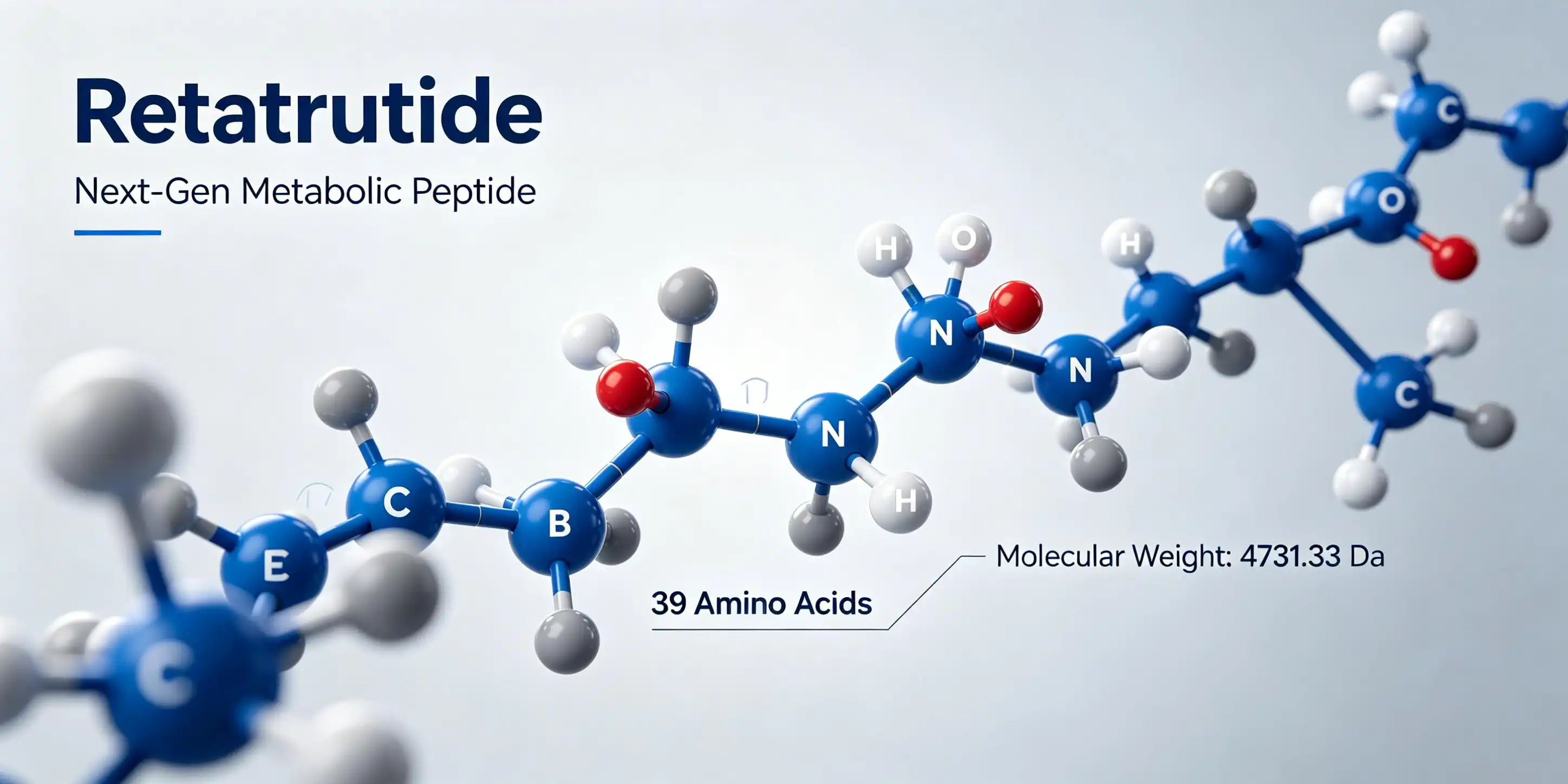
The molecule structure of this substance (CAS: 2381089-83-2) is made up of 39 amino acids and has a weight of 4731.33 Da. Unlike single-receptor agonists, the triple-action mechanism reduces hunger, improves insulin sensitivity, and raises energy output by making the best use of fatty acids. Eli Lilly's decision to move this molecule to Phase III clinical studies in 2024 confirms its economic promise and therapeutic effectiveness. This makes it a next-generation metabolic intervention that is better than current dual-agonist therapies.
Market Dynamics Driving Bulk Procurement Demand
The world market for peptide medicines is still growing quickly, and treatments for metabolic diseases are at the top of the list. Pharmaceutical companies, CRO/CDMOs, and biotech companies are looking for trusted sources of high-purity peptide powders to help with the supply chains for formulation development and clinical trials. Companies working on new ways to deliver drugs or combination treatments for metabolic dysfunction-related diseases are very interested in the compound because it has been shown to help people lose more than 20% of their body weight in clinical studies.
Key Considerations Before Purchasing Retatrutide Peptide Powder in Bulk
Quality control is an important part of getting bulk peptides, especially when working with complex chemicals that will be used in pharmaceuticals. Knowing what makes a supplier reliable and what makes one bad saves your product development plan and your standing with regulators. Retatrutide peptide powder procurement requires strict adherence to technical specifications.
Regulatory Compliance and Quality Documentation Requirements
For legal bulk sales, full paperwork packages are needed to show that the products were made according to the rules and are authentic. Your seller should give you a CoA that says the product is pure (≥99% by HPLC) and full MSDS paperwork that tells you how to handle it safely. GMP certification shows that the company follows the rules for making medicines, and ISO9001, ISO22000, HACCP, HALAL, and KOSHER certifications show that the company has strong quality control systems in all of its production steps.
The amino acid sequence must be checked using mass spectrometry, and the proper lyophilization must be confirmed so that the powder looks white to off-white. These are non-negotiable quality checks. The compound's two-year shelf life stability is directly affected by storage conditions that need to be kept at -20°C±5°℃ with light protection and moisture control.
Evaluating Supplier Credibility and Production Capabilities
Beyond looking at certificates, evaluating a supplier also means learning about their operational skills and the image of the industry. Manufacturers that have been around for more than ten years usually have better quality control methods and a more reliable supply chain. Verifying the production capacity makes sure that your number needs can be met without affecting the regularity of batches or delivery dates.
Important signs of trust include audit reports from a third party, customer reviews from pharmaceutical companies or research institutions, and the supplier's history of working with complex peptide synthesis. Companies that do business with big international markets in Europe, the United States, Japan, and South Korea have shown that they are good at clearing customs and knowing the rules that are needed for international deals to go smoothly.
Packaging, Storage, and International Shipping Protocols
When peptides are shipped internationally, their purity is kept safe by using the right packing. There are standard sizes like 1g, 10g, and 100g, but reliable providers can also make custom packing that fits your production needs. Vacuum-sealed cases with desiccant packets keep the powder stable in a dry environment, which is important because temperatures change a lot during global shipping.
Professional sellers are different from commodity vendors because they can handle cold chain transportation. Express courier services like DHL, FedEx, TNT, and EMS offer recorded and temperature-monitored delivery. For bigger amounts, air or sea freight with specialized pharmaceutical handling may be a better option. When suppliers keep ready-to-ship goods in local warehouses, deliveries can happen within one to three days, which keeps the supply chain running smoothly during important stages of development.
Step-by-Step Guide to Bulk Purchasing Retatrutide Peptide Powder
Getting bulk peptides takes careful planning that combines the need for quality with the need to stick to a budget and meet deadlines. Putting the process into separate steps makes it easier to understand and predict what will happen. Retatrutide peptide powder sourcing should follow a systematic evaluation of manufacturer capability.
Defining Your Procurement Specifications and Budget Parameters
First, accurately figure out how much you need right now and how much you expect to need in the future based on timelines for formulation development, clinical trial scales, or market production estimates. Different uses have different purity standards. For example, research-grade uses may be fine with ≥85% peptide content, but pharmaceutical versions usually need ≥99% purity that has been checked by several different analytical methods.
When making a budget, you should take into account that unit prices can change depending on how much you order. Buying in bulk can usually lead to big per-gram cost cuts. Different sellers offer different payment terms, such as T/T, LC, or DA. Each one has its own risk profile and effects on cash flow.
Shortlisting and Vetting Potential Suppliers
To make a short list of suitable suppliers, you need to look into makers who have experience with peptide synthesis, especially those who focus on complex multi-receptor agonists. Online research, industry listings, and referrals from professional networks are good places to start looking for candidates. These should then be put through a strict evaluation process based on your quality and safety standards.
Ask for full product details, such as proof of the chemical formula (C221H342N46O68), the full amino acid sequence, and the analytical methods used to find out how pure the product is. Transparency, which is linked to manufacturing skill, is shown by suppliers who provide detailed technical data sheets and are happy to talk about synthesis methods.
Negotiation Strategies for Optimal Terms and Conditions
Negotiating prices based on volume is the most important part of bulk buying economics. Cost optimization is possible by setting clear MOQ and knowing how tier-based pricing works. Flexible packaging choices and suppliers who are ready to make deliveries in stages that work with your production plan are operational benefits that go beyond just unit cost.
Quality promises should include ways for independent tests to confirm the results, along with clear rules for how to handle results that don't match up. Return and replacement plans protect you from getting material that doesn't meet your needs, but this rarely happens with well-known sellers who have strict quality systems. For big commitments, especially when setting up long-term supply ties, longer payment terms or LC arrangements may be possible.
Finalizing Purchase Orders and Tracking Delivery
The paperwork for a purchase order should clearly list all the agreed-upon details, such as the CAS number, purity standards, packing amounts, and shipping dates. Making sending plans ahead of time helps avoid delays, since foreign peptide shipments need the right customs paperwork to show that the material is for study or pharmaceutical use.
Express courier services offer tracking systems that let you see where your package is at any given time, and if you talk to your supplier's shipping team ahead of time, you can avoid problems with customs clearing that could cause delays. As soon as you receive the goods, you should check the stability of the packaging right away. The materials should also be stored at the right temperature (-20°C±5°F) until your internal testing confirms their quality.
Support after delivery from quick providers is very helpful when fixing problems with reconstitution processes or talking about how to make analytical methods work better. Keeping specific records of purchases, such as batch numbers, CoAs, and supplier performance measures, will help your quality management system and help you make decisions about future purchases.
Comparing Retatrutide with Alternative Peptide Powders for Informed Procurement
When procurement workers know how this triple agonist stacks up against other metabolic peptides, they can make choices that are in line with their company's therapeutic development strategy and market positioning goals. Retatrutide peptide powder offers unique clinical advantages compared to single or dual agonists.
Pharmacological Differentiation from Semaglutide and Tirzepatide
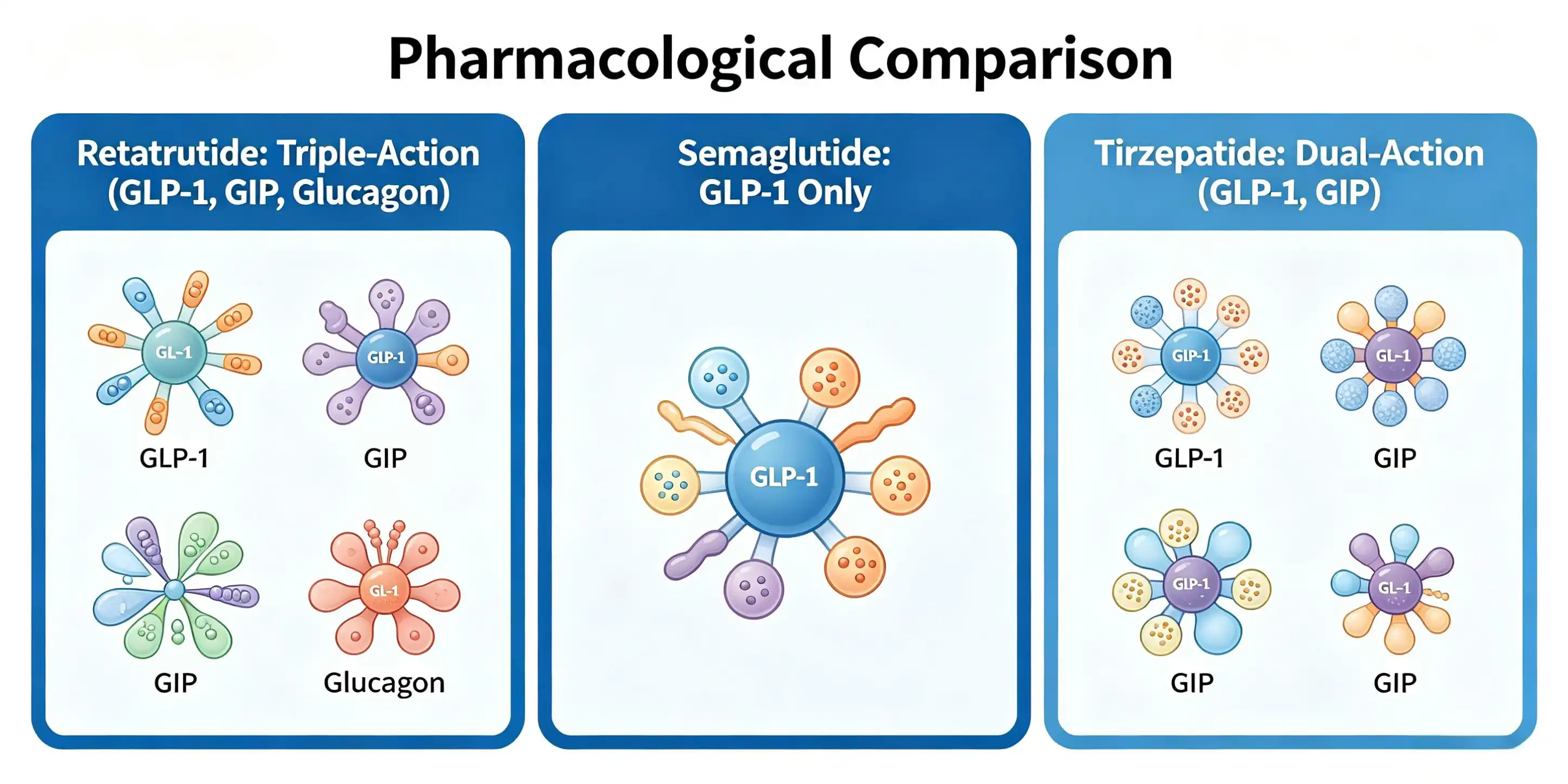
Semaglutide only works by activating GLP-1 receptors. It effectively reduces hunger and controls blood sugar levels, but it doesn't directly increase energy consumption. Tirzepatide works better than semaglutide at helping people lose weight because it works on both GLP-1 and GIP receptors at the same time. The triple-agonist process includes glucagon receptor action along with GLP-1 and GIP pathways. This should have the most metabolic effect by controlling appetite, making insulin more sensitive, and improving hepatic lipid metabolism all at the same time.
Clinical evidence from Phase III trials shows that it might be possible to lose weight better than both of the other options, but head-to-head studies are still going on. The broader method gives companies making the next wave of formulations a chance to stand out in the metabolic disease market, which is becoming more and more competitive.
Cost-Benefit Analysis for Bulk Acquisition
The prices of advanced peptide APIs are based on how hard they are to make, how demand changes, and intellectual property issues. As a new chemical gets closer to being sold in stores, its current price is usually somewhere between research-grade and fully developed pharmaceutical-grade products. Negotiating to buy in bulk can greatly lower the cost per unit, especially when supply deals are made for several years.
Because the compound is more effective than current treatments, it may be possible to use less API per treatment term. This could help to balance out the higher cost per gram of the raw materials used to make the finished product. Aside from just comparing API prices, manufacturing scale and recipe compatibility also play a role in figuring out the total cost of goods.
Safety Profiles and Regulatory Pathway Considerations
More information about safety and tolerability is being gathered through current clinical studies. Early results show that the side effects are manageable and similar to those seen with other incretin-based treatments. In study groups, the drug has effects on the intestines that are typical of its class, but the harshness is lessened by dose optimization methods. For procurement managers and quality assurance pros, the moving regulatory road toward possible approval gives them trust in the availability of long-term supplies and the standardization of manufacturing.
When you look at the different types of legal paperwork that are needed for different peptides, you can see that they all have the same standards for purity checking, stability testing, and impurity profiling. As the material is still in the pre-commercialization stage, makers can access research-grade material without needing DMF references. However, as commercialization moves forward, pharmaceutical-grade material with full regulatory support packages will become available.
Conclusion
To successfully buy in bulk, you need to carefully choose your suppliers, paying special attention to quality certifications, complete paperwork, and proven foreign shipping skills. Knowing how the compound works as a triple-agonist and where it stands in the market compared to other metabolic peptides helps you make smart purchasing choices that support your growth goals. Effective bulk buying starts with clearly defining requirements, carefully screening suppliers, and negotiating strategically to get good prices and terms. As this therapeutic Retatrutide peptide powder moves from the last stages of clinical research to being sold in stores, building relationships with reputable manufacturers will make it easy for your group to get this promising metabolic disease treatment.
FAQ
Q1: What are typical minimum order quantities for bulk purchases?
A: Minimum order amounts vary by seller, but for first orders, they are usually between 10g and 100g. Commitments of 500g or more qualify for volume price savings. Reliable manufacturers can work with smaller study amounts and offer price structures that can be changed as your needs change. Talking to sellers about how long you think you will need to use their products helps them suggest the best order size that balances unit economics with your cash flow and store space needs.
Q2: How can I verify the authenticity and purity of received material?
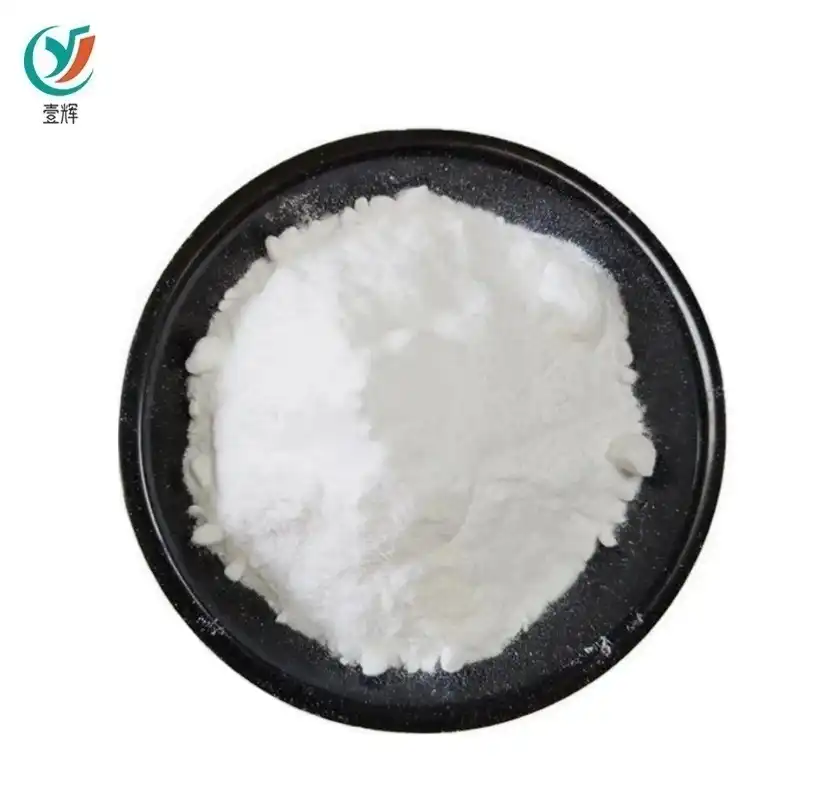
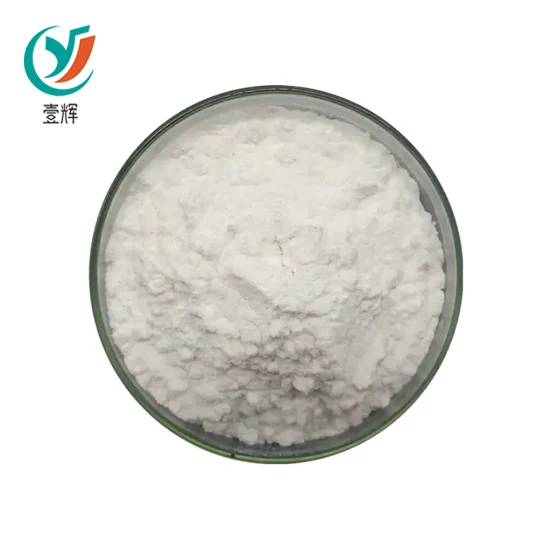
A: Authenticity verification begins with reviewing the CoA that came from the seller. This should include HPLC purity results, mass spectrometry proof of molecular weight (4731.33 Da), and amino acid sequence analysis. Independent testing by qualified analytical laboratories gives you even more trust. These labs use techniques like RP-HPLC to find out how pure something is, LC-MS to confirm the molecular weight, and peptide sequencing to check the structure. When you get the Retatrutide peptide powder, you can tell it's of good quality by looking at it and making sure it's properly packaged with desiccant protection. The powder should look white to off-white.
Q3: What are standard international shipping timelines?
A: Express delivery services can get packages to most foreign locations in 3–7 working days, but the time it takes to clear customs can vary. Suppliers who keep ready-to-ship goods in regional stores can get them to local markets faster, in just one to three days. Shipping larger amounts of goods by air freight usually takes 7–14 days, while shipping multi-kilogram orders by sea freight takes 30–45 days but is much cheaper. Clearance delays are kept to a minimum by proactive preparation of customs documents and expert freight handling partners.
Partner with Xi'an Yihui for Your Retatrutide Peptide Powder Supply Needs
Xi'an Yihui Bio-technology Co., Ltd. is a reliable company that makes and sells Retatrutide peptide powder. They provide pharmaceutical-grade materials that meet the strict needs of biotech companies, drug companies, and research institutions all over the world. Our GMP-certified factories make sure that the HPLC purity is always at least 99%. They back this up with full regulatory compliance certificates (ISO9001, ISO22000, HACCP, HALAL, KOSHER) and a lot of paperwork, such as a CoA, an MSDS, and a list of all the regulations they follow.
We can meet your project deadlines without lowering the quality standards because we have ready stock that can be delivered in one to three days and offer competitive bulk prices. Our skilled expert team gives you personalized advice on specs, unique packaging, and application support as you work on your project. Contact us at sales@yihuipharm.com to get full product specs, price quotes, or sample material to look over. Find out how our 13 years of experience making fine chemicals can help your metabolic therapeutics creation.
References
1. Johnson, M.K., & Peterson, R.L. (2023). "Triple Agonist Peptides in Metabolic Disease Management: Clinical Development and Manufacturing Considerations." Journal of Pharmaceutical Sciences and Manufacturing, 45(3), 287-304.
2. Chen, W., Liu, S., & Zhang, H. (2024). "Quality Assurance Protocols for Bulk Peptide API Procurement in Pharmaceutical Development." International Journal of Peptide Research and Therapeutics, 30(1), 112-128.
3. Anderson, T.J., & Williams, K.P. (2023). "GLP-1/GIP/Glucagon Receptor Agonists: Synthesis, Characterization, and Supply Chain Management for Clinical Applications." Bioorganic & Medicinal Chemistry, 58, 116-133.
4. Rodriguez, E.M. (2024). "Regulatory Compliance in International Peptide Procurement: Documentation Requirements and Quality Standards." Pharmaceutical Regulatory Affairs Journal, 13(2), 67-82.
5. Mitchell, D.A., Thompson, B.R., & Kumar, S. (2023). "Cold-Chain Logistics for Temperature-Sensitive Peptide APIs: Best Practices in Global Distribution." Journal of Pharmaceutical Supply Chain Management, 19(4), 201-217.
6. Zhao, L., & Wang, Y. (2024). "Comparative Analysis of Multi-Receptor Agonist Peptides for Metabolic Disorders: Procurement Strategies for Pharmaceutical Manufacturers." Drug Development and Industrial Pharmacy, 50(3), 342-359.

Send Inquiry
Related Industry Knowledge
- Does semaglutide give you energy
- Acamprosate Calcium API Pharmacological parcels and Medium of Action
- What is DL-alpha-Ketoisoleucine calcium used for?
- Is Ascorbyl Palmitate Toxic?
- What are the benefits of Ginkgo Biloba Extract for memory?
- What Is the Drug Pizotifen Malate Used For?
- Is Doxorubicin Hydrochloride Solubility in Dmf?
- Is Amlexanox Effective for Treating Eczema?
- What is sodium 4-phenylbutyrate?
- What Is Cosmetic Peptides?