
How long does tirzepatide stay in your system
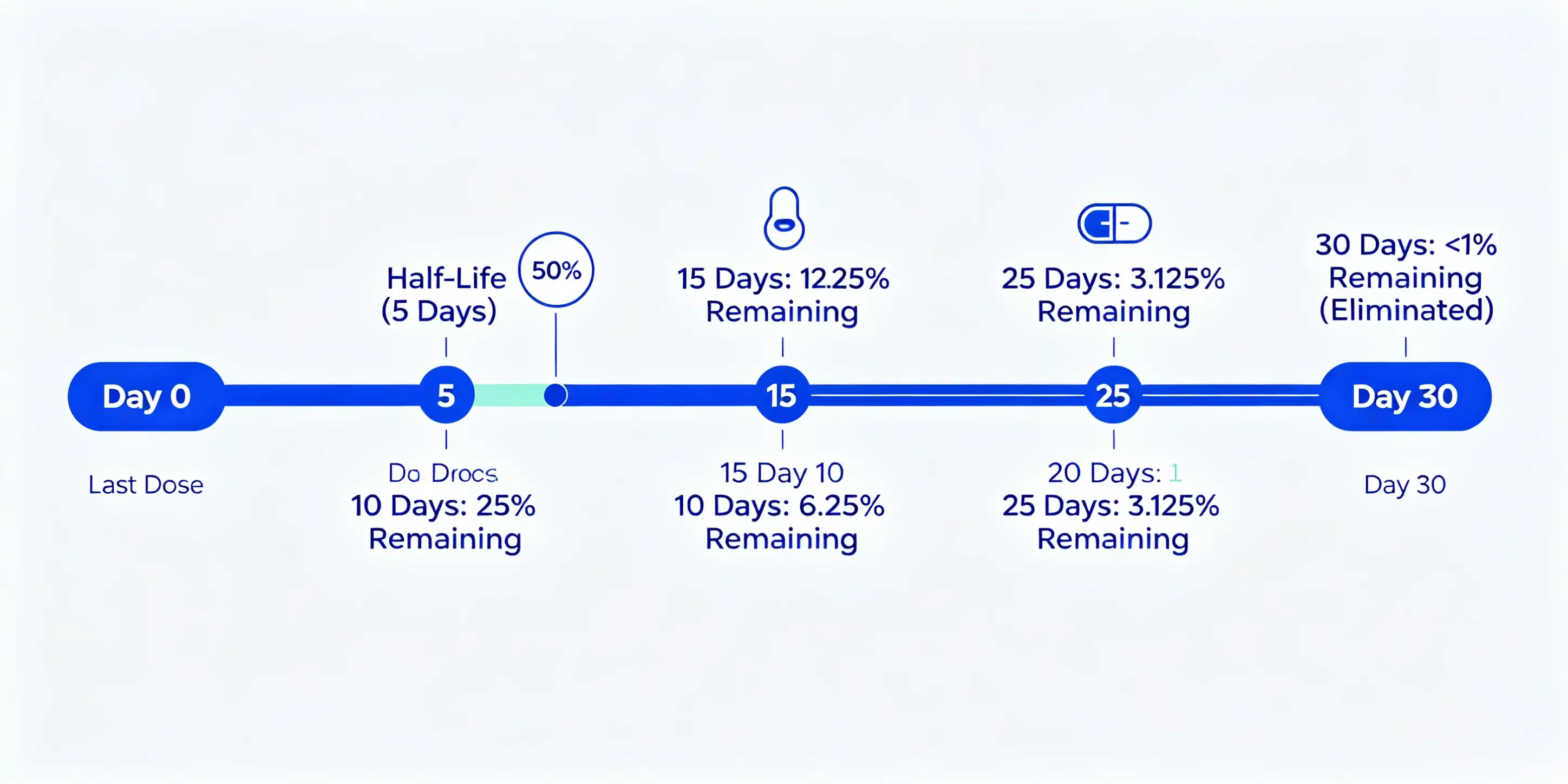
Pharmaceutical companies, study centers, and people who buy things need to know how tirzepatide stays in the body so they can keep up with the changing world of metabolic disease medicines. After the last dose, tirzepatide stays in the body for about 30 days. It takes the body five days to get rid of half of it. This longer pharmacokinetic profile lets you only take one dose a week and changes where the tirzepatide powder comes from. This dual GIP/GLP-1 receptor agonist stays in the body for a long time, which means that it works as medicine for a long time. When B2B partners add this drug to their supply lines, they need to know how to store it, how to make sure that each batch is the same, and what the quality standards are.
Understanding Tirzepatide and Its Role in Treatment
Tirzepatide has changed the pharmaceutical world by focusing on two of the most important metabolic health issues: type 2 diabetes and fat. This man-made peptide does something different because it turns on both the GLP-1 and GIP receptors at the same time. Unlike past treatments that only did one thing, this one does more than just control blood sugar to improve digestion.
Clinical Efficacy and Therapeutic Benefits
In human tests, tirzepatide reduced HbA1c levels in people with type 2 diabetes by up to 2.4% compared to the starting point. A lot of weight was lost by the people in the study. There was a range in the amount they lost, from 15% to 22.5% of their starting body weight. The drug seems like a good choice for treatment because it can help with many parts of metabolic syndrome at the same time. The medicine works by stopping the release of glucagon that isn't needed and increasing the release of insulin that is based on glucose. This is very important after meals, when keeping blood sugar in check is most important.
Mechanism of Action for Procurement Professionals
Teams that buy things can better understand why quality standards are important if they know how living things work. For two sensors to work, the chemical structure needs to be just right. It can affect how well the therapy works and how well the receptors can connect if the raw material is broken down or dirty. Tirzepatide acts like incretin hormones that are found in nature, but it is more stable and lasts longer. There are 39 amino acids in the peptide chain. These acids have been changed in certain ways to make them hard for enzymes to break down. This helps show why its half-life is longer. To keep molecules safe all the way through the supply chain, strict rules must be followed when they are being made and stored.
Safety Profile and Contraindications
Like any other drug, tirzepatide has some safety issues. Side effects like feeling sick, having diarrhea, or not being hungry are very common. These effects usually go away on their own over time. The risks that are more dangerous but less common are allergic reactions, gastritis, and thyroid C-cell tumors seen in animal studies. People who have medullary thyroid cancer or Multiple Endocrine Neoplasia syndrome type 2 in their family or on their own should not take the medicine. Full paperwork, such as safety data sheets, certificates of analysis, and batch tracking, is needed for business-to-business partners that sell to drug companies or research centers. This is to help with compliance and risk management in the future.
Pharmacokinetics: How Long Does Tirzepatide Stay in Your System?
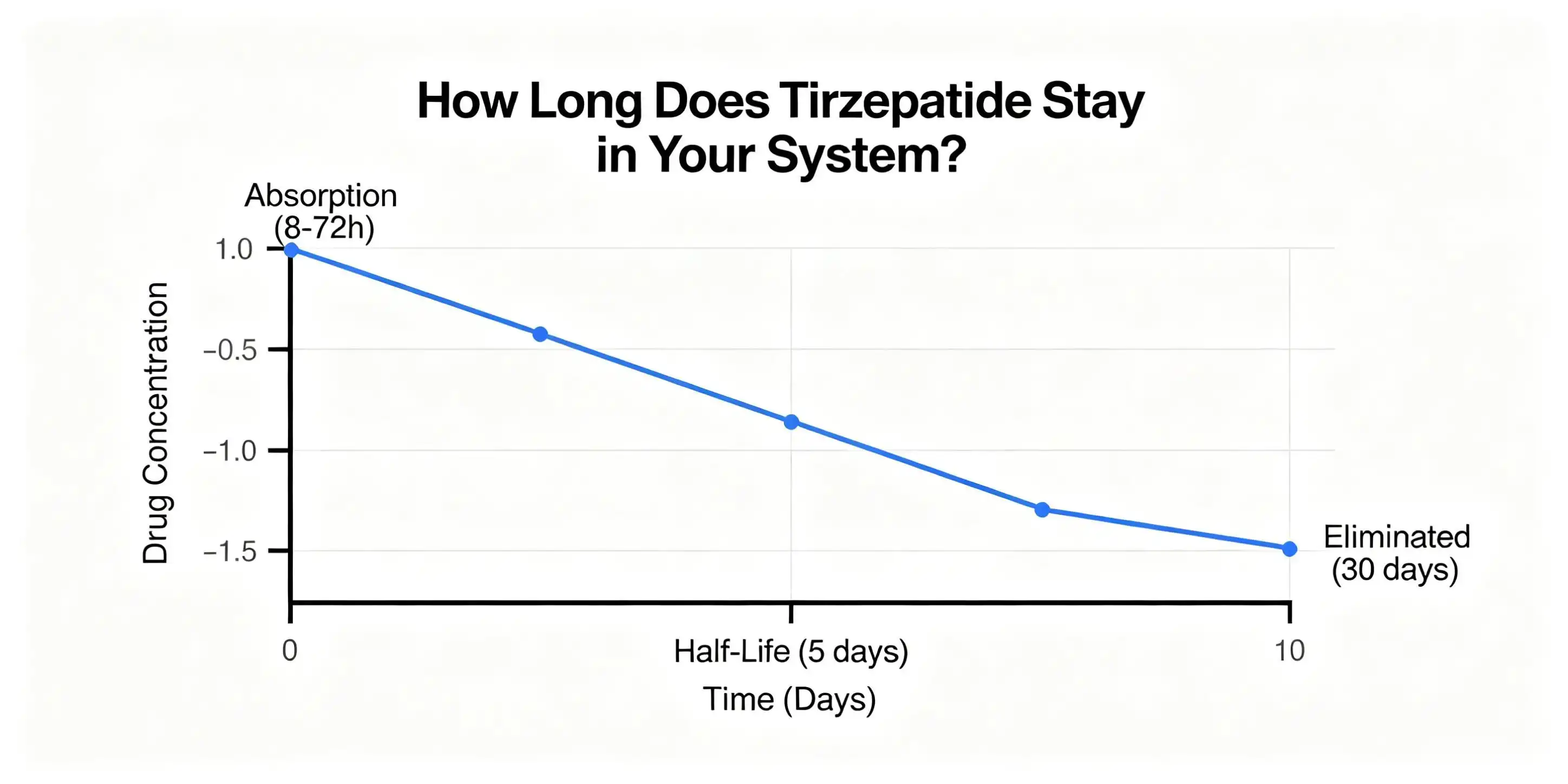
Tirzepatide is stored, new formulations are made, and patients are handled all based on how it goes through the body. Supply chain workers who know a lot about absorption, distribution, metabolism, and excretion (ADME) can make smart decisions about where to get things, how to store them, and when to send them out.
Absorption and Distribution Dynamics
It takes 8 to 72 hours for tirzepatide to reach its highest level in the blood after being introduced under the skin. This means that the peptide is highly soluble, which means that it works well for all patient groups. It stays in the bloodstream longer because it is highly linked to plasma albumin. This also means that the kidneys don't have to filter it out as fast. The binding of the protein also creates a "reservoir effect" that slowly releases the active peptide into the bloodstream. This keeps concentrations stable during the week between doses.
Elimination Half-Life and Systemic Clearance
On average, tirzepatide is eliminated from the body after five days. However, this can be different for each person and depends on their kidney function, body type, and other drugs they are taking at the same time. Peptides stay in the blood for about 30 days after the drug is no longer taken because their half-life is longer. About six half-lives are similar to this. This is how long it usually takes for drugs to be almost totally gone from the body. One thing that makes it different from small-molecule drugs is that it is mostly flushed out by proteolytic breakdown, not by liver metabolism or just going through the kidneys.
Factors Affecting Systemic Retention
There are several things that affect how long tirzepatide stays in a person's body. Failure of the kidneys doesn't have a big effect on clearance because enzymes break down the peptide instead of the kidneys filtering it. This process might be changed if the liver isn't working right. Body type and weight are also important because the amount of fat in the body changes the volume of the spread. If your B2B clients are making recipes or doing pharmacokinetic studies, learning about these things will help them choose the best ways to test and check for stability. Peptides stay stable when stored between 2°C and 8°C. This keeps them from breaking down too quickly, which would make them less useful for research and health.
Comparing Tirzepatide With Other Diabetes Treatments
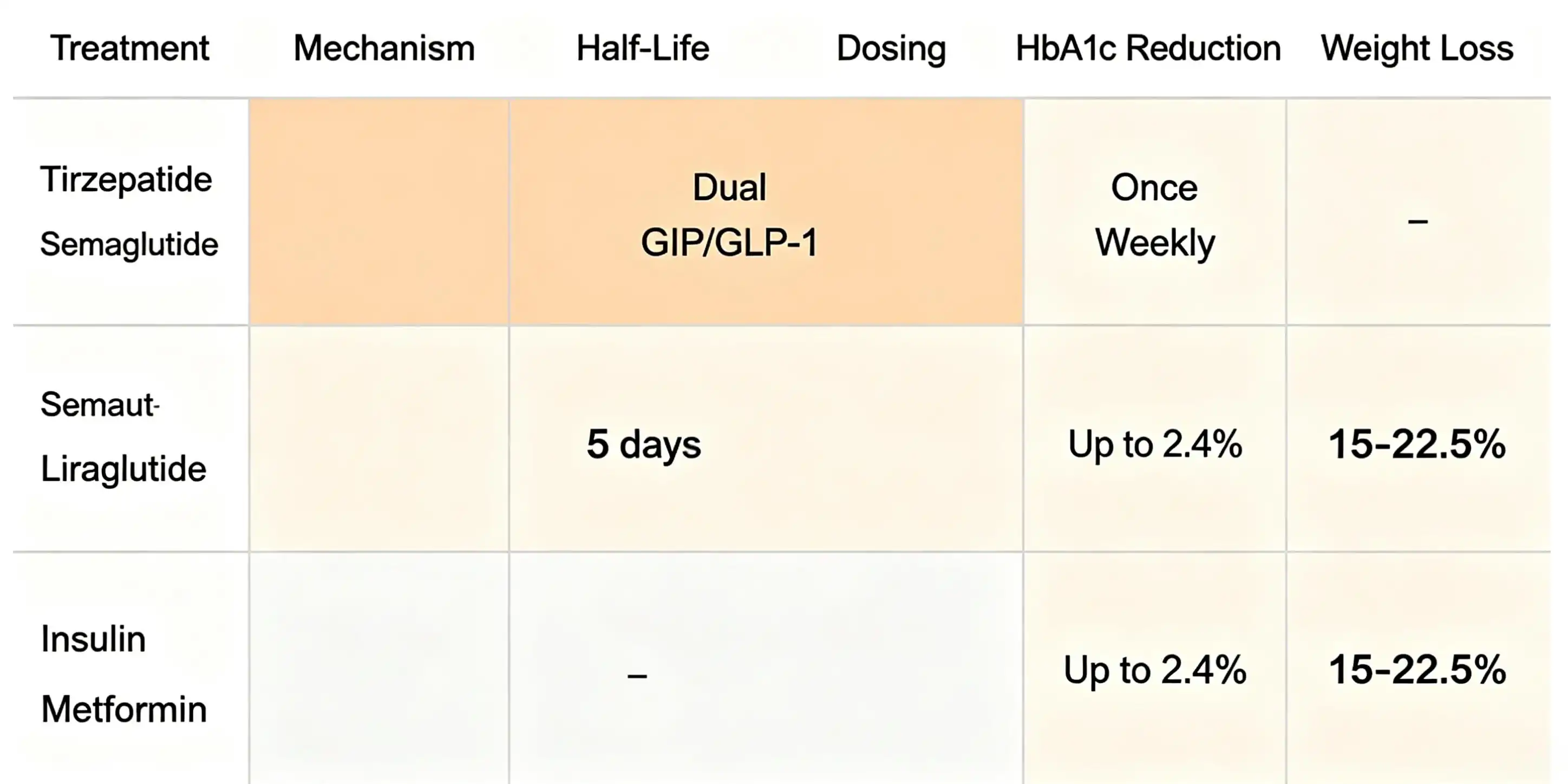
There are many different drugs available to treat diabetes and related weight issues. Each works through different mechanisms and offers unique health benefits. The availability of tirzepatide powder in the market provides procurement teams with valuable insights into market trends, helping them understand supply and demand dynamics and align their purchasing strategies with their core business objectives.
Tirzepatide Versus GLP-1 Receptor Agonists
Among the well-known GLP-1 receptor agonists are liraglutide, dulaglutide, and semaglutide. In some ways, these drugs work the same way that tirzepatide does, but they don't also trigger GIP receptors. The half-life of semaglutide is about one week, the same as tirzepatide. This means that it can only be taken once a week. In side-by-side clinical tests, tirzepatide lowers HbA1c and helps people lose weight better than semaglutide. Making use of two agonists seems to boost metabolic effects even more than activating GLP-1 does by itself. This practical benefit means that the market will want and need more high-purity raw materials, which is good for buyers.
Traditional Therapies: Insulin and Metformin
Insulin is still the best way to treat type 2 diabetes, but it has to be shot several times a day or continually given through a pump. Most people with diabetes take metformin by mouth. It needs to be taken every day, and its half-life is only 4 to 6 hours. Insulin and metformin don't help people lose a lot of weight like tirzepatide does. Most of the time, insulin makes people experience weight gain, while metformin typically maintains weight neutrality. Tirzepatide is a big step forward because it has a longer half-life and two metabolic benefits. This is especially true for people who are overweight and have diabetes. The buying managers of drugs that are making combination treatments or next-generation recipes know that tirzepatide's character makes it possible to make new products.
Market Positioning and Procurement Implications
The pharmacokinetic and clinical characteristics of tirzepatide is very different from other drugs, so it is a top treatment choice and costs more than generic alternatives. For buyers who only buy from other businesses, this means setting rules for quality control, legal paperwork, and how reliable the supply chain is. Because each person only needs a few units a week instead of taking medicine every day, the longer half-life makes it easy to make finished dosage forms. Peptide, on the other hand, is more difficult to make and needs special places to store because of its chemical complexity. Being aware of these changes in the market helps people who buy things do their jobs well and find suppliers who can meet high quality standards.
Procurement Considerations for Tirzepatide Powder
There are strict quality control and service review steps you have to take to find pharmaceutical-grade peptides. Because making tirzepatide powder is hard and it is very important in medicine, there are a lot of things that need to be carefully thought through that can affect how it is obtained.
Supplier Certification and Quality Systems
Providers you can trust have full quality control systems that have been checked and found to meet international standards. Getting ISO 9001 approval shows that you are committed to managing quality in a consistent way. On the other hand, ISO 22000 talks about methods for managing food safety, which can be useful for this peptide. You can get more people and sell your food in more places if it is HACCP, HALAL, or KOSHER certified.
In the drug business, GMP certification is the top level of quality control. It makes sure that the methods, quality checks, and work setting all meet the rules set by the government. Teams in charge of buying things should ask to see full certifications, audit reports, and proof that ongoing compliance tracking is being done when they look at possible sellers.
Analytical Documentation and Traceability
There should be full science records for every batch of tirzepatide powder. Certificates of Analysis (COA) have numbers that tell you how clean something is. The purity level for products used in medicine is generally at least 98%. On top of that, the COAs show the outcomes of tests that looked for microbe contamination, chemicals that were left over, and identity.
Most of the time, High-Performance Liquid Chromatography (HPLC) is used to find impurities and check how clean something is. Material Safety Data Sheets (MSDS) tell you how to safely handle dangerous things and what to do in an emergency. Drug Master Files (DMF) are used to give regulatory bodies secret information about how drugs are made that the buyer does not see. It is possible to move quickly if there are quality issues because strong systems keep track of the raw materials, the steps in between, and the final product.
Pricing Dynamics and Volume Considerations
The high cost of tirzepatide powder on the market shows how hard it is to make and how much people want it. Price structures depend on the grade of pure, the amount of the order, and the name of the supplier. Pharmaceutical-grade (≥98% pure, CAS 2023788-19-2) material costs more than research-grade material. When you commit to a certain amount of goods, you can usually get better prices.
But buyers have to weigh the savings they can get against the costs of having stock and the need for safety. The world market for peptide synthesis sometimes has trouble meeting demand because there aren't enough products to go around. This is especially true for new peptide medicines that are being accepted by the government. Having steady suppliers, like those who can give you 5,000g per month, is a good way to protect your buying during market changes.
Logistics and Cold Chain Management
Tirzepatide powder needs to be kept in a controlled space to stay stable. The peptide is kept in a fridge at 2°C to 8°C so that it doesn't break down while it's being shipped. When sellers have things in warehouses close to key markets, they can use just-in-time buying methods. This makes wait times a lot shorter.
Logistics partnerships with companies like DHL, FedEx, TNT, and EMS that know how to send medicines make sure that the packages are treated properly at all times. If you buy medicines from other countries, making sure you know the rules about borders and having the right paperwork can help you avoid delays that cost a lot of money. If you store it right, the two-year shelf life lets you keep a lot of the product on hand and cuts down on the waste that comes from throwing away old goods.
Proper Handling, Usage, and Administration Guidelines
As it moves through the supply chain, tirzepatide needs to be handled, restored, and kept with great care because it has a long half-life and strong cellular activity. When these things are present, a product works better and safer.
Reconstitution Protocols for Research Applications
Most of the time, research-grade tirzepatide powder comes in a lyophilized state that needs to be mixed back together before it can be used. Bacteriostatic water is the standard medium, but the exact steps rely on how the experiment is set up. To keep the powder from freezing, it needs to be brought to room temperature first. Then it should be mixed back together.
You don't make foam or put too much mechanical stress on the molecules when you spin the peptide instead of shaking it very hard. This could damage their structure. Because the peptide is more likely to break down in solution, solutions that have been reconstituted should only be used for as long as they were tested to be stable. During the whole healing process, lab staff must use aseptic methods to keep germs from getting into the sample.
Dosage Considerations Linked to Pharmacokinetics
Most drugs are only given once a week in hospitals because their half-life is five days. The first dose is usually 2.5 mg once a week. If it works well and is well taken, the dose is slowly raised to 5 mg, 10 mg, or 15 mg. Increasing the dose in this way makes stomach problems less likely during the first part of the treatment. When buying things for clinical study or drug development, these dose methods help the teams figure out how much stuff they need and how long the project will take. Since the drug stays in the body for a long time, steady-state levels are reached after taking it every week for four to five weeks. You need to think about this when you are planning a clinical study and choosing when to check how well it worked.
Storage Requirements and Stability Monitoring
Jars of unused tirzepatide powder stay as stable as possible when kept at 2°C to 8°C and out of the light, which can speed up degradation. Peptides should not be frozen because it breaks down their structure. Don't use anything that has been frozen. Throw it away. If you control the temperature, water can't soak into the lyophilized powder and damage it.
The temperatures in storage places should stay the same, and there should be good ways to keep track of them. Companies that store goods in more than one location should use strong cold chain management techniques, such as backup cooling systems and temperature alarms, to keep pharmaceutical assets safe. Every so often, stability tests are done to make sure that stored material stays clean and useful for as long as it's meant to.
Conclusion
Tirzepatide stays in the body for about 30 days after the last dose because it has a five-day elimination half-life. This is a pharmacokinetic feature that makes it easy to take once a week and ensures that the therapeutic benefits last. When procurement professionals are considering what to source, they need to keep certain factors in mind: high-purity pharmaceutical-grade material, strict cold chain operations, detailed analytical paperwork, and supplier partnerships that can consistently deliver quality products. Understanding how tirzepatide powder compares to other medications can help buyers develop plans that align with broader market trends favoring dual-agonist metabolic drugs.
The demand for tirzepatide continues to grow because it is more effective than other drugs at treating type 2 diabetes and obesity, making a stable supply source even more valuable. The peptide’s quality is maintained throughout the supply chain by following the proper steps, from manufacturing to use in study labs, pharmaceutical production, or formulation development. To help your company achieve its strategic goals, especially as the market for metabolic health drugs evolves, it is crucial to have sourcing teams with expertise in pharmacokinetics and strong, quality-focused supplier networks.
FAQ
Q1: How quickly is tirzepatide eliminated after stopping treatment?
A: Tirzepatide slowly leaves the body after the last dose because its half-life is about five days. Many times, the drug is gone after 25 to 30 days, which is the same as five to six half-lives. The peptide is mostly removed by proteolysis instead of being flushed out of the body by the kidneys. This means that the way the kidneys work doesn't really change when the peptide is eliminated in most people.
Q2: What factors influence how long tirzepatide remains detectable?
A: There are several things that can change the amount of systemic preservation. Some of the things that are unique to each patient are their body type, metabolic rate, and any health issues that might affect their protein metabolism. The strength of the dose and the length of treatment before stopping have an effect on the amount of tissue stores that build up. The peptide has a strong connection to albumin, which stores the blood and makes it last longer. Analytical detection methods and sensitivity levels decide what the real limit is of what can be found in a study setting.
Q3: Which suppliers provide certified tirzepatide powder for pharmaceutical applications?
A: As long as their GMP licenses are up to date, their materials are at least 98% pure (as shown by HPLC), and they give full lot records like COAs and MSDSs. When you judge a company, you should look at its ISO quality standards, how well it has followed the rules in the past, how stable its supply capacity is, and how well it can handle cold chain logistics. Multiple layers of marketing aren't always better for tracking down products and getting technical help than direct ties with manufacturers. This is especially true for uses that are meant to be used with drugs and need a lot of papers.
Partner With Xi'an Yihui for Certified Tirzepatide Powder Supply
Xi'an Yihui Bio-technology Co., Ltd. sells tirzepatide powder that is suitable for pharmaceutical use (CAS 2023788-19-2). Biotechnology companies, study centers, and drug companies all over the world need it to meet very high standards. We know that our white to off-white powder is ≥98% pure because HPLC study proved it. It can help you with planning, finding ways to study, and making things for sale. We have ready stock in local stores and can ship 5000g per month quickly through DHL, FedEx, and TNT. This means there are no risks in the supply chain that could cause projects to be late. The fact that we are certified for ISO9001, ISO22000, HACCP, HALAL, and KOSHER shows that we care about quality control for a lot of different uses.
Since 2010, we've done business with over 100 countries. We've earned their trust by giving them low prices, low minimum order amounts, and fast technical support 24 hours a day, seven days a week. If you store our products properly, they will last for two years. This gives you more product choices while cutting waste. It's easy to meet all of your buying needs with our wide range of goods and simple payment choices (T/T, LC, DA). This is true whether you need cosmetic-grade or reagent-grade material for specific uses. Our sales team can be reached at sales@yihuipharm.com if you need to know where to get tirzepatide powder, more about the product, or how much a batch will cost for your next project. We are a well-known supplier of tirzepatide powder, and companies that care about quality need our reliability, paperwork, and technical know-how.
References
1. Frias JP, Davies MJ, Rosenstock J, et al. Tirzepatide versus Semaglutide Once Weekly in Patients with Type 2 Diabetes. New England Journal of Medicine. 2021;385(6):503-515.
2. Jastreboff AM, Aronne LJ, Ahmad NN, et al. Tirzepatide Once Weekly for the Treatment of Obesity. New England Journal of Medicine. 2022;387(3):205-216.
3. Nauck MA, Quast DR, Wefers J, Meier JJ. GIP and GLP-1 Receptor Agonists in the Treatment of Type 2 Diabetes and Obesity. Diabetes, Obesity and Metabolism. 2021;23(Suppl 3):79-94.
4. Thomas MK, Nikooienejad A, Bray R, et al. Dual GIP and GLP-1 Receptor Agonist Tirzepatide Improves Beta-cell Function and Insulin Sensitivity in Type 2 Diabetes. Journal of Clinical Endocrinology & Metabolism. 2021;106(2):388-396.
5. Heise T, Mari A, DeVries JH, et al. Effects of Subcutaneous Tirzepatide Versus Placebo or Semaglutide on Pancreatic Islet Function and Insulin Sensitivity in Adults With Type 2 Diabetes. Diabetes Care. 2022;45(5):1260-1269.
6. Wilson JM, Nikooienejad A, Robins DA, et al. The Dual Glucose-Dependent Insulinotropic Peptide and Glucagon-Like Peptide-1 Receptor Agonist, Tirzepatide, Improves Lipoprotein Biomarkers Associated With Insulin Resistance and Cardiovascular Risk in Patients With Type 2 Diabetes. Diabetes, Obesity and Metabolism. 2020;22(12):2451-2459.

Send Inquiry
_1783655288382.jpg "Retatrutide peptide")
Related Industry Knowledge
- Tirzepatide bulk powder stability and purity retention
- What Is the Uses and Benefits of 2-Undecanone?
- The part of Acamprosate Calcium API in Alcohol Dependence Treatment
- Acamprosate Calcium API Pharmacological parcels and Medium of Action
- How Fulvestrant API workshop in bone Cancer Treatment
- What foods contain vitamin k2 mk4?
- Is carboplatin a vesicant?
- Does bimatoprost make eyelashes grow?
- What is alpha-keto isoleucine calcium salt used for?
- What Do Peptides Do For Your Face?