
Tirzepatide bulk powder stability and purity retention
Pharmaceutical companies, contract research organizations, and research institutions looking for dependable peptide APIs must take Tirzepatide bulk powder stability and purity retention into account. This dual GIP/GLP-1 receptor agonist peptide demands rigorous quality control to preserve its complex 39-amino acid structure and therapeutic efficacy. Tirzepatide stays effective throughout the supply chain as long as the right storage conditions are maintained, validated analytical methods are used, and certified suppliers are partnered with. This protects the integrity of your formulation and regulatory compliance while maximizing the return on investment in this high-value metabolic API.
Introduction
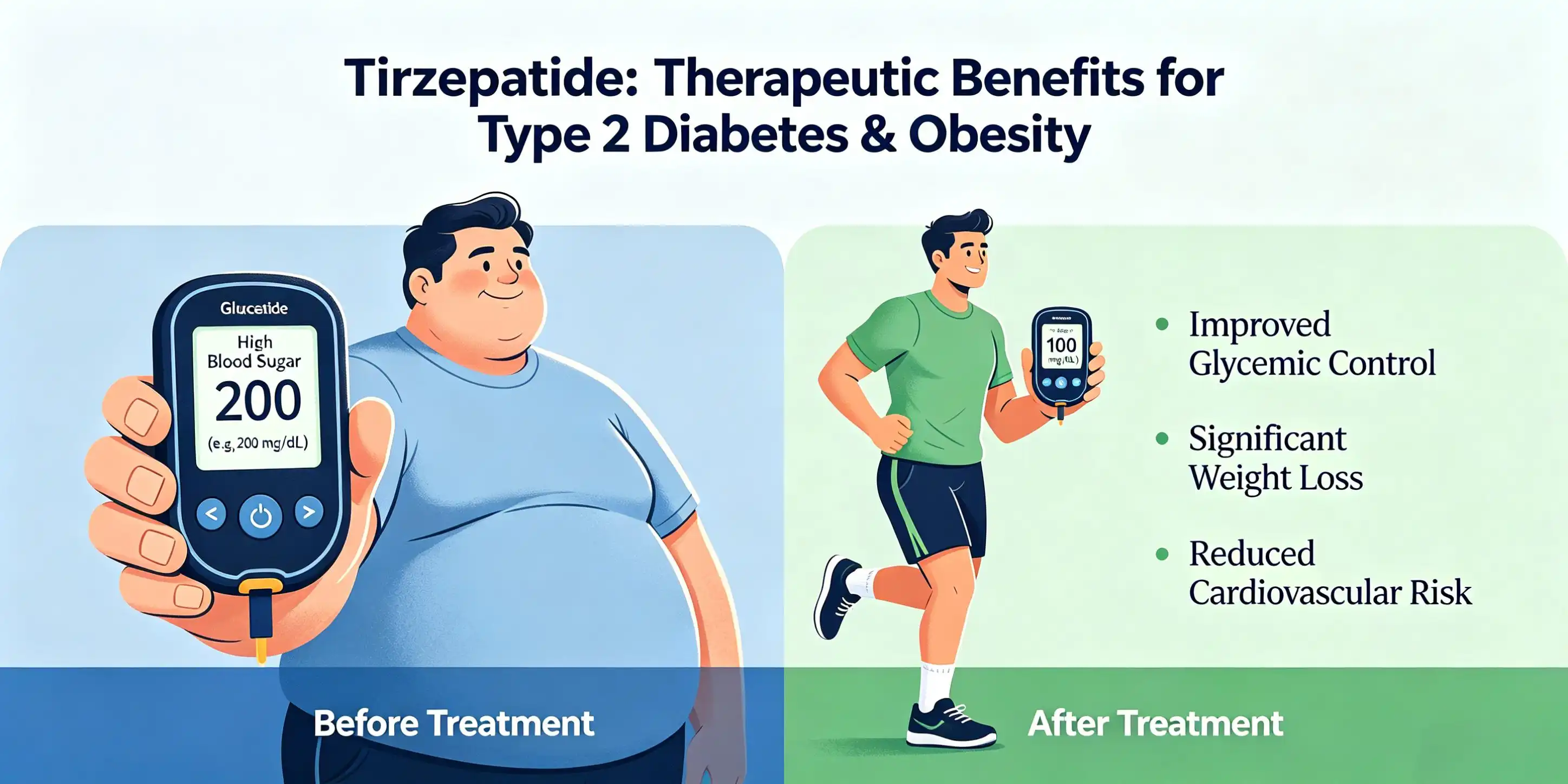
Tirzepatide is in high demand in the pharmaceutical industry because it is a new kind of medicine that can help people with type 2 diabetes and fat. For procurement managers and R&D experts who work with peptide-based APIs, knowing how to keep the supply chain stable and pure has a direct effect on how well the product works, how safe it is for patients, and how long it takes for regulators to approve it.
Tirzepatide has a special chemical structure that makes it both strong and easy to break down. It has a C20 fatty diacid change that makes its half-life longer. This manmade peptide, which has the formula C225H348N48O68 and a molecular weight of about 4813 Da, needs to be handled in a certain way that is different from how simple small-molecule APIs are. Environmental factors like changes in temperature, exposure to wetness, and light can quickly break down peptides, causing them to fragment, clump together, or oxidize, which lowers their medicinal value.
Over the past 13 years, we've worked with biotech companies and research labs around the world and found that a lot of the problems they have with sourcing are caused by not understanding the stability factors of peptides well enough. This guide fills in those gaps by giving you useful information on stability testing, purity verification, seller evaluation, and risk mitigation strategies designed especially for Tirzepatide bulk powder purchases.
Understanding Tirzepatide Bulk Powder Stability
Defining Stability in Peptide APIs
Tirzepatide bulk powder (CAS: 2023788-19-2) is said to be stable if it can keep its chemical structure, biological activity, and physical properties under certain weather conditions for as long as it is supposed to last. Stability in peptide therapeutics has many aspects. Chemical stability protects amino acid residues from breaking down and oxidizing, physical stability stops aggregation and precipitation, and bacterial stability keeps the product free of contamination. According to ICH Q1A standards, each measure needs its own set of testing procedures.
Critical Stability-Influencing Factors
Temperature remains the dominant variable affecting peptide longevity. Tirzepatide bulk powder that is kept at -20°C usually stays stable for two years. However, if it is exposed to room temperature, it breaks down faster. When the moisture level rises above 5%, peptide bonds are broken by water, mostly at asparagine and aspartate residues in the sequence. When light, especially UV light, hits the molecule of Tirzepatide, it sets off photochemical processes that change aromatic amino acids like tryptophan and tyrosine.
Manufacturing methods have a big effect on the original stability patterns. The freezing rates, main drying temperatures, and leftover moisture goals for lyophilization decide the powder's physical state and how easily it breaks down. Suppliers who use approved freeze-drying cycles with moisture levels below 3% produce goods that are more stable for longer than those who use less-than-ideal drying methods.
Stability Testing Protocols and Acceptance Criteria
Full stable tools check the product in real time (recommended conditions), during rapid testing (high temperature and humidity), and during stress testing (extreme conditions). HPLC analysis keeps track of the main peak purity, measures the amount of breakdown products, and watches as impurities form over time. By finding patterns of fragmentation, mass spectrometry proves the stability of molecules. Using receptor binding studies to check the potency makes sure that the biological activity stays between 90 and 110% of its original levels throughout the shelf life. People who work in procurement should ask for stability data that goes back at least 12 months and is stored in a way that meets their business needs.
Ensuring Purity Retention of Tirzepatide Bulk Powder
Purity Standards and Analytical Verification
For pharmaceutical-grade Tirzepatide bulk powder to meet purity standards, it usually needs to have at least 98% main peptide content, as measured by HPLC, with no more than 1% individual impurities and no more than 2% overall impurities. These strict limits make sure that there is stability from batch to batch, which is important for formula creation and regulatory reports. Reverse-phase HPLC removes Tirzepatide from truncated sequences, deletion peptides, and oxidized forms, and mass spectrometry figures out what kind of molecule each impurity is.
Related substances are made when synthesis isn't done properly, linking processes aren't finished, or substances break down after they've been made. When deletion sequences are missing one or more amino acids, they may behave similarly on chromatography but have very different biological effects. When methionine or tryptophan residues are oxidized, they change how well they bind to receptors. Trifluoroacetic acid (TFA) residues from purification methods must stay below 100 ppm so that finished medicine products don't have formulation problems or possible safety issues.
Manufacturing Quality Control and GMP Compliance
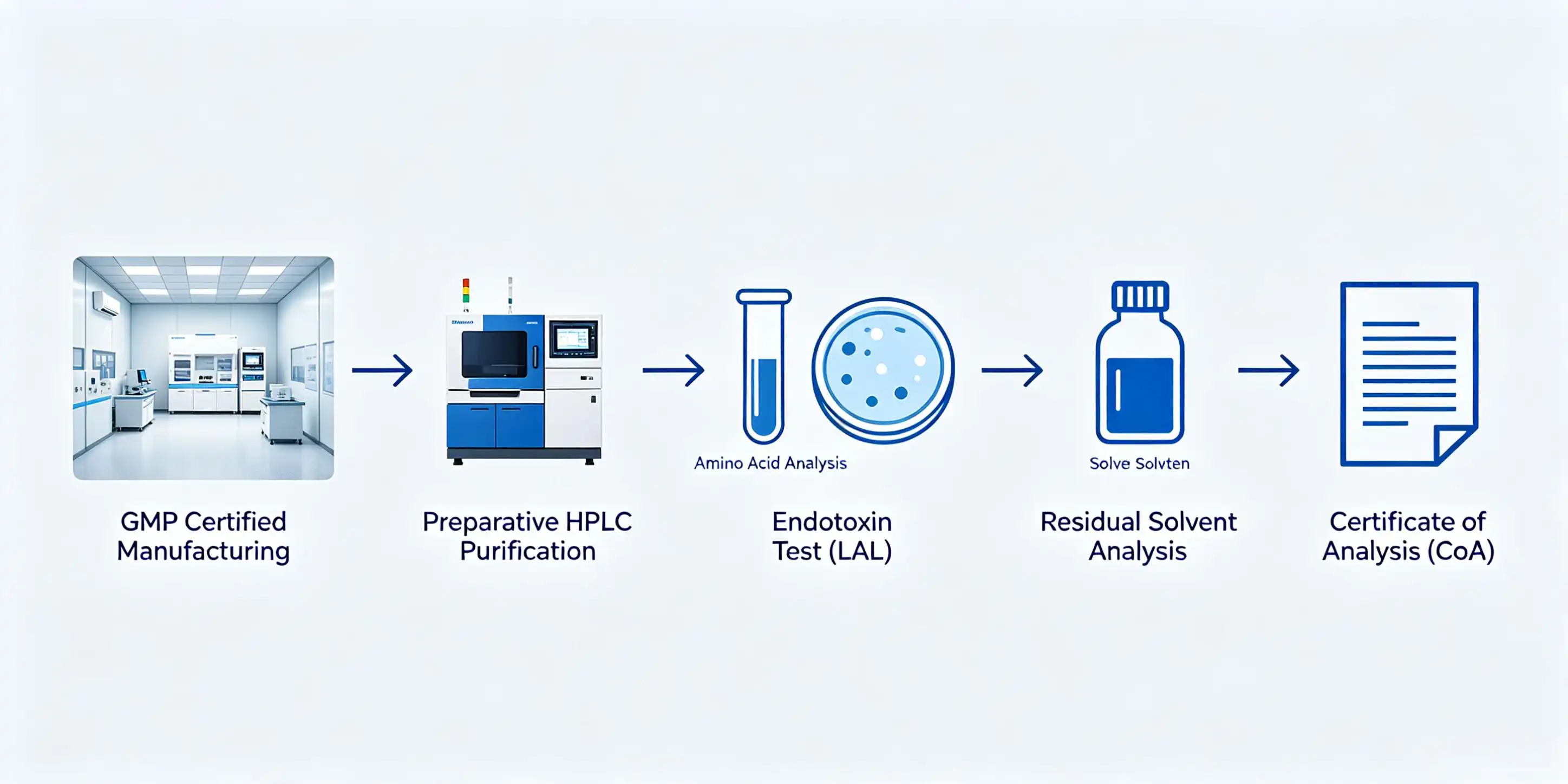
When using solid-phase methods to make peptides, each binding and deprotection step needs to be carefully watched. High-quality Tirzepatide comes from factories that follow GMP guidelines and have approved cleaning methods, environmental tracking, and training programs for their employees. Preparative HPLC purification gets rid of failed sequences and reagent residuals, meeting the high purity standards needed for pharmaceutical uses.
Our ISO9001, ISO22000, HACCP, Halal, and Kosher certifications show that we are dedicated to quality systems that keep cleanliness high from the time of production until the product is packaged. Each production batch goes through a lot of tests, such as an amino acid analysis to make sure the sequence is correct, an endotoxin analysis using the Limulus Amebocyte Lysate (LAL) assay to make sure the amounts are below 0.25 EU/mg, and a residue solvent analysis using gas chromatography. Full Certificates of Analysis (CoA) that list these factors give quality managers the information they need to qualify suppliers.
Best Practices for Maintaining Stability and Purity Throughout Procurement and Storage
Supplier Selection and Qualification Criteria
Verification of certification is the first step in finding trusted providers of Tirzepatide. When a company has an FDA license or an EMA approval, it shows that the government is checking out their quality processes. Ask for proof of GMP checks, including any findings and steps taken to fix them. Audit reports from customers or outside experts show business success that goes beyond just following the rules on paper.
Certifications and technical skills are both important. Suppliers should show they know how to do peptide synthesis by showing written work, patent portfolios, or case studies that show custom synthesis projects. Manufacturing capacity affects how reliable a supply is. Our ability to make 5,000g per month ensures steady access even when demand goes up. Geographic diversity through local stores (we keep stock on hand so delivery can happen in one to three days) reduces shipping delays and weather changes that happen during international transport.
When it comes to getting peptides, it's better to build long-term ties than casual ones. Suppliers who care about your success will give you expert help during formulation development, freedom during scale-up transitions, and prompt discussion about changes to stable data or changes to manufacturing. Quality agreements make these promises official, which protects both sides and sets clear goals for performance.
Storage and Handling Protocols
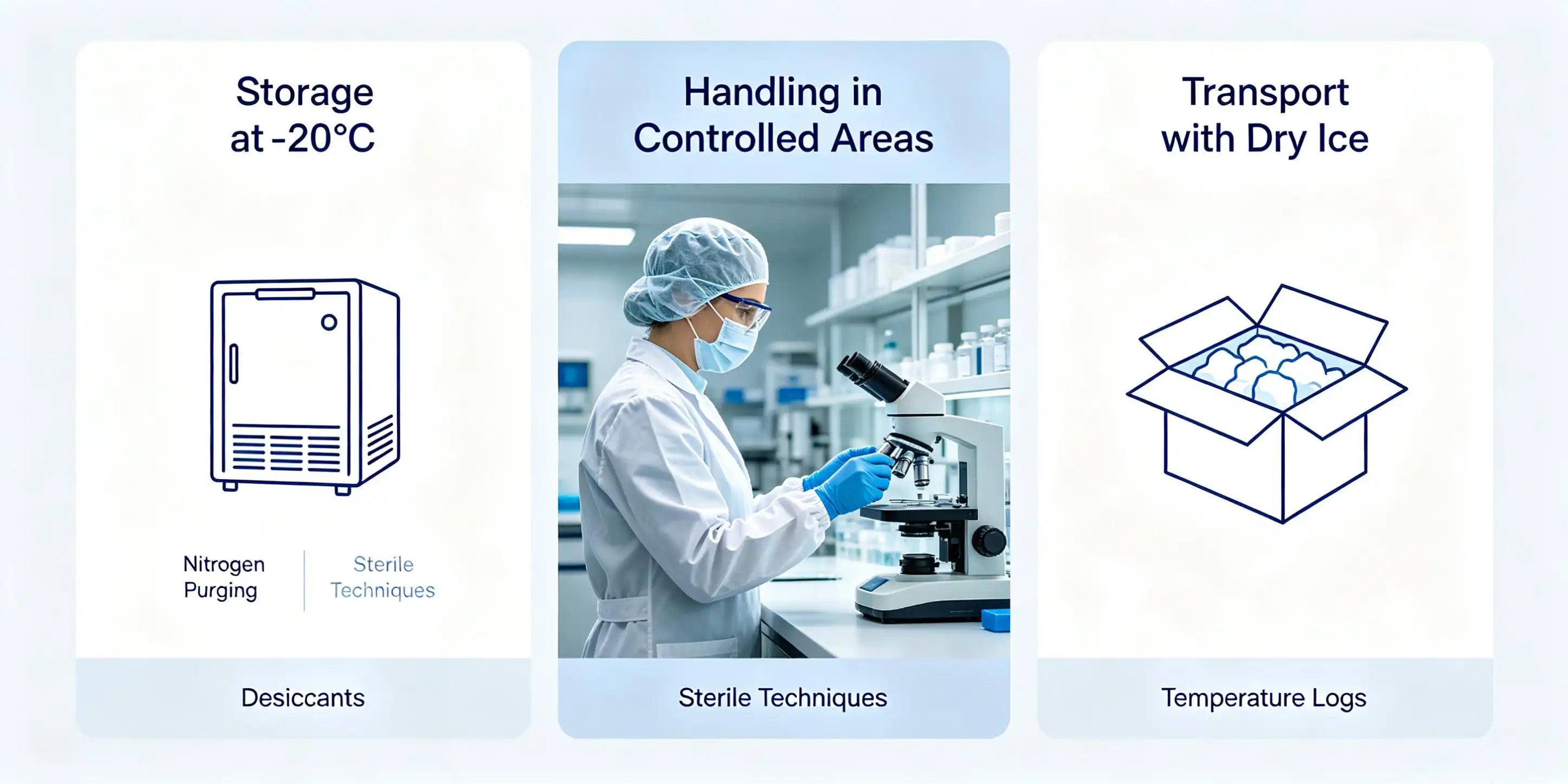
Investing in high-purity Tirzepatide bulk powder is safe as long as it is stored properly. To keep powder from oxidizing, it should be kept in sealed cases under a neutral atmosphere of nitrogen or argon. Freeze-thaw cycles that cause clumping are stopped by storing the samples at -20°C in lab freezers with temperature tracking and warning systems. Desiccants in the packaging soak up any remaining water, keeping the low humidity that is needed for peptide stability.
Handling methods lower the risks of contamination and breakdown. People should work in controlled areas with powder storage systems that keep other peptides or APIs from getting on their hands. Using sterile methods keeps microbes from getting into materials that are meant to be used in sterile products. When calibrated analytical scales are used for accurate weighing, ingredients can be added precisely to recipes without changing their potency, which can happen in processes that aren't well controlled.
Transport plans need the same amount of care. Dry ice shipping keeps things frozen while they're being sent internationally by DHL, FedEx, TNT, or EMS. Temperature logs check the stability of the cold chain while it's in motion. Our quick and safe shipping methods include special packing that has been tested to keep items at -20°C for 72 hours. This covers the time it takes to clear customs and send the package to its final destination.
Ongoing Monitoring and Documentation
After receipt, checking for stability shouldn't end. Do regular tests on kept goods every three to six months using HPLC to find any patterns of degradation. Check the results against the starting CoA numbers and the stability data given by the provider. Deviations lead to studies into the keeping conditions or earlier use of the batches that were affected.
Traceability of documentation helps with quality reviews and regulatory checks. Keep records that connect each batch of Tirzepatide to the supplier's COA, the results of internal tests, storing condition logs, and the final preparation batches. This chain of custody shows the quality of the material throughout its entire lifetime and makes it easier to find the root cause of any quality problems that happen later on. Paper records are easier to lose or change, but electronic systems with audit trails make it easier to find information.
Comparing Tirzepatide Bulk Powder Stability and Purity with Other GLP-1 Analogs
Structural Differences and Stability Implications
Tirzepatide bulk powder's ability to work against both GIP and GLP-1 is due to its unique amino acid sequence, which includes aminoisobutyric acid (Aib) residues at places 2 and 13. These residues make the drug resistant to proteolysis. The C20 fatty diacid lipid change helps albumin bind, which increases the half-life in the blood to about 5 days instead of semaglutide's 7 days. These molecular traits affect stability patterns. For example, the lipid moiety makes the structure less water-repellent, which can change how easily it dissolves and how likely it is to clump together in some situations.
A C18 fatty diacid is used in semaglutide, which also has other stable changes made to it. A C16 fatty acid with a shorter half-life is used in liraglutide. Each difference in structure makes stability problems that are different. Tirzepatide needs extra careful stability tracking because its molecular weight is higher than semaglutide's (4813 Da vs. 4114 Da) and its structure is more complicated. Comparative rapid stability studies show that Tirzepatide stays more than 95% pure for 6 months at 5°C, performing as well as or better than other GLP-1 analogs when made correctly.
Purity Benchmarks Across Suppliers
A study of the market shows that there are big differences in how pure the Tirzepatide supplied is. Premium makers always give ≥98% purity with full impurity analysis, which helps with regulatory reports. Mid-level sources may offer 95–97% purity, which is good for study but not enough for drug development. Budget sellers sometimes sell materials that are less than 95% pure and don't come with enough paperwork, which can be dangerous for any serious application.
Impurity traits are much more important than just the top purity numbers. Impurities in related peptides may show partial agonist action or harmful effects that were not expected. These worries are kept to a minimum by our synthesis methods, which use the best coupling conditions and strict purification to regularly reach purity levels above 98%, as shown by HPLC testing. When evaluating suppliers, asking for specific impurity characterization data helps tell the difference between good makers and average ones.
Cost-Effectiveness Analysis
When buying something, people who have to make decisions have to weigh price against quality. They know that expensive Tirzepatide often has better long-term value than cheaper versions. Material that is 98% pure and has been shown to be stable lets you confidently scale up, speeds up product development, and lowers regulatory risk. Alternatives with lower purity may need more purification, re-formulation, or stability testing, which will raise the overall cost of the program.
Find the total cost of ownership, which includes the price of the materials, the cost of sending and storing them, the cost of checking them, and the risk-adjusted value of how reliable the supply is. Premium providers who offer full technical support, flexible payment terms (we accept T/T, LC, and DA), and fast customer service (our team is available 24/7), lower the hidden costs that come with problems in the supply chain or poor quality. During a multi-year growth process, these factors often become more important than price differences at the start.
Mitigating Risks: Avoiding Stability and Purity Pitfalls in Tirzepatide Bulk Powder Procurement
Common Procurement Misconceptions
Tirzepatide bulk powder buying is hampered by a number of risky assumptions. The idea that "all 98% pure material is equivalent" doesn't take into account changes in impurity profiles, residual solvents, and endotoxin levels that have a big effect on how well a formulation works. If you think that stability data from one source applies to another's material, you're missing out on differences in the manufacturing process that can change the paths of degradation. The idea that cheaper prices always mean better value doesn't take into account risks to quality, problems with supply, and secret costs.
Another misunderstanding sees buying peptides as buying goods instead of working together technically. For peptide projects to be successful, suppliers must continue to work together, talking about analyzing methods, sharing insights into stability, and working out formulation problems. When suppliers see their customers as partners instead of customers they are doing business with, they are more likely to tell them about changes in production, let them know about possible delays early, and offer professional help that speeds up the development process.
Consequences of Poor-Quality Bulk Powder
Getting low-quality Tirzepatide causes problems that spread through the growth process. Low purity makes formulation optimization harder because it adds factors that hide the real links between structure and activity. Material that isn't solid might pass the first tests, but it will break down during recipe development, which will waste months of work. Not having enough paperwork stops regulatory applications or causes deficiency notes that ask for more studies.
Manufacturing mistakes caused by bad APIs have big costs that go beyond replacing the material. When a batch fails, it wastes ingredients, workers, and building time. Investigation tools take people away from more useful tasks. Product launches that are late miss out on sales prospects and money. In the worst situations, quality problems that aren't caught until they get to clinical studies or market goods lead to recalls, regulatory measures, and reputational damage that is much worse than any savings from not buying something.
Risk Management Strategies
Quality failures can be avoided by putting in place strong seller qualification processes. Check out the buildings, quality systems, and technical skills during on-site checks. Look over several batch COAs to see how consistent they are over time. Ask for process proof paperwork that shows how the manufacturing process can be repeated. Check references from past customers to see how reliable and quick to respond they are.
Dual-source strategies lower the chance of supply disruptions without lowering the standard. Find two high-quality suppliers that meet the same requirements. This will allow you to switch sources quickly if problems arise with your main supply. Maintain a backup stock that meets your needs for three to six months, weighing the costs of stocking against the security of your supply. Set up quality agreements that spell out requirements, who is responsible for testing, how to report changes, and how to settle disagreements.
Supplier data accuracy is checked by a third party on a regular basis. Send sampling samples to separate labs for HPLC, mass spectrometry, and amino acid analysis to make sure they are correct. Differences between source COAs and independent reports show areas of poor quality control that need to be fixed right away. This proof boosts trust in the quality of the supply chain and keeps suppliers from getting too comfortable.
Conclusion
To successfully purchase Tirzepatide bulk powder, you need to know more about technology than just comparing prices. Understanding how peptides break down, using tested storage methods, and working with makers who really care about quality are all important for maintaining stability and purity. This guide talks about a lot of different topics. From ICH-aligned stability testing and HPLC purity verification to evaluating seller certification and risk mitigation strategies, it gives procurement workers the information they need to make choices that protect product quality and legal compliance. As treatments for metabolic diseases keep getting better, getting solid high-purity peptide APIs will help your company succeed in research and be competitive in the market.
FAQ
What is the typical shelf life of tirzepatide bulk powder?
Tirzepatide bulk powder stays stable for two years after it was made as long as it is kept at -20°C in a sealed container with desiccant and away from light. It is assumed that the product is pure at release and has a moisture level below 5%. Accelerated stability results support shorter amounts of time at temperatures between 2 and 8°C, which are usually between 6 and 12 months.
How can I verify the authenticity of tirzepatide powder before purchase?
Ask for full proof, such as an analysis certificate with an HPLC chromatogram showing retention time and purity, mass spectrometry data confirming molecular weight (about 4813 Da), and an amino acid analysis confirming sequence composition. Reliable providers give documentation that is specific to each batch instead of general standards. Before you buy a sample, you might want to have it tested by separate labs that use LC-MS to prove the sample's identity and HPLC to find out how pure it is.
What purity level should I expect from reputable suppliers?
Pharmaceutical-grade tirzepatide bulk powder from reputable manufacturers consistently achieves ≥98% purity as measured by HPLC. This guideline makes sure that total impurities stay below 2% and individual impurities stay below 1%. This meets the quality standards set by regulators for APIs. Depending on the need, research-grade material can have a range of 95-98% depending on application requirements.
Partner with Xi'an Yihui for Premium Tirzepatide Bulk Powder Supply
If you need to buy peptides, Xi'an Yihui Bio-technology can help. They make pharmaceutical-grade Tirzepatide bulk powder under strict quality control standards. Our ISO9001, ISO22000, HACCP, Halal, and Kosher certifications show that we are dedicated to quality, and our 13 years of experience working with customers in over 100 countries shows that we can be trusted. We keep ready stock in nearby warehouses so that delivery can happen in one to three days. This cuts down on delays that cause development schedules to slip. Each batch comes with full analytical paperwork, including a certificate of analysis (CoA) with thorough impurity profiles, stability data, and a guarantee of at least 98% purity.
This information helps with the development of confident formulations. If you have any analysis questions, storage suggestions, or formulation problems, our expert team is available 24 hours a day, seven days a week. Xi'an Yihui is the best place to buy Tirzepatide bulk powder because they have low prices, accept a variety of payment methods (T/T, LC, DA), and ship safely via DHL, FedEx, TNT, or EMS. You can talk to our team at sales@yihuipharm.com about your needs, ask for product information, or place an order. Discover why leading pharmaceutical companies, research institutions, and cosmetic manufacturers trust Xi'an Yihui for their critical peptide supply needs.
References
1. International Council for Harmonisation (ICH). "Stability Testing of New Drug Substances and Products Q1A(R2)." ICH Harmonised Guideline, 2003.
2. Manning, M.C., Chou, D.K., Murphy, B.M., Payne, R.W., and Katayama, D.S. "Stability of Protein Pharmaceuticals: An Update." Pharmaceutical Research, vol. 27, no. 4, 2010, pp. 544-575.
3. Jorgensen, L. and Nielsen, H.M. "Delivery Technologies for Peptide and Protein Drugs: GLP-1 Analogues and Dual Agonists." Pharmaceutical Research, vol. 36, no. 12, 2019, pp. 165-182.
4. European Medicines Agency. "Guideline on Manufacture of the Finished Dosage Form: Chemical and Pharmaceutical Documentation for Peptide Medicinal Products." EMA/CHMP/CVMP/QWP, 2014.
5. Frokjaer, S. and Otzen, D.E. "Protein Drug Stability: A Formulation Challenge." Nature Reviews Drug Discovery, vol. 4, no. 4, 2005, pp. 298-306.
6. United States Pharmacopeia. "General Chapter <1207> Package Integrity Evaluation—Sterile Products." USP 43-NF 38, United States Pharmacopeial Convention, 2020.

Send Inquiry
Related Industry Knowledge
- Retatrutide and Its Impact on Metabolic Health
- Innovative Uses of 2- Undecanone in Food and Beverage Industry
- What's the Uses and Benefits of Carbocisteine?
- Acamprosate Calcium API Pharmacological parcels and Medium of Action
- Can Crotamiton API be Used for Other Skin Conditions?
- What Is Ascorbyl Palmitate Used For?
- Is vitamin k2 mk7 safe?
- Can phosphatidylserine for sleep?
- Is aniracetam legal?
- What Is A Example Inhibitor?