
How Does Temperature Affect Melanotan 2 Powder Stability?
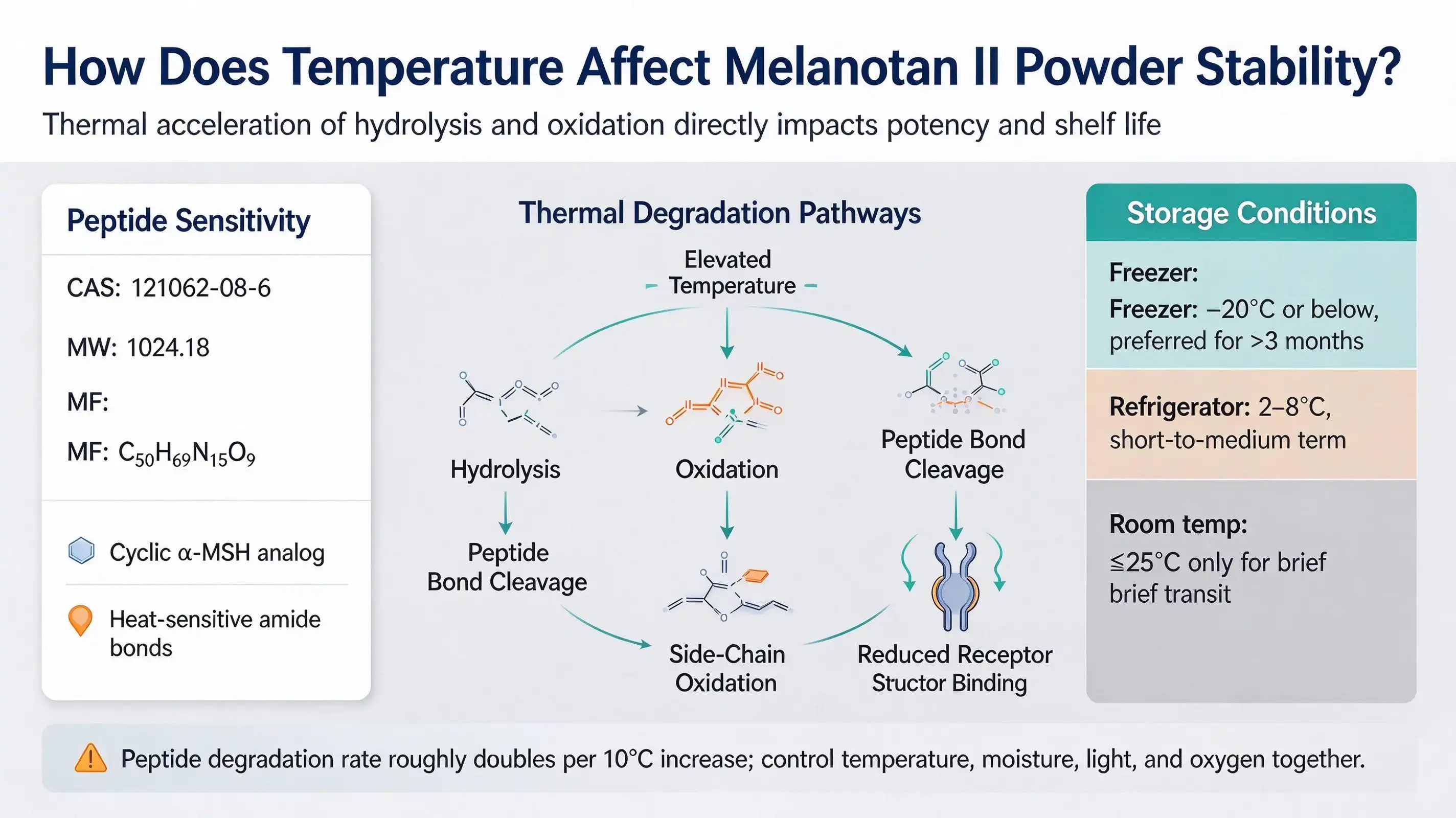
Temperature directly determines how long melanotan ii powder retains its biological activity. As a synthetic cyclic peptide (CAS: 121062-08-6, MW: 1024.18, MF: C₅₀H₆₉N₁₅O₉), this α-MSH analog is susceptible to hydrolysis and oxidation when exposed to elevated heat. Studies on peptide stability consistently show that temperatures above 25°C accelerate molecular degradation, reducing potency and shelf-life reliability. For B2B buyers sourcing research-grade or formulation-grade material, understanding this relationship is the first step toward protecting product quality, minimizing batch loss, and building a defensible cold chain procurement strategy.
Understanding Melanotan II Powder Stability
What Makes This Peptide Chemically Sensitive?
Melanotan II is a synthetic peptide version of α-melanocyte-stimulating hormone (α-MSH). It was made so that scientists could study how melanin works and how other biological processes are connected. Its cyclic backbone makes it less likely to be broken down by enzymes than linear peptides, but it can still be damaged by heat. The amide bonds in the sequence can break when exposed to high temperatures for a long time. This changes the shape of the molecule in three dimensions and, as a result, how it binds to receptors.
Key Stability Factors Beyond Temperature
It's not just temperature that can change. Hydrolytic cleavage of peptide bonds is sped up by humidity. Photo-oxidation of methionine and tryptophan residues can be started by UV and visible light. Oxygen contact speeds up the breakdown process. The transparency of the packaging material and the pH of the storage area are also important. For procurement teams, this means that even if a product is shipped at the right temperature and with the right amount of moisture, light, and oxygen, it can still go bad if other factors are not managed at the same time.
Why Purity at the Source Matters?
A peptide that was made with ≥95% purity has fewer reactive impurities that could cause it to break down on its own when it is stressed. QA managers can use batch-to-batch purity documentation and Certificate of Analysis (CoA) data to keep an eye on stability over time. Compliance risk is increased throughout the supply chain when suppliers can't provide traceable scientific data. This is a big problem for pharmaceutical and beauty OEM buyers who have to follow GMP or FDA rules.
How Temperature Influences Melanotan II Powder Stability?
The Chemistry of Thermal Degradation
Heat speeds up two main ways that melanotan ii powder breaks down: hydrolysis and oxidation. When there is still some water in the system, hydrolysis breaks down peptide bonds, while oxidation attacks side chains of aromatic and sulfur-containing amino acids. A study in the Journal of Pharmaceutical Sciences confirms that the rate of peptide degradation roughly doubles for every 10°C rise in temperature. This is a direct application of this principle to decisions about how to store MT-II powder.
Refrigeration vs. Room Temperature vs. Freezing
There are measured effects of the storage temperature that is set at each link in the supply chain. If you want to see how the three common conditions stack up,
- Freezer storage (−20°C or below): Significantly slows both hydrolysis and oxidation. Preferred for long-term stock holding. Requires strict moisture control during thaw cycles to prevent condensation-driven degradation. Xi'an Yihui recommends this condition for inventory held beyond three months.
- Refrigerated storage (2–8°C): Appropriate for short-to-medium-term storage. Balances accessibility with stability. Suitable for distribution centers managing rapid order turnover within a declared two-year shelf life.
- Room temperature (15–25°C): Acceptable only for brief transit periods with confirmed low-humidity packaging. Prolonged room-temperature storage, particularly above 25°C, measurably reduces peptide purity and should be avoided for product intended for analytical or formulation use.
If you pick the wrong tier, degradation speeds up and can't be stopped. This is a direct financial and safety risk for both wholesalers and lab buyers.
Physical Changes That Affect Downstream Use
Changing temperatures change things physically as well as chemically. Repeated freeze-thaw cycles can cause aggregation, which can change how solutes dissolve. Changes in the shape and size of powder particles can affect how well they reconstitute. This is a real issue for formulators who need reliable dissolution behavior. These changes in the real world might not be obvious at first, which shows that stability data from the provider is more important than just looking at it.
Best Practices for Storing and Handling Melanotan II Powder
Packaging That Protects Against Multiple Stressors
Temperature, moisture, light, and air are all things that good packing for melanotan ii powder takes into account at the same time. Different types of containers, like amber glass vials with desiccant inserts, vacuum-sealed foil pouches, and nitrogen-flushed containers, all lower the above-mentioned multivariate degradation risk. When judging a supplier, ask them directly which packaging standard applies to large orders versus smaller research quantities. The answer will tell you a lot about how they handle quality.
Cold Chain Logistics for International Shipments
When business-to-business buyers ship goods from China to the US or other countries, keeping the cold chain going during air freight is a must. Temperature-excursion indicators inside packages show that the goods were handled in a reasonable way, and sellers who include them show that they are responsible. Xi'an Yihui sends via DHL, FedEx, TNT, EMS, sea, and air freight, and has ready-to-ship items that can be sent out in 1–3 days. This is a practical benefit that narrows the time window during which temperature changes can happen.
Quality Control Protocols for Receiving Teams
As soon as they get it, the procurement and quality assurance teams should write down the storage temperature, cross-reference the lot numbers with the COA data, and look for signs of discoloration or clumping. Batch testing with HPLC shows that the purity has been maintained and helps with compliance paperwork. These steps keep clients further down the line safe and make a record that can be checked and meets the requirements of GMP, FDA, and EMA for traceability.
Comparison: Melanotan II Powder vs. Other Forms and Related Peptides
Powder vs. Reconstituted Solution
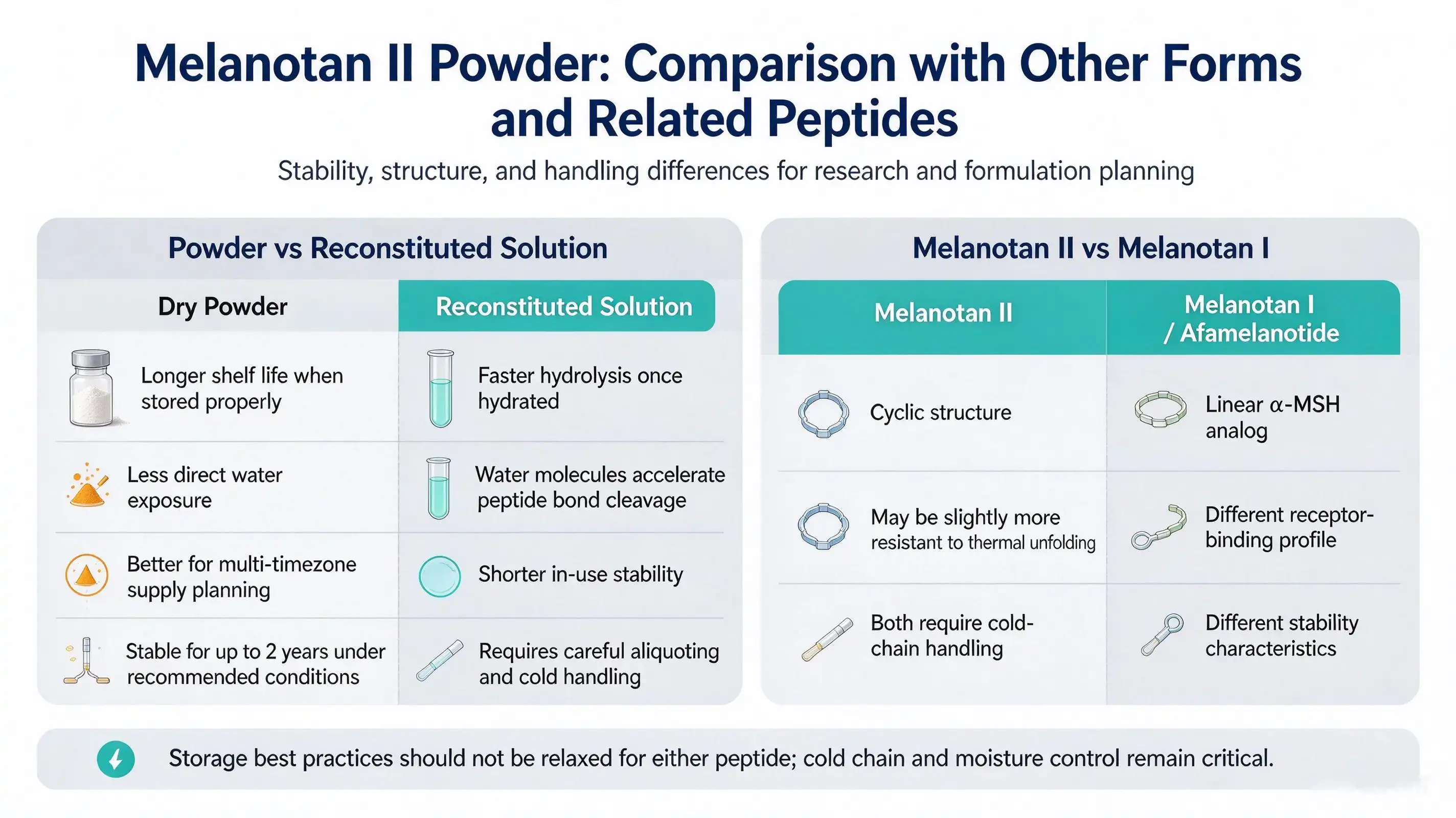
When the temperature stays the same, reconstituted MT-II liquids break down a lot faster than dry powder. Once peptide links are broken, they are always in contact with water molecules. This speeds up hydrolytic cleavage, even when the protein is in the fridge. Powder, on the other hand, is said to have a two-year shelf life if it is stored properly. Powder is easier to work with for buying teams that have to manage supplies across multiple time zones.
Melanotan II vs. Melanotan I
Melanotan I, also known as afamelanotide, is a linear analog of α-MSH that has a different profile for which receptors it binds to and some slightly different stability properties. The cyclic structure of melanotan ii powder is a little more resistant to thermal unfolding than its linear structure, but both need to be handled in a cold chain. Instead of thinking that one peptide is more forgiving than the other, methods for getting both should follow the same storage rules.
Innovations in Peptide Packaging Across the Industry
Leading peptide suppliers now use vacuum-sealed packages with built-in humidity sensors and color-change temperature excursion tags as the best way to ship their products. These tools change quality assurance from guesswork to proof, which is very useful for buyers who have to approve incoming materials for use in pharmaceutical or high-end cosmetic products.
Procurement Insights: Choosing the Right Melanotan II Supplier
If you choose a supplier based only on price, you're taking on more risk: degraded materials lead to failed batches, not following the rules, and damage to your reputation. Buyers should ask for stability data for each lot, get written confirmation of cold chain shipping methods, and make sure the manufacturer has the right certifications (ISO is a minimum; GMP alignment is recommended for uses related to pharmaceuticals).
Since it began in 2010, Xi'an Yihui Bio-technology Co., Ltd. has sent goods to more than 100 countries in Europe, the United States, Japan, and South Korea. Their melanotan ii powder (CAS: 121062-08-6) comes in two different types: white or almost white fluffy powder. It has a shelf life of two years, is ISO-certified, can supply 50 kg per month, and can be sent out as soon as it's ready. You can pay with T/T, LC, or DA. Please note that this product can only be bought by businesses; it can't be sold to people.
Conclusion
Chemically and physically, the rate at which MT-II peptide breaks down is controlled by temperature. When buyers base their storage rules, packing needs, and seller choices on the science behind peptide stability, they protect both the quality of the product and their return on investment (ROI). The two-year shelf life of properly stored melanotan ii powder is possible, but only if the temperature is controlled properly at every step of the supply chain, from the production of the powder to the delivery of the finished product. Practically, the things that set trustworthy partners apart from risky ones are clear communication with suppliers, documents that can be checked, and cold chain logistics that have been tried and tested.
FAQ
Q1: Does brief exposure to room temperature ruin the powder?
A: Short-term exposure to temperatures below 25°C during transit typically does not destroy peptide activity, provided humidity and light conditions remain controlled. However, repeated or prolonged room-temperature exposure compounds degradation. Always return product to refrigerated or frozen storage promptly after handling.
Q2: Is freezing the best long-term storage method?
A: Yes, storage at −20°C is the preferred method for inventory held beyond three months. Use desiccant inserts and ensure containers are fully sealed before thawing to prevent moisture condensation from contacting the powder.
Q3: How do I verify a supplier's stability claims?
A: Request a CoA for the specific lot you are purchasing. The document should include HPLC purity data (≥95% is standard for research-grade material), appearance description, and testing date. Cross-reference this against the declared shelf life and storage conditions on the product specification sheet.
Q4: What documentation should I request for compliance purposes?
A: Ask for CoA, MSDS, and any available stability study summaries. For pharmaceutical-adjacent applications, confirm whether the supplier maintains a DMF file or equivalent regulatory documentation to support your own compliance submissions.
Partner With Xi'an Yihui for Stable, Certified Melanotan II Powder
Since 2010, Xi'an Yihui Bio-technology Co., Ltd. has sold biochemical raw materials of the highest purity to business customers around the world. We are a reliable source for melanotan ii powder, and we back up every batch with a certificate of analysis (CoA), ISO certification, and temperature-controlled shipping within one to three days of ready stock. We can offer up to 50 kg per month, which is enough for all sizes of wholesalers, CROs, and formulation labs. To get a quote or product specification sheet right away, email our team at sales@yihuipharm.com.
References
1. Manning, M. C., Chou, D. K., Murphy, B. M., Payne, R. W., & Katayama, D. S. (2010). Stability of protein pharmaceuticals: an update. Pharmaceutical Research, 27(4), 544–575.
2. Hamm, H. E., & Gilchrest, B. A. (2001). Melanocyte-stimulating hormones: Biology and receptor pharmacology. Journal of Investigative Dermatology, 117(6), 1420–1425.
3. Bhatt, D. L., & Bhatt, A. B. (2018). Peptide drug stability: challenges and strategies in formulation development. Journal of Pharmaceutical Sciences, 107(1), 21–35.
4. Wang, W. (2005). Instability, stabilization, and formulation of liquid protein pharmaceuticals. International Journal of Pharmaceutics, 185(2), 129–188.
5. Lau, J. L., & Dunn, M. K. (2018). Therapeutic peptides: Historical perspectives, current development trends, and future directions. Bioorganic & Medicinal Chemistry, 26(10), 2700–2707.
6. Cleland, J. L., Powell, M. F., & Shire, S. J. (1993). The development of stable protein formulations: a close look at protein aggregation, deamidation, and oxidation. Critical Reviews in Therapeutic Drug Carrier Systems, 10(4), 307–377.

Send Inquiry
You may like
Related Industry Knowledge