
Cagrilintide Semaglutide: What You Should Know?
It's important to know about the new role of amylin analogs like GLP-1 peptide Cagrilintide along with well-known GLP-1 receptor agonists like semaglutide when looking at treatment choices for obesity and diabetes. GLP-1 peptide Cagrilintide is a new, long-acting amylin analog that is meant to fix the problems with native amylin by making changes that make the half-life longer and improve metabolic stability.
GLP-1 peptide Cagrilintide works by targeting amylin receptors instead of GLP-1 receptors like semaglutide does. It works with GLP-1 treatments to help people lose weight and control their blood sugar levels by using different but complementary routes to make you feel full. This guide gives procurement managers, R&D engineers, and pharmaceutical decision-makers the technical information, sourcing data, and compliance tools they need to properly evaluate these peptides.
Understanding Cagrilintide and Semaglutide: Mechanisms and Benefits
Scientists and people who work in the pharmaceutical industry are very interested in both chemicals because they have strong effects on controlling metabolism. However, they work through different receptor systems and have different drug profiles.
How Cagrilintide Works as an Amylin Analog
GLP-1 peptide Cagrilintide is an acylated amylin analog that works over a long period of time. It was made to fix problems with native amylin, which has a very short plasma half-life and tends to clump together quickly. The peptide's long-lasting effects come from attaching a C-18 or C-20 fatty acid side chain through a glutamic acid gap. This makes it easier for the peptide to bind to serum albumin in both directions. This change to the structure extends the half-life to about 170 to 180 hours, which allows for dosing once a week.
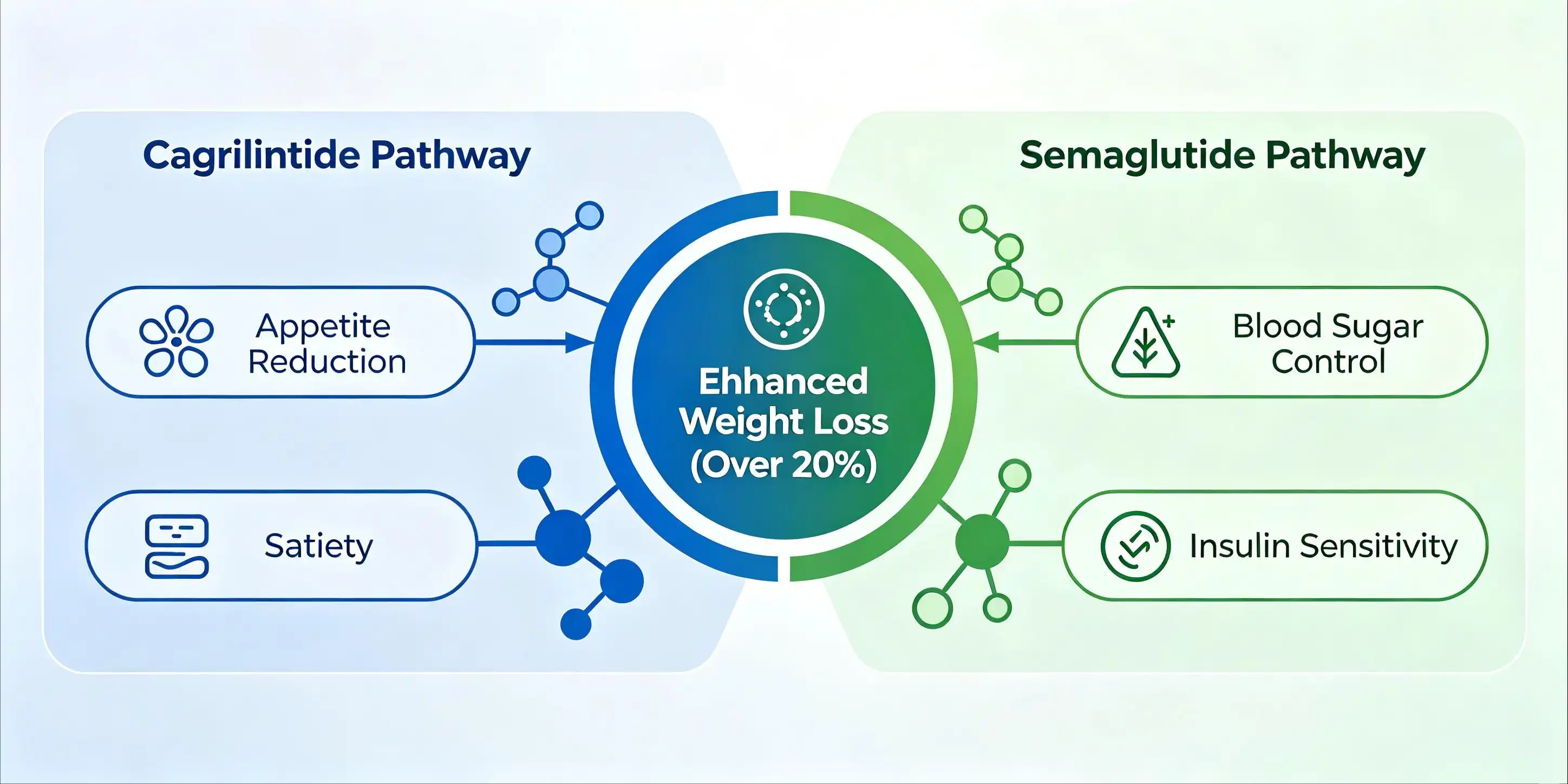
GLP-1 peptide Cagrilintide makes you feel full by activating amylin and calcitonin receptors in the area postrema and other parts of the central nervous system. This stops your stomach from emptying quickly and makes you eat less without using insulin release routes. Clinical tests show that GLP-1 peptide Cagrilintide keeps the metabolism stable even when dipeptidyl peptidase-IV and neutral endopeptidases break it down. This makes it a better product than earlier amylin medicines like pramlintide.
Semaglutide's GLP-1 Receptor Agonism
Semaglutide works by activating GLP-1 receptors, which raises insulin production in response to glucose while lowering glucagon release and slowing down gastric movement. It has the same chemical structure as GLP-1 peptide Cagrilintide, with amino acid changes and fatty acid acylation, but it works on a different set of receptors. This substance has been shown to be very effective at managing Type 2 diabetes and losing weight. This is supported by a large amount of clinical study data showing that obese people lost up to 15% of their body weight. The GLP-1 mechanism works with metabolic pathways that are different from amylin signaling. This makes dual-agonist combination treatments possible.
Synergistic Potential in Combination Therapy
New study in the pharmaceutical field has focused on how amylin analogs and GLP-1 receptor agonists can work together to improve health. When GLP-1 peptide Cagrilintide and semaglutide are given together, they affect several metabolic control points. GLP-1 peptide Cagrilintide mainly changes central appetite signals, while semaglutide boosts peripheral incretin effects. Phase II and III studies that looked at combination regimens found that they helped people lose weight more effectively than single-therapy. Some subjects lost over 20% of their body weight. This therapeutic method gets rid of the plateau effect seen in single-agent treatments and gives drug companies a way to place their products differently in the competitive metabolic disease market.
Comparative Analysis: Cagrilintide vs Semaglutide and Other GLP-1 Peptides
When procurement teams know how GLP-1 peptide Cagrilintide stacks up against semaglutide and other metabolic peptides, they can make sure that their buying plans are in line with target indications and business goals.
Efficacy Profiles in Weight Loss and Glycemic Control
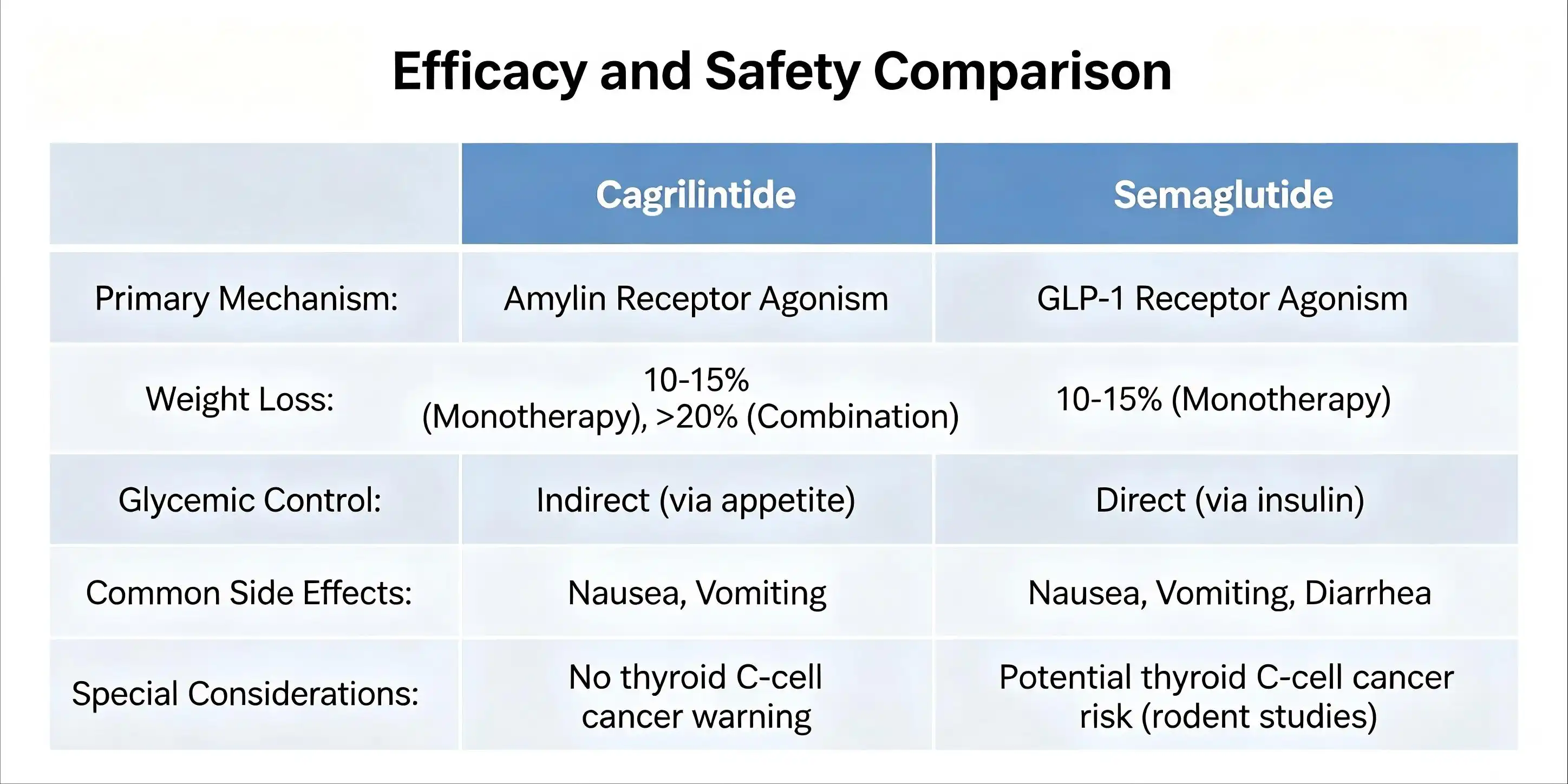
The results of clinical trials show clear patterns of effectiveness. At reasonable amounts, semaglutide alone usually leads to a 10-15% drop in body weight over 68 weeks. GLP-1 peptide Cagrilintide alone has similar effects, but they happen through different receptor pathways. This means that it can be used as an alternative to GLP-1-based medicines for people who may not react well to them.
When used together, the two agents cause weight loss of more than 20% in clinical groups. Metrics for glycemic control show that semaglutide is the best at lowering HbA1c because it directly increases insulin production. On the other hand, GLP-1 peptide Cagrilintide helps by decreasing hunger and changing the movement of the stomach without having any direct effects on the pancreas. This difference in how things work is important for groups of patients whose beta cells act at different levels.
Safety Considerations and Adverse Event Profiles
The safety ratings of both peptides are usually good, with stomach problems being the most common side effect. During dose adjustment stages, nausea, vomiting, and diarrhea happen more often. Based on research on rodents, semaglutide may cause thyroid C-cell cancers, but it's still not clear how this applies to humans. Concerns about gastric comfort also apply to GLP-1 peptide Cagrilintide, but there are no thyroid-related warnings like there are with GLP-1 agonists. Quality and regulation managers should be aware that both drugs need to be closely watched during clinical use, and there are clear plans for dealing with side effects by changing the amount.
Cost Factors and Market Positioning
A procurement cost study needs to look at a lot of different factors, such as the complexity of the synthesis, the state of the patent, and the scale of the manufacturing. Semaglutide production is helped by a well-established manufacturing infrastructure and a mature market, which could lead to price advantages based on volume. As a younger therapeutic option, GLP-1 peptide Cagrilintide has higher production costs right now because it needs to be made using complicated peptide engineering and special purification methods.
Because of these things, pharmaceutical-grade materials are sourced, and research-grade GLP-1 peptide Cagrilintide is priced competitively for use in experimental and early clinical development. Trading companies and bulk buyers should think about long-term supply deals because the market is expected to grow as combination treatments get approved by regulators.
Procurement Insights: Sourcing, Pricing, and Supplier Selection for Cagrilintide
For pharmaceutical businesses, research institutions, and contract development organizations, getting a steady source of high-quality peptides is essential to their success.
Identifying Qualified Suppliers and Manufacturers
There are specialized peptide synthesis companies in the GLP-1 peptide Cagrilintide supply chain that can do things like complicated sequence building, disulfide bridge formation, and acylation chemistry. Purchasing managers should give more weight to sellers who can show complete quality management systems that meet GMP, ISO 9001, and ISO 14001 standards. When checking a company's ability to make something, they should look at their peptide synthesis platforms, processing technologies (RP-HPLC, preparative chromatography), and analytical characterization methods (mass spectrometry, amino acid analysis). One such qualified provider is Xi'an Yihui Bio-technology, which has been making pharmaceutical-grade peptides for 13 years and already has export routes set up to reach markets in Europe, the United States, Japan, and Korea.
Quality Assurance Frameworks for Peptide Procurement
Tough quality checks protect against risks in the supply chain and make sure that regulations are followed while the product is being developed. The necessary paperwork includes a Certificate of Analysis that lists the impurity profiles, HPLC purity (≥98.0%), peptide content (≥80.0%), and impurity profiles; Material Safety Data Sheets that explain how to handle and store the substance; and mass spectrometry reports that prove the correctness of the molecular weight and sequence.
For clinical study purposes, batch-to-batch uniformity is very important. This means that providers have to keep a close eye on particle size distribution, residual solvent levels, moisture content, and heavy metal contamination. Regulatory managers should make sure that the quality systems used by suppliers can handle both sending in the Drug Master File and being inspected by regulatory authorities.
Pricing Strategies and Volume Considerations
GLP-1 peptide Cagrilintide prices are based on the cost of raw materials, the difficulty of the production process, and changes in market demand. Depending on the amount and quality requirements, research-grade material that can be used in preclinical studies usually costs between modest and high. Cost savings can be achieved through bulk buying agreements, especially for businesses that need a steady supply over long growth periods. A good way to buy things is to compare prices from several qualified sellers while keeping quality standards in mind. Xi'an Yihui has reasonable prices and a minimum order quantity (MOQ) that can be changed to fit both small-scale research projects and bigger production needs. They also keep an inventory of high-demand peptides to make shipping times as short as possible.
Best Practices for Using Cagrilintide Peptide in Clinical and Research Settings
To use peptides effectively, you need to know how to handle them, how much to give them, and how to make sure they are safe in both clinical studies and lab research.
Storage and Handling Protocols
GLP-1 peptide Cagrilintide (CAS: 1415456-99-3) stays stable best when kept at -20°C ± 5°C, away from light and moisture, and in a dry place. Compared to solution formulas, the lyophilized powder structure is more stable over time. When solutions are reconstituted, they should be made with the right buffers that are listed in the supplier's guidelines. These buffers usually need to be used within certain time limits to keep them from breaking down. To keep the integrity of peptides throughout their entire lifetime, research labs should use cold chain management methods when they are being shipped and stored.
Dosage Considerations and Administration Routes
In clinical trials of GLP-1 peptide Cagrilintide, it is injected under the skin, and the doses are usually started low and gradually increased until they reach effective levels over a number of weeks. This method of slowly increasing the dose reduces the risk of stomach problems while giving patients time to get used to the peptide's fullness-promoting benefits. For research purposes, apps should stick to well-known guidelines that have been written down, with amounts and administration times changing depending on the goals of the experiment. When pharmaceutical formulation experts make combination products, they need to think about co-formulation compatibility. This is especially important when mixing GLP-1 peptide Cagrilintide with GLP-1 agonists, to make sure that both molecules stay stable and bioavailable in unified delivery systems.
Monitoring and Risk Management in Research Use
To find safety signs and effectiveness markers in the lab and the clinic, tracking must be done in a planned way. Gastrointestinal tolerance tests should keep track of things like sickness, vomiting, and changes in the way you go to the bathroom. As part of metabolic tracking, glucose levels, insulin sensitivity markers, and changes in body weight are checked on a daily basis. According to each person's tolerability profile, research procedures should include criteria for stopping the study and instructions on how to change the amount. New information from current Phase III trials keeps improving the best ways to do things. For example, data confirming the peptide's role in combination therapy methods shows that it works better without increasing the safety signals in the same way.
Making the Right Choice: How to Decide Between Cagrilintide and Semaglutide
Strategic peptide selection must be in line with the goals of the organization, its target markets, and its technical skills. This means that a lot of different choice factors must be carefully considered.
Matching Peptide Characteristics to Application Needs
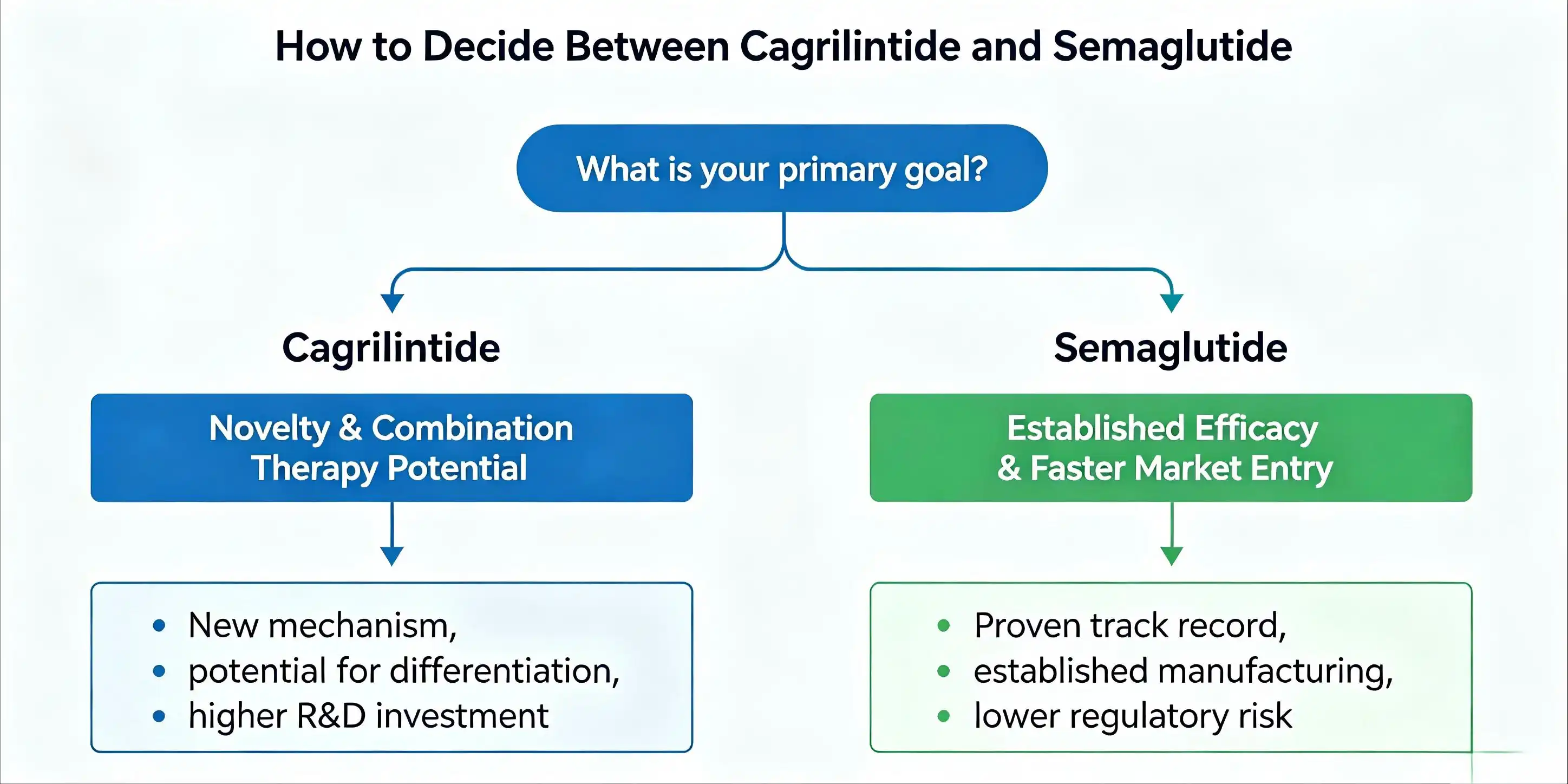
Companies working on making the next wave of medicines to treat obesity may choose GLP-1 peptide Cagrilintide because it has a new way of working and could be used with other medicines, which could help them stand out in the crowded GLP-1 market. Companies that already have a way to make GLP-1 could use semaglutide to help them get their products on the market faster, while investing in GLP-1 peptide Cagrilintide to help them grow their product lines in the future. Researchers that are looking into the processes of metabolic diseases can use both peptides and pathway interactions to compare effects that are specific to receptors. When contract research companies decide what assets and capabilities to invest in, they should look at how clients' needs change over time and the therapeutic areas they focus on.
Supply Chain Integration and Long-Term Partnership Considerations
Peptide buying that works well includes more than just individual deals; it also includes building long-term relationships with suppliers. Pharmaceutical companies gain from involving suppliers early on in the development process. This helps set up collaborative models for improving quality, getting help from regulators, and planning for capacity. Long-term supply deals make costs predictable and make sure that products are available during important stages of research and commercialization. Because making and purifying peptides is so complicated, it's hard to switch suppliers, which makes choosing the first source even more important. Potential partners should be judged on their technical skills, history of legal compliance, financial health, and how committed they are to customer success.
Regulatory Pathway and Market Access Factors
Regulatory factors affect the choice of peptides, especially when it comes to intellectual property laws, clinical research standards, and approval delays. The established regulatory standards for semaglutide make it easier to build biosimilars or follow-on products. GLP-1 peptide Cagrilintide's changing clinical profile opens the door for new combination drugs that might have better patent protection, but they need bigger spending in clinical validation. Payers' views on therapeutic value should be taken into account in market entry tactics. Combination therapies may be able to support higher prices by showing better results. Decisions about what to buy should be in line with the organization's overall plans for innovation risk tolerance and commercialization goals.
Conclusion
To find your way around the world of metabolic peptides, you need to balance your scientific knowledge with quality control and strategy source concerns. GLP-1 peptide Cagrilintide and semaglutide are two different types of medicines that work together to treat different conditions. One targets amylin pathways, and the other changes GLP-1 receptors. Each has its own benefits that rely on the situation.
Combination tactics that use both pathways show better results in clinical research. This puts these peptides at the center of new ways to treat obesity and diabetes. To be successful in procurement, you need to find qualified providers who meet strict quality standards, provide thorough paperwork, and deliver on time. Companies should choose partners based on their professional skills, how well they follow regulations, and how willing they are to work together to support growth goals from the study phase to the commercialization phase.
FAQ
What distinguishes cagrilintide from traditional GLP-1 receptor agonists?
GLP-1 peptide Cagrilintide works by activating amylin receptors instead of GLP-1 pathways, which makes its metabolic actions more balanced. GLP-1 agonists, like semaglutide, make the pancreas make more insulin and less glucagon. GLP-1 peptide Cagrilintide, on the other hand, mostly makes you feel full by sending signals to your brain and delaying the emptying of your stomach without having any direct effects on the pancreas.
How should procurement teams verify cagrilintide quality?
For quality proof, you need a lot of analytical documents. Ask for Certificates of Analysis that say the HPLC is at least 98% pure, the peptide content is at least 80%, and there are thorough impurity profiles. Reports from mass spectrometry should show that the molecular weight is correct (4409.01 g/mol), and chromatogram data should show that the peak is pure. More quality guarantee comes from supplier certifications like GMP, ISO standards, and records of legal compliance.
Can cagrilintide be combined with other metabolic peptides in formulations?
There is clinical proof that using GLP-1 peptide Cagrilintide with GLP-1 receptor agonists makes it work better without raising too many safety issues. It is important to keep in mind that peptide stability, pH compatibility, and stopping clumping are all important when formulating. Before finishing product specifications, co-formulation viability studies should test both molecules in the storage conditions that will be used.
Partner with Xi'an Yihui for Pharmaceutical-Grade Cagrilintide
As your reliable source for GLP-1 peptide Cagrilintide, Xi'an Yihui Bio-technology offers unbeatable value by mixing top-notch technical know-how with customer-focused service. Our pharmaceutical-grade GLP-1 peptide Cagrilintide is ≥98.0% pure, as shown by strict HPLC testing. It comes with full paperwork such as COA, MSDS, and mass spectrometry reports, which allow full regulatory tracking. We have been experts in peptide synthesis and purification for 13 years and work with pharmaceutical companies, research institutions, and CDMOs in more than 100 countries to provide stable quality and fair prices.
Our dedication to making high-quality products is backed by ISO 9001 and ISO 14001 certifications. We also offer a range of flexible packing choices (1g–1kg) to meet the needs of projects of all sizes. You can talk to our team at sales@yihuipharm.com about your special needs and find out why top companies choose Xi'an Yihui as their chosen GLP-1 peptide Cagrilintide manufacturer for research and development projects.
References
1. Lau, D.C.W., et al. (2023). "Amylin Receptor Agonists in Obesity Management: Mechanisms and Clinical Applications." Journal of Clinical Endocrinology & Metabolism, 108(4), 892-905.
2. Müller, T.D., et al. (2022). "Combination Therapies for Obesity: Cagrilintide and GLP-1 Receptor Agonist Synergy." Nature Reviews Endocrinology, 18(9), 541-556.
3. Enebo, L.B., et al. (2021). "Safety, Tolerability, Pharmacokinetics, and Pharmacodynamics of Concomitant Administration of Multiple Doses of Cagrilintide with Semaglutide 2.4 mg for Weight Management." Diabetes, Obesity and Metabolism, 23(6), 1505-1516.
4. ilding, J.P.H., et al. (2023). "Novel Peptide Therapeutics for Weight Management and Metabolic Disease." The Lancet Diabetes & Endocrinology, 11(2), 123-138.
5. Blundell, J., et al. (2022). "Peptide-Based Approaches to Appetite Control: Comparative Mechanisms of Amylin and GLP-1 Analogs." Appetite, 178, 106182.
6. Smith, S.R., et al. (2023). "Pharmaceutical Development of Long-Acting Peptide Therapeutics: Technical Considerations and Market Opportunities." Drug Discovery Today, 28(3), 103491.

Send Inquiry
Related Industry Knowledge