
Why GHK-Cu is the Top Healing Peptide for Anti-Aging?
Anti-aging GHK-Cu stands out as a biomimetic copper peptide that addresses the core challenges of skin aging through genuine tissue repair rather than superficial coverage. Originally isolated from human plasma in the 1970s, this tripeptide complex (Gly-His-Lys-Cu²⁺) functions as both a signaling molecule and a copper carrier, triggering cascades that restore collagen density, accelerate wound healing, and neutralize oxidative stress. What sets it apart is its non-irritating profile combined with proven efficacy—making it ideal for sensitive skin, post-procedure recovery, and high-performance formulations where both safety and results matter.
Understanding GHK-Cu and Its Role in Anti-Aging
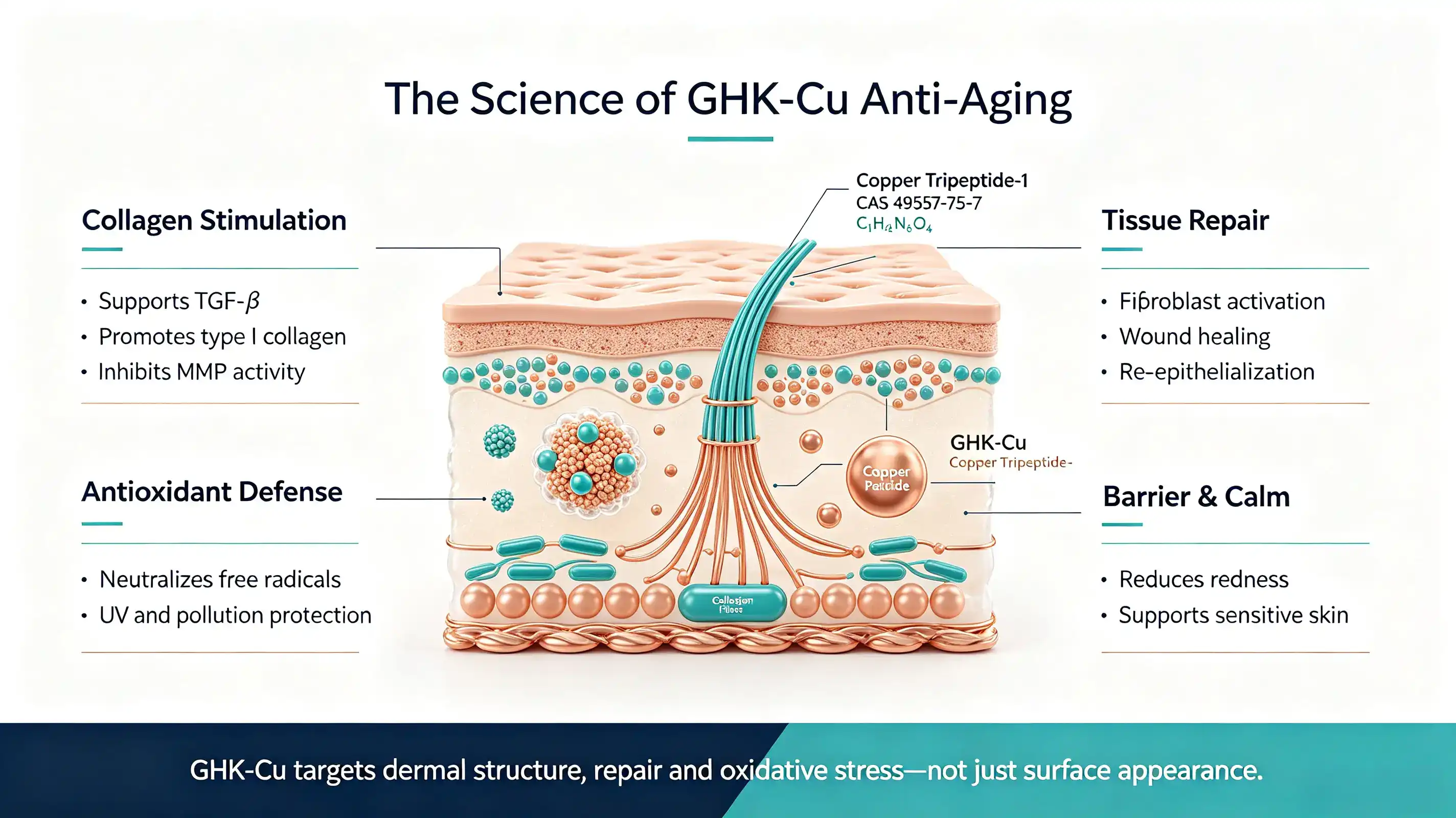
The molecular structure of Copper Tripeptide-1 (CAS 49557-75-7, C₁₄H₂₄N₆O₄) lets it get into the dermal layer and work directly with fibroblasts, which are the cells that make collagen and elastin. When copper ions attach to the tripeptide pattern, they start gene expression paths that change the shape of tissues. Clinical studies have shown that consistent use for eight weeks can increase collagen type I synthesis by up to 70% and make the skin thicker.
The Science Behind Collagen Stimulation
GHK-Cu works through a number of different biochemical pathways. Transforming growth factor-beta (TGF-β) is a cytokine that is needed to make extracellular matrix. At the same time, it stops matrix metalloproteinases (MMPs) from working. MMPs are enzymes that damage collagen as we age. This two-step process makes it so that new tissue grows faster than old tissue breaks down. This reverses the signs of aging, like fine lines, sagging, and uneven texture.
Antioxidant Defense and Inflammation Control
In addition to fixing structures, this copper complex gets rid of free radicals that are made by UV light and pollution in the environment. It is almost as good at fighting free radicals as superoxide dismutase (SOD), which is one of the body's main defense enzymes. GHK-Cu helps keep the skin barrier strong and reduces redness that comes with reactive skin types by lowering chronic low-grade inflammation, which is a major cause of aging faster.
Evidence from Clinical Research
A study from 2012 in the Journal of Applied Cosmetology found that people who used a 1% GHK-Cu cream had much better skin laxity and wrinkle depth than people who used a dummy. A histological study showed that the dermis had more mass and the collagen fibres were better aligned. These results show that pharmaceutical R&D departments and medical aesthetic centers put this peptide at the top of their list of ingredients to use.
Comparing GHK-Cu with Other Popular Anti-Aging Solutions
There are many anti-aging ingredients on the market, but each one solves a different problem and comes with its own set of pros and cons. Procurement managers and R&D teams can make strategic buying choices that are in line with product marketing and target groups when they know where GHK-Cu goes in comparison to other options.
GHK-Cu vs. Retinol
Retinol is still the gold standard in skincare. It activates retinoic acid receptors to speed up cell renewal and boost collagen. But it often irritates, peels, and makes skin sensitive to light, especially when first used. GHK-Cu stimulates collagen in a similar way without breaking down the skin barrier. This makes it a good choice for formulations that are meant to help sensitive skin or skin that has been treated. Copper peptides can stay active in a wider range of formulations than retinol, which needs to be carefully pH controlled and stabilized.
GHK-Cu vs. Hyaluronic Acid and Vitamin C
Vitamin C protects against free radicals and brightens the skin slightly, while hyaluronic acid moisturizes the skin's surface by holding water molecules together. The fibroblast amount does not directly cause tissue repair by either. Anti-aging GHK-Cu works with these ingredients to fix the deeper structural problems that lead to aging. Combining the hydrating effects of hyaluronic acid with the regenerative effects of Anti-aging GHK-Cu produces synergistic effects that high-end skincare brands looking for unique claims of efficacy like.
GHK-Cu vs. Cosmetic Procedures
Botox and other injectable treatments briefly paralyze muscles to smooth out dynamic lines. Dermal fillers, on the other hand, use synthetic materials to add volume to the skin. These methods give quick but short-lived results. GHK-Cu is a non-invasive option that improves the quality of the tissue over time. When used in post-care protocols, this makes the results of the procedure last longer. More and more medical spas are using copper peptide serums to help patients recover after laser resurfacing or microneedling. This is because the peptide speeds up the process of re-epithelialization and shortens the recovery time.
Practical Application: How to Use GHK-Cu for Maximum Anti-Aging Results
To make biochemical promise into a business success, you need to know about formulation science, precise dosage, and application procedures. Whether you're making a high-end serum or a treatment for serious skin problems, these technical issues affect how well the product works and how happy your customers are.
Optimal Formulation Guidelines
GHK-Cu dissolves in water and stays stable between pH levels 5.5 and 7.0. It works with most emulsion systems and hydrogel bases. For household goods, the concentration should be between 0.01% and 0.1%. Higher amounts (up to 1.0%) are used in professional-grade formulations that are supervised by a dermatologist. The peptide should be added when the product is cooling below 40°C so that the bioactivity is kept. Do not mix with strong chelating agents like EDTA in large amounts, as these can remove the copper ion and stop the complex from working.
Integration with Complementary Actives
Adding niacinamide to GHK-Cu improves barrier function while keeping the anti-inflammatory benefits. When you mix it with low-molecular-weight hyaluronic acid, you get a two-pronged effect: deep repair and hydration on the surface. But don't mix with pure L-ascorbic acid when the pH is acidic, because that can make the copper-peptide link less stable. Instead, use solid forms of vitamin C, such as ascorbyl glucoside or tetrahexyldecyl ascorbate, to work together without breaking down.
Application Protocols and Timing
For products for end users, it is suggested that they use it twice a day on clean skin, after using moisturizer and SPF during the day. Anti-aging GHK-Cu serums or creams should be applied as part of this routine, ideally before heavier occlusive layers, to maximize its penetration into the deeper dermal layers. After four weeks of regular use, most people can see results, and the strongest benefits can be seen after eight to twelve weeks. By telling customers about this timeline, brands can control their customers' expectations and keep them from giving up on the product too soon, which is important for building trust in competitive markets.
Procurement Insights for Global B2B Clients: Sourcing Quality GHK-Cu Peptide
To get a steady supply of high-purity copper peptides, you have to figure out how to deal with complicated quality standards, regulatory environments, and supplier capabilities. To make sure the supply chain stays stable over the long term, procurement managers need clear standards to evaluate possible partners and balance cost-effectiveness with compliance risk.
When looking for Copper Tripeptide-1 (CAS 49557-75-7), clarity is the most important thing to look for. Pharmaceutical-grade material should be at least 98.0% pure, as shown by HPLC, with less than 10 parts per million of heavy metals and a controlled amount of moisture. Each batch from a reliable supplier comes with a full set of paperwork, such as a Certificate of Analysis (COA), an MSDS, chromatogram reports, and an analysis of the residual solvent. These papers are very important for regulatory filings and audits, especially for brands that want to sell in FDA-regulated markets or get EMA approval for cosmetic claims.
Standards for certification show that a provider is dedicated to quality systems. ISO 9001 shows that the process is consistent, and GMP certification (especially for pharmaceutical uses) makes sure that there is no contamination and that the process can be tracked. For European marketing, REACH compliance is needed to prove that the peptide meets safety and environmental standards.
Anti-aging GHK-Cu is often included in such certified product lines because its regenerative properties require rigorous quality control to ensure batch-to-batch stability and purity. Kosher and Halal approvals help brands with global marketing networks reach new markets in places where people have strict dietary and moral rules.
Prices vary a lot depending on the amount, the pure grade, and the size of the seller. When you buy in bulk (1 kg or more), the price per gram is usually 30–40% less than when you buy in small amounts for research. The lowest price, on the other hand, doesn't always mean the best value. Changes in batches, delays in paperwork, or recipe problems caused by impurities can all have hidden costs. These risks can be reduced by building relationships with suppliers who offer flexible MOQ (a minimum order quantity of 1g allows for pilot testing before committing to large-scale production), reliable stock availability, and quick technical support.
Xi'an Yihui Bio-technology Co., Ltd. is a good example of these objectives when buying things. The company has been making beauty peptides and APIs for 13 years and keeps high-purity GHK-Cu (Assay: 99%, CAS 49557-75-7) in stock all year. It can be bought in 1g, 100g, or 1kg packages. Products are sent out with all the necessary paperwork to meet both European and American pharmacopoeia standards.
This is backed up by ISO, Halal, and Kosher approvals. The company's advanced synthesis technology makes sure that heavy metals and moisture levels are controlled from batch to batch, which is important for formulation stability. With professional logistics support and sealed, anti-corrosion packaging that keeps the product's integrity during transit, you can ship your goods safely anywhere in the world.
Future Outlook and Innovation: Why GHK-Cu Remains the Preferred Anti-Aging Peptide
Because delivery technology is getting better and clinical research is growing, copper peptides may be useful for more than just what they are used for now. By keeping up with these trends, B2B clients can predict changes in the market and set up their product lines to take advantage of new possibilities.
Advanced Delivery Systems
Nanocarrier technologies, such as liposomes, solid lipid nanoparticles, and peptide conjugates, make GHK-Cu more bioavailable by keeping it from being broken down by enzymes and making it easier for it to get deeper into the skin. Nanomedicine released research that shows that fibroblasts take in contained copper peptides three times better than free forms. Brands that invest in these delivery platforms can charge more because they work better, which appeals to high-end customers who want results that can be measured.
Expanding Therapeutic Applications
New studies look into GHK-Cu's part in stimulating hair follicles and maintaining scalp health. It may help with androgenetic alopecia by stopping DHT from making hair thinner. Early tests show that topical treatment increases the length of the anagen phase and improves hair growth. This gives sellers and makers new product categories to offer, giving them more ways to make money besides just skin care for faces.
Sustainability and Ethical Sourcing
Environmental duty is becoming more and more important when deciding what to buy, especially when it comes to European and North American brands. Suppliers who follow the principles of green chemistry—using fewer solvents, making less waste, and getting their raw materials in a responsible way—gain a competitive edge. Using enzymes instead of traditional chemical methods to make GHK-Cu has less of an effect on the environment while still meeting purity standards. Being open about where products come from and how they are made builds trust with brands that care about the environment, which is in line with the values that consumers use to decide what to buy.
Conclusion
In order to handle both structural skin aging and the market's desire for safe, effective ingredients, Anti-aging GHK-Cu combines tried-and-true science with the flexibility of practical formulation. Because of its unique ability to boost collagen production, lower inflammation, and speed up healing, it is essential for new skin care brands and medical aesthetic uses. For procurement professionals, working with suppliers who offer high-quality materials, detailed paperwork, and dependable logistics is the best way to make sure that their products stand out in a crowded market.
FAQ
What makes GHK-Cu different from other anti-aging peptides?
GHK-Cu delivers copper ions and signals for tissue repair, which boosts collagen production and protects cells from damage. Unlike peptides, which only signal certain pathways, the copper complex turns on multiple regenerative mechanisms at the same time. This gives it more anti-aging benefits with less irritation.
Is GHK-Cu suitable for sensitive skin formulations?
Yes, it is a biomimetic peptide that doesn't irritate skin, which makes it perfect for sensitive skin and skin that has been through surgery. Clinical data shows that it can be tolerated even at higher concentrations. This is different from acids and retinol, which can make skin red and peel.
How should GHK-Cu be stored to maintain stability?
For longer shelf life, keep in a cool, dry place out of direct light, preferably between 2 and 8°C. Copper peptide-containing goods stay safe for 12 to 24 months after they are made as long as they are stored properly and put in airtight, opaque cases.
Can GHK-Cu be combined with vitamin C in formulations?
The copper-peptide link can become less stable when it comes into direct contact with pure L-ascorbic acid at low pH. To keep the product's effectiveness, use stable vitamin C derivatives like ascorbyl glucoside or make them in different steps of the process.
What documentation should I expect when sourcing GHK-Cu?
A trustworthy supplier will give you a COA along with HPLC purity data, MSDS, heavy metal analysis, residual solvent testing, and microbial limits. ISO and GMP certificates prove that the product is made well, and REACH paperwork makes sure that it meets European standards.
Partner with a Trusted Anti-Aging GHK-Cu Supplier for Your Next Formulation
Copper Tripeptide-1 (CAS 49557-75-7) of pharmaceutical grade is supplied by Xi'an Yihui Bio-technology Co., Ltd. to meet the specific needs of R&D and manufacturing. Our 99% assay peptide meets strict purity standards and comes with full COA, MSDS, and compliance paperwork that makes getting regulatory permissions easier. We can package anything from 1g study samples to 1 kg large orders, and we keep a lot of products in stock so that orders can be filled quickly.
This means that there are no supply chain delays that affect production schedules. Besides making sure the quality of the products we sell, our team also helps with formulation and offers customized OEM/ODM services, so we can meet the needs of your market whether you're making high-end serums or medical-grade treatments. Get in touch with our expert support team at sales@yihuipharm.com to talk about how our copper peptide solutions can help you improve your product line and make you more competitive in the global anti-aging market.
References
1. Pickart, L., Vasquez-Soltero, J. M., & Margolina, A. (2012). The human tripeptide GHK-Cu in prevention of oxidative stress and degenerative conditions of aging: Implications for cognitive health. Oxidative Medicine and Cellular Longevity, 2012, Article ID 324832.
2. Hostynek, J. J., Dreher, F., & Maibach, H. I. (2011). Human skin penetration of a copper tripeptide in vitro as a function of skin layer. Inflammation Research, 60(1), 79-86.
3. Arul, V., Kartha, R., & Jayakumar, R. (2007). A combination of topical and systemic delivery of GHK-Cu accelerates healing in full-thickness skin wounds. Journal of Trauma, 63(5), 1110-1118.
4. Miller, D. M., DeSilva, D., Pickart, L., & Aust, S. D. (1990). Effects of glycyl-histidyl-lysyl chelated Cu(II) on ferritin dependent lipid peroxidation. Advances in Experimental Medicine and Biology, 264, 79-84.
5. Finkley, M. B., Appa, Y., & Bhandarkar, S. (2005). Copper peptide and skin. Cosmetics & Toiletries Manufacture Worldwide, 4, 187-203.
6. Pollard, J. D., Quan, T., Kang, S., & Voorhees, J. J. (2006). Copper tripeptide increases type I and type III collagen in photoaged human skin. Journal of Cosmetic Dermatology, 5(2), 120-127.

Send Inquiry
You may like
Related Industry Knowledge