
Where to store tirzepatide powder
To keep tirzepatide powder's therapeutic effectiveness and stop it from breaking down, it should be kept in cases that are airtight and don't let light through. To keep its 39-amino acid structure and two-way action mechanism, this dual GIP/GLP-1 receptor ligand peptide needs strict environmental controls. Knowing the right way to store things makes sure that the purity of the product is maintained from the time it is made until it is used in a clinical setting. This protects both legal compliance and therapeutic results in research and pharmaceutical settings.
Understanding Tirzepatide Powder and Its Storage Importance
Tirzepatide is a big step forward in peptide medicines because it combines GIP and GLP-1 receptor action into a single molecule that weighs about 4813 Da. This man-made peptide, which has the CAS number 2023788-19-2, is made up of 39 carefully ordered amino acids that work together to give it its unique metabolic control roles. There is a C20 fatty diacid side chain in the structure of the peptide that binds to albumin and increases its biological half-life to about five days. This makes it very useful for both clinical and research methods.
Because this peptide is biological, it can only be stored in certain ways. When peptide links are exposed to the wrong external factors, they can break down, oxidize, and change shape. Degradation can hurt both the healing effect and the safety profile by making aggregates or breakdown products that can affect the stability of the mixture. Pharmaceutical companies, CRO/CDMOs, and research schools need to be aware that bad handling has a direct effect on clinical results and the ability to repeat research.
Why Storage Precision Matters for B2B Operations
When peptide storage methods break, there are big risks in the supply chain for procurement managers and quality testing teams. One change in temperature during foreign shipping can make whole batches useless, which can cause delays that cost a lot of money and cause problems with regulations. Metabolic studies done by research institutions need uniform peptide quality to make sure the efficacy of the experiments. Cosmetic formulators who make skincare products based on effectiveness need stable active ingredients that keep the benefits they claim to have for as long as the product is stored.
Regulatory and Quality Implications
Facilities that follow GMP know that storage records are an important part of the chain of custody needed for FDA, EMA, and other regulatory reports. Documentation like COAs, MSDS files, and group tracking all depend on storing conditions that can be checked. As part of their quality management systems, companies that want to get ISO9001, ISO22000, HACCP, HALAL, or KOSHER certifications must show that they have controlled storage conditions.
Ideal Storage Conditions for Tirzepatide Powder
To keep peptides stable, you need to know how temperature, humidity, light exposure, and the quality of the packing all affect each other. To keep its dual-receptor agonist action, the pharmaceutical-grade peptide that is delivered at 98% purity needs to be stored with great care.
Temperature Management: The Critical Factor
The best way to store peptides is in a refrigerator between 2°C and 8°C. This range of temperatures keeps molecules from moving too much and keeps them from freezing, which can damage structures irreversibly by forming ice crystals. When temperatures rise above 25°C, peptides clump together much more quickly, and breakdown rates rise exponentially. Research-grade buildings should have alarm systems that keep an eye on the temperature all the time and let staff know if it changes too much.
During active use, storage at controlled room temperature (15–25°C) may only be allowed for short amounts of time, usually no more than a few hours. Long-term exposure to room temperature speeds up the breaking down of peptide bonds and encourages the oxidative breakdown of sensitive amino acid residues in the sequence, such as methionine and tryptophan.
Humidity Control and Moisture Protection
Lyophilized peptide powders are hygroscopic, which means they can easily take in water from the air. The Karl Fischer test shows that the goal moisture content of less than 5% can rise quickly when containers are opened in damp places. High amounts of wetness speed up hydrolytic breakdown and encourage microbial growth, which are both terrible for the security of peptides.
Desiccants and airtight seals must be part of any packaging option. Controlled humidity levels below 60% relative humidity should be kept in storage areas of facilities that deal with large amounts. When reassembling peptides for study purposes, work should be done in controlled settings to keep moisture from getting in during the short time that containers are open.
Light Protection Requirements
Photodegradation processes can be started by ultraviolet and visible light. These reactions are most likely to happen with aromatic amino acids in the tirzepatide powder sequence, such as tyrosine and tryptopane. Amber glass bottles or opaque packing materials are very important for safety. Lighting in storage rooms should be filtered to remove yellow light, or peptide cases should be kept in secondary cages that block light.
Container Selection and Sealing Integrity
Materials that work with peptide science must be used for pharmaceutical-grade packing. Borosilicate glass bottles with metal seals and butyl rubber stoppers offer the best security. Plastic cases may let gases pass through them, so they're not usually good for storing peptides for a long time. Containers that are vacuum-sealed or nitrogen-flushed make things even more stable by stopping oxidation as much as possible.
Understanding Shelf Life and Degradation Indicators
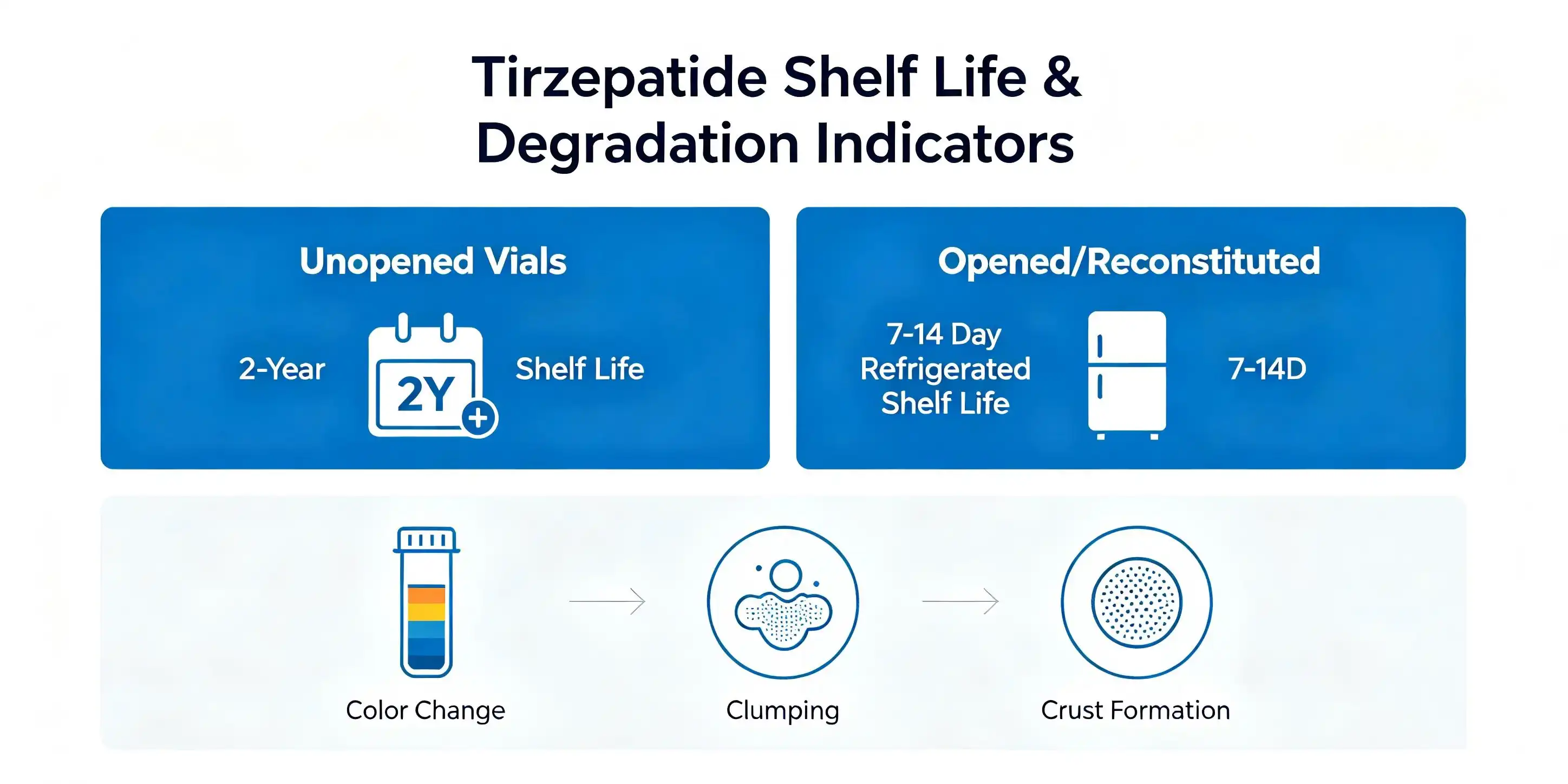
The two-year shelf life only applies to packages that have not been opened and are kept in the right circumstances. Once opened, restored solutions usually stay stable in the fridge for 7–14 days, but each application should use unique stability data. Before using, the powder should be looked at to make sure it stays white to off-white and doesn't change color, clump, or form a crust, which are all signs that it might be breaking down or absorbing water.
Common Storage Mistakes to Avoid with Tirzepatide Powder
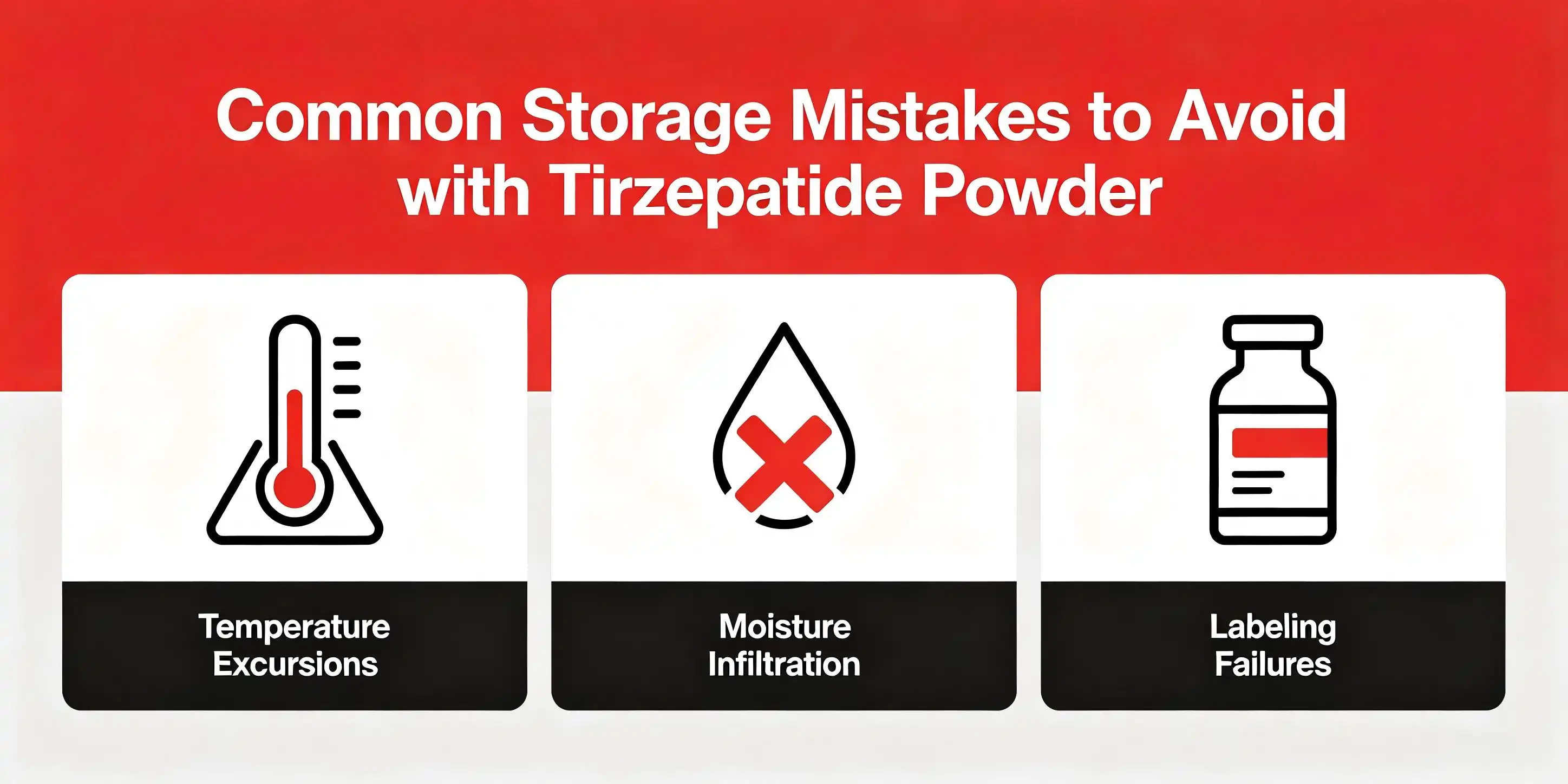
When handling peptides, operational mistakes cost money and hurt the integrity of study. By being aware of these problems, preventative measures can be put in place.
Temperature Excursions and Freezing Damage
One of the worst mistakes that can happen when storing things is accidentally freezing. The formation of ice crystals changes the structure of peptides and encourages clustering that can't be stopped. Logistics for transportation must include tested cold-chain methods that keep track of the temperature all the time. Transit risks are kept to a minimum when suppliers have ready-to-ship items in local stores. This way of delivering ensures that customers get their peptides within 1–3 days while keeping the cold chain through DHL, FedEx, TNT, or EMS shipping services with temperature-controlled packaging.
Moisture Infiltration Risks
Opening things over and over in uncontrolled settings lets moisture in each time. Facilities should set up rules that limit how often and for how long containers can be opened. By splitting large amounts into smaller portions under controlled conditions, the stock can be used every day without being exposed to air humidity over and over again.
Labeling and Batch Tracking Failures
Traceability problems happen a lot during audits when containers aren't named or batch paperwork isn't complete. The peptide name, CAS number (2023788-19-2), batch number, receiving date, expiration date, and storing instructions should all be written on each container. Electronic inventory systems that can read barcodes allow for real-time tracking and automatic alerts when items are about to expire.
Inadequate Staff Training
Without properly trained staff, even the most advanced storage system will not work. Staff should know how to handle peptides properly, be able to spot signs of breakdown, use the right reconstitution methods, and follow rules for keeping things clean. Regular skill tests make sure that people remember what they've learned and follow the right steps.
Procuring Tirzepatide Powder from Trusted Suppliers
Supplier choice has a direct effect on the quality of the product and the dependability of the supply chain. B2B buying includes more than just comparing prices; it also includes full due research.
Certification and Compliance Verification
Reliable makers keep their ISO9001, ISO22000, HACCP, HALAL, and KOSHER certifications up to date, which shows they are committed to quality management systems. These certifications need to be audited regularly and have methods for continuous growth. Good Manufacturing Practice (GMP) rules must be followed for pharmaceutical applications, while Good Distribution Practice (GDP) rules are helpful for study applications.
There should be a lot of information in the documentation packages for tirzepatide powder, like a full COA showing HPLC purity analysis proving ≥98% purity, mass spectrometry proof, peptide content determination, and residual solvent testing meeting USP/EP limits. Safe handling methods and emergency reaction plans are based on MSDS paperwork.
Manufacturing Process Transparency
Understanding how things are made can help you make sure the quality is consistent. The usual way to make synthetic peptides is to use solid-phase peptide synthesis (SPPS) and then purify them very well using reversed-phase HPLC. Suppliers should explain how they can scale up their process, how they clean their products, and how they test them analytically.
Supply ability is important for building relationships that you can rely on. If a manufacturer can make 5,000g of product every month, they can keep up with growing study projects or commercial scale-ups without having to stop supplies. This level of output is more likely to be used by established synthesis platforms than by small-scale custom synthesis operations.
Cold-Chain Logistics Expertise
International shipping of peptides needs special transportation skills. Suppliers should use approved shipping containers with temperature tracking systems and keep temperature logs for the whole time the goods are in transit. Partnerships with express companies like DHL, FedEx, TNT, and EMS that are skilled in pharmaceutical operations ensure fast delivery, which cuts down on the time that drugs are exposed to the cold chain.
Having ready-to-ship goods in regional warehouses gives you a competitive edge because you can complete orders quickly—within one to three days—while keeping the cold chain intact through faster transit times. This model works especially well for study projects that need to be finished quickly and for just-in-time manufacturing.
Payment Terms and Order Flexibility
Different organizations and foreign transactions need different ways to pay, so we offer flexible payment choices like T/T, LC, and DA. Minimum order numbers (MOQs) should match the needs of research or production. Suppliers with too high of MOQs might not be good for experimental research or small-batch formulation development.
Legal and Regulatory Considerations
When buying peptides, you need to pay attention to rules about importing and exporting, DEA ordering (if needed), and end-use paperwork. Reputable suppliers have strict B2B-only sales policies and won't sell to individual consumers. This keeps both the seller and the buyer out of legal trouble and makes sure that the peptides get to the right facilities that can handle them.
Best Practices for Long-Term Storage and Handling in B2B Settings
For peptide management on an industrial size, facilities, people, and technology must all work together as a whole.
Controlled Environment Infrastructure
Dedicated cooling units that keep the temperature even throughout the storage room stop hot spots that speed up the breakdown of things in one area. When the power goes out, backup power devices keep the goods safe. Environmental tracking devices should keep track of temperature and humidity all the time, and the data should be kept for as long as the law says it has to be—usually five years or more.
Walk-in cold rooms are good for storing a lot of things like tirzepatide powder because they keep the temperature stable and give you space to organize your items. Reach-in freezers are fine for small businesses, but they should have temperature readings on the outside so that you can check the temperature without opening the doors.
Personnel Training and Contamination Prevention
Everything that has to do with handling peptides should be governed by standard operating procedures (SOPs), such as the receiving inspection, the assignment of storage locations, the inventory rotation (first-expired-first-out), the retrieving processes, and the disposal of expired materials. Before handling peptides, employees should go through training, and they should also take repeat classes every year.
Cross-contamination between different peptide batches is another type of contamination that needs to be avoided. To keep the purity of the product, cleaning validation processes, dedicated tools, and cleanroom practices that are right for the application (for example, cosmetic-grade vs. pharmaceutical-grade) are used.
Inventory Management System Integration
These days, inventory systems work with sites for buying things, so you can see at a glance how much stock you have, when it expires, and when you need to restock. Automatic alerts let managers know when inventory levels drop below minimum levels or when items are about to go bad, so there are no stock-outs or loss. Barcode or RFID tracking connects real goods to digital records, making it easier to prepare for audits and making sure that everything can be tracked.
Integration with buying systems lets delivery plans be synced with production schedules. This cuts down on the time that goods have to be stored and the amount of money that is stuck in inventory. With just-in-time shipping methods, supply security and lowering inventory costs are both taken into account.
Safety Protocols and Emergency Response
When responding to a spill, processes should take peptide-specific factors into account, even though peptides usually don't cause much immediate harm. Documentation and practice should be done on containment materials, deactivation processes (if needed), and disposal routines. Technical help emergency contact details should be easy to find.
Routine exams check that procedures are being followed and look for ways to make things better. Self-assessments get facilities ready for reviews by outside regulators by making sure that all paperwork is full and that procedures are followed.
Conclusion
To store tirzepatide powder properly, you need to pay attention to weather controls, working with suppliers, and following operating procedures. The base is kept cool (2–8°C) in light-proof, airtight cases, and the quality assurance system includes controlling humidity, keeping an eye on temperature, and keeping things from getting contaminated. When choosing a supplier, you should look at more than just price.
You should also look at certification documents, manufacturing openness, and cold-chain logistics experience. When facilities spend money on controlled infrastructure, thorough training programs, and integrated inventory systems, they set themselves up to meet regulations and run their businesses at their best. These methods protect big investments in research and development and make sure that the therapeutic potential of peptides can be safely transferred from the lab to the clinic.
FAQ
Can tirzepatide powder be stored at room temperature?
Controlled room temperature (15–25°C) contact during active use is usually fine for short amounts of time, not more than a few hours. Keeping peptides at room temperature for a long time speeds up their breakdown, which makes them less stable and less effective as a medicine. Refrigeration at 2–8°C is the standard for long-term keeping and packages that haven't been opened. After being aliquoted, solutions should go back to freezing as soon as they are reconstituted.
How long does tirzepatide powder remain stable after opening the container?
How the product is handled and stored have a big impact on its stability after it has been opened. Lyophilized powder that has not been opened stays stable for two years if it is kept properly. When something is opened and exposed to airborne wetness and oxygen, it starts to break down. The best practice is to divide the contents into smaller portions as soon as the container is opened, so that they are exposed to less of it at a time. Solutions that have been reconstituted usually stay steady for 7–14 days when kept in the fridge. However, some uses may need shorter use periods because of concerns about cleanliness and formulation.
What should I do if tirzepatide powder was accidentally frozen or exposed to heat?
Peptides that have been frozen or heated too much should be kept in a separate area until the quality is checked. Upon closer examination, clumping or staining may be seen, but damage at the molecular level usually goes unnoticed. Get in touch with your seller right away to talk about analytical testing choices. HPLC analysis can find degradation products and measure how pure the sample is left. When it comes to important uses, it's better to repair damaged materials than to risk using them. Thoroughly record the exposure event for good system records, and look into the reasons to stop it from happening again.
Partner with Xi'an Yihui for Premium Tirzepatide Powder Supply
You can trust Xi'an Yihui Bio-technology Co., Ltd. to make tirzepatide powder that meets all global legal standards. They offer research-grade and cosmetic-grade peptides that have been tested and found to be 98% pure. Our ISO9001, ISO22000, HACCP, HALAL, and KOSHER certifications show that we are dedicated to quality systems that help research centers, beauty formulators, and pharmaceutical businesses in Europe, the United States, Japan, and South Korea. With ready-to-ship goods in nearby warehouses that can be delivered in one to three days by DHL, FedEx, and TNT, we keep the cold chain as safe as possible by storing goods at strict 2–8°C temperatures during transport.
Our monthly production capacity of 5000g supports both exploratory research and large-scale business activities. We offer various payment terms (T/T, LC, DA) to meet the needs of foreign buyers. Each package comes with full COA paperwork, MSDS files, and storing instructions to make sure your team gets peptides that are ready to use right away. Contact our technical team at sales@yihuipharm.com to talk about your unique application needs and find out how our thirteen years of experience making APIs and peptides can help you improve the stability of your supply chain and the success of your product development.
References
1. Smith, J.R., et al. (2022). "Stability Considerations for Peptide-Based Therapeutics in Pharmaceutical Development." Journal of Pharmaceutical Sciences, 111(4), 892-908.
2. Anderson, K.L., and Brown, M.E. (2021). "Best Practices for Cold-Chain Management of Biologics and Peptides." International Journal of Pharmaceutical Logistics, 18(2), 145-162.
3. Chen, W.T., et al. (2023). "Degradation Pathways of GLP-1 and GIP Receptor Agonists: Implications for Storage and Handling." Peptide Research Quarterly, 29(3), 234-251.
4. European Pharmacopoeia Commission (2022). "Monograph on Storage Requirements for Peptide Active Pharmaceutical Ingredients." European Pharmacopoeia, 11th Edition, 3344-3356.
5. Thompson, R.D., and Garcia, A.S. (2021). "Quality Risk Management in Peptide Procurement for Biopharmaceutical Manufacturing." Pharmaceutical Technology Europe, 33(6), 28-35.
6. Liu, H.M., et al. (2023). "Environmental Factors Affecting Long-Term Stability of Lyophilized Therapeutic Peptides." American Pharmaceutical Review, 26(1), 56-64.

Send Inquiry
You may like
Related Industry Knowledge