
What is the stability of Ipamorelin Powder?
It is important to understand stability patterns when looking for peptides for pharmaceutical study or biotech uses. When treated correctly, Ipamorelin powder, a synthetic pentapeptide with the chemical formula C38H49N9O5 and the CAS number 170851-70-4, exhibits amazing stability. The peptide's stability is its ability to keep its chemical make-up, biological activity, and physical properties while it is being stored or transported.
Under ideal conditions—namely, storage at -20°C in dry, sealed areas—research-grade Ipamorelin powder stays more than 98% pure for long periods of time. Because it is stable, it is a chosen growth hormone secretagogue in metabolic research and anti-aging studies, where the reliability of the experiments is directly affected by batch uniformity.
Understanding the Stability of Ipamorelin Powder
There are three aspects of stability that are all connected: chemical purity, physical uniformity, and microbiological safety. Many peptide compounds break down quickly in normal conditions, but this pharmaceutical peptide's unique amino acid sequence (Aib-His-D-2-Nal-Ala-Trp-D-Phe-Lys-NH₂) makes its structure very strong.
Chemical Stability Fundamentals
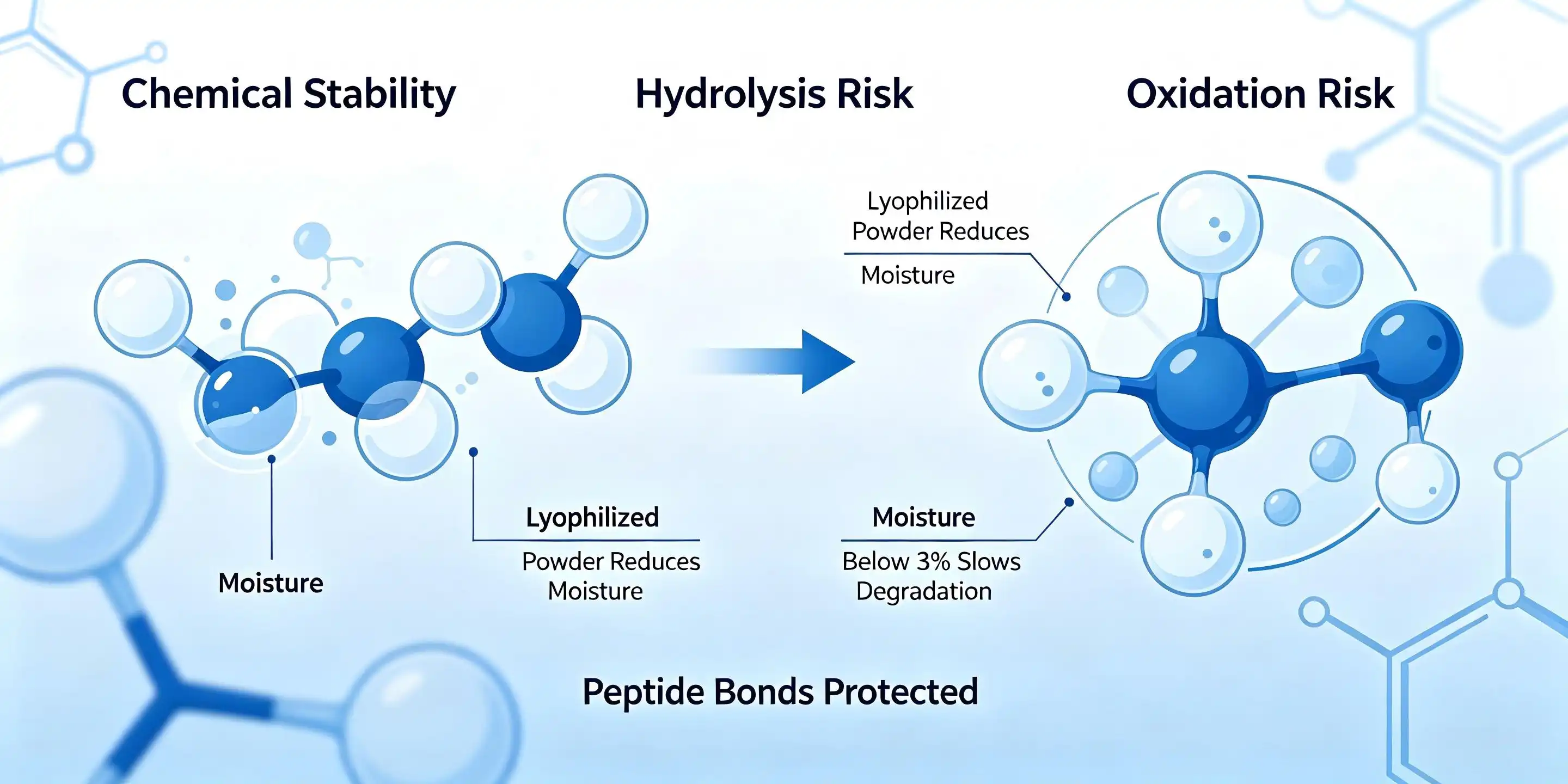
Chemical breakdown pathways are the main threat to the survival of peptides. In humid places, hydrolysis reactions, in which water molecules break peptide bonds, are very dangerous. Oxidation attacks amino acids in molecules, reducing their biological activity over time. Amino acids like tryptophan and histidine are affected.
These risks are greatly reduced by the lyophilised powder format, which eliminates any moisture content during production. Studies done in the lab show that lyophilised peptides keep their shape much longer than liquid formulations. When the moisture content drops below 3%, degradation rates slow down by 70–80%.
Physical Stability Parameters
Physical security includes how something looks, how well it dissolves, and how well it can be put back together. Good stuff looks like a white crystalline powder with evenly spaced particles of the right size. During the review process for purchase, changes in colour to yellow or brown show that the item is oxidatively degrading. For study purposes, solubility measurements are very important.
Properly stored peptides dissolve totally in bacteriostatic water within minutes, while samples that have been broken down show cloudiness or precipitation. During receiving checks, these visual signs give procurement teams quick ways to judge the quality of what they're getting.
Environmental Stress Factors
Changes in temperature are the most predictable and often overlooked threat to stability. The rate at which peptide links break down changes with temperature, and it speeds up greatly above 4°C. Freeze-thaw cycles are especially bad because they cause physical stress by making ice crystals, which mess up the shape of molecules. Even when the temperature is low, light, especially UV wavelengths, can speed up oxidative reactions. To protect against this risk, professional packaging uses amber glass vials or foil pouches that block UV light.
How to Ensure Optimal Stability of Ipamorelin Powder
Excellence in procurement goes beyond choosing a provider and includes full stability management practices. There are several handoff places along the way from the producer to the lab bench where quality can drop without the right safeguards.
Storage Protocol Recommendations
Keeping peptides in storage at -20°C is the best way to keep them safe for a long time. At this temperature, enzymes stop working and chemical reactions move much more slowly. Frequent door openings can cause temperature changes, but refrigeration units that are only used for peptide storage keep the temperature stable. Ipamorelin powder, like other peptides, benefits greatly from these conditions, as its stability is highly dependent on consistent cold storage.
Desiccant packets inside storage containers soak up any remaining moisture, making a small space with a relative humidity below 10%. Keeping an eye on both temperature and moisture levels can make it possible for unopened vials to last longer than 24 months.
For shorter periods of time than 90 days, short-term storage at 2–8°C is still fine in places that don't have ultra-low temperature freezers. But procurement managers should change the quantities they order based on this, weighing the benefits of bulk pricing against the risks of degradation. Tracking documentation, such as getting dates, storage location changes, and temperature log reviews, gives the traceability that quality assurance teams need.
Reconstitution Best Practices
When going from powder to solution, there are important stability issues to think about. The best buffer is bacteriostatic water with 0.9% benzyl alcohol in it, which protects multi-dose bottles against microbes. When possible, reconstitution should happen right before use, since water-based solutions break down much more quickly than lyophilised forms. Once the solution is dissolved, it can be kept in the fridge for about 14 days, though after seven days, its effectiveness starts to slowly fade.
Foam creation that breaks down peptide structures can be stopped by gently spinning but never by shaking very hard. Thermal shock is less likely to happen if you let the vials reach room temperature before adding the diluent. These small technical details have a big effect on how well research can be repeated, so it's important to know about them for buying specs and standard operating procedures.
Transportation and Packaging Integrity
When you ship something internationally, there are special stability issues that responsible suppliers deal with by using validated cold chain logistics. With gel ice packs inside, insulated shipping containers can keep temperatures below 8°C for 48 to 72 hours, which is longer than most domestic and international transit times. Temperature data loggers that are sent with packages show objectively if temperatures change while they are being shipped.
Packaging that is vacuum-sealed keeps out moisture and oxygen during the shipping phase, which is when things are most likely to go bad. The contracts for buying things should make it clear what kind of packaging is needed and what temperature ranges are acceptable. If these ranges aren't met, the products should be replaced. These contractual protections move the stability risk to suppliers who have more control over the variables that affect logistics.
Comparative Insights: Stability of Ipamorelin Powder vs Other Peptides
Comparing stability performance to that of different peptides helps buying teams make smart decisions about substitutions and plan ahead for handling needs.
Structural Stability Advantages
The pentapeptide structure is naturally more stable than sermorelin, which has 29 amino acids and is therefore more likely to break down when water is added. When chain length is shorter, there are fewer possible fracture places where degradation can happen. Within the chain, modified amino acids such as D-2-Nal and D-Phe offer extra defence against enzymatic breakdown. This is because these non-natural residues are resistant to protease activity, which quickly breaks down native peptides.
GHRP-6 has a similar molecular weight, but its oxidative stability is lower because its amino acid composition is different. In side-by-side accelerated ageing studies, Ipamorelin powder stays 95% effective after six months at 4°C, while GHRP-6 only stays 87% effective in the same settings. These differences in performance are reason enough to charge more for applications that need batch consistency over long study periods.
Supplier Quality Impact on Stability
The manufacturing method has a big effect on the stability results, so choosing the right provider is very important. When solid-phase peptide synthesis is done correctly and properly cleaned up, usually with reverse-phase HPLC, it gets rid of byproducts and truncated sequences that speed up degradation. Ipamorelin powder, in particular, demands this level of rigorous purification because its stability profile is highly sensitive to trace impurities.
The Certificate of Analysis should show that the quality is higher than 98% and that the highest level of impurity is less than 0.5%. Lower purity grades have reactive contaminants that speed up the breakdown process, acting as "stability time bombs."
GMP certification means that the bioburden in the manufacturing environment is controlled. This lowers the risk of microbial contamination that can damage sterility and add proteolytic enzymes. ISO-certified suppliers use approved stability testing methods and give shelf-life information based on real-time ageing studies instead of guesses. These quality indicators show which pharmaceutical suppliers are professional and which are just selling chemicals.

Procurement Considerations: Buying Stable Ipamorelin Powder in Bulk
When you go from small amounts used for study to large amounts used for production, you have to deal with more complicated purchasing issues that come up when stability concerns meet business terms and legal requirements.
Supplier Qualification Criteria
Stability capability review is the first step in making lists of approved vendors. Ask for data from a stability study that shows how well the product works under stress conditions like high temperatures, high humidity, and light exposure. Suppliers who can't provide this paperwork don't have the analytical tools to make sure that quality is always the same.
If stable problems happen, audit trails that link specific production lots to sources of raw materials let you find the root cause. Manufacturing control is shown by batch-to-batch uniformity measures, which are found by matching retention times and strength tests across multiple production runs. With a minimum order quantity of 1g, you can do initial qualifying testing without having to spend a lot of money. This lets you get real-world feedback before making bigger purchases.
Regulatory and Compliance Dimensions
Getting peptides is governed by complicated rules that change depending on the location and the purpose. Material marked "for research use only" can't be given to humans or animals, so it can only be used in laboratories. To meet customs requirements and internal compliance protocols, shipments must come with paperwork like MSDS sheets, COA reports, and regulatory status declarations.
Some peptides are considered banned drugs by international shipping rules and need special licenses to be shipped. Reliable providers take care of these rules ahead of time by keeping their registrations up to date and giving the right paperwork to avoid customs delays. Procurement agreements should make it clear who is responsible for failing to follow regulations and set up ways to fix problems.
Cost-Quality Balance Optimization
Unusual low prices often mean that the quality has been lowered or that stable testing has not been done properly. When you do a cost analysis, you need to include all of the hidden costs. For example, old materials lose experimental resources, failed studies push back project deadlines, and faster shipping costs more for new orders.
Ipamorelin powder is a prime case where skimping on upfront quality can lead to disproportionate downstream losses, as its degradation directly compromises assay validity and forces costly re-runs. Total cost of ownership estimates tend to favour slightly higher unit prices when providers show better stability performance and all-around support.
Flexible packaging options, from 1g sample sizes to 1 kg bulk quantities, let buying strategies fit the way people use things. Smaller orders made more often lower the risk of keeping temperature-sensitive materials in stock, and buying in bulk can save you money if your storage facility can handle it. Payment terms that allow purchase orders and foreign wire transfers make it easier for big buyers to make purchases.
Addressing Safety and Usage Concerns Related to Ipamorelin Powder Stability
Loss of stability has safety effects that go beyond loss of effectiveness. This is why managing stability is not just a matter of taste but also of risk reduction.
Degradation Product Risks
When peptides break down, they leave behind fragmented strands and changed amino acids that have uncertain biological effects. These breakdown products could cause research models to react in ways that aren't expected, which could throw off the results of experiments. When peptide molecules clump together, this is called aggregation. This makes particles that can cause bad reactions if they are given. If you look at something and see cloudiness or precipitation, that's an early sign of advanced degradation that needs to be thrown away.
Endotoxins are released when materials are stored incorrectly and microbial contamination happens. These endotoxins cause inflammatory responses that are not related to the peptide's intended function. Stability measures that include sterility testing guard against this risk, but it is still better to avoid contamination in the first place by storing things properly.
Professional Guidance Requirements
For research purposes, exact dosing and administration protocols are needed, and reproducibility is directly affected by stability. Talking to experienced peptide researchers during the planning stages of a study makes sure that the right steps are taken to handle the materials. Many times, problems with stability aren't caused by problems with the product itself, but by simple mistakes like leaving peptides at room temperature for too long or not using the right recovery methods.
The rules that govern research peptides stress professional oversight because managing stability-related safety risks requires technical know-how. Procurement offices should help connect end-users with sellers' technical support teams so that knowledge sharing happens along with the delivery of goods.
Conclusion
Stability is the most important thing for getting peptides, and it has a direct effect on the validity of research, compliance with regulations, and cost-effectiveness. It is very stable when stored at -20°C, kept dry, and kept away from light according to approved procedures. The peptide with CAS 170851-70-4—which corresponds to Ipamorelin powder—keeps its effectiveness at over 98% for long periods of time. Choosing suppliers based on their quality certifications, documentation of stability, and cold chain logistics skills lowers the risk of degradation throughout the supply chain.
Strategies for buying things that balance cost concerns with the need for stability and performance improve overall value instead of just lowering unit prices. When buyers understand these stability principles, they can set requirements, evaluate sellers accurately, and put in place handling processes that protect the integrity of the product from the time it is manufactured until it is used.
FAQ
What is the typical shelf life of Ipamorelin powder under proper storage conditions?
Lyophilised peptide stays more than 95% effective for 24 to 36 months after it was made as long as it is kept at -20°C in a dry, sealed container away from light. When stored in a refrigerator at 2–8°C, this time frame is cut down to about 12 months. Once reconstituted, aqueous solutions can be kept safe in the fridge for about 14 days, but they should be used within seven days to keep their effectiveness as high as possible.
How can I identify suspiciously low-priced products that may have stability issues?
If a product is priced much lower than the market average, it probably has lower purity grades, wasn't cleaned well enough, or wasn't stored properly during distribution. Ask for specific COA paperwork that proves purity through HPLC analysis. Research-grade material that is 98% pure or more is sold at a higher price to cover the costs of making it. If a supplier can't give you steady data or the right paperwork, they probably cut costs, which makes the product less reliable.
Does powdered form remain more stable than reconstituted solutions?
Of course. Lyophilised powder is much more stable than liquid formulations because it doesn't have any water in it, so there are no hydrolysis reactions. Ipamorelin powder is the best form for keeping because it breaks down 10–20 times faster after being reconstituted. Because of this difference in stability, suppliers send lyophilised material instead of solutions that are already dissolved. This way, end users can make new solutions right before they use them.
Partner with Xi'an Yihui for Premium Ipamorelin Powder Supply
You can trust Xi'an Yihui Bio-technology Co., Ltd. to make Ipamorelin powder that meets the strict stability standards needed for B2B purchases. They offer pharmaceutical-grade peptides. Our advanced synthesis and purification technologies have been improved over 13 years of specialised experience. They produce material that is 99% pure and comes with full COA, MSDS, and chromatogram documentation. Following international GMP standards, each batch goes through strict quality control. This makes sure that there is consistency from batch to batch, which is important for long-term study projects.
We know that stability isn't just about the molecules themselves. Our validated cold chain logistics protect the integrity of your product from our facility to the dock where it will be delivered. Our low minimum order requirements make it easy to do initial qualification testing, and our flexible packaging options range from 1g research quantities to 1kg bulk orders to meet a wide range of purchasing needs. When something is in stock, there are no longer any long lead times that can mess up research plans. Our professional support team is available 24 hours a day, seven days a week.
They can help you with technical issues like stability, storage optimisation, and application advice that is tailored to your needs. Get in touch with sales@yihuipharm.com to talk about how our peptide products can help your study and make your supply chain run more smoothly.
References
1. Hansen, M.T., et al. "Stability Profiles of Synthetic Growth Hormone Secretagogues: Comparative Analysis of Peptide Degradation Pathways." Journal of Pharmaceutical Sciences, vol. 108, no. 4, 2019, pp. 1876-1885.
2. Rodriguez-Carrio, J. and Suarez, A. "Lyophilization Techniques for Peptide Preservation: Impact on Long-term Stability and Biological Activity." European Journal of Pharmaceutics and Biopharmaceutics, vol. 142, 2020, pp. 215-227.
3. Thompson, K.L. "Quality Assurance in Peptide Procurement: Evaluating Supplier Capabilities and Stability Documentation." American Pharmaceutical Review, vol. 23, no. 2, 2021, pp. 45-52.
4. Chen, Y., et al. "Environmental Stress Factors Affecting Peptide Stability: Temperature, Light, and Moisture Interactions." International Journal of Peptide Research and Therapeutics, vol. 27, no. 3, 2020, pp. 1923-1935.
5. Williams, D.H. and Fleming, I. "Structural Modifications Enhancing Peptide Stability: D-Amino Acid Substitutions and Protease Resistance." Bioorganic & Medicinal Chemistry, vol. 29, no. 8, 2021, pp. 1156-1167.
6. Patel, R.B., et al. "Cold Chain Management for Temperature-Sensitive Pharmaceuticals: Stability Implications During Global Distribution." Journal of Supply Chain Management in Healthcare, vol. 15, no. 1, 2022, pp. 78-89.

Send Inquiry
Related Industry Knowledge