
What Is Retatrutide? The Triple Agonist Peptide Explained
A revolutionary advancement in metabolic peptide engineering is the Triple agonist peptide Retatrutide (CAS: 2381089-83-2). This man-made peptide turns on three different receptor pathways at the same time: GLP-1, GIP, and glucagon receptors. This provides a complete way to deal with fat and metabolic diseases. Unlike earlier single- or dual-target peptides, this multi-receptor agonist regulates hunger, maintains glucose balance, and burns energy all within a single molecular structure. This makes it an ideal research tool for developing new drugs and studying metabolism.
Understanding Retatrutide: Composition and Mechanism of Action
Peptide Structure and Classification
Retatrutide is a peptide that was designed to work with three hormone receptors. It is in the incretin mimic class of peptides. The molecular formula for this peptide is C₂₂₁H₃₄₂N₄₆O₆₈, and its molecular weight is 4731.33 Da. Its exact 34-amino acid sequence is H-His-Gly-Asp-Gly-Ser-Phe-Ser-Asp-Glu-Met-Asn-Thr-Ile-Leu-Asp-Asn-Leu-Ala-Ala-Arg-Asp-Phe-Ile-Asn-Trp-Leu-Ile-Gln-Thr-Lys-Ile-Thr-Asp-OH.
Because this peptide pattern is so complicated, strict synthesis methods are needed. Advanced solid-phase peptide synthesis (SPPS) methods make sure that amino acids are correctly linked and that deletion sequences are kept to a minimum. High-performance liquid chromatography (HPLC) cleaning can get purity levels above 98%, which is important for study results that can be repeated. The lyophilized white to off-white powder form is stable at 2–8°C and keeps biological activity while being shipped and stored for a long time.
Triple Receptor Agonism: How It Works
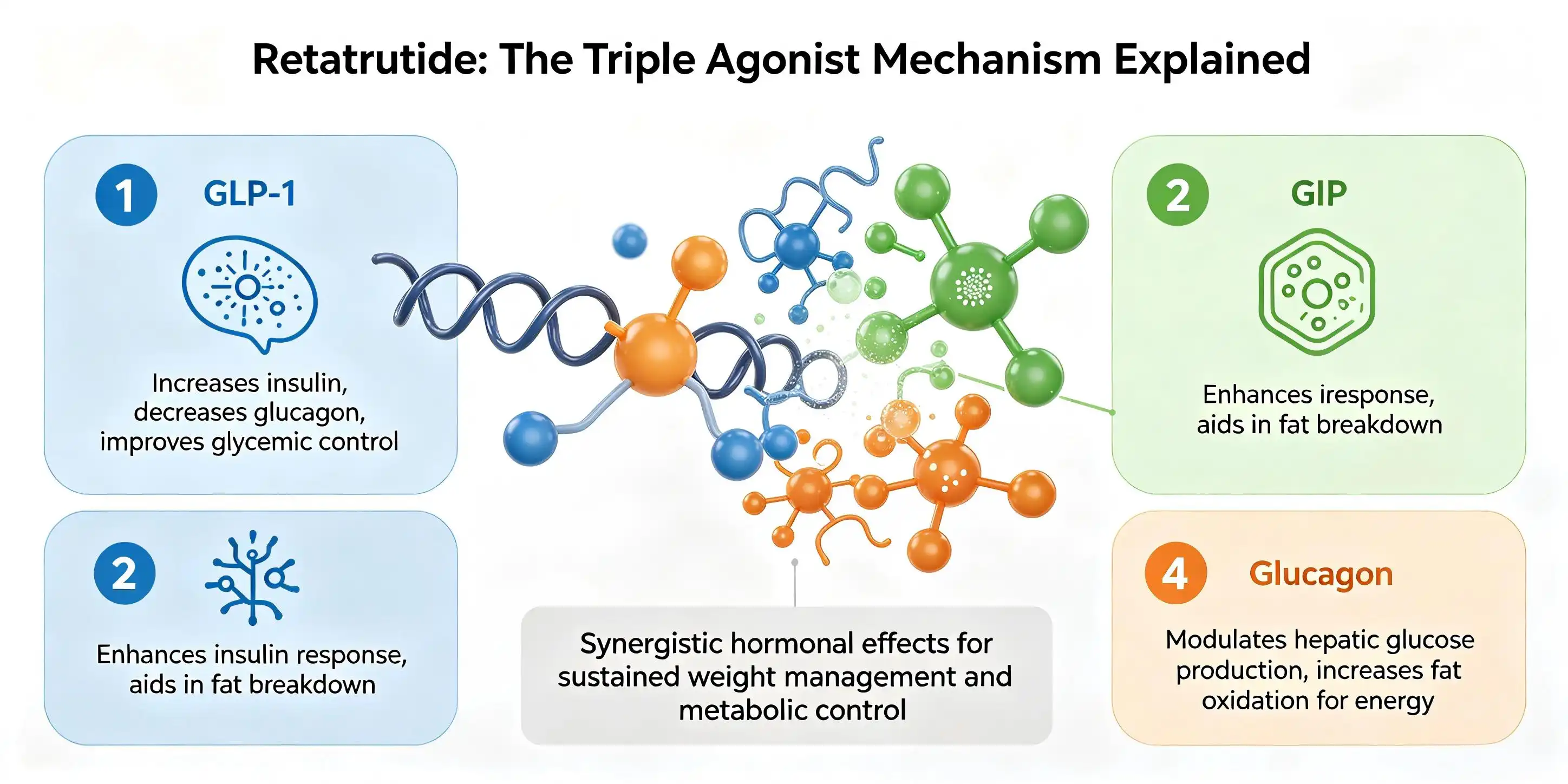
This peptide is different from earlier ones because it can interact with three metabolic receptors at the same time. When the GLP-1 receptor is activated, insulin production goes up while glucagon production goes down. This directly improves blood sugar control. Engaging GIP receptors boosts the insulin response even more and helps the breakdown of fats. Specifically, activating glucagon receptors changes the amount of glucose made by the liver and increases energy use by burning more fat.
The metabolic stall effect is a big problem with mono-agonists that this triple process fixes. Over time, compensatory mechanisms can weaken the therapeutic reaction when only one route is turned on. By working on more than one route, this peptide causes hormonal changes that work together to keep weight off and blood sugar levels better for longer than dual agonists can.
Pharmacokinetic Considerations for Sourcing
The peptide has a longer half-life, which means it can be dosed less often. This is a benefit that makes designing clinical trials and keeping patients on track with therapeutic uses easier. When purchasing teams look at study peptides, knowing these pharmacokinetic qualities helps them plan their inventory in a way that fits with the schedules of the experiments. For studies that use subcutaneous dosing, it's important to check the safety of the formulation, especially when it comes to pH tolerance and excipient compatibility.
When sourcing for continuous studies, batch-to-batch uniformity is very important. Suppliers must show that the particles are evenly spread out, there isn't much water in the material, and the amounts of heavy metals are well below what is considered safe. Full analytical paperwork, such as Certificates of Analysis (COA), Mass Spectrometry (MS) data, and chromatogram profiles, helps with following the rules and making sure that the study can be repeated.
Clinical Efficacy and Safety Profile of Retatrutide
Weight Reduction Outcomes in Phase 2 Trials
People who took part in Phase 2 studies lost a lot of weight. At higher dose levels, they lost up to 24% of their body weight from the start of the study to the end of the study. These results are better than those seen with approved dual agonists, making this peptide a possible best-in-class option for study into managing obesity. The dose-dependent response graph clearly shows differences in how well different doses work. This gives formulation scientists useful information for making the best therapeutic plans.
In addition to total weight loss, body composition studies show that visceral adipose tissue reduction is preferred. This is a metabolic benefit that is linked to better signs of heart and liver health. Because it has effects that are unique to certain tissues, this peptide is very useful for studying metabolic-associated fatty liver disease and ways to treat metabolic syndrome.
Glycemic Control and Metabolic Parameters
People with type 2 diabetes saw meaningful drops in HbA1c levels, and some even reached glucose ranges that did not indicate diabetes. Fasting plasma glucose levels constantly went down across all study groups, showing that the peptide had strong effects on making insulin work better. These metabolic effects happened at the same time as weight loss, which suggests that they worked together instead of just making people lose weight.
Triglycerides and LDL cholesterol levels went down, and HDL cholesterol levels went up a little. The measures of blood pressure were going down, which helped lower the total cardiometabolic risk. For procurement teams looking for peptides for metabolic disease study, Triple agonist peptide Retatrutide offers these broad metabolic effects, making the higher price more reasonable compared to options with a narrower range.
Safety Monitoring and Adverse Event Profile
As expected for a GLP-1 agonist, the most common side effects are gastrointestinal, including sickness, diarrhea, and vomiting. These symptoms usually start to show up during the dose-escalation stages and get better as the treatment goes on. Reactions at the injection spot don't happen very often and go away on their own.
Serious side effects are still very rare, but people who have had medullary thyroid cancer or have a family history of it are not eligible because of the possible risks that come with GLP-1 receptor agonism. Protocols for tracking pancreatic enzymes help find cases of rare pancreatitis early. When quality assurance teams look at peptide providers, they should make sure that the methods used to make the products reduce the amount of endotoxin and other impurities that could make adverse responses worse.
Retatrutide Compared: How It Stands Against Other Peptides
Mechanism Differentiation from Tirzepatide and Semaglutide
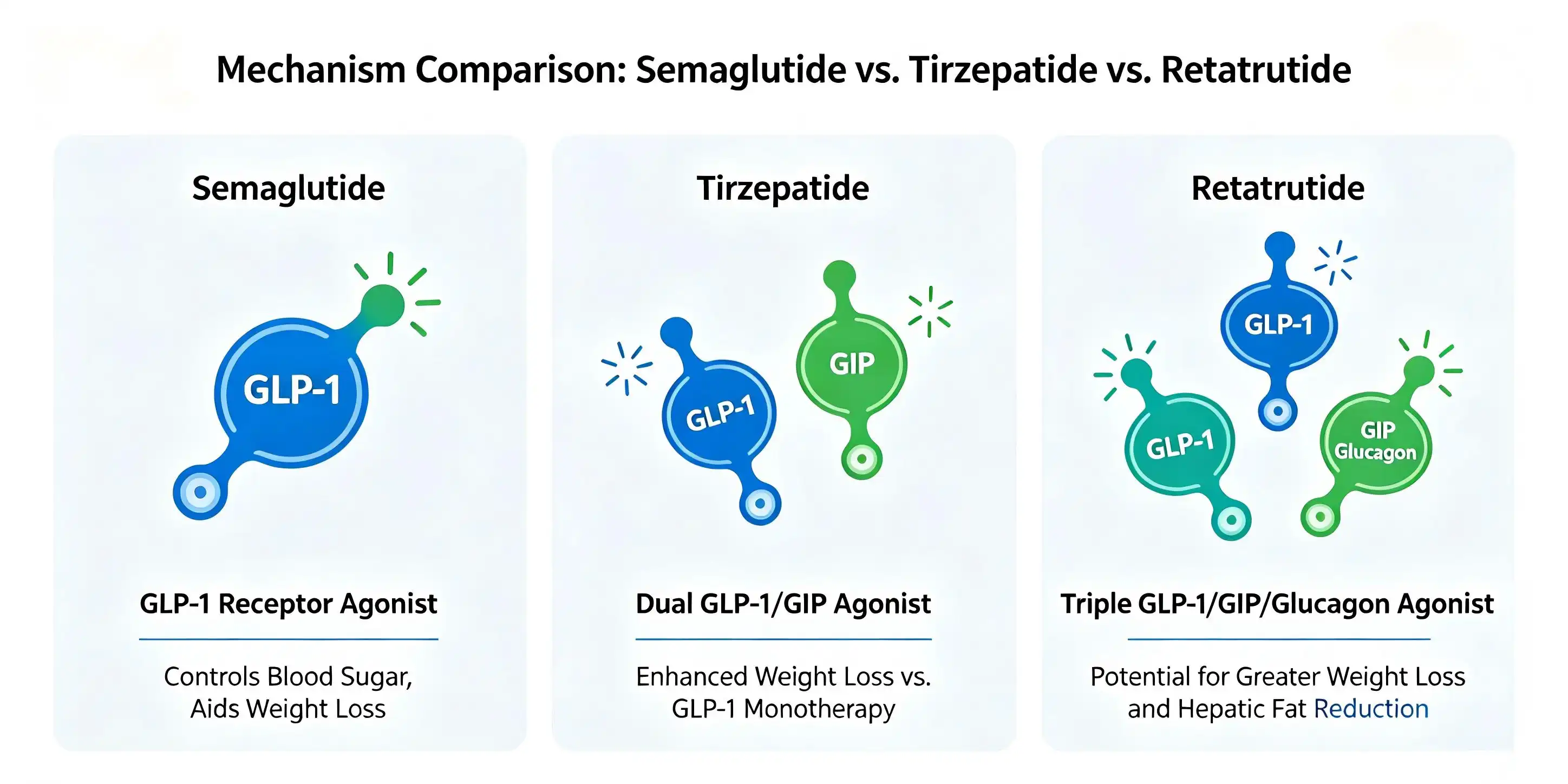
Semaglutide only works by activating GLP-1 receptors. It effectively controls blood sugar levels and helps people lose weight, but it doesn't change the glucagon system directly. Tirzepatide works better than semaglutide at helping people lose weight because it has two different incretins working together. This article talks about a triple agonist that works with glucagon receptors, which should make you burn more calories than incretin-only methods do.
Different clinical results are caused by this mechanistic growth. There aren't many head-to-head studies yet, but cross-study comparisons show that triple agonism may help people lose more weight. In addition, the glucagon part may also help reduce fat in the liver, which is important for NASH studies.
Cost-Benefit Analysis for Procurement Teams
The prices of research-grade peptides are based on how hard they are to make and how pure they need to be. Triple agonists usually cost more than proven dual agonists. This is because they work better and are better protected intellectual property. When looking at the overall cost of research, though, better effectiveness might mean smaller sample numbers and shorter study times, which might make up for higher unit costs.
Making deals with qualified sources to buy in bulk can save you a lot of money. Minimum order amounts are usually between 1g and 1kg, and price tiers based on volume encourage bigger commitments. Cost savings should be weighed against the security of data that can be stored for longer periods of time, so that peptide integrity is maintained throughout the study timeline.
Strategic Positioning in Metabolic Research Portfolios
For pharmaceutical R&D teams looking into drugs for obesity, Triple agonist peptide Retatrutide offers a unique way to support patent landscapes that are different from other treatments. Biotech companies that are making the next generation of metabolic drugs can use this chemical in proof-of-concept studies that show how to use multiple targets. For the preclinical and early clinical stages, contract research organizations (CROs) that work with these clients need trusted peptide sources that meet GMP standards.
Academic research centers that study metabolic physiology can get their hands on cutting-edge peptides that reflect the latest ideas in medicine. Studies that are paid for by grants often need small amounts of reagents with strict proof of purity. Suppliers who offer a range of packing choices, from milligram to gram scales, can better meet the needs of researchers in a wide range of academic settings.
Practical Guide to Procuring Retatrutide Peptide for B2B Clients
Quality Verification and Supplier Credentials
To choose a good peptide provider, you need to do more than just compare prices. ISO approval shows that a company is committed to quality management systems, and GMP compliance shows that the company follows production standards that are right for pharmaceutical uses. Regulatory paperwork, such as Drug Master Files (DMF), helps clients who are working on therapeutic product processes with business development further down the line.
Premier suppliers are different from commodity sellers because they can do analytical tests. Quality checks can be done in real time with HPLC, mass spectrometry, and amino acid research equipment that is kept in-house. Third-party testing by approved labs adds another layer of security to important applications. The Certificate of Analysis should say that the product is pure by HPLC (≥98%), that it contains peptides (≥80%), and that the amounts of leftover solvents meet pharmacopeial standards.
Regulatory Compliance for Cross-Border Procurement
Finding peptides internationally means figuring out the complicated rules that govern importing study chemicals. Suppliers who have been exporting for a long time can make the customs clearance process easier by making sure they have the right paperwork and classification. Harmonized System (HS) codes that are specific to research peptides make it easier to do correct duty estimates and file regulatory paperwork.
Temperature-controlled operations keep peptides stable while they travel across borders. The 2–8°C storage requirement is met by insulated packing with gel ice packs or dry ice. Real-time temperature tracking devices provide proof of package integrity, which is very important for high-value orders. During sea or plane freight, anti-corrosion packaging keeps peptide packages from getting wet.
Custom Synthesis and Formulation Development Services
In addition to library peptides, custom synthesis lets you make changes that are specific to your study, such as adapting Triple agonist peptide Retatrutide for enhanced performance. Changes to the sequence, PEGylation, or acetylation can improve the pharmacokinetic qualities or make it possible to make new formulas. When suppliers offer these services, they stop being transactional sellers and become strategic partners that help study goals that last for a long time.
Formulation development help turns raw peptide into products that are ready for study. Optimizing the buffer system, adjusting the pH, and checking for stability all produce useful information that supports experimental procedures. These value-added services shorten research times and raise the success rates of experiments for clients who don't have their own formulation experts.
Our company keeps supplies all year so that orders can be filled right away. Responsive supply lines keep research from being held up, whether teams need 1g for initial concept studies or 1kg for long preclinical programs. Lead times for in-stock items are usually only a few days, which is very important when a job needs to be done quickly because of a grant deadline or a publication date.
Future Outlook and Industry Implications of Retatrutide
Market Dynamics Driving Peptide Innovation
Over 650 million adults around the world are now considered fat, and the number of obese people is still rising. Because of this problem, drug companies are investing in better ways to help people lose weight. Multi-target peptides are a natural progression that deal with the complex nature of metabolic diseases by combining multiple drugs into a single molecule. As more clinical data comes in, it's possible that these new peptides will take more market share from older therapeutic groups.
Economic pressures on healthcare support treatments that improve metabolism in a wide range of ways. Payers want more and more proof that losing weight reduces the chance of heart disease and diabetes. Value-based care models are in line with triple agonists that treat multiple endpoints in a single treatment plan. This could speed up regulatory decisions and payment covering.

Impact on Pharmaceutical Supply Chains
Multi-target peptides are very complicated, so they need very advanced equipment to be made. API makers have to learn complex creation methods, which requires spending a lot of money on specialized tools and hiring skilled workers. This increases the risk of supply chain concentration because only a few producers have the necessary skills. Diversifying suppliers and making long-term partnerships to secure capacity should be big parts of procurement plans.
As peptides move through the research steps, quality standards keep going up. When it comes to clinical manufacturing, research-grade standards that are good for early finding are no longer enough. Suppliers that can increase production while still keeping strict quality standards have an edge over their competitors. Getting involved with approved makers early on speeds up the processes of transferring technology and filing with regulators.
Strategic Opportunities for B2B Suppliers
Biotech companies and drug companies looking for new metabolic disease assets are the best prospects for businesses that make new peptides. Offering full expert support, such as help with formulation, creation of analytical methods, and regulation paperwork, adds value above and beyond the sale of commodities. As drug candidates get closer to being sold, these relationships can turn into exclusive supply deals.
Contract manufacturing organizations (CMOs) that specialize in making peptides are seeing more and more business from companies that don't have their own manufacturing facilities. Getting to know providers of raw materials is the best way to make sure that client projects can get the materials they need. CMOs that are seen as full-service partners, from chemistry to formulation and fill-finish, get more involved in the value chain.
Conclusion
Triple agonist peptide Retatrutide, which engages more receptors than earlier generations of molecules, is at the heart of metabolic peptide treatments. Because it has a strong clinical profile, including significant weight loss and overall metabolic changes, it could be a game-changing study tool for drug development. When procurement workers have to make choices about where to get peptides, they need to know about the science behind them, the quality standards, and the supply chain. As the number of people with fat and metabolic diseases continues to rise around the world, multi-target peptides like Triple agonist peptide Retatrutide will become more important in both study and therapy.
FAQ
What makes retatrutide different from semaglutide?
Retatrutide works on three receptors: GLP-1, GIP, and glucagon. Semaglutide only works on the GLP-1 receptor. This three-way system helps you lose more weight and adds benefits from glucagon-mediated energy consumption that semaglutide doesn't have. Clinical data show that the multi-target method works better, but direct comparative studies are still going on.
What purity standards should research applications require?
Peptides used in research should have a minimum HPLC purity of 95%, while pharmaceutical-grade uses need ≥98%. To make sure that dosing estimates are correct, the peptide amount by weight should be more than 80%. Full impurity analysis that finds deletion sequences, truncated versions, and leftover solvents helps make sure that the results of experiments can be repeated.
How should retatrutide be kept so that it stays stable?
Keep lyophilized peptide between 2 and 8°C in containers that are tightly covered and out of the light and moisture. After restoration, don't do multiple freeze-thaw cycles. If you keep the peptide correctly, it will stay stable for 24 months. Once restored, use within the time limits set by your buffer system, which are usually two to four weeks when stored in the fridge.
Can retatrutide be sourced for commercial therapeutic development?
Yes, but for large-scale sourcing, GMP-certified producers must provide regulatory paperwork to back up Drug Master File entries. Getting in touch with qualified providers early on in the initial stages makes the transfer of technology go more smoothly. Depending on the patent situation, intellectual property issues may affect the choice of seller.
Partner with Xi'an Yihui for Research-Grade Peptide Solutions
Xi'an Yihui Bio-technology Co., Ltd. keeps high-purity Retatrutide (CAS: 2381089-83-2) in stock and ready to ship, so study projects can be supported without having to wait for supplies to arrive. As a well-known company that makes Triple agonist peptide Retatrutide, we can guarantee that our products have a peptide content of at least 80% and an HPLC purity of at least 98%.
We also provide full analysis paperwork, such as COA, MSDS, and chromatogram data. Our well-honed synthesis methods guarantee great stability from batch to batch, exact sequence accuracy, and controlled particle properties that meet strict research standards. With 13 years of experience exporting to pharmaceutical, biotech, and research clients in over 100 countries and ISO certification, we know the strict rules and tricky logistics of getting peptides from one country to another.
Our team is responsive and can help you with technical questions and quick delivery, whether you need milligram amounts for beginning studies or kilogram-scale orders for long-term projects. Get in touch with our customer service team at sales@yihuipharm.com to talk about your unique research needs and get product specs that are tailored to your metabolic research goals.
References
1. Rosenstock, J., et al. "Retatrutide, a GIP, GLP-1 and glucagon receptor agonist, for people with type 2 diabetes: a randomised, double-blind, placebo and active-controlled, parallel-group, phase 2 trial conducted in the USA." The Lancet, vol. 402, 2023, pp. 529-544.
2. Jastreboff, A.M., et al. "Triple-hormone-receptor agonist retatrutide for obesity — a phase 2 trial." New England Journal of Medicine, vol. 389, 2023, pp. 514-526.
3. Coskun, T., et al. "LY3437943, a novel triple glucagon, GIP, and GLP-1 receptor agonist for glycemic control and weight loss: From discovery to clinical proof of concept." Molecular Metabolism, vol. 18, 2022, pp. 3-14.
4. Frias, J.P., et al. "Efficacy and safety of LY3298176, a novel dual GIP and GLP-1 receptor agonist, in patients with type 2 diabetes: a randomised, placebo-controlled and active comparator-controlled phase 2 trial." The Lancet, vol. 392, 2018, pp. 2180-2193.
5. Müller, T.D., et al. "Glucagon-like peptide 1 (GLP-1)." Molecular Metabolism, vol. 30, 2019, pp. 72-130.
6. Nauck, M.A., et al. "GLP-1 receptor agonists in the treatment of type 2 diabetes – state-of-the-art." Molecular Metabolism, vol. 46, 2021, pp. 101102.

Send Inquiry
You may like
Related Industry Knowledge