
What is Octreotide Acetate?
Octreotide Acetate powder is the acetate salt form of a man-made cyclic octapeptide that works like somatostatin in the body. The native hormone breaks down in two to three minutes, but this pharmaceutical-grade powder keeps working for about 90 minutes after it is given. Pharmaceutical companies use this stability benefit to make clean injectables that treat acromegaly, diarrhea caused by carcinoid syndrome, and vasoactive intestinal peptide tumors. The powder form gives formulators more options, letting them make exact doses of both immediate-release and long-acting depot products that treat serious endocrine problems.
It is very important for business-to-business buyers who are trying to buy peptides to understand the technical details and sourcing issues of this active medicinal ingredient. This guide fills in the blanks between chemical properties and real-world buying choices. It gives procurement workers the information they need to make sure they have good supply lines while still following the rules.
Understanding Octreotide Acetate and Its Mechanism of Action
Chemical Structure and Pharmaceutical Forms
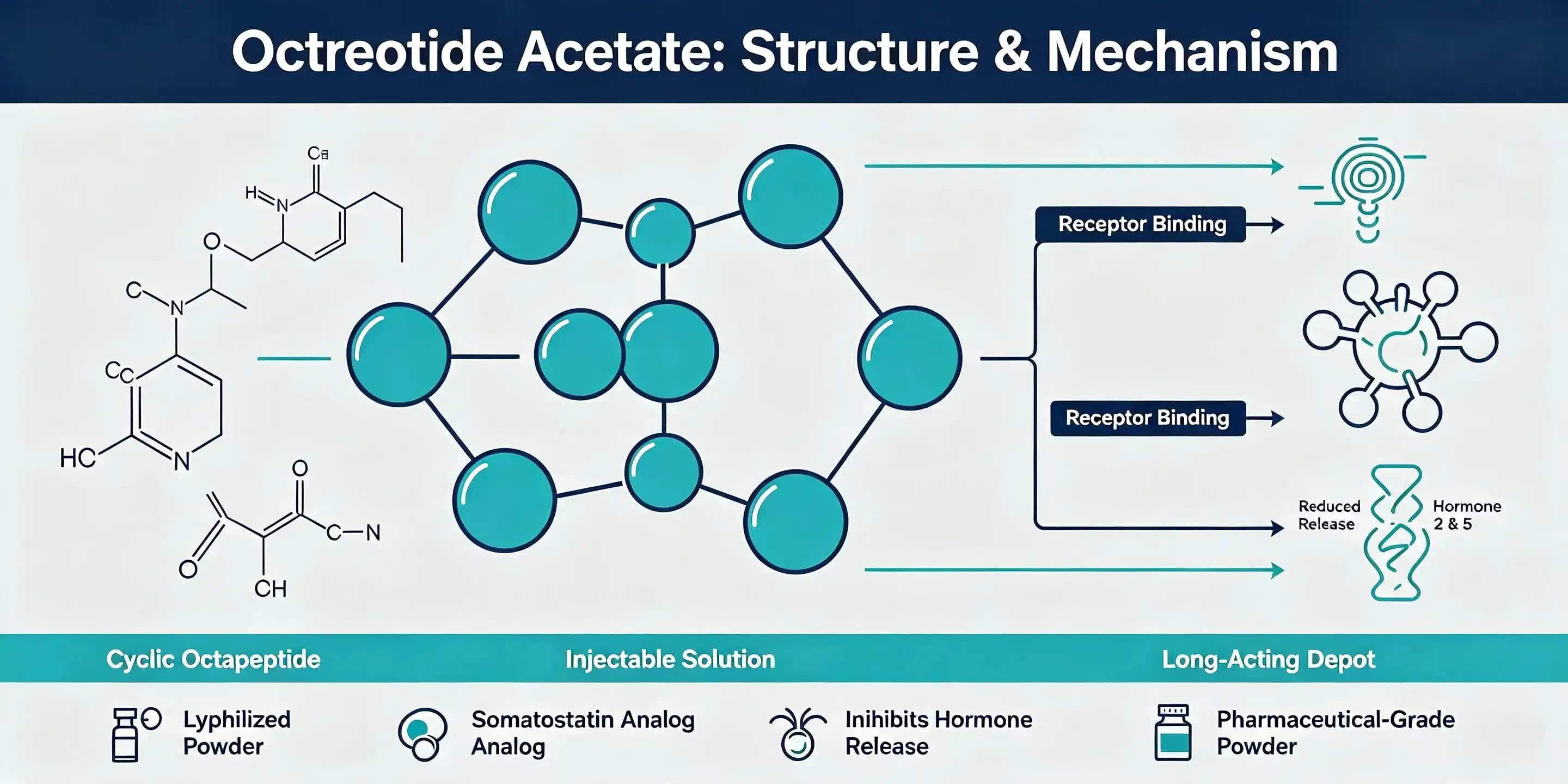
This octapeptide's molecular structure is made up of eight amino acids grouped in a circular pattern that makes it harder for enzymes to break down. Pharmaceutical-grade material usually comes as a white to off-white lyophilized powder that has been tested and found to be more than 98% pure using HPLC. The formation of acetate salts makes them easier to dissolve than free-base options, which speeds up the reconstitution process in clean industrial settings.
Different types of display styles are used for different business reasons. For custom formulation creation, the powder version gives you the most freedom, while pre-formulated injectable options are best for regular production runs. Liquid preparations are in the middle because they are convenient and can be customized to a certain extent. When procurement teams choose a format, they have to make sure that it works with their systems for quality control and handling further down the line.
Receptor Interaction and Hormonal Regulation
A man-made version of this substance binds very well to somatostatin receptor subtypes 2 and 5, which are mostly found in neuroendocrine organs. When the receptor is activated, the substance stops adenylate cyclase from working. This lowers the amount of cyclic AMP inside the cell, which stops calcium from entering. Growth hormone, gastrin, insulin, glucagon, and other gut peptides are stopped from being released by this chain of events.
The therapeutic effect is especially important in diseases where too much hormone release makes the sickness worse. Targeted receptor modulation is used to restore hormonal balance. This helps treatment methods reduce symptoms and stop tumor growth in patients who respond.
Pharmacokinetics and Stability Considerations
When given under the skin, the drug is quickly absorbed, and within 30 minutes, bloodstream amounts reach their highest point. The substance is broken down in the liver and then flushed out of the body by the kidneys. About 32% of it is released unchanged in the urine. Because the half-life of removal for immediate-release formulas is 1.5 hours, they need to be given more than once a day. This is what drives innovation in sustained-release technologies.
Throughout the supply chain, storage conditions have a direct effect on the quality of the product. Pharmaceutical-grade powder needs to be kept in a cool place, between 2 and 8°C, and it needs to be protected from light and moisture. Reconstituted solutions aren't very stable; they usually stay active for 24 hours when kept in the fridge. These handling standards put specific duties on logistics providers and end users. This makes the technical help skills of suppliers an important thing to think about when buying.
Clinical Uses and Safety Profile of Octreotide Acetate Powder
Primary Therapeutic Applications
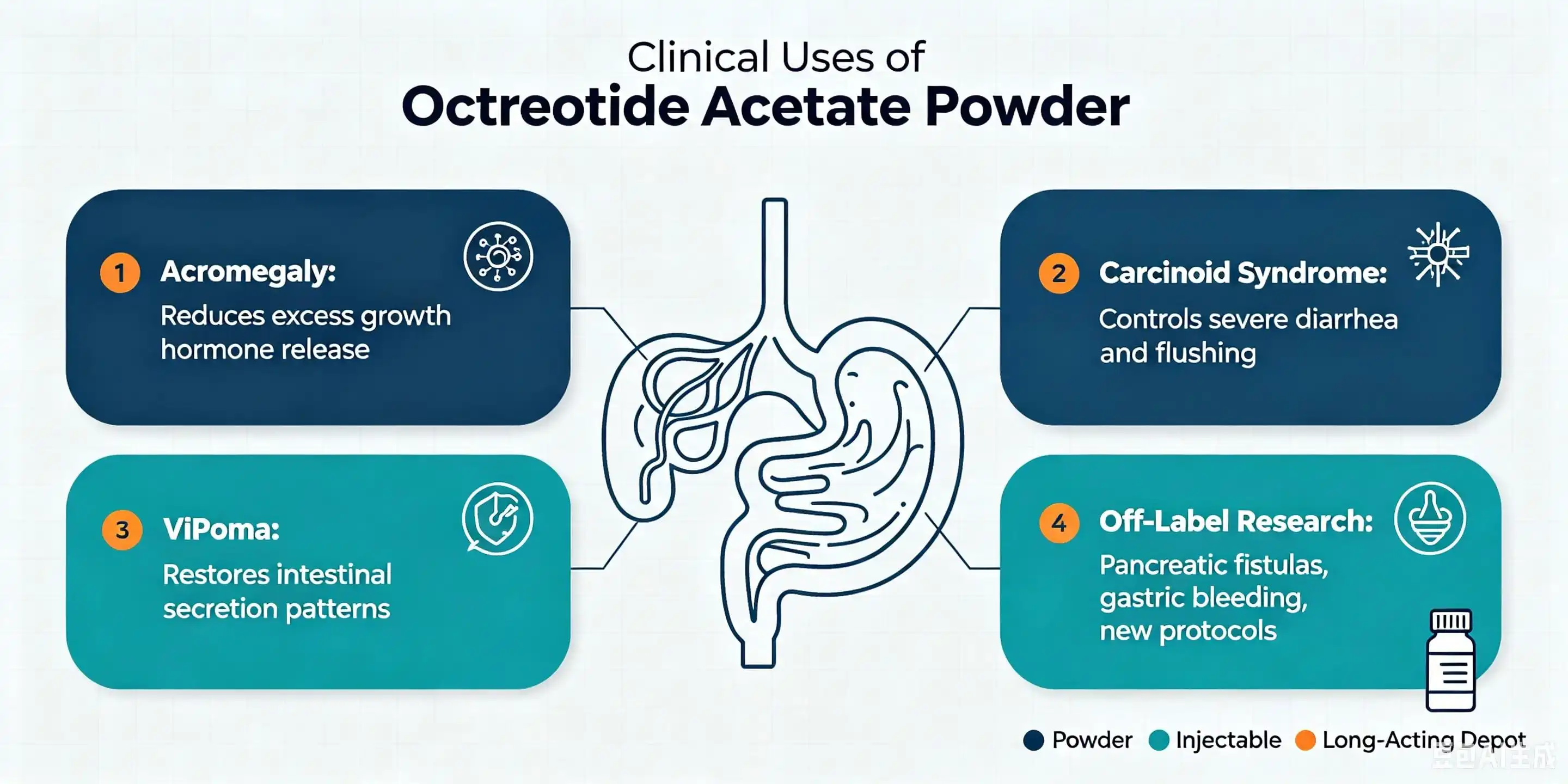
A major use of Octreotide Acetate powder is for treating amyloidosis, in which the substance stops pituitary adenomas from releasing too much growth hormone. In clinical studies, insulin-like growth factor-1 levels dropped significantly, which was linked to better patient results and symptom resolution. Dosing usually starts at 50 mcg twice or three times a day, and is increased or decreased based on watching biochemical reaction.
Managing carcinoid syndrome is another well-known use that deals with severe diarrhea and burning bouts caused by too much serotonin. Response rates of 60 to 70% have been found in published studies for patients with neuroendocrine tumors that have spread to other parts of the body. Watery diarrhea caused by VIPomas also improves, as the substance restores normal intestine secretion patterns by blocking vasoactive intestinal peptides.
Besides these main uses, off-label uses include managing pancreatic fistulas, gastric bleeding, and some side effects of treatment. When research institutions buy small amounts, they often try out new uses for the products, which means that sellers have to be able to handle different purity levels and packing types.
Dosage Protocols and Administration Guidelines
Standard treatment schedules are very different depending on the seriousness of the reason and how the patient responds. To treat ametropia, you might need 100–600 mcg daily, split up, while to treat carcinoid syndrome, you usually need 150–750 mcg daily. Long-acting depot versions make it easier to give through monthly intramuscular shots, which increases the number of people who stick with their treatment plans for chronic diseases.
Scientists who work on formulas have to keep the pH level between 3.9 and 4.5 to keep peptides stable while they are combining. The acetate buffer system helps keep the fluid stable and reduces the number of reactions that happen at the entry site. Before going into clinical use, quality control procedures should check the peptide content, endotoxin levels, and cleanliness in line with pharmacopeial standards.
Adverse Effect Profile and Safety Monitoring
In clinical studies, stomach problems like sickness, abdominal cramps, and steatorrhea were common side effects that happened to about half of the patients during the first few weeks of treatment. As treatment goes on, these affects usually get less noticeable as the body gets used to it. Developing cholelithiasis is a major long-term risk. Gallstones form in 15–30% of long-term users because their bile makeup and liver motility change.
Some rare but dangerous side effects can be arrhythmia, problems with conduction, and changes in glucose metabolism. Patients who already have heart problems or diabetes need more stringent tracking procedures. When buying things for clinical uses, procurement managers should make sure that sellers give full safety data sheets and confirmed analytical certificates to back up regulatory reports. Understanding the safety environment helps quality assurance teams come up with the right ways to reduce risks throughout the duration of a product.
Comparative Analysis: Octreotide Acetate Powder vs Other Analogues and Formulations
Powder Versus Injectable Preparations
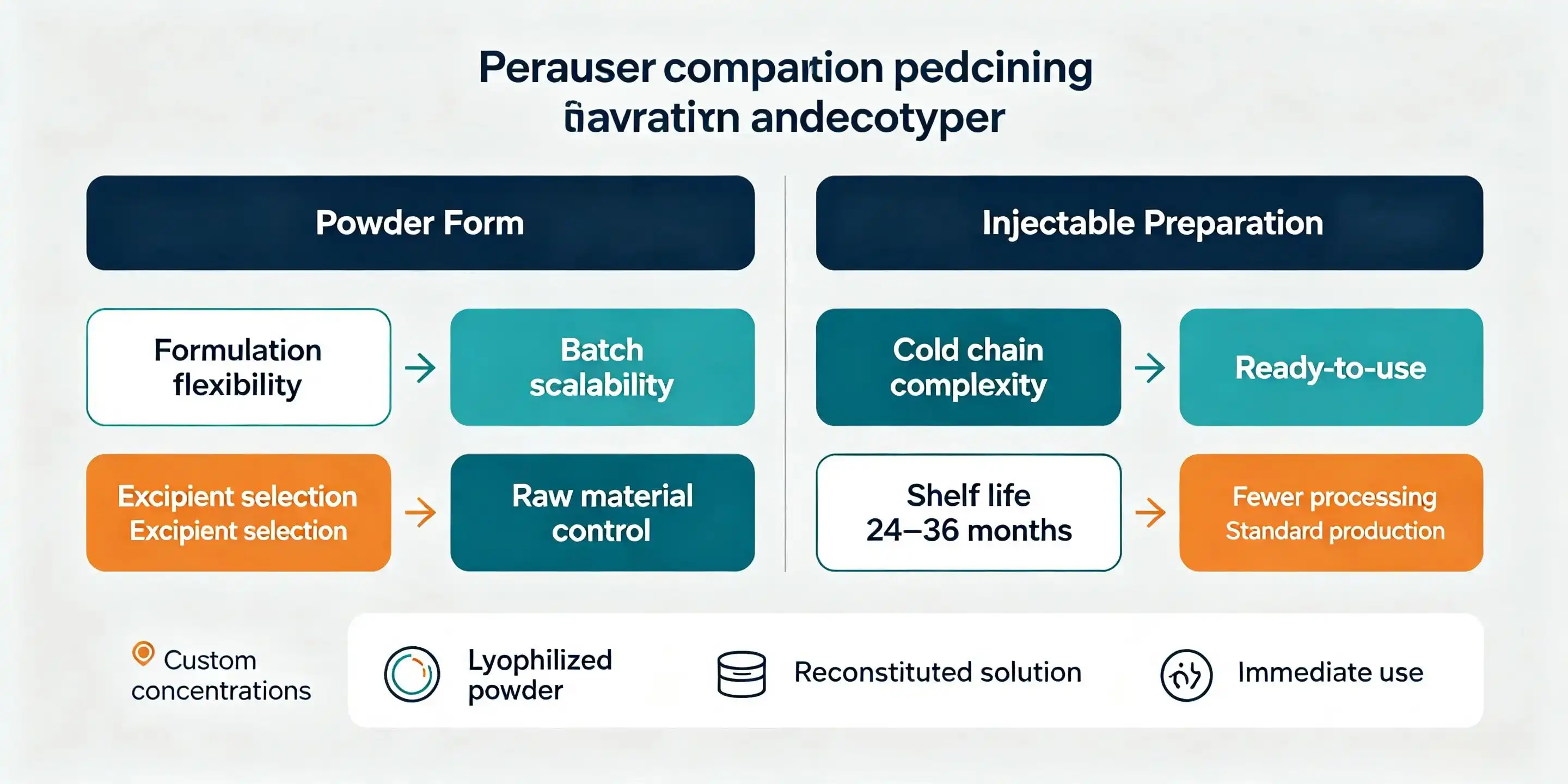
The powder form has clear benefits for drug companies that need to be able to change the way they make medicines. Getting the raw materials lets you make your own concentrations, choose excipients that work with your delivery systems, and change the batch sizes from test studies to full-scale production. Injectable solutions give up this flexibility in exchange for being easier to use and requiring fewer steps in the processing, which makes them appealing to generic makers who want to offer standard products.
Different formats have very different stability qualities. Lyophilized powder has a longer shelf life and can be kept in the fridge for 24 to 36 months, while reconstituted solutions need to be used right away or have short-term cold chain upkeep. This difference in security affects how inventories are managed and how delivery networks are set up, especially for exporters who serve markets that are spread out physically.
Competitive Somatostatin Analogues
Lanreotide is a structural cousin that has better selective affinity for certain receptor subtypes and can have longer-lasting effects when injected deeply under the skin. Octreotide Acetate powder seems to work about the same in most cases, but how each patient reacts depends on how their receptors are expressed. To improve its effectiveness in treating Cushing's disease, pasireotide binds to a wider range of somatostatin receptor subtypes, while Octreotide only works in some cases.
Choosing which of these alternatives to buy depends on the therapeutic target groups and market marketing strategies. Octreotide stays cheaper than generic drugs because it is made on a large scale and there are already generic drugs on the market. This makes it appealing to price-conscious markets. Novel analogs are more expensive, but they are worth it because they work better or more conveniently, appealing to specific medical aesthetics and rare disease groups.
Generic Versus Branded Product Considerations
Branded formulations usually put a lot of money into legal paperwork, clinical proof, and making sure the supply chain is reliable. The high prices of these goods are due to the fact that they come with a lot of high-quality infrastructure and expert support services. Generic options reach bioequivalence through shortened routes. They are much cheaper than brand-name drugs, which is helpful for situations where a lot of them need to be bought.
The chance of quality variation is different depending on the buying strategy. Established brand sources show reliable batch-to-batch reproducibility, which is backed up by mature production methods and full impurity analysis. Generic sources need strict seller qualification processes, such as on-site checks, comparative dissolution tests, and stability validation under the conditions that the product will be stored. When making lists of allowed vendors, regulatory managers have to weigh the need to cut costs against the amount of legal risk they are willing to take.
Procurement Guide for Octreotide Acetate Powder: Sourcing, Pricing, and Supplier Selection
Global Sourcing Channels and Market Dynamics
Pharmaceutical-grade peptide markets focus on places that have strong regulatory systems and a lot of experience with specialty production. Chinese companies have become major providers, taking a big part of the market thanks to their advanced solid-phase peptide synthesis platforms and low labor costs. Indian makers also offer good prices for general API markets, but making sure the quality is consistent requires careful screening of vendors.
European and North American providers stay ahead in high-value markets by using their own cleaning technologies and offering full regulatory support packages. When quality documentation, readiness for audits, and expert cooperation are important for custom synthesis projects, these sources really shine. When planning bulk purchases, it's important to look at how much of a region's capacity is being used. This is because when production is at its best, supply problems can shorten wait times and drive up spot prices.
Pricing Benchmarks and Cost Drivers
Pharmaceutical-grade material usually costs between $800 and $2,500 per gram on the market, but this depends on the quality requirements, the amount of the order, and where the seller stands in the market. Research-grade peptides that are 95–98% pure are cheaper, while GMP-certified APIs that are more than 99% pure are more expensive. When you commit to buying more than 100 grams, you can often get deeper discounts that save you 20 to 35 percent compared to buying in small amounts.
When figuring out the total cost of ownership, it's important to look closely at any hidden costs that go beyond the unit price. Fees for analytical tests, custom paperwork preparation, special packaging needs, and fast shipping can add 15 to 25 percent to base quotes. Even though they cost more up front, long-term supply deals that include technical support, legal help, and guaranteed capacity allocation may be a better deal.
Supplier Qualification Criteria
As a basic condition, GMP certification makes sure that manufacturing processes use quality systems that meet the standards of the pharmaceutical business. The past of FDA inspections shows how well people have been following the rules. Not getting a warning letter and passing an audit show that the business is mature. For Octreotide Acetate powder, European companies with CEP licenses show that they follow the strict rules set by the EU. This makes the process of importing easier for networks that buy things from other countries.
In addition to licenses, actual evaluation should use certificate of analysis review to test analytical skills. Sharp peak resolution, full impurity reporting below 0.1% thresholds, and approved test methods in HPLC chromatograms are all signs of an advanced quality control system. Responding quickly to technical questions, being willing to work with specific requirements, and being open about production schedules are some of the things that set trusted partners apart from transactional providers. For business models that depend on formulation, building ties with providers that offer help with application development gives them a competitive edge.
Logistics and Storage Compliance
For peptide buying to go smoothly, the cold chain must be maintained at all times, from the production sites to the final delivery. Temperature changes that break down peptide structure and hurt the effectiveness of therapy can be avoided with qualified shipping containers whose thermal performance has been proven. Recording that temperatures were checked during transport creates an audit trail that supports choices about when to release a product.
To get pharmaceutical materials through customs, import licenses, drug master files, and safety certificates that are in line with the rules of the target country must be carefully prepared. Freight forwarders with experience in pharmaceutical operations can handle these challenges, but buying teams should make sure that the carrier's skills and insurance coverage are sufficient before hiring them. Setting up dual-source supply arrangements lowers the risk of a single point of failure and keeps the business running even if the main sources have production delays or are limited by regulations.
Conclusion
Octreotide Acetate powder is a complex medicinal ingredient that needs to be bought in a way that protects quality while also making business sense. To be successful at buying, you need to know about the compound's chemical properties, its medicinal uses, and the formulation needs while managing the complicated provider environment. If procurement workers master these dimensions, their companies will be able to provide reliable, legal goods that meet strict industry standards. Strategic partnerships between vendors based on technical expertise, regulatory alignment, and open communication build long-term economic benefits in peptide markets with strict quality standards and changing regulatory frameworks.
FAQ
How do I verify supplier authenticity for pharmaceutical-grade material?
Ask for all the necessary legal paperwork, such as GMP certificates, site inspection records, and access to the drug master file. Do audits of the industrial sites, quality control labs, and documentation systems that are happening on-site. Independent testing labs, acting as a third party, confirm that the purity standards and impurity profiles given match the real properties of the product.
What purity level is appropriate for different applications?
Most research uses grades with 95 to 98 percent pure, which are good for in vitro studies and looking into how things work. For developing a commercial formulation, you need 98–99% purity to support experimental toxicity and Phase I studies. To make pharmaceuticals for sale, the ingredients must be more than 99% pure and have full impurity profiles that meet regulatory filing standards.
How should I manage temperature-sensitive shipments?
Use approved shipping crates made of phase-change materials that can keep temperatures between 2 and 8°C for the entire expected transport time plus an extra buffer in case something goes wrong. Include temperature loggers that are set to record continuous data and have warning levels that send instant notifications. Set up receiving processes that check the temperature of shipments before taking them, and make sure that quality agreements include criteria for rejecting shipments.
Partner with Xi'an Yihui for Premium Octreotide Acetate Powder Supply
As a reliable provider of Octreotide Acetate powder, Xi'an Yihui Bio-technology Co., Ltd. is ready to help you with your pharmaceutical production needs. Our ISO, Halal, and Kosher certificates show that we are devoted to meeting the high quality standards needed by pharmacy markets around the world. We have been experts in peptide APIs for over 13 years and serve customers in over 100 countries. This means that we can provide the reliable supply chain that procurement managers need.
Our competitive benefits go beyond low prices and include quick expert help that's available 24 hours a day, seven days a week, low minimum order amounts that allow for both pilot projects and large-scale production, and complete documentation packages that speed up regulatory approvals. Our product line meets a wide range of standard needs, from research-grade materials for early development work to GMP-certified APIs for market formulations. Get in touch with our team at sales@yihuipharm.com to talk about your unique needs, ask for full certificates of analysis, and look into volume pricing structures that fit your buying goals. You can find out how our combined skills in APIs, beauty peptides, and fine chemicals can add value to your entire product process by visiting yihuipharm.com.
References
1. Lamberts, S.W., van der Lely, A.J., de Herder, W.W., and Hofland, L.J. (2011). Octreotide in Acromegaly and Neuroendocrine Tumors: Mechanisms of Action and Clinical Applications. Endocrine Reviews, 32(3), 388-431.
2. Kvols, L.K. and Woltering, E.A. (2006). Role of Somatostatin Analogues in the Clinical Management of Neuroendocrine Tumors. Anticancer Drugs, 17(6), 601-608.
3. Reichlin, S. (1998). Somatostatin and Its Analogues: Clinical Applications in Endocrinology and Gastroenterology. Molecular and Cellular Endocrinology, 138(1-2), 1-10.
4. Weckbecker, G., Lewis, I., Albert, R., Schmid, H.A., Hoyer, D., and Bruns, C. (2003). Opportunities in Somatostatin Research: Biological, Chemical and Therapeutic Aspects. Nature Reviews Drug Discovery, 2(12), 999-1017.
5. Patel, Y.C. (1999). Somatostatin and Its Receptor Family. Frontiers in Neuroendocrinology, 20(3), 157-198.
6. Rubin, J. and Ajani, J. (2007). Octreotide Long-Acting Release in the Treatment of Carcinoid Syndrome: A Review of Clinical Trials and Practical Applications. Journal of Clinical Oncology, 25(11), 1371-1378.

Send Inquiry
You may like
Related Industry Knowledge