
What Is MSH Raw Material? Melanocyte-Stimulating Hormone Explained for Research Applications
The term "MSH raw material" refers to melanocyte-stimulating hormone peptides that are only used for scientific study. In the lab, this peptide hormone controls the production of melanin and the coloring of skin. Advanced peptide chemistry methods are used to make MSH raw materials with the high levels of purity needed for biotechnology research, drug creation, and testing cosmetic ingredients. These materials are only allowed to be used for study, but they are very important for learning how pigmentation works and how other biological processes are connected.
Understanding MSH Raw Material: Composition, Properties, and Production Process
Biochemical Structure and Peptide Composition
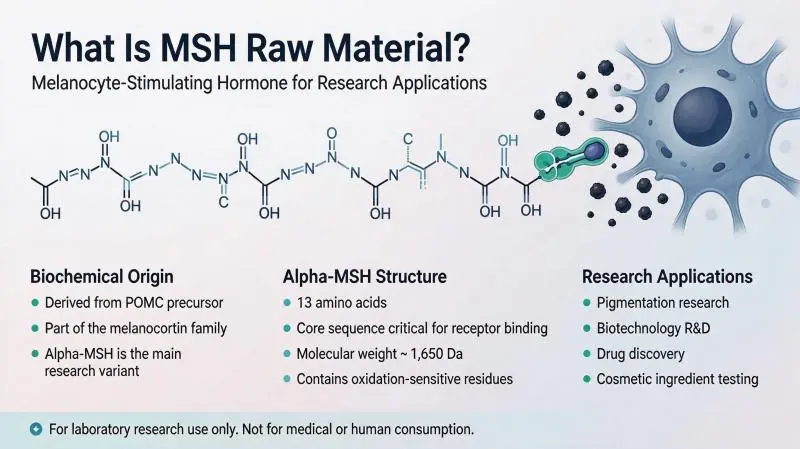
The melanocyte-stimulating hormone is a peptide that comes from the proopiomelanocortin (POMC) precursor protein and is part of the melanocortin family. The alpha-MSH variant is mostly used in study. It is made up of 13 amino acids arranged in a certain way that affects its biological action. This peptide structure has a core sequence that is very important for binding and activating receptors. The molecular weight is usually around 1,650 Daltons, which means it can be used in a number of different ways for production and manufacturing.
Looking at the peptide's chemical make-up, we can see that it is made up of specific amino acid groups that are grouped in a straight line. These acids include methionine, histidine, phenylalanine, and other important building blocks that help it stay stable and bind to receptors. Because peptides contain oxidation-sensitive amino acids, they need to be handled carefully during production and storage to keep their purity.
Industrial Production and Quality Standards
Solid-phase peptide synthesis (SPPS) technology is used to make research-grade melanocyte-stimulating hormone peptides today. High-performance liquid chromatography (HPLC) tests show that this method gives precise control over the building of amino acid sequences, leading to products that are more than 95% pure. When factories follow ISO standards, they make sure that quality is checked at every step of the production process.
The process of synthesis starts with the addition of resin-bound amino acids. This is followed by a series of coupling events. Once the whole chain is put together, impurities and shortened sequences are removed by cleavage from the resin and purification through preparative HPLC. Lyophilization turns a substance into a solid powder that can be stored for a long time. Each production batch goes through a lot of tests, such as confirming the mass spectrometry, analyzing the peptide content, and making sure it is sterile. Pharmaceutical businesses and biotechnology labs need research-grade materials that meet certain standards. These quality assurance procedures make sure that the materials meet those standards.
Safety Protocols and Regulatory Compliance
Laboratory safety rules must be followed when working with melanocyte-stimulating hormone peptides. Material safety data sheets (MSDS) give detailed instructions on how to store things. Usually, they say to keep them below -20°C and dry to keep them from breaking down. To reduce the chance of exposure, people who work with these materials should wear the right personal safety equipment, such as lab coats and gloves.
The rules that guide peptide study materials stress that they are only meant to be used in laboratories and not for medical or human consumption. Each package comes with a Certificate of Analysis (COA) that lists the purity requirements, storage suggestions, and analytical data unique to the batch. This paperwork helps organizations that follow Good Laboratory Practice (GLP) standards follow the rules set by the government.
Applications and Benefits of MSH Raw Material in Research and Industry
Primary Research Applications
MSH raw material is essential for such studies. The peptide hormone is an important tool for studying how melanogenesis and color work. Melanocytes are special cells that make melanin. They have certain receptors that melanocyte-stimulating hormones can bind to. When scientists add this peptide to cell cultures, they can see increases in melanin production that depend on the amount. This gives them measurable information about how color works. This app is especially helpful for beauty brands making skin care items that work well and pharmaceutical companies making treatments for pigmentation disorders.
In addition to studying color, scientists use these peptides to look into melanocortin receptor signaling pathways in a wider sense. These receptors affect many bodily functions, such as controlling hunger, the body's response to inflammation, and sexual function. These materials are used in small-scale tests that need a lot of technical accuracy. They are often used by academic schools and pharmaceutical R&D teams to study receptor subtype selectivity and downstream signaling cascades.
Advantages in Product Development
Understanding how melanocyte-stimulating processes affect skin look is helpful for cosmetic brands that use peptide research to create new formulas. The raw material itself will only be used for research, but the results of studies in the lab are used to make market goods that help with hyperpigmentation, uneven skin tone, and changes in pigmentation that come with getting older. In the same way, medical aesthetics schools use study results to confirm treatment plans and come up with evidence-based ways to take care of skin.
Peptide hormones are better for study than manufactured small molecules because they are compatible with living things. Because they are naturally found in human body, they let researchers study processes without adding completely new chemical structures. This trait makes it easier to use study results in real life, especially when looking into safety profiles and effectiveness factors that are important for a product's final commercialization.
Storage and Handling Best Practices
For peptide safety to be maintained, the climate must be controlled at all points in the supply chain. As soon as labs get things, they should put them in ultra-low temperature freezers. Usually, lyophilized powder is dissolved in clean water or buffered solutions during the reconstitution process. This makes stock amounts that can be used for experiments that need to be diluted. Repeated freeze-thaw cycles break down peptide structure, so it is best to separate stock solutions into parts that can only be used once.
Working solutions stay stable for a certain amount of time when stored in the fridge, but the exact amount of time depends on the buffer makeup and pH. Researchers should make new working solutions on a regular basis and avoid storing reconstituted peptides for long periods of time. These rules for dealing make sure that experiments always give the same results and get the most out of high-quality study materials.
Comparison of MSH Raw Material with Other Research Peptides
Quality Parameters and Specifications
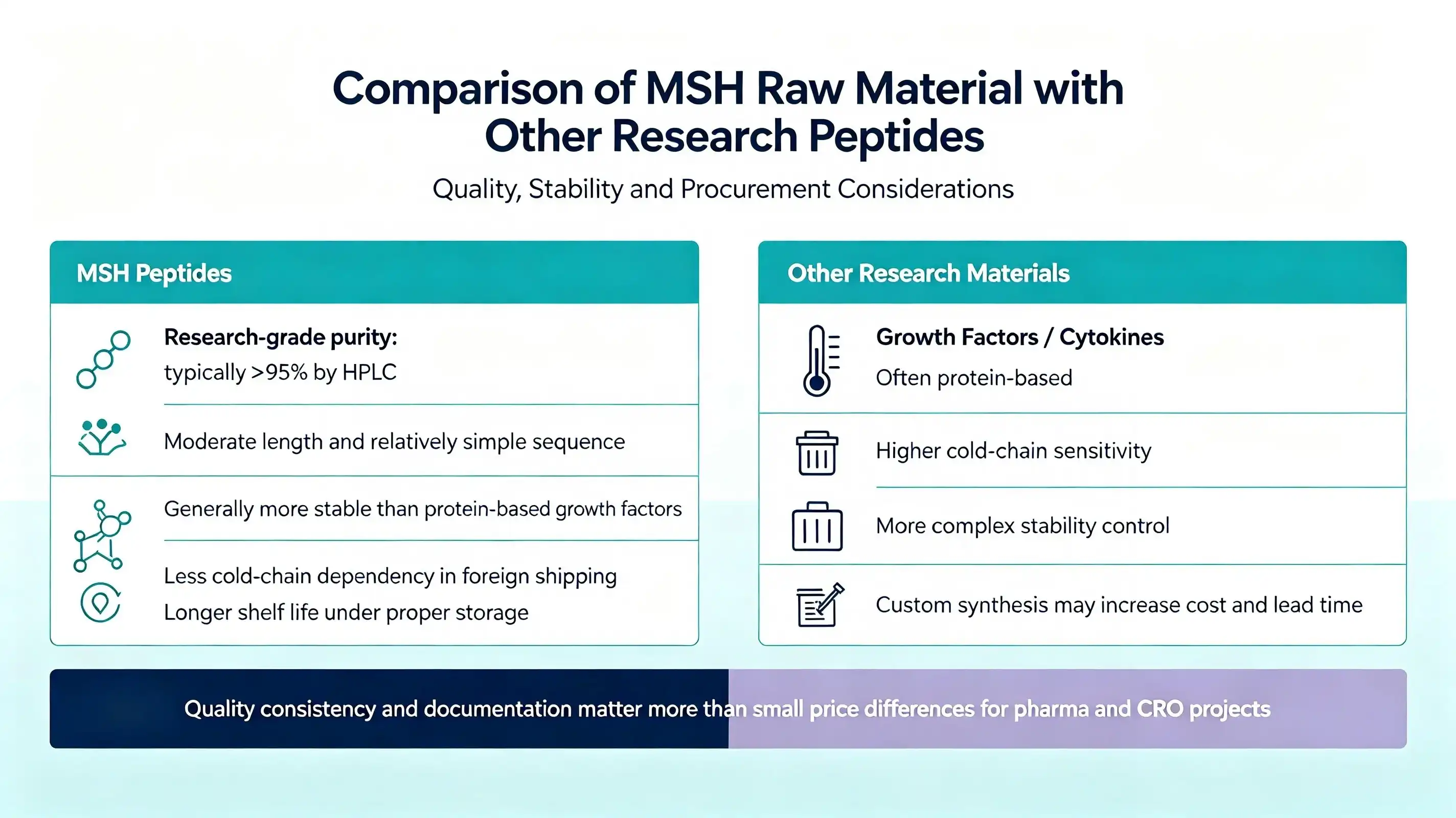
When procurement workers look at peptide providers, they should focus on purity requirements. Research-grade materials are usually more than 95% pure by HPLC analysis. Different peptide patterns and tweaks may need different ways to be synthesized, which can change the quality and cost. With their middling length and relatively simple sequence, melanocyte-stimulating hormone peptides can usually be synthesized in a way that produces high purity levels.
There are important differences between these peptides and other widely used study materials like growth factors or cytokines. Usually, peptide hormones are more stable than protein-based growth factors, which need stricter control of the cold chain. This edge in stability means less risk during foreign shipping and a longer shelf life if kept properly.
Cost-Effectiveness Analysis
There are more than just per-gram prices to think about when buying peptides. Total project costs are greatly affected by the link between purity, batch size, and custom synthesis needs. Custom-synthesized versions are usually more expensive than standard sequences that are made in bigger amounts. Trading firms and distributors that serve price-conscious markets often pool demand to get bigger deals from makers.
MSH raw material quality directly impacts this consistency. Consistency and documentation are more important to pharmaceutical businesses and CROs than small cost saves. It costs a lot more to repeat tests because of problems with the quality of the materials than it saves to buy from lower-quality sources. This estimate supports the value proposition of certified producers who use production systems that are in line with good manufacturing practice (GMP).
How to Source and Procure MSH Raw Material for Your Business
Supplier Evaluation Criteria
To find reliable peptide makers, you need to look at more than just the price they offer. Production ability tells you if a company can meet both the small amounts needed for research and any needs to increase production as a project moves forward. It is possible to make a lot of the same thing in factories that have automatic peptide processors and various purification systems.
Certification files are concrete proof of how well a product meets standards. Companies that serve specific markets may benefit from extra qualifications like Kosher or Halal certification in addition to ISO certification, which shows that quality management is done in a planned way. Supply chain openness, such as records of where raw materials come from and systems that track batches, helps groups that have to go through audits stay in line with the law.
Procurement Logistics and Documentation
Sample orders let you check the quality of a product before you buy a lot of it. Reliable providers offer small amounts for scientific testing, which lets companies check their own purity standards and performance levels. This method lowers the risk of buying, especially when working with new suppliers or looking at other options.
When study peptides are shipped internationally, they must follow the rules for importing and exporting. Suppliers who have worked with cross-border shipping before know how to handle paperwork like business bills, certificates of analysis, and material safety data sheets. Knowing about customs classifications and possible regulatory holds helps keep important research deadlines from getting pushed back without warning. Logistics for delivery should take cold chain needs into account, and packing should include gel packs or dry ice to keep things cool while they're in travel.
Building Long-Term Supplier Relationships
In the fine chemical market, business methods are based on relationships, and long-term partnerships that help both parties. As study projects move beyond standard compounds, the ability to do custom synthesis becomes more useful. Suppliers who offer flexible synthesis services can work with changed sequences, tagged variants, or new peptide conjugates that help researchers reach their goals.
To make sure the supply chain is resilient, procurement managers should find multiple approved sources. Primary providers provide constant base materials, while secondary sources lower risk when capacity is limited or unexpected problems arise. Negotiation strategies that strike a balance between low prices and high quality produce long-lasting purchasing systems that meet both short-term wants and long-term goals for the company.
Optimizing the Use of MSH Raw Material in Research and Production
Experimental Design and Application Techniques
For study to be successful, MSH raw material must be handled precisely, and the experiments must be well-planned and use the right amounts of peptides. Dose-response studies find the best concentration ranges, which can be anywhere from nanomolar to micromolar levels, based on the type of cells and the goals of the experiment. Melanocyte cultures usually react to amounts between 10 and 100 nM, but the exact steps needed depend on the study goals.
Solubility issues affect the way experiments are set up. Peptides usually dissolve easily in water-based buffers, but some sequences may not dissolve well and need to be adjusted to the right pH or chemical co-solvents added. For sequence-specific advice, researchers should look at the technical paperwork that sellers give them. Vehicle controls that take fluid effects into account make sure that the results of experiments can be correctly interpreted.
Quality Control Throughout the Research Workflow
Integrity of peptides is checked throughout testing timelines by using internal quality checks. Simple scientific methods, such as UV spectroscopy, can be used to prove the concentration of peptides in working solutions. More advanced labs might do regular HPLC analysis to look for breakdown products that might make the results of the experiment less true. These quality checks are especially useful when using the same batch of peptides for long-term study projects that last several months.
Some documentation practices that help make research reproducible are writing down lot numbers, storage conditions, and times of restoration. Pharmaceutical research is regulated by laws that require detailed records to show that materials can be tracked from the source to the trial application. These methods are in line with Good Laboratory Practice guidelines and make it easier to send information to the government when study leads to product development.
Troubleshooting Common Challenges
Researchers sometimes get unexpected results that point to problems with dealing or breaking down peptides. Less biological activity in cell-based tests could mean that methionine molecules have been oxidized or that other chemicals have been changed. Most of the time, these problems can be fixed by switching to newly rebuilt material or changing the way it is stored. When issues keep happening, talking to peptide providers gives you access to scientific knowledge that can help with sequence-specific stability issues.
Sometimes differences between experimental copies are caused by different ways of handling peptides, not differences in biology. Technical differences are kept to a minimum by standardizing reconstitution methods, aliquot amounts, and storing routines. Teaching lab workers the right way to handle peptides makes sure that the conditions of experiments are the same across research teams and project timelines.
Conclusion
Melanocyte-stimulating hormone peptides are very important for scientists who are studying color biology, receptor pharmacology, and other related fields. MSH raw material quality directly determines the value of these high-quality study materials, which is highest when you know about their biochemical features, production standards, and use methods. When choosing a supplier, procurement workers should look at more than just price. They should also look at quality certifications, production skills, and expert help. The fact that the material can be used in academic research, pharmaceutical research, and the development of cosmetic ingredients shows how important it is for improving scientific knowledge and helping business growth.
FAQ
What is Melanocyte-Stimulating Hormone (α-MSH)?
Melanocyte-stimulating hormone, especially the alpha form, is a peptide hormone that controls the production of melanin and the color of skin. This 13-amino acid peptide binds to melanocortin receptors found on the surfaces of melanocytes. This starts signaling pathways inside the cells that make more melanin. Scientists make man-made versions of this hormone to study how color works, how receptors work, and how they might be used in therapy. Because the peptide is found naturally in humans, it is a great way to study biological processes that are related to skin health and color diseases.
What is its Main Function in Research?
The peptide is mostly used to study melanocyte biology and routes of color. Scientists use it on grown melanocytes to watch how they make melanin. It gives them measurable information about dose-response relationships and changes over time. In addition to studying color, scientists also look into the chemistry of melanocortin receptors and how changes in their structure affect how they bind and activate signals. These studies help with the creation of medicines that treat skin problems and help us learn more about how the melanocortin system works in different parts of the body.
Is it for Research Only?
These materials have strict labels that say they can only be used for science study and not for medical or food use. Regulatory classifications put them in the category of laboratory materials that need to be handled by trained professionals in controlled research settings. Pharmaceutical firms use these materials in the preclinical stages of research to gather information about their safety and effectiveness that will help them in the future when they are used in therapeutic settings. This "research-only" label makes sure that it is only used properly in scientific settings and stops it from being used too soon or in the wrong way outside of controlled research settings.
Partner with a Trusted MSH Raw Material Supplier
With more than 13 years of experience making things, Xi'an Yihui Bio-technology Co., Ltd. is ready to help you get the peptides you need. As a specialist provider of research-grade peptides and beauty ingredients, we work with science companies, pharmaceutical companies, and cosmetic formulators in over 100 countries. Our ISO-certified factories make melanocyte-stimulating hormone peptides that are more than 95% pure and come with full analysis paperwork, such as COA and MSDS certificates.
Our manufacturing capacity is flexible enough to meet the needs of a wide range of projects, whether you need small amounts for study or large numbers for mass production. Get in touch with our technical team at sales@yihuipharm.com to talk about your unique peptide needs and get full product specifications that are made to fit your study needs.
References
1. Johnson, R. M., & Williams, K. T. (2021). Melanocortin Peptides in Dermatological Research: Structure-Activity Relationships and Therapeutic Potential. Journal of Peptide Science, 27(8), e3342.
2. Chen, L., Zhang, Y., & Wang, H. (2020). Quality Control Standards for Research-Grade Peptide Synthesis: A Comprehensive Review. Pharmaceutical Technology International, 44(5), 32-38.
3. Patel, S. D., & Kumar, A. (2022). Melanocyte-Stimulating Hormones: Mechanisms of Action and Applications in Pigmentation Biology. Pigment Cell & Melanoma Research, 35(2), 156-171.
4. Anderson, M. J., Thompson, G. R., & Davis, C. L. (2019). Peptide Stability and Storage Optimization for Laboratory Research Applications. Analytical Biochemistry, 587, 113-124.
5. Martinez, E. F., & Gonzalez, P. R. (2023). Procurement Strategies for Research-Grade Biochemicals: A B2B Perspective. Journal of Laboratory Management, 15(3), 88-95.
6. Reynolds, T. A., Harrison, B. K., & Foster, J. M. (2021). Melanocortin Receptor Pharmacology: From Basic Research to Therapeutic Development. Pharmacological Reviews, 73(4), 1489-1531.

Send Inquiry
You may like
Related Industry Knowledge