
What Is Etelcalcetide Hydrochloride?
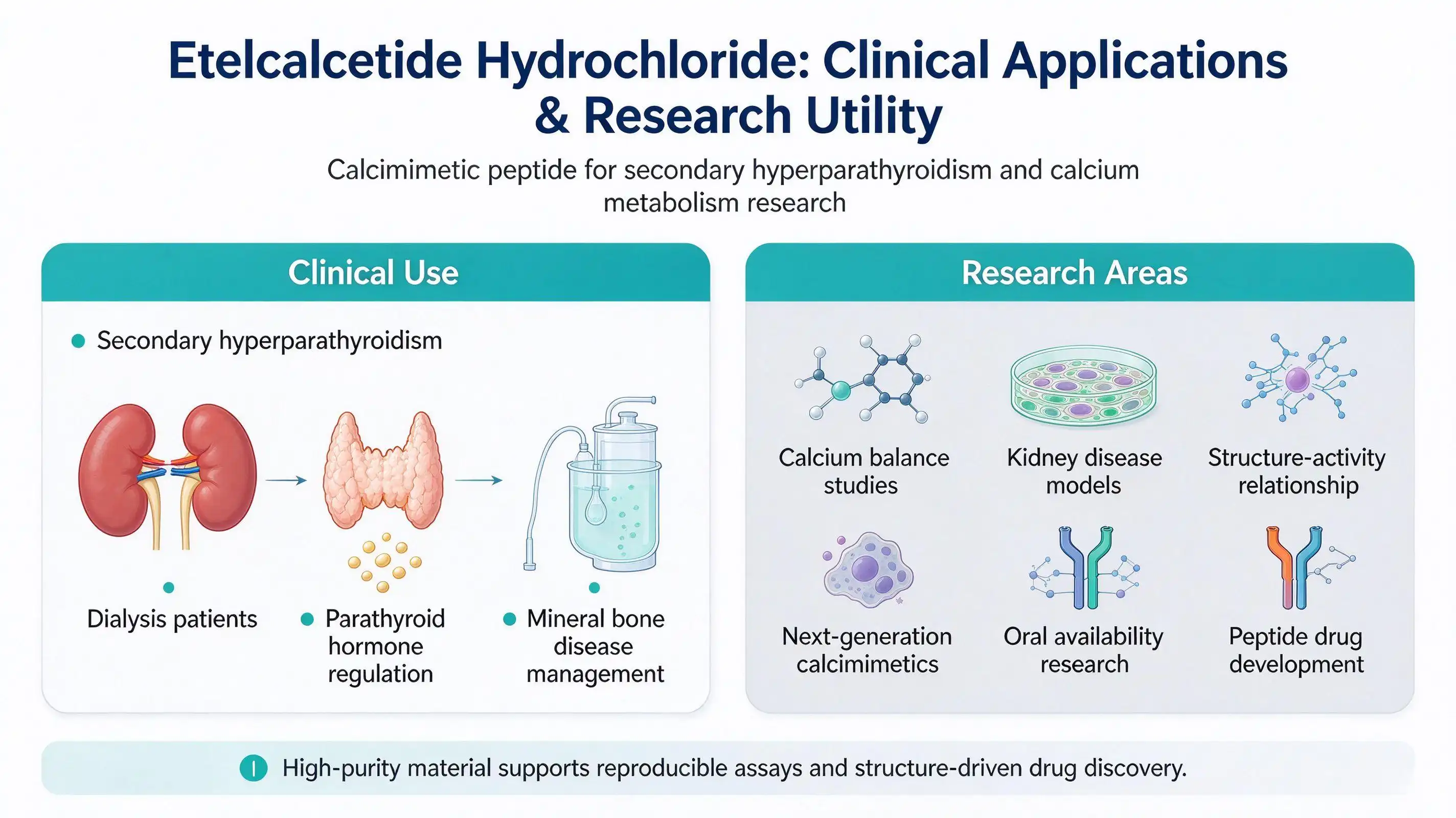
Etelcalcetide hydrochloride is a man-made peptide that is designed to change calcium-sensing receptors. This helps treat secondary hyperparathyroidism in people with chronic kidney disease who are on dialysis. This peptide-based therapeutic drug, which has the chemical formula C₃₈H₇₄ClN₂₁O₁₀S₂ and the CAS number 1334237-71-6, can be given intravenously and works to block parathyroid hormones specifically. Its use goes beyond clinical uses; it also helps pharmaceutical R&D centers and biotech firms do cutting edge research in areas like calcium metabolism, endocrine control, and the development of peptide drugs.
Understanding Etelcalcetide Hydrochloride: Mechanism, Uses, and Safety
Molecular Mechanism and Receptor Interaction
This calcimimetic works as a medicine because it can allosterically activate calcium-sensing receptors on chief cells in the parathyroid gland. Etelcalcetide hydrochloride directly raises receptor sensitivity to external calcium, while other vitamin D analogues indirectly lower parathyroid hormone. This process quickly lowers the production of PTH, which fixes the hormonal problems that are a feature of mineral bone disease. The peptide's molecular weight of 1084.71 g/mol and unique D-amino acid sequence [Ac-D-Cys-D-Ala-D-Arg-D-Arg-D-Arg-D-Ala-D-Arg-NH₂] make it resistant to enzyme degradation, which means it can keep working during dialysis sessions.
Clinical studies show that a significant drop in PTH is seen within hours of treatment, and the effects last throughout treatment cycles. The peptide forms a disulphide link with the L-cysteine residue on serum albumin, which holds it in place and increases the time it stays in circulation. This pharmacokinetic characteristic makes it very useful for studying long-lasting peptide formulations and drug delivery methods that bind to albumin.
Clinical Applications and Research Utility
Etelcalcetide hydrochloride is used to treat secondary hyperparathyroidism in the medical field, but it is also used for research purposes in the pharmaceutical and biotechnology industries. Universities and research centers use very pure material (≥98% by HPLC, 99% assay) for molecular studies that look at how kidney disease models affect calcium balance. The compound's well-known structure allows researchers to look into the relationship between structure and activity. This helps the creation of next-generation calcimimetic agents that work better or are easier to take by mouth.
Custom synthesis is very important when research and development teams need to make changes to peptide sequences or label versions with isotopes for pharmacokinetic tracking studies. Being able to get materials in different amounts, ranging from 1g for exploratory assays to 1kg for expanded preclinical programs, meets the wide range of scale needs that are common in pharmaceutical development pipelines. Throughout the research process, quality documentation like Certificate of Analysis, HPLC chromatograms, mass spectrometry reports, and Material Safety Data Sheets make sure that things can be tracked and that regulations are followed.
Safety Profile and Handling Considerations
A lot of clinical experience goes into setting safety standards that are used to guide proper handling procedures in labs. In therapeutic settings, it is common for the body to experience short-term drops in serum calcium and possible lengthening of the QT interval. This is why it is important to be very careful during in vivo studies. Keeping peptides at -20°C and keeping them away from light and water keeps their integrity, stopping reactive breakdown of sensitive cysteine residues and keeping disulphide bond stability, which is important for biological activity.
When scientists work with this calcimimetic peptide, they should follow standard biosafety procedures that are right for chemicals that are used in medicine. For experiments to be repeatable, the white to off-white powder form needs to be carefully weighed in controlled settings. When documentation standards are in line with ISO9001 and ISO14001 certifications, you can be sure that the quality of the materials meets the standards set by the international pharmacopoeia. This lowers the variability in research results and helps with regulatory submissions for investigational new drug applications.
Comparison of Etelcalcetide Hydrochloride with Alternative Treatments
Efficacy Distinctions Among Calcimimetic Options
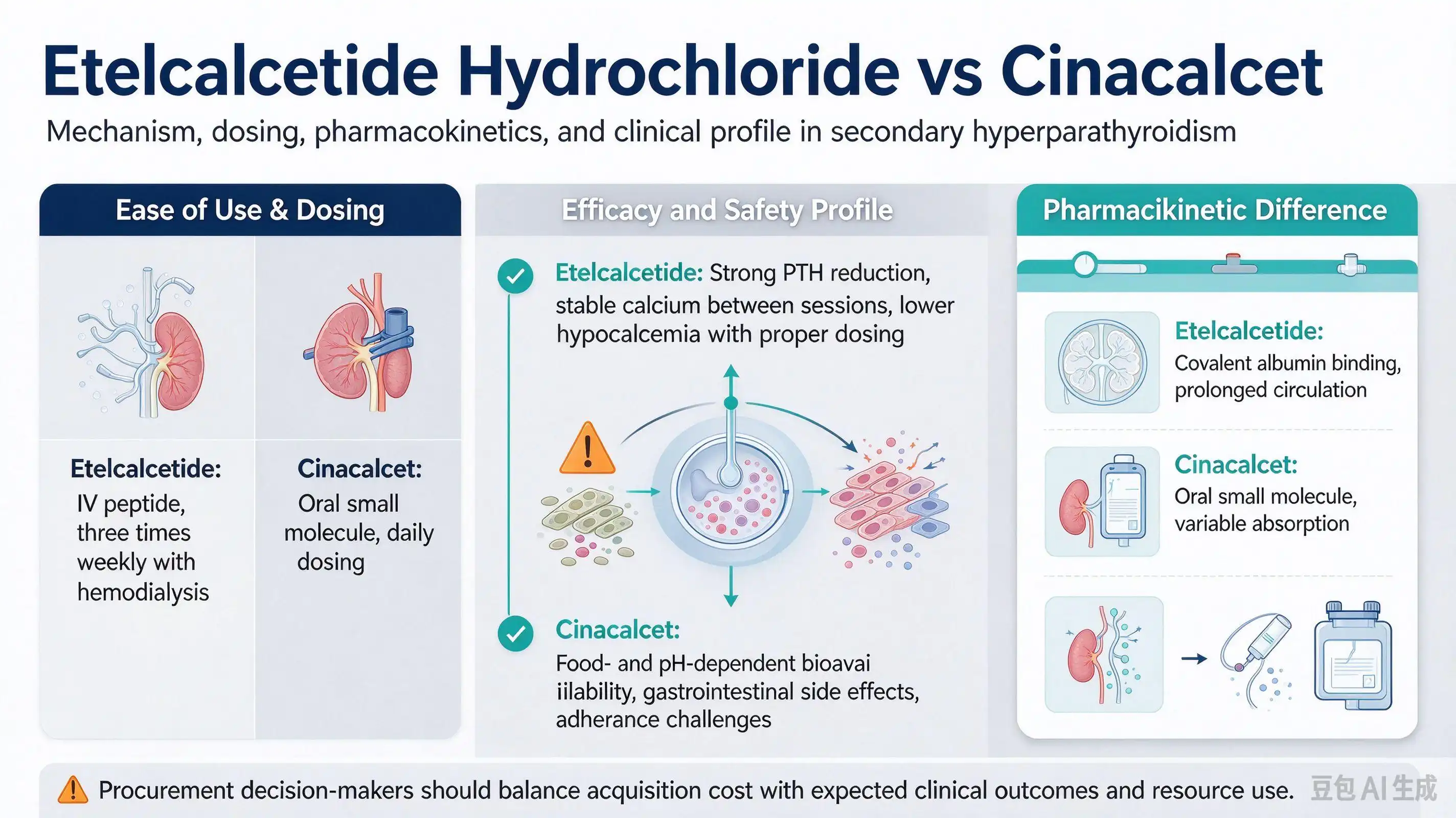
When you compare Etelcalcetide hydrochloride and cinacalcet, you can see that they are very different in how they work and how easy they are to use in therapy. Cinacalcet hydrochloride API is an oral small-molecule calcimimetic that needs to be taken every day and has varying bioavailability that depends on food intake and stomach pH. Digestive side effects and complicated dosing schedules make it hard for patients to stick to their treatment plans. On the other hand, the intravenous peptide formulation works perfectly with dialysis schedules. It is given three times a week during haemodialysis sessions, so there are no worries about commitment while still providing regular receptor activation.
Comparing these drugs in clinical trials shows that the peptide-based method has higher rates of lowering PTH and lower rates of hypocalcaemia when the right dose guidelines are followed. Because etelcalcetide binds covalently to albumin, it has a better pharmacokinetic profile than cinacalcet, which means that calcium and PTH levels stay stable between dialysis treatments. These differences are very important for procurement experts who are comparing how cost-effective different treatment plans are, because better effectiveness may make up for higher acquisition costs by lowering the number of hospitalisations and calcium needs.
Strategic Considerations for Procurement Decision-Making
Paricalcitol and other vitamin D receptor activators are a new type of medicine that can help treat secondary hyperparathyroidism through different ways of working. These drugs make it easier for the body to absorb calcium in the intestines and stop the transcription of the PTH gene directly. However, they can cause high calcium and phosphate levels, which makes dosing less flexible. The calcimimetic method keeps calcium and phosphorus levels from rising, which is a huge benefit for people who are already at high risk for vascular calcification.
From the point of view of the supply chain, comparing different treatment options means balancing the clinical outcomes with the difficulties of obtaining them. The prices and seller choices are affected by the availability of generic drugs, the number of patents, and the length of regulatory monopoly periods. Pharmaceutical companies and CROs that do research on comparative effectiveness need to be able to access reference standards for both vitamin D analogues and calcimimetic classes that they can trust. Building partnerships with providers who offer full technical support, custom synthesis, and regulatory paperwork cuts down on development risks and speeds up research timelines.
Procurement and Supply Chain Considerations for Etelcalcetide Hydrochloride
Sourcing Strategies for Research-Grade Material
To get steady supplies of research-grade Etelcalcetide hydrochloride, you need to carefully screen suppliers and do your research on the supply chain. There aren't many companies that can make pharmaceutical research-grade peptides because they have to follow very specific steps for making them, like adding D-amino acids and making sure that disulphide bonds are formed correctly. Purchasing managers should give more weight to suppliers who can show they have advanced knowledge in peptide synthesis, tested methods for purification, and strong quality control systems.
Different research sizes can be accommodated by packaging choices of 1g, 100g, and 1kg. These range from preliminary feasibility studies to GLP toxicology programs. Minimum order amounts starting at 1 gram give early-stage projects that aren't sure what materials they'll need some freedom, while bulk choices help with large-scale screening campaigns and formula development. Immediate shipment from in-stock inventory cuts down on project delays, which is important for research goals and clinical trial plans that need to be done quickly.
Regulatory documentation requirements vary across jurisdictions but consistently demand comprehensive material characterization. It's easier to prepare for regulatory reports and audits when suppliers offer full analytical kits that include HPLC purity analysis showing ≥98% purity, mass spectrometry confirming molecular identity, and stability data backing storage suggestions. Pharmaceutical companies that have implemented sustainable procurement policies are looking more closely at ISO9001 and ISO14001 certifications, which show that a company is committed to systematic quality management and environmental responsibility.
Cost Analysis and Budget Planning
The high prices of making peptides are due to the technical difficulty of adding D-amino acids and the need for special chemicals to create disulphide bonds. When compared to simpler peptide sequences, procurement professionals should expect higher prices. Prices will vary based on order volume, purity requirements, and delivery times. Setting up framework deals with qualified suppliers lets you get better prices based on volume and give priority to certain suppliers when supplies are low. This protects the continuation of research during important development stages.
When you source from other countries, you have to think about things like import rules, customs paperwork, and logistics that keep things at the right temperature. Because the storage needs to be at -20°C, cold-chain shipping arrangements are needed. These cost more and keep the materials stable while they're in transit. When planning a study program's budget for more than one year, it's helpful to look at the total cost of ownership, which includes the purchase price, shipping costs, customs clearing, and any material loss that might happen due to changes in temperature.
Brand, Manufacturer, and Supplier Insights
Identifying Qualified Manufacturing Partners
There are specialised contract producers around the world that make pharmaceutical peptides for both study and commercial markets. Companies with well-known peptide synthesis platforms, a history of regulatory inspections, and cGMP skills are the best partners for projects that are moving from research to clinical development. When looking at possible providers, you need to see what kind of professional skills they have in solid-phase peptide synthesis, purification chromatography systems, and analytical characterisation instruments.
Xi'an Yihui Bio-technology Co., Ltd. has the production skills needed to make complicated pharmaceutical peptides. Since 2010, the company has grown its range of skills to include making APIs, pharmaceutical intermediates, and fine chemicals, with peptide compounds being its main area of expertise. The company's ISO, Halal, and Kosher certifications show that it cares about quality processes and meeting the needs of a wide range of customers. Products mostly sent to Europe, the United States, Japan, and South Korea show that strict international rules were followed successfully.
Credibility in manufacturing goes beyond certifications and includes technical support services that help customers make their research protocols work better. By using their years of experience in peptide development, suppliers who give advice on improving solubility, making formulations work better together, and checking for stability can cut down on project timelines. Custom synthesis services allow for specific research needs, like changing sequences, using conjugation chemistry, or labelling isotopes in a way that standard catalogue products can't.
Authentication and Quality Verification
Fake pharmaceutical materials are very dangerous for both study ethics and patient safety. This is why verifying the supplier is a very important part of purchasing. Procurement teams should check the qualifications of manufacturers by talking to them directly, doing facility audits when they are possible, and comparing government databases that keep track of inspection results. Asking for batch-specific analytical data and comparing the results to what was expected helps find low-quality material before it gets into research workflows.
Setting up long-term relationships with suppliers is good for both parties because it makes it easier to predict demand and give better customer service. Suppliers can see what needs to be bought in the future, which lets them plan their capacity ahead of time and buy raw materials. Customers get dedicated technical reps who know how to use their specific research applications, faster answers to technical questions, and first choice when there are shortages in the market. During scale-up phases, when material needs rise dramatically and supply chain issues have a direct effect on clinical study timelines, these relationships become even more useful.
Best Practices and Recommendations for Using Etelcalcetide Hydrochloride
Laboratory Handling and Experimental Design
Good study results depend on how well the materials are handled from the time they are received until they are used in an experiment. As soon as the peptide is delivered, it should be put in -20°C storage with desiccation to stop it from absorbing water. Let sealed containers cool to room temperature before opening them so that the hygroscopic powder doesn't get wet. Make working solutions in the right buffers, taking into account the peptide's ionisable groups and the fact that it might clump together at high concentrations. Etelcalcetide hydrochloride usage guidelines and recommendations help ensure experimental reproducibility.
The peptide's mechanism needs calcium-sensing receptor expression to be taken into account in the experimental protocols. For in vitro tests using parathyroid cell lines or synthetic receptor systems, it is important to carefully adjust the calcium levels in the growth media because the levels of calcium at the start of the experiment affect the levels at which receptors are activated. When doing in vivo studies, researchers have to think about how different species' receptors work and how their pharmacokinetics can change dose plans. Initial dose-ranging studies find the best amounts that have measurable effects without making receptors too sensitive.
Quality Control and Data Integrity
Strong quality control procedures protect research investments and make sure that results can be repeated. Reanalyse arriving material using different analytical methods in addition to the paperwork given by the seller. Mass spectrometry checks the identity of molecules, while HPLC analysis proves purity and finds possible breakdown products. Setting internal reference standards makes sure that all of the experiments are the same and makes it easier to figure out what went wrong when the results don't match what was expected.
For regulatory compliance and scientific publication, documentation practices need to keep very accurate records that connect specific lots of materials to experimental results. Keep full records of the entire chain of custody, from receiving the goods to using them up. These should include information about how they were stored, how the solution was made, and any notes about stability. During regulatory checks, peer review, and technology transfer activities that move study results toward business development, these practices are very important.
Conclusion
Etelcalcetide hydrochloride is a complex peptide that can be used for research and treatment of disorders affecting calcium metabolism. Its unique way of working with calcium-sensing receptors and good pharmacokinetic properties from albumin binding make it a useful tool for drug research and development programs studying kidney disease, hormone regulation, and peptide drug development.
To successfully buy and use something, you need to know the technical details, what the supplier can do, and the right way to handle it so that the integrity of the material is maintained and the research can be repeated. As the ways to treat secondary hyperparathyroidism change, so does the need for high-quality reference standards and research-grade materials to help with both academic studies and business drug development projects.
FAQ
Is Etelcalcetide a Calcimimetic?
Yes, it works as a strong calcimimetic drug that turns on calcium-sensing receptors on the parathyroid glands. This stops PTH from working so that it can be used in research to study calcium metabolism and kidney disease models. Compared to small-molecule options, the peptide structure is more stable.
What Is Etelcalcetide Indicated For?
This calcimimetic peptide is used as a research tool to look into how the parathyroid gland works, how calcium is controlled, and how to treat mineral bone diseases. Scientists use controlled experiments to look into how it binds to receptors and what effects it has on the body.
How to Store Etelcalcetide HCl?
Keep Etelcalcetide hydrochloride stored at -20°C in containers that are tightly closed and shielded from light and moisture. These conditions keep the stability of the peptide by stopping oxidative breakdown and hydrolytic cleavage, which happen over long periods of storage.
Partner with a Trusted Etelcalcetide Hydrochloride Supplier
Xi'an Yihui Bio-technology Co., Ltd. is ready to help you with your research projects by providing pharmaceutical-grade Etelcalcetide hydrochloride that meets the strict standards for quality and paperwork that your projects need. Because we've been making pharmaceutical peptides for 13 years, you can count on a stable supply chain, cheap pricing, and technical advice that is tailored to your unique application needs. People from pharmaceutical companies, contract research organisations (CROs), and research institutions in over 100 countries use our services.
They are purchasing managers, research and development scientists, and quality assurance professionals. You can talk to our dedicated team at sales@yihuipharm.com about your Etelcalcetide hydrochloride needs, ask for certificates of analysis, or learn more about our custom synthesis options. As a well-known company that has been making Etelcalcetide hydrochloride for a long time and has ISO approval and all the necessary regulatory paperwork, we can give your important research projects the quality guarantee and supply reliability they need.
References
1. Block GA, Bushinsky DA, Cheng S, Cunningham J, Dehmel B, Drueke TB, Ketteler M, Kewalramani R, Martin KJ, Moe SM, Patel UD, Silver J, Sun Y, Wang H, Chertow GM. Effect of Etelcalcetide vs Cinacalcet on Serum Parathyroid Hormone in Patients Receiving Hemodialysis with Secondary Hyperparathyroidism: A Randomized Clinical Trial. Journal of the American Medical Association, 2017.
2. Nemeth EF, Shoback D. Calcimimetic and Calcilytic Drugs for Treating Bone and Mineral-Related Disorders. Best Practice & Research Clinical Endocrinology & Metabolism, 2013.
3. Fukagawa M, Yokoyama K, Shigematsu T, Akiba T, Fujii A, Kuramoto T, Odani E, Sato M, Hasegawa Y. A Phase 3, Multicentre, Randomized, Double-Blind, Placebo-Controlled, Parallel-Group Study to Evaluate the Efficacy and Safety of Etelcalcetide in Japanese Haemodialysis Patients with Secondary Hyperparathyroidism. Nephrology Dialysis Transplantation, 2017.
4. Martin KJ, Floege J, Ketteler M. Etelcalcetide for Secondary Hyperparathyroidism in Patients Receiving Hemodialysis. New England Journal of Medicine, 2017.
5. Shigematsu T, Akizawa T, Uchida E, Tsukamoto Y, Iwasaki M, Koshikawa S. Long-term Etelcalcetide Treatment in Japanese Hemodialysis Patients with Secondary Hyperparathyroidism. Clinical and Experimental Nephrology, 2018.
6. Patel L, Bernard LM, Elder GJ. Etelcalcetide for the Management of Secondary Hyperparathyroidism: A Review of the Evidence. Drug Design, Development and Therapy, 2018.

Send Inquiry
You may like
Related Industry Knowledge