
What is a nonapeptide-1? What can it do for your skin?
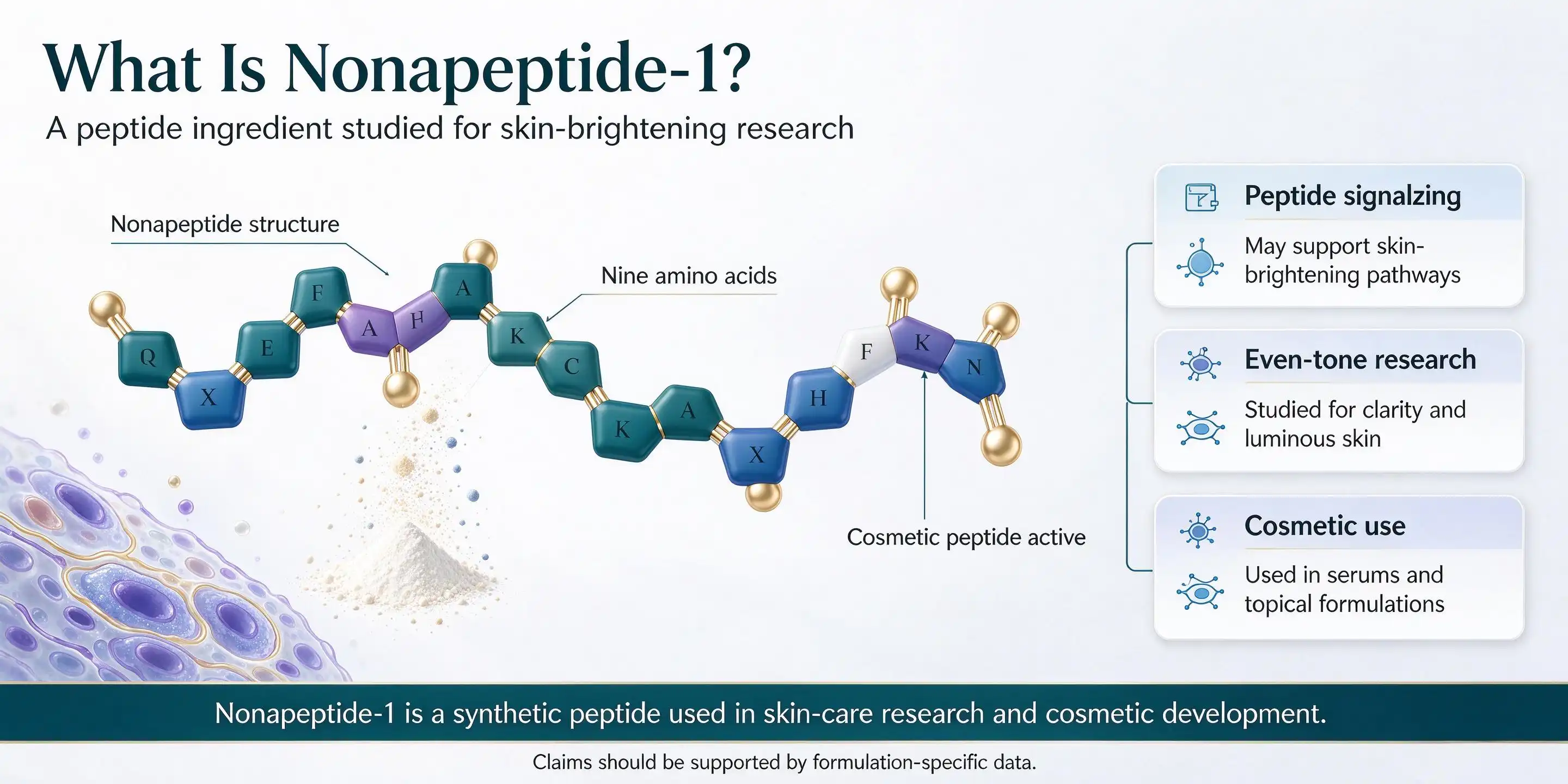
Nonapeptide-1 (CAS 158563-45-2) is a nine-amino-acid biomimetic peptide and one of the most technically precise skin-brightening actives available to formulation professionals today. Also called Melanostatin-5, this cosmetic peptide nonapeptide-1 works by competitively blocking α-MSH from binding to Melanocortin-1 Receptors (MC1R) on melanocytes, which stops melanin synthesis before it starts. Unlike enzyme-level inhibitors, it targets the upstream receptor signal, producing a cleaner, safer brightening effect that suits even sensitive skin formulations.
Understanding Nonapeptide-1: Structure, Mechanism, and Benefits
Chemical Identity and Specifications
The molecular formula for nonapeptide-1 is C₆₁H₈₇N₁O₉S, and its amino acid sequence is H-Met-Pro-D-Phe-Arg-D-Trp-Phe-Lys-Pro-Val-NH₂. Adding D-amino acids at places 3 and 5 makes the molecule resistant to being broken down by enzymes, which is a very important quality for finished cosmetic products. Our pharmaceutical-grade batches pass the HPLC test with a purity level of 98.0% or higher, giving R&D teams and quality managers the consistency they need for results that can be repeated.
How the MC1R Blocking Mechanism Works?
When UV light or changes in hormones cause α-MSH to be released, it usually binds to MC1R and starts the melanogenesis cycle. Nonapeptide-1 binds strongly to the same receptor spot, stopping that stimulation without harming melanocyte cells. With this non-cytotoxic method, the skin keeps its natural defenses while hyperpigmentation, melasma, and dark spots caused by inflammation are gradually lessened.
Additional Skin Benefits Beyond Brightening
Published research shows that cosmetic peptide nonapeptide-1 that target MC1R pathways also have measurable antioxidant activity. This means that they help fight free radical stress, which speeds up the aging process. Several in vitro studies show that long-term use leads to a change in the general uniformity of skin tone. Formulation engineers who are making serums or anti-aging lines with more than one benefit will find Nonapeptide-1 to be a good choice because it has two functions without adding another active ingredient.
Comparing Nonapeptide-1 with Other Popular Skin-Lightening Agents
Nonapeptide-1 is unique because it only works on certain receptors, doesn't contain any hormones, and doesn't cause photosensitivity. This means that finished goods containing it can be used every day without extra sun-avoidance instructions. This difference is important for brands that want to reach sensitive or post-surgery skin.
- Kojic Acid acts on tyrosinase enzyme activity directly and is cost-effective, but it shows notable instability in formulations exposed to air and light. It also carries a recognized skin sensitization risk, which limits its use in sensitive-skin products.
- Arbutin (alpha and beta) hydrolyzes to hydroquinone over time, raising safety questions in certain regulated markets. Its brightening effect is moderate, and concentration restrictions exist under EU cosmetic regulations.
- Niacinamide reduces melanosome transfer to keratinocytes rather than blocking melanin production itself. It is broadly tolerated and stable but functions through a different pathway that produces subtler tone-evening rather than targeted spot reduction.
- Tranexamic Acid addresses plasmin-mediated pigmentation and works well for melasma triggered by hormonal factors. However, it does not interfere with the MC1R receptor pathway, so it complements rather than replaces receptor-level inhibitors like Nonapeptide-1.
What sets Nonapeptide-1 apart is its receptor-specific action, hormone-free profile, and the absence of photosensitivity risk—meaning finished products containing it can carry a daily-use positioning without special sun-avoidance warnings. For brands targeting sensitive or post-procedure skin, this distinction carries real commercial weight.
Procurement Guide: How to Source High-Quality Nonapeptide-1 for Your Business?
Grade Distinctions That Matter
Not every grade of cosmetic peptide nonapeptide-1 works the same. Cosmetic-grade materials that are less than 95% pure may have impurity peaks that change both the effectiveness data and the regulatory submissions. Nonapeptide-1 of pharmaceutical grade at ≥98.0% HPLC purity is what serious formulation projects need, and that's what Xi'an Yihui ships as standard.
Documentation and Compliance Requirements
All B2B shipments should come with a full package of paperwork. What's in our standard package:
- Certificate of Analysis (COA) with HPLC chromatogram
- Material Safety Data Sheet (MSDS)
- Export compliance documentation for smooth customs clearance
- Traceability records supporting regulatory dossier submissions
This set of documents meets the needs of QA and RA managers who work with cosmetics that are regulated by the FDA, the EU, or other regional bodies.
Practical Procurement Terms
Our Nonapeptide-1 supplier specifications are set up so that they can be used for both small-scale R&D projects and large-scale production runs. Since the MOQ starts at 1g, sample-stage proof is easy to do. There are 1g, 100g, and 1kg bags for packaging, and 5,000g can be supplied every month. Because stock is kept ready to ship right away, lead times are known and planning for the supply chain stays on track.
Formulation and Application: Integrating Nonapeptide-1 into Skincare Products
Compatible Product Types
Cosmetic peptide nonapeptide-1 works well in water-based serums, emulsion creams, essences for sheet masks, and lotions that you leave on your skin. Its peptide structure is most stable when the mixture is kept at a pH level between 4.5 and 6.5 and is not exposed to too much heat during production. The molecule has a high affinity for receptors at low doses, which is why recommended use concentrations in cosmetic applications are usually between 1 ppm and 10 ppm.
Ingredient Compatibility Strategy
When Nonapeptide-1 is mixed with niacinamide, tranexamic acid, or vitamin C derivatives, it can work on more than one part of the color pathway at the same time, without interfering with the receptors of the other actives. Formulations with retinol are also suitable, but they need to be pH aligned because retinol works better at slightly higher pH than the peptide's stable window. To protect the methionine residue at the N-terminus, strong reactive preservation systems should not be mixed directly with it.
Stability and Preservation Considerations
The D-amino acid changes in the sequence make it much more stable at room temperature than all-L peptides, but it's still important to store it properly. Keep large items away from light and at 2–8°C. Antioxidant co-ingredients like tocopherol or ferulic acid help finished products keep working for as long as they're supposed to. In their clinical documentation, brands that make brightening claims about MC1R-blocking peptides always say that well-preserved formulations give consistent results in consumer trials.
Conclusion
The way cosmetic peptide nonapeptide-1 works is different and has been studied a lot when it comes to controlling skin coloring. Because it works at the receptor level, is safe, and can be mixed in a variety of ways, it is a good choice for companies making whitening serums, anti-melasma treatments, or beauty lines with multiple benefits. For procurement teams, pharmaceutical-grade purity, full documentation, and easy-to-reach MOQs get rid of common supply chain problems. When you work with a supplier who knows both the chemistry and the compliance rules, it's easy to find this peptide because the science behind it is solid.
FAQ
Q1: Is Nonapeptide-1 safe for sensitive skin?
A: Yes, Nonapeptide-1 does not irritate, sensitize, phototoxic, or contain any hormones. Because it doesn't break down the skin layer or make it peel, it can be used on sensitive skin, skin that has just had surgery, and skin that has been used every day for a long time in finished recipes.
Q2: How long does it take to see visible brightening results?
A: According to published beauty studies, the melanin index usually goes down between four and eight weeks of daily use at effective amounts. The timing depends on how bad the pigmentation was to begin with and how the product is designed as a whole.
Q3: Can Nonapeptide-1 be combined with retinol or AHAs?
A: Yes, but be careful. The most important thing to think about is pH alignment. At a pH level above 5.5, retinol works best, and Nonapeptide-1 is most steady between 4.5 and 6.5. This means that a pH level around 5.5 is good for both. AHAs need special care because their low pH can put stress on the stability of peptides. Encapsulation or sequential application forms can help with this.
Q4: What is the difference between cosmetic-grade and research-grade Nonapeptide-1?
A: Cosmetic-grade materials are meant to be used to make finished products, and they come with all the paperwork needed to send them to the government. Research-grade material, like what Xi'an Yihui sells (only for scientific research use), is at least 98.0% pure by HPLC standards and can be used for melanin blocking studies, MC1R binding tests, and anti-pigmentation lab research.
Partner with Xi'an Yihui for Verified Nonapeptide-1 Supply
With users in over 100 countries and over 13 years of production experience, Xi'an Yihui Bio-technology is a reliable cosmetic peptide nonapeptide-1 producer. Our 99%-assay Nonapeptide-1 has been tested by HPLC and comes with full compliance, COA, and MSDS paperwork. Samples start at 1g, and there aren't any long wait times. You can ask for a sample or detailed information right now by emailing sales@yihuipharm.com.
References
1. Mountjoy, K. G. (2010). Functions for pro-opiomelanocortin-derived peptides in obesity and diabetes. Biochemical Journal, 428(3), 305–324.
2. Kadekaro, A. L., Kavanagh, R., Kanto, H., Terzieva, S., Hauser, J., Kobayashi, N., & Abdel-Malek, Z. A. (2005). Significance of the melanocortin 1 receptor in regulating human melanocyte pigmentation, proliferation, and survival. Annals of the New York Academy of Sciences, 1040, 71–74.
3. Brenner, M., & Hearing, V. J. (2008). The protective role of melanin against UV damage in human skin. Photochemistry and Photobiology, 84(3), 539–549.
4. Dessinioti, C., & Katsambas, A. (2013). Melasma: From pathogenesis to treatment. Journal of the European Academy of Dermatology and Venereology, 27(5), 543–551.
5. Passeron, T., & Ortonne, J. P. (2005). Physiopathology and genetics of melasma. Journal of the American Academy of Dermatology, 52(7), S10–S14.
6. Schallreuter, K. U., & Wood, J. M. (2001). Regulation of melanin biosynthesis in the human epidermis by tetrahydrobiopterin. Science, 263(5152), 1444–1446.

Send Inquiry
You may like
Related Industry Knowledge