
What does cetrorelix do for IVF?
Cetrorelix powder plays a critical role in modern in vitro fertilization (IVF) protocols by acting as a potent GnRH antagonist. This synthetic decapeptide prevents premature luteinizing hormone (LH) surges during controlled ovarian stimulation, a common issue that can lead to cycle cancellations and reduced pregnancy success rates. By competitively blocking GnRH receptors in the pituitary gland, Cetrorelix acetate ensures that follicular development proceeds in a controlled manner, allowing fertility specialists to time egg retrieval optimally. This mechanism has transformed IVF treatment outcomes, offering patients better chances of success while reducing risks associated with hormonal fluctuations during delicate reproductive procedures.
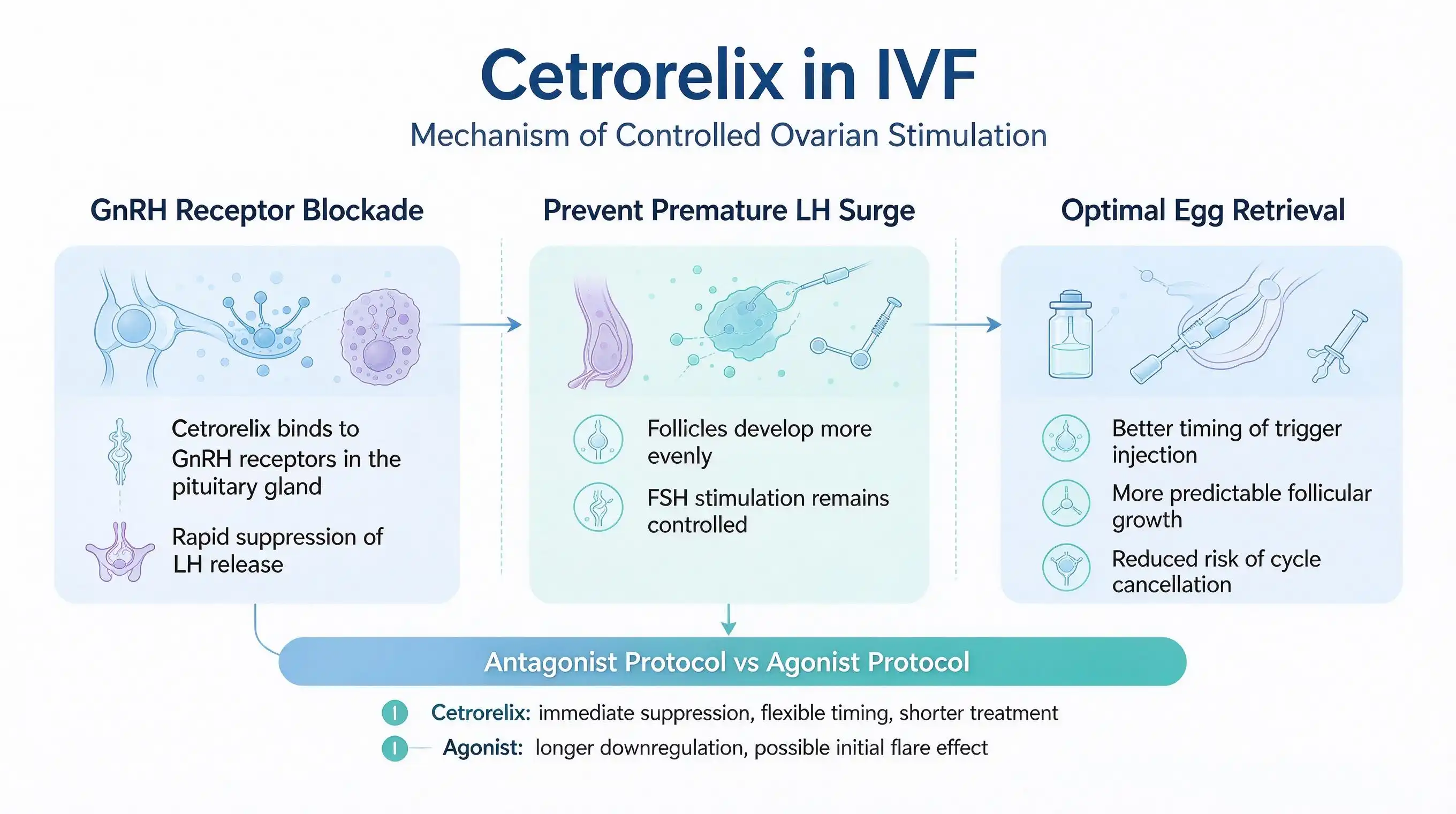
Understanding Cetrorelix Powder and Its Role in IVF
The Pharmaceutical Foundation of Cetrorelix Acetate
It is a pharmaceutical peptide with the CAS No.: 120287-85-6. Cetrorelix acetate is a third-generation GnRH antagonist that was made especially for use in assisted reproductive technology. This white to off-white lyophilized substance has a molecular formula of C₇₀H₉₂ClN₁₇O₁₄ and a molecular weight of 1431.04 g/mol. It is very pure, usually more than 99% by HPLC analysis. The peptide sequence (Ac-D-Nal-D-Cys-D-Phe-D-Trp-Lys-D-Trp-Arg-D-Trp-D-Arg-NH₂) was designed to quickly and permanently stop the release of gonadotropins without the "flare-up" effect that was seen with earlier GnRH agonists.
Mechanism of Action in Controlled Ovarian Stimulation
Keeping exact control over hormone levels is very important during IVF treatment sessions for determining success rates. Cetrorelix works by blocking GnRH receptors right away, which stops the pituitary gland from releasing LH too early. This blockage lets follicles develop evenly while FSH stimulation is managed. This makes the conditions perfect for recovering multiple high-quality eggs. An agonist protocol needs the pituitary gland to be downregulated for weeks, but an antagonist protocol using Cetrorelix gives patients more options, shorter treatment times, and less medication to take.
Clinical Benefits and Treatment Outcomes
Research shows that GnRH antagonist protocols that include Cetrorelix acetate have the same or higher success rates for getting pregnant than traditional long agonist protocols. Because it starts working right away, there is no chance of cysts forming or the hormonal side effects that come with flares. Clinical studies show that Cetrorelix greatly lowers the risk of ovarian hyperstimulation syndrome (OHSS), a potentially dangerous side effect that can happen to women getting fertility treatment. Because it is safe, Cetrorelix is especially helpful for people who are at a high risk of OHSS, like those with polycystic ovary syndrome or a lot of antral follicles.
Dosage, Administration & Safety Considerations
Standard Dosing Protocols for IVF Cycles
In practical practice, there are two main ways that Cetrorelix powder is usually given. On day 7 of stimulation, a 3 mg subcutaneous shot of Cetrorelix powder is given to start the single-dose schedule. This keeps the suppression going until the human chorionic gonadotropin (hCG) trigger injection is given. In the multiple-dose procedure, 0.25 mg shots of Cetrorelix powder are given under the skin every day starting on day 5 or 6 of stimulation and going through the day of the trigger.
Fertility experts choose procedures based on the unique traits of each patient, the way their ovaries respond, and the tastes of the center. Extreme accuracy in timing is very important—injections must be given every day at the same time to keep receptor blockade stable during the stimulation phase.
Common Adverse Effects and Contraindications
According to clinical tests, Cetrorelix has a very good safety rating, with most people only experiencing mild, short-term side effects. About 5 to 10 percent of people have reactions to their injection sites, which can include redness, swelling, and slight pain. These reactions go away on their own. Headaches, sickness, and tiredness affect a smaller portion of users and rarely mean that treatment needs to be stopped. Some things that make it not a good idea are being allergic to GnRH or GnRH analogs, being pregnant, or having serious kidney or liver damage. People who are allergic to latex should be told that some product presentations may have natural rubber latex in the package.
Evidence Base from Clinical Research
Comparing GnRH antagonists to agonists in multicenter randomized controlled trials has shown that Cetrorelix is a good option for suppressing the pituitary gland. A review of more than 20 studies with more than 4,000 IVF cycles showed that antagonist protocols cut the number of OHSS cases by about 50% while keeping the same rate of live births. Because Cetrorelix can be reversed right away, normal pituitary function can be quickly restored after treatment. This is especially helpful for patients who are having problems or need to cancel their cycles.
Comparative Insights: Cetrorelix Powder vs Other Fertility Drugs
Cetrorelix vs Ganirelix: Antagonist Comparison
As GnRH antagonists, both Cetrorelix and Ganirelix work in similar ways and are just as effective in the clinic. The main differences are in how the drugs work and how they can be dosed. Ganirelix only needs to be injected once a day with 0.25 mg, but Cetrorelix can be given in both single-dose and multiple-dose forms.
Some clinical data show that the tolerability profiles of the two compounds are slightly different, but the pregnancy results are about the same. Most of the time, decisions about which of these antagonists to buy are based on regional availability, price, and institutional experience, not on big differences in how well they work.
Antagonist vs Agonist Protocols: Strategic Distinctions
Traditional GnRH agonists, such as leuprolide (Lupron), need the pituitary to be downregulated for 10 to 14 days before they can start stimulating it. This makes treatment cycles longer. Agonist protocols are still very popular and work very well, but antagonist protocols have clear benefits, such as the use of Cetrorelix powder to immediately block premature LH surges, allowing clinicians to start ovarian stimulation right away and cut the time needed for treatment by about two weeks.
Patients like how convenient it is to have fewer shots and how much less expensive the medicine is. In the real world, antagonist procedures are especially helpful for patients who don't react well, older patients, and people who are at a high risk of OHSS because they allow for more personalized treatment plans.
Cost-Effectiveness and Market Positioning
To evaluate the purchase of Cetrorelix powder, more than just unit price is needed. Even though antagonist drugs may have higher per-dose costs than some agonists, the shorter treatment duration and lower need for monitoring usually make up for the higher overall cycle costs. The significantly lower frequency of OHSS means lower hospitalization costs and better safety ratings for patients. The way Cetrorelix is positioned in the market shows that it is a high-end treatment choice for customized IVF protocols. This makes it especially useful for experienced fertility centers that work with a wide range of patients who need custom stimulation strategies.
Procurement Guide for Cetrorelix Powder: What B2B Clients Need to Know
Sourcing Channels and Supplier Verification
Buying Cetrorelix acetate from a business-to-business (B2B) seller needs to be carefully checked to make sure the product is real and follows all the rules. The most reliable ways to get APIs are from certified pharmaceutical wholesalers and well-known companies that make them with quality systems that can be proven.
Checking methods should make sure the seller keeps up with GMP certification, the right manufacturing licenses, and a clear supply chain that can be fully tracked. Ask for a lot of paperwork, like Certificates of Analysis (CoA), data on stability, and reports on the regulatory status of target markets. Established suppliers give detailed impurity profiles that show that the amount of deletion peptides and D-isomers is still within the acceptable ranges set by the pharmaceutical industry.
Regulatory Compliance and Documentation Requirements
In every country, pharmaceutical-grade Cetrorelix acetate has to follow strict rules set by the government. Real sellers must meet basic standards like FDA registration, EMA approval paperwork, and following EP/USP outlines. The existence of DMF (Drug Master File) makes regulatory filings much easier for drug companies that are making finished dosage forms.
Material Safety Data Sheets (MSDS), detailed descriptions of the manufacturing process, and validation data to back up claimed purity specifications should all be included in quality documentation. International certifications like ISO 9001, ISO 13485, and good manufacturing practices that are specific to a region show that a supplier is committed to quality systems.
Packaging, Storage, and Logistics Considerations
To keep its safety and pharmaceutical effectiveness throughout the supply chain, Cetrorelix powder must be handled in a certain way. Standard packaging includes 1g, 100g, and 1kg amounts in bags that keep out wetness and protect against neutral atmospheres. Keeping it at -20°C in a dry, dark place stops it from breaking down, but specific stability data should be used to set temperature limits for shipping.
Managers of procurement should make sure that providers offer verified cold-chain services that keep an eye on the temperature during transit. For bulk sales, it's important to plan ahead so that customs clearing, the right paperwork, and on-time delivery don't get in the way of production schedules. Because Cetrorelix is hygroscopic, it needs to be stored properly as soon as it arrives, and the moisture content should be checked before it is used.
Conclusion
Cetrorelix powder has become an important part of modern IVF protocols because it helps control hormones more accurately, is safer, and gives doctors more treatment options. Its job of stopping early LH peaks—achieved through the timely administration of Cetrorelix powder—directly leads to better patient results and more effective fertility treatments.
For people who buy things for businesses in the pharmaceutical industry, research centers, and fertility clinics, knowing the technical specs, legal requirements, and sourcing factors is important to make sure they can get reliable, high-quality materials for important reproductive uses. Assisted reproductive technology is getting better as GnRH antagonist protocols change. To make good procurement strategies, it's important to choose suppliers carefully and make sure their products are of high quality.
FAQ
What makes cetrorelix different from other GnRH medications?
Cetrorelix works as a competitive GnRH blocker, blocking receptors right away without the hormonal rise that happens when you take an agonist drug. This system lets you use stimulation cycles right away, without having to wait for long periods of downregulation in the pituitary gland.
How should pharmaceutical-grade cetrorelix acetate be stored?
Keeping peptides at -20°C in a dry, dark place stops them from breaking down and keeps them stable. Due to the fact that lyophilized peptide formulations are hygroscopic, they need to be kept dry in sealed containers with desiccants.
What purity levels are required for research applications?
For research-grade Cetrorelix, it usually needs to be at least 98% pure by HPLC analysis, with recorded impurity profiles showing that there are only small amounts of deletion peptides and D-isomers that could change biological activity or the ability to repeat experiments.
Can cetrorelix acetate be shipped internationally?
With the right paperwork, like export licenses, customs declarations, and temperature-controlled logistics, you can ship things across international borders. Suppliers should help with legal issues that come up when moving pharmaceutical ingredients across borders.
Partner with Xi'an Yihui: Your Trusted Cetrorelix Powder Supplier
Xi'an Yihui Bio-technology Co., Ltd. is the reliable source for Cetrorelix powder. Research-grade Cetrorelix acetate with proven quality guarantee is available from Xi'an Yihui Bio-technology Co., Ltd. for use in pharmaceutical and biotechnology fields. Our pharmaceutical peptides are ≥98% pure by HPLC, and they come with full CoA paperwork and strict quality control methods to back them up.
We meet international compliance standards that are important for global supply chains because we are ISO, Halal, and Kosher certified. Because we've been in business since 2010 and have helped customers in over 100 countries, you can rely on us to provide you with high-quality peptides for reproductive research, hormone control studies, and API development. Flexible packaging from 1g to 1kg can be used for a range of project sizes, and our in-stock inventory means that we can ship right away. Our professional team is available 24 hours a day, seven days a week to help customers, provide technical support, and make solutions that fit the needs of each buying project.
Get in touch with us at sales@yihuipharm.com to talk about your needs for Cetrorelix powder with a manufacturer that cares about quality, compliance, and customer satisfaction. You can find full information about the products and how to buy them at yihuipharm.com.
References
1. Al-Inany, H.G., Youssef, M.A., Ayeleke, R.O., Brown, J., Lam, W.S., & Broekmans, F.J. (2016). Gonadotrophin-releasing hormone antagonists for assisted reproductive technology. Cochrane Database of Systematic Reviews, 4(4), CD001750.
2. Devroey, P., Aboulghar, M., Garcia-Velasco, J., Griesinger, G., Humaidan, P., Kolibianakis, E., Ledger, W., Tomás, C., & Fauser, B.C. (2009). Improving the patient's experience of IVF/ICSI: a proposal for an ovarian stimulation protocol with GnRH antagonist co-treatment. Human Reproduction, 24(4), 764-774.
3. Griesinger, G., Diedrich, K., Devroey, P., & Kolibianakis, E.M. (2006). GnRH agonist for triggering final oocyte maturation in the GnRH antagonist ovarian hyperstimulation protocol: a systematic review and meta-analysis. Human Reproduction Update, 12(2), 159-168.
4. Kolibianakis, E.M., Collins, J., Tarlatzis, B.C., Devroey, P., Diedrich, K., & Griesinger, G. (2006). Among patients treated for IVF with gonadotrophins and GnRH analogues, is the probability of live birth dependent on the type of analogue used? A systematic review and meta-analysis. Human Reproduction Update, 12(6), 651-671.
5. Olivennes, F., Belaisch-Allart, J., Emperaire, J.C., Dechaud, H., Alvarez, S., Moreau, L., Nicollet, B., Zorn, J.R., Bouchard, P., & Frydman, R. (2000). Prospective, randomized, controlled study of in vitro fertilization-embryo transfer with a single dose of a luteinizing hormone-releasing hormone (LH-RH) antagonist (cetrorelix) or a depot formula of an LH-RH agonist (triptorelin). Fertility and Sterility, 73(2), 314-320.
6. Tarlatzis, B.C., Fauser, B.C., Kolibianakis, E.M., Diedrich, K., Rombauts, L., & Devroey, P. (2006). GnRH antagonists in ovarian stimulation for IVF. Human Reproduction Update, 12(4), 333-340.

Send Inquiry
You may like
Related Industry Knowledge