
Should I keep retatrutide peptides powder frozen or refrigerated?
When procurement managers and research and development teams look for high-purity peptide APIs for cosmetics or drug development, they always have the same question: Should I keep Retatrutide peptides powder frozen or chilled? The answer varies on a number of things, such as the size of your order, how long you plan to use it, and the powers of your supply chain. The best way to keep Retatrutide peptide powder stable over time is to keep it frozen at -20°C±5°C, which is what most certified makers suggest.
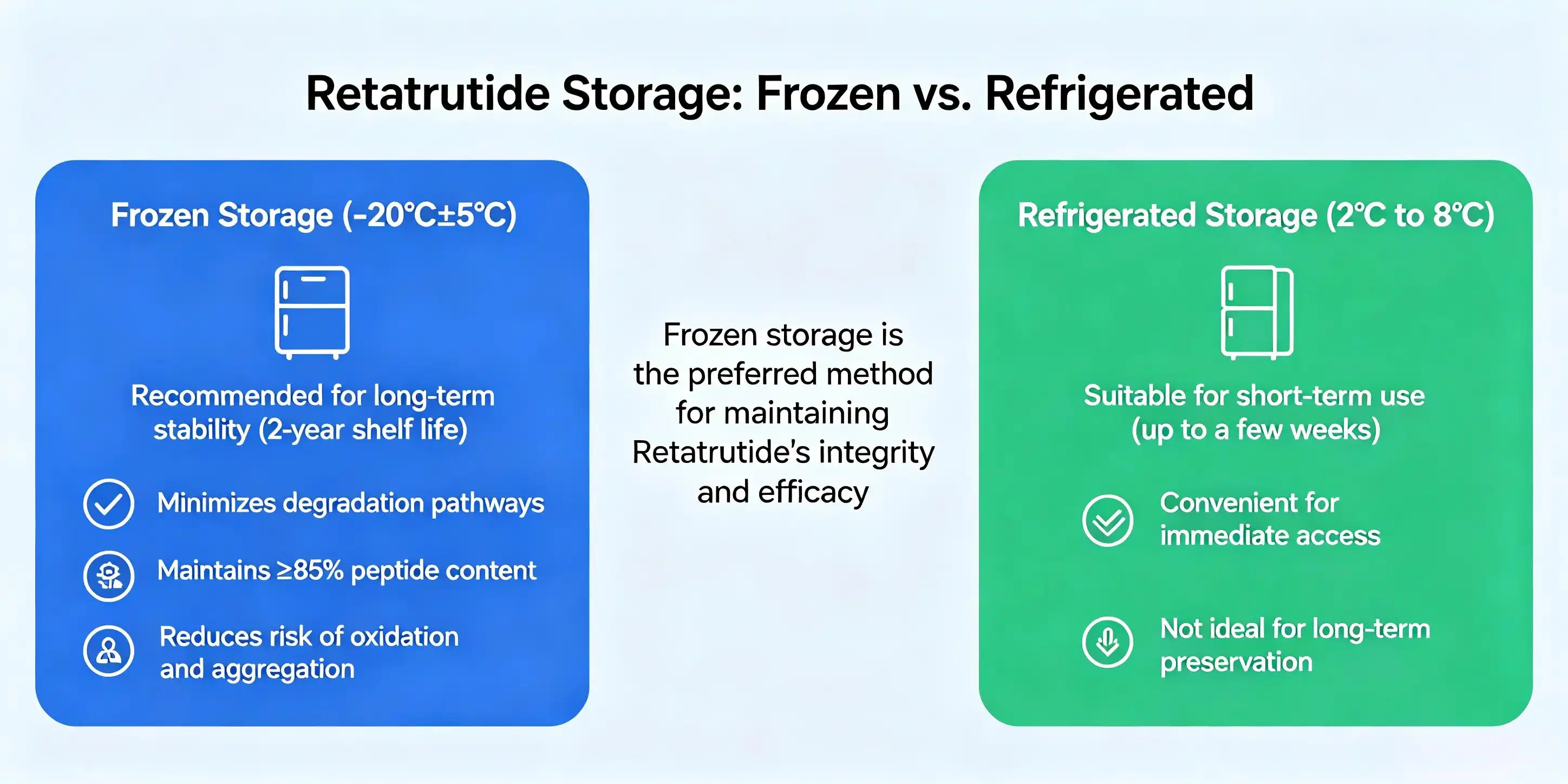
This storage temperature keeps the peptide's effectiveness and structural stability while minimizing the breakdown routes. For short-term storage, like up to a few weeks, refrigeration between 2°C and 8°C is fine, but frozen conditions are still the best way to keep the ≥85% peptide content and extend the two-year shelf life for research-grade and pharmaceutical-grade materials.
Introduction
Retatrutide has gotten a lot of interest in the metabolic health and pharmaceutical fields because it targets GLP-1, GIP, and glucagon receptors all at the same time in a unique way. As Eli Lilly moves this molecule through Phase III clinical studies to help people with obesity and type 2 diabetes, there is a huge demand for high-quality raw materials from CRO/CDMO companies, formulation labs, and biotech developers.
It's important for B2B procurement workers, like a purchasing manager balancing cost and supply chain security, an R&D engineer focused on purity and effectiveness data, or a QA/RA expert making sure GMP and FDA compliance, to know the right storage procedures. Handling peptides incorrectly can weaken their stability, lower their treatment effectiveness, and put regulatory paperwork at risk. This guide gives you specific, useful information about the best ways to store things, so you can make smart buying choices that protect the quality of the product from manufacturing to formulation.
Understanding the Storage Requirements of Retatrutide Peptide Powder
What Makes Retatrutide Unique Among Peptide APIs
Retatrutide (CAS: 2381089-83-2) is a complex powder that has been frozen. It has a molecular weight of 4731.33 Da and a complex amino acid sequence that includes changed residues like Aib and α-Me-Leu. The peptide's ability to bind to multiple receptors is due to its complicated structure, but it also makes it sensitive to stressors in the environment. Changing temperatures, letting water in, and being exposed to light can cause the peptide to clump together, oxidize, and break down. All of these things hurt its medicinal potential and make it less pure than 85%, which is needed for study and pharmaceutical uses.
Frozen vs Refrigerated Storage in Pharmaceutical Contexts
There are clear differences between these two types of storage settings based on industry norms. Peptides are kept at -20°C±5°C during frozen storage. This temperature range greatly slows down chemical processes and the growth of microbes. Refrigerated storage is between 2°C and 8°C, which is good for active ingredients or short-term storing but not for keeping raw materials fresh for a long time.
For lyophilized peptide powders like Retatrutide, freezing them follows the ICH stability rules and keeps them from absorbing water, which can happen at higher temperatures, even in cases that are tightly sealed. This difference is very important when looking at suppliers: a company that only offers refrigerated shipping could put your supply chain at risk, especially for packages that need to travel across continents over long periods of time.
Regulatory and Quality Assurance Considerations
Teams that buy things because they have to follow the rules have to make sure that the storage suggestions sellers give them match up with paperwork like COAs and MSDSs. Reputable makers will say to store at -20°C, out of the light, in a dry, covered space. This is similar to how ISO9001 and ISO22000 quality management standards say to store things. Traceability and batch consistency are made sure by these procedures, which is very important for clients in controlled markets who are trying to get FDA or EMA reports.
Scientific Principles Behind Retatrutide Peptide Powder Storage
Degradation Mechanisms at Different Temperatures
To keep peptides stable, both chemical and physical breakdown must be kept to a minimum. Retatrutide can still have its peptide links broken by water when it is stored in the fridge, especially at locations close to aspartic acid and glutamic acid residues. If methionine and cysteine analogs are found in changed sequences, they also oxidize faster than the freezing point. When wetness comes in contact with lyophilized powders, even at low temperatures, they can break down physically in ways like clumping or precipitation.
Frozen storage effectively arrests these processes. At -20°C, molecules move much more slowly, which means that chemical processes have less kinetic energy. Retatrutide peptide powder stored under these conditions benefits from the same principle: autocatalytic breakdown pathways that work like enzymes stay inactive, and water stays frozen and can't be broken down. Clinical testing data and stability studies regularly show that peptides that are kept frozen stay active for 24 months, while samples that are kept in the fridge may lose some of their potency within six to twelve months.
Shelf Life and Safety Profiles
The Retatrutide peptide powder has a two-year shelf life as long as it is kept frozen and under controlled circumstances. The time frame shown here is based on accelerated stable testing methods that mimic long-term storage settings. Deviations from the suggested conditions, like multiple freeze-thaw cycles or handling that leaves the product at room temperature for a long time, can shorten this shelf life by a large amount. For procurement managers, this means being extra careful with the supply chain: it becomes a top goal to choose vendors whose cold chain operations have been tested and whose packaging is made to keep its temperature while it's being shipped.
Evidence from Case Studies and Industry Practice
Pharmaceutical companies often do tests called "forced degradation" to find out what storage conditions are most important. Data from peptide analogs in the GLP-1 agonist family show that freezing is a much better way to keep the structure's shape and its ability to bind to receptors than cooling. Due to its newness, there aren't many specific published studies on Retatrutide yet. However, extrapolation from chemically related peptides like tirzepatide gives strong support for methods for frozen storage.
Practical Storage Solutions for B2B Procurement Clients
Storage Recommendations Based on Order Volume
For large orders, from 100 grams to kilograms, you need specialized ultra-low temperature coolers with backup power systems and constant surveillance. CRO centers and drug companies that are doing multi-batch production efforts should make these investments. Sample orders of 1g to 10g, which are typical in formulation labs and research institutions, can be kept in regular laboratory freezers as long as the temperatures stay stable and the doors aren't opened all the time, which can cause temperature changes.
Regardless of scale, splitting it into smaller pieces as soon as it arrives reduces the chance of freeze-thaw damage. When a procurement manager gets a 100g bulk order, they might repackage the material right away into 10g pieces and freeze each one separately to keep the majority and let working numbers thaw as needed.
Packaging Technologies Supporting Cold Chain Integrity
Peptide operations have changed a lot because of new package technologies. Vacuum-sealed foil bags with desiccant sachets keep dampness out, which is important for lyophilized powders. More and more, suppliers use phase-change materials (PCMs) for frozen packages that are set to stay below zero for 48 to 72 hours, which is long enough for fast courier services like DHL, FedEx, and TNT. Temperature data loggers built into these systems provide written proof of cold chain compliance, which is needed for GMP-certified supply chains.
Xi'an Yihui has ready stock in local warehouses across major markets, which allows for delivery windows of one to three days and greatly reduces temperature changes caused by transport. This geographical distribution plan solves a common problem in foreign purchasing: even with the best packing, the longer a package is in transit, the higher the risk of thermal damage.
Supplier Responsibilities and Supply Chain Best Practices
When choosing a provider, it's not enough to just compare prices; you also need to look at their cold chain skills and quality systems. Retatrutide peptide powder requires particular attention to these factors, as improper handling can compromise its stability. Procurement teams should check possible vendors for ISO9001 certification, which requires written storage and handling procedures. They should also ask about backup storage methods in case something goes wrong with the main equipment. Reliable providers give full storing instructions with each delivery, including suggested reconstitution methods and stability data to back up their suggestions.
Quality assurance managers like it when providers can give them stability studies and store validation records that are specific to each batch. These papers prove that the shipped material was kept in perfect conditions from the time it was made until it was packed. They also provide the traceability needed for regulatory reports and internal quality checks.
Comparing Storage Options: Frozen vs Refrigerated for Retatrutide Peptide Powder
Advantages and Limitations of Frozen Storage
Frozen storage is the best way to keep things stable and extend their shelf life, so it's the best choice for long-term study projects and stockpiling raw materials. The main benefits are low chance of degradation, keeping peptide purity at ≥85%, and being in line with norms in the pharmaceutical business. This way of doing things backs up the two-year shelf life claim and cuts down on how often you have to reorder, which can be helpful when handling relationships with suppliers and negotiating bulk discounts.
However, cold storage makes things more difficult to plan. Ultra-low temperature coolers use a lot of energy and need to be serviced regularly. International packages need dry ice or special PCM systems, which drives up the cost of freight. When getting materials from a single large container, they have to go through repeated freeze-thaw cycles, which can cause them to clump together and lose their effectiveness. This means that careful inventory management is needed.
Benefits and Risks of Refrigerated Storage
Refrigeration makes dealing easier and requires less equipment, which makes it a good choice for places that can't fit a lot of freezers or need to prepare materials quickly. Retatrutide peptide powder stored under refrigeration, however, may degrade faster than frozen forms, so users should weigh convenience against long-term stability. Peptides can be used without having to wait for them to cool, which speeds up lab work. When room-temperature-stable or cold packaging is enough instead of frozen supplies, shipping costs go down.
The trade-off involves accelerated degradation kinetics. Hydrolytic and oxidative processes are still active at 2°C to 8°C, especially when there is a small amount of wetness present. Materials that will be used within a few weeks may be able to be stored in the fridge, but long-term stocks run the risk of losing their effectiveness and failing quality control tests. For procurement experts, this means that they have to quickly turn over their goods and risk throwing away things that don't meet the standards before they can be used.
Decision-Making Criteria for Procurement Teams
When deciding between frozen and cold storage, you need to look at a number of practical factors. The size of the order is very important. For example, small, frequent purchases for instant use may need to be handled in a cold way, while big purchases for pipeline projects need to be kept frozen. Usage patterns are also important. For example, labs that are doing ongoing research benefit from frozen stocks that can be used for years, while formulation facilities that are making production batches may be fine with short-term storage in the fridge to make operations easier.
Budget constraints cannot be avoided. The infrastructure for frozen storage costs money, but it guards against the hidden costs of damaged materials, failed trials, and supply gaps. Quality-focused companies put frozen storage at the top of their list of ways to reduce risk, knowing that the costs of replacing materials and delays in projects are much higher than the costs of cold chain management.
Conclusion
The right way to store Retatrutide peptide powder is very important if you want to keep its ≥85% purity, molecular integrity, and medicinal potential all the way through your supply chain. Frozen storage at -20°C±5°C is still the gold standard in the business. It offers longer shelf life and compliance with regulations that options that require refrigeration can't match.
When B2B procurement professionals are dealing with the complicated world of pharmaceutical APIs and cosmetic peptides, they can turn storage from a problem into a competitive advantage by working with suppliers who can prove they have good cold chain management, thorough quality documentation, and quick technical support. If you know these storage rules, you can protect your investment and make sure that every gram of peptide stays as potent as your uses need it, whether you're buying small amounts for study or large amounts for production.
FAQ
Can Retatrutide peptide powder tolerate brief room temperature exposure during handling?
As long as the powder is quickly put back into frozen storage after being exposed for less than 30 minutes, usually while it is being weighed or divided up, it is usually fine. Long-term contact at room temperature lets wetness soak in and starts the breakdown process, especially in damp places. As a general rule, handling should only happen in controlled settings, on dry desks, and with containers open for as little time as possible. Always reseal packages right away and put items back in storage at -20°C right away.
What procedures should I follow when receiving a Retatrutide shipment?
As soon as the package arrives, make sure it is still intact and check any temperature data loggers that may be inside. Within 15 minutes of opening, move the items to -20°C storage. If the shipment came cold, you should decide if the length of time in travel and your planned use make it worth freezing or holding in the fridge right away. Write down the conditions of receiving, including any changes in temperature that were seen on data loggers, and get in touch with your provider if the conditions that were agreed upon were not met. This paperwork backs up quality control procedures and possible claims that could be made if serious quality problems happen.
Do different peptide dosages or formulations require distinct storage approaches?
No matter what size package it comes in, pure lyophilized powder should always be stored frozen according to the same rules. Reconstituted peptide solutions, on the other hand, need to be kept cool, between 2°C and 8°C, and they should only be used within the time limits set by stability data, which are usually no more than a few weeks. Custom formulas that use stabilizers or excipients may have different storing needs that are explained in the supplier's paperwork. Instead of following general rules to specific formulas, you should always look at the COA and technical data sheets for batch-specific information.
Partner with Xi'an Yihui for Reliable Retatrutide Peptide Powder Supply
When you work with an experienced provider who knows your business issues, it's easy to handle the complicated processes of peptide storage and procurement. Since 2010, Xi'an Yihui Bio-technology Co., Ltd. has worked with customers in more than 100 countries on research, cosmetics, and pharmaceuticals. They have built a name for quality, technical know-how, and service that is focused on the customer. Our Retatrutide peptide powder meets strict requirements, including being 99% pure by HPLC, having a white to off-white color, and fully documented CAS 2381089-83-2. It also comes with a full COA, MSDS, and handling instructions.
Our strategic advantage is that we keep ready-to-ship goods in nearby warehouses, so we can send them in one to three days and keep the cold chain as safe as possible. There are a variety of flexible packing choices that can hold anything from research-scale 1g samples to bulk orders of 100g or more, and they can be changed to fit your exact needs.
Our ISO9001, ISO22000, HACCP, HALAL, and KOSHER certifications show that we are dedicated to quality systems that help you meet legal requirements. In addition to supplying products, our expert team offers customer service 24 hours a day, seven days a week. They can help you with composition, storage, and stability data that is specific to your application.
Xi'an Yihui is the partner you need whether you're a procurement manager looking for a reliable Retatrutide peptide powder supplier with reasonable prices and proven quality or an R&D engineer who needs to be able to do custom synthesis. You can email our team at sales@yihuipharm.com or visit yihuipharm.com to talk about your specific needs and find out how our knowledge of fine chemicals and pharmaceutical intermediates can help you finish your projects faster while keeping the quality of the product safe from production to use.
References
1. Müller, T.D., Finan, B., Bloom, S.R., et al. "Glucagon-like peptide 1 (GLP-1) and the regulation of energy balance." Physiology & Behavior, 2019, 209: 112609.
2. International Council for Harmonisation of Technical Requirements for Pharmaceuticals for Human Use. "Stability Testing of New Drug Substances and Products Q1A(R2)." ICH Harmonised Guideline, 2003.
3. Manning, M.C., Chou, D.K., Murphy, B.M., et al. "Stability of protein pharmaceuticals: an update." Pharmaceutical Research, 2010, 27(4): 544-575.
4. Jorgensen, L., Hostrup, S., Moeller, E.H., et al. "Recent trends in stabilising peptides and proteins in pharmaceutical formulation—considerations in the choice of excipients." Expert Opinion on Drug Delivery, 2009, 6(11): 1219-1230.
5. United States Pharmacopeia. "General Chapter <1079>: Good Storage and Distribution Practices for Drug Products." USP 43-NF 38, 2020.
6. Wang, W. "Lyophilization and development of solid protein pharmaceuticals." International Journal of Pharmaceutics, 2000, 203(1-2): 1-60.

Send Inquiry
You may like
Related Industry Knowledge