
Safe handling and usage guide for semaglutide raw powder
Handling active pharmaceutical chemicals in pharmaceutical and biotech buying requires accuracy, following strict safety rules, and being careful. To keep its structural integrity and medicinal potential, semaglutide raw powder, a high-purity GLP-1 receptor agonist used in diabetes and weight management studies, needs to be stored, handled, and checked for quality. For makers, R&D teams, and quality managers looking to get this peptide API, this guide covers important safety rules, quality control standards, and buying strategies. Knowing the right way to handle things saves both people and the value of the goods, and it also makes sure that regulations are followed throughout global supply lines.
Understanding Semaglutide Raw Powder: Composition, Uses, and Benefits
Chemical Structure and Pharmaceutical Standards
Its molecular formula is C187H291N45O59 and its molecular weight is about 4,113.64 g/mol. Semaglutide (CAS 910463-68-2) is a man-made peptide analog. Its structure has been changed at position 8 with alpha-aminoisobutyric acid (Aib) and a C-18 fatty diacid chain linked to Lys26. This makes it more compatible with albumin and increases its half-life to about 165 hours in humans. This acylation makes it much less likely that the DPP-4 enzyme will break it down, which is a big benefit over earlier GLP-1 analogs like liraglutide.
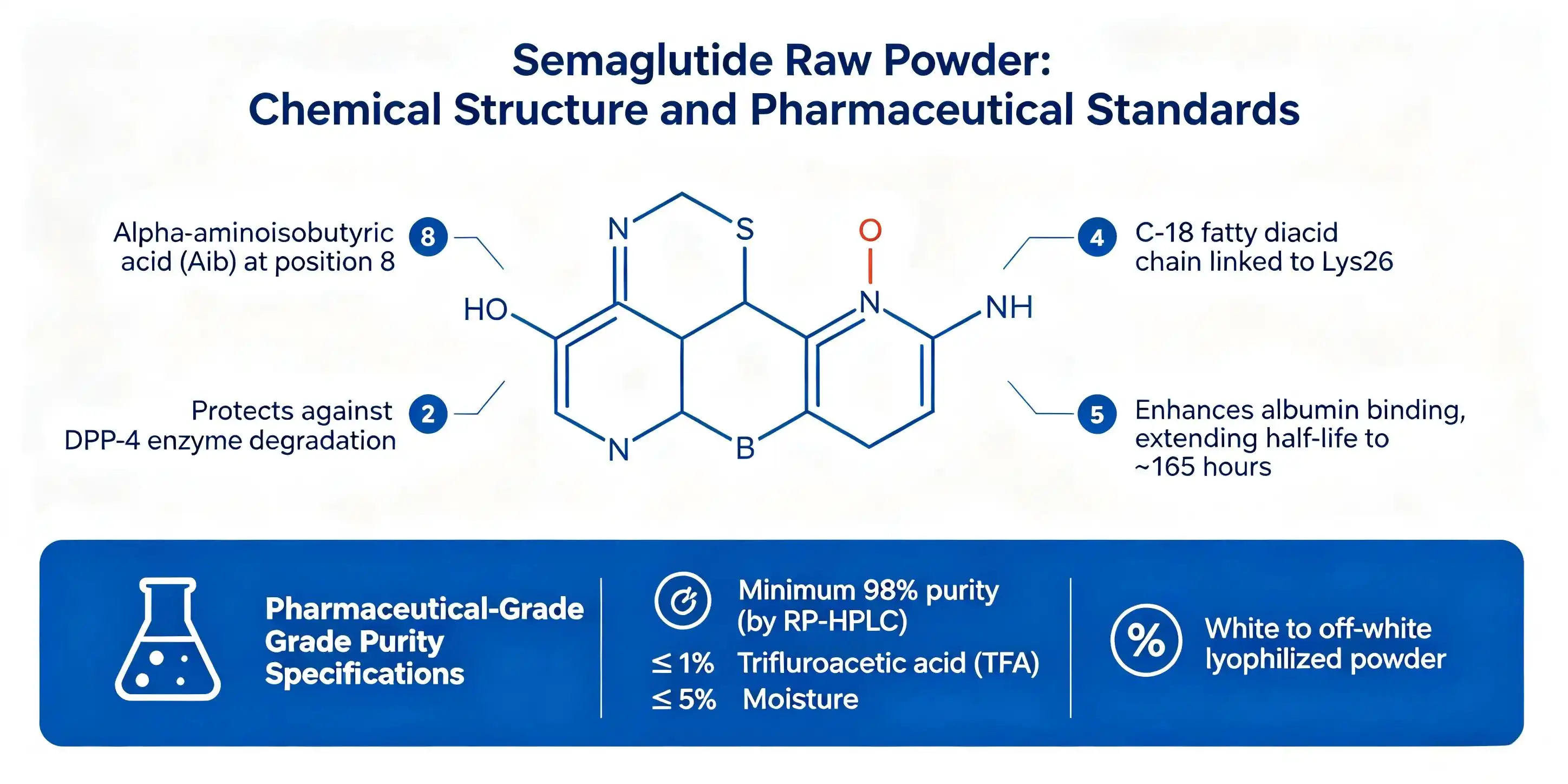
For pharmaceutical-grade standards, the product must be at least 98% pure, as tested by RP-HPLC, and have less than 1% trifluoroacetic acid (TFA) and less than 5% moisture. The peptide is made using solid-phase peptide synthesis (SPPS), which turns the peptide into a white to off-white powder that can be frozen and kept safe for two years at 2–8°C.
Primary Applications in Research and Development
Pharmaceutical companies and research institutions mostly use this API to study metabolic disorders like type 2 diabetes mellitus and obesity. The GLP-1 receptor agonist process increases insulin release in a way that depends on glucose while decreasing glucagon release. This slows down stomach emptying and increases feelings of fullness. There is strong clinical proof that it lowers HbA1c and helps people lose weight, which makes it useful for formulating new medicines that can be injected or taken by mouth.
The medical and cosmetic aesthetics industries have also started to look into peptide uses for metabolic skin health studies, but pharmaceutical uses are still the major market. The raw powder format gives formulation freedom, so R&D teams can make their own delivery methods, change dosing protocols, and do bioavailability studies without being limited by goods that have already been made.
Advantages of High-Purity Raw Material Sourcing
Getting pharmaceutical-grade peptide powder has a number of strategic advantages. The concentrated API format lets you do accurate dosing estimates, which are needed for clinical study and pilot batch production. A high net peptide content (usually between 80 and 90% of the total powder weight after taking into account counterions and leftover moisture) makes sure that the mixture works the same way every time and cuts down on waste from inactive ingredients. The lyophilized form is more stable during international shipping than reconstituted solutions, so there is less chance that it will break down during delays in customs clearance or changes in temperature.
Safe Handling Practices for Semaglutide Raw Powder in B2B Environments
Identifying Potential Hazards
Peptide APIs usually have smaller safety risks than small molecule drugs, but there are still some risks that need to be looked at. Fine peptide powder can irritate the lungs if breathed in, especially during operations like weighing and moving things. After repeated exposure, direct skin touch may cause sensitivity reactions in people who are vulnerable. Cross-contamination is a big quality risk in facilities that make more than one product. It can make batches less pure and less likely to follow the rules.
Storage Requirements and Environmental Controls
Having the right storing facilities is the first step in keeping the purity of your products. It is necessary to keep the temperature between 2 and 8°C, which means that pharmaceutical refrigeration units must be approved and have warning and tracking systems that are always on. Humidity levels should stay below 60% RH to stop moisture uptake, which breaks down and clumps together peptides more quickly. Storage areas must be kept separate from materials that don't work with each other, and APIs must have their own places to keep them from getting contaminated.
There is a direct link between packaging standards and safety during both keeping and transport. Amber glass jars with inert rubber stoppers or high-barrier foil bags with desiccant packets should be used as the main carriers. For large sales, secondary packing must include shipping containers that are insulated and have devices that check the temperature. Teams in charge of buying things should make sure that the sellers they work with use tested packaging methods that have stability data to back up the configurations they choose.
Personnel Safety and Handling Protocols
Setting up thorough handling processes saves both the workers and the quality of the product. When working with semaglutide raw powder in open systems, workers need to wear the right safety gear, like rubber gloves, lab coats, safety glasses, and N95 respirators. Weighing should only be done in laminar flow hoods or contained weighing rooms to keep the area clean and to limit the amount of dust that people breathe in.
Peptide-specific dangers, proper reconstitution methods, spill reaction procedures, and paperwork needs should all be covered in training programs. There are a lot of procurement managers who don't think ongoing competency tests are important, but these programs really help cut down on handling mistakes that hurt the quality of batches. Facilities that work with peptide APIs should keep their cleanrooms up to the standards needed for the job and check the air and surfaces often for particles and microbes that could be harmful.
Dosage Guidelines and Quality Control for Semaglutide Raw Powder
Pharmaceutical Compounding Considerations
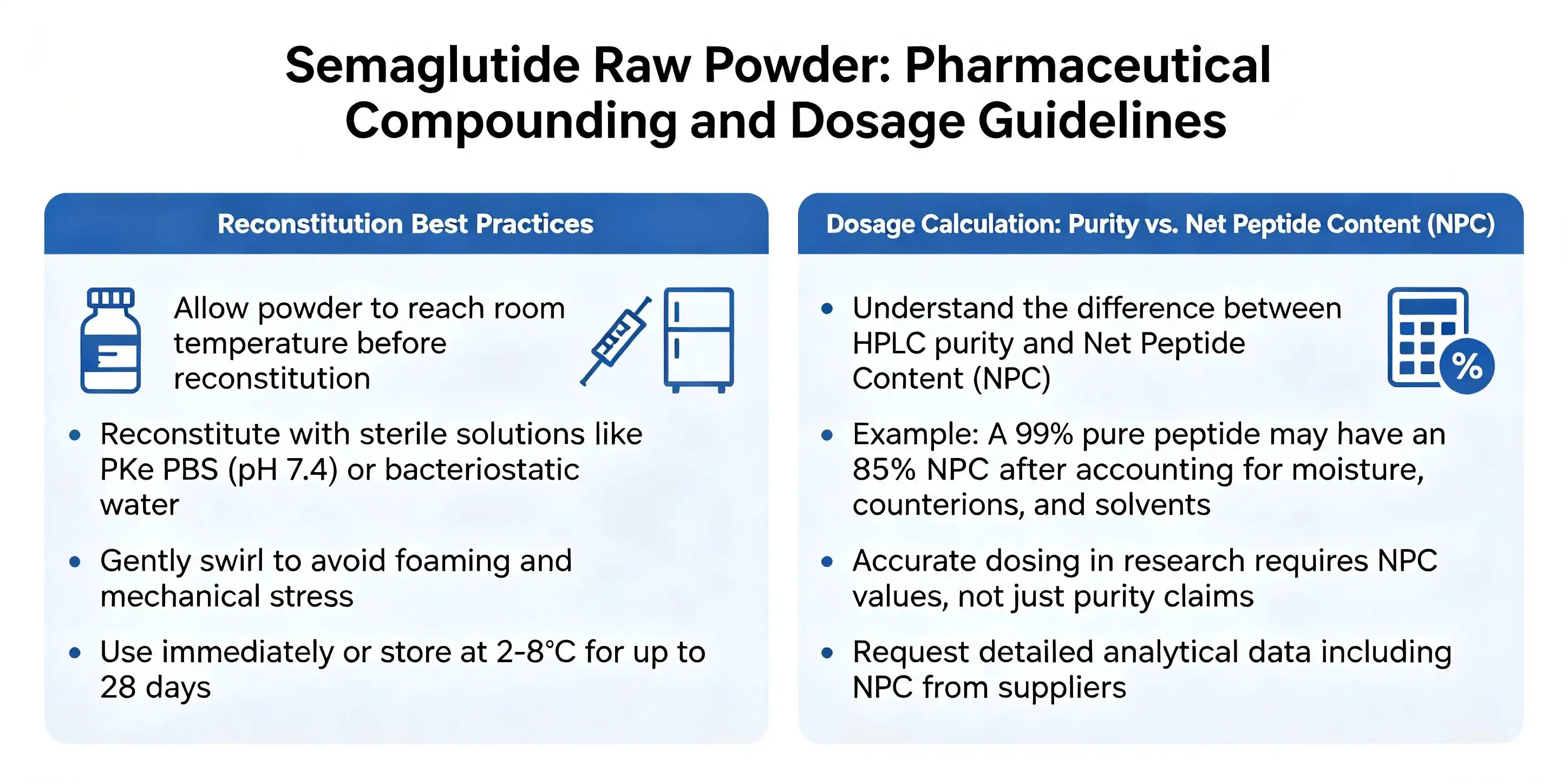
To keep reconstitution methods from clumping together, which is a typical problem with GLP-1 peptides, extra care must be taken. Before adding a clean solution, like phosphate-buffered saline (PBS) at pH 7.4 or bacteriostatic water for injection, the powder should be at room temperature. Mechanical stress that breaks down peptide structure can be avoided by gently spinning instead of shaking vigorously. Solutions that have been reconstituted should be used right away or kept at 2–8°C for no more than 28 days, based on the composition and stability data.
To figure out the right amounts, you need to know the difference between claimed purity and net peptide content (NPC). After taking into account water, acetate counterions, and any remaining solvents, a product that is 99% pure by HPLC may only have 85% NPC. This difference is very important for correct dosing in study settings. To make sure the composition is correct, R&D teams should ask for specific analytical data that includes NPC values.
Critical Quality Control Parameters
To get pharmaceutical-grade peptide APIs, you have to make sure they are correct in a lot of different ways. As of now, HPLC purity testing is the best way to do it. Certificates of analysis (COA) show in great detail how the target peptide is separated from synthesis leftovers like des-Gly impurities and oxidized forms. Mass spectrometry (ESI-MS) checks the weight of molecules and finds mistakes in peptide production that cause them to be cut off.
For injectable-grade uses, bacterial endotoxin testing using the LAL method is necessary. Usually, less than 10 EU/mg is needed to avoid pyrogenic responses. Gas chromatography analysis of residual solvents shows that the amounts of acetonitrile and TFA are in line with ICH standards. Karl Fischer analysis shows that the water level stays below 8.0%, which keeps the product from breaking down during storage due to hydrolysis.
To figure out how reliable a provider is, you need to look at data on consistency from batch to batch, government certifications (GMP, ISO, or FDA registration, if needed), and evidence from stable studies. Instead of depending on data from a single batch, which might not show normal production quality, quality managers should ask for COAs from multiple batches to check how well the manufacturing process can be repeated.
Validation Through Clinical Evidence
A lot of clinical study backs up the treatment safety profile. Phase III studies showed that the drug was safe for the circulatory system and helped people control their blood sugar and lose weight. If a procurement team is helping to make a new product, they should look at published pharmacokinetic and pharmacodynamic data to learn about how to handle the drug safely and how it breaks down.
Comparison and Selection: Semaglutide Raw Powder vs Other Forms and Alternatives
Raw Powder Versus Injectable Formulations
When you compare different style choices, you can see their clear pros and cons. Pre-formulated injectable goods are convenient and don't require formulation development, but they can't be changed or used for study into new delivery systems. Semaglutide raw powder gives you full control over the excipients you use, the concentration amounts they are in, and how they are delivered. This makes it important for researching new formulations and making your own products.
Different formats have very different stability qualities. When kept in the right way, lyophilized powder stays effective for two years, while recovered solutions usually need to be used within 28 days. Powder is easier to ship because the cold chain is simpler, but both need to be shipped at the right temperature. When it comes to cost, companies that can formulate their own drugs usually choose to buy raw materials instead of finished injected goods because the price per dose is much lower.
Comparative Analysis with Other GLP-1 Analogs
There are several options in the peptide world, and each one has its own unique properties. Liraglutide, an older GLP-1 analog, needs to be taken every day because its half-life is shorter (about 13 hours), but semaglutide can be taken once a week because its pharmacokinetics are longer. The longer fatty acid chain change makes albumin bind better, which is what makes this difference. Dulaglutide is another choice for once a week, but it has a different structure and uses an IgG Fc fusion protein instead of acylation.
When buying something, you should think about a number of things. Bioavailability data shows that these drugs work about the same when dosed correctly, but the complexity of the formulations changes a lot. It is easier to make formulations because the acylated structure is more stable in water-based solutions than fusion protein creations. The market is moving more and more toward weekly dosing schedules, which could affect the ability of new goods to make money.
Differentiating between suppliers is very important when looking at powder sources. Even though different sellers may list similar purity requirements, impurity profiles, TFA content, and net peptide content often differ by a large amount. Some companies use acetate as the counterion, while others leave behind TFA from the synthesis process. This has a big effect on the cytotoxicity in both cell-based tests and in vivo uses. Asking for thorough analytical methods and validation data helps buying teams tell the difference between goods that look the same but have quality ratings that are significantly different.
Procurement Best Practices: Buying Semaglutide Raw Powder Safely and Cost-Effectively
Strategic Sourcing Across Global Markets
To buy peptides internationally, you need to know about the rules and skills of the suppliers in each area. China, Europe, and North America all have a lot of factories, and each one has its own benefits. Research-grade materials from Asian sources are often available at reasonable prices, and the minimum order quantity (MOQ) is usually low, as little as 1g. This makes them easy to get for early-stage research. European and North American manufacturers usually put a lot of emphasis on GMP compliance and thorough documentation systems that work for commercial output and late-stage research.
Verification of a supplier's approval should include checking for ISO 9001 quality management systems, GMP compliance for medicinal uses, and any necessary export licenses. Before starting a relationship with a seller, procurement managers should do their own audits or look at audit records from a third party. This is especially important for materials like semaglutide raw powder that are going through the clinical development process. Regulatory registration with the FDA or EMA is not needed for raw material providers, but it does show that the quality system is more mature.
Cost Structure and Negotiation Strategies
The price of a peptide API is based on complicated models that are affected by standards for purity, order number, synthesis scale, and documentation needs. Pharmaceutical-grade material (99%+ purity with full impurity analysis) usually costs more than research-grade material (98% purity). When you buy in bulk, you save a lot of money, and prices often go down at 10g, 50g, and 100g amounts. Setting up framework deals for regular buying keeps prices stable and makes sure that supplies are distributed fairly when supplies are low.
Customers and distribution partners should not only talk about unit prices, but also the total cost of ownership, which includes professional help, access to stability data, documentation packages, and the sharing of analytical methods. Some suppliers have different prices for different end-uses, such as lower prices for study use compared to business manufacturing. Terms of payment (T/T, LC, or DA) affect cash flow management. Letters of credit offer security for big orders from new sources, even though they cost more to process.
Logistics and Regulatory Compliance
When pharmaceutical peptides are shipped internationally, they have to go through a lot of compliance steps. Export rules are different in each country, and some places need licenses even for small amounts used for study. Usually, import rules require the right paperwork, like business bills, certificates of analysis, and material safety data sheets (MSDS). Using the right HS code for customs classification keeps processing from taking too long and makes sure that the right amount of duty is paid.
Temperature-controlled services are the most difficult part of running a business. When moving between continents, dry ice keeps things stable, but carriers must be qualified to handle dangerous goods. Gel pack methods can be used for shorter domestic exports that happen during seasons with stable temperatures. In buy deals, procurement teams should spell out the shipping methods they will use and make sure that suppliers use approved packaging systems with temperature tracking devices. The high value-per-gram number and the cost of replacing should be taken into account by insurance.
There are more documentation needs than just simple COAs. Pharmaceutical applications need Drug Master Files (DMF) or similar regulatory support papers, as well as descriptions of the manufacturing process, impurity standards, and procedures for stability studies. Quality agreements should spell out requirements, who is responsible for testing, how to handle changes, and how to report deviations. Even though they take time to set up, these administrative aspects greatly lower the risk of noncompliance and make regulatory checks go more smoothly.
Conclusion
To safely handle and buy semaglutide raw powder, you need to pay attention to technical specs, safety rules, and managing the supply chain. Because the peptide has a complicated structure and is sensitive to changes in its surroundings, it needs to be carefully stored, handled, and its quality checked over and over again. Cost-effectiveness and quality assurance must be balanced by procurement professionals, who know that using lower-quality materials may seem like a way to save money at first, but they often end up costing more in the long run because of formulation fails or compliance issues.
Building relationships with suppliers, carefully going over paperwork, and careful planning for processes are all important parts of successful buying strategies. When companies follow these best practices, they can be sure that they will always have access to high-quality peptide APIs and that their supply chains are safe and in line with regulations.
FAQ
What specific safety equipment is required when handling this peptide powder?
When moving powder, people who work with peptide APIs should wear N95 respirators, throwaway lab coats, safety glasses with side shields, and nitrile gloves that don't contain latex to avoid allergic responses. To keep people from breathing in dust and germs and contaminating each other, weighing should be done in laminar flow hoods or powder containment rooms. In places where rebuilding takes place, facilities should keep eyewash stations and safety baths stocked.
How can we verify the authenticity of peptide powder from new suppliers?
Authentication needs more than one type of analysis. Ask for certificates of analysis that show HPLC chromatograms with retention times that match reference standards, mass spectrometry that confirms the molecular weight (4113.64 Da), and amino acid analysis that confirms the sequence makeup. Testing by an independent third party in approved laboratories adds to the confidence. Managers in charge of buying things should also check the validity of business licenses and the names of production sites. They should also ask well-known pharmaceutical companies for customer references.
What are the most common storage mistakes that compromise peptide stability?
The most common mistakes are changing the temperature of the bottles often when they are taken out of the fridge, exposing them to humidity when they are being weighed, and keeping them near the freezer, where frost forms. Using storage cases that aren't dessicated lets water soak in, and using clear glass instead of amber jars for protection from light lets things break down. Using expired or almost expired stock in the wrong way when rotating goods also makes study less reliable.
Partner with Xi'an Yihui for Certified Pharmaceutical-Grade Peptide APIs
Join forces with Xi'an Yihui to get certified pharmaceutical-grade peptide APIs. The Xi'an Yihui Bio-technology Co., Ltd. main business is selling pharmaceutical- and research-grade semaglutide raw powder to formulation labs, biotechnology companies, and research institutions in Europe and North America. Our GMP-approved factory makes peptide APIs that are at least 99% pure, as shown by a series of diagnostic tests such as HPLC, mass spectrometry, and endotoxin analysis. We keep a steady supply of 5000g per month and offer flexible packaging choices (1g, 5g, and 10g bottles).
Our minimum order sizes start at just 1g, so we can support both pilot projects and large-scale production. Each batch comes with full paperwork packages that include COA, MSDS, and stability data to make it easier for you to file with regulators. Our expert team can help with preparation and set up shipping of samples for qualification testing. You can email our procurement experts at sales@yihuipharm.com to get product details, up-to-date prices on bulk orders, or to talk about your particular needs with a provider of semaglutide raw powder who is dedicated to quality and compliance.
References
1. Davies, M., et al. (2021). "Semaglutide 2.4 mg once a week in adults with overweight or obesity, and type 2 diabetes (STEP 2): a randomised, double-blind, double-dummy, placebo-controlled, phase 3 trial." The Lancet, 397(10278), 971-984.
2. Lau, J., et al. (2015). "Discovery of the Once-Weekly Glucagon-Like Peptide-1 (GLP-1) Analogue Semaglutide." Journal of Medicinal Chemistry, 58(18), 7370-7380.
3. Weghuber, D., et al. (2020). "Once-Weekly Semaglutide in Adolescents with Obesity." New England Journal of Medicine, 387(24), 2245-2257.
4. Nauck, M.A., et al. (2016). "GLP-1 Receptor Agonists in the Treatment of Type 2 Diabetes – State-of-the-Art." Molecular Metabolism, 6(11), 1421-1442.
5. United States Pharmacopeia. (2022). "General Chapter <1>: Peptide Characterization and Quality Control." USP-NF Standards, United States Pharmacopeial Convention.
6. International Council for Harmonisation. (2021). "ICH Q7: Good Manufacturing Practice Guide for Active Pharmaceutical Ingredients." ICH Harmonised Guidelines, Geneva, Switzerland.

Send Inquiry
You may like
Related Industry Knowledge