
Retatrutide for Weight Loss: Benefits of the Triple Agonist Peptide
If you work in pharmaceutical R&D, peptide procurement, or metabolic research, you have likely heard growing discussion around triple agonist peptide retatrutide. As a triple agonist peptide, retatrutide simultaneously targets GLP-1, GIP, and glucagon receptors — three distinct metabolic pathways — within a single synthetic molecule. This multi-receptor approach distinguishes it sharply from older single or dual-agonist therapies. Phase 2 trial data published in The New England Journal of Medicine reported up to 24.2% mean body weight reduction over 48 weeks, a figure that has drawn serious attention from drug developers and research institutions worldwide.
Understanding Retatrutide: Mechanism and Therapeutic Potential
The Triple Receptor Targeting Mechanism
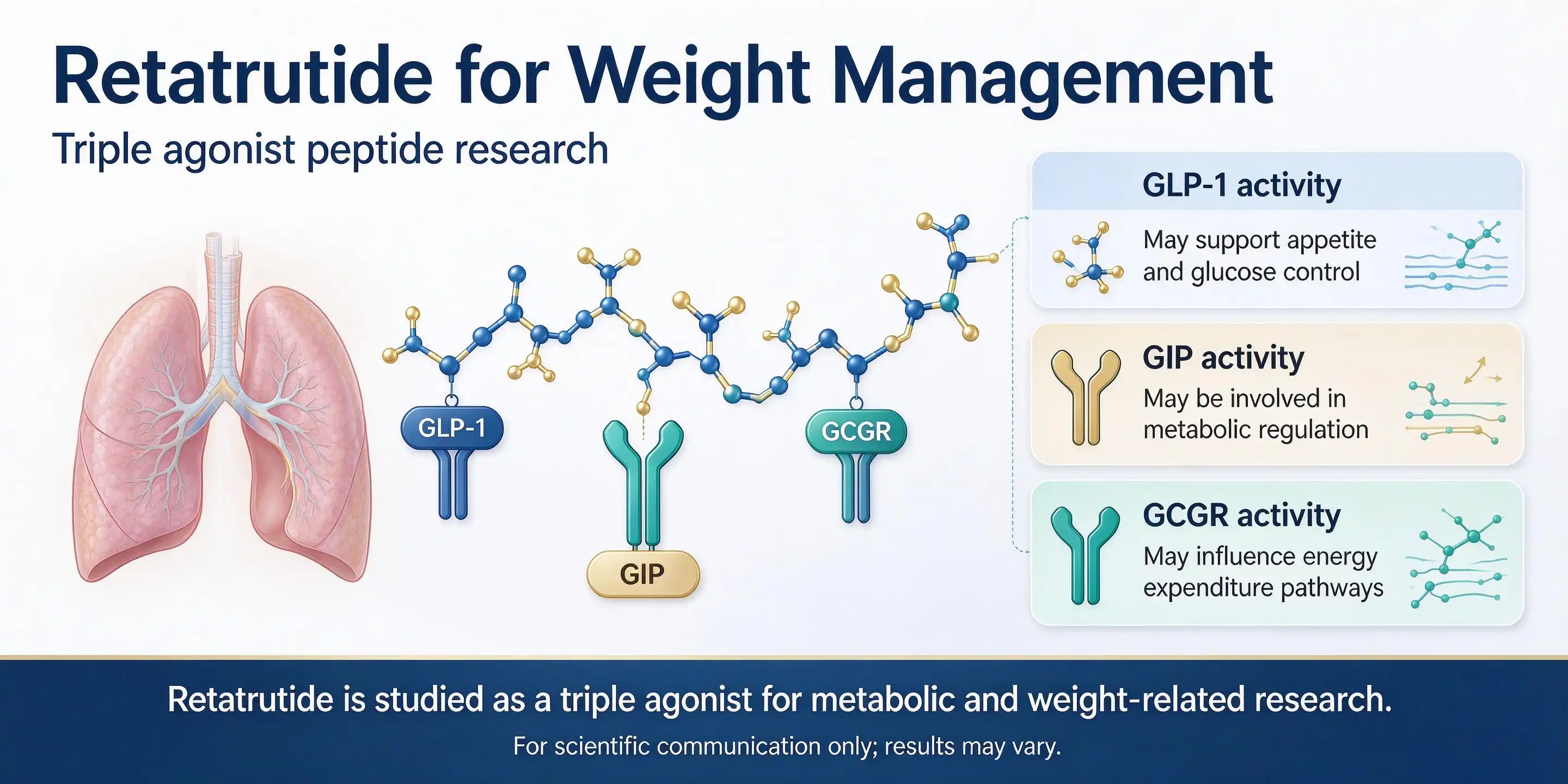
Also known as retatrutide (CAS: 2381089-83-2, MW: 4731.33, MF: C₂₁H₃₄₂N₄₆),The chemical formula for O₆₈ is H-His-Gly-Asp-Gly-Ser-Phe-Ser-Asp-Glu-Met-Asn-Thr-Ile-Leu-Asp-Asn-Leu-Ala-Ala-Arg-Asp-Phe-Ile-Asn-Trp-Leu-Ile-Gln-Thr-Lys-Ile-Thr-Asp-OH. It turns on GLP-1 receptors, which make you feel full, GIP receptors, which make your body more sensitive to insulin, and glucagon receptors, which make you burn more calories and speed up the liver's clearance of fats. In a way that mono-agonists can't, this three-part action gets to the root of metabolic dysfunction.
Clinical Efficacy Data Worth Knowing
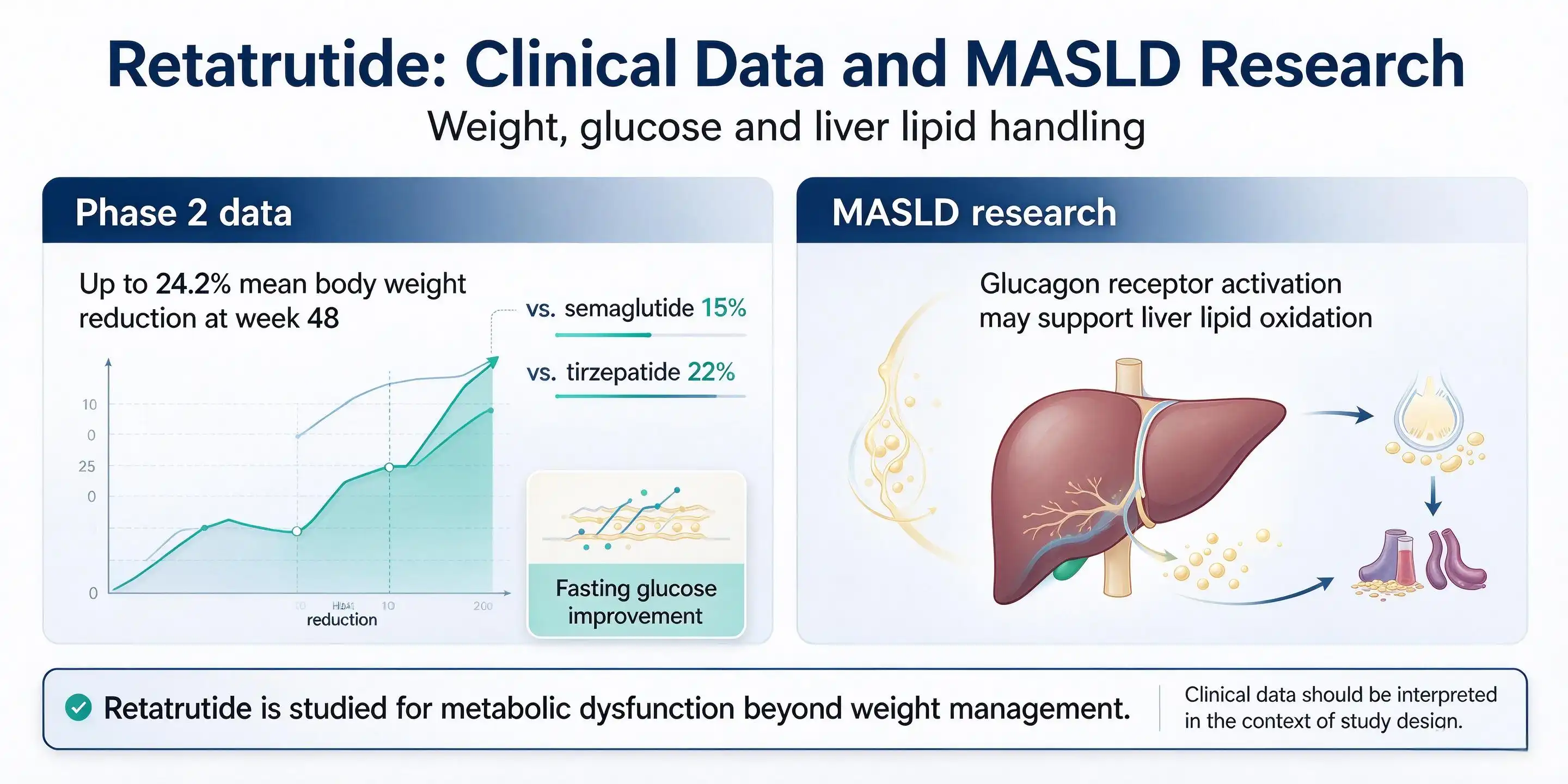
Participants in a Phase 2 dose-escalation study who took the highest dose of retatrutide lost an average of 24.2% of their body weight at week 48. This was a much higher rate of weight loss than those who took semaglutide (15%) or tirzepatide (22%). Glucose levels also went down, as shown by drops in HbA1c and fasting glucose. These numbers are an important clinical signal for drug companies working on the next generation of metabolic portfolios.
Addressing Metabolic Dysfunction Beyond Weight
Retatrutide is very good at treating metabolic dysfunction-associated steatotic liver disease (MASLD) because it activates glucagon receptors. It goes after a disease that earlier GLP-1 treatments weren't able to fully treat by speeding up lipid oxidation in the liver. Teams of researchers looking into liver problems caused by fat have pointed out that this trait could be very useful for future therapeutic uses.
Comparing Retatrutide with Other Weight Loss Solutions
Retatrutide vs. Semaglutide and Tirzepatide
This medicine only works on the GLP-1 receptor. Tirzepatide is a dual agonist because it also works on GIP receptors. Triple agonist peptide retatrutide goes even further by including the glucagon receptor, which makes the body use a lot more energy. When comparing published clinical data side by side, retatrutide regularly leads to better weight loss results than both of its predecessors. This change from mono to dual to triple agonism shows a clear pharmacological evolution for drug companies looking at how to position their pipelines.
Safety and Side Effect Profile
Many people who took part in the studies experienced stomach problems like nausea, vomiting, and diarrhea, which is typical for the GLP-1 drug class. Most of the time, these effects were dose-dependent and could be controlled by slowly increasing the dose. The Phase 2 results for RETATRUTIN did not show any major cardiovascular signals. The current safety information gives quality and regulatory managers a good starting point for evaluating risk, but Phase 3 data will be needed for a full regulatory review.
Strategic Market Positioning
In the business-to-business market, retatrutide is unique because it covers three metabolic receptors in one molecule, which is something that neither semaglutide nor tirzepatide can do at the moment. This opens up great opportunities for research institutions, CROs, and partners in the CDMO industry to work on GGG agonist research programs, obesity pharmacology studies, and new metabolic pathway investigations. Getting high-purity research-grade material early on helps you stay ahead of the pipeline curve.
Procurement Insights: How to Source High-Quality Retatrutide Peptide?
There are a few things that you must do in order to find research-grade triple agonist peptide retatrutide. Quality and safety must come before price. Procurement managers in the pharmaceutical and biotech industries know this to be true.
When choosing a recycler, these are the main things you should look for in a supplier:
- Purity verification: Demand HPLC-confirmed purity of ≥98.0% and peptide content ≥80.0%. Substandard purity compromises experimental reproducibility and downstream data integrity.
- Complete documentation package: Every shipment should include a Certificate of Analysis (COA), MSDS, and full chromatogram data. These documents support both internal QA and external regulatory submissions.
- Batch-to-batch consistency: Advanced peptide synthesis should deliver precise sequence accuracy and controlled particle size distribution, with heavy metal levels well below safety thresholds.
- Flexible packaging and supply volume: Research teams need options. Look for suppliers offering 1g to 1kg quantities in sealed plastic bottles, with year-round stock availability to avoid project delays.
- Export compliance expertise: International procurement requires compliant shipping channels, professional sealed packaging, and full customs clearance support — especially for pharmaceutical research materials crossing multiple jurisdictions.
With these factors in mind, you can tell if a seller will be a good long-term study partner and not just a one-time buyer.
Storage and Handling Requirements
Keep retitatrutide powder between 2 and 8°C in a cool, dry place away from light and water. Peptides lose their integrity and biological activity when they are stored incorrectly. Purchasing managers should make sure that the cold chain is followed both at the seller center and while the goods are being shipped.
Establishing Long-Term Supply Agreements
By signing a long-term supply contract, institutions that do ongoing metabolic research can be sure of a steady supply of goods at a price that they can afford. Because peptide APIs usually have high repurchase rates, finding a good supplier early on lowers the risk of buying things as research moves from initial studies to longer projects.
Safety, Dosage, and Regulatory Compliance
Research Dosage Guidance
People are not able to get triple agonist peptide retatrutide; it is only given to scientists for research purposes. In clinical trials, amounts went from 0.5 mg to 12 mg per week, and were slowly increased to make sure they were safe. Researchers should stick to tried-and-true methods that are right for their study plan.
Regulatory Status Overview
At the moment, retatrutide is in Phase 3 clinical studies (Eli Lilly). It hasn't been approved for commercial medicinal use by the FDA or EMA yet. For laboratory and developmental studies, however, it is legal to get research-grade material. Regulatory managers who are buying things for research and development projects should check the paperwork to make sure it says what it will be used for and make sure the seller follows all import and export rules.
Risk Mitigation in Laboratory Settings
Side effect data from Phase 2 trials helps researchers come up with the right safety rules for their labs. The biggest risks that have been found are still related to the digestive system. The fact that no major off-target toxicity signs were seen in the released study data is good news for planning preclinical research.
Future Prospects for GLP-1/GIP/Glucagon Research
According to Goldman Sachs Research, the world market for obesity drugs will be worth more than $100 billion by 2030. Retatrutide is on the cutting edge of the next generation of metabolic medicines. More research is being done on cardiovascular effects, MASLD, and combination treatment for type 2 diabetes. In all of these areas, GLP-1/GIP/glucagon co-agonism is showing early promise in terms of how it works. If procurement teams and R&D managers can find good supply chains now, they will be ready to help the program grow quickly when regulatory deadlines get closer.
Conclusion
Triple agonist peptide retatrutide is the most advanced weight loss peptide from a pharmaceutical point of view that is currently being tested in humans. It works on GLP-1, GIP, and glucagon receptors all at the same time, which gives it a metabolic reach that other treatments don't have. It is important for pharmaceutical developers, CRO/CDMO companies, and research institutions to get high-purity retatrutide material from a reliable supplier. The right supplier can make a real difference in the quality of research and the continuity of programs by providing full documentation, HPLC-verified purity levels of 98.0% or higher, and reliable cold-chain logistics.
FAQ
Q1: What makes retatrutide different from semaglutide?
A: Semaglutide targets only the GLP-1 receptor. Retatrutide activates GLP-1, GIP, and glucagon receptors simultaneously, producing greater weight reduction and broader metabolic effects, including increased energy expenditure and hepatic lipid clearance — mechanisms outside semaglutide's reach.
Q2: How do I verify a supplier's authenticity?
A: Request HPLC chromatogram data, a COA with batch number, MSDS, and third-party testing records. Reputable suppliers provide complete documentation without hesitation. ISO certification and established export compliance history are additional markers of supplier credibility.
Q3: What purity level is acceptable for research use?
A: A minimum HPLC purity of ≥98.0% with peptide content ≥80.0% is the standard for reliable research-grade retatrutide. Lower purity introduces variables that compromise data quality.
Q4: Is retatrutide approved for human therapeutic use?
A: No. As of the current date, retatrutide remains in Phase 3 clinical trials and has not received FDA or EMA approval. It is available only for scientific research purposes.
Q5: What storage conditions are required?
A: Store at 2–8°C in a dry, cool place, protected from light and moisture. Cold-chain integrity during shipping should be confirmed with your supplier before placing an order.
Source Research-Grade Retatrutide from Xi'an Yihui
Since 2010, Xi'an Yihui Bio-technology Co., Ltd. has sent fine chemicals and medicinal peptides of the highest quality to more than 100 countries. We are a verified provider of the triple agonist peptide retatrutide. We offer COA/MSDS documentation, HPLC-confirmed purity of ≥98.0%, flexible amounts from 1g to 1kg, and professional foreign shipping. Email our team at sales@yihuipharm.com to ask for a sample or talk about your buying needs.
References
1. Jastreboff, A. M., et al. "Retatrutide, a GIP, GLP-1, and Glucagon Receptor Agonist, for People with Type 2 Diabetes." The New England Journal of Medicine, 2023.
2. Jastreboff, A. M., et al. "Triple Hormone Receptor Agonist Retatrutide for Obesity." The New England Journal of Medicine, 2023.
3. Finan, B., et al. "Unimolecular Dual Incretins Maximize Metabolic Benefits in Rodents, Monkeys, and Humans." Science Translational Medicine, 2013.
4. Nauck, M. A., & D'Alessio, D. A. "Tirzepatide, a Dual GIP/GLP-1 Receptor Co-agonist for the Treatment of Type 2 Diabetes." Lancet Diabetes & Endocrinology, 2022.
5. Goldman Sachs Research. "Obesity Drug Market Outlook." Goldman Sachs Equity Research Report, 2023.
6. Loomba, R., et al. "GLP-1 Receptor Agonists and the Liver: Emerging Evidence in MASLD." Journal of Hepatology, 2023.

Send Inquiry
You may like
Related Industry Knowledge