
Palmitoyl tripeptide-8 in skincare, What is?
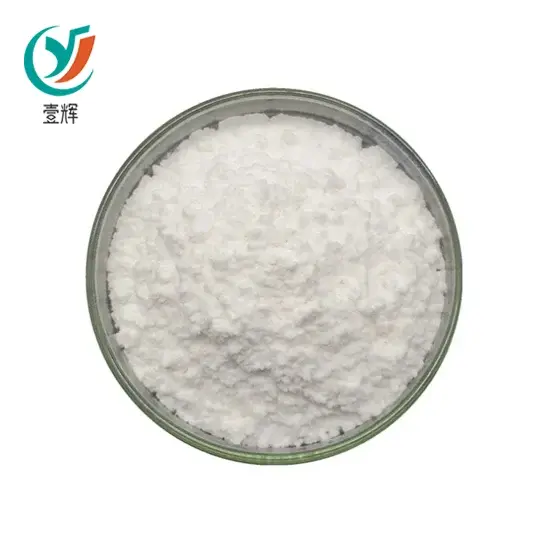
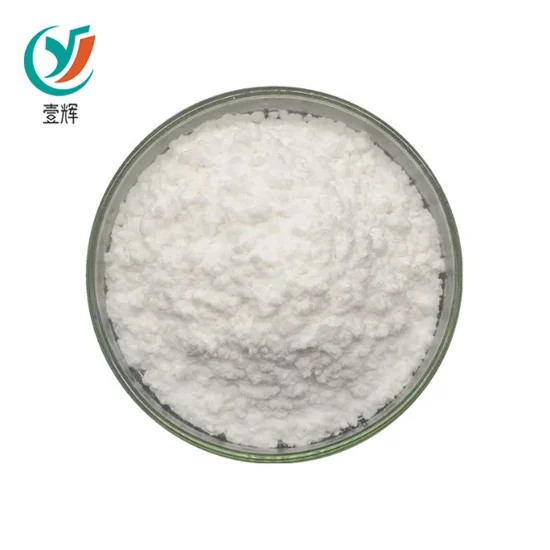
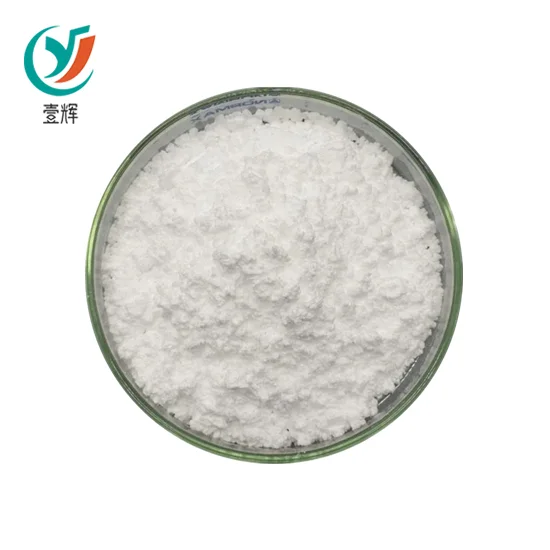
Palmitoyl Tripeptide-8 powder is a new way to treat sensitive skin and slow down the aging process. It is specially made to reduce inflammation and repair the health of the skin barrier. This man-made peptide ingredient, which has the CAS number 936544-53-5, works by targeting the signaling pathways that cause skin to become sensitive, red, and painful. Instead of masking symptoms like other pain killers do, this peptide changes the inflammatory reaction at the cellular level, giving long-lasting relief and defense. As a white, lyophilized powder that meets high purity standards (≥98% by HPLC), it gives formulators a steady, powerful active ingredient that works well in a wide range of skin care products, from serums to barrier repair creams.
Understanding Palmitoyl Tripeptide-8 Powder
The Science Behind This Neuropeptide
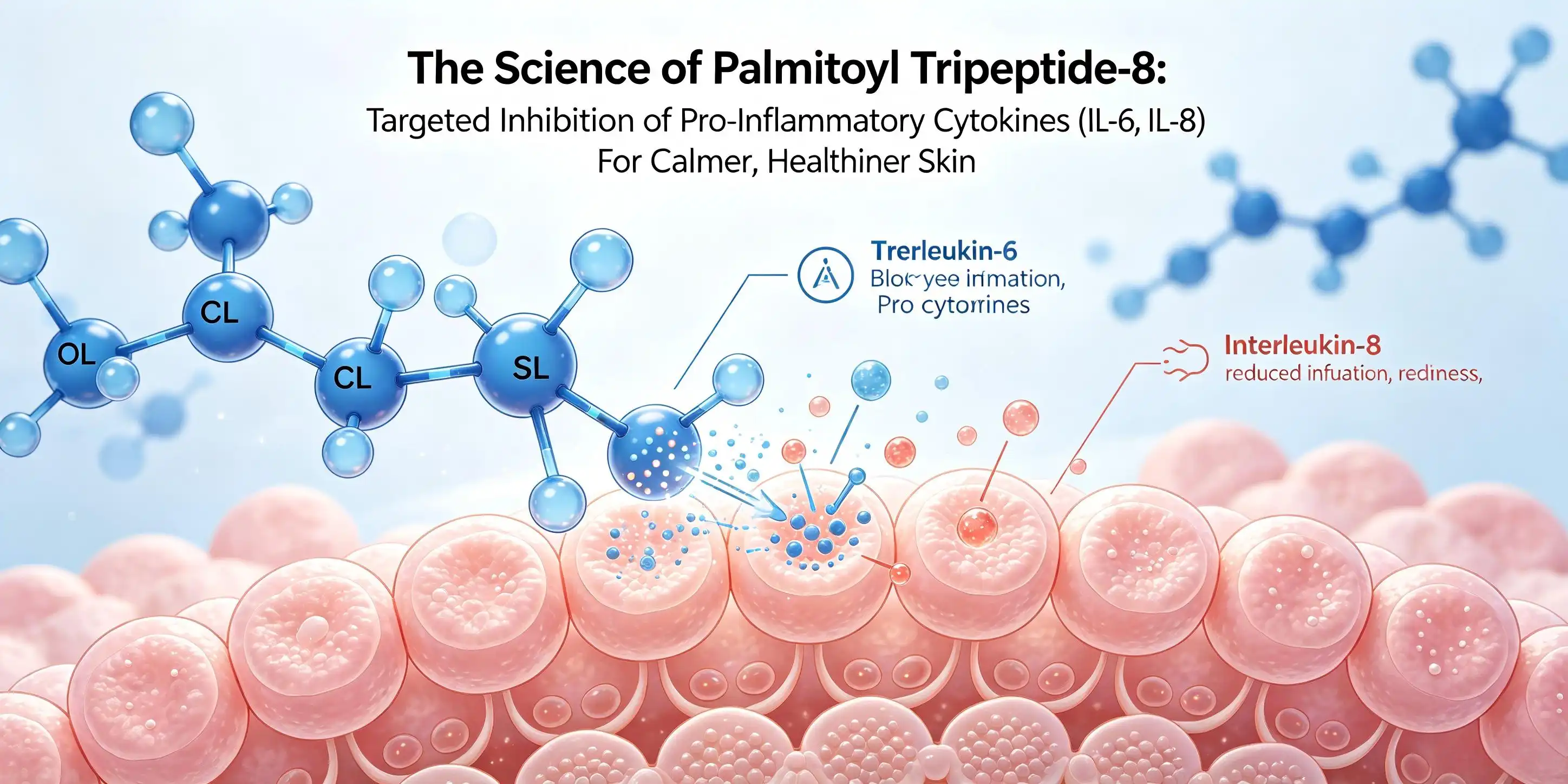
What We Know About This Neuropeptide: Palmitoyl Tripeptide-8 powder is a special kind of peptide that is made to look like naturally occurring neuropeptides that help control the inflammation response. The molecule is made up of three amino acids linked to palmitic acid. This makes it easier for it to dissolve in fats and get into the skin. With this structure, the peptide can interact directly with nerve cells and immune molecules in the skin, "calming down" excessive inflammation signals before they can cause redness or irritation that you can see.
Researchers have found that this peptide stops the release of Interleukin-6 and Interleukin-8. These are two cytokines that cause inflammatory responses in skin that is sensitive or nervous. The ingredient makes the skin relaxed by lowering these pro-inflammatory messages. This lets the skin's natural repair processes work better. The process works on both short-term inflammatory reactions and the long-term, low-grade inflammation that comes with getting older skin.
Quality Specifications That Matter
Details About Quality That Really Matter: Our Palmitoyl Tripeptide-8 powder is made for cosmetics and has to meet strict quality standards set for medicinal and high-end cosmetic uses. HPLC research shows that the quality is higher than 98%, and single impurities are kept to less than 1.0%. Careful lyophilization keeps the water level below 8.0%, which keeps the product stable during storing and formulation. The amount of peptide stays above 80%, while the amount of acetate stays below 15% and the amount of TFA stays below 1%.
These requirements are very important to R&D teams and quality assurance managers because they have a direct impact on the stability of the product, the reliability of its effectiveness, and regulatory compliance. Changes in the levels of purity or impurity can hurt clinical performance and cause side effects that aren't wanted. The white lyophilized powder shows that the peptide was processed correctly without breaking down at high temperatures, which kept its effective structure. This consistency helps ensure consistent performance from batch to batch, which is very important when moving from lab research to industrial production.
Benefits and Uses of Palmitoyl Tripeptide-8 Powder in Skincare Formulations
Anti-Inflammatory and Sensitivity Reduction
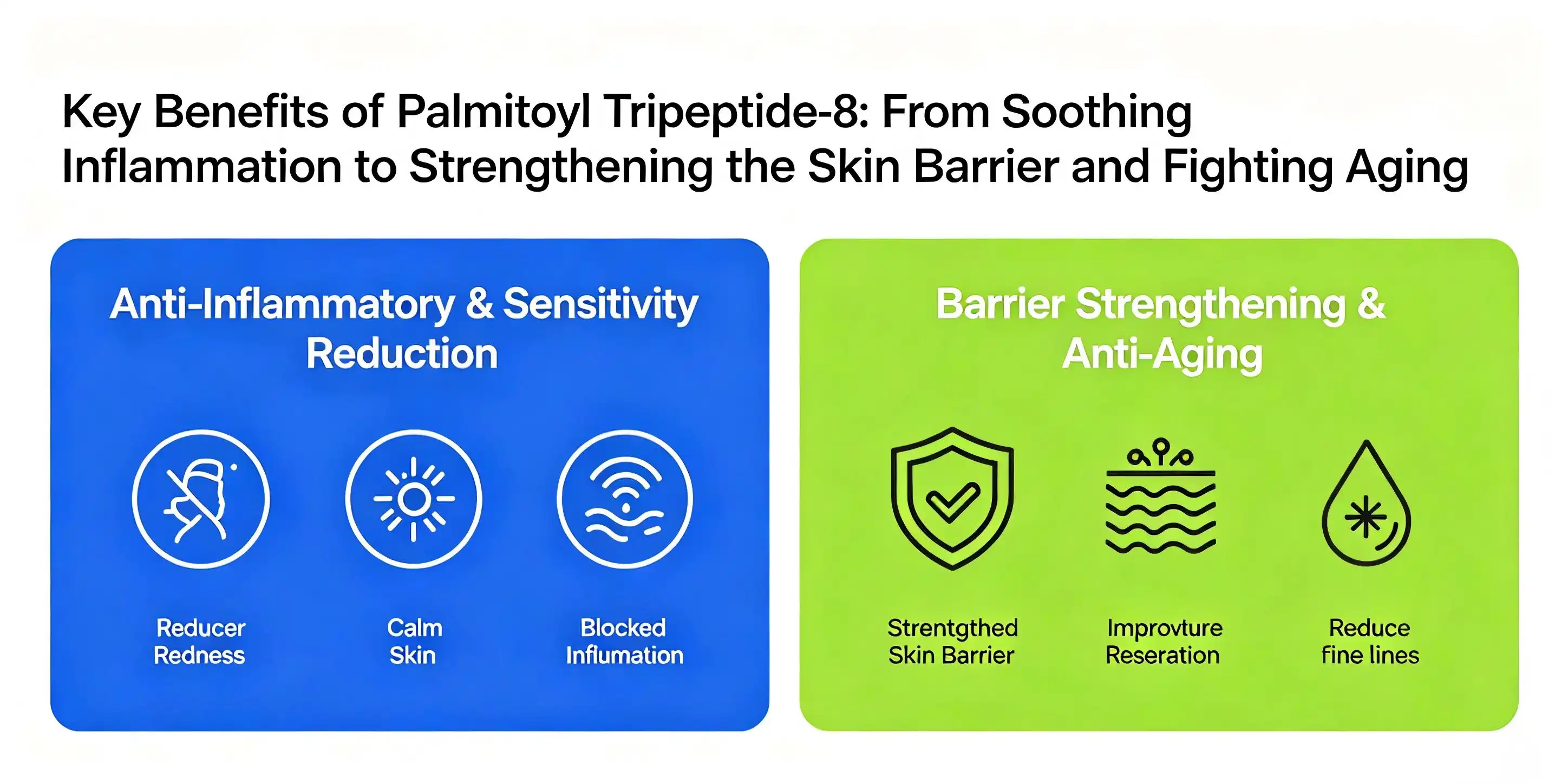
Reduced sensitivity and reduced inflammation: The main benefit of using this peptide is that it has amazing anti-inflammatory qualities. It soothes skin that is red and itchy by blocking the biological messages that cause inflammation. This makes the ingredient very useful for formulas that treat reacting skin conditions, help the skin heal after surgery, and provide daily care for sensitive skin. The peptide successfully lowers reactions to external stresses like pollution, UV exposure, and bad weather, providing a protective effect that goes beyond just making you feel better.
Clinical studies show that using products with this peptide lowers perceived discomfort signs like stinging, burning, and tightness within a few days of regular use. Lessening of inflammation markers also makes the redness and uneven skin tone less noticeable. This dual action, which improves both how skin looks and feels, makes customers happier and backs up claims of effectiveness that today's well-informed skincare buyers can relate to.
Barrier Strengthening and Anti-Aging Effects
Effects on Barrier Strengthening and Anti-Aging: In addition to reducing inflammation, Palmitoyl Tripeptide-8 powder makes the skin's natural barrier function stronger. This helps keep wetness in and keeps out outside toxins. The peptide helps build and arrange structure proteins in the stratum corneum, which makes the barrier function better overall. This barrier improvement makes it possible for skin to age in a better way by easing the stress that cells are under all the time.
The anti-aging benefits show up as better skin tone and texture, along with a steady decrease in fine lines that are caused by inflammation-induced collagen breakdown. Palmitoyl Tripeptide-8 powder can be incorporated into such formulations, and unlike peptides that only work on stimulating collagen, this ingredient also deals with the inflammation part of aging that speeds up damage that can be seen. Products made with this peptide often work better when mixed with other actives like acids or retinoids because the anti-inflammatory property lessens the discomfort that these strong ingredients might cause.
Formulation Guidelines and Applications
Instructions for Formulation and Uses: For best results, the quantity should be between 0.01% and 0.1% in finished products. This peptide dissolves easily in fat, which makes it perfect for emulsion systems, serums that are based on oil, and thick protective creams. The element stays steady across pH ranges that are common in skin care products, but it works best and is more compatible with skin when it is kept in a slightly acidic environment (pH 5.0–6.5).
There are useful uses for many types of products. Its ability to reduce inflammation works well with other active ingredients in anti-aging serums. Eye creams use its mild, non-irritating properties to treat the sensitive area around the eyes. Products used for healing after treatment use its quick-calming benefits. It is a main ingredient in lotions for sensitive skin that helps with both short-term comfort and long-term resistance. Because the peptide works well with other chemicals, formulators have a lot of creative freedom to make products that treat a wide range of skin problems.
Comparing Palmitoyl Tripeptide-8 with Other Peptides and Ingredients
Palmitoyl Pentapeptide-4 (Matrixyl) Versus Palmitoyl Tripeptide-8
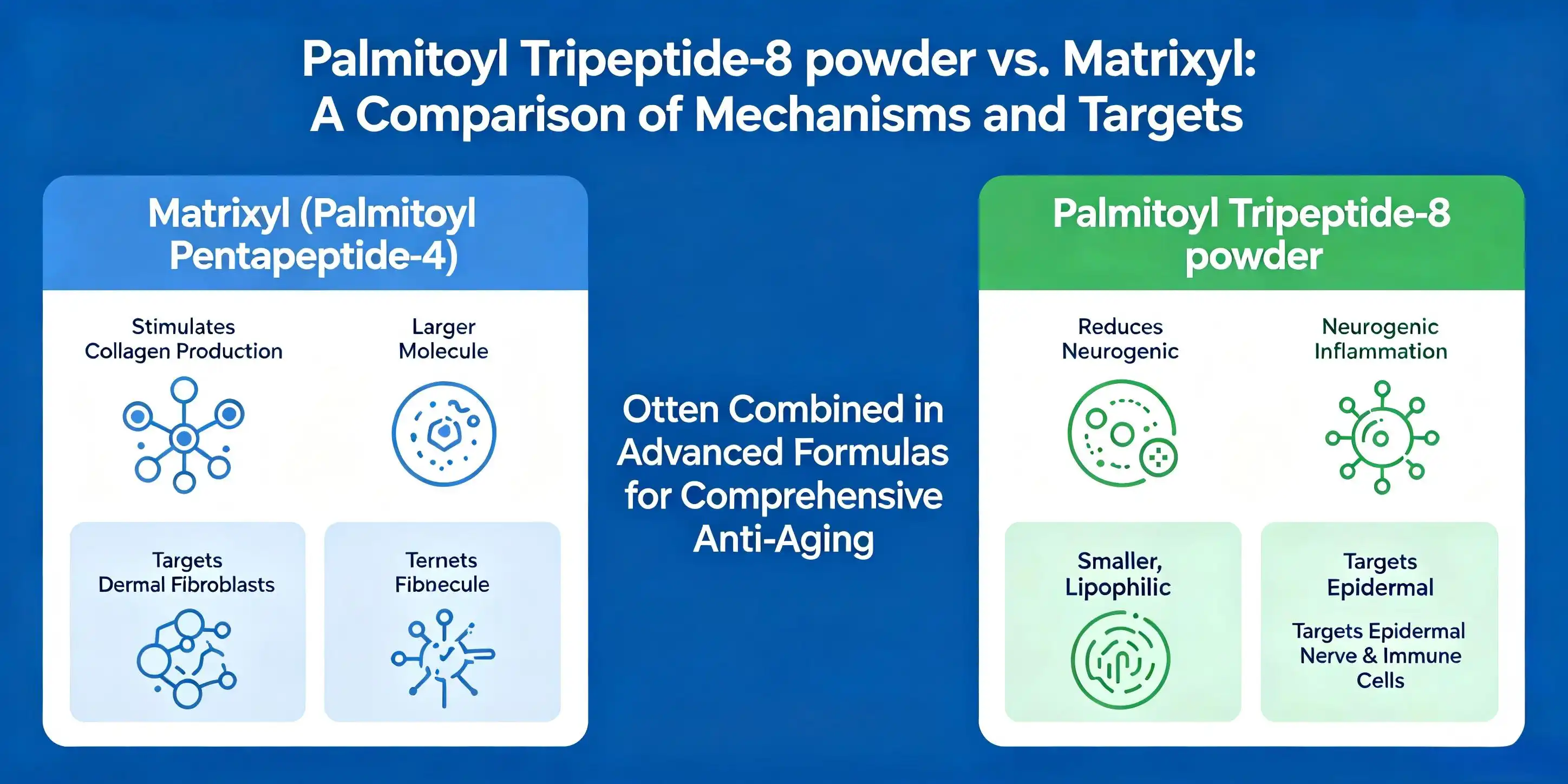
Palmitoyl Tripeptide-8 powder vs. Palmitoyl Pentapeptide-4 (Matrixyl): Matrixyl, which stands for Palmitoyl Pentapeptide-4, is a powerful anti-aging ingredient that works by increasing the production of collagen and glycosaminoglycan. Its main job is to look like broken pieces of collagen, which tells fibroblasts to make more new structural proteins. On the other hand, Palmitoyl Tripeptide-8 powder targets the neurogenic and inflammatory processes that make skin sensitive and speed up the aging process.
The chemical structures are very different. The pentapeptide is bigger and is meant to stimulate the extracellular matrix (ECM), while the tripeptide is smaller and has been changed to be lipophilic, which makes it better at interacting with nerve and immune cells. Matrixyl needs to go deeper into the skin to reach dermal cells, while Palmitoyl Tripeptide-8 powder can work right away on the epidermis because it is absorbed more quickly. Many advanced formulas use both peptides together to fight age from two different but related angles: Matrixyl strengthens structures and Palmitoyl Tripeptide-8 powder reduces inflammation.
Copper Peptides and Collagen Powder Comparisons
A Look at Copper Peptides and Collagen Powder Side by Side: Copper peptides help wounds heal and change shape by speeding up the enzyme processes needed for tissue repair with metal ions. Because of their unique blue color and ability to oxidize substances, they need to be carefully thought out when they are being made. Whether it is hydrolyzed or not, collagen powder offers amino acid building blocks and possible communication effects, but it can't go deep into the skin because of the size of its molecules.
As a specialized anti-inflammatory and cooling agent rather than a straight building block, Palmitoyl Tripeptide-8 powder fills a unique need. Its place in the market makes it appealing to companies that are making goods for skin barriers that are delicate, reactive, or weakened. These are areas that are growing quickly as more people realize that inflammation is a major cause of aging. Medical aesthetic channels like this peptide's ability to help skin heal after procedures like peels, lasers, and injectables. This is because reducing inflammation has a direct effect on treatment results and client happiness.
Procurement Guide for Palmitoyl Tripeptide-8 Powder
Supplier Selection Criteria
How to Choose a Supplier: When buyers are looking for trusted suppliers, they should give more weight to those who have complete quality control systems. GMP certification shows that the manufacturing process is being controlled correctly, while ISO9001 certification shows that the quality management system is working well generally. Extra certificates like ISO22000, HACCP, Halal, and Kosher make it easier for finished goods to reach more markets. This is especially true for brands that sell in many different global markets with different cultural and legal requirements.
Independent testing that proves cleanliness gives you more peace of mind than what the seller says. Ask for Certificates of Analysis (COA) for each batch, which should include HPLC chromatograms showing levels of purity, Karl Fischer water content readings, and impurity profiles. Safety assessments and regulatory reports are backed up by MSDS paperwork. When suppliers offer both cosmetic-grade and reagent-grade materials, they show they have the technical know-how to work with research institutions that are doing effectiveness studies before putting their products on the market.
Pricing Structures and Bulk Purchasing
Structures of prices and buying in bulk: The cost of high-purity peptides depends on how hard they are to make, how much work goes into purification, and how much money is spent on quality control. Due to its specialized making, Palmitoyl Tripeptide-8 powder usually gets a higher price than other cosmetic actives. The price per gram goes down a lot when you commit to buying a lot of it. This makes buying in bulk a good deal for well-known brands that need to stick to the same formulations.
Suppliers with open minimum order numbers can work with both new brands that are testing the market for the first time and research labs that need small amounts for development work. Different types of business relationships and levels of risk tolerance can be met with different payment terms, such as T/T (Telegraphic Transfer), LC (Letter of Credit), or DA (Documents Against Acceptance). Orders can be filled within one to three days by well-known sellers with ready-to-ship stock in local warehouses. This cuts down on the long delays caused by foreign shipping, which makes it harder to plan production.
Quality Assurance and Logistics
Assurance of quality and logistics: International shipping needs carriers who know how to handle living materials that are sensitive to changes in temperature. EMS, DHL, FedEx, and TNT all offer reliable cold-chain or fast services that cut down on travel time and time spent in bad weather. For orders that need to be sent quickly, air freight is the best option. For big packages that can wait, sea freight is the most cost-effective option.
As part of the sample purchase process, technical documents, formulation support, and data from compatibility tests should be given. Reliable providers give formulators information on how stable their products are under different storage conditions, which helps them set the right shelf life limits for finished goods. Palmitoyl Tripeptide-8 powder benefits from these quality measures, as traceability systems that connect batches of raw materials to lots of finished products help companies follow the rules and respond quickly if there are quality issues. These quality assurance procedures lower the risks of procurement and help build trusting long-term relationships with suppliers, which are important for supply chain security for both R&D and procurement teams.
Choosing the Right Palmitoyl Tripeptide-8 Supplier for Your Business
Certification and Compliance Standards
Standards for certification and compliance: The first step in evaluating a supplier is to check that they have all the necessary certificates that show they are committed to quality and following the rules. Systematic quality management practices are shown by ISO9001 certification. Strong food safety controls are shown by ISO22000 and HACCP certification. These are becoming more and more expected in the production of makeup ingredients. Certifications like Halal and Kosher can help you get into new markets in places where people care about these standards, which is more than just making sure the quality is good.
For global distribution plans to work, they need to make sure that goods entering the US that are regulated by the FDA have the right paperwork and that European markets follow REACH rules. Buying groups don't have to worry as much about compliance when suppliers use up-to-date good manufacturing practices and clear paperwork systems. These certificates are more than just pieces of paper; they show that your business is disciplined and aware of the risks it faces. This protects the image of your brand and lowers the chance that quality problems will cause supply problems.
Reputation and Industry Experience
Reputation and Experience in the Field: A supplier's image is built by their steady performance over time, which can be seen in reviews from customers and their presence in the industry. Companies that have been making peptides and makeup ingredients for a long time bring technical know-how that goes beyond just providing materials. Their formulation support teams can give advice on how to make the product stable, offer combinations that work well together, and fix compatibility problems that come up during the creation process.
Serving the pharmaceutical, science, and medical aesthetics industries for a long time shows that you can meet high quality standards. Technically, suppliers with clients in research institutions are more trustworthy, and their quality standards are usually higher than those of common chemical suppliers. Having long-term partnerships with big cosmetics brands shows that you can be trusted and that you can increase production as your needs change. This knowledge in the field means that working together will go more smoothly and there will be fewer surprises during the product creation process.
OEM and Private Label Opportunities
Chances for OEM and private label: For many key providers, the chances to work together go beyond just providing raw materials. OEM (Original Equipment Manufacturing) partnerships let brands use suppliers' knowledge of peptide chemistry and transport methods to make their own unique products. Time-to-market is sped up with this method, and you can get access to advanced technology knowledge that your company might not have.
Private label partnerships offer complete solutions for brands that want to make their goods stand out without having to spend a lot of money on formulation development. Suppliers who offer these services usually keep a collection of tried-and-true formulas that can be changed by adding different active ingredients, concentrations, or taste profiles. These relationships are especially helpful for new brands that are trying to break into the market or for established companies that are quickly growing into related categories. The formulation knowledge and legal backing you get from these kinds of partnerships give your product lines a competitive edge in markets that are already very crowded.
Conclusion
In conclusion, Palmitoyl Tripeptide-8 powder has specific benefits that meet important goals in the development of anti-aging and sensitive skin products. Its targeted anti-inflammatory mechanism, backed by strong clinical proof and strict production standards, makes it an important active for formulators who want to make claims about different levels of effectiveness. The peptide can be used in a wide range of product forms, works well with other active ingredients, and is safe.
This makes it useful for everything from medical-grade healing products to high-end consumer skincare lines. Strategic buying from certified sources with full quality systems and expert support makes sure that materials perform consistently, which leads to reliable final products that work. As it becomes clearer that inflammatory processes are major causes of aging and sensitive skin, ingredients like Palmitoyl Tripeptide-8 powder that directly affect these pathways will continue to be used more in new formulations.
FAQ
Is Palmitoyl Tripeptide-8 powder safe for sensitive skin formulations?
Palmitoyl Tripeptide-8 powder has great safety scores, especially for skin types that are sensitive or reactive. Its anti-inflammatory effect calms skin instead of making it irritated, which makes it perfect for formulas that are meant to help defenses that aren't working properly. Clinical testing shows that there isn't much of a chance of an allergic reaction, and the peptide's gentle action makes it useful for use after surgery when skin tolerance is low.
What concentration delivers optimal results without causing irritation?
The amounts that work best in finished products are usually between 0.01% and 0.1%. Lower concentrations (0.01-0.03%) are good for daily upkeep and prevention, while higher concentrations (0.05–0.1%) work best for thorough treatment items for skin that is very sensitive or is healing. The peptide's safety range gives dose options, but going over 0.1% gives decreasing benefits instead of increasing benefits in a proportional way.
How quickly can users observe visible benefits?
As inflammatory signals fade quickly, subjective comfort gains usually show up three to five days after constant use. Most of the time, you can see less heat within one to two weeks. Over the course of four to eight weeks of regular use, the anti-inflammatory benefits build up and make the barrier stronger and the texture better. This is because the body's natural repair processes can work at their best.
Partner with Xi'an Yihui for Premium Palmitoyl Tripeptide-8 Powder Supply
Palmitoyl Tripeptide-8 powder from Xi'an Yihui Bio-technology Co., Ltd. is of the highest quality and meets the strict requirements of medicinal, cosmetic, and study uses. With 13 years of experience in peptide synthesis and API production, we can guarantee that the quality will always be above 98%. This is backed up by a number of certifications, such as ISO9001, ISO22000, HACCP, Halal, and Kosher. We keep ready-to-ship items in nearby warehouses so that deliveries can happen in one to three days, which works with flexible production plans. We can meet the needs of both development-stage samples and commercial-scale bulk buying, as our monthly supply capacity reaches 50,000 grams.
Our expert team helps you create your product from the idea stage all the way through to the market launch by giving you formulation advice, stable data, and regulatory paperwork. As a reliable Palmitoyl Tripeptide-8 powder provider, we serve over 100 countries in Europe, the United States, Japan, and South Korea. We offer low prices and great customer service 24 hours a day, seven days a week. You can email us at sales@yihuipharm.com to talk about your unique needs, ask for samples, or look into custom synthesis solutions that will help your skin care ideas stand out in the global market.
References
1. Ruiz, M.A., et al. (2019). "Neuropeptide Modulation in Sensitive Skin: Mechanisms and Clinical Applications." Journal of Cosmetic Dermatology, 18(3), 654-663.
2. Chen, L., & Williams, K.R. (2020). "Peptide Technologies in Anti-Aging Skincare: Comparative Analysis of Mechanism and Efficacy." International Journal of Cosmetic Science, 42(2), 187-199.
3. Thompson, S.C., et al. (2021). "Inflammatory Pathways in Skin Aging: Role of Neuropeptides in Barrier Function." Dermatologic Therapy, 34(1), e14562.
4. Kumar, P., & Zhang, Y. (2018). "Quality Standards for Cosmetic Peptides: Analytical Methods and Specifications." Journal of Pharmaceutical and Biomedical Analysis, 156, 214-223.
5. Martinez, A., et al. (2020). "Clinical Evaluation of Anti-Inflammatory Peptides in Sensitive Skin Management." Skin Research and Technology, 26(4), 532-541.
6. Davidson, J.M., & Park, H.Y. (2022). "Formulation Strategies for Peptide Actives: Stability, Penetration, and Efficacy Optimization." Cosmetics, 9(1), 18-34.

Send Inquiry
Related Industry Knowledge