
Nonapeptide-1 Peptide Powder Supplier for Skincare Use - Xi'an Yihui
As a specialist supplier to the skincare industry around the world, we know that finding the right Cosmetic peptide Nonapeptide-1 isn't just about finding an ingredient. It's also about finding a partner that can help you meet your formulation goals, meet regulatory requirements, and grow your business. Xi'an Yihui Bio-technology Co., Ltd. has become a trustworthy supplier of high-purity Cosmetic peptide Nonapeptide-1 peptide powder, offering pharmaceutical-grade quality and quick technical support that helps skincare brands, OEM/ODM manufacturers, and formulation labs all over the world. This blog post talks about why Cosmetic peptide Nonapeptide-1 is useful for current skin care and why Xi'an Yihui should be your strategic buying partner.
Understanding Nonapeptide-1 and Its Role in Skincare
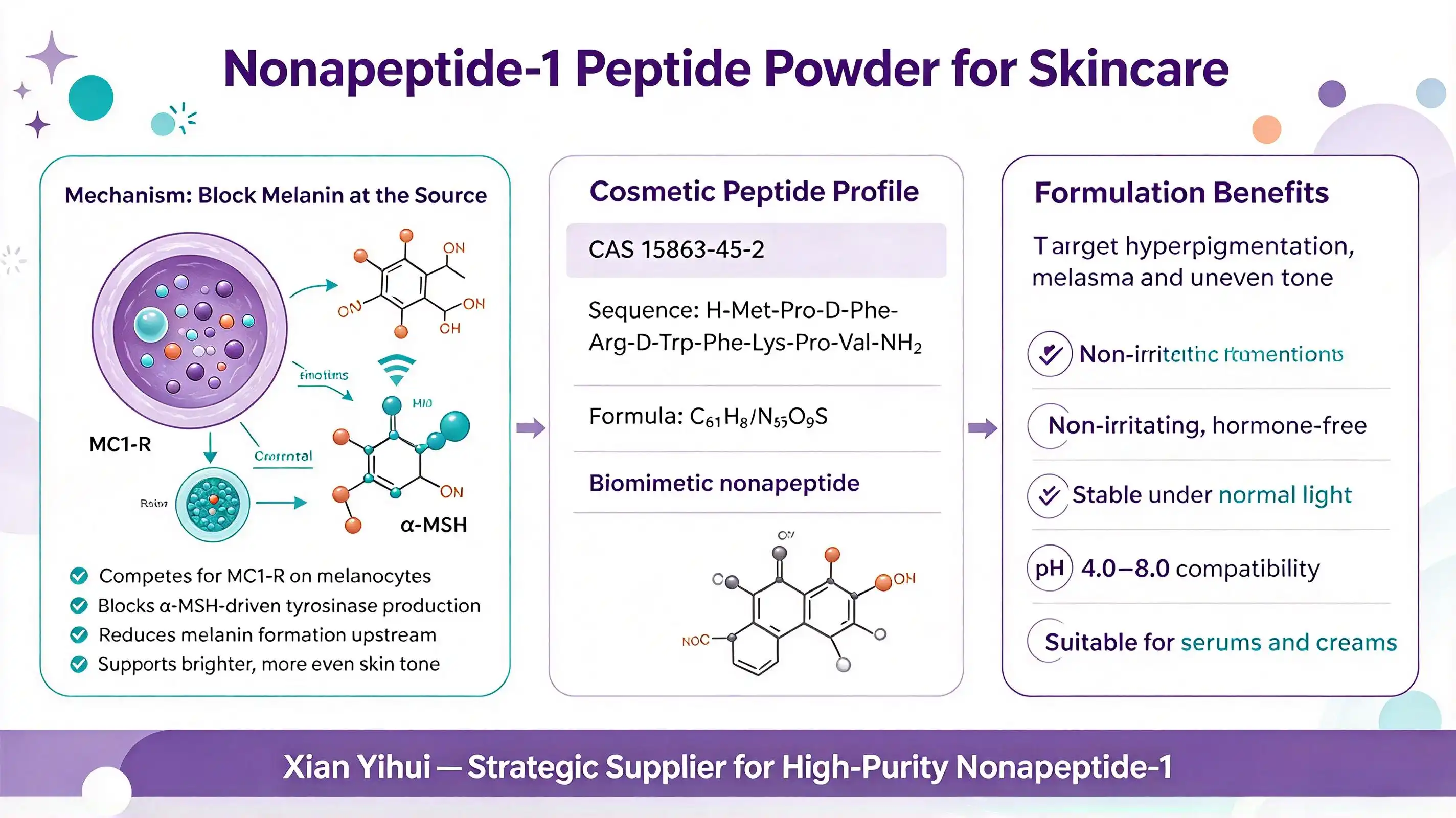
Cosmetic peptide Nonapeptide-1 (CAS No. 158563-45-2), a biomimetic peptide, has the following building blocks: H-Met-Pro-D-Phe-Arg-D-Trp-Phe-Lys-Pro-Val-NH2; its chemical formula is C61H87N15O9S. This peptide works at the receptor level instead of the enzyme level, which is very different from other tyrosinase inhibitors like arbutin or kojic acid. This makes it a very different way to treat skin pigmentation.
Mechanism of Action: Blocking Melanin at the Source
Cosmetic peptide Nonapeptide-1 works by competing with the melanocortin-1 receptor (MC1-R), which is found on the surfaces of melanocytes. The peptide stops the production of tyrosinase enzyme by stopping alpha-melanocyte-stimulating hormone (α-MSH) from activating these receptors. This stops the production of melanin before it even starts. This upstream action helps with hyperpigmentation, melasma, and uneven skin tone that can be caused by UV light or changes in hormones, without hurting melanocytes.
Validated Benefits for Advanced Formulations
Research in humans has shown that Cosmetic peptide Nonapeptide-1 has important effects on brightening the skin while also being very safe. The peptide gets rid of age spots, evens out skin tone, and speeds up the process of cell renewal. It's great for sensitive skin recipes and daily use goods because it doesn't irritate and doesn't contain any hormones. Instead of making you more sensitive to light like some whitening agents do, Cosmetic peptide Nonapeptide-1 stays stable in normal light, which means it can be used in more types of skin care.
Comparing Nonapeptide-1 with Other Cosmetic Peptides and Whitening Agents
Procurement and R&D teams can make better buying choices when they know how Cosmetic peptide Nonapeptide-1 is different from other options.
Functional Differences from Traditional Whitening Agents
Vitamin C and glutathione mostly work as antioxidants, and arbutin directly stops tyrosinase activity. Cosmetic peptide Nonapeptide-1, on the other hand, stops the first signal that starts the production of melanin. This upstream mechanism works with these ingredients instead of replacing them, which lets formulators create multi-pathway brightening systems that work better together. When mixed with antioxidants like vitamin E or other peptides that work on different ways of ageing, Cosmetic peptide Nonapeptide-1 makes the mixture work better without making itching more likely.
Safety and Compatibility Advantages
Hydroquinone is limited in many markets because of safety issues. Cosmetic peptide Nonapeptide-1, on the other hand, is a non-cytotoxic option that has been shown to be biocompatible. It is stable between pH levels 4.0 and 8.0, which gives formulators a lot of options. However, it works best in environments that are moderately acidic to neutral. Because of this, it can be used with most skin care bases, from light serums to thick creams, without needing a lot of stabilising ingredients.
How to Source High-Quality Nonapeptide-1 for Skincare Production
To get peptide raw materials successfully, you need to pay attention to certain quality indicators and organisational issues that have a direct effect on how well the product works and how well it meets legal requirements.
Critical Quality Parameters
When looking at sources, quality is the most important thing. Cosmetic peptide Nonapeptide-1 must be held to rigorous standards: to avoid possible immune reactions, high-quality Cosmetic peptide Nonapeptide-1 should have an HPLC purity of ≥98.0% and no single impurity that is more than 1%. ESI-MS verification shows the right peptide sequence and lack of deletion peptides that could make the drug less effective. The amount of moisture in the material must be kept under control (usually between 5 and 8 percent), and any solvents left over from the synthesis process, especially methanol and acetonitrile, must follow ICH Q3C guidelines to make sure users are safe.
Packaging and Documentation Requirements
Professional peptide suppliers give a lot of paperwork to back up their quality control and regulatory compliance processes. Certificates of Analysis (COA) with test results specific to each batch, Material Safety Data Sheets (MSDS), HPLC chromatogram records, and export compliance paperwork are all important papers. Standards for packaging play a big role in how stable peptides are; proper closing, drying, and temperature control during keeping keep them from breaking down. Suppliers who offer a range of flexible packaging options, from 1g for research purposes to 1kg for production batches, can meet the needs of both people working on new formulations and companies making goods for sale.
Why Choose Xi'an Yihui as Your Nonapeptide-1 Supplier
Xi'an Yihui Bio-technology Co., Ltd. has been making fine chemicals and peptides for over thirteen years and has supplied goods to more than 100 countries that meet worldwide standards for pharmaceuticals and cosmetics.
Pharmaceutical-Grade Manufacturing Standards
Our factory follows good manufacturing practices (GMP) and has ISO, Halal, and Kosher certifications. This makes sure that every batch of Cosmetic peptide Nonapeptide-1 meets strict quality standards. Strict HPLC testing protocols make sure that the 99% assay and ≥98.0% purity requirements are met. This provides the consistency that formulators need for products to work the same way every time. This pharmaceutical-grade method gets rid of the differences that can make formulation reliability and customer results less reliable.
Flexible Supply and Technical Support
We keep an impressive supply capacity of 5,000g per month and have stock on hand all the time. This cuts down on wait times and lets us support both planned production runs and immediate formulation needs. Our smallest order is just 1g, so we can work with both research labs doing preliminary studies and well-known names that are increasing their market production. Samples can be used to check the quality of the material before making larger commitments, which lowers the risk of procurement.
In addition to providing raw materials, our scientific team also gives formulation advice on the best concentration ranges (usually between 0.005% and 0.05% for pure powder), the best ways to incorporate peptides while keeping their safety, and how to make multi-active systems compatible with each other. Cosmetic peptide Nonapeptide-1 is a key example where such guidance is particularly valuable, as its stability and efficacy depend heavily on proper handling and matrix matching. With this consultative approach, Xi'an Yihui goes from being a transactional vendor to a strategic partner who cares about the success of your product.
Complete Documentation and Regulatory Support
Each package comes with a lot of paperwork, like a COA, an MSDS, HPLC chromatograms, and export compliance certificates. This makes it easier to get through customs and helps you meet your regulatory filing requirements in a wide range of foreign markets. Our knowledgeable customer service team is available 24 hours a day, seven days a week. They are quick to respond to technical questions, give updates on orders, and provide helpful support after the sale.
Practical Guide to Using Nonapeptide-1 Peptide Powder in Skincare Formulations
To get the most out of Cosmetic peptide Nonapeptide-1, you need to know about its physical properties and how to formulate it.
Optimal Concentration and Incorporation Methods
The white powder that has been lyophilised dissolves easily in water, making it easier to mix with water-based substances. For pure Cosmetic peptide Nonapeptide-1 powder, the right dose is between 0.005% and 0.05%. For pre-diluted solutions (100ppm or 500ppm), the right dose is between 2% and 5%. Because the peptide is sensitive to heat in solution, mix it with water and add it when the temperature drops below 40°C to keep it from breaking down.
Product Types and Synergistic Combinations
Cosmetic peptide Nonapeptide-1 works well in serums, essences, lotions, creams, and sheet masks, among other types of products. Because it doesn't irritate skin, it's great for items that are meant to help sensitive or reactive skin. When you mix Cosmetic peptide Nonapeptide-1 with active ingredients that work well together, you get better results.
For example, tyrosinase inhibitors like arbutin help control melanin in more than one way, and antioxidants like vitamin E help protect against oxidative stress, which can cause pigmentation. But formulators should be careful when working in places with a pH of less than 3.5, because this can break down peptide bonds over time, making the product less effective.
Storage and Stability Considerations
Peptides stay intact throughout the supply chain and product development process as long as they are stored correctly. To keep raw powder for a long time, it needs to be kept at -20°C in tight, dry cases so that it doesn't absorb water and break down. When kept in these conditions, the shelf life usually lasts for 24 months. When the formula is done, it should be put in containers that keep light out and stored according to the results of the stability tests. Usually, it should be kept in cool, dry places that are out of direct sunlight.
Conclusion
Finding good Cosmetic peptide Nonapeptide-1 is a business choice that affects how well the product works, how well it follows the rules, and the reputation of the brand. The main things that Xi'an Yihui Bio-technology Co., Ltd. does for procurement managers, R&D teams, and quality assurance professionals are meet pharmaceutical-grade manufacturing standards, be able to supply products in a flexible way, and provide dedicated technical support.
Because we always keep our products pure, provide detailed paperwork, and offer quick customer service, beauty brands looking for reliable, performance-driven peptide ingredients can work with us. Cosmetic peptide Nonapeptide-1's gentle safety profile and proven ability to brighten the skin make it a strong ingredient for formulators who want to make new skincare products that meet the growing demand for science-backed, effective products.
FAQ
What purity level should I expect from high-quality Nonapeptide-1?
Premium Cosmetic peptide Nonapeptide-1 should have an HPLC purity of at least 98.0%, with no single impurity being more than 1%. This specification makes sure that the performance will be consistent and lowers the chance of irritation or immune system reactions in finished products.
How does Nonapeptide-1 compare to traditional whitening ingredients like vitamin C?
Cosmetic peptide Nonapeptide-1 blocks signals for melanin production at the receptor level, before the enzymes are activated. The main ways that vitamin C works are through direct tyrosinase inhibition and antioxidant pathways. When these two processes work together, they make the brightening benefits stronger without raising the risk of soreness.
What documentation should accompany peptide shipments?
Professional suppliers give out Certificates of Analysis that include test results for each batch, MSDS, HPLC chromatogram reports, and paperwork for export compliance. These materials help with regulatory filings, clearing customs, and internal quality assurance processes that are necessary for making skincare products for sale.
Can Nonapeptide-1 be used in formulations for sensitive skin?
Yes, Cosmetic peptide Nonapeptide-1 has a profile that doesn't irritate or sensitise skin, so it can be used in formulations for sensitive skin. Since it doesn't make skin sensitive to light, it can be used in everyday products on a wide range of skin tones and types.
Partner with Xi'an Yihui for Premium Nonapeptide-1 Supply
Skincare companies, formulation labs, and cosmetic brands are welcome to work with Xi'an Yihui Bio-technology Co., Ltd. to experience the quality benefit of working with a specialised peptide source. Our Cosmetic peptide Nonapeptide-1 peptide powder is pharmaceutical-grade and has the purity, uniformity, and technical support that improve the performance of formulations and speed up the time it takes to get new skin care goods on the market. We offer reasonable prices despite our low minimum order amount of 1g, flexible bulk buying choices up to our monthly capacity of 5000g, and full technical documentation.
These features make your procurement process easier while also making sure you comply with regulations in all foreign markets. You can email our technical team at sales@yihuipharm.com to get samples, technical data sheets, or to talk about your unique recipe needs. Find out why Xi'an Yihui is the trusted supplier of Cosmetic peptide Nonapeptide-1 to large companies.
References
1. Hearing, V.J. "Determination of Melanin Synthetic Pathways." Journal of Investigative Dermatology Symposium Proceedings, vol. 14, no. 1, 2009, pp. 23-29.
2. Ito, S. and Wakamatsu, K. "Chemistry of Mixed Melanogenesis—Pivotal Roles of Dopaquinone." Photochemistry and Photobiology, vol. 84, no. 3, 2008, pp. 582-592.
3. Schurink, M. and van Berkel, W.J.H. "Flavoprotein Oxidases: Classification and Applications." Applied Microbiology and Biotechnology, vol. 97, no. 12, 2013, pp. 5177-5188.
4. Smith, K.R. "Peptide Stability in Cosmetic Formulations: Factors Affecting Efficacy and Shelf Life." International Journal of Cosmetic Science, vol. 38, no. 4, 2016, pp. 315-323.
5. Briganti, S. and Picardo, M. "Antioxidant Activity, Lipid Peroxidation and Skin Diseases: What's New." Journal of the European Academy of Dermatology and Venereology, vol. 17, no. 6, 2003, pp. 663-669.
6. Draelos, Z.D. "Skin Lightening Preparations and the Hydroquinone Controversy." Dermatologic Therapy, vol. 20, no. 5, 2007, pp. 308-313.

Send Inquiry
You may like
Related Industry Knowledge