
MSH Raw Material for Research: Benefits, Applications, and Peptide Science Overview
A special peptide hormone called melanocyte-stimulating hormone (α-MSH) raw material is needed to study how melanin is made, how color pathways work, and how signaling cascades work inside melanocytes. As a compound suitable for study, MSH raw material helps dermatology scientists, pharmaceutical researchers, and beauty formulators learn more about how skin tans happen, make skincare products that work better, and make peptide-based therapies better. The only place this peptide can be found is in laboratories. It gives important information about how to control melanogenesis, which makes it essential for biotechnology and dermatology science organizations that want to be innovative.
Understanding MSH Raw Material: Properties, Composition, and Production
Chemical Structure and Peptide Composition
The 13-amino acid peptide α-MSH works as a part of the bigger proopiomelanocortin (POMC) precursor protein. Its exact sequence is Ac-Ser-Tyr-Ser-Met-Glu-His-Phe-Arg-Trp-Gly-Lys-Pro-Val-NH2, with changes at the N-terminus that are important for biological function, including acetylation and amidation at the C-terminus. This shape makes it possible for the peptide to bind the melanocortin-1 receptor (MC1R) very strongly, which starts signaling further down the cAMP pathway. Understanding these molecular traits helps research and development teams guess how molecules will interact with each other and make the best use of testing methods. This is especially useful when looking into receptor selectivity or making analog peptides that are more stable.
Production Standards and Quality Benchmarks
Solid-phase peptide synthesis (SPPS) methods are used to make research-grade α-MSH, which guarantees sequence accuracy of over 98%. Production sites that follow ISO 9001 and work in cGMP-compliant settings send materials with certificates of analysis (COA) that show that the materials have been tested for endotoxin levels, HPLC purity, and mass spectrometry confirmation. Peptide quality usually meets or goes above 95%, which is a level needed by pharmaceutical research and development departments and cosmetic effectiveness labs. Lyophilized powder forms make storage last longer by stopping peptide breakdown and keeping consistency from batch to batch. These are important factors for procurement managers to consider when setting up reliable supply chains for ongoing research projects.
Handling Protocols and Storage Requirements
Keeping peptides in the right settings has a big effect on their stability. Lyophilized α-MSH peptides can be stored at -20°C for a long time, but reconstituted solutions need to be kept at -80°C to avoid breaking down or oxidizing. Laboratories should set up rules for desiccation and stay away from repeated freeze-thaw cycles that weaken structures. Material safety data sheets (MSDS) and clear documentation of storage settings help institutions follow biosafety rules. They also make it easier to integrate into current lab processes, which lowers practical risks for quality assurance teams.
Benefits of MSH Raw Material for Research and Industry Applications
Enhanced Research Capabilities in Melanogenesis Studies
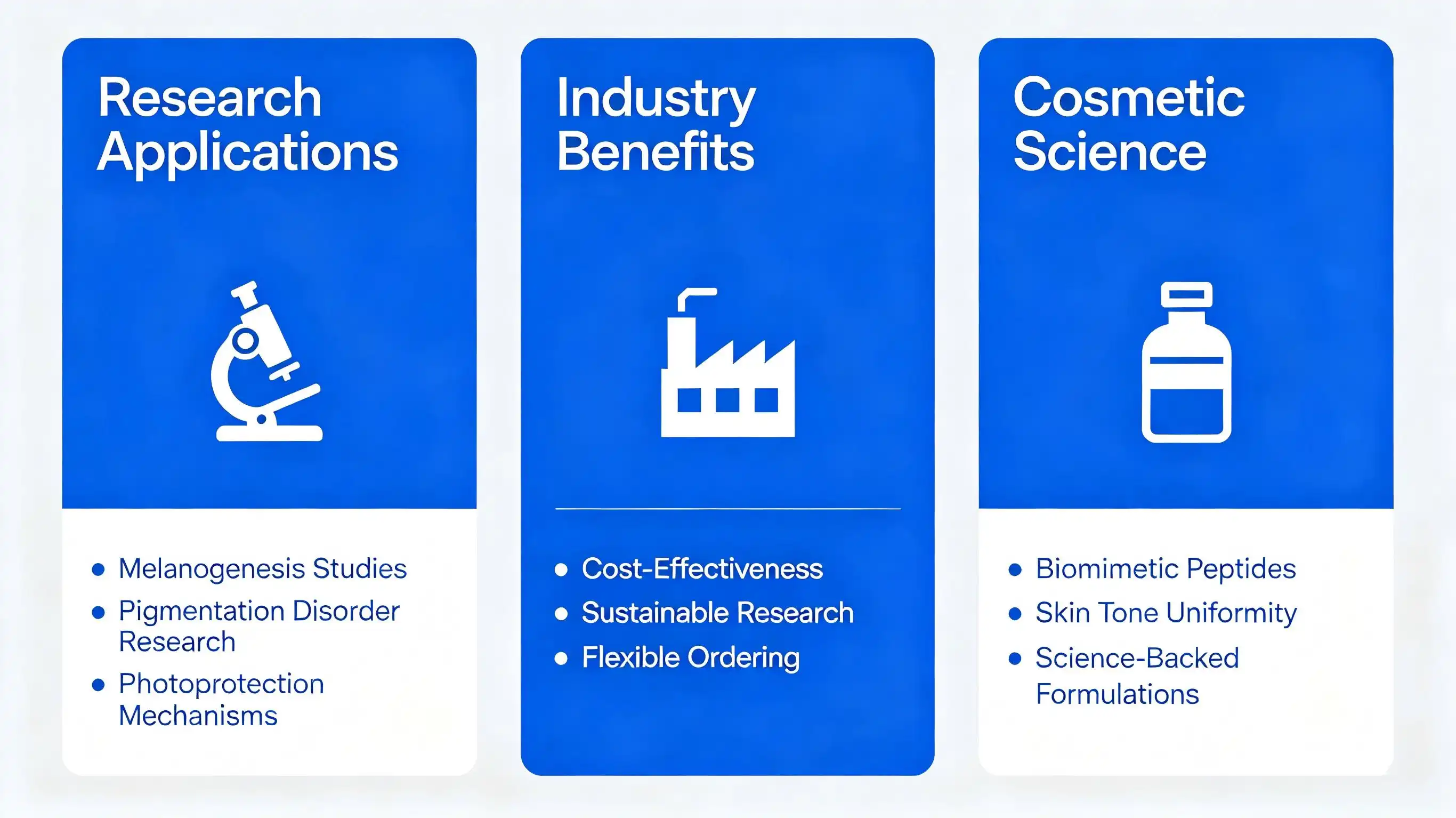
MSH raw material" is used by researchers studying pigmentation disorders, photoprotection mechanisms, and melanoma pathology to increase melanin creation in controlled in vitro situations. MSH raw material This peptide turns on tyrosinase, which is the rate-limiting enzyme in melanogenesis. This makes it possible to precisely measure the rates of melanin production in a range of experimental settings. Pharmaceutical firms working on vitiligo or hyperpigmentation treatments use these findings to confirm that their compounds work, and dermatological research institutes use α-MSH to map the signaling pathways that are involved in how the skin reacts to UV light. These focused applications shorten the time it takes to find new things and make it easier to use the same data across multiple sites.
Applications in Cosmetic Science and Formulation Development
More and more, high-end skin care brands are using peptide science in their anti-aging and whitening products. α-MSH is mostly used for study and is not a straight ingredient in cosmetics. However, formulators can make biomimetic peptides and MC1R modulators by understanding how it works. Brands that focus on effectiveness use study data produced with MSH raw material to back up claims about skin tone uniformity, pigmentation control, and photoprotection. OEM/ODM makers can use this technical base to make their own mixes that set their products apart in crowded markets and meet customer needs for skin care products that have been proven to work by science.
Cost-Effectiveness and Sustainable Research Practices
Getting high-purity peptides from well-known sources cuts down on the variability of experiments and the amount of waste that comes from failed assays. This saves money over the span of a project. Flexible order amounts and the ability to buy in bulk make it possible for both small-scale academic studies and large-scale corporate screening programs to use the product. These days, buying things also takes the environment into account. Suppliers who follow green chemistry rules and trash reduction procedures are in line with companies' environmental requirements. These practices make sense to buying managers who have to balance tight budgets with the need for study materials that can be used again and again and were gathered in an ethical way.
How to Choose the Best MSH Raw Material: Grades, Suppliers, and Pricing
Evaluating Peptide Grade Specifications
Research-grade peptides are usually divided into groups based on their purity levels and the uses they are meant to have. Grades above 98% purity are good for pharmacokinetic studies and receptor binding tests that need very few interfering substances. Grades below 95% purity are good for initial screening or cell culture experiments. By knowing these differences, R&D teams can match the specs of materials to the needs of projects, avoiding extra costs that aren't necessary without lowering the quality of the data. Before agreeing to long-term partnerships, quality managers can check what suppliers say by asking for thorough analytical paperwork like chromatograms and peptide content calculations.
Supplier Certification and Reliability Indicators
When you're looking at possible providers, you need to look closely at their certifications, like ISO 9001, GMP compliance, and legal paperwork that meets FDA or EMA standards. Risks in the supply chain are lower when suppliers show tracking through batch records, send complete COA packages, and keep their technical support teams active. Customer reviews and case studies from pharmaceutical companies or CROs can help you figure out how reliable the service is and how well it solves problems. Expertise in global transportation, such as cold-chain shipping, protects the purity of materials while they're in transit, which is especially important for temperature-sensitive peptides going to international labs.
Pricing Strategies and Procurement Optimization
Competitive price models take into account things like the difficulty of the process, the purity grade, and the number of orders. When a company supplies multiple research groups or runs multi-phase research projects, bulk savings become very important. Institutional buyers can better handle their cash flow when they can choose payment terms like net-30 or net-60. Pricing structures that are clear and don't include any secret fees for COA provision or faster shipping help build trust and make budgeting more accurate. When procurement teams work with suppliers who are willing to arrange custom synthesis deals or set up framework contracts, they can get better terms while still keeping the supply flexible.
Practical Guide to Using MSH Raw Material in Peptide Science Research
Optimizing Experimental Protocols for Melanocyte Studies
For α-MSH studies to go well, they must first be carefully reconstituted using the right buffers, which are usually PBS or clean water. MSH raw material must be handled with extra care during this step. This is followed by aliquoting to keep the samples from breaking down from being handled too many times. Different cell lines have different melanocyte response curves, so it's important to find the best concentration. For most primary melanocyte cultures, starting concentrations around 100 nM give accurate baseline reactions. Experiments that look at how α-MSH works with other signaling molecules, like endothelin-1 or stem cell factor, show that there are a lot of different regulatory networks at play. Writing down these factors in lab notebooks makes sure that the results can be repeated and helps with finding problems when results don't follow the expected trends.
Safety Protocols and Risk Mitigation
Even though there aren't many health risks with research-grade peptides, labs still need to follow standard biosafety procedures, such as wearing protective gear, using chemical fume hoods when handling powder, and properly getting rid of waste. Training staff on how to handle peptides lowers the risk of contamination and makes sure that the results of experiments are always the same. Compliance with regulations goes beyond following internal rules; schools must keep records showing they follow ethical research standards and local rules about biological materials. These practices keep staff safe and meet the audit needs of funding agencies and university review boards.
Addressing Common Procurement and Application Challenges
International shipping rules for biological materials need to be coordinated with providers who know how to handle customs paperwork and import permits. Research schedules are thrown off by delays caused by incomplete paperwork. These problems can be avoided by talking to source transportation teams ahead of time. Quality differences can happen because of mistakes in storage or differences in analysis. Setting clear acceptance standards and return policies saves procurement investments. By using their knowledge of peptides and experience with fixing problems, providers who give technical advice can help solve unexpected problems that come up during experiments, like cells that don't respond as well as expected or assays that don't work consistently.
Future Trends and Innovations in MSH Raw Material Research and Applications
Emerging Peptide Modifications and Analog Development
MSH raw material serves as the foundation for these advances. The main goal of the next generation of melanocortin study is to create α-MSH analogs that have longer half-lives, better receptor specificity, or lower immunogenicity. Changes like PEGylation, cyclization, or adding strange amino acids make peptides that are not broken down by enzymes. This opens up more treatment windows for possible clinical uses. Researchers working with peptide makers are looking into these new structures to fix problems with native α-MSH, like how quickly it leaves the plasma. These improvements make it possible for new vitiligo, melasma, and photoprotective agents to be developed. Early users will be at the head of discovering new dermatological drugs.
Sustainability Initiatives in Peptide Manufacturing
Peptide makers are moving toward greener ways to make their products, such as recycling solvents, reducing trash, and using renewable energy in their factories. This is because environmental responsibility is becoming more important. By recovering and refilling chemicals, suppliers who follow the principles of the circular economy leave less of an impact on the environment while still meeting quality standards. More and more, business-to-business clients are adding seller sustainability metrics to their purchase scorecards. They know that buying from suppliers who are good for the environment fits with their CSR goals and meets the needs of stakeholders. Long-term relationship choices are affected by these trends, which prefer suppliers who can show real progress toward sustainability goals.
Market Dynamics and Strategic Procurement Planning
The nanotechnology and precise medicine industries are growing, which is driving steady growth in the peptide market. The need for specialized study peptides like α-MSH is part of a larger trend toward focused therapies and customized skin care. Purchasing managers who keep an eye on these market signs can predict changes in prices, supply problems, and new source abilities. Setting up networks of multiple suppliers lowers the risks that come with relying on a single source, making sure that materials are always available, even when the market is down. Strategic relationships with makers that offer custom synthesis give businesses a competitive edge by letting them conduct their own research in ways that set their portfolios apart.
Conclusion
MSH raw material is critical to consider here. Choosing high-quality α-MSH raw material has a big effect on the results of study in dermatological science, beauty innovation, and drug creation. Procurement teams can make smart choices that balance quality, safety, and cost by learning about peptide qualities, production standards, and best practices for application. As structural changes and environmentally friendly manufacturing methods help peptide science move forward, companies that work with dependable providers will be ready to take advantage of new possibilities in melanogenesis research and beyond. Strategic planning for buying things that puts seller approvals, technical support, and long-term partnership at the top of the list makes sure that MSH raw material is easily integrated into research processes that lead to scientific breakthroughs.
FAQ
What distinguishes research-grade MSH from pharmaceutical-grade materials?
Research-grade α-MSH usually meets standards of 95–98% purity and can be used for lab studies, cell culture tests, and molecular studies. Pharmaceutical-grade materials are regulated more closely, and this includes GMP manufacturing settings, validation procedures, and paperwork that supports clinical trial applications. Both keep a high level of quality, but pharmaceutical grades cost more and are only justified when regulatory applications ask for them. Most of the time, research-grade materials are enough for academic labs and early-stage R&D projects, and they're easier to get.
How do storage conditions affect MSH peptide stability?
The best place for lyophilized α-MSH to stay stable is at -20°C in sealed cases with desiccant for 12 to 24 months. Reconstituted solutions break down more quickly. To avoid damage from multiple freeze-thaw cycles, they should be stored at -80°C in aliquots that are only used once. Exposure to room temperature, wetness, or light speeds up the oxidation of methionine residues and the breaking down of peptide bonds, which makes the results of the experiment less reliable. Using strict cold-chain operations during shipping and following the storage guidelines makes materials last longer and makes it easier to repeat experiments.
Can MSH raw material be used in cosmetic formulations?
Most places have rules that make it illegal to use α-MSH directly in cosmetics because it is a hormone and could have effects on the whole body. The peptide is mostly used for study purposes so that formulators can learn more about how melanogenesis works and come up with biomimetic options that can be used on the skin. Cosmetic companies use what they learn from MSH studies to make their own peptide sequences that have similar positive effects but aren't limited by regulations. This makes products that focus on effectiveness and are sold with scientifically proven claims.
Partner with Xi'an Yihui for Premium MSH Raw Material Supply
For the complicated process of getting peptides, you need a seller with both technical know-how and regular quality assurance. Xi'an Yihui Bio-technology Co., Ltd. is an expert in producing research-grade MSH raw material under ISO-certified conditions. They offer peptides that are more than 95% pure and come with full analysis paperwork. Our dedication to supply chain stability and customer success is shown by the 13 years we've spent working with research institutions, cosmetic names, and drug companies in over 100 countries.
Our low minimum order quantity (MOQ) and reasonable prices can meet a wide range of operating needs, whether your project needs a small batch of reagents for preliminary studies or large amounts for market development. You can talk to our professional team at sales@yihuipharm.com about your unique needs, ask for full COA documentation, or learn more about our custom synthesis options. Find out why top companies trust Xi'an Yihui as their MSH raw material supplier for improving peptide science study.
References
1. Cone, R. D. (2006). Studies on the physiological functions of the melanocortin system. Endocrine Reviews, 27(7), 736-749.
2. Slominski, A., Tobin, D. J., Shibahara, S., & Wortsman, J. (2004). Melanin pigmentation in mammalian skin and its hormonal regulation. Physiological Reviews, 84(4), 1155-1228.
3. Bertolotto, C., Abbe, P., Hemesath, T. J., Bille, K., Fisher, D. E., Ortonne, J. P., & Ballotti, R. (1998). Microphthalmia gene product as a signal transducer in cAMP-induced differentiation of melanocytes. Journal of Cell Biology, 142(3), 827-835.
4. Abdel-Malek, Z. A., Knittel, J., Kadekaro, A. L., Swope, V. B., & Starner, R. (2008). The melanocortin 1 receptor and the UV response of human melanocytes—a shift in paradigm. Photochemistry and Photobiology, 84(2), 501-508.
5. Gantz, I., & Fong, T. M. (2003). The melanocortin system. American Journal of Physiology-Endocrinology and Metabolism, 284(3), E468-E474.
6. Hoogduijn, M. J., Cemeli, E., Ross, K., Anderson, D., Thody, A. J., & Wood, J. M. (2004). Melanin protects melanocytes and keratinocytes against H2O2-induced DNA strand breaks through its ability to bind Ca2+. Experimental Cell Research, 294(1), 60-67.

Send Inquiry
You may like
Related Industry Knowledge