
MSH Raw Material Explained: Uses, Functions, and Applications in Pigmentation Research
MSH raw material, which is formally called Melanocyte-Stimulating Hormone (α-MSH), is a peptide hormone that controls the production of melanin and the processes that make skin color. This bioactive substance is mostly used to study melanocytes in pigmentation research, which looks at skin tanning, pigmentation pathways, and communication processes that are connected to these. Researchers all over the world use this unique peptide to learn more about skin conditions and come up with new ways to treat color problems in the pharmaceutical, cosmetic, and medical aesthetics industries.
Understanding MSH Raw Material: Composition, Properties, and Manufacturing Process
Chemical Composition and Technical Specifications
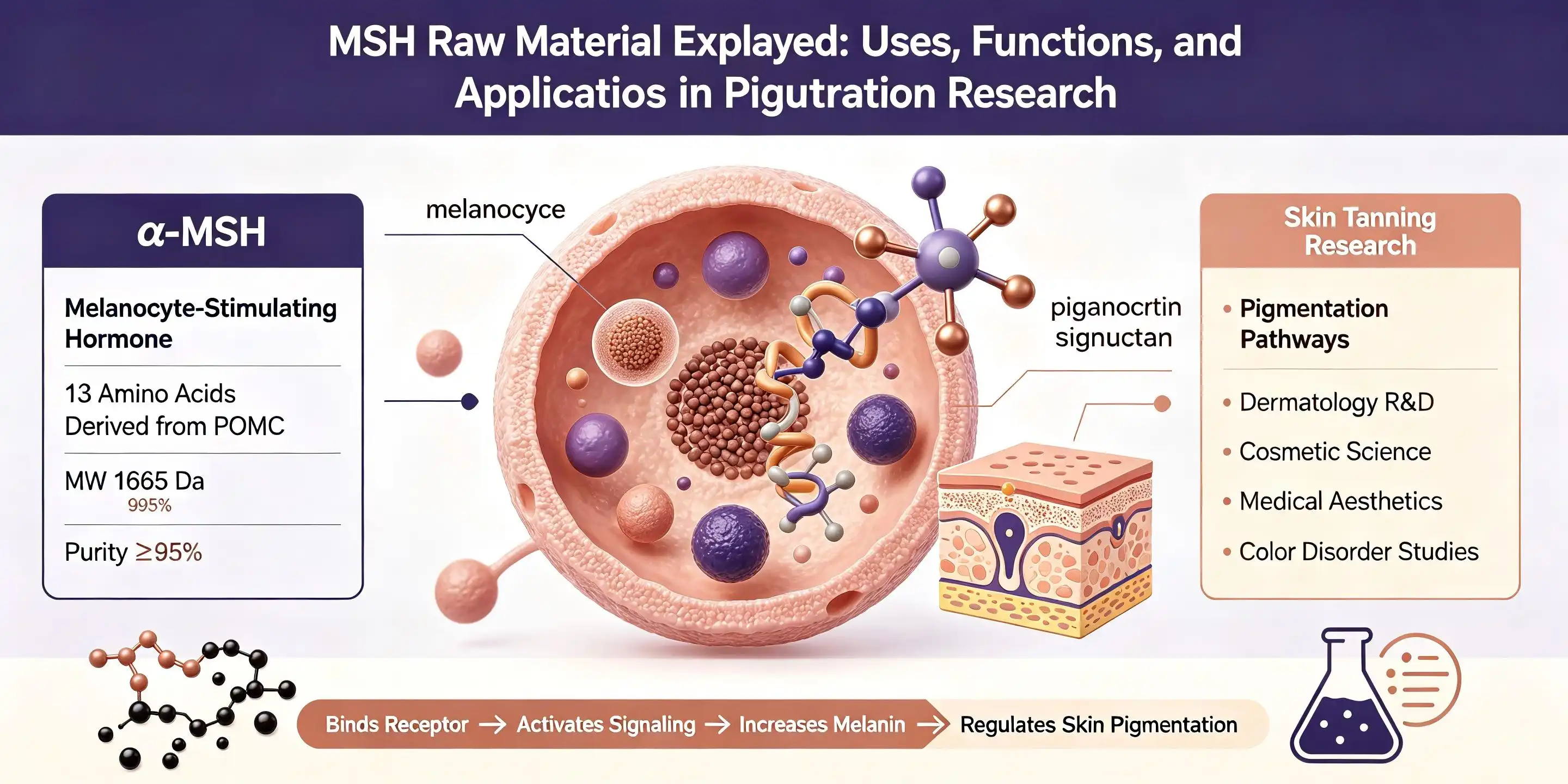
This hormone, α-MSH, is made up of three different parts. It starts as a protein called proopiomelanocortin (POMC). This peptide hormone is made up of 13 amino acids that are grouped in a certain way that lets it work in living things. The chemical structure is very specific; it binds to melanocortin receptors to start signaling pathways further down the line. Research-grade versions usually have purity levels above 95%, which meets the strict needs of pharmaceutical R&D departments and biotechnology businesses.
The molecular weight is usually around 1665 Da, and the peptide stays stable when stored in a controlled environment. Quality-assured batches come with technical paperwork like Certificates of Analysis (COA), Material Safety Data Sheets (MSDS), and Drug Master Files (DMF). This gives buying managers the peace of mind they need for regulatory clearance processes.
Physical and Chemical Properties
The peptide dissolves easily in water, which makes it easier to add to different preparation materials. Transporting goods across foreign supply chains without worrying about damage is possible when temperatures are kept stable under controlled conditions. The bioactive chemical is sensitive to pH and needs to be made in certain conditions to keep working at its best.
Because of these features, α-MSH is a flexible study tool that can be used with a range of experimental methods. This peptide hormone is different from other pigmentation agents because it has targeted biological activity instead of broad-spectrum effects. This lets researchers separate specific processes within melanogenesis pathways. The precision cuts down on influence from confounding factors, which makes it easier to repeat the experiment in different labs.
Manufacturing Standards and Quality Controls
To make research-grade peptides, strict synthesis techniques are used, such as solid-phase peptide synthesis (SPPS) or liquid-phase methodologies, starting with MSH raw material. High-performance liquid chromatography (HPLC) is used to purify each batch several times so that it meets the purity standards needed for pharmaceutical uses. Some quality control methods are checking the mass spectrometry, analyzing the amino acids, and making sure the product is sterile.
Manufacturers usually keep GMP compliance, ISO certifications, and other legal qualifications that buyers can rely on to make sure that the quality of their products stays high. Global sustainability standards are met by environmental care practices built into the production process. This meets the needs of B2B clients in Europe and the US who are placing more importance on responsible sourcing. Documentation that can be tracked from where the raw materials come from to how they are packaged at the end provides audit trails that meet the needs of regulatory managers.
Key Uses and Applications of MSH Raw Material in Pigmentation Research
Primary Research Applications
Pigmentation study labs use α-MSH to look into the basic processes that control how melanin is made in melanocytes. The peptide is used as a positive control in tests that measure melanogenesis stimulation. This helps researchers set a standard reaction that they can then use to test new compounds. Dermatology researchers who study hyperpigmentation diseases use this hormone to create in vitro models of abnormal conditions.
This helps them find new drugs that can treat melasma, age spots, and post-inflammatory hyperpigmentation. Medical beauty research teams study how α-MSH works with other signaling molecules to create combined treatments that precisely change skin tone. This peptide is used in cosmetic ingredient testing protocols to back up claims of skin-brightening effectiveness. It provides the clinical proof that regulatory bodies and educated customers are asking for more and more.
Pharmaceutical and Biotechnology Applications
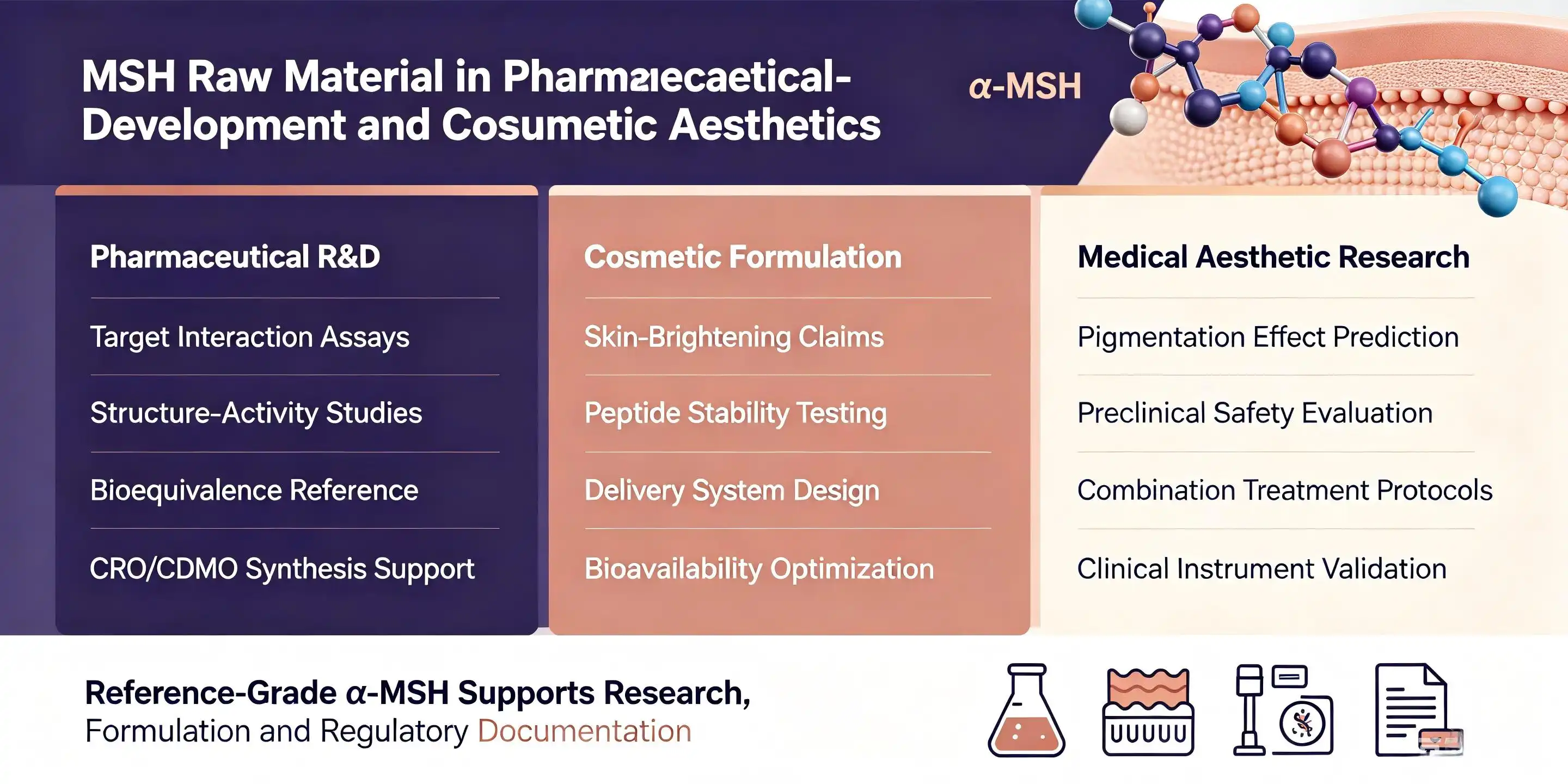
In addition to scientific study, drug companies that are looking for ways to treat pigmentation diseases use α-MSH as a standard during the drug creation process. The peptide helps to confirm target interaction assays, which test potential molecules to see how well they can change the activity of melanocortin receptors. Contract research organizations (CROs) and contract development and manufacturing organizations (CDMOs) offer custom synthesis services that make α-MSH versions with different sequences.
This lets researchers study the link between structure and activity. These changes help medicinal scientists improve the drug's pharmacokinetic qualities while keeping its biological effectiveness. When generic drug companies test biosimilar peptides, they use reference-grade α-MSH to show that the peptides are bioequivalent before sending them to the government. Because the peptide's pharmacology is well understood, it can be used as a standard at different steps of drug research.
Cosmetic and Medical Aesthetic Integration
High-end skin care brands that are looking into formulas that focus on effectiveness use α-MSH in the preliminary testing stages to back up their product claims. When OEM and ODM makers work with cosmetic brands to improve formulations, they use this study tool to find the best balance between stability and bioavailability. Medical beauty schools that are testing the safety of new skin treatments use α-MSH to guess what pigmentation effects might happen before they start testing on humans. Peptides play a big role in more than just labs.
For example, cosmetic chemists build delivery methods that keep peptides intact while also making it easier for them to get into the skin. Leading cosmetic ingredient providers have shown through case studies that using melanocortin-targeting methods in formulations can improve the evenness and brightness of the skin. These results have been confirmed by clinical instruments and customer perception studies.
Comparing MSH Raw Material with Traditional and Recycled Alternatives
Performance Metrics and Technical Superiority
In the past, researchers who studied pigments often used cruder extracts or manufactured copies that weren't as specific as recombinant α-MSH, which requires high-quality MSH raw material to begin with. When it comes to receptor specificity, the peptide hormone is better than non-specific melanogenic boosters. This means that it has fewer side effects that make it harder to understand the data. When compared to biologically sourced options, where natural variability can add experimental noise, consistency between batches is a key benefit. Research-grade α-MSH keeps activity patterns the same across production lots, which lets long-term studies go on without having to be re-calibrated.
When stored correctly, it lasts longer than many other substances, and when lyophilized and kept in the fridge for long periods of time, it keeps its potency. A study of cost-effectiveness shows that even though the original price per gram of α-MSH may seem higher than that of common chemicals, its high strength means that smaller doses are needed, which lowers the overall cost of the experiment per data point.
Supplier Quality Assurances and Certifications
Buying choices depend on a supplier's qualifications that show they can make things well and follow the rules. Quality assurance managers make sure that vendors follow ISO 9001 quality management systems, which set standard processes for all production activities. GMP approval shows that a company follows the rules for making medicines, which is very important for companies that work with drug developers.
For products sold in Europe, REACH registration shows that environmental safety studies have been carried out, which is in line with chemical management rules. Independent labs that do tests for a third party provide extra proof on top of what the supplier's paperwork says. The location of factories affects the robustness of the supply chain. Diversified buying methods lower the risks that come with regional disruptions. Before signing a long-term contract, purchasing managers test a supplier's response by placing sample orders and checking the quality of technical support and documents.
Environmental and Compliance Considerations
As companies match their operations with their corporate social responsibility goals, sustainability efforts have a bigger impact on the purchases they make. Using optimized techniques for peptide synthesis makes less trash than older methods, showing success in making fine chemicals that are better for the environment. Procurement teams that keep track of scope 3 emissions across supply lines like it when suppliers keep records of their efforts to reduce their carbon footprint.
Market access is based on following international chemistry rules, such as FDA guidelines, EMA standards, and regional limits on cosmetic ingredients. Detailed regulatory paperwork speeds up the approval process for products, reducing the time it takes for new products from clients to hit the market. Because the peptide is only for study purposes, it needs to be clearly labeled and handled in a way that stops it from being misused. This keeps both the seller and the customer from getting into regulatory trouble.
Procurement Guide for MSH Raw Material: How to Buy, Source, and Evaluate Suppliers
Critical Procurement Metrics
Different suppliers have different minimum order quantities (MOQs). Some makers of specialized peptides offer flexible MOQs that can be used for both small-scale academic study and large-scale commercial uses. When you buy more than the normal amount, you get discounts for buying in bulk, and tiered price systems reward partnerships that last a long time. Lead times are usually between two and six weeks, based on how complicated the synthesis is and how big the order is.
This means that procurement managers have to be good at predicting demand for MSH raw material. When shipping, temperature-controlled operations are important to keep peptides stable. This adds to the cost of handling but makes sure the product arrives intact. International packages need customs paperwork that includes statements of material classification, planned use, and, if needed, import permits.
Supplier Evaluation Framework
To start judging the quality of a product, you need to ask for Certificates of Analysis that show that the product's purity has been confirmed using HPLC chromatograms and mass spectrometry data. If you have any doubts about the accuracy of a certificate, you can get in touch with the labs that issued it. Some ways to measure a supplier's dependability are how often they deliver on time, how quickly they respond to communications, and how well they solve problems.
Shipping times and prices are affected by where you are in the world, and local suppliers can help with jobs that need to be done quickly. References from current customers can tell you a lot about how well a seller does in long-term relationships. Better providers offer technical support, and customers can talk to application scientists who can help with formulation problems and testing problems.
Partnering with Qualified Manufacturers
Xi'an Yihui Bio-technology has been helping researchers around the world since it opened, and we have a lot of experience making peptides and fine chemicals. Our factories are certified as ISO, Halal, and Kosher, so they can meet the needs of a wide range of clients in the pharmaceutical, beauty, and research fields. We make peptide hormones, like research-grade α-MSH, and make sure they are of high quality before sending them out. For legal compliance, we provide full paperwork.
Custom synthesis requests are handled by our production capabilities, letting clients look into changed peptide sequences that are specifically designed to meet their study goals. Competitive pricing systems strike a balance between quality control and cost management. This is especially helpful for buying managers who are trying to negotiate within a tight budget. International transportation relationships make sure that customers in Europe, the United States, Japan, and South Korea get their orders on time, and temperature-controlled shipping keeps the products stable.
Conclusion
It is very important to use MSH raw material in color studies because it is very specific and reliable for studying how melanogenesis works. The peptide's well-known qualities and strict production standards make it the best choice for research in academia, the pharmaceutical industry, and the cosmetics industry. When looking for this specialized compound, procurement workers should know the technical specifications, factors for evaluating suppliers, and possible uses. Access to high-quality peptide hormones is becoming more and more important for staying ahead of the competition and making research breakthroughs as color research moves toward targeted treatments and personalized solutions.
FAQ
What is Melanocyte-Stimulating Hormone (α-MSH)?
To be used in study, α-MSH is a peptide hormone that controls the production of melanin and the color of skin. The bioactive molecule is made up of a unique 13-amino acid sequence that binds to melanocortin receptors. This sets off intracellular signaling pathways that tell melanocytes how to make pigment.
What is its main function in research?
The peptide mostly works on melanocytes to learn more about how skin tans, how color works, and the signaling pathways that are involved. It is used by researchers to look into hyperpigmentation diseases, test the effectiveness of makeup ingredients, and come up with new medicines to treat conditions linked to melanin.
Is it for research only?
Yes, study-grade α-MSH is only allowed to be used for scientific studies and not for therapeutic purposes. This classification needs the right labels, handling instructions, and paperwork to make sure it can only be used in the right way in research and lab settings and to stop people from using it without permission.
Ready to Source High-Quality MSH Raw Material for Your Research?
If you need to buy peptides, Xi'an Yihui Bio-technology can help. They have approved, research-grade materials that come with a lot of quality paperwork. As a reputable company that has been serving the pharmaceutical, biotechnology, and beauty research sectors around the world for more than 13 years, we offer dependable supply chain solutions that strike a balance between quality, compliance, and cost-effectiveness.
Our specialized team gives you a one-on-one consultation that takes into account your unique technical needs, legal concerns, and delivery dates. You can email us at sales@yihuipharm.com to talk about our custom synthesis services, ask for Certificates of Analysis, or set up sample packages that let you try things out before making bigger promises.
References
1. Cone RD. Studies on the Physiological Functions of the Melanocortin System. Endocrine Reviews, 2006.
2. Slominski A, et al. Melanin Pigmentation in Mammalian Skin and Its Hormonal Regulation. Physiological Reviews, 2004.
3. Hearing VJ. Determination of Melanin Synthetic Pathways. Journal of Investigative Dermatology, 2011.
4. Yamaguchi Y, Hearing VJ. Physiological Factors That Regulate Skin Pigmentation. BioFactors, 2009.
5. D'Orazio J, et al. UV Radiation and the Skin. International Journal of Molecular Sciences, 2013.
6. Lin JY, Fisher DE. Melanocyte Biology and Skin Pigmentation. Nature, 2007.

Send Inquiry


Related Industry Knowledge