
MSH Raw Material: A Complete Guide to Melanocyte-Stimulating Hormone in Scientific Studies
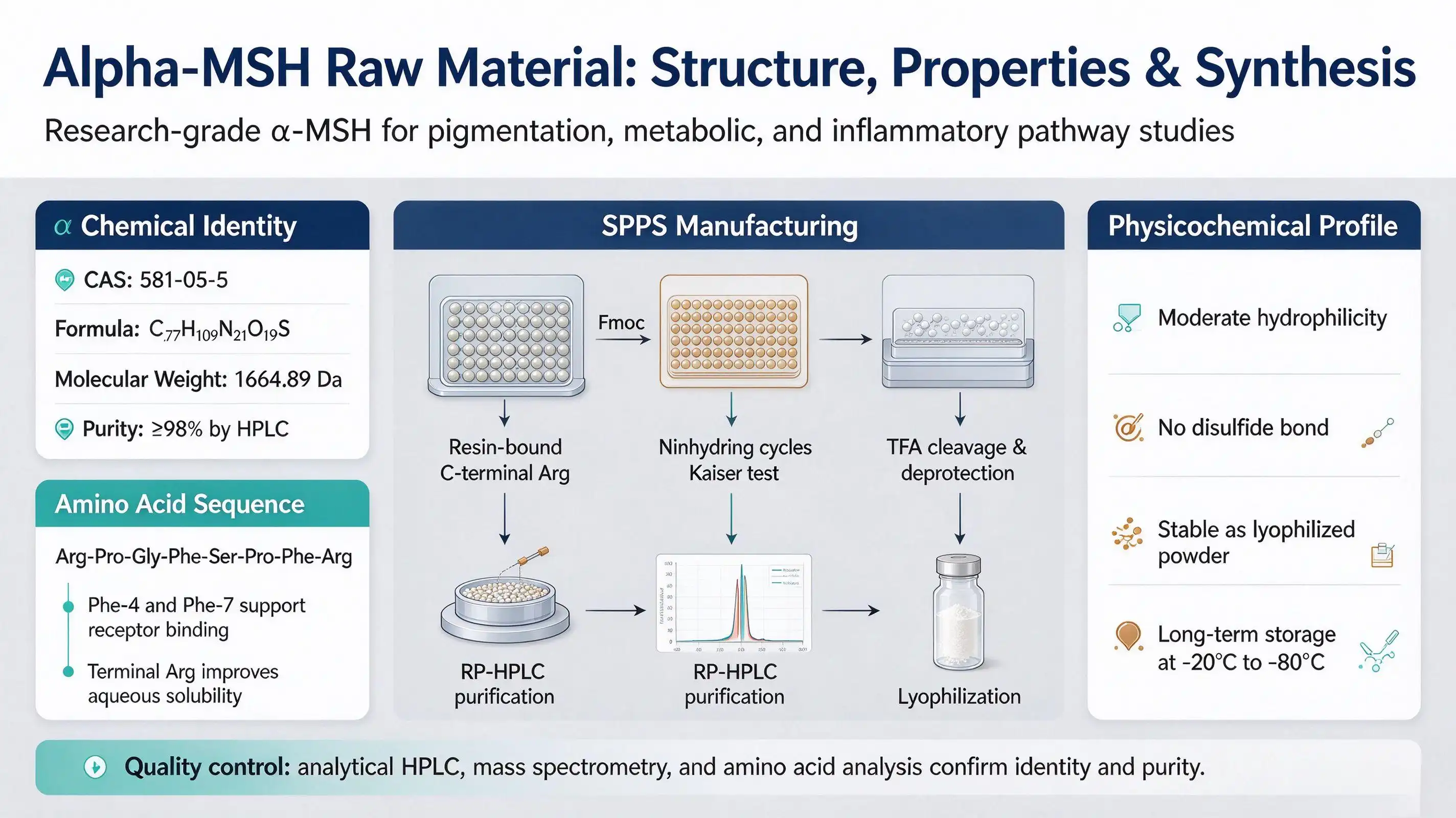
Alpha-melanocyte-stimulating hormone, also called α-MSH or MSH raw material, is a peptide hormone that is very important for making melanin and controlling colour in mammals. This peptide is made up of 13 amino acids that come from proopiomelanocortin (POMC). It mainly works on melanocortin receptors to change how melanin is made in melanocytes. Researchers have found that it does more than just change colour. It also affects inflammation, appetite, and antioxidant pathways. The MSH raw material we're talking about here is α-MSH (CAS 581-05-5), a cosmetic peptide with the formula C77H109N21O19S and a molecular weight of 1664.89 Da that is available at research purity levels of ≥98%.
MSH raw material is becoming more popular in scientific studies because it can be used in many areas, such as making medicines, making cosmetics, and doing biological research. When choosing peptide suppliers, B2B procurement professionals like purchasing directors, quality managers, and R&D engineers need clear information about where the peptides come from, how they are tested for quality, and how they make sure they follow the rules. This guide meets those needs by looking at the chemical properties, production standards, industrial uses, and buying strategies that make up high-quality MSH sourcing in today's market.
Understanding MSH Raw Material: Properties and Production
Chemical Structure and Physicochemical Characteristics
As you can see, the α-MSH sequence (Arg-Pro-Gly-Phe-Ser-Pro-Phe-Arg) is a short piece of POMC that can bind to certain receptors. Its molecular structure includes aromatic amino acids that are necessary for activating the melanocortin receptor, especially at positions 4 and 7 where phenylalanine residues help with binding affinity. Having arginine residues at the ends of molecules makes them more soluble in water while keeping their structure intact in normal settings. Because of these features, MSH raw material is a useful substance for studying how receptors and ligands work together and how signals are sent.
The peptide has a moderate hydrophilicity because it has an equal number of polar and nonpolar residues. Most storage needs call for temperatures between -20°C and -80°C to keep things fresh for a long time. Dry conditions stop rusting and degradation. α-MSH is easier to work with than more complicated peptide structures because it doesn't have a disulphide bond. However, it is still important to store it properly so that it stays bioactive for a long time.
Synthesis and Purification Methodologies
Solid-phase peptide synthesis (SPPS) with Fmoc chemistry is mostly used to make research-grade α-MSH these days. This method gives you exact control over putting together amino acid sequences, which reduces the number of mistakes in the sequences that hurt bioactivity. The process of synthesis starts with resin-bound C-terminal arginine and continues through a series of binding cycles until the N-terminal arginine connection finishes the chain. Each step in the binding process is checked using ninhydrin or Kaiser tests to make sure that all the amino acids are incorporated before moving on.
After the chain is put together, it is cut from the resin and the side chains are deprotected at the same time using trifluoroacetic acid (TFA) cocktails that have the right scavengers. After that, the rough peptide goes through several steps of processing, which usually include preparative reversed-phase high-performance liquid chromatography (RP-HPLC) and gel filtration chromatography.
These methods separate the target peptide from chemical impurities, deletion sequences, and fragments that have been cut off. High-quality manufacturers use analytical HPLC, mass spectrometry, and amino acid analysis to make sure that the final purity levels are higher than 98%. This makes sure that there is consistency from batch to batch, which is important for getting the same results in future research.
Storage Stability and Safety Considerations
Following the right handling instructions will greatly increase the useful life of MSH raw material. Lyophilized powder products are more stable than water-based solutions. They stay effective for 24 months or longer when kept at -20°C with only a few freeze-thaw cycles. After being reconstituted in clean water or the right buffers, working solutions should be divided into portions that are only used once. This is to avoid frequent changes in temperature that speed up degradation.
Safety data sheets (MSDS) that come with pharmaceutical-grade peptides list how to handle them safely, including what safety gear is needed and how to give first aid. Even though α-MSH isn't very harmful in short-term study settings, lab workers should still follow standard biosafety procedures when making solutions and getting rid of materials. Environmental concerns in peptide production are shifting to solvent recovery systems and waste stream treatment to reduce damage to the environment. This aligns production methods with sustainability goals that procurement departments value.
Industrial Applications and Benefits of MSH Raw Material
Pharmaceutical Research and Drug Development
Alpha-MSH is used as a model for studying the chemistry of melanocortin receptors, especially the MC1R and MC4R subtypes. Pharmaceutical companies that are researching metabolic diseases, inflammatory conditions, and skin treatments use this peptide to confirm how receptors work before moving on to synthetic analogues with better pharmacokinetic profiles. MSH raw material serves as the essential starting point for these studies, ensuring batch-to-batch consistency in experimental assays. The well-known binding properties of native α-MSH are used as a standard to compare new compounds to during the lead optimisation stages.
As part of clinical research into preventing melanoma, α-MSH analogues that can increase the production of eumelanin have been studied. These analogues may be able to lower the DNA damage that UV light does to skin cells. For setting up dose-response relationships and mechanism-of-action studies, these studies need to be able to use high-purity reference standards. Because there is research-grade material available with full analytical documentation, preclinical development timelines are shortened because there is no longer any doubt about the quality of the raw materials.
Cosmetic Formulation and Skin Biology Research
The beauty industry has been interested in melanogenesis modulators for a long time in order to make products that deal with hyperpigmentation, photoprotection, and even skin tone. While finished cosmetics usually use synthetic peptide analogues instead of native α-MSH, formulation scientists need real standards when they are screening ingredients and testing protocols for effectiveness. Researchers working on new beauty ingredients compare natural melanocyte-stimulating hormone and man-made peptides to learn more about the structure-activity links that help with the creation of intellectual property.
α-MSH is often used as a positive control compound in studies that look at melanocyte signalling pathways. This peptide, along with tyrosinase activity tests and melanin measurement methods, helps researchers figure out the complicated regulatory networks that control the production of pigments. This kind of basic research helps with both treating pigmentation disorders and making cosmetics that people want to look better.
Biomedical Research Applications
In addition to studies on colour, α-MSH is now being looked at in neuroscience, immunology, and metabolic studies. It is useful for studying obesity because it affects appetite in the hypothalamus by activating MC4R. It may also be useful for immune modulation studies because it has been shown to reduce inflammation in different lab models. To study these different functions, researchers need to have access to well-characterized peptide standards that have purity and bioactivity profiles that can be proven.
Neurodegenerative disease experts are interested in the peptide because it has been shown to protect neurones in experimental models. For these studies to be able to be repeated in different labs and study phases, the materials need to be consistent. Suppliers who can keep their stock all year with stable quality standards are very helpful for study projects that need to make sure they have access to materials for a long time.
Comparing MSH Raw Material with Alternatives: Making the Best Choice
Purity Grades and Quality Distinctions
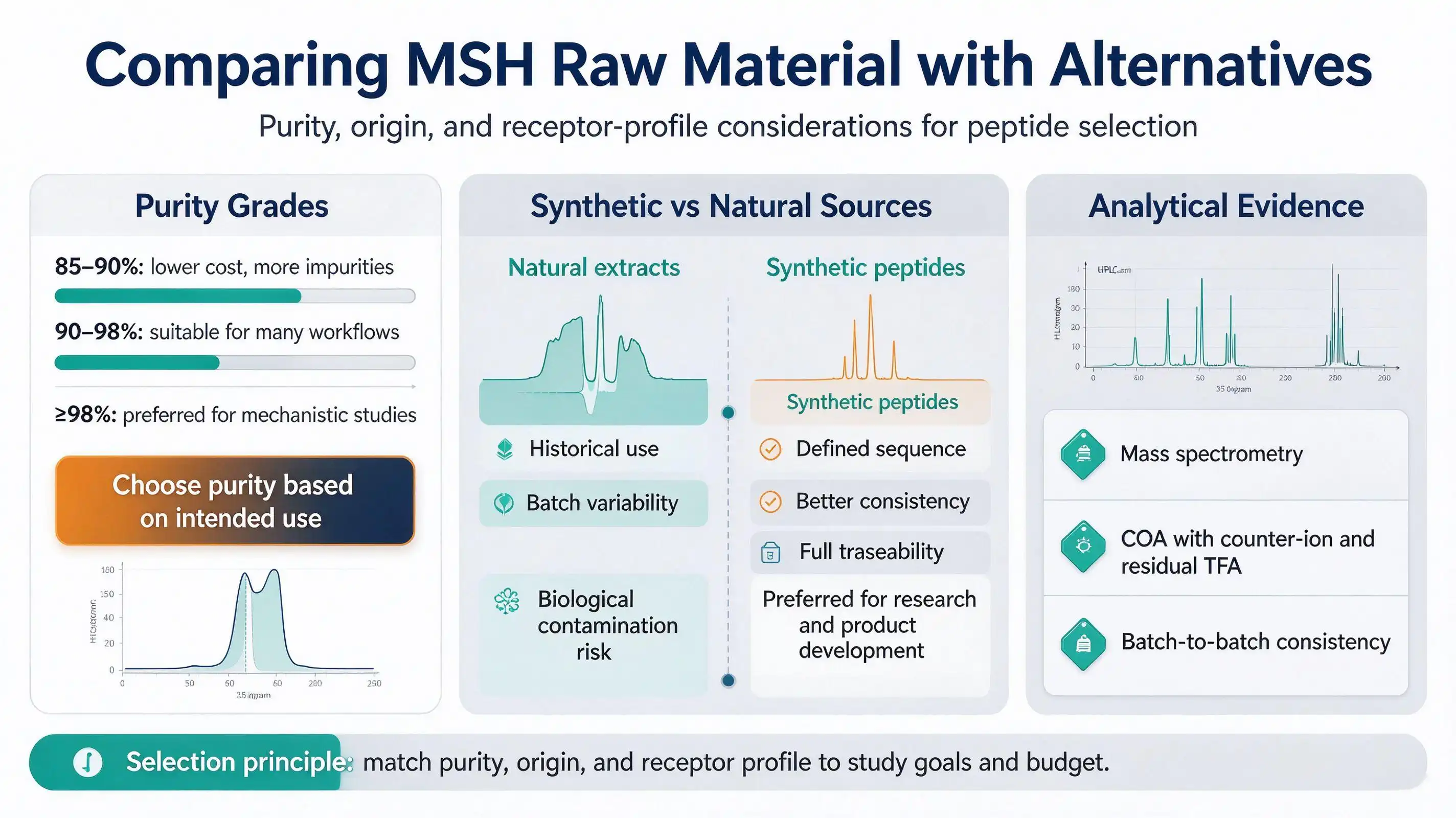
Commercial peptide suppliers give α-MSH with levels of purity running from 85% to over 99%, and the prices are linked to the level of purity. Research-grade material that is at least 98% pure is best for most mechanistic studies and method development tasks because it strikes the best balance between quality and cost. Lower-purity grades might have a lot of shortened sequences or deletion peptides that mess up receptor-binding tests and could make the results less reliable.
Some of the analytical paperwork that sets premium suppliers apart is HPLC chromatograms that show clear baseline separation, mass spectrometry data that confirms the correct molecular weight, and certificates of analysis (COAs) that show the counter-ion composition and residual TFA content. It's possible for peptides with too much TFA to change how they dissolve and cause problems in biology tests. Instead of automatically choosing the purest grades when smaller ones will do, procurement teams should set purity standards that are in line with the planned uses.
Synthetic Peptides Versus Naturally Derived Sources
Historically, pituitary extracts were used to make melanocyte-stimulating hormone. However, all current study focuses on synthetic peptides, which are more consistent and don't pose any biological contamination risks. Synthetic production lets you precisely control sequence fidelity and post-translational modifications, so you don't have to deal with the variety that comes with preparations made from tissues. Pharmaceutical and beauty research regulations strongly favour synthetic materials that can be fully tracked and have clear production processes.
There are trade-offs in receptor specificity, metabolic stability, and cost when you compare α-MSH to similar peptides like β-MSH or synthetic analogues like afamelanotide. Native α-MSH has the widest melanocortin receptor activation profile, which makes it good for screening studies that look at a lot of different compounds. Analogues that prefer certain receptors are better for more focused studies. Which hormone to use—native or designed—depends on the goals of the research and the money that is available.
Certification Standards and Regulatory Alignment
Suppliers who follow the ISO9001 quality management system and the ISO14001 environmental standards show that their companies are dedicated to using consistent manufacturing methods. Pharmaceutical companies doing GLP or GMP studies need peptide suppliers that can provide a lot of paperwork to show that the materials can be tracked from the raw materials all the way through to the final release testing. MSH raw material is a critical part of this traceability chain, requiring documented evidence of origin and handling. This includes records of each batch of products made, information on how stable they are, and paperwork for change control when production processes are changed.
The European and American pharmacopoeias set minimum standards for active ingredients and inactive ingredients in medicines. Even though research-grade peptides aren't covered by pharmacopoeia monographs, companies that follow these rules in their factories show that they care about quality, which is appreciated by departments that manage the supplier qualification process. Certification portfolios that include Halal and Kosher labels may help sellers that work with niche markets, but these aren't as useful for peptide research as ISO certifications.
Procuring MSH Raw Material: Best Practices for B2B Buyers
Identifying Reliable Sourcing Channels
Directly dealing with peptide makers is better than going through middlemen because you can see the prices, get expert help, and be sure of the supply chain. When manufacturers do their own synthesis and purification, they have more options for custom changes and can better answer questions about quality. But regional distributors are helpful because they handle transportation, legal paperwork, and support in the local language, which makes buying things from other countries easier.
When choosing a seller, you should look at their manufacturing capacity, how well their quality system works, their technical knowledge, and how quickly they respond to customer service requests. Quality assurance teams do site audits to confirm claimed capabilities and find potential red flags that can't be seen just by reading documentation. References from current customers in similar industries can tell you a lot about how well a supplier works in the real world.
Minimum Order Quantities and Lead Time Considerations
For research-grade α-MSH, the smallest amount that can be ordered is usually just 1 gram. This makes it possible for exploratory studies and method development projects that don't need a lot of material. Depending on the complexity and length of the manufacturing queue, bulk synthesis for larger programs may need a few weeks of lead time. Suppliers who keep common peptides in stock can ship them right away for urgent projects, but custom sequences have to be made on demand, which means they have to take longer.
Payment terms depend on the seller and the size of the order. For first-time customers, you can pay in advance, and for known accounts, you can choose between net-30 or net-60 terms. Letters of credit are good for big foreign deals where the buyers and sellers don't already know each other. As the number of orders goes up and business ties get stronger through repeated successful transactions, it gets easier to negotiate good terms.
International Trade Compliance and Documentation
Shipments of peptides go across borders using harmonised tariff codes that are specific to amino acid polymers. They are subject to customs duties and regulatory oversight that are different in each destination country. Commercial bills, packing lists, certificates of analysis, and material safety data sheets are some of the most common types of export paperwork. Depending on the planned use classification, some places need extra documents like certificates of origin or free-sale certificates.
Understanding import rules keeps you from having to pay a lot of money for delays and fines for not following the rules. Health officials may need to issue import permits for materials used in pharmaceutical research, while different rules apply to materials used in beauty research. Experienced suppliers help customers prepare paperwork and give advice on what each country needs. This makes it easier for procurement teams to manage multi-national supply chains by reducing the amount of paperwork they have to do.
Sample Testing and Supplier Qualification
Asking for analytical samples before placing a bulk order is a smart way to manage risk. Samples make it possible for independent testing at buyer facilities or contract analytical laboratories to make sure that the supplier's specifications match the actual product's features. Identity should be confirmed using mass spectrometry, purity should be checked using HPLC, and functional bioassays should be used to prove biological activity.
Supplier qualification programs set the standards for approving vendors, keeping an eye on their performance, and re-qualifying them on a regular basis. Documented training processes show regulatory inspectors that you did your research and help the quality system follow the rules. MSH raw material suppliers, in particular, must undergo rigorous qualification due to their impact on peptide-based research and production. Metrics like on-time delivery rates, the accuracy of certificates of analysis, and how quickly technical support responds help with ongoing supplier management decisions and find the best-performing partners who deserve to have their business relationships grow.
Top MSH Raw Material Suppliers and Brands in the Market
Evaluating Manufacturer Credentials
There are specialised makers, pharmaceutical ingredient wholesalers, and contract synthesis companies that serve the research market that make peptides. Leading makers set themselves apart by having ISO approval, a wide range of analytical tools, and quality paperwork that is made public. Companies that do their own peptide synthesis instead of outsourcing production show more technical skill and better quality control throughout the whole manufacturing process.
Testimonials from customers and unbiased reviews give an honest picture of how well a company is doing that marketing materials can't show. Online platforms that collect buyer reviews help people find suppliers who consistently deliver high-quality goods and provide good customer service. Verifying claimed certifications through direct contact with certifying bodies, on the other hand, keeps people from relying on credentials that are out of date or not what they seem to be.
Geographic Considerations in Supplier Selection
When compared to foreign sources that are far away, working with local providers can speed up shipping, lower transportation costs, and make customs procedures easier. It is cheaper and easier to do business with domestic suppliers because they don't charge tariffs or deal with currency exchange issues. They also make site visits and face-to-face collaboration easier. Peptide production, on the other hand, is mostly limited to certain areas of the world where there is a lot of technical know-how and good facilities for making speciality chemicals.
Global suppliers that sell to markets around the world invest in logistics networks that make sure goods get delivered reliably and at the right temperature while they're in transit. For peptides that need to be stored frozen, cold chain management is even more important, and sources who know how to follow pharmaceutical cold chain standards are needed. Whether to choose local convenience or global expertise depends on the needs of the program and the priorities of the organization.
Xi'an Yihui Bio-technology as a Trusted Partner
Manufacturers who have been in the market for a long time show stability and a wealth of knowledge that buyers looking for long-term supply relationships value. Businesses that have been around for more than ten years have seen many market cycles and improved their production methods by gaining a lot of experience. This level of operational maturity means that the quality of the products is always the same, and the company has the technical knowledge to meet customer needs.
Vertically integrated manufacturers who control the whole process from sourcing raw materials to releasing the finished product do away with the supply chain risks that come with relying on multiple vendors. Direct ties with manufacturers can save you money because they don't add markups for middlemen. They can also give you customisation options that you can't get from wholesalers. Comprehensive technical support, such as application advice and troubleshooting help, adds value beyond the supply of basic peptides and helps customers succeed throughout their research projects.
Conclusion
To find high-quality MSH raw material, you need to pay attention to purity requirements, seller qualifications, and regulatory compliance issues that set pharmaceutical-grade peptides apart from commodity chemicals. For the α-MSH peptide to be useful in pigmentation research, cosmetic development, and biomedical research, materials must meet strict quality standards and come with full analytical documentation.
Understanding the synthesis methods, purification techniques, and certification systems that describe a supplier's capabilities can help procurement choices that have to balance quality needs with budget limits. Successful sourcing strategies focus on having direct relationships with manufacturers, carefully screening suppliers, and following the rules for international trade. These things work together to lower supply chain risks and raise material quality and value.
FAQ
What factors influence the shelf life of MSH raw material?
The main thing that determines how stable a peptide is is its storage temperature. Frozen storage at -20°C or below greatly increases its useful lifespan compared to cooling. Lyophilized formulations stay stable longer than solutions because hydrolysis and oxidation reactions happen faster in water. Putting powders in containers with inert gas atmospheres and adding desiccants keeps them from coming into contact with moisture, which can make them less stable. When working with working stocks, avoiding repeated freeze-thaw cycles helps keep the bioactivity intact over the course of an experiment. With the right storage conditions, high-purity peptides can usually be kept for longer than 24 months.
How can buyers verify material purity and quality?
Certificate of analysis documentation should include HPLC chromatograms showing peak purity, mass spectrometry data confirming molecular weight accuracy, and amino acid analysis validating sequence composition. Testing by independent, third-party analytical laboratories gives more proof than data provided by the supplier. Functional tests that measure biological activity in cell-based systems that are relevant to the study confirm that chemical purity means the expected bioactivity. By asking for samples before buying in bulk, you can check the quality without spending a lot of money.
What compliance considerations apply to international MSH procurement?
Import rules are different for each country and type of use. For example, pharmaceutical study uses may need permits from the health authority. Harmonised tariff codes, material composition, and declared value must all be correctly listed on customs paperwork. In some places, it's illegal to bring in peptides without the right end-user permits that prove they will be used for study. Suppliers with a lot of experience can help you navigate the rules and provide standard paperwork that makes customs clearance go smoothly. Knowing the requirements of the destination country before placing an order helps keep shipments on time and avoids problems with compliance.
Connect with a Reliable MSH Raw Material Manufacturer
Pharmaceutical-grade α-MSH (CAS 581-05-5) made to strict quality standards is available from Xi'an Yihui Bio-technology to help you get the peptides you need. Our research-grade material is ≥98% pure, which has been proven by a wide range of analytical tests, such as HPLC, mass spectrometry, and amino acid analysis. Each batch comes with full documentation, such as a certificate of analysis, chromatograms, and an MSDS, to help you meet regulatory standards and quality control methods.
Cosmetic peptides and pharmaceutical intermediates have been sold to research centers, drug businesses, and cosmetic makers in Europe, the United States, and Asia since 2010. Our quality management systems are based on ISO9001 and ISO14001 certifications, and GMP-aligned manufacturing protocols make sure that the quality of our products is always the same. We can help with projects of all sizes, from small-scale study to large-scale commercial production, thanks to our ready-to-ship inventory that is always available and our low minimum order amounts that start at just 1 gram.
You can talk to our expert team at sales@yihuipharm.com about your unique needs, ask for analytical samples, or get cheap quotes. Our experienced staff offers full support, including help with applications, customs paperwork, and quick answers to technical questions. Work with a reliable MSH raw material supplier that wants to help your research succeed by giving you the best products and the best customer service.
References
1. Cone, R.D. (2006). Studies on the physiological functions of the melanocortin system. Endocrine Reviews, 27(7), 736-749.
2. Gantz, I. & Fong, T.M. (2003). The melanocortin system. American Journal of Physiology-Endocrinology and Metabolism, 284(3), E468-E474.
3. Bohm, M., Luger, T.A., Tobin, D.J., & Garcia-Borron, J.C. (2006). Melanocortin receptor ligands: new horizons for skin biology and clinical dermatology. Journal of Investigative Dermatology, 126(9), 1966-1975.
4. Getting, S.J. (2006). Targeting melanocortin receptors as potential novel therapeutics. Pharmacology & Therapeutics, 111(1), 1-15.
5. Chan, L.F., Webb, T.R., Chung, T.T., Meimaridou, E., Cooray, S.N., Guasti, L., & Chapple, J.P. (2009). MRAP and MRAP2 are bidirectional regulators of the melanocortin receptor family. Proceedings of the National Academy of Sciences, 106(15), 6146-6151.
6. Abdel-Malek, Z., Swope, V.B., Suzuki, I., Akcali, C., Harriger, M.D., Boyce, S.T., & Nordlund, J.J. (1995). Mitogenic and melanogenic stimulation of normal human melanocytes by melanotropic peptides. Proceedings of the National Academy of Sciences, 92(5), 1789-1793.

Send Inquiry
You may like
Related Industry Knowledge