
Is survodutide the same as tirzepatide?
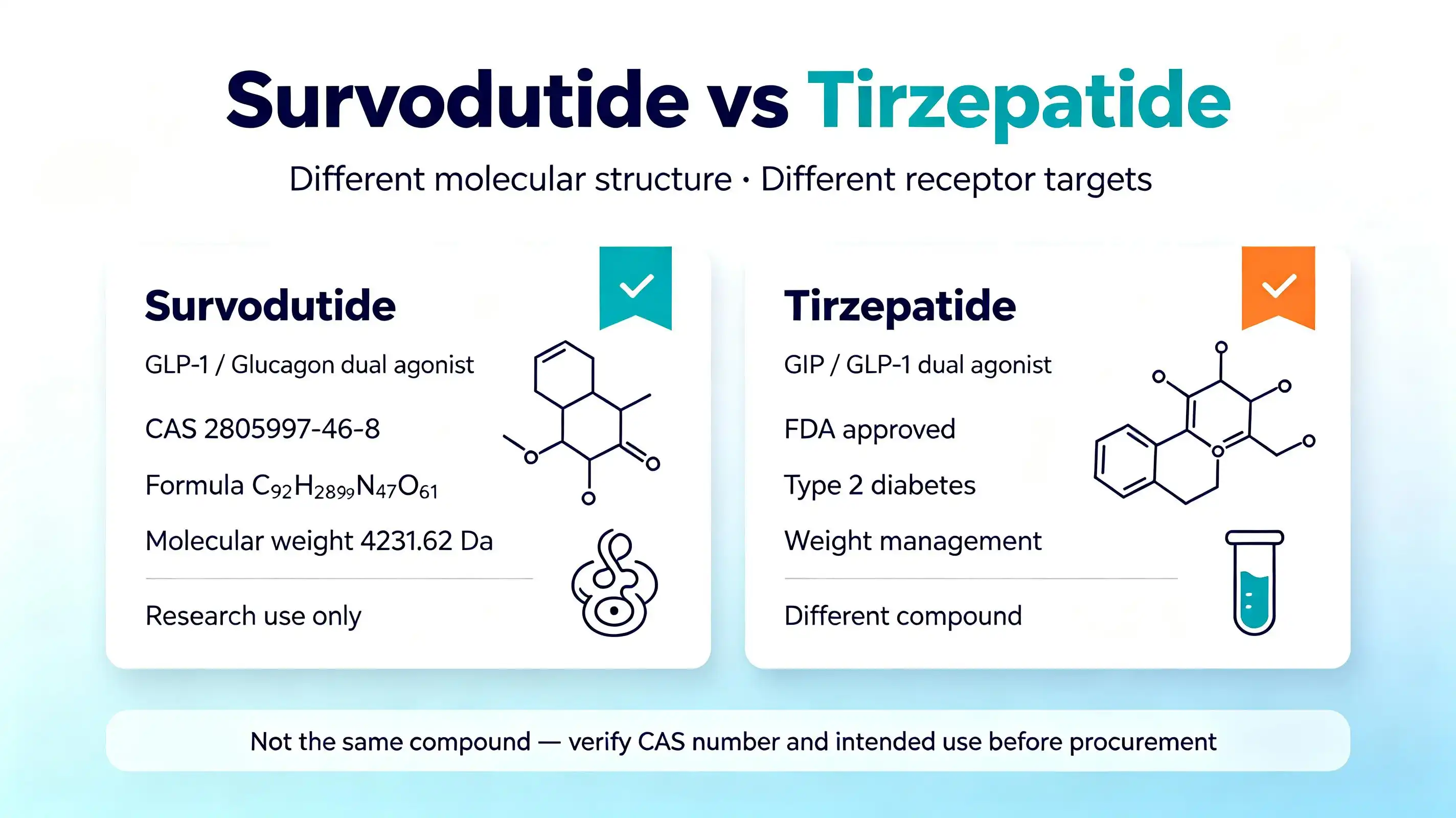
Survodutide and Tirzepatide are both dual incretin receptor agonists, but they are not the same compound. Both are being studied for metabolic disorders, though. Tirzepatide is a dual GIP/GLP-1 receptor agonist that has been allowed by the FDA and is already sold to treat type 2 diabetes and help people lose weight. Survodutide, on the other hand, is a new molecule that is currently being tested in humans. Survodutide powder, which has the molecular formula C₁₉₂H₂₈₉N₄₇O₆₁ and the CAS number 2805997-46-8, is available for research purposes. It is structurally different from Tirzepatide in terms of peptide sequence and receptor affinity profile, which leads to different pharmacokinetic characteristics that should be taken into account when purchasing and using it for research purposes.
Understanding Survodutide and Tirzepatide: Overview and Pharmacology
Dual incretin-based therapies have brought a lot of new ideas to the pharmaceutical world for managing metabolic diseases. Glucagon-like peptide-1 (GLP-1) and glucose-dependent insulinotropic polypeptide (GIP) receptors are both activated by both substances. However, their molecular structure creates different pharmacological signatures that affect their clinical potential and purchasing worth.
Pharmacological Mechanisms of Survodutide
Survodutide works by activating both GLP-1 and glucagon receptors at the same time. When paired with its GIP activity at certain receptor subtypes, this creates a triagonist profile. With a molecular weight of 4231.62 Da, this peptide medicine meets the highest standards for purity, going beyond 98% as shown by HPLC analysis. The compound's amino acid sequence has special changes, such as 1-Aminocyclobutanecarboxylic acid and a lipidated lysine residue with an extended linker (Gly-Gly-Ser-Gly-Ser-Gly-γ-Glu-diacid18), which greatly increases the half-life and changes how it distributes in tissues.
Clinical studies show that Survodutide's pattern of receptor activation has long-lasting metabolic effects, which could make it better at losing weight quickly and keeping blood sugar levels stable for longer than single-target agents. The powder form of the compound, which is white to off-white, makes it easy to make different formulations. This makes it very useful for research institutions that are looking into new ways to give drugs or combination treatments.
Tirzepatide's Established Pharmacology
Tirzepatide is sold under different brand names to help people with diabetes and obesity. It is a dual GIP/GLP-1 receptor agonist that doesn't have the glucagon part that Survodutide does. This medicine was approved by the FDA in 2022 after strong Phase III trial results showed that it lowered HbA1c levels by more than 2% and helped people lose weight by about 20% of their starting body weight at the highest doses.
The compound's receptor selectivity profile focuses on balanced GIP and GLP-1 activation, which has effects that work together to make insulin release, gastric emptying, and satiety signals stronger. Pharmacokinetic tests show that the half-life is about five days, which means that it can be given subcutaneously once a week, which makes it easier for patients to stick with their treatment in hospital settings.
Comparative Molecular Characteristics
When procurement professionals look at these peptides, they need to know that differences in structure directly lead to differences in how they need to be handled and how stable they are. Survodutide powder needs to be kept at -20°C and out of the light. Tirzepatide formulations, on the other hand, may be able to be stored at different temperatures based on the final form of the drug. Changes in molecular weight affect reconstitution protocols, filtration needs, and the development of analytical methods. These are all important things to think about when setting supply chain requirements for research or manufacturing uses.
Effectiveness and Clinical Comparisons: Survodutide vs Tirzepatide
To figure out how effective different drugs are in the clinic, you have to look at trial data. However, because Survodutide is still in its early stages of development, it's hard to make direct head-to-head comparisons. Both compounds work very well at helping people lose weight and control their blood sugar levels, but because they work in different ways, they might work better together than against each other in different therapeutic situations.
Clinical Trial Evidence for Survodutide
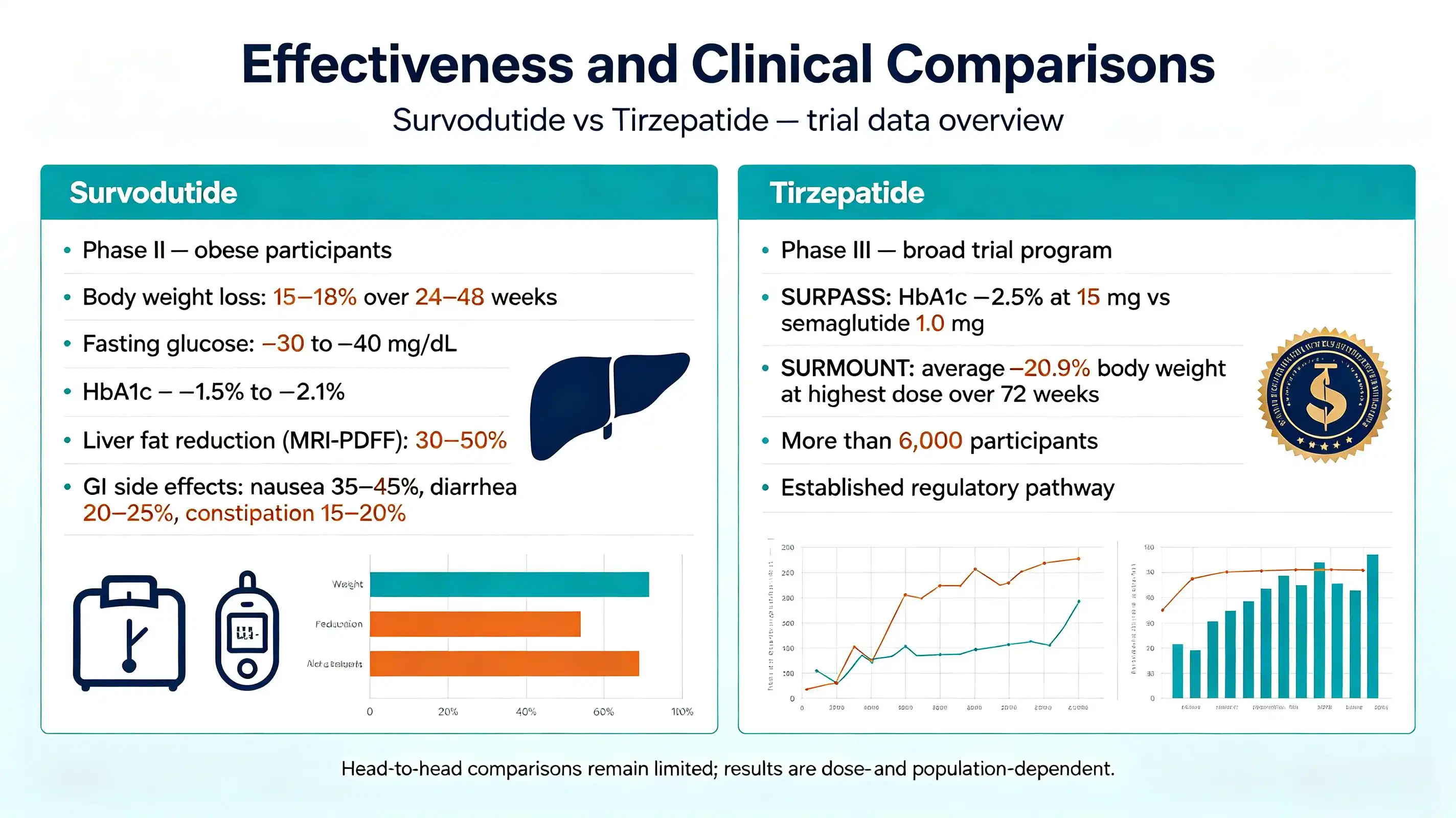
Participants in phase II tests of Survodutide in obese people lost an average of 15 to 18% of their body weight over 24 to 48 weeks of treatment, with reaction patterns that depended on the dose. Fasting glucose levels went down by 30 to 40 mg/dL in diabetic groups, and HbA1c levels went down by 1.5% to 2.1%, based on their metabolic state at the start of the study and how they were given the medicine.
The compound's triagonist activity seems to help reduce fat in the liver, as shown by MRI-PDFF measurements that show 30–50% relative drops in liver fat content. These results are especially important for drug companies working on treatments for metabolic dysfunction-associated steatotic liver disease (MASLD). As expected, safety tests showed gastrointestinal side effects related to the incretin class. These included nausea (35% to 45% of cases), diarrhoea (20 to 25%), and constipation (15 to 20%). The side effects were mild to moderate in severity and got better as the treatment continued.
Tirzepatide's Established Clinical Profile
Tirzepatide's market approval is based on a lot of data from Phase III studies that included more than 6,000 people with a variety of conditions. The SURPASS clinical program showed that the 15 mg dose of Tirzepatide was better at controlling blood sugar than the 1.0 mg dose of semaglutide. At this dose, HbA1c levels dropped by 2.5%. The SURMOUNT trials showed that people who took the highest amounts of Tirzepatide lost an average of 20.9% of their body weight over 72 weeks. This makes it one of the most effective weight control drugs on the market right now.
Cardiovascular outcome studies are still going on, but preliminary safety data suggest that the risk profiles for cardiovascular events are neutral to possibly favourable. The compound's well-established regulatory pathway and ability to be manufactured on a large scale make it easier for companies to buy it right away. On the other hand, Survodutide is still an investigational drug, which means that early partnership agreements and exclusive supply agreements are possible as clinical development continues.
Positioning Within the Competitive Landscape
Both peptides are competing in a market segment that is changing quickly and includes semaglutide, retatrutide, and new GLP-1 oral formulations. When making purchases, people are looking at more than just how well something works. They are also looking at things like intellectual property landscapes, industrial complexity, and supply chain stability. Survodutide's special triagonist mechanism could earn it a higher price if it shows clinical differentiation in Phase III trials. On the other hand, Tirzepatide's proven effectiveness and regulatory approval give it immediate market access with quality standards that have already been set.
Procurement Considerations for Survodutide Powder vs Tirzepatide
When you want to strategically source research-grade peptides, you need to carefully look at the skills, quality paperwork, and logistical infrastructure of your suppliers. Because these compounds have different regulatory and developmental statuses, they can only be bought in certain ways, which B2B buyers must carefully navigate.
Quality Specifications and Documentation Requirements
For research uses involving Survodutide powder, suppliers must have the ability to make the powder in a pharmaceutical-grade way and keep full analytical records. Important requirements include:
- Purity thresholds: HPLC purity must be at least 98.0%, and detailed impurity profiling must be used to find sequence variants, truncation products, and oxidation species.
- Identity confirmation: mass spectrometry data showing that the molecular weight is within a range of ±0.01% and amino acid analysis showing that the sequence is correct.
- Regulatory documentation: Certificates of Analysis (COA), Material Safety Data Sheets (MSDS), and chromatogram reports are examples of regulatory paperwork that show that research safety standards have been met.
- Stability data: How quickly something breaks down in different storage conditions that help predict its shelf life and explain how to handle it.
When buying Tirzepatide for manufacturing or clinical use, you need to provide a lot more detailed paperwork. This includes Drug Master Files (DMFs) for API sourcing, GMP certification verification, and batch genealogy traceability that goes all the way back to the source of the raw materials. The difference in legal load has a big effect on when suppliers must qualify and how they must be audited.
Packaging and Handling Specifications
Survodutide powder usually comes in 1g, 100g, or 1kg packages that are kept in a dry atmosphere and protected from moisture. These sizes are based on how much is used in study. Because the compound is sensitive to light, it needs to be packaged in amber or opaque materials. Also, changes in temperature during transport can make it less effective, so it's important to look at the cold chain logistics when choosing a supplier.
Minimum order quantities (MOQ) as low as 1g let formulation labs and research institutions do preliminary feasibility studies without having to spend a lot of money. However, bulk pricing benefits start to show up at 100g and kilogram scales for companies that are moving toward manufacturing readiness or doing a lot of preclinical studies.
Supplier Evaluation Criteria
To find trusted peptide providers, you need to do a thorough evaluation of many factors. Quality management systems should show ISO certification as basic proof that they can control the process. However, for pharmaceutical uses, GMP compliance must be proven through inspection records or checks by a third party. Superior sellers stand out because they offer better technical support, especially for complicated peptides that need teamwork to solve problems like synthesis issues, formulation compatibility issues, or the development of analytical methods.
Recently, global problems with pharmaceutical raw materials made supply chain resilience more important. More and more, buyers want suppliers to have extra manufacturing capacity, a variety of raw material sources, and a track record of being able to increase or decrease production based on changes in demand. This is especially important when setting up long-term supply agreements for compounds that are in the late stages of clinical development.
Our company keeps Survodutide powder in stock all year so that it can be shipped right away. This eliminates the uncertainty of wait times that can push back research deadlines. Full technical support includes formulation advice, stability study design help, and help with transferring analytical methods. This makes sure that your research programs can move forward without any problems with the supply chain.
How to Choose Between Survodutide and Tirzepatide for Your Business Needs
When choosing a peptide, decision models need to take into account clinical, commercial, and practical factors that are in line with the organization's strategic goals. Which of these compounds you choose will rely on your business plan, the type of therapy you want to focus on, and when you want to enter the market.
Evaluation Framework for R&D Organizations
Researchers and drug companies that are still in the research or early development stages should look into how Survodutide can help differentiate mechanisms. The triagonist profile may give it an edge in situations where changing glucagon signals provides extra benefits over GIP/GLP-1 activation alone. These situations include some lipodystrophy conditions or metabolic-associated fatty liver disease subtypes.
When looking for new ways to use existing drugs or combination therapies, intellectual property issues make investigational compounds more appealing. This is because established drugs like Tirzepatide have licensing restrictions and commercial supply agreements that make formulation flexibility harder. Survodutide powder, as an investigational peptide, fits directly into this advantage—research-grade peptide sourcing lets you do exploratory studies without getting involved with business, which speeds up the time it takes to prove a concept.
Considerations for CDMO and Generic Developers
Contract development and manufacturing organisations (CDMOs) that are looking forward to biosimilar or follow-on peptide possibilities need to look at the patent environment and regulatory route complexity for each compound. Because Tirzepatide has been so successful in the market, there will be a lot of interest in generic versions of it when the patents run out. This will create a predictable need for manufacturing capacity and analytical method creation services.
Survodutide is still in its early stages of development, which means that it could form partnerships with innovator sponsors looking for ways to make the company bigger. These partnerships could lead to long-term supply agreements and technology transfer agreements. Building up early-stage technical knowledge puts CDMOs in a good situation to get commercial manufacturing contracts if regulatory approval comes through.
Supplier Relationship Strategy
When buying peptides, it's better to form strategic ties with suppliers instead of simple buying relationships, no matter what compound is chosen. When supplies are low, preferred supplier agreements make sure that the right people get the job done first. They also make it possible to customise packing or paperwork to meet the needs of your quality system and let people work together to solve problems when they come up.
When you look at how responsive a supplier is during the initial stages of an inquiry, you can learn a lot about their operational capabilities and customer service focus. We answer technical questions within hours on business days, give detailed quotes with full specifications, and keep communication open throughout order fulfilment. These are the kind of service standards that set partners apart from vendors in the competitive peptide supply landscape.
Conclusion
Survodutide and Tirzepatide are two different molecules that belong to the same therapeutic class. Each has its own benefits for different purchasing situations. While Tirzepatide's FDA approval and well-established clinical profile make it ready for instant commercialisation, Survodutide powder—due to its investigational status and unique mechanism—opens up possibilities for research groups and forward-thinking drug companies. When making purchases, companies should think about things like clinical success data, the state of regulations, the supply chain, and their long-term business goals.
Organisations that want proven effectiveness and regulatory certainty should choose Tirzepatide. On the other hand, organisations that want to be different or find early partnership opportunities may find Survodutide research applications more useful. No matter the compound, choosing the right supplier is still very important. Quality systems, technical support capabilities, and the resilience of the supply chain are all important factors to consider when looking for reliable long-term sourcing relationships.
FAQ
Are survodutide and tirzepatide interchangeable in clinical applications?
In the medical world, these substances are not the same. Both of them activate incretin pathways, but Survodutide has extra glucagon receptor activity that makes it act in a different way. Survodutide is still being studied by the FDA, but Tirzepatide is still approved for certain uses with set dose guidelines. For clinical replacement to happen, it would need to be approved by the regulatory body and shown to be bioequivalent, which has not happened yet. When buying things for clinical use, they have to follow these rules.
What regulatory documentation should I expect when purchasing survodutide powder for research?
Reliable suppliers give out Certificates of Analysis (COA) that prove purity by HPLC, mass spectrometry data that proves molecular identity, and Material Safety Data Sheets (MSDS) that list how to safely handle the product. Research conformity is helped by batch-specific chromatograms and impurity profiles. The compound Survodutide powder for study is only approved for use in scientific research, not for human consumption. This should be made clear in all sales agreements and documentation from suppliers.
How do pricing structures compare between these peptides?
Tirzepatide is usually cheaper per gram when it is made on a business scale for medicinal purposes. However, research-grade material may be more expensive because it has to be made in a special way. Survodutide prices are very different depending on the quality requirements and the amount of the order. This is because the drug is still being studied and is only being made in small amounts. Our competitive pricing structure gives you benefits at different sizes, and you can start saving money on large orders as low as 100g. Get in touch with us to get detailed quotes that are made to fit your needs.
Partner with Xi'an Yihui for Reliable Survodutide Powder Supply
Xi'an Yihui Bio-technology Co., Ltd. is ready to help you with your research and development projects by providing you with pharmaceutical-grade Survodutide powder and offering full expert support and strict quality control. We are a reputable supplier that works with biotech, pharmaceutical, and research companies in Asia, Europe, and the United States. We can give your projects the dependability they need.
Our Survodutide powder is ≥98% pure by HPLC, and we provide full paperwork to support your compliance needs, such as a COA, an MSDS, and thorough analytical results. With a MOQ as low as 1g and immediate shipping from a well-stocked warehouse, we get rid of supply uncertainties that can throw off research schedules. There are different sizes of packages (1g, 100g, and 1 kg) that can be used for projects ranging from pilot studies to large-scale preclinical programs.
In addition to providing products, our team offers formulation advice, stability study guidance, and analytical method support. They do this by drawing on their 13 years of experience with pharmaceutical intermediates and bioactive compounds. Our ISO, Halal, and Kosher certifications show that we are dedicated to quality management systems that meet global standards. Our professional logistics team makes sure that international shipping follows the rules by keeping the cold chain in good shape and helping with customs paperwork.
Whether you're doing early-stage research on new metabolic therapies, making formulation prototypes, or setting up supply chains for making clinical materials, we invite you to experience the Xi'an Yihui difference. Email our technical team at sales@yihuipharm.com for full product details, competitive prices, and advice on how to meet your specific application needs. Find out why pharmaceutical and biotech companies around the world choose Xi'an Yihui as their favourite maker of Survodutide powder.
References
1. Jastreboff AM, Kaplan LM, Frías JP, et al. Triple-hormone-receptor agonist retatrutide for obesity: a phase 2 trial. New England Journal of Medicine. 2023;389(6):514-526.
2. Rosenstock J, Wysham C, Frías JP, et al. Efficacy and safety of a novel dual GIP and GLP-1 receptor agonist tirzepatide in patients with type 2 diabetes (SURPASS-1): a double-blind, randomised, phase 3 trial. Lancet. 2021;398(10295):143-155.
3. Nauck MA, Quast DR, Wefers J, Meier JJ. GLP-1 receptor agonists in the treatment of type 2 diabetes: state-of-the-art. Molecular Metabolism. 2021;46:101102.
4. Frias JP, Davies MJ, Rosenstock J, et al. Tirzepatide versus semaglutide once weekly in patients with type 2 diabetes (SURPASS-2): a randomised, open-label, parallel-group, multicentre, phase 3 trial. Lancet. 2021;398(10303):1001-1014.
5. Holst JJ, Rosenkilde MM. GIP as a therapeutic target in diabetes and obesity: insight from incretin co-agonists. Journal of Clinical Endocrinology and Metabolism. 2020;105(8):e2710-e2716.
6. Tschöp MH, DiMarchi RD. Glucagon-like peptide-1 and glucagon receptor dual agonism for the treatment of obesity and type 2 diabetes. Annual Review of Pharmacology and Toxicology. 2022;62:169-188.

Send Inquiry
You may like
Related Industry Knowledge