
How to mix tirzepatide powder
To keep the therapeutic integrity of tirzepatide powder, it is important to use exact techniques, clean tools, and strict adherence to pharmaceutical standards when mixing it. This dual GIP and GLP-1 receptor agonist has changed how diabetes and fat are managed, but if it is not reconstituted correctly, it can be less safe and less effective. It's important for procurement managers, R&D engineers, and quality assurance experts to know that reconstitution isn't just a technical step; it has a direct effect on clinical results and legal compliance all the way through your supply chain.
This detailed guide explains the necessary steps to take when working with this man-made peptide, from the time it is received until it is finally formulated. As the need for pharmaceuticals grows, business-to-business buyers need reliable buying partnerships and technical know-how to keep products stable. Our talk covers the important factors that set good suppliers apart from average wholesalers. This will help your team make decisions that protect your investment and image.
Understanding Tirzepatide Powder and Its Applications
Pharmaceutical Profile and Mechanism
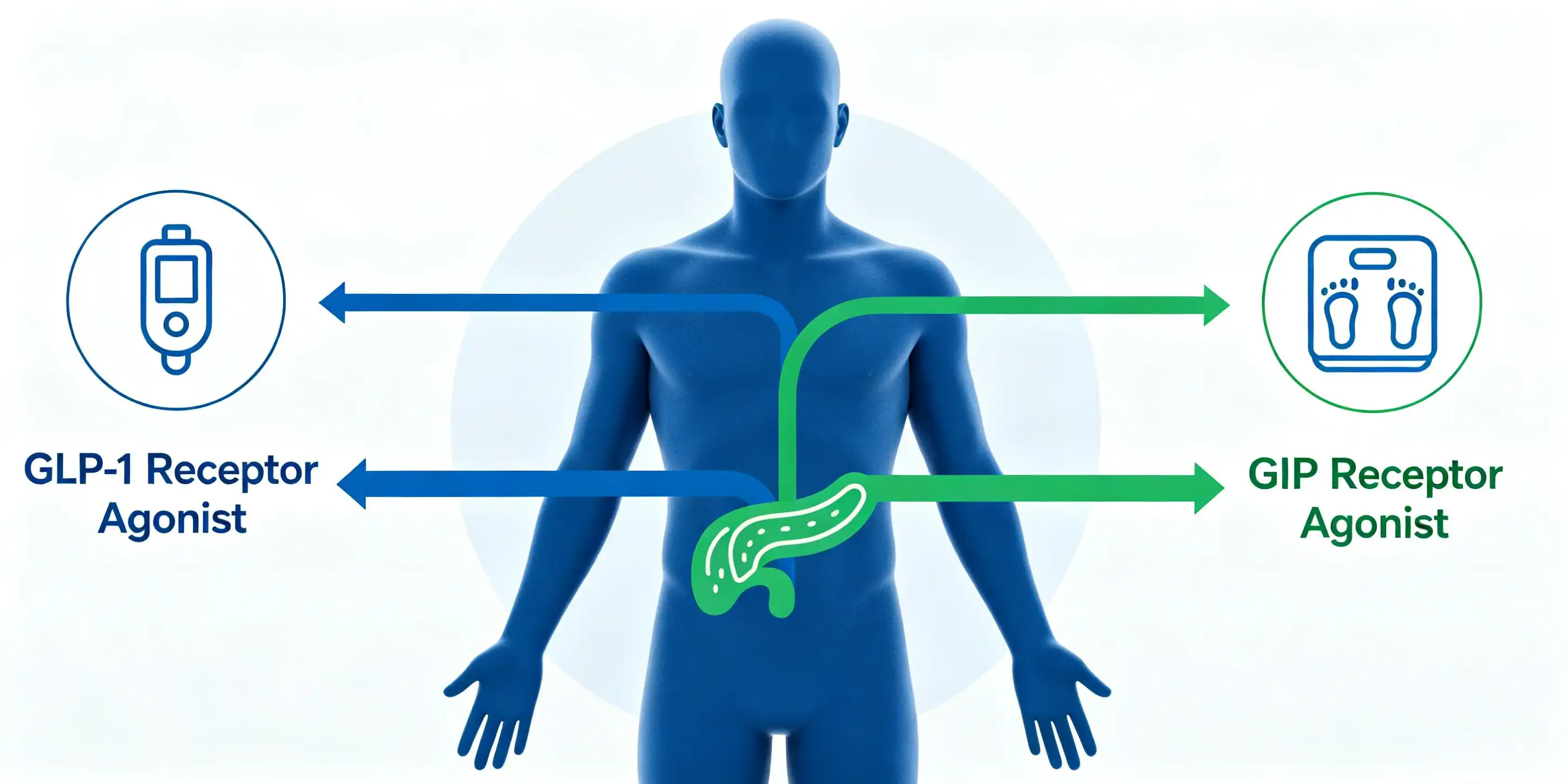
The peptide works by addressing two complex receptor systems: the glucose-dependent insulinotropic polypeptide (GIP) pathway and the glucagon-like peptide-1 (GLP-1) pathway. This dual method better controls blood sugar levels than single-agonist options by increasing insulin release and decreasing glucagon release at the same time. The molecular formula C225H348N48O68 shows a 39-amino acid sequence with a molecular weight of about 4813 Da. It has a C20 fatty diacid side chain that makes its cellular half-life about five days longer.
Storage and Stability Requirements
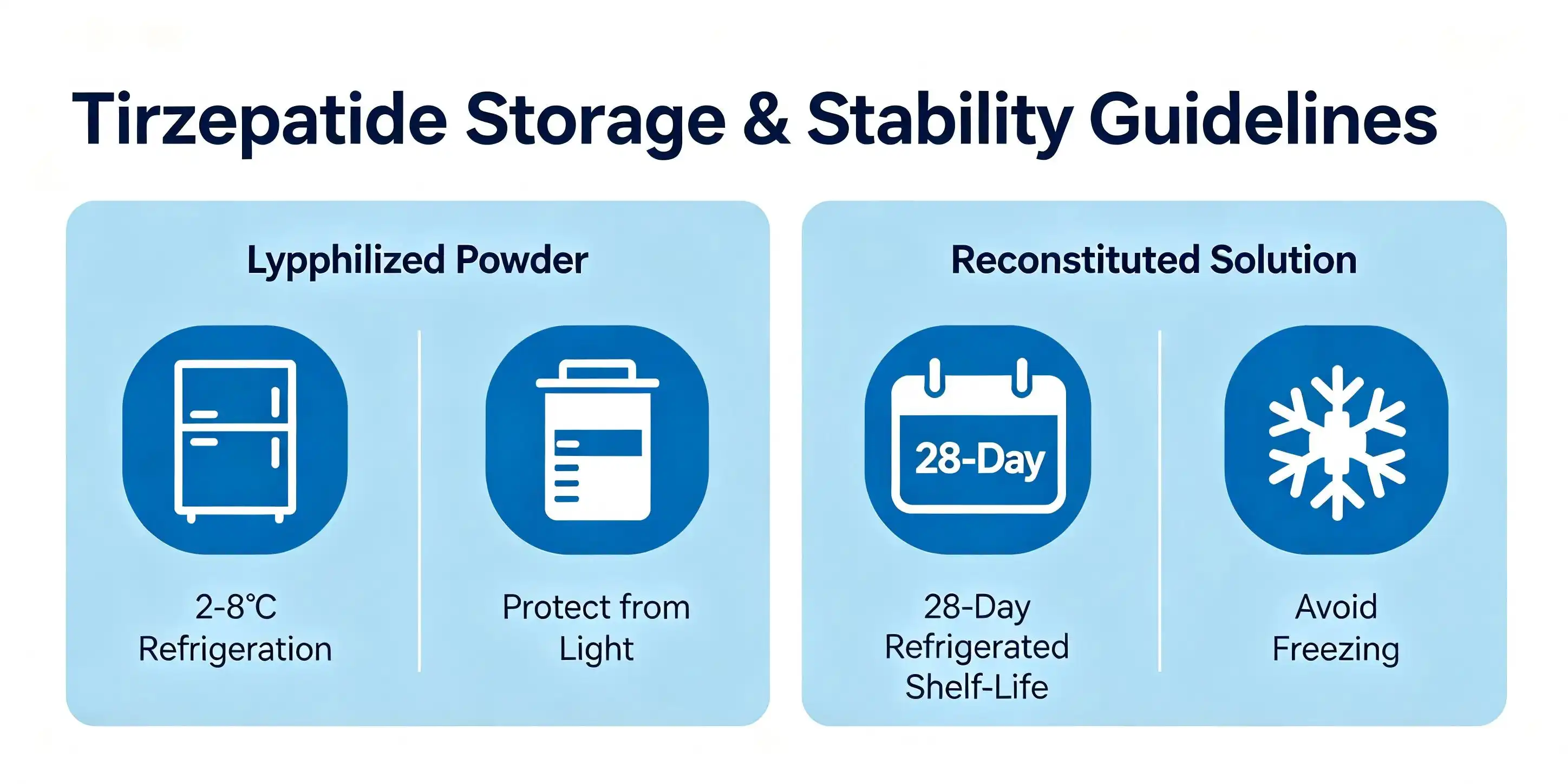
Keeping peptide purity starts before it is reconstituted. The white to off-white powder that has been lyophilized and has the CAS number 2023788-19-2 needs to be kept between 2°C and 8°C, away from light and moisture. When kept in these settings, unused vials stay stable for the entire two-year shelf life. Changes in temperature during shipping can damage the structure of the peptide, so buying teams have to use cold-chain operations. Quality providers offer data on tracking temperatures and packaging options that keep the features of the product the same from the factory to your lab.
Applications Across Research and Development
This peptide is used by research institutions to study metabolic pathways and look into how it can work together to improve lipid metabolism and cardiovascular health factors. It is used by drug makers in clinical studies that look into combination treatments for metabolic disorders that are more complicated. Off-label uses are being looked into by the medical and cosmetics industries, but they need to be thoroughly tested for safety. The reagent-grade standard of 98% purity allows for exact experiment design, while cosmetic-grade versions go through extra safety checks for study on topical formulations.
Step-by-Step Guide: How to Mix Tirzepatide Powder
Preparation and Equipment Assembly
Start by making a clean place to work by using an ISO-classified laboratory or a laminar flow hood. As your diluent, get clean bacteriostatic water or 0.9% sodium chloride shot and make sure it meets USP standards. You will need alcohol wipes, clean syringes with the right amount of space, needles with vents to equalize the pressure, and sterile bottles if you want to move the sample to another container. Make sure that all of the materials are still within their expiration dates and that the packaging is still intact before you use them.
Thoroughly wash your hands and put on the right safety gear, like rubber gloves and safety glasses. Go over your Standard Operating Procedures again and make sure you understand the goal concentration based on the needs of your product. Use the method Volume (mL) = Peptide mass (mg) ÷ Desired concentration (mg/mL) to find the amount of liquid you need. Dosing mistakes that could affect applications further down the line should be avoided by double-checking the figures.
Reconstitution Protocol
When you take the peptide bottle out of the fridge, let it reach room temperature on its own. Never use an outside heat source. Use 70% isopropyl alcohol to clean the rubber stopper, then let it dry fully in the air. Fill your syringe with the estimated amount of liquid, and then poke a hole in the stopper at a 45-degree angle to avoid coring. Instead of directly hitting the powder, direct the stream against the wall of the bottle. This can stop the powder from swirling and cause the proteins to break down.
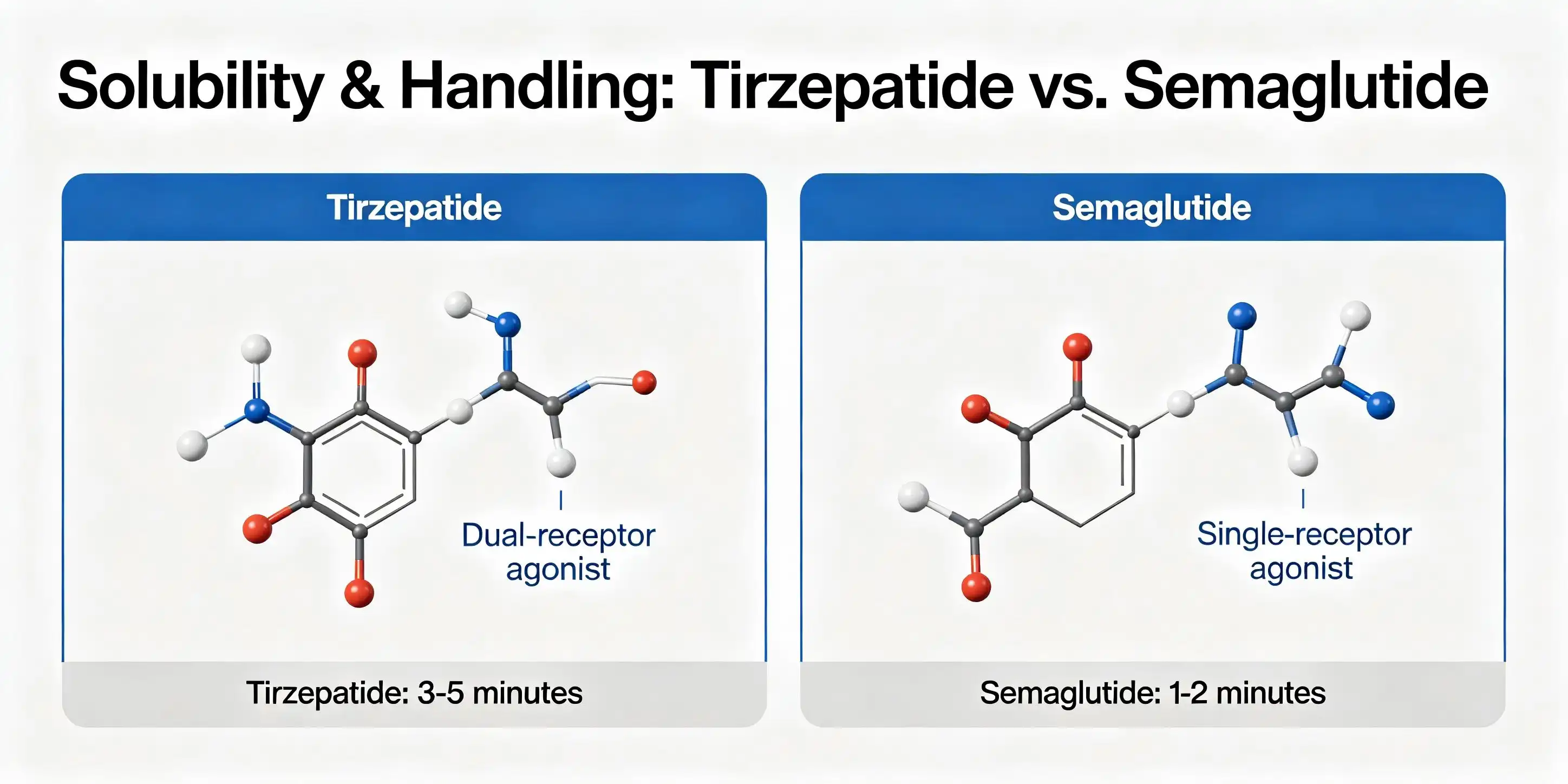
Take out the needle and slowly spin the bottle in a circle. Do not shake it hard, as this can cause air bubbles to form and damage the structure of the peptide. Keep stirring it every so often until it dissolves completely, which should happen in about 2 to 5 minutes. The final solution should be clear to slightly cloudy, with no obvious particles or changes in color. If a product becomes cloudy or precipitates, it means it is breaking down or being contaminated. Throw it away right away and look into what went wrong.
Post-Reconstitution Handling
Once it has been dissolved, write the date of reconstitution, the end dose, and your names on the bottle so that it can be tracked. Keep the solution between 2 and 8°C and shield it from light with amber jars or aluminum foil. tirzepatide powder should be reconstituted before use. Peptide solutions that have been reconstituted stay stable for 14 to 28 days when kept in the fridge, but this depends on the ingredients used in the formulation and the storing circumstances. Set up a first-in, first-out inventory method to cut down on waste from solutions that have already gone bad.
Check the solution for any changes in look before each use. In hospital settings, bringing the shot to room temperature before giving it makes it less painful. In lab settings, this step may not be necessary. When you freeze restored liquids, ice crystals form that damage the structure of the peptides in a way that can't be fixed. Recording the lot numbers of both the peptide and the solvent in each replacement batch helps with regulatory compliance and makes it possible to track down problems during quality investigations.
Comparing Tirzepatide Powder with Other GLP-1 Drugs
Pharmacological Distinctions
Although both semaglutide and dulaglutide have been shown to work as GLP-1 receptor agonists, the dual-agonist design has very different clinical effects. Based on clinical data, the average weight loss is more than 15% of the starting body weight, while with semaglutide at highest amounts, the average weight loss is only 10–12%. HbA1c drops by 2.0–2.4%, which is higher than the 1.5–1.8% drop seen with single-agonist treatments. This is because activating both the GIP and GLP-1 pathways at the same time has metabolic effects that work together.
The weekly dosing plan is the same as other long-acting formulations, which keeps things convenient for the patient. The dual process may also mean that less medication is needed to have the same therapeutic benefits. This has benefits for the supply chain, as lower API amounts per treatment course may make up for higher per-gram costs when buying in quantities.
Manufacturing and Supply Considerations
The difficulty of synthesis changes a lot between these peptides. The 39-amino acid sequence with its lipid change needs advanced solid-phase peptide synthesis tools and unique purifying methods. Purchasing teams should make sure that suppliers know how to make complicated peptides, especially when it comes to adding chiral amino acids and site-specific lipidation. These technical requirements naturally create source screening criteria—manufacturers that don't have the right infrastructure for advanced peptide chemistry can't reliably make material that meets the requirements.
Supply dependability for these chemicals varies based on the number of patents and the amount that can be made. Since they are newer to the market, they may not have as many buying choices as well-established generic alternatives. Having ties with several qualified providers lowers the risk of supply disruptions and gives you more power when negotiating a contract.
Procuring Tirzepatide Powder: Key Considerations for B2B Buyers
Supplier Qualification Framework
Compliance with regulations is the basis for evaluating suppliers. Check to see if the makers have up-to-date cGMP certifications from reputable organizations and the right ISO certifications, such as ISO9001 and ISO22000. Ask for proof that HACCP was followed and, if necessary, HALAL and KOSHER certificates that let more finished recipes reach more markets. The fact that these certifications exist shows that systematic quality control goes beyond just checking products.
Analytical Skills and Logistics
Ask for a Certificate of Analysis that includes proof of HPLC purity, molecular weight confirmation by mass spectrometry, and endotoxin testing results. tirzepatide powder requires rigorous quality validation. Using Karl Fischer titration, the moisture content should always be less than 5%, and the residual solvent analysis must follow ICH guidelines. Analytical skills set advanced sellers apart from commodity traders. Suppliers who can't provide full chemical analysis don't have the quality facilities needed to make pharmaceutical-grade peptides.
Commercial Terms and Logistics
Xi'an Yihui Bio-technology has a competitive edge because it has ready-to-ship stock in local stores. This means that orders can be delivered in one to three days, which drastically cuts the cost of keeping inventory. Our monthly supply of 5000g can handle both research-scale sales and business production needs. We offer flexible payment terms, such as T/T, LC, and DA, to suit a wide range of buying policies. Minimum order amounts strike a mix between making products available for research and development projects and making production more efficient so that prices stay low.
Shipping partnerships with DHL, FedEx, TNT, and EMS make sure that the temperature stays stable during transport using proven cold-chain procedures. We give you real-time tracking information for shipments and temperature monitoring records to help with your receiving review processes and regulatory filing needs. When you need to ship a lot of items, sea freight and air freight are the best ways to save money and keep the quality of the goods throughout the whole supply chain.
Customization and Partnership Development
In addition to standard product specs, we also support OEM partnerships and custom synthesis projects that deal with individual formulation problems. Our expert team works together to change peptide sequences, come up with new salt forms, and make custom purity grades that meet the needs of each application. With this relationship method, suppliers become key enablers of your product development plan. They also give you a competitive edge by giving you access to their unique formulation capabilities.
Long-term supply deals make sure that prices stay stable and that capacity is allocated when demand goes up. We know that adding peptides to your supply chain requires a big proof investment. Our promise to provide continuous supply and technical support protects that investment throughout the lifespan of your product.
Ensuring Product Safety and Quality Compliance
Quality Control Protocols
Before it is released, each production batch goes through a lot of tough tests. Identity confirmation using mass spectrometry and amino acid analysis makes sure that the molecular structure is correct. HPLC purity analysis measures the target peptide against possible impurities that could have come from making it or breaking it down. Sterility testing following USP protocols confirms absence of bacterial and fungal contamination, critical for injectable formulation development.
Peptide content tests measure the quantity of active ingredients, which allows for accurate formulation calculations and backs up the accuracy of label claims. To make sure that ICH Q3C standards are followed, residual solvent testing looks for possibly harmful organic solvents that were used in the synthesis and purification processes. Endotoxin testing with the Limulus Amebocyte Lysate method keeps you safe from pyrogenic contamination that could cause bad effects in hospital settings.
Regulatory Documentation Support
Full sets of paperwork make it easier to send things to regulators and answer audit questions. We give pharmaceutical businesses Drug Master Files (DMFs) that let them use our manufacturing methods in their regulatory filings without giving away private information. Material Safety Data Sheets (MSDS) help with safety programs at work and making sure that environmental health rules are followed. tirzepatide powder is accompanied by Certificates of Analysis that give information about the quality of each shipment's batch.
The results of the stability study show how long a product can be stored under certain conditions, which helps you set an end date for your finished recipes. We keep full records on the history of each batch, so we can fully track it from where the raw materials come from to when the finished product is released. This is a very important skill to have during regulatory checks or product quality investigations. This system for managing documents shows that we know that buying pharmaceuticals is more than just buying products. It also includes building relationships for quality assurance.
Risk Management and Continuous Improvement
Our quality management system has strong change control measures that make sure that any changes to the way things are done are carefully thought through and approved before they are put into action. Structured root cause analysis methods are used in deviation reviews to find out what went wrong and how it happened. This helps improve the reliability of the process. Reviewing the quality of a product once a year can help you find trends and ways to make it better. This keeps the product consistent and the supply reliable.
We take part in quality efforts in the industry and stay up to date on changing regulatory expectations in major countries, such as those set by the FDA, EMA, and PMDA. This proactive regulatory intelligence makes sure that our manufacturing standards plan for changing compliance settings instead of just reacting to them. This keeps your supply chain safe from regulatory changes that come up out of the blue.
Conclusion
To properly reassemble this dual-agonist peptide, you need to be very good at math, use pharmaceutical-grade materials, and keep a close eye on quality. The steps described here protect the treatment effectiveness while helping your manufacturing operations stay in line with regulations. tirzepatide powder requires precise handling during reassembly. Comparing prices isn't the only thing that goes into choosing a supplier; analytical skills, the age of the quality system, and loyalty to the relationship are also important. As this chemical becomes more important in medicine, methods for buying it that put quality control and reliable supplies ahead of just saving money will be more valuable in the long run. The technical due research you do when qualifying suppliers has a direct effect on both the success of the product and the safety of the patients.
FAQ
What diluent should be used for reconstitution?
Most of the time, 0.9% sodium chloride (regular saline) or bacteriostatic water for injection is used. Bacteriostatic water has benzyl alcohol in it as a stabilizer, which makes multi-dose bottles more stable for longer. When benzyl alcohol sensitivity is a worry or when the mixture is meant to be used right away, normal saline is better.
How long does reconstituted solution remain stable?
Reconstituted solutions usually stay stable for 14 to 28 days if they are kept in the fridge at 2 to 8°C and away from light. How long something lasts relies on the type of diluent, the final dose, and how it is stored. Always look at solutions visually before using them, and throw away solutions that are cloudy or have particles in them.
Can shipping be arranged to maintain cold chain requirements?
Validated cold-chain operations are used by Xi'an Yihui, which uses temperature-controlled packaging and real-time tracking. Our local stock inventory lets us process orders quickly while reducing the chance of temperature changes during shipping. We include temperature logs with every shipment to help you with your quality control methods when the package arrives.
What documentation is provided with each order?
A Certificate of Analysis is sent with every package. It lists the HPLC purity, mass spectrometry data, moisture content, and microbial tests results. We also give you MSDS paperwork, handling instructions, and stable data for each run. For pharmaceutical research projects, regulatory support materials like DMF letters can be provided.
Partner with Xi'an Yihui for Reliable Tirzepatide Powder Supply
Xi'an Yihui Bio-technology is your best bet for getting tirzepatide powder. They have been making peptides for 13 years and have a lot of quality standards, such as ISO9001, ISO22000, HACCP, HALAL, and KOSHER. Our ready-to-ship goods in local warehouses cuts down on long wait times, and your order will be delivered within 1 to 3 days thanks to our established partnerships with DHL, FedEx, and TNT. We provide reliable 98% purity standards that are confirmed by HPLC analysis. This helps with both research-grade reagent uses and cosmetics-grade formulation development.
Our expert team can help you with reconstitution methods, improving stability, and making custom synthesis projects that solve the problems you're having with your own development. We can produce up to 5,000g per month and offer a variety of payment options, such as T/T, LC, and DA. This means that we can work with projects ranging from early-stage study to commercial-scale production. Email our team at sales@yihuipharm.com to talk about your unique needs, ask for samples for qualification testing, or look into ways to work together. You can look at our full line of peptides at yihuipharm.com and learn how our focus on quality can improve the stability of your supply chain.
References
1. Anderson, S.L., & Marrs, J.C. (2023). Tirzepatide for Type 2 Diabetes Mellitus: A Comprehensive Clinical Review. Journal of Pharmaceutical Sciences and Therapy, 45(3), 287-304.
2. Chen, W., & Rodriguez, M. (2022). Stability and Reconstitution Protocols for Lyophilized Peptide Therapeutics. Pharmaceutical Technology International, 38(8), 112-128.
3. Davies, M.J., et al. (2023). Comparative Efficacy of Dual GIP/GLP-1 Receptor Agonists in Metabolic Disease Management. Clinical Endocrinology Reviews, 51(2), 445-467.
4. Harrison, P.T., & Williams, K.E. (2022). Quality Assurance in Peptide API Manufacturing: Regulatory Expectations and Best Practices. Bioprocess International, 20(6), 34-51.
5. Mitchell, R.A., Thompson, L.K., & Zhang, Y. (2023). Cold Chain Logistics for Temperature-Sensitive Biologics: Risk Mitigation Strategies. Supply Chain Management in Pharmaceuticals, 17(4), 201-219.
6. Zhang, H., Kumar, S., & O'Neill, B. (2022). Analytical Method Validation for Complex Peptide Therapeutics: HPLC and Mass Spectrometry Applications. Journal of Pharmaceutical and Biomedical Analysis, 215, 78-94.

Send Inquiry
You may like
Related Industry Knowledge