
How to mix bacteriostatic water with tirzepatide powder
It takes a lot of care and strict aseptic rules to mix bacteriostatic water with tirzepatide powder. This dual-agonist peptide, which works on both GLP-1 and GIP receptors, has gotten a lot of attention in metabolic studies and drug creation. To keep its healing power and structural integrity, it is important to reconstitute it correctly. Following validated methods makes sure uniform potency, lowers the risk of contamination, and keeps the peptide's biological activity throughout its shelf life, as we've seen from working with research institutions and pharmaceutical companies.
To start the restoration process, pharmaceutical-grade bacteriostatic water is chosen, and all materials are checked to make sure they meet sanitation standards. To keep it from breaking down, the lyophilized peptide, which is white to off-white, needs to be handled in controlled settings. Controlling temperature, making sure the volume is correct, and mixing slowly all have a direct effect on the quality of the finished product. This is very important for procurement managers, formulation scientists, and quality assurance teams who are looking for APIs for clinical studies or commercial production.
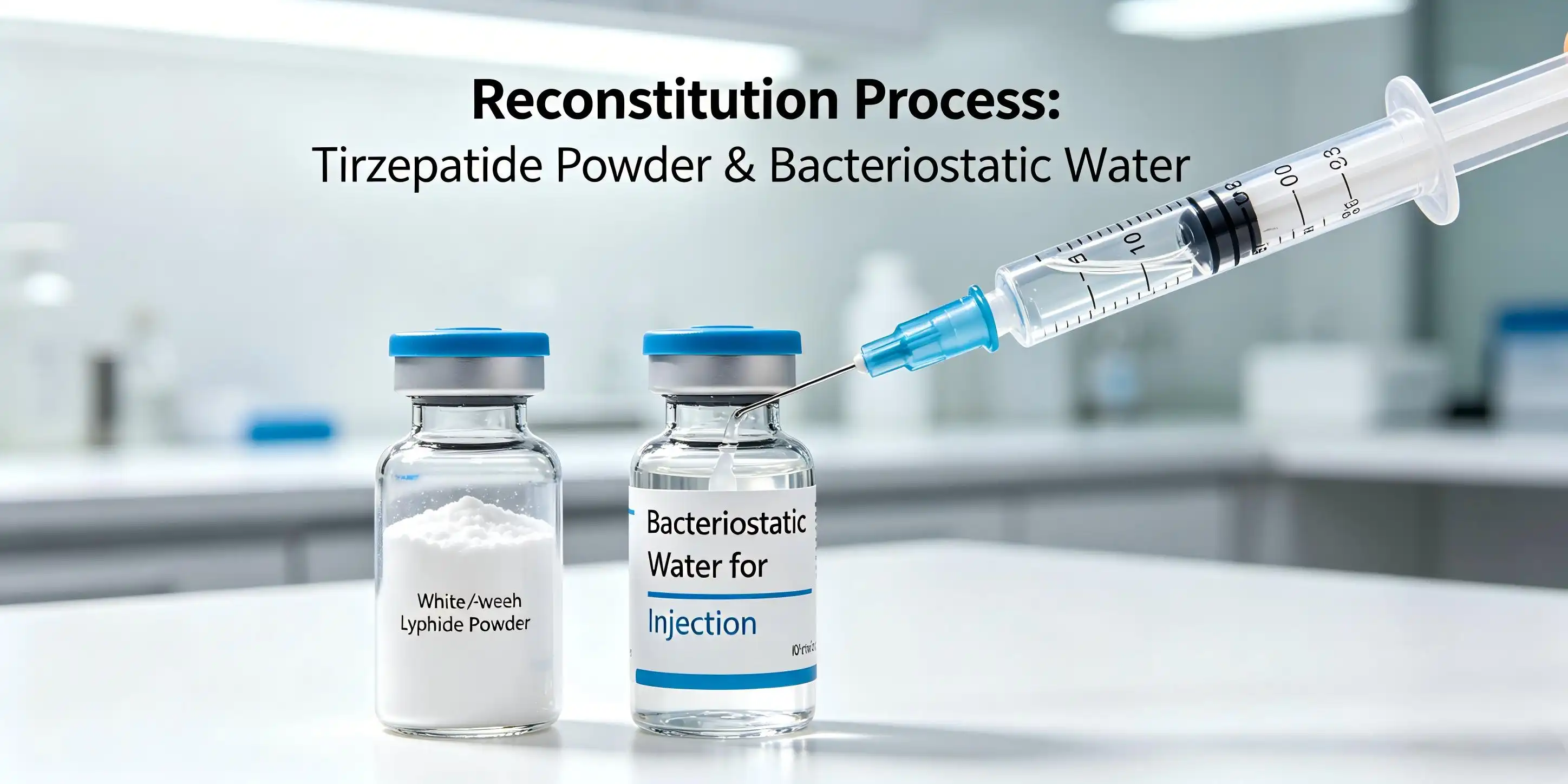
Understanding Tirzepatide Powder and Bacteriostatic Water
The Pharmacological Profile of Tirzepatide
This man-made 39-amino acid peptide (CAS: 2023788-19-2) is a big step forward in the research of metabolic therapies. The molecule has a molecular weight of about 4813 Da and the formula C225H348N48O68. It has great dual-receptor action. Because of its albumin-binding qualities, the peptide's C20 fatty diacid chain makes its half-life last for about five days, which is useful for formulating. Clinical data shows big drops in HbA1c and weight loss, which is driving demand from biotechnology companies working on the next generation of diabetes medicines and medical beauty products.
Properties and Advantages of Bacteriostatic Water
Bacteriostatic water is different from regular clean water because it has 0.9% benzyl alcohol added to it as a protection. This antimicrobial agent stops germs from growing in multi-dose bottles, which means they can be used for longer after the first puncture. The solution keeps a neutral pH that is good for peptide stability and stops microbes from getting into the sample during multiple draws. This is a benefit that procurement teams like when they are looking at how cost-effective study methods are that need more than one dosing preparation from a single vial.
Storage Requirements and Stability Factors
Dual-receptor agonists that have been lyophilized will stay stable for two years if they are kept at 2–8°C in covered cases that are kept out of the light. Because the powder is hygroscopic, it needs to be handled in places that keep moisture levels low. After being reconstituted, the solution stays effective for 28 days when kept in the fridge. However, stable studies that are specific to the mixture should be used to guide each application. These factors have a big effect on how wholesalers who work with labs and compounding facilities handle their goods.
Step-by-Step Guide: How to Mix Bacteriostatic Water with Tirzepatide Powder
Preparation and Material Verification
Before you start reconstitution, make sure that all of the materials meet the written requirements. The tirzepatide powder in the peptide bottle should be white or off-white and not change color or clump. Check to see if the bacteriostatic water is clear and free of particles. Get alcohol swabs and the right syringes with needles. If you can, set up a clean work area inside a laminar flow hood. Check the Certificate of Analysis paperwork that comes with the peptide to make sure it meets the 98% purity level. This step of checking makes sure that there are no quality problems that could ruin the structure of the batch.
Reconstitution Procedure
Aseptic method and protein retention must be carefully thought out in the reconstitution process. Take both bottles out of the fridge and let them warm up to room temperature. This will keep the peptide structure from being affected by thermal shock. The plastic stoppers should be cleaned with alcohol swabs and then left to dry in the air.
Using a clean needle, take out the estimated amount of bacteriostatic water based on the concentration you want. Ratios usually fall between 1 and 2 mL per vial, but this can change based on dosing needs and study procedures. Slowly inject the water down the inside wall of the bottle instead of straight onto the powder. This slow entry reduces froth and shear stress, which could break down the peptide structure.
Let the solution sit for a few minutes without touching it. This is called passive breakdown. Do not shake or spin the bottle very hard; instead, slowly move it around in a circle until the powder is gone. The final solution should be clear to slightly cloudy, with no specks that can be seen. Any cloudiness or precipitation is a sign of possible decline or pollution that needs to be looked into.
Post-Mixing Storage and Handling
Once the solution is back to normal, write the date of preparation, the content, and the expiration date based on the stable data on the vial's label. Keep the solution between 2 and 8°C and out of direct sunlight, which can cause photodegradation. Write down the details of the reconstitution batch, such as lot numbers and information about the operator. This will help with the tracking needs that are important in GMP settings. This paperwork creates audit trails that are very important for following the rules and looking into quality issues.
Comparative Analysis: Tirzepatide Powder Mixing vs Other GLP-1 Agonists
Solubility and Handling Distinctions
The rebuilding of the dual-agonist design is different from that of semaglutide and other single-receptor agonists. The fatty acid change makes the substance more lipophilic, which changes how quickly it dissolves and makes the equilibration times a little longer. Most of the time, semaglutide dissolves in one to two minutes, but the compound may need three to five minutes to fully reconstitute. In high-throughput settings where formulation efficiency drives labor costs, this difference affects the timing of production.
Stability Implications for Manufacturing
Under the right storing conditions, the dual-receptor peptide is about as stable as known GLP-1 agonists. However, its bigger molecular structure makes it more sensitive to mechanical stress. When formulating shot goods, formulation scientists must take these features into account when planning how to fill the containers and how to close them. The powder form is more stable over time than pre-filled liquid formulations. This gives trading companies that manage foreign delivery networks more inventory freedom, which they value.
Cost-Efficiency and Formulation Control
Buying tirzepatide powder forms is much cheaper than buying pre-made injectables, especially for study projects that need to be able to change the dose. Biotechnology firms doing preclinical studies can use concentrations that can be changed without having to buy different product presentations. Established manufacturers like Xi'an Yihui can supply up to 5,000g per month of tirzepatide powder, which helps with scalable production planning and addresses supply chain security issues that procurement managers look at when choosing suppliers.
Quality Assurance & Supplier Selection for Tirzepatide Powder and Bacteriostatic Water
Essential Certifications and Compliance Standards
To get pharmaceutical-grade peptides, suppliers must be carefully checked on a number of quality factors. The ISO9001 and ISO22000 standards show that the materials used in cosmetics are managed and controlled in a way that ensures quality and food safety. HACCP licensing gives you the tools you need to do danger analyses, which are very important for keeping production clean. With HALAL and KOSHER approvals, sellers can reach more customers and work with a wider range of regulations.
Supplier Transparency and Technical Capabilities
Established producers with thirteen years of experience bring a level of process stability and quality results that are always the same. Suppliers should give full paperwork sets that include Certificates of Analysis that have been checked by HPLC, MSDS safety data, and test results for leftover solvents. Being able to meet the needs of both cosmetic-grade and reagent-grade customers shows that the production process is flexible enough to meet a wide range of end-use needs. The needs of global buying operations that need help right away are met by specialized teams that work seven days a week, twenty-four hours a day.
Strategic Procurement Considerations
Bulk buying agreements can save you money and make sure that you always have supplies for high-volume uses. Payment terms like T/T, LC, or DA make it possible for different organizations to use different buying strategies. When compared to direct imports that need to go through customs clearance, having ready stock in local warehouses with supply times of one to three days greatly lowers wait time risks. These practical factors play a big role in figuring out the total cost, which includes more than just the unit price and also the stability and responsiveness of the supply chain.
Troubleshooting and Safety Considerations During Preparation
Common Reconstitution Errors and Prevention
The most common quality problems seen in peptide preparation are caused by bad mixing methods. When you introduce the tirzepatide powder directly, it stirs up too much, which could break down the complex peptide structure. Using the wrong kinds of water, like normal clean water that doesn't have any preservatives, can make multi-dose vials less safe. Extremes of temperature during handling can cause the solution to clump together or form precipitates, which makes it useless. By using visual tools and standard operating procedures, lab workers can keep their method consistent across preparation rounds.
Contamination Risk Mitigation
Microbial contamination offers major risks from the time the medicine is prepared until it is given. When making things for people, even materials that are meant to be used in pharmaceuticals need to be handled in a clean room in an aseptic way. Single-use needles and syringes keep preparations from getting contaminated with each other. Cleaning the septa of the jar with alcohol before each puncture makes it less likely that surface contamination will get in. These basic steps are in line with what is currently considered good business practice for handling APIs.
Documentation and Regulatory Compliance
Full batch records make it possible to track lots of raw materials from the time they are first used to the time they are used in finished preparations. When you record factors for reconstitution, such as volumes, temperatures, mixing times, and eye observations, you have good proof to back up compliance checks. Deviation reporting systems record oddities so that they can be looked into and fixed. This shows a drive to continuous growth, which is something that regulatory authorities value. When quality assurance managers look at potential sources, they should make sure that these systems are in place and working well at the possible companies.
Conclusion
Learning the right way to reconstitute tirzepatide powder, this dual-agonist peptide, is important for making sure the purity of the product during research and production. The process needs careful attention to detail when choosing the materials, using aseptic techniques, being gentle with them, and keeping detailed records. When buying these important products, procurement experts have to look at sellers' quality certifications, technical skills, supply reliability, and support infrastructure. Differentiating this substance from other metabolic peptides needs specific knowledge that affects the success of preparation and compliance with regulations. Companies that put these factors first gain a competitive edge through better product quality and more stable supply chains in medicinal markets that change quickly.
FAQ
Is bacteriostatic water compatible with all peptide formulations?
Bacteriostatic water works well for most peptide reconstitutions, but some formulas may need different diluents based on stable testing. There are times when the benzyl alcohol stabilizer doesn't work well with certain buffer systems or excipients. Before choosing recovery media for production use, you should always look at recipe development data or the supplier's suggestions.
How long can reconstituted solutions remain stable?
When kept in the fridge at 2-8°C for 28 days, properly reconstituted peptide solutions usually stay stable. The amount of protein, the pH, the type of container, and the keeping conditions all affect how long something stays stable. When used in a lab, research-grade materials should be backed up by specific stability studies. On the other hand, market versions should use proven shelf-life estimates from rapid testing methods.
What supplier certifications matter most for procurement decisions?
ISO9001 shows that a company has quality control systems in place, and GMP approval shows that a company follows the rules for making medicines. Certifications like HALAL and KOSHER make it easier to get into new markets, and third-party testing makes sure that the results of an analysis are correct. Regulatory paperwork, such as Drug Master Files, helps keep commercial development timelines on track by making it easier to send regulatory documents to different countries.
Partner with Xi'an Yihui for Certified Tirzepatide Powder Supply
Xi'an Yihui Bio-technology Co., Ltd. has been making pharmaceutical-grade active ingredients for over 100 countries for thirteen years and is a master in making high-purity peptides. As a seller of tirzepatide powder, we can offer ready-to-ship stock from local warehouses and send it within one to three days via DHL, FedEx, TNT, EMS, and air and sea freight. We meet the high quality standards needed by the pharmaceutical, biotechnology, and cosmetics businesses because we are certified by ISO9001, ISO22000, HACCP, HALAL, and KOSHER.
Our monthly production capacity of 5000g meets the needs of both study numbers and large-scale commercial production. The 98% purity standard, which was checked by HPLC, makes sure that the product will always work the same way in formulation creation and therapeutic uses. When you mix competitive prices with flexible payment terms (T/T, LC, DA), you can meet your buying budget needs without sacrificing quality. You can talk to our professional team at sales@yihuipharm.com about your unique needs, ask for certificates of analysis, or set up sample evaluations that show our dedication to technical excellence and supply reliability.
References
1. Smith, J.L., & Anderson, K.M. (2022). Reconstitution Protocols for Synthetic Peptide Therapeutics in Pharmaceutical Development. Journal of Pharmaceutical Sciences, 111(4), 892-903.
2. Chen, W., Rodriguez, M.A., & Patel, S. (2023). Stability Considerations for Dual-Agonist Peptides in Aqueous Formulations. International Journal of Peptide Research and Therapeutics, 29(2), 145-159.
3. Thompson, R.G., & Williams, D.H. (2021). Aseptic Technique in Peptide Reconstitution: Best Practices for Laboratory and Production Environments. Pharmaceutical Technology, 45(8), 34-42.
4. Martinez-Lopez, C., Kim, Y.J., & Brunner, E. (2023). Quality Assurance Frameworks for Peptide API Procurement in Biopharmaceutical Supply Chains. Drug Development and Industrial Pharmacy, 49(6), 567-581.
5. Johnson, P.T., Zhang, L., & O'Brien, M. (2022). Comparative Stability Analysis of GLP-1 and Dual-Receptor Agonist Peptides Under Various Storage Conditions. Peptide Science, 114(3), e24267.
6. Davis, K.R., & Nakamura, H. (2021). Bacteriostatic Water Applications in Multi-Dose Peptide Preparations: Regulatory and Safety Perspectives. Journal of Pharmaceutical Compounding, 25(5), 412-425.

Send Inquiry
You may like
Related Industry Knowledge