
How often can I take icatibant?
Icatibant powder, a synthetic peptide mixture with the CAS number 138686-38-4, is usually injected under the skin once during an attack of acute hereditary angioedema (HAE). The usual amount for adults is 30 mg, which is injected under the skin. If the symptoms don't go away or come back, you can get another shot after at least six hours. You can get a maximum of three doses in 24 hours. This dosing schedule strikes a good mix between quickly relieving symptoms and keeping the patient safe. This makes the peptide an important part of emergency HAE treatment plans. Professionals in buying who are looking for high-purity research-grade materials for drug development and clinical studies need to know these rules.
Understanding Icatibant Powder and Its Indications
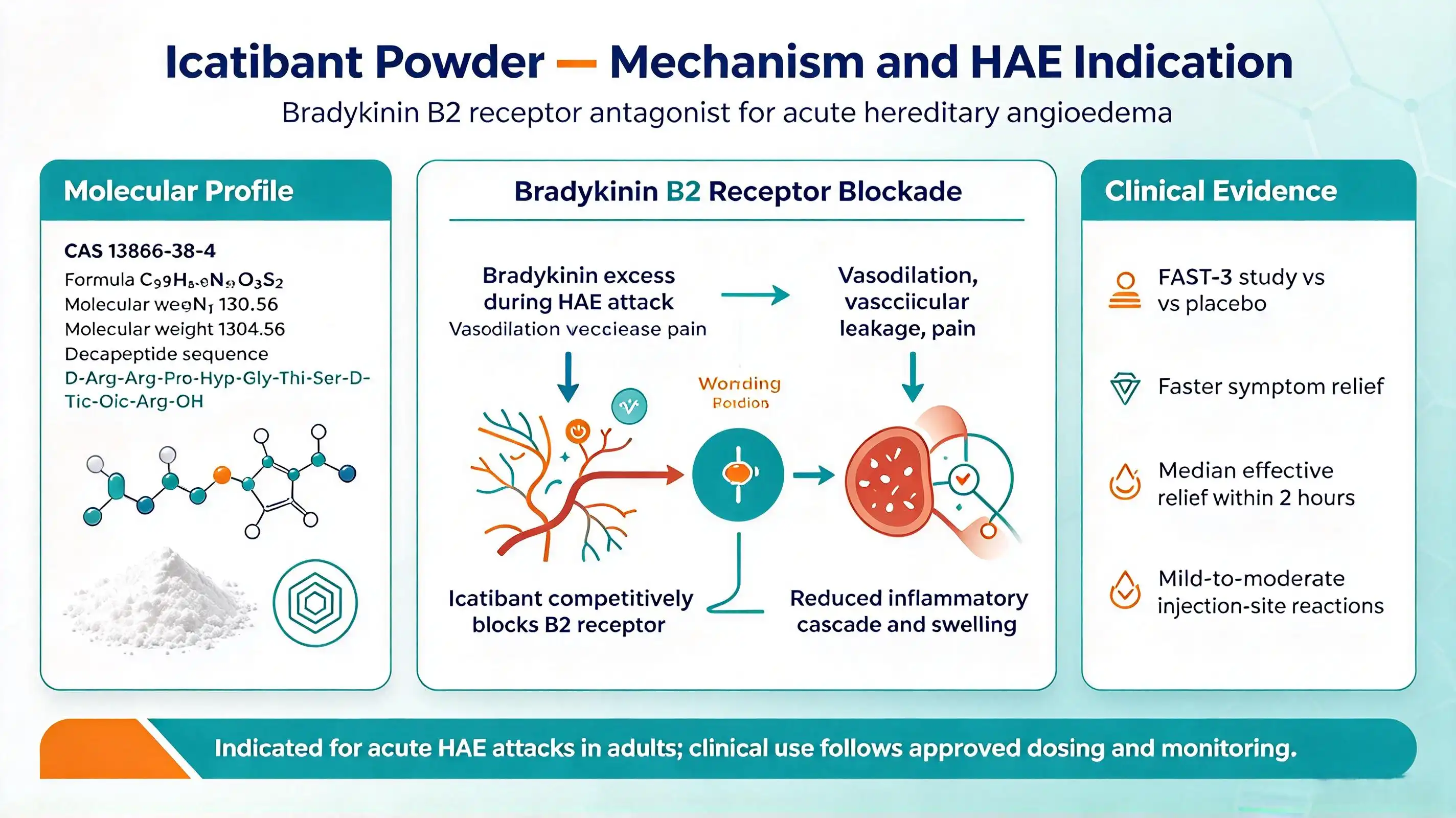
Icatibant acetate is a big step forward in the treatment of bradykinin B2 receptor antagonists. This drug peptide is a decapeptide with the formula C₉₉H₈₉N₁₊O₁₃S₂ and a molecular weight of 1304.56. It stops the bradykinin receptors that cause blood vessels to widen, blood flow to speed up, and pain to be felt during HAE events. D-Arg-Arg-Pro-Hyp-Gly-Thi-Ser-D-Tic-Oic-Arg-OH is the exact sequence of the molecule that has been designed to selectively block bradykinin binding sites.
Mechanism of Action in HAE Treatment
During cases of genetic angioedema, too much bradykinin builds up and causes internal tissues and mucous membranes to swell very badly. This specific antagonist stops bradykinin B2 receptors competitively, stopping the chain reaction of inflammatory chemicals that cause angioedema. The results of clinical studies show that this treatment clears up symptoms much faster than a placebo, with the median time to effective relief happening within 2 hours of administration.
Approved Medical Applications
The FDA and EMA have both cleared Icatibant powder for people who are having severe HAE attacks. The medicine helps with stomach pain, facial swelling, and bouts of peripheral angioedema. Institutions that do research use high-purity research-grade material to study angioedema, immune control, the development of peptide drugs, and inflammation. These studies keep helping us learn more about the paths that bradykinin uses and possible treatments.
Clinical Evidence Supporting Efficacy
This peptide blocker has been shown to be useful in therapy in a number of randomized controlled studies. The FAST-3 study showed that the drug was statistically significantly better than a placebo at lowering the intensity and length of attacks. Long-term safety studies that lasted several years found that the risks were low compared to the benefits, and most of the bad effects were mild to moderate responses at the injection site. These strong clinical records give procurement specialists peace of mind as they look at therapeutic choices for their drug development processes.
Recommended Dosage and Frequency of Icatibant Powder
Pharmacological study has led to the development of clinical dose guidelines for this bradykinin antagonist. Healthcare professionals and study teams that are working with this peptide mixture need to know how to administer it correctly to make sure it is safe and effective in managing acute HAE.
Standard Adult Dosing Protocol
It has been proven that 30 mg given subcutaneously into the abdomen is the right therapeutic amount. This way makes sure that the drug gets into the body quickly while reducing the risk of problems at the entry spot. No matter where the attack starts, patients or healthcare workers should inject the medicine as soon as they notice HAE signs. After the right training, the subcutaneous delivery method lets people give themselves medicine, which makes care easier to get in an emergency.
Timing Between Doses and Maximum Daily Limits
Clinical rules say that there should be at least 6 hours between doses. This spacing gives us enough time to see how well the therapy is working while keeping the patient safe. There should be no more than three doses given in any 24-hour time. This daily maximum strikes a good mix between the need to control symptoms and the need to keep an eye out for any possible side effects. Going beyond these limits may raise the risks without adding any treatment value.
Clinical Scenarios Justifying Repeat Dosing
If the first symptoms last longer than 6 hours or if new symptoms show up after the first ones got better, the medicine should be given again. About 20 to 30 percent of HAE cases need a second dose to completely get rid of their symptoms. If the attacks are very bad and hurt the throat or cause a lot of stomach pain, you may need more treatment. Doctors still use their best opinion when deciding if more doses are needed. They look at the severity of the attack, the patient's background, and how they have responded in the past.
Patient-Specific Considerations
The intensity of the attack has a big effect on dosing choices for Icatibant powder. People who are having their first HAE attack may react differently than people who already have the disease. Adults usually don't need to have their doses changed based on their age, but older patients may need to be closely watched for circulatory affects. Renal and liver disease don't seem to require dose changes, but there isn't a lot of safety information in these groups yet. Doctors have to make treatment plans for each patient that are unique based on thorough exams and patterns of past responses.
Safety Profile, Side Effects, and Contraindications
When purchasing and quality assurance managers look at this pharmaceutical peptide for their supply lines, they need to know a lot about how safe it is. Detailed descriptions of adverse events help with risk management and legal compliance in markets around the world.
Common Adverse Reactions
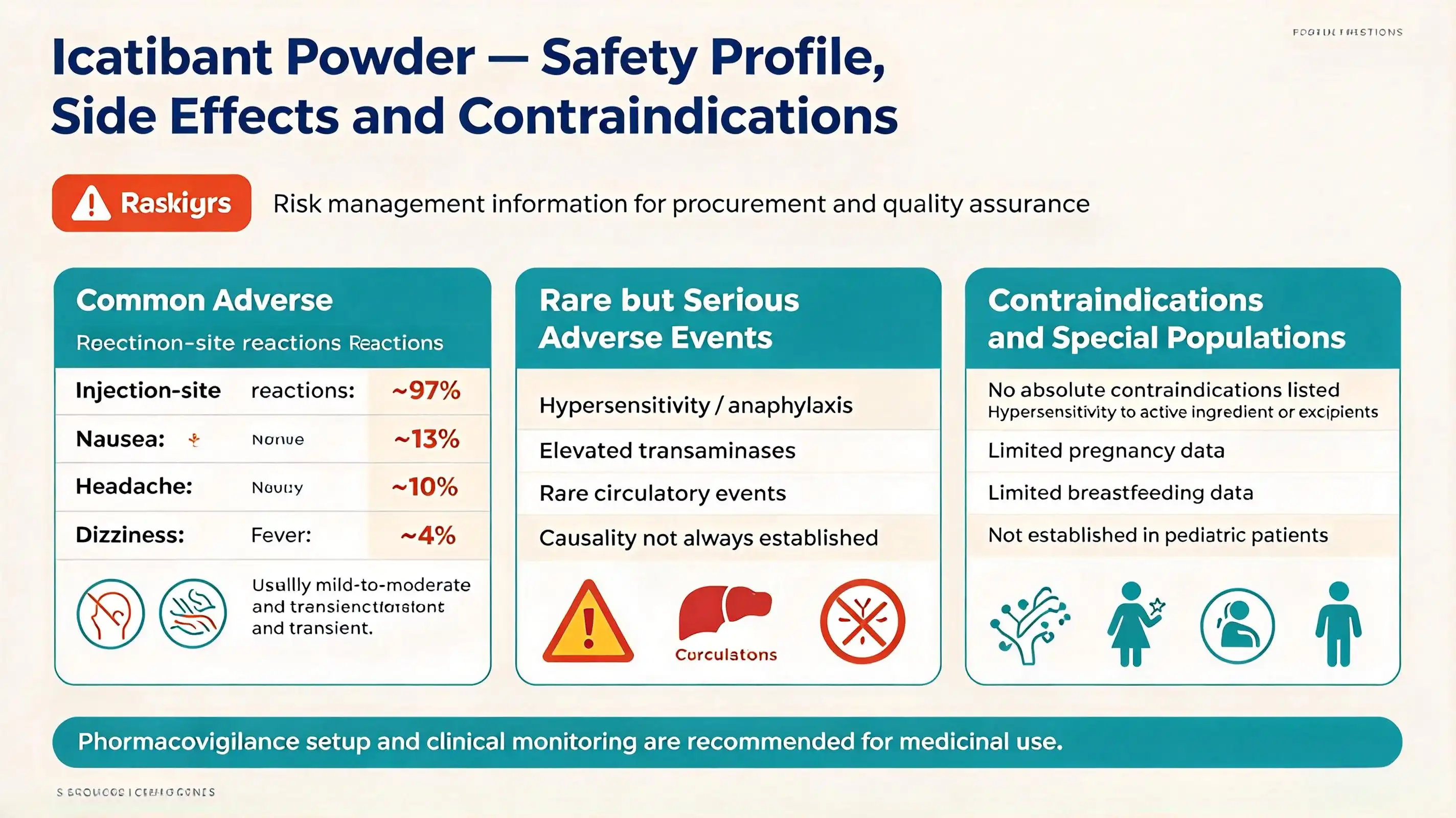
Reactions at the injection site are the most common reported side effects; they happened to about 97% of people in clinical studies. Some of these localized reactions are redness, swelling, a burning feeling, and itching at the injection site. Most of the time, symptoms go away on their own within a few hours. About 13 percent of patients feel sick, and 10 percent of patients get headaches. About 4% of people who are treated experience both dizziness and fever. These common effects usually don't need to stop treatment, and they get better with repeated encounters.
Rare but Serious Adverse Events
Hypersensitivity responses, such as anaphylaxis, have been seen in post-marketing monitoring, though they are rare. Elevated transaminase levels don't happen very often, but they should be watched in people who already have liver problems. There have been reports of rare circulatory events, such as cerebrovascular crashes, but the cause is still unknown. When getting this peptide for medicinal use, procurement teams need to make sure that the right pharmacovigilance processes are set up.
Contraindications and Special Populations
There are no clear contraindications, but patients who are known to be allergic to the main ingredient or any of the excipients should be careful. Pregnancy category data is still limited. Studies on animals have shown that it doesn't cause teratogenic effects, but there isn't enough data on humans to give firm advice. It has not been proven that breastfeeding is safe, so a careful risk-benefit study is needed. At this time, there are no safety and effectiveness results for pediatric patients, so the drug can only be used on adults until more clinical study is done.
Storage and Stability Requirements
Peptides stay intact and therapeutically effective as long as they are stored correctly. The powder mixture that has been lyophilized should be kept at a controlled room temperature of between 2°C and 25°C, away from light and moisture. Once solutions are reconstituted, they need to be used right away or thrown away to keep them from breaking down.
For packages that need to be kept at a certain temperature, especially those going to other countries, procurement experts must set up cold chain logistics. Each batch should come with good paperwork, such as stability studies and stress testing data, to show that the food will last in different storage circumstances. Our high-purity material keeps its test values at 99% and its purity at 98.0% by HPLC, so it works the same way every time it is used in study.
Icatibant Powder in Comparison: Market Alternatives and Procurement Considerations
Procurement workers can make better sourcing choices when they know what their competitors are doing. This bradykinin receptor blocker has a special place in the market for HAE medicines, with benefits and things to think about that aren't present in other treatments.
Comparison with Other HAE Therapies
Acute HAE can be managed in a number of different ways. The most clear comparison is Firazyr, which is the brand name for Icatibant powder. Ecallantide is another bradykinin pathway inhibitor that needs to be given through an IV and has a higher risk of allergy, so it has to be given in a healthcare facility. Instead of stopping bradykinin receptors, C1 esterase inhibitor extracts work in a different way by replacing proteins that are missing. Fresh frozen plasma can be used to activate contact systems, but it is not very specific and comes with risks linked to transfer. This peptide is different from other treatment methods because it is administered through the skin and works against specific receptors.
Cost Analysis and Budget Implications
Branded formulations usually have higher prices, and a single dose can cost anywhere from a few thousand dollars to several thousand dollars, based on the market in the area and talks with payers. When it comes to cost, generic and research-grade alternatives are better for pharmaceutical creation and study procedures. When you buy in bulk, you can get prices based on volume, which is especially helpful for CRO/CDMO businesses that are doing clinical trials or making their own formulations. When considering sourcing choices, procurement managers have to weigh the costs of purchase against quality certifications, the dependability of the supply chain, and the need to meet legal requirements.
Supply Chain Variables and Sourcing Best Practices
The method for getting this pharmaceutical peptide depends on a number of things. Supplier image and manufacturing skills have a direct effect on the quality of the product and its acceptance by regulators. Facilities that are GMP-compliant and have ISO9001 and ISO14001 certifications guarantee high-quality production. Having all the necessary paperwork, like Certificates of Analysis, HPLC chromatograms, MSDS sheets, and compliance certificates, makes it easier to send things to the government and do quality checks on the company itself. Lead times depend on how complicated the process is and how many items are ordered. However, established sources usually keep standard numbers in stock. For study purposes, the smallest amount that can be ordered is usually 1 gram. For bigger needs, bulk choices come in 100-gram and 1-kilogram sizes.
Pharmaceutical peptide production is supported by Xi'an Yihui Bio-technology's full range of quality systems. Our production methods are in line with international quality standards, and each batch goes through a lot of analytical testing. We always make sure that the white lyophilized powder we sell meets quality standards and comes with full documentation packages. Logistics skills allow for shipping to Europe, the United States, Japan, and South Korea, and set shipping rules keep products safe while they're in travel.
Regulatory Compliance Across Major Markets
When looking for pharmaceutical peptides, procurement teams have to deal with complicated legal settings. The FDA controls these substances because they are drug substances and needs the right paperwork for research and development uses. European markets require that EMA rules and REACH registration standards are followed. Certain forms of paperwork are needed for the importing and exporting process. These include business bills, certificates of analysis, and statements of hazardous materials. Different places have different rules about prescription drugs. In some places, they can only be sold by approved healthcare centers. Working with providers who have experience with foreign pharmaceutical trade lowers the risk of not following the rules and speeds up the customs clearance process.
Ensuring Quality and Compliance When Procuring Icatibant Powder
Quality verification is the most important part of getting medicinal peptides. To make sure that materials are real, pure, and in line with regulations, research institutions, pharmaceutical businesses, and CDMOs need strict verification methods.
Manufacturer Credential Verification
Professionals in procurement should do a lot of research on possible providers. Inspections of manufacturing facilities make sure that they follow GMP and have the right peptide synthesis capabilities. FDA company registration and the release of the Drug Master File are signs that pharmaceutical applications are ready for regulatory review. Patent landscape research makes sure that choices about where to get goods don't violate intellectual property rights. Third-party tests and SGS certification back up analytical claims and give independent proof of quality. Track records of suppliers, which include customer references and records of government inspections, show how reliable and consistent the quality is.
Analytical Documentation Requirements
Each batch must come with a full analysis package. Purity by HPLC, protein content, water content, leftover solvents, heavy metals, and microbial limits should all be written on certificates of analysis. Visual proof of chemical purity is given by HPLC chromatograms, which also show possible impurities. Mass spectrometry data checks the structure and molecular weight. The sequencing correctness of peptide products is confirmed by amino acid analysis. Material Safety Data Sheets list how to handle the product safely and what to do in an emergency. Receiving quality control teams can use these large files to check that materials meet standards before sending batches to be used.
Storage and Handling Protocols
Peptides stay stable throughout the supply chain as long as they are stored properly. Monitoring the temperature during shipping keeps things from breaking down because of heat stress. The materials used for packaging need to keep out light and wetness, which can both damage peptide structure. To keep old materials from being used, inventory management systems should use "first-expired-first-out" rules and keep track of how long things are stored. Monitoring the environment in storage areas makes sure that conditions stay within certain ranges. These practical rules keep the quality of the materials high from the time they are made until they are used.
Import/Export Documentation and Regulatory Navigation
When you buy something internationally, you need to provide certain paperwork. Invoices for goods sold must correctly list the materials they contain by using the right chemical names and CAS numbers. Harmonized System numbers make it easier to classify goods at customs and figure out duties. Depending on the country where the goods are going and what they will be used for, export licenses may be needed. Import licenses from the sending country's government make sure that local drug laws are followed. Freight forwarders who are skilled in pharmaceutical logistics can handle all of these issues, which cuts down on delays and safety risks. Building ties with sellers who know about international regulations makes it easier to do business across borders and makes sure that materials move smoothly.
Conclusion
Understanding the right dosing schedules and instructions for Icatibant powder is important for managing HAE in a safe and effective way. The standard procedure, which allows up to three doses in 24 hours, each at least six hours apart, gives doctors the freedom to treat attacks of different severity while still keeping patients safe. To support pharmaceutical development and clinical research, procurement workers who are looking for high-purity research-grade peptide materials must put seller credentials, full paperwork, and regulatory compliance at the top of their list of priorities. Effective tactics for buying this type of specialized medicine depend on quality control measures, the right way to store the medicine, and a deep understanding of the rules set by foreign regulators.
FAQ
Can patients safely receive multiple doses within 24 hours?
According to clinical standards, you can get up to three injections in a 24-hour time, but you must wait at least six hours between each dose. This distance lets the right evaluation of therapeutic reaction happen while keeping safety limits. The results from clinical trials back up this dosing plan, showing that it is safe to give the drug more than once during severe attacks.
What are the most important side effects to monitor after administration?
The most common side effects are reactions at the injection site, which include redness, swelling, and burning. These happen to almost all patients but usually go away quickly. Headaches, nausea, and dizziness happen less often. Even though they don't happen very often in clinical practice, healthcare teams should always be on the lookout for rare hypersensitivity responses, especially during first exposures.
How do storage conditions affect product shelf life and stability?
Peptides stay intact for as long as they are stored correctly at room temperature (2°C to 25°C) and away from light and moisture for as long as the label says they will. Changes in temperature or contact to wetness can speed up degradation, which can lower its effectiveness and possibly create degradation products. To keep the quality of materials during the storage and delivery stages, procurement teams should use strict cold chain logistics and environmental tracking.
Partner with Xi'an Yihui for Premium Icatibant Powder Supply
Xi'an Yihui Bio-technology is ready to help you get medicinal peptides because they are a reliable Icatibant powder producer with a track record of making high-purity peptides. Our research-grade icatibant acetate (CAS 138686-38-4) always gets 99% test values and is ≥98.0% pure by HPLC. It comes with full COA paperwork, HPLC chromatograms, and MSDS sheets to back it up. Our prices are reasonable, and our minimum order quantity (MOQ) is as low as 1 gram, so we can work with both small research projects and big pharmaceutical development programs.
Our manufacturing methods are ISO9001 and ISO14001 approved, which means that each batch is very consistent with the others. SGS testing also backs up our quality promises. We provide dependable supply chain solutions to research centers, pharmaceutical businesses, and CDMOs in Europe, America, and Asia. Our in-stock items are easy to get, and our established logistics support global delivery. Get in touch with our expert team at sales@yihuipharm.com to talk about your unique needs and discover the Xi'an Yihui edge in finding pharmaceutical peptides.
References
1. Cicardi M, Banerji A, Bracho F, et al. Icatibant, a new bradykinin-receptor antagonist, in hereditary angioedema. New England Journal of Medicine. 2010;363(6):532-541.
2. Lumry WR, Li HH, Levy RJ, et al. Randomized placebo-controlled trial of the bradykinin B2 receptor antagonist icatibant for the treatment of acute attacks of hereditary angioedema. Annals of Allergy, Asthma & Immunology. 2011;107(6):529-537.
3. Maurer M, Magerl M, Ansotegui I, et al. The international WAO/EAACI guideline for the management of hereditary angioedema. World Allergy Organization Journal. 2018;11(1):1-45.
4. Bork K, Yasothan U, Kirkpatrick P. Icatibant. Nature Reviews Drug Discovery. 2008;7(10):801-802.
5. Zuraw BL, Cicardi M, Levy RJ, et al. Icatibant self-administration for acute hereditary angioedema. Journal of Allergy and Clinical Immunology. 2012;130(3):692-697.
6. Craig TJ, Levy RJ, Wasserman RL, et al. Efficacy of human C1 esterase inhibitor concentrate compared with placebo in acute hereditary angioedema attacks. Journal of Allergy and Clinical Immunology. 2009;124(4):801-808.

Send Inquiry
You may like
Related Industry Knowledge