
How long does carbetocin work?
Carbetocin powder is a long-acting synthetic oxytocin analogue used primarily to prevent postpartum hemorrhage (PPH) after cesarean delivery. Based on published clinical data, a single 100 mcg intravenous dose produces uterine contractions within 2 minutes of administration, with the contractile effect lasting 60 to 120 minutes. This extended duration is the defining pharmacological advantage of carbetocin over native oxytocin, which has a plasma half-life of only 3–4 minutes. For pharmaceutical R&D teams and procurement professionals, this duration profile directly shapes formulation strategy, dosing protocols, and supplier specification requirements.
Understanding Carbetocin Powder: Mechanism, Uses, and Duration
How Carbetocin Binds to Oxytocin Receptors?
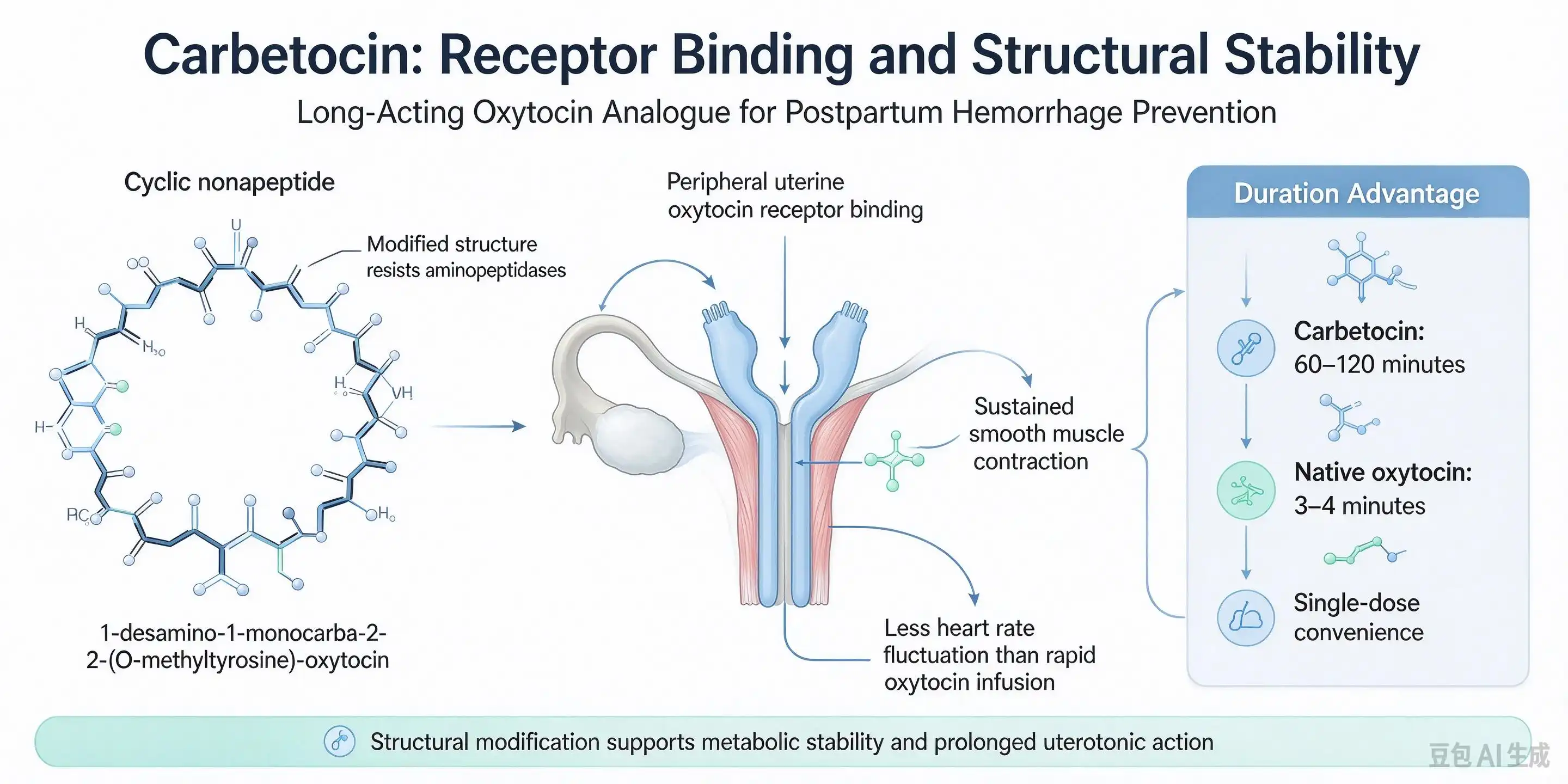
Carbetocin is a cyclic nonapeptide with the sequence Tyr-Met-Leu-Gly-Asn-Glu-Asn-Cys-Pro-Leu-Gly-NH₂. Its chemical name is 1-desamino-1-monocarba-2-(O-methyltyrosine)-oxytocin. By taking out the amino terminus and swapping the disulfide bridge with a methylene group, the molecule is made very immune to aminopeptidases, which break down natural oxytocin very quickly. This change in structure makes it possible for the compound to bind peripheral uterine oxytocin receptors very strongly. This causes smooth muscle contractions to last for a long time without the heart rate changes that happen when oxytocin is infused quickly.
Clinical Evidence on Duration of Action
Peer-reviewed studies, such as the WHO-commissioned CHAMPION trial published in The Lancet , confirmed that a single carbetocin injection keeps the uterus in good shape for 60 to 120 minutes after it is given. In contrast, a constant oxytocin infusion needs to be in place during the whole surgery in order to provide the same level of uterotonic covering. This one-dose effectiveness makes operating room procedures a lot easier and makes nursing jobs easier during busy obstetric procedures.
Dosage Guidelines and Administration Notes
There is a normal therapeutic dose of 100 mcg, which is given as a slow IV bolus or intramuscular injection right after the baby is born. When R&D engineers choose a raw material for an injectable formulation, they should know that its molecular formula is C₄H₆₉N₁₁O₁₃S and its molecular weight is 988.16 g/mol (CAS 37025-55-1). For pharmaceutical-grade API, the purity level needs to be at least 98.5% by HPLC. Changes in a patient's physiology, such as liver function, body mass, and receptor density, can have a small effect on the effective duration within the 60–120 minute window.
Comparative Analysis: Carbetocin Powder vs. Other Uterotonics
Carbetocin vs. Oxytocin
Globally, oxytocin is still the first-choice uterotonic, but because it has a plasma half-life of 3–4 minutes, it needs to be continuously infused through an IV during surgery. Because carbetocin's structure has been changed, its half-life has been shortened to about 40 minutes, which allows for a single-dose protocol. When compared to standard oxytocin regimens, clinical studies show that carbetocin cuts the need for extra uterotonic interventions by as much as 18% (Dyer et al., BJOG, 2010). For procurement teams looking at API providers, the longer action time means less drug is used per treatment and less waste in hospitals with a lot of patients.
Carbetocin vs. Misoprostol
Misoprostol is cheap and doesn't change when it gets hot, but it has a lot of side effects, like shivering, fever, and stomach cramps, which makes it hard to use in places where people are choosing to have surgery. Because carbetocin powder only reacts with peripheral oxytocin receptors and not with vasopressin receptors, it has a better safety window in the operating room. Misoprostol works well in settings with few resources, but carbetocin-based APIs are better for high-end injectable product lines that are aimed at regulated markets in the US, EU, and Japan.
Supply Chain and Stability Advantages
When it comes to logistics, carbetocin peptide API has a much longer shelf life than native oxytocin. High-purity carbetocin stays stable for up to 2 years if it is kept at -20°C and out of the light. Because enzymes can't break it down, there is less chance of breakdown during cold-chain transport. When compared to labile oxytocin solutions, this stability profile makes it easier for procurement managers to plan their supplies and lowers the amount of food that goes bad when shipping goods across multiple climate zones.
Procurement Insights: Buying Carbetocin Powder in Bulk
Key Supplier Certification Criteria
Compliance paperwork is a must when buying carbetocin API in bulk. Suppliers that are qualified should have ISO certification and follow manufacturing practices that are in line with GMP. There should be a Certificate of Analysis (COA), an MSDS, and full HPLC/mass spectrometry data for each batch that shows it is pure at least 98%. Also, procurement managers should ask for heavy metal screening results, impurity profile reports, and leftover solvent data. These papers are the most important parts of regulatory applications for formulated drug goods in the FDA and EMA.
MOQ, Packaging, and Pricing Structures
Most B2B carbetocin suppliers offer different prices based on how much you order. For study and feasibility testing, the smallest order quantity is usually 1 gram. For pilot and business batches, the minimum order quantity increases to 100 grams and then to 1 kg. At the 100g and 1 kg levels, the price per gram drops by a lot. This makes early-stage volume commitments financially attractive for CDMO clients who are running repeated synthesis campaigns. Before you place an order for more than 100 grams, make sure you know the lead time, the cold-chain packaging requirements, and the export documentation requirements.
International Logistics and Compliance
When shipping pharmaceutical peptide APIs across borders, it's important to pay close attention to HS codes, import licenses, and the rules of the target country. Carbetocin powder providers you can trust will give you all the paperwork you need to export, such as certificates of origin and, if necessary, REACH compliance records. Delivery times depend on where the order is going, but reputable makers with stock can send within 24 to 48 hours of order confirmation. Always make sure that your supplier can support regulatory audits and give you batch records that can be used to find out where the raw materials came from.
Safety, Side Effects, and Regulatory Considerations
Known Side Effects and Risk Profile
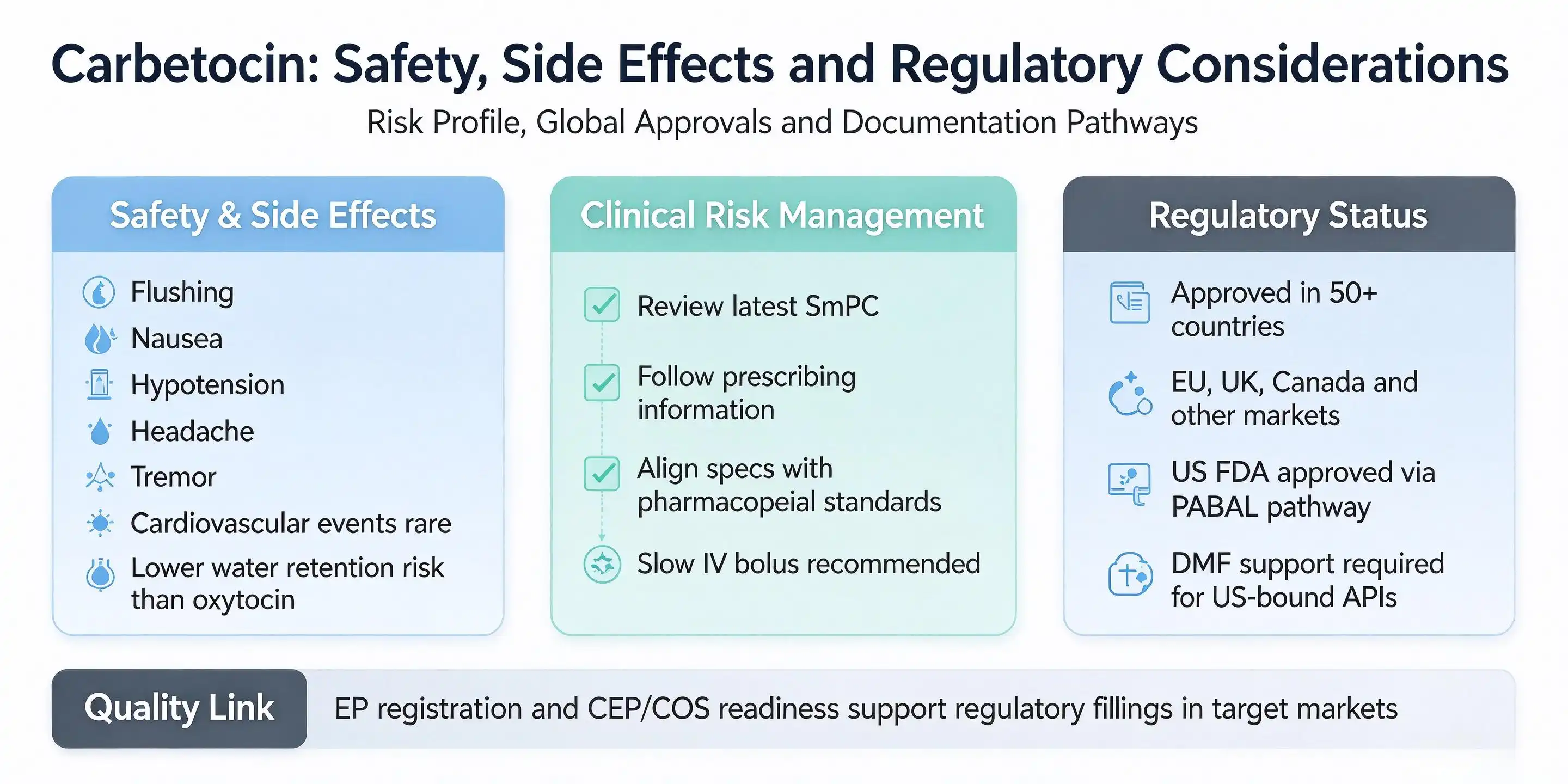
It has been used in pregnancy for more than 20 years, so we know that carbetocin is safe. Most of the time, minor and short-lived side effects like flushing, nausea, low blood pressure, headaches, and tremors are noted. Heart problems are very uncommon and usually happen after a quick IV bolus injection. Because it doesn't work as well as oxytocin at vasopressin-like functions, water retention and low sodium levels happen less often. The quality assurance and regulatory teams should look over the latest SmPC and prescribing information and make sure that the product specs match the pharmacopeial standards for the target market.
Regulatory Approvals and Documentation Requirements
Carbetocin injectable products are approved in more than 50 countries, such as Canada, the UK, and the whole of the EU. However, the US FDA only recently approved the 100 mcg IV formulation through the PABAL brand pathway. When sellers want to sell APIs for use in formulas going to the US, they have to provide DMF (Drug Master File) support or similar paperwork. Managers in charge of regulations should check to see if the supplier's factory has been inspected or is ready for inspection and if EP-registered papers can get certificates of fitness (CEP/COS).
Quality Verification Before Batch Acceptance
Before taking any commercial carbetocin powder batch, quality teams should test it again independently against COA standards. Important factors include assay purity (≥ 99%), HPLC purity (≥ 98%), moisture content, and impurities related to peptides. To make it easier to find samples, retain samples should be kept at -20°C. Pharmaceutical firms whose products are controlled by the FDA or EMA usually set up an official vendor qualification procedure that includes regular site checks and performance reviews.
Making the Right Choice: Optimizing Your Procurement Decision
Evaluating Supplier Credentials
The level of detail in the documentation and how quickly the seller responds to technical questions are often what set a reliable carbetocin peptide source apart from a bad one. Ask for full batch factory records instead of just a COA. Ask the supplier if they have worked with regulatory filings before and if they can offer reference standards along with the API. When founders and R&D leads look at long-term supply partners, they should see if the supplier can go from small batches of grams to large batches of kilograms without changing the quality. This is a sign of mature process control.
Sample Testing Before Bulk Commitment
It is common for businesses to ask for a 1-gram sample before committing to a 1-kg order when they want to buy pharmaceutical peptides. The material meets the requirements because it has been checked by an independent lab for purity, identity (using LC-MS), and physical appearance (as a white to off-white powder that doesn't cake up). This step saves formulation timelines further down the line and stops expensive reformulation work from having to be done because the starting material wasn't up to par.
Global Market Trends Supporting Carbetocin Adoption
The world market for uterotonics is moving toward drugs that can handle one dose and heat. The CHAMPION trial data support WHO's recommendation of carbetocin as an alternative to oxytocin for preventing PPH. This has sped up adoption in both regulated and emerging markets. For drug companies that are building or growing their maternal health businesses, getting a stable, well-documented carbetocin API supply chain is now the best way to get ready for the expected growth in demand through 2030.
Conclusion
Carbetocin powder works for 60 to 120 minutes after a single dose, which makes it a better choice than oxytocin infusion in elective obstetric settings, both from a medical and a practical point of view. Stability in its structure, a well-known safety profile, and a single-administration procedure all make it useful for both hospitals and drug supply lines. For business-to-business buyers, knowing how long a chemical works is the first step in figuring out the right purity, dosage, and source requirements, whether they are looking for ingredients for formula development, study programs, or commercial production.
FAQ
Q1: How quickly does carbetocin take effect?
A: Carbetocin produces measurable uterine contractions within approximately 2 minutes of intravenous administration. Intramuscular injection produces a slightly slower onset but achieves comparable uterotonic effect within 5–10 minutes. This rapid onset, combined with its prolonged action window, makes it practical for use in operating theater settings where timing and control of uterine tone are priorities.
Q2: Is carbetocin safe to use during pregnancy?
A: Carbetocin is contraindicated during pregnancy and is only indicated for use after delivery of the infant. It should not be administered before the baby is born, as stimulating uterine contractions prior to delivery carries significant obstetric risk. Its established use is specifically in the third stage of labor or immediately post-cesarean section.
Q3: What is the typical MOQ for carbetocin API from B2B suppliers?
A: Most qualified B2B suppliers offer a minimum order quantity starting at 1 gram. This allows research institutions and small CDMO teams to conduct feasibility and analytical testing before scaling. Commercial quantities are typically available in 100g and 1 kg packaging with corresponding volume pricing.
Q4: What purity level is required for pharmaceutical-grade carbetocin?
A: Pharmaceutical manufacturing applications require API purity of ≥98.5% by HPLC, with assay values at ≥99%. Research-grade material is generally accepted at ≥98% purity when used for non-clinical studies.
Partner with Xi'an Yihui for Reliable Carbetocin Powder Supply
Since 2010, Xi'an Yihui Bio-technology Co., Ltd. has sold pharmaceutical peptides and fine chemicals to customers in the US, Europe, Japan, and South Korea. We can make carbetocin powder that is HPLC-verified to be at least 98% pure, has a 99% assay, full batch documentation, and can be packed in a variety of ways, from 1g to 1 kg. When an item is in stock, it can be sent out right away. To get a sample or bulk quote right away, email our team at sales@yihuipharm.com.
References
1. Dyer, R.A., et al. "Carbetocin versus oxytocin for prevention of postpartum haemorrhage at caesarean section." British Journal of Anaesthesia, 2010.
2. Widmer, M., et al. "Heat-stable carbetocin versus oxytocin to prevent haemorrhage after vaginal birth (CHAMPION)." The Lancet, 2018.
3. Oladapo, O.T., et al. "Carbetocin for preventing postpartum haemorrhage." Cochrane Database of Systematic Reviews, 2020.
4. Su, L.L., et al. "Carbetocin vs oxytocin for prevention of post-partum haemorrhage after caesarean section." BJOG: An International Journal of Obstetrics and Gynaecology, 2012.
5. World Health Organization. "WHO recommendations for the prevention and treatment of postpartum haemorrhage." WHO Press, 2012.
6. Moertl, M.G., et al. "Haemodynamic effects of carbetocin and oxytocin given as intravenous bolus on women undergoing caesarean delivery." British Journal of Anaesthesia, 2011.

Send Inquiry
You may like
Related Industry Knowledge