
How does terlipressin powder work?
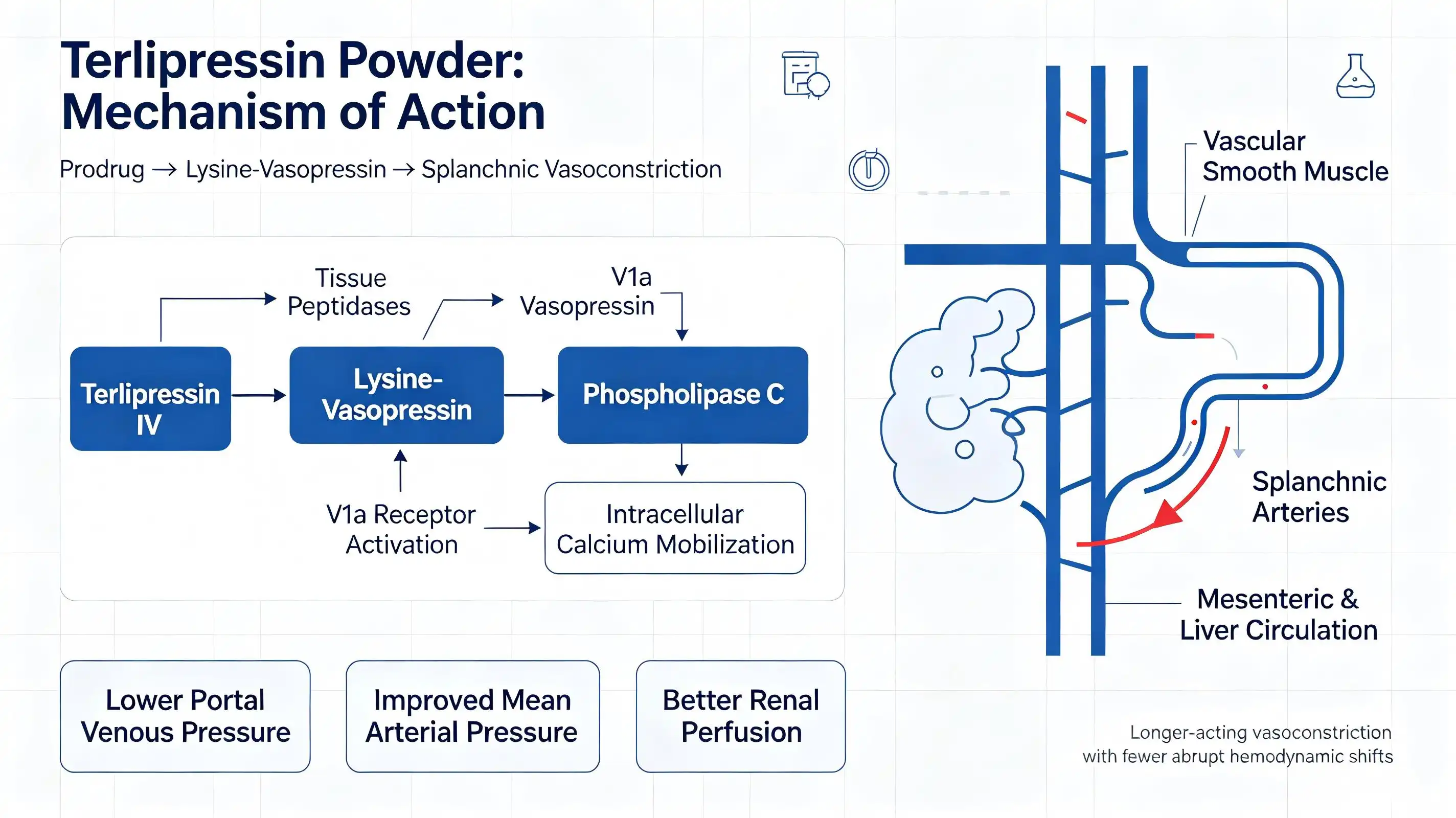
Terlipressin powder is a man-made version of Vasopressin that works as a specific vasoconstrictor by focusing on V1 receptors in vascular smooth muscle. Once given, this pharmaceutical peptide goes through enzymatic conversion in the bloodstream, slowly releasing lysine-Vasopressin, which is the active metabolite that causes splanchnic vasoconstriction to last longer. This mechanism lowers portal venous pressure and improves renal perfusion in people with hepatorenal syndrome. This makes Terlipressin powder an important medicine to have in emergency and critical care settings where stabilizing blood flow quickly is very important.
Understanding Terlipressin Powder: Pharmacology and Mechanism of Action
Chemical Structure and Classification
The chemical name for Terlipressin acetate is 14636-12-5, and it is a pharmaceutical peptide. Its molecular formula is C₅₂H₇₄N₁₆O₁₅S₂, and its molecular weight is 1227.37 g/mol. Terlipressin powder is a white to off-white hygroscopic powder that dissolves very easily in water. It is different from native Vasopressin because it has three glycyl residues at the N-terminus that act as a protective prodrug mechanism. Its amino acid sequence is Gly-Gly-Gly-Cys-Tyr-Phe-Gln-Asn-Cys-Pro-Lys-Gly-NH2.
This change to the structure extends the biological half-life to about six hours, which solves a big problem with continuous Vasopressin infusions. The disulfide bridge between cysteine residues keeps the structure strong, which makes sure that the receptor binding affinity stays the same when the protein is stored and then reconstituted. The HPLC purity levels of pharmaceutical-grade material must be at least 98%, with single impurities strictly controlled below 1.0%. This meets strict standards for research uses in cardiovascular physiology and hepatorenal syndrome studies.
Receptor Interaction and Vasoconstriction Pathway
The drug works by selectively binding to V1a receptors in vascular smooth muscle while having less of an effect on V2 receptors in the kidneys than native Vasopressin. When Terlipressin is given through an IV, it doesn't do much until tissue peptidases cut the glycyl residues, which gradually releases lysine-Vasopressin. This slow change causes long-lasting vasoconstriction without the sudden changes in blood flow that happen with direct Vasopressin injection.
The active molecule binds to V1a receptors on the splanchnic artery beds, which turns on phospholipase C and moves calcium around inside cells. This chain reaction makes smooth muscles contract, mostly in the mesenteric and liver artery systems. This lowers blood flow to the splanchnic area, which in turn lowers portal vein pressure. This is a healing effect that is very important for controlling variceal bleeding. Moving blood from the splanchnic circulation to the systemic arteries improves mean arterial pressure and renal perfusion at the same time. This fixes the main problem that causes type 1 hepatorenal syndrome.
Pharmacokinetics and Storage Requirements
Terlipressin is different from other drugs because it has a longer half-life, which lets you give it in bolus doses instead of continuously. Peak plasma amounts happen 30 minutes after injection, and vasoconstrictor effects can be felt for 4-6 hours. This pharmacokinetic profile makes it easier to administer drugs in critical care settings, which means nurses have less work to do and infusion-related problems happen less often.
Stability studies show that it is sensitive to heat and moisture, so it needs to be stored at -20°C in a dry, sealed environment. When kept away from things that could break down it, the lyophilized powder keeps its chemical stability for a long time. To keep peptide bonds from breaking, reconstituted solutions need to be kept cool (2-8°C) and used right away, within the time frames set by the manufacturer. These storage conditions are very important for procurement teams that are in charge of cold-chain logistics, especially when they are coordinating international shipments that go through different climate zones.
Clinical Uses and Dosage Guidelines of Terlipressin Powder
Approved Therapeutic Indications
Terlipressin powder is the best way to stop bleeding from esophageal varices caused by portal hypertension. It works by quickly narrowing the portal veins, which stops the bleeding without the need for invasive endoscopic procedures. Clinical trials show that this medicine works better than a placebo at stopping acute variceal bleeding, and when used with endoscopic therapy, it lowers the risk of death.
Type 1 hepatorenal syndrome is another main indication. In this condition, splanchnic vasoconstriction and better renal perfusion help patients with advanced cirrhosis whose kidneys are failing more and more. By moving cardiac output away from swollen splanchnic beds and toward critical organs, the substance restores functional kidney impairment. New regulatory approvals in several places have made this life-saving therapy easier for more people to get, which is increasing demand in pharmaceutical supply chains.
Off-label uses include treating septic shock and vasoplegia caused by abdominal surgery, but these needs to be carefully weighed against the risks and benefits. As a result, research centers are still looking into new uses for research-grade materials that are very pure. These uses include cardiovascular research, studies on blood pressure control, and the development of peptide drugs.
Dosage Protocols and Administration
Standard treatment for variceal bleeding includes first boluses of 2 mg given IV every 4-6 hours until the bleeding stops, followed by maintenance doses for 24-72 hours. Hepatorenal syndrome treatments usually start with 1 mg every 4-6 hours and build up to 2 mg based on signs of kidney function improvement like a drop in serum creatinine.
Careful tracking of the patient's blood pressure is needed during treatment because too much vasoconstriction can lead to myocardial ischemia or mesenteric hypoperfusion. The dose is changed based on the patient's weight, how well their liver is working, and any other medicines they are taking that might affect their vascular tone. When buying things for clinical trials or institutional formularies, people who work in procurement need to know these titration protocols so they can accurately predict how much they will need and set the right inventory levels.
Safety Profile and Contraindications
Some of the most common side effects are abdominal cramps, diarrhea, and slow heart rate, which are all signs of effects on the splanchnic vessels and the autonomic nervous system. About 3-5% of people will have a serious cardiovascular event like a myocardial attack or arrhythmias. This is why high-risk groups need to have their hearts monitored.
Absolute restrictions include serious coronary artery disease, peripheral vascular disease, and pregnancy, because the risks of vasoconstriction are higher than the benefits of the therapy. Chronic kidney disease that isn't related to hepatorenal syndrome and high blood pressure that can't be controlled are relative contraindications. When quality assurance managers check the credentials of suppliers, they should make sure that the Certificate of Analysis paperwork includes information on toxicity and safety testing results. This is to make sure that pharmacovigilance standards are met.
Comparing Terlipressin Powder with Alternative Vasoconstrictors
Vasopressin: Mechanism and Clinical Differences
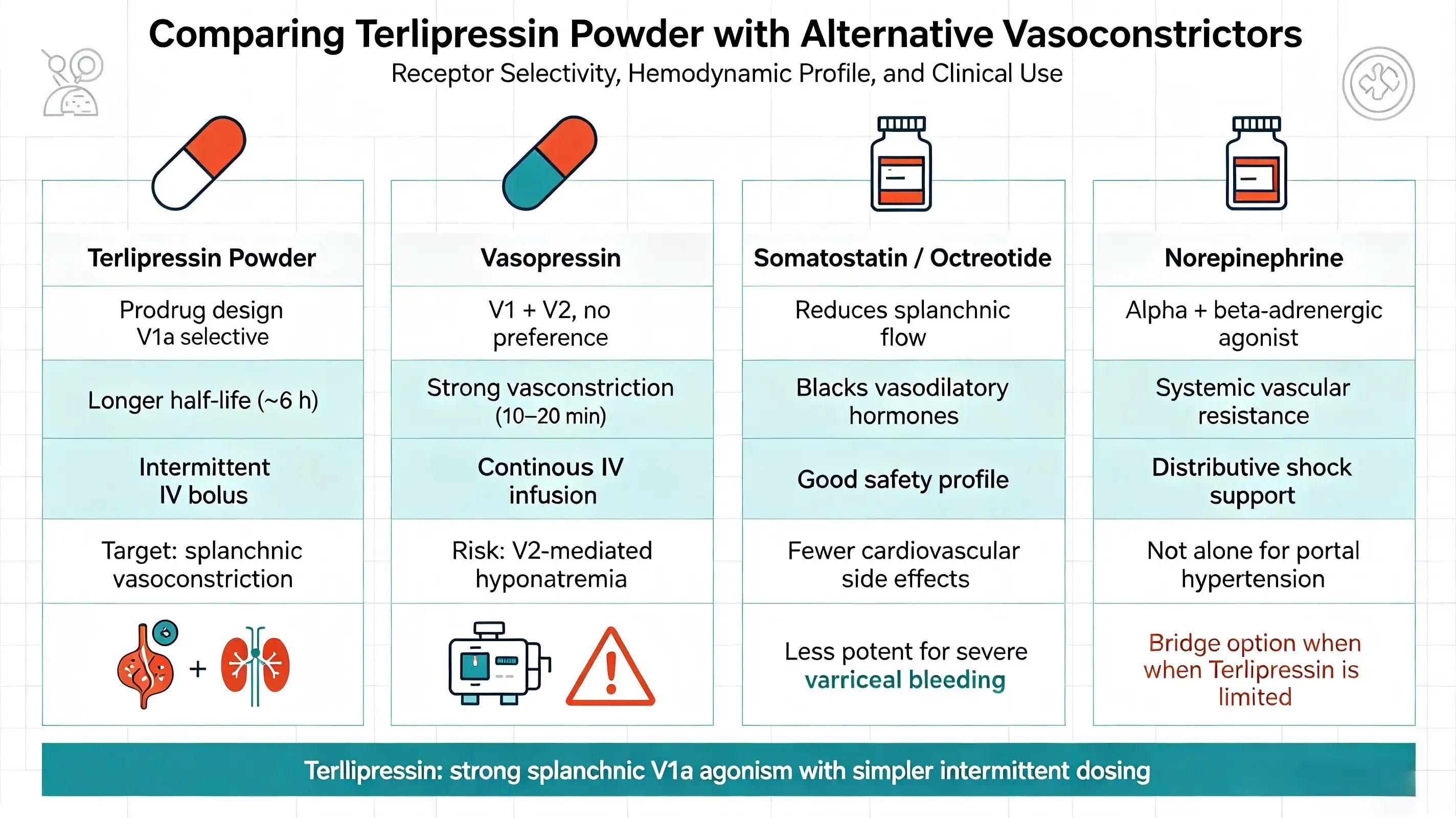
Native Vasopressin binds to both V1 and V2 receptors without preference, causing strong vasoconstriction and decreasing urine output. Because the half-life is so short (10-20 minutes), constant intravenous infusion is needed. This makes treatment more difficult and requires more nurse resources. Terlipressin powder's prodrug design and V1a selectivity make up for these problems, allowing for easier intermittent dosing without the risks of V2-mediated hyponatremia.
Similar rates of hemostatic success have been found for variceal bleeding, but Terlipressin has better results in hepatorenal syndrome because it improves renal perfusion over time. Cost-effectiveness studies show that Terlipressin is more cost-effective in high-acuity settings where less complicated infusions lead to lower total healthcare costs, even though the drug costs more per dose.
Somatostatin and Octreotide: Alternative Splanchnic Vasoconstrictors
Somatostatin and its man-made counterpart Octreotide slow down blood flow in the splanchnic area by blocking vasodilatory hormones instead of directly narrowing blood vessels. These drugs have good safety ratings and few cardiovascular side effects, which makes them first-choice choices for people who already have a lot of heart problems. Their vasoconstrictor strength isn't as strong as Terlipressin's direct V1a agonism, though, so they aren't as good at stopping severe variceal bleeding.
When deciding what to buy, people often choose Somatostatin analogues for preventative uses and save Terlipressin for cases that haven't responded to other treatments. To support protocol-driven treatment algorithms that increase therapy based on clinical response, supply chain managers must keep a wide range of inventory on hand.
Norepinephrine: Hemodynamic Support in Shock States
Norepinephrine is a mixed alpha and beta-adrenergic agonist that helps with a wide range of vasopressor functions in distributive shock syndromes. Unlike Terlipressin, which only affects the splanchnic area, Norepinephrine changes the systemic vascular resistance all over. This means that it can't be used to treat portal hypertension on its own, but it is perfect for resuscitation in septic shock.
Comparative studies in hepatorenal syndrome show that Terlipressin is better for kidney healing. This is because it narrows the splanchnic vessels more, sending more blood to the renal arteries. Norepinephrine could be used as a bridge drug when Terlipressin supplies are limited, but the results are still not ideal. If B2B buyers who work with critical care markets understand these clinical details, they can help institutions make decisions about what products to buy that are in line with their treatment preferences.
Procurement Considerations for Terlipressin Powder
Global Pricing Dynamics and Bulk Purchasing
The high cost of making Terlipressin powder is due to the complicated steps needed to make pharmaceutical peptides. These steps are called multi-step solid-phase peptide synthesis. A study of the market shows that prices vary across regions based on things like government approval status, property protection landscapes, and the ability to make the product locally. Due to strict governmental pathways, European and North American markets can charge higher prices. On the other hand, developing markets are price sensitive, which helps generic makers.
Economies of scale are used in bulk buying deals, especially for institutional buyers who handle yearly volumes over 100 grams. Research institutions that need to do pilot studies can place orders for as little as 1 gram, but prices are best when commitments are made in 100-gram or 1-kilogram increments. When negotiating long-term supply agreements, purchasing managers should look into volume-based discounting structures that keep quality standards high and reward supply chain partnerships.
Supplier Qualification and Quality Certifications
When you choose providers with ISO9001 and ISO14001 certifications, you can be sure that they will follow widely recognized quality management systems that include controlling the manufacturing process and being environmentally friendly. Third-party validation through SGS testing reports gives independent confirmation of consistency from batch to batch, which is very important for R&D teams that need to be able to repeat the conditions of an experiment.
The paperwork that comes with the Certificate of Analysis should list the HPLC purity (≥98%), single impurity profiles (<1.0%), amino acid composition within ±10% of theoretical values, and peptide content (≥80%). For Karl Fischer titration to work, the water content readings can't be higher than 10.0%. This keeps the material from breaking down because of the remaining wetness. Confirmation of mass spectrometry and measures of specific rotation between -95.0° and -105.0° show that the structure is solid.
Logistics and Cold-Chain Management
For international shipping to keep the integrity of the product, there needs to be a strong cold chain that can keep storage temperatures at -20°C from the manufacturer to the end user. Thermal packing options that use dry ice or phase-change materials keep temperatures stable during shipping, especially for shipments that go across various climate zones across continents.
Lead times for in-stock items usually range from 5-7 business days for shipments within the United States and from 14-21 days for shipments to other countries, taking into account the time needed to clear customs. Purchasing teams that are in charge of just-in-time inventory systems have to weigh the costs of faster shipping against the costs of keeping more inventory on hand. Partnering with suppliers to offer contract inventory deals lowers the risk of running out of stock and improves the efficiency of working capital.
For international shipments, you need commercial invoices, certificates of origin, and material safety data sheets with instructions on how to handle the goods safely. Transportation laws may apply to dangerous materials, which means that you need to have specialized goods moving skills. Experienced sellers offer turnkey transportation support, which makes cross-border purchasing easier for buyers who don't have their own import/export capabilities.
Conclusion
When procurement professionals know how Terlipressin powder works, they can make smart decisions about where to get it that meet clinical efficacy requirements and regulatory compliance standards. The compound's special pharmacological properties—selective V1a receptor agonism, longer half-life through prodrug metabolism, and strong splanchnic vasoconstriction—make it the only medicine that can be used to treat variceal bleeding and hepatorenal syndrome.
Comparative studies with other vasoconstrictors show clear benefits in certain clinical situations, which help with making smart choices about formulary. To make sure the purity of the product from manufacturing to clinical use, good buying strategies put a high priority on qualifying suppliers, checking quality certifications, and optimizing cold chain logistics. More and more clinical data backing more uses means that demand will continue to rise in the pharmaceutical, research, and biotechnology industries.
FAQ
What are the primary clinical benefits of terlipressin acetate?
Terlipressin powder acetate causes splanchnic vasoconstriction to last for a long time without needing to be infused continuously. This lowers portal venous pressure in variceal bleeding and improves renal perfusion in hepatorenal syndrome. Compared to native Vasopressin, the longer half-life makes dosing easier, and the V1a receptor specificity reduces the problems with antidiuretics that come with V2 activation.
How should research-grade terlipressin powder be stored?
The best way to store things is at -20°C in dry, covered containers so that they don't absorb wetness and lose heat. Under these conditions, lyophilized powder stays stable for a long time. Manufacturers give specific expiration dates based on accelerated stability studies. Reconstituted solutions need to be kept cold right away and used within certain time limits.
What differentiates high-quality suppliers in the terlipressin market?
Leading suppliers show that they follow ISO9001 quality management systems, give testing reports that have been approved by SGS, and keep HPLC purity levels at or above 98% by strictly controlling impurities. Reliable makers can be told apart from low-quality providers by their extensive paperwork, which includes Certificates of Analysis, material safety data sheets, and regulatory compliance certificates. Cold-chain logistics and quick technical support are two more things that set quality-focused organizations apart.
Partner with Xi'an Yihui for Reliable Terlipressin Powder Supply
Xi'an Yihui Bio-technology Co., Ltd. is a reliable company that has been making Terlipressin powder for over 13 years and has worked with research, biotechnology, and pharmaceutical companies in more than 100 countries. Our Terlipressin acetate is used in study and is very pure (99% as measured by HPLC). It is backed by ISO9001 and ISO14001 certifications that make sure the quality of each batch is the same. We offer flexible packaging options, such as 1g, 100g, and 1kg sizes, and the smallest amount you can order is just 1 gram. This means that we can meet the needs of both small research projects and large-scale purchases.
Our in-stock inventory means that we can deliver quickly, and our professional transportation team handles cold-chain shipping at -20°C to keep the quality of the goods while they travel across foreign borders. Each batch comes with a Certificate of Analysis, SGS testing records, and mass spectrometry confirmation. This gives your quality assurance teams the tracking and compliance proof they need. Our technical support staff is available 24/7 to help with formulation questions, regulatory questions, and needs for custom synthesis.
Xi'an Yihui gives your projects the quality, dependability, and professional know-how they need, whether they're making peptide-based medicines, researching cardiovascular diseases, or handling critical care formularies. Contact our purchasing agents at sales@yihuipharm.com to talk about bulk pricing for Terlipressin powder for sale, to ask for Certificates of Analysis, or to learn more about how we can make Terlipressin powder specifically for your research needs. You can look at our full line of pharmaceutical peptides and active pharmaceutical ingredients at yihuipharm.com.
References
1. Krag, A., Borup, T., Møller, S., & Bendtsen, F. (2008). Efficacy and safety of terlipressin in cirrhotic patients with variceal bleeding or hepatorenal syndrome. Advanced Therapy, 25(11), 1105-1140.
2. Sanyal, A. J., Boyer, T., Garcia-Tsao, G., Regenstein, F., Rossaro, L., Appenrodt, B., ... & Reuben, A. (2008). A randomized, prospective, double-blind, placebo-controlled trial of terlipressin for type 1 hepatorenal syndrome. Gastroenterology, 134(5), 1360-1368.
3. Ioannou, G. N., Doust, J., & Rockey, D. C. (2003). Systematic review: terlipressin in acute esophageal variceal hemorrhage. Alimentary Pharmacology & Therapeutics, 17(1), 53-64.
4. Moreau, R., & Lebrec, D. (2006). The use of vasoconstrictors in patients with cirrhosis: type 1 HRS and beyond. Hepatology, 43(3), 385-394.
5. Fabrizi, F., Dixit, V., & Martin, P. (2012). Meta-analysis: terlipressin therapy for hepatorenal syndrome. Alimentary Pharmacology & Therapeutics, 35(4), 448-458.
6. Sola, E., & Ginès, P. (2010). Pharmacological treatment of hepatorenal syndrome: efficacy and limitations. Current Opinion in Critical Care, 16(2), 168-175.

Send Inquiry
You may like
Related Industry Knowledge