
How Does Etelcalcetide Work?
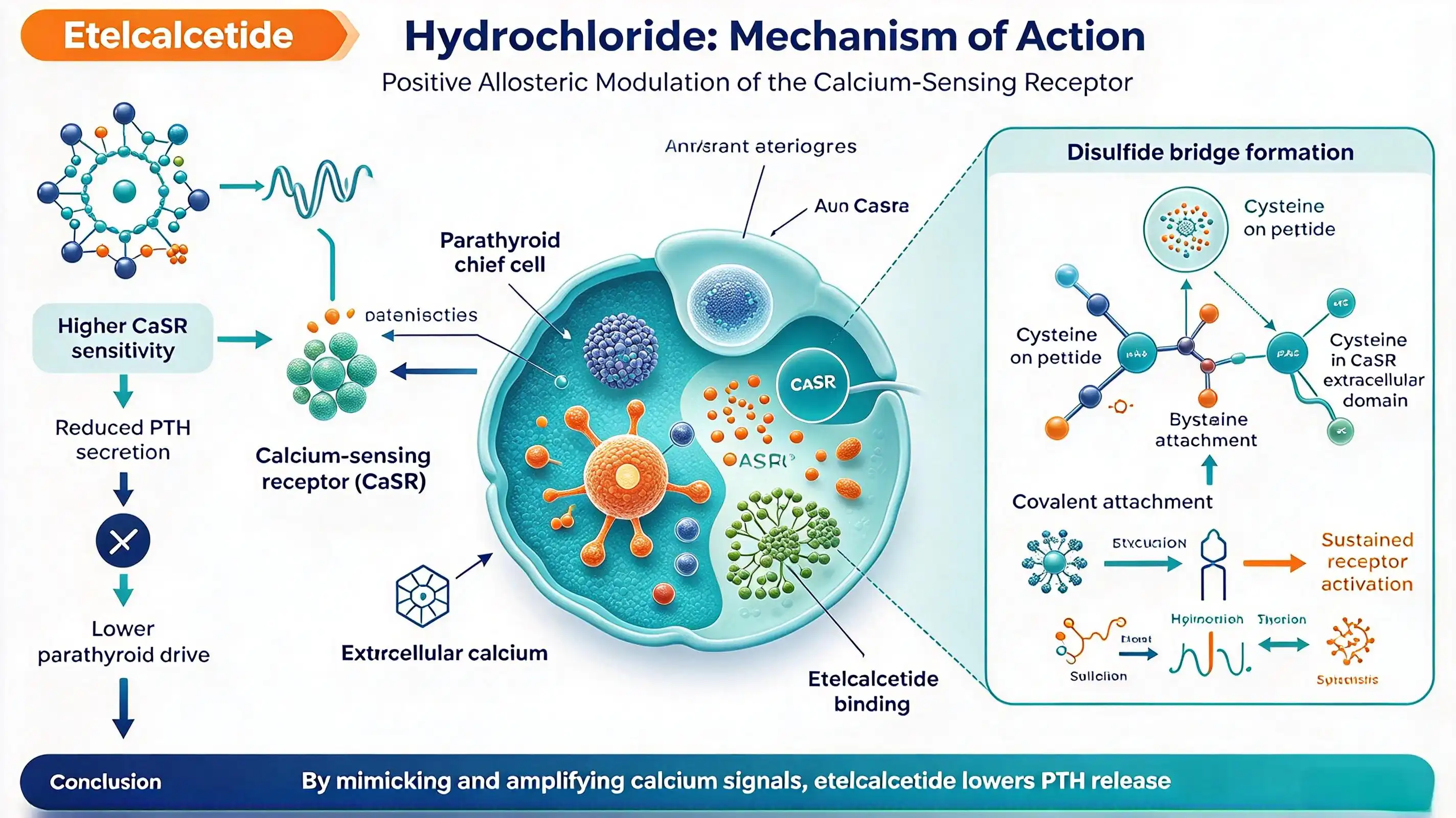
Etelcalcetide hydrochloride represents a breakthrough in managing calcium metabolism disorders, particularly secondary hyperparathyroidism in patients undergoing dialysis. This synthetic calcimimetic peptide operates by binding directly to calcium-sensing receptors (CaSR) on parathyroid cells, triggering a conformational change that amplifies the receptor's sensitivity to extracellular calcium.
This mechanism effectively reduces parathyroid hormone (PTH) secretion without requiring oral administration, offering a reliable therapeutic option. With a molecular weight of 1084.71 g/mol and a unique D-amino acid peptide structure (CAS Number: 1334237-71-6), this compound demonstrates exceptional stability and biological activity crucial for both clinical applications and advanced research initiatives.
Understanding the Mechanism of Action
Activation of Calcium-Sensing Receptors
Etelcalcetide hydrochloride's main way of working is by interacting with calcium-sensing receptors on the surface of chief cells in the parathyroid gland. These G-protein-coupled receptors normally check the amount of calcium in the blood and control the release of PTH based on that.
When this calcimimetic agent binds to the receptor, it makes the receptor more sensitive to calcium levels by acting as a positive allosteric modulator. This means that the parathyroid glands think that calcium levels are higher than they really are, which makes them release less PTH. It is different from other vitamin D analogs or phosphate binders because it changes specific receptors.
Disulfide Bridge Formation and Binding Specificity
The covalent joining ability of Etelcalcetide hydrochloride is what makes it so useful. It has a cysteine residue that connects to a cysteine in the extracellular domain of the CaSR to form a disulfide bridge. This covalent attachment makes an effect that lasts for a long time, even after the dialysis session is over.
This disulfide bond formation makes sure that receptors stay activated even when plasma levels drop, which is different from non-covalent calcimimetics that need a constant concentration in the plasma. The specific sequence [Ac-D-Cys-D-Ala-D-Arg-D-Arg-D-Arg-D-Ala-D-Arg-NH₂] linked to an L-Cys residue by a disulfide bond is what makes this long-lasting action possible.
Pharmacokinetic Advantages
The injectable form has different pharmacokinetic advantages compared to oral forms. Giving Etelcalcetide hydrochloride straight into the bloodstream during dialysis sessions makes sure that it is fully bioavailable, so there are no worries about how the body will absorb it. The peptide is mostly broken down by proteolytic cleavage, with little participation from the liver.
This makes it a good choice for people with chronic kidney disease whose liver function is often poor. Plasma half-life is long enough to keep therapeutic effects going between dialysis sessions, which are usually done three times a week. This known pharmacokinetic profile makes dosing easier and helps people stick with their medication.
Evaluating Effectiveness and Safety
Clinical Efficacy in PTH Reduction
Several phase III clinical studies have shown that lowering blood PTH levels with Etelcalcetide hydrochloride works very well. Studies show that between 68 and 75% of patients reach their goal of lowering their PTH levels by at least 30% from the start of treatment within 12 weeks. This decrease happens along with positive changes in serum calcium and phosphorus levels, which fixes the complicated mineral metabolism problems that come with having chronic kidney disease.
The fact that these results have been consistent across a wide range of patients shows how reliable this treatment method is. The FDA, EMA, and other foreign bodies have given their permission, which backs up these results of effectiveness and its place in standard treatment protocols.
Safety Profile and Risk Management
The safety profile shows that the bad effects can be controlled if the right tracking methods are used. Hypocalcemia is the most common side effect of Etelcalcetide hydrochloride, happening to about 5–10% of patients during the first titration. This risk can be reduced, though, by regularly checking the serum calcium level and changing the amount.
Other side effects that have been reported are muscle spasms, nausea, and vomiting, which are usually mild and short-lived. Etelcalcetide hydrochloride shows a consistent safety profile, as data collected over a number of years confirms long-term stability without any unexpected effects. The lack of liver metabolism lowers the chance of drug interactions, making it easier to handle multiple medications at the same time in this group of patients who take a lot of different drugs.
Real-World Clinical Outcomes
In addition to controlled trial settings, more and more real-world evidence is being collected to support the benefits of Etelcalcetide hydrochloride. Healthcare professionals say that patients are more likely to take the drug as directed compared to oral calcimimetics. This is mostly because the drug is given during dialysis sessions instead of needing to be taken separately every day.
This integration into current treatment routines removes adherence hurdles associated with complicated drug schedules. Patients are happy that they have to take fewer pills and have fewer stomach problems. These quality-of-life gains translate into better general disease management and possibly lower healthcare utilization for complications linked to uncontrolled hyperparathyroidism.
Comparing Treatment Alternatives
Injectable Versus Oral Calcimimetics
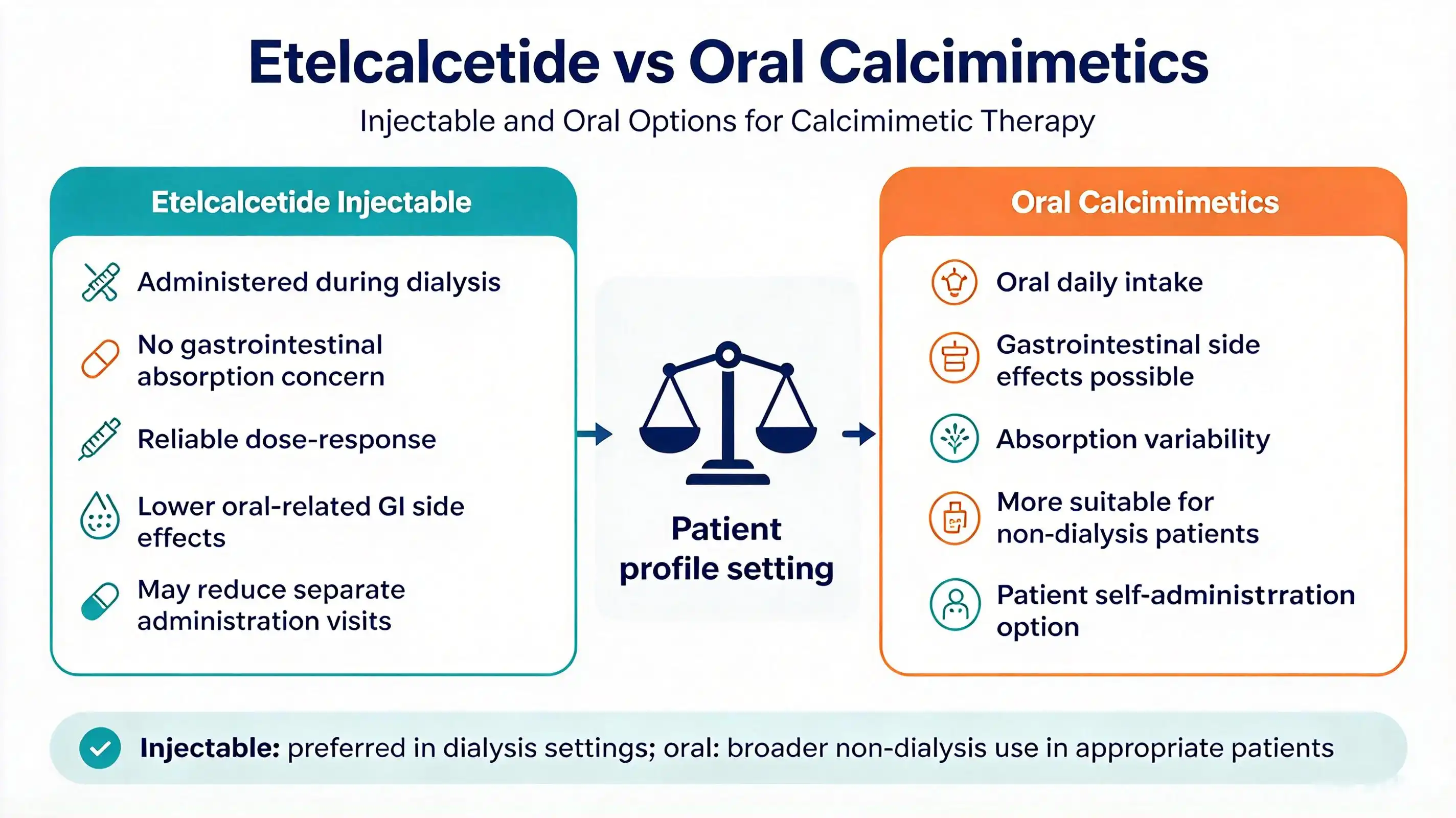
There are a few things that make Etelcalcetide hydrochloride different from oral calcimimetics like cinacalcet. When you use an injectable method, you don't have to worry about stomach side effects, which are a big problem with oral drugs. Bioavailability differences make dose-response relationships more reliable, which makes it easier to give the right amount of medicine to each person.
From a purchasing point of view, combining dialysis administration with other services could lower overall healthcare costs by getting rid of the need for separate clinic visits and medication administration at home. But oral drugs give patients who aren't on dialysis more options. This shows how important it is to match the right treatment to the patient's needs.
Non-Surgical Alternative Considerations
For cases that don't respond to other treatments, parathyroidectomy is still a choice, but it comes with a lot of risks. Surgical intervention comes with instant risks, requires staying in the hospital and taking time to heal, and may cause chronic hypoparathyroidism that needs calcium and vitamin D supplements for life.
Economic studies always show that surgery has higher up-front costs than medical management. As an option to surgery, Etelcalcetide hydrochloride works well and doesn't cause these problems, but it still controls PTH levels similarly in most people. When formulary choices or clinical plans are made, procurement decision-makers who are looking at treatment paths must take these complex differences in cost and result into account.
Emerging Therapeutic Options
New vitamin D analogs, phosphate binders, and investigational agents are being developed, which means that the way hyperparathyroidism is managed is always changing. Even with these improvements, Etelcalcetide hydrochloride still has a competitive edge thanks to its proven effectiveness, regulatory approval, and years of clinical experience.
As patents run out, generic versions may come out, which could make them more affordable while still providing the same level of therapeutic efficacy. By keeping up with these changes in the market, procurement professionals can predict how the supply chain will change and work out good terms with suppliers.
Procurement Considerations for Research Applications
Supplier Qualification Criteria
To successfully find research-grade Etelcalcetide hydrochloride, suppliers must be carefully evaluated. Manufacturers who are qualified should show that they meet the quality control standards set by ISO9001 and ISO14001 certificates. In addition to general certifications, specific paperwork is also very important.
This includes detailed Certificates of Analysis (COA) that confirm ≥98% purity via HPLC, mass spectrometry reports that confirm molecular weight (1084.71 g/mol), and Material Safety Data Sheets (MSDS) that explain how to handle the substance safely. Suppliers should also give full proof of the peptide sequence and stable data that backs up the storage conditions of -20°C and safety from light and moisture.
Pricing and Volume Considerations
Pricing systems for Etelcalcetide hydrochloride are very different depending on the amount you order, your purity needs, and how you want it packaged. Minimum order quantities start at 1 gram, which is good for small-scale research needs. Bulk options (100g, 1 kg) are also available for bigger studies or commercial development projects. Cost-per-gram usually goes down with volume, which encourages buying in bulk when it's possible. But people who work in procurement have to weigh the savings they can make against the limits of storage stability and the expected length of time for use to keep materials from breaking down.
Regulatory Documentation Requirements
Getting research-grade Etelcalcetide hydrochloride requires careful regulatory attention, especially for materials meant for preclinical studies that could later support regulatory applications. It is important for suppliers to make it clear that the material is "for scientific research use only" and cannot be sold to people. This will help keep spread under control. Documentation that backs up GMP-compliant manufacturing processes, even for research-grade materials, gives you peace of mind that the quality will be the same every time.
Working with Trusted Manufacturers
Quality Assurance Standards
Top makers of Etelcalcetide hydrochloride set themselves apart with quality control methods that do more than just make sure they meet specifications. Premium suppliers make sure that their products are consistent from batch to batch and use tested analytical methods and strict impurity profiling. Being able to show purity profiles on HPLC chromatograms, molecular identity on mass spectrometry data, and stability studies to back up shelf-life claims shows that you are technically skilled and dedicated to quality.
Supply Chain Reliability
Aside from the quality of the goods, the performance of the supply chain has a big effect on the success of buying Etelcalcetide hydrochloride. Manufacturers who have established production capacity, relationships for getting raw materials, and methods for managing their goods are less likely to have problems with their supplies. Being able to increase production to meet higher demand without lowering quality or lengthening lead times is important for expanding research programs or moving products through the commercial pipeline.
Conclusion
By understanding how Etelcalcetide hydrochloride works, we can see that it has a complex way of connecting to calcium-sensing receptors and lowering PTH in a way that is safe for most people. The injectable version has pharmacokinetic benefits that back its clinical success, especially in dialysis patients who often have trouble sticking to their treatment plans. When looking for research-grade materials, procurement workers should carefully look at the skills of suppliers, the quality of their paperwork, and the strength of their supply chains.
Even though there are new treatments coming out, this one is still useful because it works and is supported by the government. Finding the right source relationship is important for both research success and regulatory compliance, whether it's for basic research into calcium metabolism or peptide drug development projects.
FAQ
What is the mechanism by which this calcimimetic reduces PTH?
Etelcalcetide hydrochloride binds to calcium-sensing receptors on parathyroid cells and makes a disulfide bridge, which makes the receptors work. This binding makes receptors more sensitive to calcium in the blood, which makes the parathyroid glands act as if calcium levels are higher than they really are, which stops the release of PTH.
How does storage condition affect peptide stability?
Peptides stay intact by preventing oxidation and breakdown when stored properly at -20°C away from light and moisture. Changes in temperature can make disulfide bonds less stable and encourage them to stick together. Following the storage instructions keeps the Etelcalcetide hydrochloride ≥98% pure and makes sure that the experiments can be repeated.
What documentation should accompany research-grade material?
A Certificate of Analysis proving identity and purity, an HPLC chromatogram showing purity profile, a mass spectrometry report validating molecular weight, and a Material Safety Data Sheet outlining how to handle the substance are all part of the complete paperwork. These papers provide the quality control and traceability that are needed for rigorous research applications.
Can this material be used in human clinical applications?
Etelcalcetide hydrochloride material that is labeled "for scientific research use only" is not meant to be directly administered to people. For clinical uses, you need materials that are made in full compliance with good manufacturing practices (GMP) and with the right government licenses. Products that are made for research help with preclinical studies, in vitro tests, and method creation.
Partner with Xi'an Yihui for Your Peptide Needs
You can count on Xi'an Yihui Bio-technology Co., Ltd. to be your trusted source for Etelcalcetide hydrochloride. They offer research-grade materials that are of the best quality. We understand your technical needs and buying goals because we have 13 years of experience in pharmaceutical peptides and APIs. With ISO9001 and ISO14001 certifications to back us up, we keep full records of every shipment, including COAs, HPLC chromatograms, mass spectrometry reports, and MSDSs. We make it easier for you to buy things for your study by having them in stock, having a low MOQ starting at 1 gram, offering flexible packing choices (1g, 100g, 1kg), and being able to send right away.
Our dedication to quality and service is shown by the fact that we have customers in more than 100 countries. For full specs, pricing information, or technical advice, please email our professional team at sales@yihuipharm.com. You can look at our full line of products at yihuipharm.com. We serve research, science, and pharmaceutical institutions all over the world.
References
1. Block GA, Bushinsky DA, Cheng S, et al. Effect of Etelcalcetide vs Cinacalcet on Serum Parathyroid Hormone in Patients Receiving Hemodialysis with Secondary Hyperparathyroidism: A Randomized Clinical Trial. JAMA. 2017;317(2):156-164.
2. Nemeth EF, Shoback D. Calcimimetic and Calcilytic Drugs for Treating Bone and Mineral-Related Disorders. Best Practice & Research Clinical Endocrinology & Metabolism. 2013;27(3):373-384.
3. Moe SM, Abdalla S, Chertow GM, et al. Effects of Cinacalcet on Fracture Events in Patients Receiving Hemodialysis: The EVOLVE Trial. Journal of the American Society of Nephrology. 2015;26(6):1466-1475.
4. Fukagawa M, Yokoyama K, Shigematsu T, et al. A Phase 3, Multicentre, Randomized, Double-Blind, Placebo-Controlled, Parallel-Group Study to Evaluate the Efficacy and Safety of Etelcalcetide in Japanese Haemodialysis Patients with Secondary Hyperparathyroidism. Nephrology Dialysis Transplantation. 2017;32(10):1723-1730.
5. Palmer SC, Nistor I, Craig JC, et al. Cinacalcet in Patients with Chronic Kidney Disease: A Cumulative Meta-Analysis of Randomized Controlled Trials. PLOS Medicine. 2013;10(4):e1001436.
6. Ketteler M, Block GA, Evenepoel P, et al. Executive Summary of the 2017 KDIGO Chronic Kidney Disease-Mineral and Bone Disorder (CKD-MBD) Guideline Update. Kidney International. 2017;92(1):26-36.

Send Inquiry
You may like
Related Industry Knowledge