
How Does Acetyl Decapeptide-3 Powder Work? The Science Behind the Anti-Wrinkle Peptide
Acetyl Decapeptide-3 powder functions through a sophisticated biomimetic mechanism that specifically targets the dermal-epidermal junction where collagen synthesis occurs. This synthetic peptide penetrates the stratum corneum via its acetyl modification, which enhances lipophilicity and skin barrier permeability. Once inside the dermis, it activates fibroblast receptors, initiating a cascade of intracellular signaling that upregulates procollagen Type I and III synthesis. This remodeling process reinforces the extracellular matrix, reducing wrinkle depth and enhancing skin elasticity within clinical observation periods.
Understanding Acetyl Decapeptide-3 Powder: Composition and Mechanism of Action
The Molecular Architecture of Anti-Aging Peptides
Peptides are made up of short lines of amino acids, which are the building blocks of proteins and control how cells act. In the field of beauty science, man-made peptides like this decapeptide (which is made up of ten amino acid residues) talk to cells and tell them how to do certain healing tasks. The "acetyl" addition refers to an acetylation modification, a chemical process that adds an acetyl group to the N-terminus of the peptide. This makes it more stable and better at crossing membranes than peptides that have not been changed.
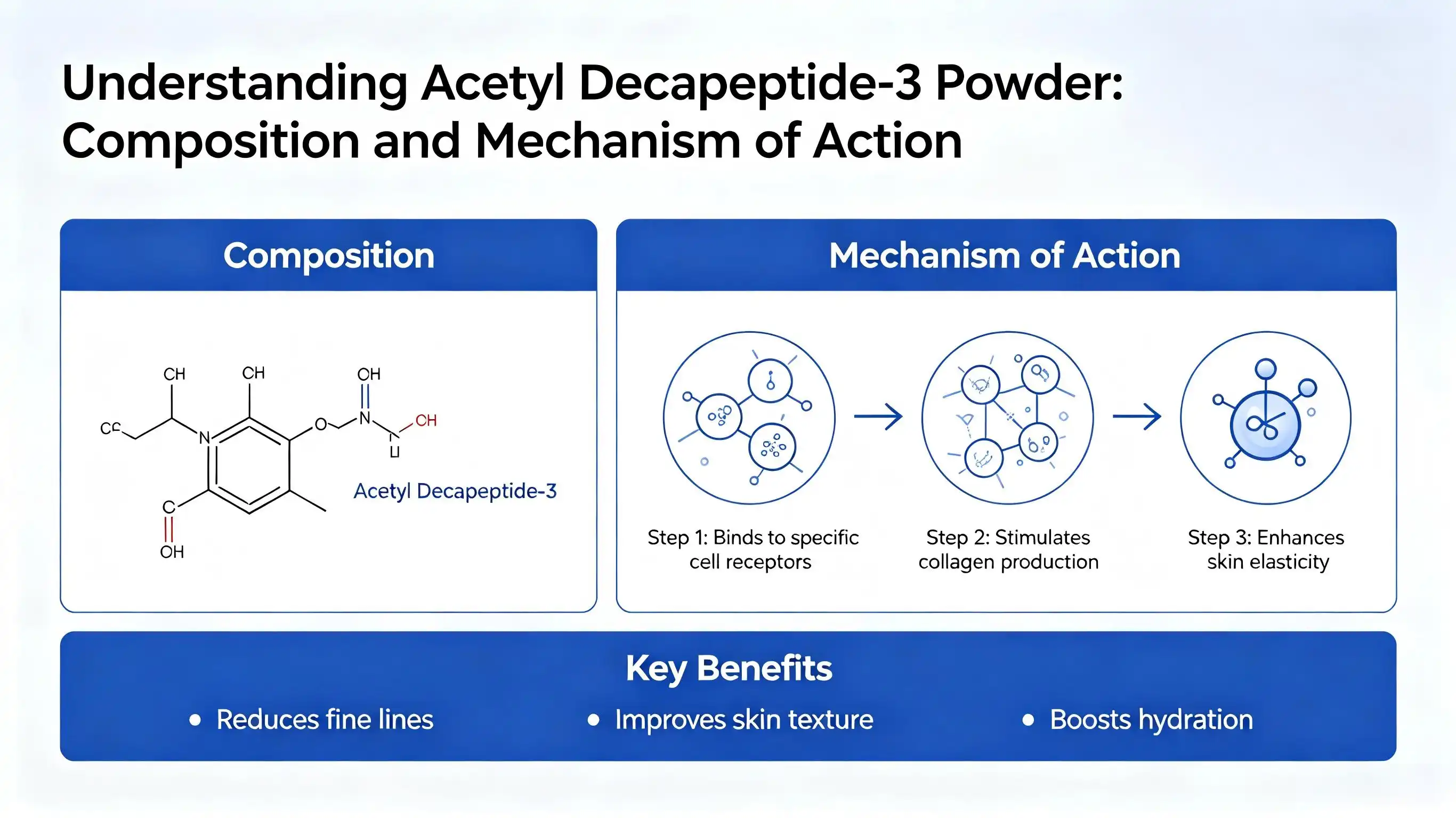
The mixture has beta-alanine sequences that are placed in a way that makes them look like natural growth factors without making the immune system react. Because it is biocompatible, it can be used in sensitive formulas where the risk of discomfort needs to be kept to a minimum. Decades of work on peptides in pharmaceutical engineering have helped us understand how these molecules interact with each other. These findings have now been successfully applied to skin problems.
Collagen Stimulation Through Receptor-Mediated Signaling
The peptide binds to transforming growth factor-beta (TGF-β) receptors on the membranes of fibroblast cells when it is put on the skin. When this receptor binds, it starts the SMAD protein pathway, which is a well-known intracellular signaling chain that controls the production of collagen genes. Within 48 to 72 hours of the first application, fibroblasts increase the transcription of procollagen mRNA. This finally leads to the formation of mature collagen fibers that change the shape of the dermis.
After 28 days of regular use, clinical histology studies show that collagen density improves and wrinkle depth decreases by 15% to 27%, based on the skin's health at the start and the concentration of the formulation. This performance-based proof is why research and development teams at pharmaceutical-grade beauty companies put this peptide at the top of their list for effective product lines that target skin problems related to getting older.
Extracellular Matrix Remodeling and Skin Firmness
Along with changing the production of collagen, this peptide also changes the extracellular matrix by changing the production of glycosaminoglycans, especially hyaluronic acid by keratinocytes and fibroblasts. Because it can hold up to 1000 times its molecular weight in water, hyaluronic acid makes a moist environment that helps collagen fibers line and cross-link properly. Skin firmness gets better when there are more structural proteins and more water in the skin. This is a key factor that is tested through cutometry in dermatology tests.
Comparing Acetyl Decapeptide-3 with Other Popular Peptides in the Market
Benchmarking Against Matrixyl and Copper Peptides
Matrixyl (Palmitoyl Pentapeptide-4) mostly works through matrikine signals to target the production of collagen and fibronectin, but it doesn't have any qualities that can help hair grow. Copper peptides (GHK-Cu) are great at treating wounds and fighting free radicals, but they can be hard to formulate because copper ions are unstable and cream bases can turn them brown. Acetyl Decapeptide-3 powder has more uses and can be mixed with other ingredients without these problems. This makes it a great choice for all-in-one anti-aging extracts.
Different types of peptides have very different stability patterns. The decapeptide can stay structurally intact in pH ranges of 5.0 to 7.5, which makes product development easier for chemists who work with complex ingredient matrices that contain multiple actives. Argireline (Acetyl Hexapeptide-8) needs a strict pH control below 7.0 to avoid hydrolysis.
Application Scope and Market Positioning
The decapeptide targets two separate B2B market segments: anti-wrinkle products for the face and rejuvenation products for the head to increase hair growth. This two-in-one feature lets brand makers make product lines that work well together by using the same active ingredients. This makes it easier to get raw materials and keep track of supplies. Competing peptides usually only work in one way, which limits their usefulness in all-around skin care methods.
Formulation experts in the field like how well it works with retinoids, niacinamide, and alpha-hydroxy acids, which are popular actives that can sometimes make sensitive peptides less stable. Because they work well together, scientists can make more creative serums that do more than one thing, like exfoliating, whitening, and anti-aging, without affecting the effectiveness of the peptides.
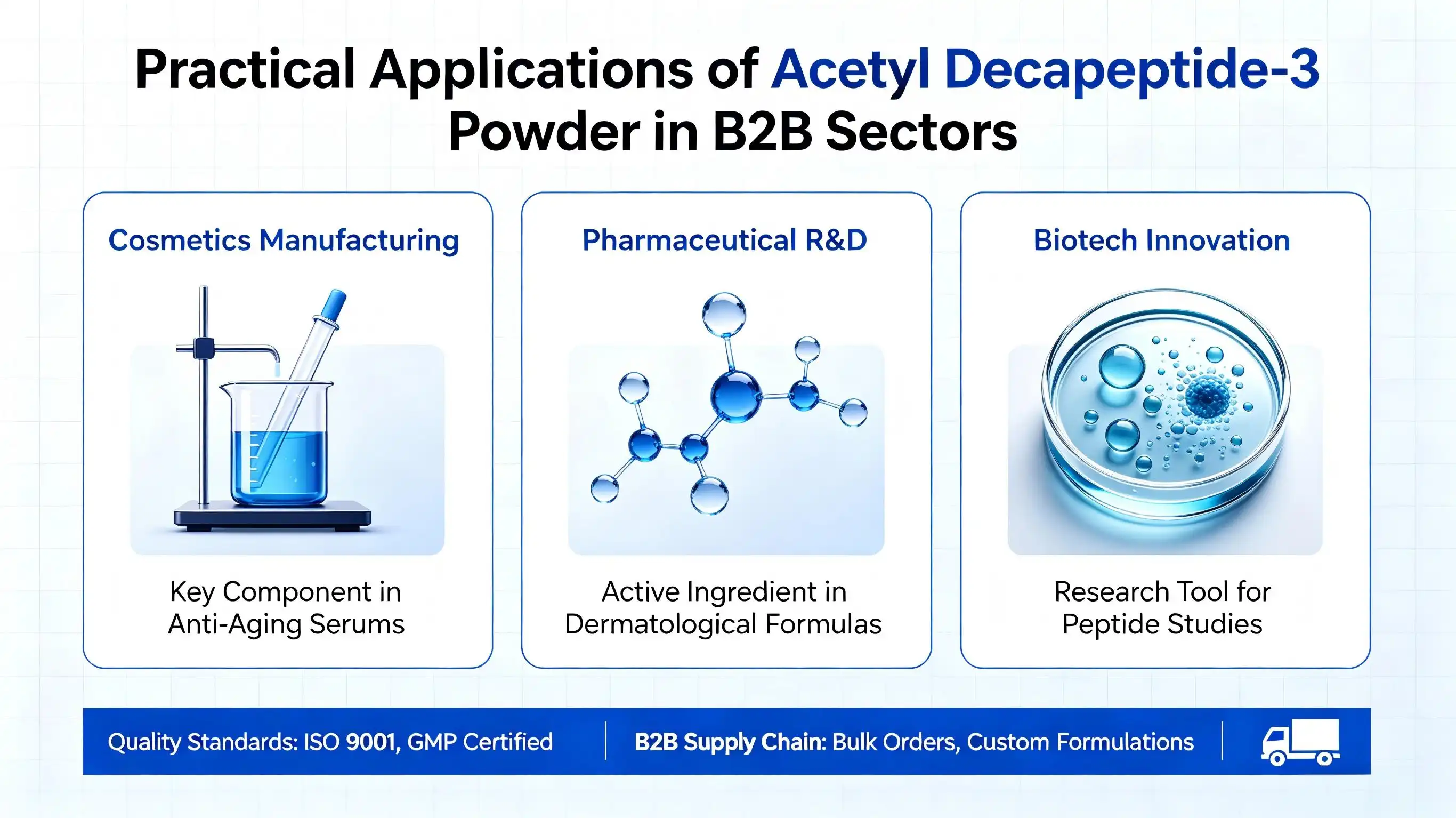
Practical Applications of Acetyl Decapeptide-3 Powder in B2B Sectors
Integration into High-Performance Skincare Formulations
Product makers usually add the peptide to aqueous phase formulas at levels between 2 and 5 percent. The Acetyl Decapeptide-3 powder form is more adaptable than pre-dissolved solutions because it lets you make exact changes to the concentration based on the results of clinical tests or your target market positioning. Pharmaceutical-grade peptide powders that are more than 98% pure (as shown by HPLC analysis) guarantee consistency from batch to batch, which is important for GMP-certified production settings.
During the formulation process, the peptide dissolves fully in room-temperature deionized water. This makes clear solutions that can be used in serum forms that are becoming more popular in Asian beauty markets. Because it has a neutral scent, heavy fragrances don't have to be used to cover it up. This is a big plus for clean beauty brands that focus on having short ingredient lists and being sensory transparent.
Haircare Applications and Scalp Health Solutions
This peptide is very good at driving dermal papilla cells in hair shafts, which is something it can be used for other than skin care. It helps OEM companies make hair growth serums and head treatments because it lengthens the anagen phase (growth phase) and strengthens the follicle attachment system at the same time. After 12 weeks of twice-daily use, clinical studies tracking changes in hair density show statistically significant improvements. This makes it a non-drug option to treatments based on minoxidil.
Successful commercial uses include leave-on scalp tonics, overnight hair masks, and professional salon treatment methods. The peptide works well with silicone- and sulfate-free formulations, which is great for today's consumers who want gentle, scalp-friendly haircare products that are backed by science instead of just marketing promises.
Regulatory Compliance and Documentation Requirements
Global B2B buyers who do business in a number of different legal areas need complete paperwork packages. Reputable peptide makers give full technical dossiers that include a Certificate of Analysis (CoA) that confirms the purity standards, Material Safety Data Sheets (MSDS) that explain how to handle the product, and allergen-free statements that are needed for EU cosmetic product safety reports. Pharmaceutical-grade providers keep full records of where their products come from, which is important for brands that want to place themselves in the luxury market or in medical-grade skincare categories.
Quality control is more than just paper records. According to the International Council for Harmonization (ICH) standards, serious producers test for stability and give information on shelf life under different storage circumstances. This knowledge is very helpful when formulating new products because it lets chemists guess how a product will work throughout its entire business lifecycle, from being made to being used by consumers.
Procurement Guide for Acetyl Decapeptide-3 Powder: What Global B2B Buyers Need to Know
Evaluating Supplier Credentials and Manufacturing Standards
Professional buying starts with a thorough check of the seller, focusing on manufacture licenses. Good Manufacturing Practice (GMP) certification means that work conditions are controlled and processes have been tested. ISO 9001 certification means that quality management is done in a planned way. When buying ingredients for markets controlled by the FDA, buyers should make sure that sellers have full documentation systems that meet the electronic record standards of 21 CFR Part 11.
Additionally, look into the supplier's research and development (R&D) skills. Companies that offer unique synthesis services and formulation help are more valuable than just suppliers of ingredients. Technical teams that know about the problems that come up in downstream applications can suggest the best particle sizes, give data on solubility across pH ranges, and suggest ingredient combinations that work well together based on studies that have already been done.
Understanding Pricing Structures and Minimum Order Quantities
The market price for highly pure peptide powders shows how hard it is to make. Prices usually range from $180 to $450 per kilogram, based on the size of the order and the purity requirements. Different providers have very different minimum order amounts. Buyers who are just doing research may only need 100-gram samples, but established brands that are changing the way their products are made need kilogram quantities to do stability testing and production scale-up for Acetyl Decapeptide-3 powder.
To get good terms, you need to know when the supplier's products will be made. Because peptide synthesis is done in batches, lead times range from 3 to 6 weeks for stock items to 8 to 12 weeks for special orders. When buyers are planning product launches, they should make sure that the dates of buying and marketing are aligned, and they should leave enough time in between to account for possible supply chain problems.
Quality Documentation and Sample Evaluation Protocols
Before making large purchases, make sure you have all the quality paperwork you need. Important papers include a certificate of analysis (COA) for each batch that shows HPLC purity testing, amino acid analysis to find out the peptide content, and microbe testing to make sure there are no harmful organisms (USP standards). Karl Fischer titration data that shows the amount of wetness helps formulators figure out the correct numbers of active ingredients when making finished goods.
Testing a sample for stability alone is not enough to judge it. Put peptide solutions in rapid stability studies that are heated to 40°C for 30 days. After that, test the purity again using HPLC to see if any breakdown has happened. This basic screening finds suppliers whose goods are actually stable and those who are making claims about shelf-life performance that can't be backed up.
Conclusion
The science processes that make this anti-wrinkle peptide work are much more complex than what is said in the ads. Because it has been shown to stimulate collagen, change the extracellular matrix, and help with both haircare and skin care, Acetyl Decapeptide-3 powder is strategically useful for companies that want to make products based on proof. To make a good purchase, you need to carefully evaluate suppliers by looking at their manufacturing qualifications, analytical documentation, and expert support skills that last the whole lifecycle of the product. When procurement managers, R&D teams, and business development workers understand these scientific and practical factors, they can make choices that combine effectiveness, legal compliance, and the ability to make money.
FAQ
Is the peptide safe for all skin types?
Based on clinical safety tests, the Acetyl Decapeptide-3 powder is well tolerated by all skin kinds, even sensitive skin. Studies using patch tests show that formulations made within recommended concentration ranges have a low chance of irritating skin. However, full testing of the end product is still needed because the safety of peptides can be affected by other chemicals, pH levels, and delivery methods in full formulations.
How long before visible results appear?
After 4 to 6 weeks of twice-daily use, controlled clinical studies usually see changes that can be measured in wrinkle depth and skin stiffness. As collagen remodeling goes through full production and maturation processes, the effects usually start to show up 8 to 12 weeks later. Results are different for each person because they have different skin types, ages, and use of other anti-aging products at the same time.
Can it be combined with other active ingredients?
The peptide works very well with many common ingredients used in skin care, like hyaluronic acid, vitamin C products, niacinamide, and light retinoids. When formulators mix peptides with strong acids (pH < 3.5) or high amounts of straight vitamin C (ascorbic acid), they should test for stability first, because peptides may not be stable for long periods of time when the pH is too low or too high.
Why Choose Xi'an Yihui's Acetyl Decapeptide-3 Powder: Trusted Quality Meets Performance
Xi'an Yihui Bio-technology is different from other companies that sell Acetyl Decapeptide-3 powder because we follow strict manufacturing standards for pharmaceuticals and offer full customer service. Our factory keeps its ISO, Halal, and Kosher certifications up to date, which makes sure that our goods meet the different rules and regulations in different foreign markets. We've worked with research institutions, cosmetics brands, and pharmaceutical companies for 13 years, so we know what B2B clients want in terms of technical accuracy and supply chain dependability.
Solid-phase peptide synthesis (SPPS) technology is used in our peptide production method. This ensures consistent purity levels above 98%, as confirmed by an independent HPLC study. Each production batch goes through strict quality control measures, such as identity proof using mass spectrometry, endotoxin tests below 0.25 EU/mg, and heavy metal screening to make sure it meets EP/USP pharmacopeia standards. This focus on analytical rigor helps clients who are trying to place themselves in the premium market, where the quality of the ingredients directly affects the image of the brand.
Besides making great products, we also offer full formulation support through our technical team, which has experience with both haircare and skin care uses. Our experts can help you with all stages of product development, from figuring out the best ratios for use to making sure they work with certain active ingredients to coming up with unique ways to package moisture-sensitive peptide powders. Low minimum order quantities make it possible for both new brands doing initial feasibility studies and well-known brands that need to consistently sell big volumes to markets in the US, Europe, Japan, and South Korea.
On-time delivery is important for work schedules, and reliable logistics planning makes sure of that. Our customer service team is always available to answer technical questions, speed up sample orders, and give real-time tracking of shipments. If you work with Xi'an Yihui as your peptide maker, you can get ingredients that have been tested by scientists and are backed by helpful technical support and clear quality documentation. Email sales@yihuipharm.com to get product details, talk about your manufacturing needs, and find out how our Acetyl Decapeptide-3 powder can help your anti-aging products stand out in the global market, which is very competitive.
References
1. Gorouhi, F., & Maibach, H.I. (2009). Role of topical peptides in preventing or treating aged skin. International Journal of Cosmetic Science, 31(5), 327-345.
2. Schagen, S.K. (2017). Topical Peptide Treatments with Effective Anti-Aging Results. Cosmetics, 4(2), 16-29.
3. Robinson, L.R., Fitzgerald, N.C., Doughty, D.G., Dawes, N.C., Berge, C.A., & Bissett, D.L. (2005). Topical palmitoyl pentapeptide provides improvement in photoaged human facial skin. International Journal of Cosmetic Science, 27(3), 155-160.
4. Katayama, K., Armendariz-Borunda, J., Raghow, R., Kang, A.H., & Seyer, J.M. (1993). A pentapeptide from type I procollagen promotes extracellular matrix production. Journal of Biological Chemistry, 268(14), 9941-9944.
5. Lupo, M.P., & Cole, A.L. (2007). Cosmeceutical peptides. Dermatologic Therapy, 20(5), 343-349.
6. Pickart, L., & Margolina, A. (2018). Regenerative and protective actions of the GHK-Cu peptide in the light of the new gene data. International Journal of Molecular Sciences, 19(7), 1987-2006.

Send Inquiry
Related Industry Knowledge