
How do you mix tirzepatide powder
To protect the molecular structure and therapeutic usefulness of this peptide, it must be mixed with great care and strict obedience to strict sterile practices. During the reconstitution process, lyophilized tirzepatide powder is mixed with bacteriostatic water under controlled conditions. The ratio of the two is usually estimated based on the dosage strength that is needed. To keep things clean, this process must be done in a sterile area using aseptic technique. The peptide must be broken up with gentle agitation, never strong shaking, so that its complex 39-amino acid structure is not damaged. When properly reconstituted, this molecule's dual GIP and GLP-1 receptor agonist action is kept, which is what makes it useful for treating metabolic disorders.
Understanding Tirzepatide Powder and Its Basics
If you are a buyer in the pharmaceutical or research industries, knowing the basic science behind this peptide makes it much easier to make decisions about where to get things. This substance is different from other single-pathway medicines because it works with two receptors. This gives it special medicinal benefits that affect both the market and the supply chain.
The Dual Agonist Mechanism Explained
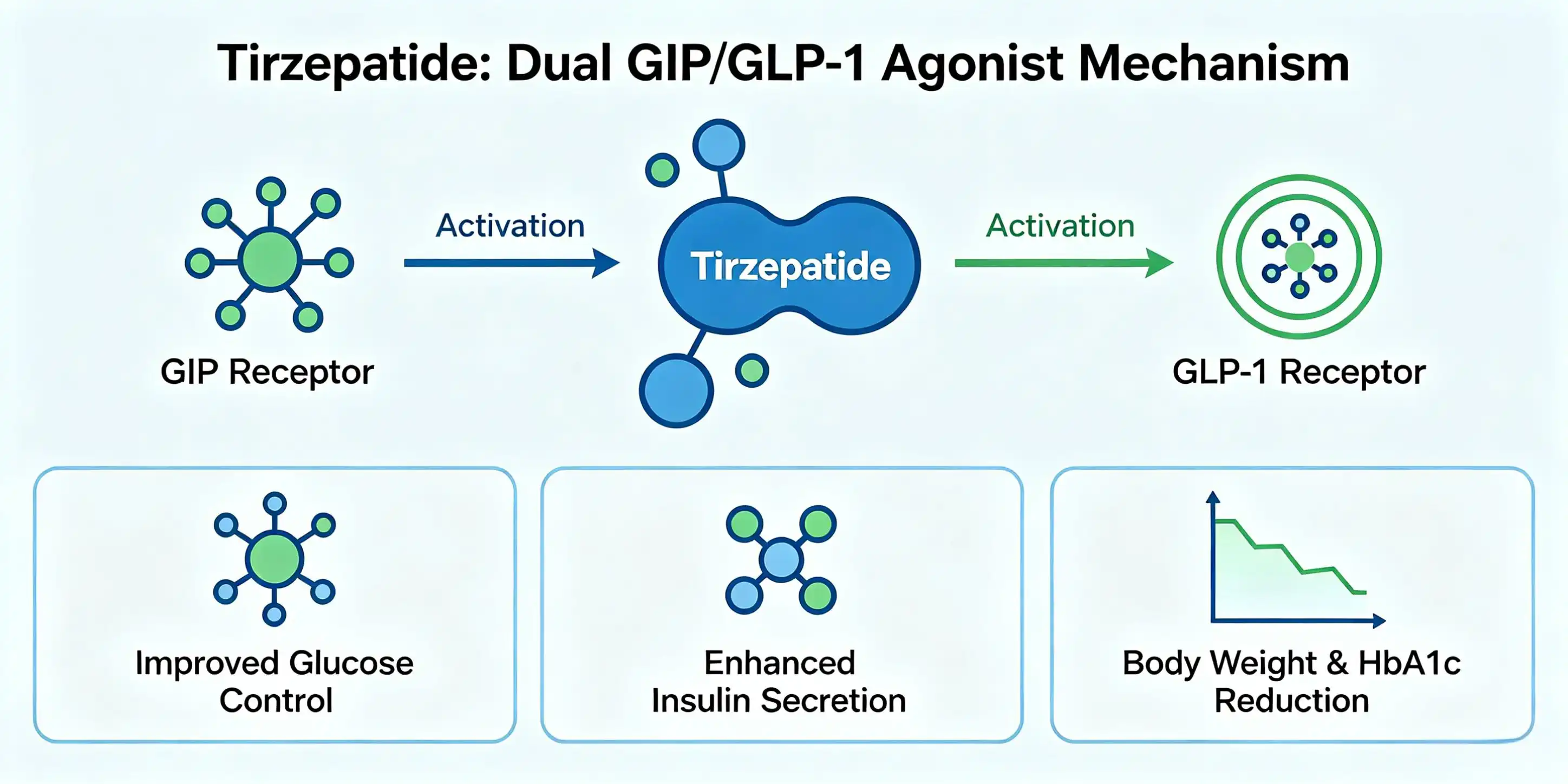
This artificial peptide turns on both glucose-dependent insulinotropic polypeptide (GIP) and glucagon-like peptide-1 (GLP-1) receptors at the same time, which has a physiological effect that works better when used together. Clinical data shows that this dual action improves glucose control compared to GLP-1 monotherapy. In phase 3 studies, patients lost an average of 15-20% of their body weight and their HbA1c levels dropped by up to 2.5%. This two-pathway method is a big change in how metabolic diseases are treated, and it makes the raw material more useful for formulation labs and CDMOs.
Critical Quality Parameters Before Reconstitution
Before starting any mixing procedure, procurement teams have to check certain quality marks. HPLC testing should show that the peptide is at least 98% pure, and a Certificate of Analysis should list any residual solvents, bacterial endotoxins (≤5 EU/mg), and heavy metals content. During its two-year shelf life, the lyophilized tirzepatide powder should stay stable as a white to off-white solid that hasn't changed color or clumped with moisture. It should be kept at -20°C. Knowing these basic factors helps keep downstream production honest and in line with regulations.
Regulatory Context for B2B Buyers
The peptide must be handled in a way that is strictly medicinal, especially for businesses that sell to FDA-regulated markets. Suppliers of raw materials must show proof that they follow good manufacturing practices (GMPs). This includes GMP compliance certificates, batch-specific COAs, and stability studies that show the peptide will stay intact under certain storage conditions. Before committing to large orders, purchasing managers should check the qualifications of suppliers, such as making sure they have an ISO9001 certification, and ask for samples to be checked by a third party. This is even more important now that the chemical is being used more and more in clinical settings, which means that regulators will be looking closely at it.
Step-by-Step Guide: How to Mix Tirzepatide Powder Safely and Effectively?
The process of rebuilding needs careful attention to the surroundings and the steps that need to be taken. If you don't mix things properly, peptides can clump together, bioactivity can drop, or microbes can get into the mixture, all of which are terrible for pharmaceutical manufacturing and study.
Preparing the Sterile Work Environment
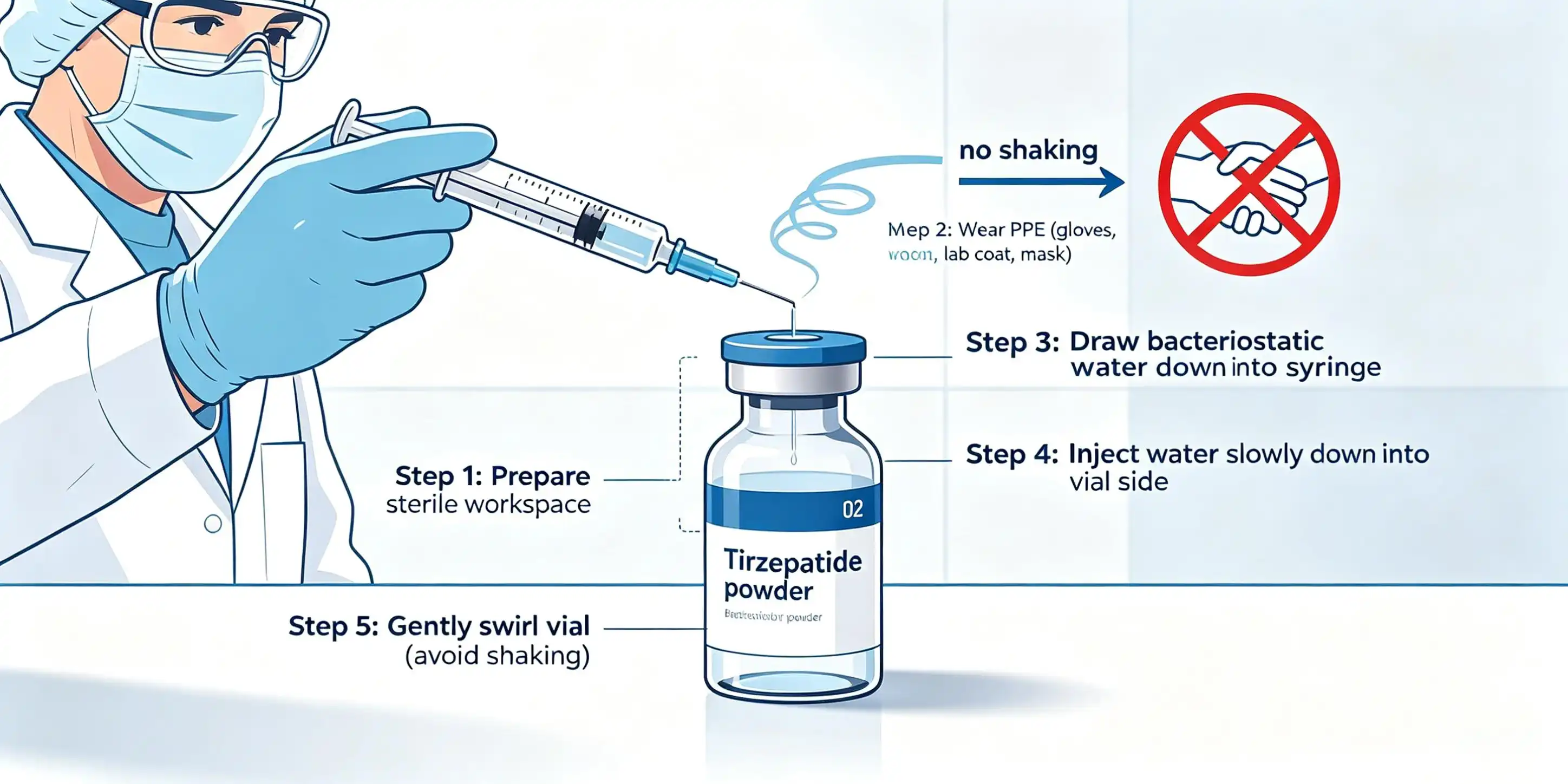
To keep particles and microbes from getting into the mixture, reconstitution must happen in an ISO Class 5 laminar flow hood or cleanroom environment. Personal safety equipment (PPE), such as clean gloves, lab coats, and face masks, should be worn before starting. All of the hood's sides should be cleaned with 70% isopropyl alcohol and then left to dry naturally. The tools needed are sterile vials, bacteriostatic water for injection (usually 0.9% benzyl alcohol), sterile syringes (1–5mL capacity depending on batch size), sterile needles (18–21 gauge for drawing and 25–27 gauge for reconstitution), and sterile vial adapters if you need to work with more than one unit.
The Reconstitution Process
The lyophilized tirzepatide powder bottle should be taken out of cold storage and left to warm up on its own for about 15 to 20 minutes. This stops humidity, which could bring in moisture too soon. Figure out how much bacteriostatic water you need based on the final concentration you want. Depending on the dosage, popular formulations run from 2.5mg/mL to 10mg/mL. Using aseptic methods, put the determined amount of bacteriostatic water into a clean needle. Slowly inject the water down the inside wall of the peptide bottle. Make sure the stream doesn't come into direct contact with the lyophilized cake, as this can make foam and denature the peptide.
Do not shake the bottle hard; instead, slowly spin it in circles until the powder turns into a clear, colorless to slightly yellow solution. Depending on the powder's mass and particle size, the dissolving process usually takes between 2-5 minutes. Check the restored solution against a white background in well-lit conditions to make sure it has completely dissolved without any particles, cloudiness, or color changes that can be seen. Any problems should be thrown away because they could mean that the batch is contaminated or breaking down.
Post-Mixing Storage and Stability
The peptide solution needs to be kept at 2-8°C in a pharmaceutical-grade fridge after it has been restored. If you make the solution with bacteriostatic water, it will stay stable for up to 28 days under these conditions. However, you should do stability tests that are specific to your recipe. Right away, write the date of reconstitution, the concentration, the batch number, and the expiry date on each bottle. For study purposes that need to store the solution frozen, divide it into portions that can only be used once. This way, the solution won't go through multiple freeze-thaw cycles that break down proteins in a way that can't be fixed. All reconstitution actions must be recorded, along with environmental tracking data and user names. This helps with GMP compliance and traceability standards.
Comparing Tirzepatide Powder with Other Diabetes Treatments: Insights for Informed Procurement
Procurement experts can figure out market trends, price changes, and strategic buying goals by looking at how competitors are positioned in the metabolic therapeutics environment. Not only does the comparison show differences in how they work in the lab, but it also shows how complicated the production process is, which affects supply chain issues.
Clinical Efficacy and Mechanism Differentiation
Another well-known GLP-1 receptor agonist, semaglutide, has great clinical results with normal weight losses of 12–15%. However, the dual agonist mechanism usually has better effects. Head-to-head clinical studies show that the highest dose of tirzepatide leads to a 21% weight loss, while the highest dose of semaglutide only leads to a 15% weight loss over the same amount of time. The extra stimulation of GIP receptors makes insulin work better and creates extra pathways that reduce hunger. This clinical superiority means that formulation companies working on next-generation obesity and diabetes products will want to buy more of them. This means that raw material sellers who can consistently deliver high-purity batches will have more chances to make sales.
Cost Structure and Procurement Economics
Prices for this tirzepatide powder raw materials usually run from $800-1,500 per gram, based on the size of the order, the purity requirements, and the supplier's reputation. When you buy in bulk for amounts over 100 grams, you can usually get price cuts of 20-30% and sure supply shares. Solid-phase peptide production of a 39-amino acid sequence with specific lipid changes makes it harder for new companies to get into the market, which keeps prices stable compared to simpler peptide structures. When comparing sources, purchasing managers should think about the total cost of ownership, which should include transportation for the cold chain, the need for stability tests, and any waste that might come from handling losses.
Market Trajectory and Supply Chain Implications
Approval in major countries and more label warnings are expected to drive demand growth that is exponential. Analysts in the field say that the global market will hit $25 billion by 2028, which will put pressure on the whole API supply chain. As capacity issues arise, long-term supply deals with certified manufacturers become more useful from a business point of view. Companies that work with more than one qualified seller reduce the risks that come with relying on a single source. They also keep their negotiating power when it comes to price and sharing goals during times when supplies are low.
Choosing the Right Tirzepatide Powder Supplier and Evaluating Quality
The choice of supplier is probably the most important buying decision that affects the quality of the product, compliance with regulations, and the continuation of the business. Because peptide production is so complicated and there are a lot of rules about diabetes and obesity medicines, they need to go through strict screening steps.
Essential Certifications and Compliance Documentation
Suppliers who are qualified must show that they follow GMP compliance standards by getting approvals from well-known organizations like the FDA, EMA, or similar regional officials. For European markets, ask for copies of recent inspection reports and Certificates of Suitability (CEP). An ISO9001 certification shows that the quality management system is mature. Other certifications, like ISO22000, HACCP, and food (Halal, Kosher), may be useful in some markets. To figure out how mature the supplier's operations are, look at more than just their certifications. Check out their change control methods, how they handle deviations, and quality agreement forms.
Analytical Testing and Quality Verification
There should be a lot of analytical data in each run. It's required that the Certificate of Analysis list the HPLC purity (≥98%), the amount of peptide content by amino acid analysis, the amount of water by Karl Fischer titration, the amount of residual solvents by gas chromatography, the amount of bacterial endotoxins by LAL assay, and the amount of heavy metals by ICP-MS. Ask for representative chromatograms and spectra instead of just summary numbers so that an outside expert can look them over. Set up quality control procedures for arriving materials that include mass spectrometry to confirm identity and at least one orthogonal purity method to check seller data before sending materials to manufacturing.
Procurement Specifics and Supply Chain Factors
Depending on the supplier, the minimum order quantity is usually between 10-50 grams. Smaller study amounts can be purchased at higher prices. Pharmaceutical-grade containers with the correct headspace, an inert atmosphere (nitrogen or gas), and tamper-evident seals should be used for packaging. Lead times from well-known suppliers are generally between 3-5 weeks for stock materials, but they can extend to 8-12 weeks for special synthesis or times of high demand. International shipping requires special cold chain management, which includes monitoring the temperature, the appropriate paperwork for dangerous goods (although tirzepatide powder typically does not meet the criteria for dangerous goods), and customs brokers familiar with handling pharmaceutical imports. Companies that maintain strategic inventory—usually enough for 3-6 months of usage at controlled temperatures—strike a balance between capital costs and supply chain security.
Best Practices and Troubleshooting When Mixing Tirzepatide Powder
During peptide synthesis, even lab workers with a lot of experience run into problems. Knowing the most common ways things go wrong and putting in place preventative controls helps keep results uniform and cuts down on expensive material loses.
Common Reconstitution Errors and Prevention
The most common mistake is using the wrong dilution ratio, which usually happens when people mix up milligrams of peptide and milliliters of liquid. Set up standard worksheets for reconstitution that have clearly stated steps for calculation and allow independent proof before moving forward. If you use the wrong liquids, like clean water without a preservative for multiple doses or buffers with the wrong pH, they can make the peptide less stable or help microbes grow. Strong shaking makes foam and shear forces that hurt the peptide's third structure, which lowers its bioactivity even if the solution looks clear. Protocols for training should stress slow, gentle spinning motions and being patient during breakdown.
Recognizing and Addressing Quality Issues
Visual inspection gives you instant feedback on quality. Cloudiness, particulate matter, or changes in color are all signs of problems that need to be looked into and will probably lead to batch rejection. If the cake structure doesn't dissolve all the way after 5 minutes of gentle mixing, it could mean that there were problems with the way it was made. When liquids are reconstituted, they should stay clear and white to slightly yellow. If foaming happens during reconstitution, leave the vial alone for 10 to 15 minutes. Foam usually goes away on its own, but continuous foam means the tirzepatide powder is broken and needs to be thrown away.
Changes in temperature during keeping show where things could go wrong. If a lyophilized peptide is kept at temperatures above -10°C for a long time, it may become less pure and have more breakdown products. When treatments are thawed after being frozen or heated above 8°C, they lose their effectiveness. Set up warning systems and constant temperature tracking for refrigeration units that store high-value peptide inventory.
Documentation and Traceability Systems
Full batch records help with following the rules and allow for finding the root cause of quality problems when they happen. Record information about environmental monitoring, such as particle counts from hoods and viable air samples, as well as information about operators' names and training, the state of equipment calibration, material lot numbers and expiration dates, and any changes from standard processes, along with reasons for them. Photographs of reconstituted solutions show that the results drawn by eye analysis are correct. When regulators do checks or customers ask about quality, these records are very helpful.
Conclusion
To properly reassemble this dual-receptor agonist peptide, you need scientific know-how, strict quality control, and environmental controls that extend throughout the buying and manufacturing process. When making sourcing plans, procurement experts must consider clinical effectiveness, cost structures, source trustworthiness, and regulatory compliance. As the market for this molecule grows and becomes more important for therapy, it creates both opportunities and challenges for the supply chain. To make the most of these, it's best to start working with qualified makers right away so that you can secure consistent pharmaceutical-grade material. By using the sterile mixing protocols, quality verification systems, and supplier evaluation frameworks described here, businesses can take advantage of the metabolic therapeutics market's growth while maintaining the integrity of their products and adhering to all necessary regulations for long-term success. This applies equally to sourcing tirzepatide powder, where proper handling and compliance are essential for optimal therapeutic outcomes.
FAQ
Q1: Can tirzepatide powder be reconstituted with normal saline instead of bacteriostatic water?
A: Normal saline can be used for one-dose uses right away, but it doesn't have the antibacterial preservative that is needed for bottles with multiple doses. Bacteriostatic water with 0.9% benzyl alcohol stops germs from growing, so a restored solution can stay stable for up to 28 days in the fridge. Researchers can use different buffers, like phosphate-buffered saline at pH 7.4, after proving that the peptides will stay stable in the given mixture through chemical testing.
Q2: How long does mixed tirzepatide remain stable at different temperatures?
A: When made with bacteriostatic water, reconstituted solutions stay stable for 28 days at 2-8°C. Keeping things at room temperature makes them much less stable; at 20-25°C, stability starts to drop within 48–72 hours. Freezing at -20°C or below keeps the effectiveness for a long time, but repeated freeze-thaw cycles cause aggregation, which can be prevented by separating the samples.
Q3: What safety protocols apply when handling bulk quantities for manufacturing?
A: For large-scale recovery, you need a cleanroom that is Grade B cleanroom and has Grade A laminar flow protection at the point where the chemicals are mixed. The staff has to go through health tracking programs and get certified in aseptic techniques. Monitoring the environment involves counting particles all the time, taking samples of microbes on a daily basis, and checking the difference pressure. Material Safety Data Sheets show that peptides are not very toxic in the short term, but normal handling measures keep people from becoming sensitized by touching or breathing in powder particles.
Partner with Xi'an Yihui for Pharmaceutical-Grade Tirzepatide Powder
You can trust Xi'an Yihui Bio-technology Co., Ltd. to be your trusted seller of tirzepatide powder. They make their products to pharmaceutical-grade standards and offer flexible B2B purchasing options. Our very pure peptide (≥98% by HPLC, CAS: 2023788-19-2) is used by drug companies, study centers, and preparation labs in over 100 countries in Europe, the United States, and Asia. With ISO9001, ISO22000, HACCP, Halal, and Kosher certifications, we ensure compliance with the most stringent international quality standards. Our ready stock in local warehouses allows for shipping times of 1-3 day, which supports just-in-time manufacturing plans. Our monthly supply capacity of 5000g also allows for growing production needs. You can email our skilled team at sales@yihuipharm.com to get full COA paperwork, regulatory support files, and custom pricing structures based on volume that fit your needs.
References
1. Frias, J.P., Davies, M.J., Rosenstock, J., et al. "Tirzepatide versus Semaglutide Once Weekly in Patients with Type 2 Diabetes." New England Journal of Medicine, 2021, 385:503-515.
2. Nauck, M.A., D'Alessio, D.A. "Tirzepatide, a Dual GIP/GLP-1 Receptor Co-agonist for the Treatment of Type 2 Diabetes with Unmatched Effectiveness Regrading Glycaemic Control and Body Weight Reduction." Cardiovascular Diabetology, 2022, 21:169.
3. Hartman, M.L., Sanyal, A.J., Loomba, R., et al. "Effects of Novel Dual GIP and GLP-1 Receptor Agonist Tirzepatide on Biomarkers of Nonalcoholic Steatohepatitis in Patients with Type 2 Diabetes." Diabetes Care, 2020, 43(6):1352-1355.
4. Wilson, J.M., Nikooienejad, A., Robins, D.A., et al. "The Dual Glucose-Dependent Insulinotropic Peptide and Glucagon-Like Peptide-1 Receptor Agonist, Tirzepatide, Improves Lipoprotein Biomarkers Associated with Insulin Resistance and Cardiovascular Risk." Diabetes, Obesity and Metabolism, 2020, 22(12):2451-2459.
5. Coskun, T., Sloop, K.W., Loghin, C., et al. "LY3298176, a Novel Dual GIP and GLP-1 Receptor Agonist for the Treatment of Type 2 Diabetes Mellitus: From Discovery to Clinical Proof of Concept." Molecular Metabolism, 2018, 18:3-14.
6. Rosenstock, J., Wysham, C., Frías, J.P., et al. "Efficacy and Safety of a Novel Dual GIP and GLP-1 Receptor Agonist Tirzepatide in Patients with Type 2 Diabetes (SURPASS-1): A Double-blind, Randomised, Phase 3 Trial." The Lancet, 2021, 398(10295):143-155.

Send Inquiry
Related Industry Knowledge
- Does tirzepatide give you energy
- How does Disulfiram API Work?
- What Is Abamectin Used For?
- Does Ginkgo Biloba Extract Help You Sleep?
- What Is Doxorubicin Hydrochloride Use For?
- Is Amlexanox Safe for Children to Use?
- What Is Atropine Sulphate For?
- What is the mechanism of action of 4-pba?
- What Is A Example Inhibitor?
- Is Sodium Selenite Safe For Humans?