
How do you administer carbetocin?
Carbetocin powder is administered as a single intravenous bolus injection immediately following delivery, typically after cesarean section under epidural or spinal anesthesia. The standard clinical dose is 100 micrograms (0.1 mg), delivered slowly over approximately one minute into a peripheral vein. This synthetic oxytocin analogue binds to uterine oxytocin receptors to induce sustained contractions, preventing postpartum hemorrhage more effectively than natural oxytocin due to its extended half-life and superior stability. Reconstitution must occur under sterile conditions using appropriate diluents before administration.
Understanding Carbetocin Powder and Its Clinical Use
The Molecular Foundation of Carbetocin's Superiority
Carbetocin powder works as a changed form of oxytocin. It was created by deamination at position 1 and replacing position 2 with O-methyltyrosine. By changing the structure, this makes a circular nonapeptide with the building blocks Tyr-Met-Leu-Gly-Asn-Glu-Asn-Cys-Pro-Leu-Gly-NH₂. These changes at the molecular level make it very hard for enzymes like peptidases and oxytocinases to break it down. These enzymes quickly break down natural oxytocin. As a result, the pharmacokinetic profile has a half-life of 40 minutes, compared to oxytocin's 4–10 minutes. This means that receptor occupancy lasts longer and uterine contractility lasts for 60–120 minutes after a single administration.
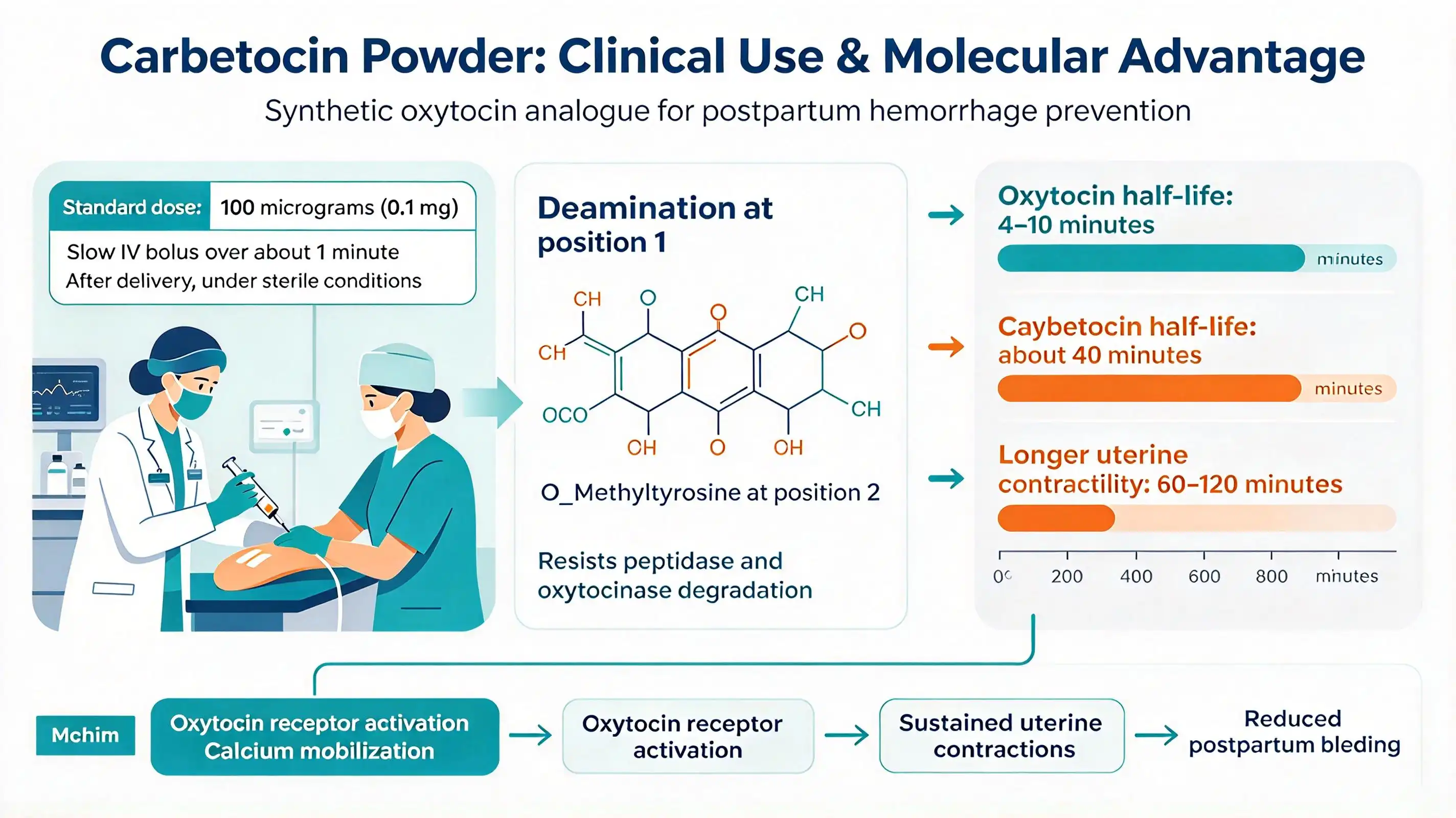
The peptide only binds to oxytocin receptors, which are widely spread in the smooth muscle myometrium of the uterus. When a receptor is activated, intracellular calcium mobilization starts the contractile machinery. This causes rhythmic contractions that squeeze spiral arteries and lower blood flow to the placental bed. This natural reaction stops uterine atony, which is the main cause of bleeding after giving birth. When compared to standard oxytocin protocols, clinical trials consistently show that giving Carbetocin powder lowers the need for extra uterotonic agents by about 50%.
Clinical Indications and Patient Selection
Healthcare professionals usually only use Carbetocin powder to stop bleeding after a planned cesarean birth with regional anesthesia. The specificity of this indication comes from the groups of people who took part in clinical trials and where safety and effectiveness data are the strongest. Some things that make it not a good idea are known hypersensitivity to the peptide or its ingredients, high blood pressure during pregnancy, eclampsia, and heart disease.
It is important to carefully weigh the risks and benefits of each patient, especially those who have problems with their kidneys or liver that could affect how well drugs are cleared from their bodies. Knowing these factors helps procurement teams guess how the product will be used and how much of it will be needed in different clinical situations.
Pharmacological Advantages for Research Applications
In addition to its use in clinical obstetrics, Carbetocin powder is a very useful tool for studying the physiology of the uterus, the pharmacology of oxytocin receptors, and the development of peptide drugs. Because it stays stabler under test settings, it's perfect for long lab routines where natural oxytocin would break down. Carbetocin powder works consistently in many experimental cycles, which helps researchers who are studying reproductive health mechanisms, maternal-fetal medicine, and peptide synthesis methodologies. Universities, pharmaceutical R&D departments, and CROs that need high-purity peptides with verified specifications are the ones who make the demand.
How to Prepare Carbetocin Powder for Injection
Reconstitution Protocol and Solvent Selection
To properly reconstitute Carbetocin powder, you must first check its specs, which include its assay (usually 99%), purity by HPLC (≥98%), and look as a white to off-white powder. As the diluent, you can use pharmaceutical-grade clean water for injection or common saltwater (0.9% sodium chloride). The whole process of reconstitution needs to be done in an aseptic way. To lower the risk of microbial exposure, people who work in pharmacies should use a laminar flow hood or a biological safety box.
A final concentration of 100 micrograms per milliliter is usually achieved in the standard preparation by adding the estimated amount of diluent to the vial holding the Carbetocin powder. Instead of vigorous shaking, gentle swirling makes sure that everything dissolves while keeping the integrity of the peptides. A visual check shows that the solution is clear and colorless, with no particles or changes in color that would suggest degradation or contamination. If the preparation doesn't look the way it was supposed to, it should be thrown away and possible quality problems should be discussed with the provider of the raw materials.
Critical Storage Parameters
Carbetocin powder needs to be kept at -20°C and away from light, which breaks down peptide bonds more quickly, before it can be mixed with other substances. Under the right conditions, this temperature control keeps the 2-year shelf life. When the solution is reconstituted, it is much less stable than before. Most rules say that the food should be used right away or within 24 hours if it is kept at 2°C to 8°C in the fridge. Long-term storing allows germs to grow and chemicals to break down, which lowers the safety and effectiveness of the product.
When managing Carbetocin powder supply lines, procurement managers must make sure that the cold chain stays intact throughout distribution. Changes in temperature during shipping can damage the structure of peptides in a way that can't be fixed. This means that the product is no longer therapeutically effective, even though it meets the criteria for visual inspection. Working with shipping partners who know how to handle the cold chain for pharmaceuticals will protect your investment and make sure that clinical teams get materials that meet all of the requirements for full strength.
Quality Control and Documentation
Each batch of reconstituted Carbetocin powder should go through documentation standards that help with tracking and following the rules. An audit trail is needed for quality assurance programs, and it is made by writing down the lot number, the date and time of reconstitution, the operator's names, and the end date. For review preparedness, hospital pharmacies that are accredited by the Joint Commission or follow FDA Good Manufacturing Practice guidelines need these records.
During production, quality control measures are used, such as high-performance liquid chromatography verification, mass spectrometry proof, and impurity analysis. Reliable suppliers give out Certificates of Analysis that list these parameters along with the results of heavy metal screening and moisture content analysis. This detailed paperwork helps QA/RA managers meet their legal responsibilities and promotes openness in the supply chain, which boosts trust among stakeholders.
Detailed Administration Guidelines for Carbetocin Powder
Intravenous Administration Technique
Carbetocin powder should be given through a slow intravenous bolus dose over 60 seconds right after giving birth to a baby, or better yet, after giving birth to the placenta. This time makes the most of the uterus receptors while limiting the drug exposure to the fetus. Before starting the procedure, doctors should make sure they have a safe way to connect an IV. Usually, they use a peripheral vein in the hand or forearm for this. The 100-microgram dose is put into a clean syringe, air bubbles are pushed out, and the injection is done at a steady pace to avoid sudden changes in the blood flow.
Because of rapid effects on vascular smooth muscle, a quick dose can cause cardiovascular side effects like low blood pressure, fast heart rate, and flushing. The planned one-minute administration window gives the body time to adjust and lowers the risk of adverse events. When it's hard to get to an IV, an alternative method of administration through the muscles is sometimes used. This method has a slightly slower onset and lower bioavailability than direct venous delivery.
Monitoring and Adverse Reaction Management
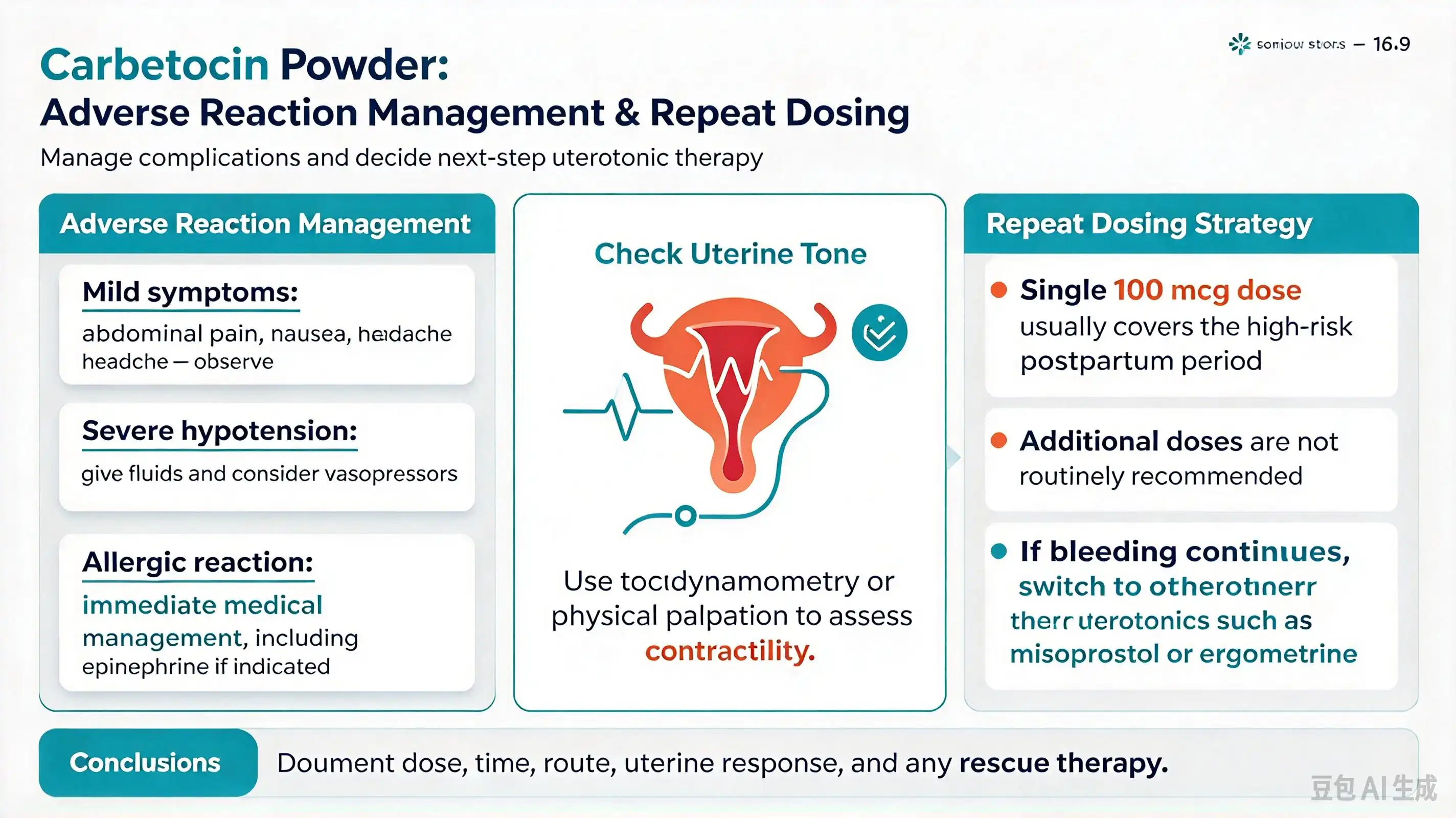
After giving Carbetocin powder, keeping an eye on vital signs like blood pressure, heart rate, and oxygen levels makes it possible to find bad responses early. Some common side effects are stomach pain, feeling sick, and headaches, which are usually mild and go away on their own. More dangerous reactions, like severe low blood pressure, bronchospasm, or allergic reactions, need to be treated right away with fluids, vasopressors, or epinephrine, as determined by the doctor.
Tocodynamometry or physical palpation of the uterus to check for contractility shows that the treatment is working. If the uterine tone isn't good enough after Carbetocin powder is given, you may need more uterotonic drugs like misoprostol or ergometrine. This happens less often than with normal oxytocin procedures, though. Recording the time, dose, route, and response of the mother helps doctors make decisions and protects them in court.
Dosing Frequency and Repeat Administration
Carbetocin powder is different from oxytocin because it works for a longer time. This means that most of the time, there is no need for ongoing infusion or repeated doses. One 100-microgram dose of uterotonic covers the first few hours after giving birth, which are the most dangerous for bleeding. Compared to multi-dose oxytocin regimens that need infusion pump management, this pharmacological profile makes nursing routines easier, lowers the risk of medication mistakes, and lightens the workload of pharmacists who prepare medications.
Dosing more than once may be necessary in some clinical situations, but there isn't much evidence to back this approach yet. If the bleeding after giving birth doesn't stop after the first dose of Carbetocin powder, doctors usually switch to other uterotonics that work in different ways instead of giving more Carbetocin powder. This method takes into account both the fact that the receptors have already been occupied for a long time and the need to use additional therapeutic approaches for cases that don't respond to one treatment.
Comparing Carbetocin Powder with Alternative Uterotonics
Efficacy and Duration of Action
Head-to-head clinical trials that compare Carbetocin powder and oxytocin regularly show that they are not worse at preventing primary bleeding. In fact, some studies suggest that Carbetocin powder is better at lowering the need for additional uterotonic interventions. The main thing that sets them apart is not the peak contractile force but how long the effect lasts. Oxytocin causes quick, strong contractions that go away in 20 to 30 minutes, so it needs to be infused continuously to keep beneficial amounts. Carbetocin powder's long-lasting effects keep the uterus in good shape for one to two hours after a single dose, which is the same amount of time when bleeding is most likely to happen without the need for infusion management.
Misoprostol is an alternative uterotonic that is better because it doesn't change when heated and can be taken by mouth, vaginal, or sublingually, so there's no need for a shot. Misoprostol, on the other hand, has a less expected effect on the uterus, causes more fevers and shivering, and is not approved for regular use as a preventative measure in many places. Carbetocin powder is still the best agent when there is infrastructure for giving injection medications and cold chain store space.
Stability and Handling Logistics
Healthcare systems that work in places with few resources or that are far away have to make very important decisions about what to buy based on their storage needs. Oxytocin is notoriously sensitive to heat. It breaks down quickly at temperatures above 25°C, which makes it useless in tropical climates where it isn't always cool. When researchers look at oxytocin samples from healthcare facilities with few resources, they often find weak versions that don't meet pharmacopeial standards because the temperatures have changed while they were being stored.
Carbetocin powder is more stable over a wider temperature range, but it still needs to be kept in the fridge for the longest shelf life. Being able to handle short changes in temperature during transport is helpful for distribution networks that serve facilities that are spread out geographically. This better stability means less product waste, fewer stock-outs, and more reliable therapy, all of which have a direct effect on maternal safety results.
Cost Considerations and Value Analysis
Carbetocin powder costs more per dose than oxytocin by a factor of three to five, which gives the idea that the economics are not good. A full value study shows a more complex picture. Higher drug costs are balanced by the fact that nurses don't have to use infusion pumps, administration sets, or their own time to keep an eye on patients all the time. When primary prevention works, there is less need for extra uterotonic agents, which makes the cost-effectiveness profile even better. When you look at the total amount of resources used instead of just the cost of drugs, economic models from developed healthcare systems usually show that there are no costs or small savings.
When purchasing managers think about using Carbetocin powder, they should do institution-specific budget effect studies that take into account local labor costs, hemorrhage intervention costs, and the current failure rates of oxytocin. The business case is stronger in places with high nursing costs, a lot of hemorrhage complications, or a lot of cesarean deliveries, where streamlining operations can make things run more smoothly. Because of these things, Carbetocin powder is very appealing to hospitals that want to improve the quality of care for mothers while keeping costs down.
Procurement and Supplier Guidance for Carbetocin Powder
Regulatory Compliance and Certification Standards
Carbetocin powder can only be sourced from manufacturers who have strong quality control systems and follow all the rules. The basic quality standard is certification of Good Manufacturing Practice from regulatory bodies like the FDA, EMA, or WHO. These certificates show that factories have the right environmental controls, tested analytical methods, written standard operating procedures, and thorough quality assurance programs that make sure stability from batch to batch.
More licenses, like ISO 9001 for quality management systems and ISO 13485 for medical products when they apply, and registrations specific to the region, like REACH compliance for European markets, make suppliers look more trustworthy. Procurement teams should ask for and check current copies of these certificates, making sure to look at the end dates and scope of certification to make sure they cover the production of Carbetocin powder. As part of standard approval methods, reputable providers give this information in a clear way.
When a maker registers their Drug Master File with the right regulatory bodies, it shows that they are committed to being open and working with regulators. When regulatory reviewers look at drug applications, they look at the DMF paperwork, which has information about the manufacturing processes, analytical methods, stable data, and impurity profiles. DMFs are kept secret between the manufacturer and the regulatory authority, but the fact that they exist shows that a lot of money has been put into building up good infrastructure, which is what sets professional pharmaceutical manufacturers apart from chemical suppliers who just make chemicals.
Supplier Selection Criteria for B2B Procurement
In addition to regulatory credentials, there are a number of useful factors that affect the choice of a seller. Minimum order quantities make it much harder to change your mind about what you want to buy, especially for study schools and smaller healthcare facilities that don't use a lot of goods. Carbetocin powder is one such product where flexible supply options are particularly valuable, and manufacturers with 1-gram minimum orders, like the ones listed (available in 1g/bag, 100g/bag, and 1kg/bag sizes), can meet a wide range of customer needs, from early-stage study to large-scale production.
Supply chain robustness is directly affected by lead times and the amount of material that is available. Suppliers who keep stock on hand and can ship right away keep hospital operations and study timelines from getting thrown off. This is very important for businesses that use "just-in-time" inventory models or have to deal with sudden rises in demand during public health situations or changes in yearly delivery volume.
The ability to provide technical help sets exceptional sellers apart from transactional vendors. Companies with their own research and development departments can help with formulation, troubleshooting, and custom synthesis for changed peptide sequences needed by specific research protocols. This consultative partnership approach adds value beyond the physical product by helping with innovation projects and cutting down on the time it takes for companies to develop peptide drugs.
International Trade and Documentation Requirements
Getting Carbetocin powder across international borders means figuring out the complicated rules that govern pharmaceutical imports. It usually takes a few weeks to a few months to process export licenses from the country of origin and import permits from the country of destination. This process goes faster if you work with suppliers who have experience trading pharmaceuticals internationally because they already have relationships with regulatory authorities and know what paperwork is needed.
To get a package through customs, it needs to have a Certificate of Analysis, a Material Safety Data Sheet, and proof of cleanliness. Temperature-controlled shipping with data loggers that show constant cold chain maintenance during travel is proof of proper handling. These records are very important if there are questions about the quality of the product or if regulatory inspections look at how the product was bought.
The paperwork includes Harmonized System codes for correct tariff classification, business bills that show the true value of the transaction, and statements that the goods are in line with international chemical control agreements. Logistics partners with a lot of experience in managing the cold chain for pharmaceuticals take care of all of these details so that procurement teams can focus on managing relationships with suppliers and strategic sourcing projects instead of small administrative tasks.
Conclusion
Healthcare workers, supply managers, and research and development teams working to improve maternal health results need to know how to give Carbetocin powder. Traditional uterotonic drugs have some major problems that the synthetic oxytocin equivalent fixes. It is more stable, works for longer, and is easier to dose. The right reconstitution methods, precise administration timing, and thorough quality documentation are needed to make sure that the therapy works and that the regulations are followed.
When you compare Carbetocin powder to other drugs, you can see that it has clear benefits in some clinical situations. Smart procurement strategies combine cost concerns with the overall value provided. As preventing postpartum bleeding becomes more important around the world, Carbetocin powder is seen as a medicinal tool that can help turn new drugs into useful medicines by using them in a way that is supported by proof.
FAQ
Can carbetocin replace oxytocin in all clinical situations?
Carbetocin powder is especially helpful for stopping postpartum bleeding after a cesarean section under regional anesthesia, which is where the clinical evidence is strongest. It might not fully replace oxytocin for accelerating labor or other maternal uses where constant infusion and dose adjustments are better. When making clinical protocols, institutions should think about their patients' needs and the evidence-based indications they use.
How should reconstituted carbetocin be stored if not used immediately?
When kept in the fridge at 2–8°C and away from light, reconstituted solutions stay stable for up to 24 hours. Long-term keeping is not advised because there is a higher chance of degradation and microbial contamination. To improve therapeutic dependability, pharmacy offices should set up procedures that cut down on the time between reconstitution and delivery.
What documentation should accompany carbetocin powder shipments for quality assurance?
Certificates of Analysis with HPLC purity verification, mass spectrometry proof, peptide sequence validation, heavy metal screening results, microbe testing, and moisture content analysis are all part of the full set of paperwork. Temperature records from shipping show that the cold chain is being maintained. Regulatory certificates (GMP, ISO) and batch-specific stability data round out the quality package that helps with compliance and tracking.
Partner with Xi'an Yihui for Premium Carbetocin Powder Supply
Carbetocin powder made by Xi'an Yihui Bio-technology Co., Ltd. is of the highest quality and is delivered to study centers, drug companies, and healthcare wholesalers all over the world with a purity level of 98% or higher by HPLC. Our Carbetocin powder (CAS 37025-55-1, chemical formula C₄₅H₆₉N₁₁O₁₂S) meets the highest quality standards. It has 99% assay confirmation, full paperwork showing regulatory compliance, and a full impurity profiling. We offer flexible packaging options for 1g research orders up to 1 kg bulk orders, we can ship right away from our stock, and we have 13 years of experience serving customers in more than 100 countries.
This gives your operations the supply chain reliability they need. Our ISO, Halal, and Kosher certifications show that we are dedicated to quality, and our professional technical team is available 24 hours a day, seven days a week to answer questions about formulation and meet unique synthesis needs. Get in touch with our team at sales@yihuipharm.com to talk about your specific Carbetocin powder needs and find out how our low prices, guaranteed purity, and smooth international shipping can help your pharmaceutical supply chain right now.
References
1. Su LL, Chong YS, Samuel M. Oxytocin agonists for preventing postpartum haemorrhage. Cochrane Database of Systematic Reviews, 2012; 2: CD005457.
2. Widmer M, Piaggio G, Nguyen TMH, et al. Heat-stable carbetocin versus oxytocin to prevent hemorrhage after vaginal birth. New England Journal of Medicine, 2018; 379(8): 743-752.
3. Sweeney G, Holbrook AM, Levine M, et al. Pharmacokinetics of carbetocin, a long-acting oxytocin analogue, in nonpregnant women. Current Therapeutic Research, 1990; 47(3): 528-540.
4. World Health Organization. WHO recommendations for the prevention and treatment of postpartum haemorrhage. Geneva: World Health Organization, 2012.
5. Dansereau J, Joshi AK, Helewa ME, et al. Double-blind comparison of carbetocin versus oxytocin in prevention of uterine atony after cesarean section. American Journal of Obstetrics and Gynecology, 1999; 180(3): 670-676.
6. Leung SW, Ng PS, Wong WY, Cheung TH. A randomised trial of carbetocin versus syntometrine in the management of the third stage of labour. BJOG: An International Journal of Obstetrics and Gynaecology, 2006; 113(12): 1459-1464.

Send Inquiry
You may like
Related Industry Knowledge