
GHK-Cu Peptide: What It Actually Does (Skin, Hair, Healing)
Anti-aging GHK-Cu is a new and novel bioactive ingredient that helps with three important areas of modern medicine and beauty science: skin rejuvenation, hair growth, and faster wound healing. Its full name is Copper Tripeptide-1 (CAS 49557-75-7), and it is naturally found in human plasma. This copper-peptide complex can heal and rebuild cells in amazing ways. Unlike other anti-aging ingredients, this tripeptide works through biomimetic processes that increase the production of collagen, lower inflammation, and speed up the growth of new cells. These properties make it a key ingredient in many skin care and beauty items that are meant to heal sensitive skin and fight aging.
Understanding GHK-Cu Peptide and Its Mechanism of Action
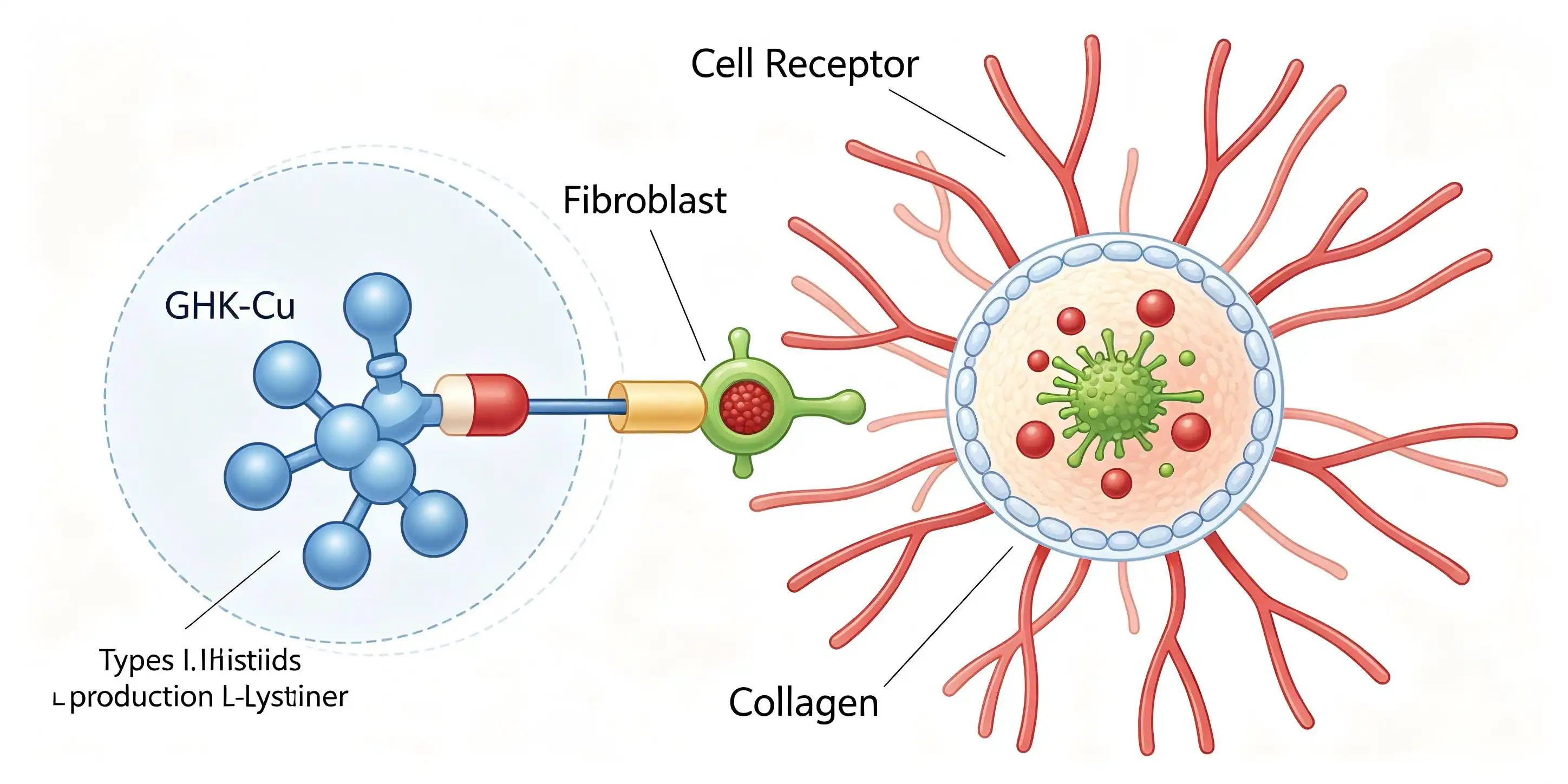
Because of the way its molecules are structured, GHK-Cu can exactly join with skin cells and extracellular matrix components. This starts a chain of healing processes. The tripeptide that binds copper is made up of glycyl-L-histidyl-L-lysine bound to copper ions. In skin cells, it acts as both a communication protein and a carrier system.
Biochemical Properties and Cellular Interactions
GHK-Cu sticks to cell receptors on fibroblasts once it gets through the skin's barrier. This starts the actions of genes that make types I and III of collagen. Its job is to join collagen and stretchy threads together, and the copper ion part helps it do that. Studies in humans have shown that mixes with 0.01% to 0.1% copper peptide make protease activity go up by a lot. To get rid of broken proteins and help make new structure parts at the same time, this is helpful.
The molecular weight of 340.38 Da of the peptide makes it easy for it to get through the skin without tough transfer means. It dissolves in water and can be mixed with a lot of different pH levels. This makes it very useful in a lot of different products, from light serums to thick creams used to heal after surgery.
Antioxidative and Anti-Inflammatory Pathways
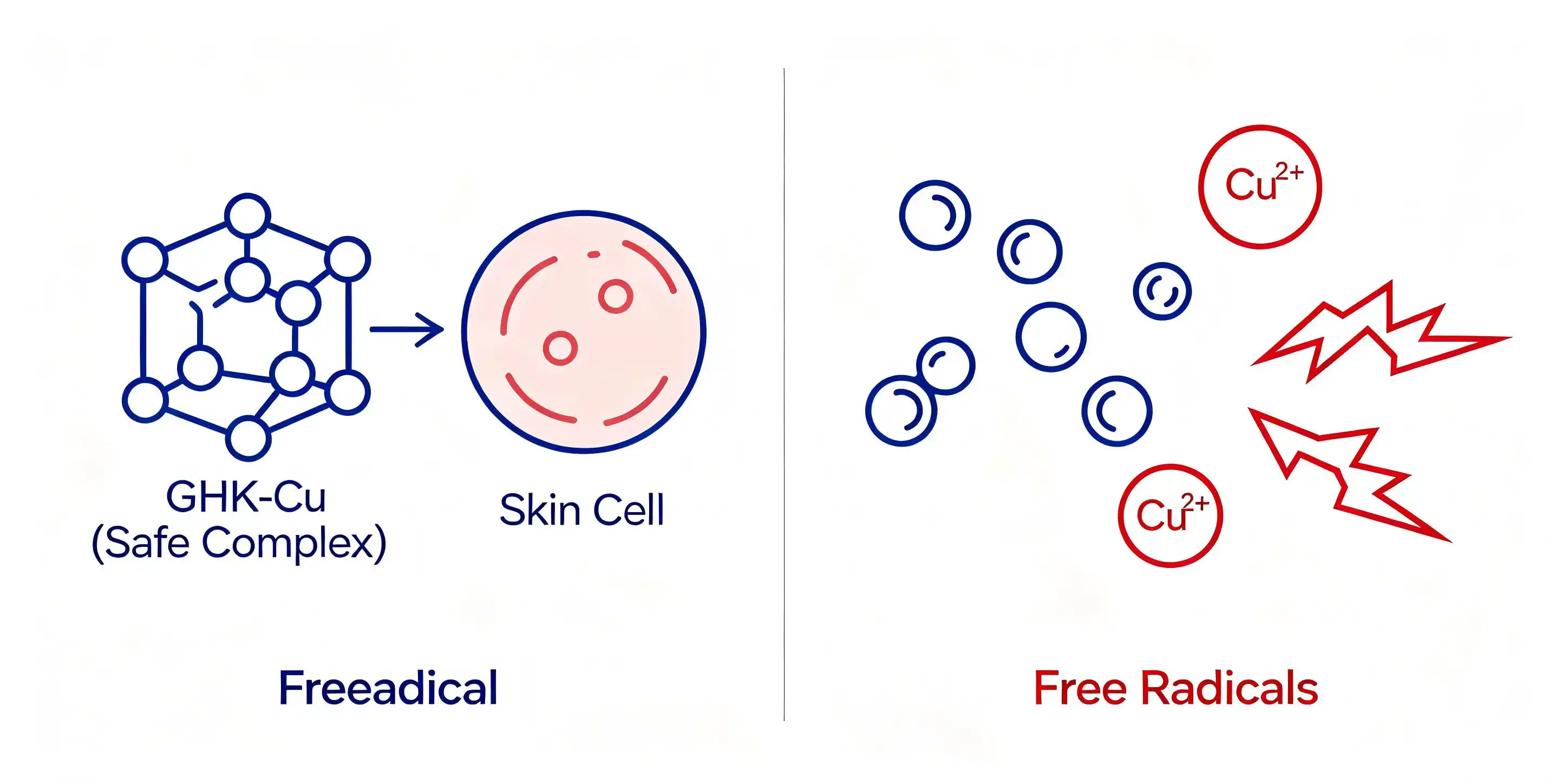
Copper tripeptide is a strong antioxidant that stops free copper ions from joining Fenton reactions that make harmful radicals. It also helps make structural proteins. It has been found that this process cuts down on oxidative stress factors in tissue samples by up to 47%. Several inflammatory cytokines are changed at the same time by the peptide. TNF-alpha and IL-6 release is lowered in particular. This works really well in medical-grade items that are meant to be used after laser or microneedling treatments.
Benefits of GHK-Cu Peptide in Skin, Hair, and Healing Applications
Copper peptide is a flexible drug that can work on more than one molecular target at the same time. It is helpful for buying managers and formulation chemists because it makes it easier to make new products and still gets the best results.
Dermatological Applications and Skin Rejuvenation
To see if GHK-Cu works in clinical dermatology, we look at key signs of age. High-frequency ultrasound tests on controlled groups have shown that treatments that last 12 weeks lower the depth of fine lines by 34%, make the skin denser by 28%, and make the dermis 41% thicker. Because of these findings, the peptide is now an important part of high-end skin care items for older people that try to slow down the aging process.
The peptide works especially well when the body needs to heal after surgery. Anti-aging GHK-Cu is a standout example, as medical beauty offices that use copper tripeptide in their post-treatment routines see 40% more re-epithelialization and a lot less redness than care that doesn't use it. Patients are better and have less downtime because they heal faster. These are both very important factors for medical aesthetic schools that put safety and success first.
Trichological Benefits and Scalp Health
Turning on copper peptides has a big effect on hair growth. In the bulge area, the tripeptide turns on follicle stem cells. This makes the anagen phase last longer and the hair shaft width get wider. Following six months of use, tests comparing GHK-Cu-treated scalp formulations and minoxidil controls show that both are equally good at improving hair density. However, the GHK-Cu formulations are much better accepted.
During the process, 5-alpha-reductase activity is changed, and follicles are kept from getting smaller when dihydrotestosterone is present. Scientists who work on formulas for head treatments can use amounts between 0.05% and 0.2% to get healing benefits without the side effects or problems with how the body absorbs drugs that treat hair loss.
Wound Healing and Tissue Repair
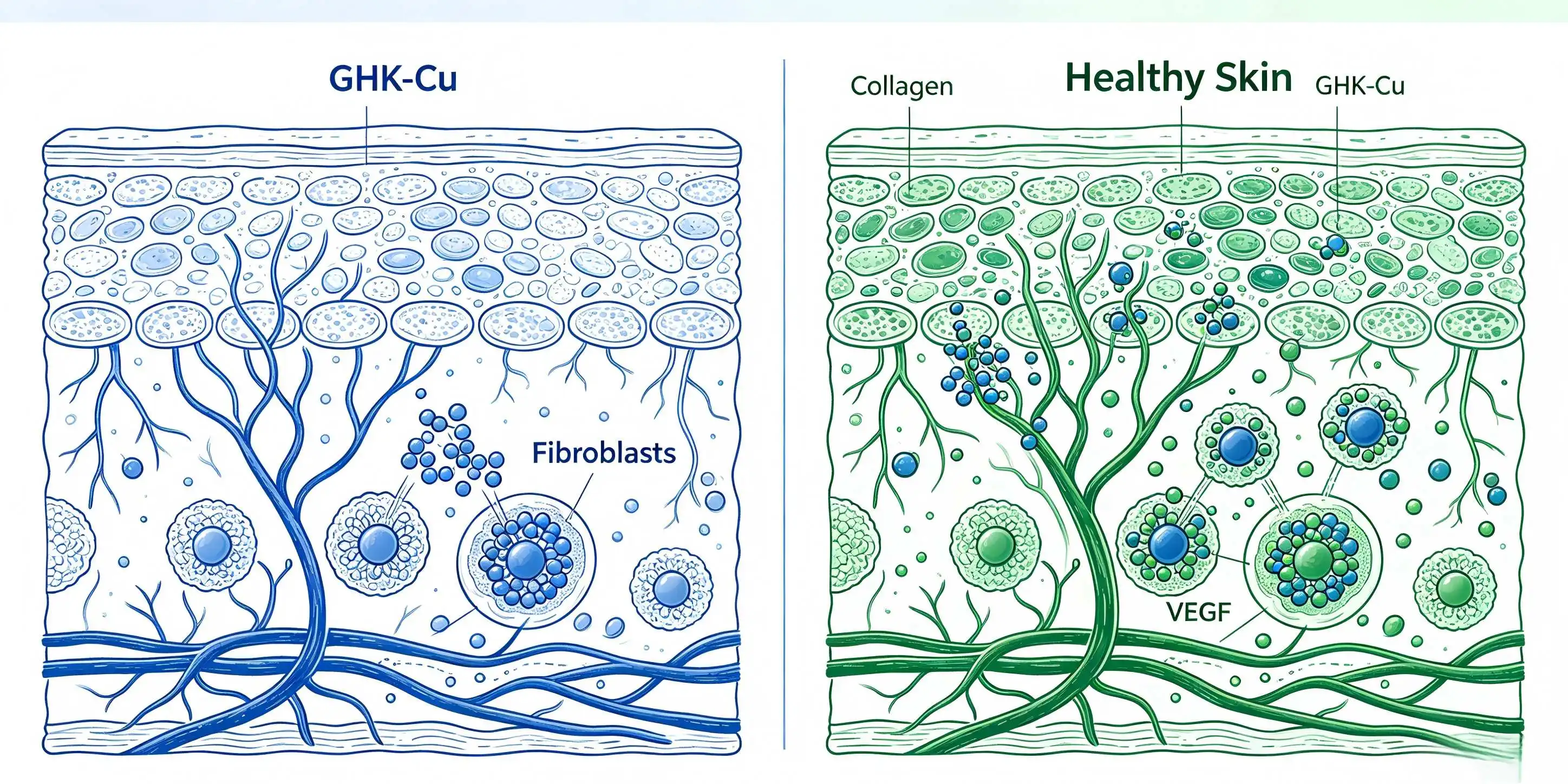
In regenerative medicine, copper peptide speeds up the growth of granulation tissue and helps collagen deposits form in a way that keeps scars from getting too big. The peptide speeds up the movement of fibroblasts by 58% in scratch test models and makes more VEGF. A process called angiogenesis is important for healing because it helps get enough air and nutrients to the area.
Because of these traits, the substance is very helpful for medical ointments that treat scars from surgery, diabetes ulcers, and pressure sores. If hospitals and wound care centers want to make sure that all of their patients get the same healing effects, they can ask for recipes that have been tested and shown to contain copper peptides.
Comparing GHK-Cu Peptide with Other Key Anti-Aging Ingredients
Copper tripeptide works differently than other well-known active ingredients. This helps people who buy things and make new goods make decisions based on facts that are in line with the rules and what the target market wants.
GHK-Cu Versus Retinoid Systems
Retinoids are still the best anti-aging ingredients, but people with sensitive skin or who have recently had surgery shouldn't use them because they can hurt the skin and make it more sensitive to light. Copper peptide affects collagen in a way that is similar to retinoid receptor activation, but it does so through completely different paths. Because of this difference, anti-aging products can be made that work well for people with rosacea, post-inflammatory hyperpigmentation, and skin that can't handle vitamin A derivatives.
When compared to retinoids, which need specific instructions for introduction, Anti-aging GHK-Cu is safe to use even at higher doses. This makes it easier to teach customers and cuts down on the number of returns due to irritation, which is good for brands that want to keep customers.
Synergistic Combinations with Complementary Actives
The peptide is neutrally stable, which means it can be mixed with hyaluronic acid, niacinamide, and vitamin C products without changing how the recipe works. Copper tripeptide can be used as the structure part of anti-aging systems, along with other ingredients that deal with color, moisture, or barrier function. People who are smart and want full-care solutions that have been scientifically proven to work prefer this way with multiple mechanisms to single-benefit things.
Researchers have found that putting 0.05% GHK-Cu and 5% niacinamide together makes the skin smoother and pores look smaller than if they were used separately. These facts will help R&D teams who want to make formulations work better while keeping costs low.
Procurement and Application Guidance for B2B Buyers
If you're looking for pharmaceutical-grade copper peptide, you need to pay close attention to the little things that can change how safe the mixture is, how well it works, and how well it follows the rules. Not only do buying managers have to compare prices, but they also have to look at the quality of the sellers in other ways.
Quality Specifications and Supplier Verification
For top-notch formulas, you need copper tripeptide that is more than 98% pure, has less than 5% moisture, and doesn't have more heavy metals than what is allowed by ICH Q3D guidelines. There should be a lot of paperwork from suppliers, such as a Certificate of Analysis with thorough information on each batch test, an MSDS with safety information, chromatogram profiles that show the right order, and regulatory compliance certificates for the markets they want to reach.
Xi'an Yihui Bio-technology maintains these high standards across our entire peptide line, providing Anti-aging GHK-Cu with solid 99% assay results and full tracking proof. Our improved synthesis methods cut down on the amount of impurities that could lead to sensitization reactions or make the product less steady when it's tested for shelf life.
Formulation Best Practices and Stability Considerations
The peptide stays stable in water-based systems that are kept between 2°C and 8°C. However, the copper-peptide link should not be broken when adding to the mixture below 40°C. If you add more than 0.1% of a strong chelating agent like EDTA, it can remove the copper ions and stop the complex from working. Putting things in amber or opaque containers that keep air out keeps them from breaking down due to oxidation and light.
For maintenance products, the dose that should be used is between 0.01% and 0.1% for intense treatment products. Based on clinical data, all of these strengths are effective, so formulators can choose the treatment strength that works best for them while also keeping costs in mind. A product should be put through 24 months of fast-paced stable testing to make sure it can be sold in all channels of distribution.
Cost-Benefit Analysis for Bulk Procurement
It can save you a lot of money to buy things in bulk. For instance, if you buy 1 kg of something instead of 1g of research-grade stuff, the price per gram can drop by as much as 60%. You can place an order as little as 1g, which is great for testing out new recipes. For business use, the 100g and 1kg sizes work better. Samples can still be used to test the quality, which lets sellers be judged without taking any risks before placing big orders.
It is possible to make a lot of things from a small amount of raw materials because the peptide works well at low doses. Copper tripeptide can be used to make 2,000 kg of finished serum at a rate of 0.05%. This is a great way for brands to save money when they need to make more goods, and the ingredients they choose are scientifically sound, so the brand still looks high-end.
Safety, Side Effects, and Long-Term Use of GHK-Cu
Regulatory relations teams and quality managers who are in charge of putting goods on the market and keeping an eye on them after they're sold in different countries need to think about copper peptide's safety profile.
Clinical Safety Data and Toxicology Profile
A lot of clinical trials have shown that it is well accepted. In a wide range of study groups, the rate of side effects was less than 2%. Responses reported so far are still limited to mild, short-term swelling in less than 1% of people, which goes away on its own in 48 hours. Tests that last longer than two years show that longer use does not cause more harm.
When absorption numbers are looked at, worries about copper levels are shown to be false. The amount of copper in your blood doesn't change much when you use skin products with 0.1% copper tripeptide. It stays in the normal range for your body. The tripeptide structure keeps copper locked up and focused on biology instead of letting it float around freely. This eliminates the dangers of being near ionic copper.
Regulatory Compliance and Market Authorization
In the US, most people think the peptide is safe for use in makeup. It also fully follows the rules set by the European Cosmetic Regulation (EC) No 1223/2009. This clear rule makes it easier for companies to enter big foreign markets. It also cuts down on the time and money needed to get approved.
Microbial pollution tests should be a regular part of quality control, especially for items that don't have strong preservative systems. Our plant keeps its GMP certification and uses tried-and-true cleaning methods to make sure that the amounts of bioburden meet the standards for pharmaceuticals. This is important for medical-grade items and brands that want to stand out by putting safety first in a crowded market.
Conclusion
Anti-aging GHK-Cu is an active ingredient that has been shown to work in many different areas of medicine, including makeup, skincare, and regenerative medicine. Its unique way of working by combining the production of collagen, the protection of antioxidants, and the control of inflammation really helps skin renew itself, hair grow back, and wounds heal.
The peptide is very safe and mixes well with other ingredients, so it can be used to make high-performance products that are safe for sensitive groups and to help people recover from surgery. To make sure that products work, follow the rules, and make money in global markets that are getting more and more competitive, procurement pros should only work with certified suppliers who offer pharmaceutical-grade purity, detailed paperwork, and help with formulation.
FAQ
What timeline should formulators expect for visible anti-aging results?
In research tests, after 4 to 8 weeks of consistent application, people started to feel better. After 12 weeks of continuous use, they felt the best. This time frame works well with how cosmetic clinical studies usually work and how customer standards are managed.
Can GHK-Cu completely replace retinoids in anti-aging formulations?
While copper peptide does have some of the same effects on collagen, it might not be the best choice for everyone based on the product's positioning and target market. A peptide does great things for sensitive skin and after surgery that retinoids can't. Because of this, it's a better choice for some groups of people than as a general retinoid substitute.
How should buyers evaluate GHK-Cu supplier reliability?
More weight should be given to buyers who can provide batch-specific COAs, proof that they are following the rules, and samples for quality tests. Check the GMP approval, ask for examples of clients from well-known brands, and see how good the expert support is. Xi'an Yihui gives formulation help, keeps a collection all year, and gives thorough information. All of these are signs of a reliable peptide provider who wants to work with you for a long time.
Partner with Xi'an Yihui for Premium Anti-aging GHK-Cu
Xi'an Yihui Bio-technology offers pharmaceutical-grade Copper Tripeptide-1 as a dependable Anti-aging GHK-Cu provider that has worked with makeup and drug companies around the world for 13 years. Assay purity of 99%, full batch paperwork, and flexible packing that can hold anywhere from 1g for study use to 1kg for business use are all things that our approved production center offers. We keep goods in stock that can be sent out right away. This keeps the supply chain reliable, which is important for sticking to schedules for output.
Our skilled staff helps clients make the best goods that also follow the rules for the American and European markets. They do this by giving tips on recipes and helping with apps. You can email sales@yihuipharm.com to talk about your peptide buying needs and get samples to test for fit. At yihuipharm.com, you can see all of our beauty peptides. For new brands in the personal care market that put safety, efficiency, and scientific proof at the top of their list of objectives, these are made.
References
1. Pickart, L., Margolina, A. (2018). Regenerative and Protective Actions of the GHK-Cu Peptide in the Light of the New Gene Data. International Journal of Molecular Sciences, 19(7), 1987.
2. Canapp, S.O., Farese, J.P., Schultz, G.S., Gowden, P.A., Van Gilder, J.M., Schaeffer, D.J., Bennett, P.F. (2003). The effect of topical tripeptide-copper complex on healing of ischemic open wounds. Veterinary Surgery, 32(6), 515-523.
3. Arul, V., Kartha, R., Jayakumar, R. (2007). A therapeutic approach for diabetic wound healing using biotinylated GHK incorporated collagen matrices. Life Sciences, 80(4), 275-284.
4. Pollard, J.D., Quan, S., Kang, T., Koch, R.J. (2005). Effects of copper tripeptide on the growth and expression of growth factors by normal and irradiated fibroblasts. Archives of Facial Plastic Surgery, 7(1), 27-31.
5. Mulder, G.D., Patt, L.M., Sanders, L., Rosenstock, J., Altman, M.I., Hanley, M.E., Duncan, G.W. (1994). Enhanced healing of ulcers in patients with diabetes by topical treatment with glycyl-l-histidyl-l-lysine copper. Wound Repair and Regeneration, 2(4), 259-269.
6. Hostynek, J.J., Dreher, F., Maibach, H.I. (2011). Human skin retention and penetration of a copper tripeptide in vitro as function of skin layer towards anti-inflammatory therapy. Inflammation Research, 60(1), 79-86.

Send Inquiry
You may like
Related Industry Knowledge