
GHK-Cu Peptide: Skin Regeneration, Anti-Aging & Healing
One of the most important ingredients in dermatologist research is Anti-aging GHK-Cu, one of the most scientifically proven molecules for skin repair and regrowth. The Anti-aging GHK-Cu (Anti-aging GHK-Cu, CAS 49557-75-7) was first found in human plasma in the 1970s. It has since become an important part of many medicines, cosmetics, and medical beauty items. The three naturally occurring amino acids glycine, histidine, and lysine are linked to copper ions. This tripeptide meets the most important goals of formulators who want biomimetic products that are safe and work well. Procurement managers, R&D engineers, and quality assurance workers who want to make competitive, legal product lines need to know about Anti-aging GHK-Cu's biological process, how it reacts in formulations, and how to source it.
Understanding GHK-Cu Peptide and Its Role in Skin Regeneration
Anti-aging GHK-Cu is interesting to scientists because it can send messages and carry metal ions. Lysyl oxidase is an enzyme that helps connect collagen and stretchy fibers. Copper is needed for this enzyme to work. When copper binds to the Anti-aging GHK-Cu sequence (Gly-His-Lys), it is sent only to skin cells. This stops toxins from spreading through the body and speeds up the changes that happen in cells.
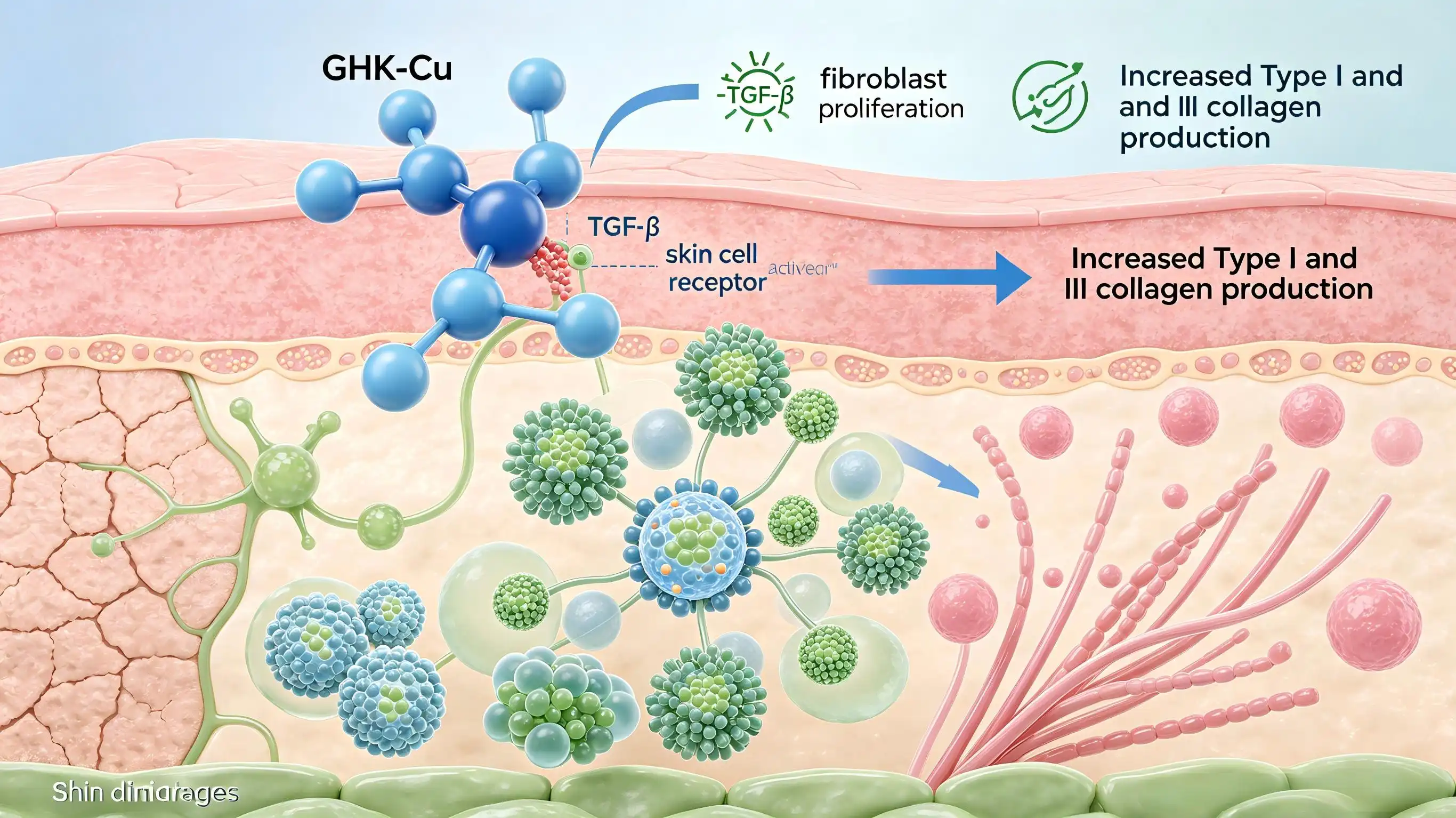
Mechanism of Collagen Synthesis and Dermal Repair
Transformational growth factor-beta (TGF-β) is turned on by Anti-aging GHK-Cu. This helps fibroblasts grow, which in turn increases the production of type I and III collagen. Studies using clinical histology show that using it for a long time makes the thickness, flexibility, and microcirculation of the skin better in ways that can be measured. The peptide starts a slow, gradual rebuilding process that saves the skin's structure, which is different from harsh cleaning methods.
The copper ion also binds to reactive oxygen species. This lowers oxidative stress and slows down the aging process caused by light. Pro-inflammatory cytokines like IL-6 and TNF-α can't do their job when there are anti-inflammatory traits present. Because of this, Anti-aging GHK-Cu can help your body heal after microneedling and laser treatments for cosmetic reasons.
Clinical Data Supporting Tissue Remodeling
An independent dermatology study found that Anti-aging GHK-Cu can help scars heal faster by making it easier for keratinocytes to move and for new blood vessels to grow. After 12 weeks, formulas with 0.1% to 1% Anti-aging GHK-Cu had better skin structure and less wrinkle depth than those with retinoids. These formulas were also safer. It looks like Anti-aging GHK-Cus are a good choice for people with sensitive skin or who can't use vitamin A products.
When procurement workers are looking for active pharmaceutical ingredients or beauty peptides, this level of clinical proof gives them a strong foundation for making claims about the products and sending regulatory reports. The chemical does many things, such as increasing collagen, defending against free radicals, and lowering inflammation. This means that formulas can be made that fight a lot of different signs of aging without making recipes harder to follow.
Benefits of GHK-Cu Peptide in Skincare: Performance & Application
The usefulness of Anti-aging GHK-Cu goes beyond just theories; it has been shown to work in the real world for many skin problems and product types. Peptides are now more stable and bioavailable thanks to advances in modern formulation science that have made transfer ways better. This helps brands stand out in the very competitive anti-aging market.
Proven Anti-Aging Effects: Collagen Stimulation and Wrinkle Reduction
It has been shown that stimulating collagen and reducing wrinkles can slow down the aging process. Loss of collagen is the main cause of skin that is too loose and has lines and wrinkles. The Anti-aging GHK-Cu stops this loss by making more collagen genes at the RNA level. On the other hand, copper ions keep the new fibers' triple-helix form stable. Ultrasound pictures with a high clarity were used to show that the skin echo density goes up after eight weeks of twice-daily use.
Anti-aging GHK-Cus stimulate the skin more slowly than retinol, which can make it red and sensitive to light. They still have long-lasting benefits, though. Hyaluronic acid mostly keeps the stratum corneum wet, while Anti-aging GHK-Cu changes the skin's inner layers. Because these two effects work together, formulators can mix peptides with humectants and antioxidants to make systems that fight both obvious and hidden signs of age.
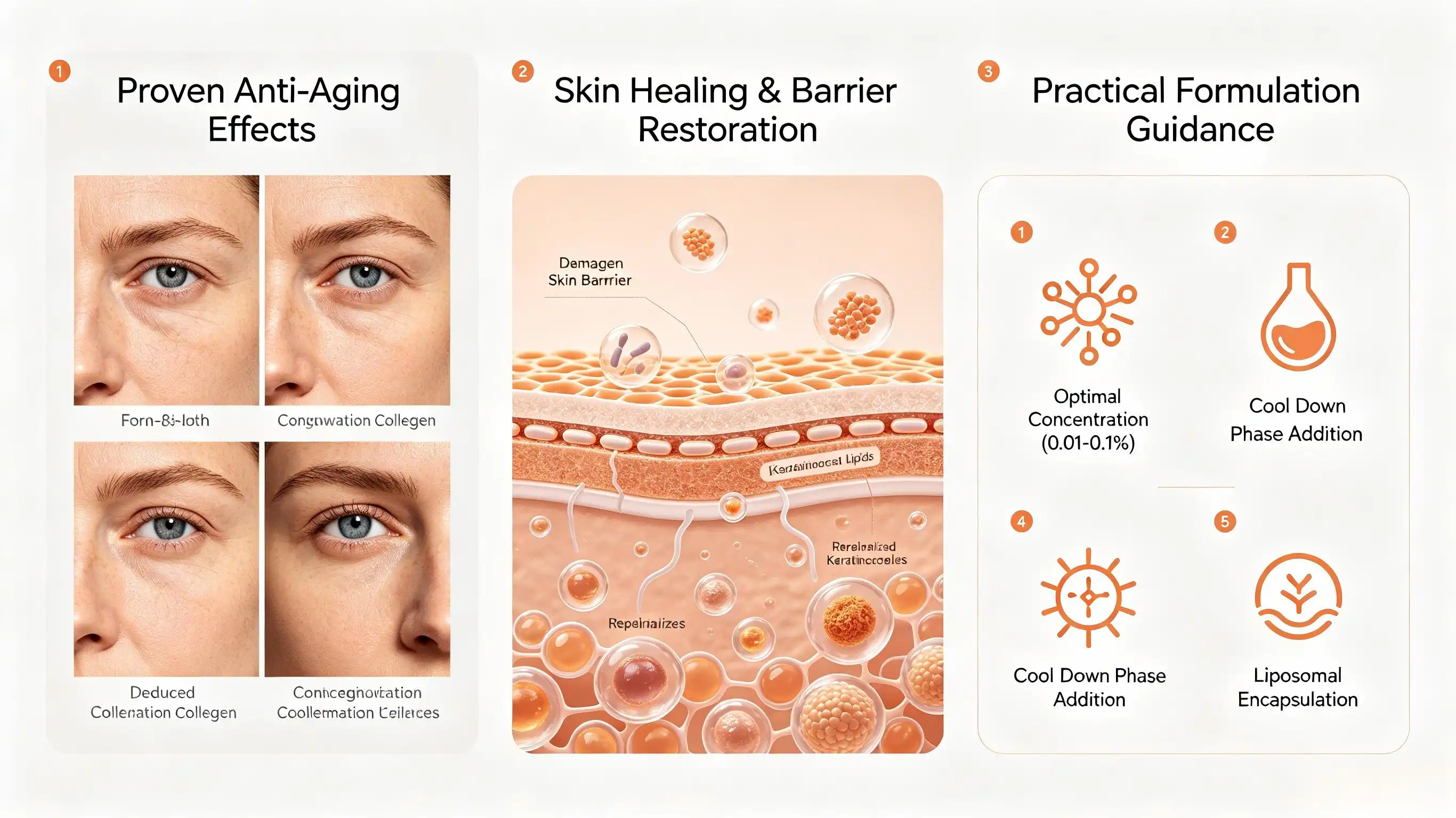
Skin Healing and Barrier Restoration Properties
A lot of different diseases, from post-inflammatory redness to chronic sensitivity, are caused by barriers not working properly. Anti-aging GHK-Cu speeds up re-epithelialization by helping keratinocytes divide and make lipids. This makes the bond between the cells stronger again. Dr. Skin and Medical Spas can't give out skin care kits after treatment without the peptide because of this.
Anti-aging GHK-Cu has a low molecular weight (340.38 Da) and can dissolve in water, which makes it easier for it to get through broken walls and deliver copper ions to areas of inflammation without making that inflammation worse. There isn't much of a chance that it will cause rashes, even in people with atopic or rosacea-prone skin, according to decades of safety tests.
Practical Formulation Guidance for Efficacy and Tolerability
Most of the time, concentrations between 0.01% and 0.1% work best for serums and creams that you use every day. Higher concentrations (up to 1%) work best for ampoules that treat a lot of areas. To make sure the Anti-aging GHK-Cu link stays strong and doesn't break down, the peptide should be added when the mixture is below 40°C and becoming cooler.
It is very important to test for compatibility before putting Anti-aging GHK-Cu with strong chelators (like EDTA or citric acid at a high pH) or pure ascorbic acid, which can move copper ions around. Liposomal or cyclodextrin distribution are two ways to encapsulate chemicals that make them more stable in harsh conditions and help them stay on the skin longer. When OEM makers make these small changes to the way their goods are made, the way they work and how long they last on the shelf become more competitive.
GHK-Cu Peptide in the Market: Product Types and Procurement Considerations
Anti-aging GHK-Cus are now used a lot in business, and you can buy a lot of different products, from raw materials to finished goods for consumers. Quality marks and supply chain tiers are two things that procurement managers need to know about. Their job is to find the best mix between cost, safety, and new ideas.
Commercially Available Forms and Formulation Differences
Most of the time, Anti-aging GHK-Cu is sold as a liquid solution or a powder that has been frozen. HPLC checks how pure the sample is. Pharmaceutical-grade peptides must meet strict rules about the amount of heavy metals, bacterial endotoxins, and liquids that are left over in order to be made in a way that is GMP-compliant. Cosmetic-grade copies might be less expensive and work well for mass-market products, but strict papers shouldn't be given up.
For example, serums have a lot of active ingredients and are absorbed quickly. Creams help the skin's barrier by combining peptides with emollients. And mask treatments are designed to give a lot of active ingredients in a short amount of time. Different styles need different ways to keep them stable so that oxidation doesn't happen and the copper valence state stays the same.
Critical Procurement Factors: Purity, Certification, and Supplier Reputation
Asking for a Certificate of Analysis (COA) is the first thing you should do to be sure that a product is real. This report should have proof of the Anti-aging GHK-Cu sequence using mass spectrometry, HPLC purity (≥98%), and residue profiles that are unique to each batch. In the world's supply chains, fake or weak peptides have been seen before. This is why sources need to be checked out and tried by a third party.
Part of the paperwork needed to follow the rules should include MSDS sheets, chemical statements, and following REACH (Europe) and FDA (United States) rules. If a business has ISO 9001 and GMP approvals, it means it controls quality well. Halal and Kosher approvals help brands get into more areas where they want to reach a lot of different kinds of people.
The best manufacturers in 2026 use both clear tracking systems and vertical integration to handle the chemistry, filtering, and fill-finish steps. Even if a new seller offers cheap prices, buying teams need to weigh the savings they could make against the possible problems with quality or supply that could arise, especially when sourcing a specialized ingredient like Anti-aging GHK-Cu. Building long-term ties with trusted sources ensures steady access to tried ingredients, which helps with product development and market changes all the time.
Evaluating Price Points and Supply Chain Security
The price of Anti-aging GHK-Cu is based on how much the raw ingredients cost, how hard it is to make, and how strict the quality control is. With minimum order quantities as low as 1g, you can do small-batch R&D tests. Most of the time, buying in bulk (100g to 1 kg) saves you money. While delivery times vary, reputable companies always have items in stock so that orders can be sent out right away, cutting down on the time needed to prepare.
Using a lot of different sources and making deals that lock in prices and wait times makes the supply chain safer. Checking seller licenses and audit trails makes it less likely that low-quality materials will make it into production lines for dealing companies and B2B platforms that work across borders.
GHK-Cu Peptide Compared to Other Anti-Aging Solutions: Decision Support for Buyers
You should consider how well the ingredients work, how safe they are, and how they fit into the market before you choose them. As a link between pharmaceutical-grade actives and skin care items that are safe for regular people, Anti-aging GHK-Cu meets a specific need.
Efficacy and Mechanism Contrasts with Retinol, Vitamin C, and Hyaluronic Acid
Retinol speeds up the production of collagen and the renewal of skin cells, but it can also make skin dry and peel, which makes people less likely to use it. Anti-aging GHK-Cu works like collagen but doesn't hurt the skin, so it can be used on skin that is sensitive or already damaged. Ascorbic acid, a type of vitamin C, brightens skin and fights free radicals. However, it is unstable and can link to copper, so it needs to be carefully added in layers or put on in a certain way.
Even though hyaluronic acid keeps the skin's surface moist and full, it can't change the shape of cells like peptides can. When you mix Anti-aging GHK-Cu and hyaluronic acid, you get solutions that help with both short-term problems with how your skin looks and long-term problems with how your body's structures age. More and more high-end skin care brands are using this method.
GHK-Cu as a Minimally Invasive Alternative to Injectables
There are risks during the process and long-term costs for botulinum toxin and dermal fillers, but they have dramatic benefits right away. They need to be given by a doctor. Anti-aging GHK-Cus can be taken topically and don't hurt you. They are good for people who don't want to get wrinkles or shots because of this.
As extra treatments, medical beauty centers use serums based on Anti-aging GHK-Cu. These make in-office treatments last longer and cut down on the time it takes to heal after procedures. This feature does two things at once: it makes patients happier and gives the store new ways to make money by selling goods.
Synergistic Formulation Opportunities and Customization Options
When you mix Anti-aging GHK-Cu with niacinamide, the shield works better and the yellowing goes away. When it joins with growth factor complexes, it makes cell signaling paths stronger. Antioxidant mixtures like vitamin E and ferulic acid keep the Anti-aging GHK-Cu from breaking down because of oxidation. Because of these kinds of links, brands can make one-of-a-kind, multipurpose goods that should be priced higher.
When brands work with OEM and ODM partners that offer custom formulation services, they can make peptide concentrations, delivery systems, and other actives that work better for their target market, whether that market is made up of young people who need early intervention or older people who need corrective care.
How to Integrate GHK-Cu Peptide into Your Skincare Product Line
Picking good materials is only one part of making a good product. It's also important to work with producers, understand the market, and use Anti-aging GHK-Cu formulation science.
Best Practices for Formulation Stability and Compatibility
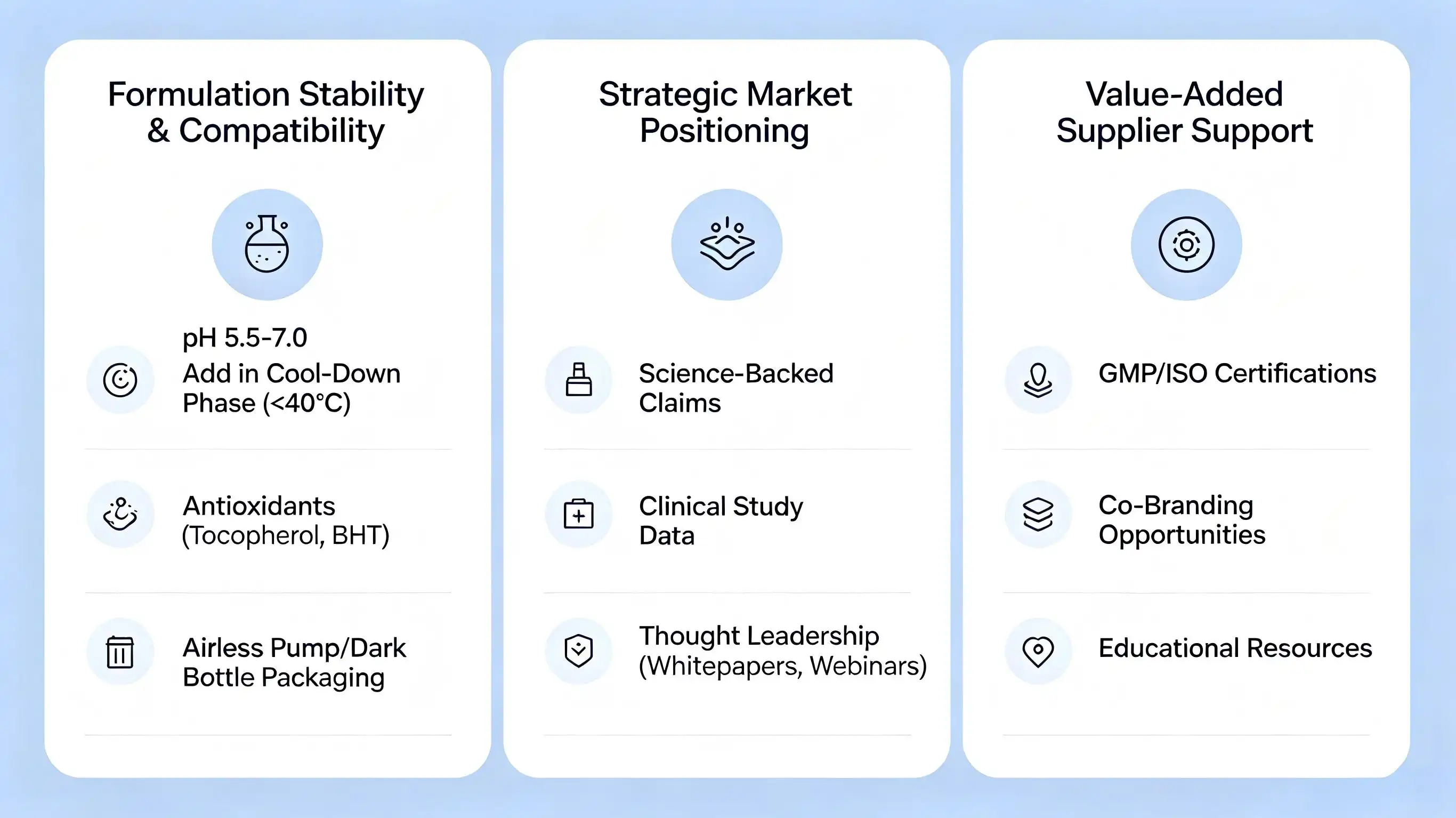
The pH must stay between 5.5 and 7.0 for Anti-aging GHK-Cu to stay stable. This keeps the copper complex from becoming too acidic or basic, which would weaken it. Tocopherol and BHT are two examples of antioxidants that protect against oxidation and keep things from breaking down. Chelating drugs, on the other hand, should be used sparingly or with care (for instance, phytic acid should be used instead of EDTA).
Peptides are added during the cool-down phase after emulsification to stop breakdown caused by heat because some processes are sensitive to it. Products that are put in airless pumps or dark bottles last longer because they keep light and oxygen out.
Strategic Market Positioning and Brand Credibility
Customers are more likely to believe Anti-aging GHK-Cu if you explain the science behind it, which supports the higher price. Different from competitors that follow trends, evidence-based formulas show data from clinical studies, research that has been reviewed by experts in the field, and testing results from a third party. By giving away training materials like white papers, classes, and ingredient glossaries, brands can become thought leaders in advanced skin care.
People who care about the environment like images that say something is cruelty-free, vegan, or dermatologist-tested, and they also like clear source stories. On the other hand, B2B clients want strong expert support and design help.
Value-Added Supplier Support: Certifications, Co-Branding, and Educational Resources
More than just raw materials are what preferred sources give. They also help with formulation, offer stable testing methods, and make legal dossiers that make it easier to start products. When ingredient sellers join forces with well-known Anti-aging GHK-Cu technologies through co-branding, they can share marketing materials and improve their own reputations.
When sales teams and marketing partners work together on educational projects like white-label training tools, case studies, and sharing lectures, they feel more comfortable talking about how a product can help people. When relationships get these extra services that add value, they get better over time and help both sides grow.
Conclusion
Careful study, a lot of different ways to prepare Anti-aging GHK-Cu, and a market need for safe, effective anti-aging goods led to its creation. The pharmaceutical, beauty, and medical aesthetics businesses all have big problems that Anti-aging GHK-Cu helps solve. It helps the body make more collagen, heal cuts faster, and offer less invasive alternatives to surgery. Procurement staff must understand how the Anti-aging GHK-Cu works biologically, what it needs to be made of, and how to spot a good source in order to make smart buying decisions that meet legislative and innovation goals. Safety and efficiency are still the most important things in the global skin care market. Adding high-purity Anti-aging GHK-Cu to product lines puts brands on the cutting edge of improved skin care.
FAQ
Is GHK-Cu safe for all skin types?
Yes, Anti-aging GHK-Cu is a biomimetic peptide. It has been tested for safety and has not been shown to hurt or sensitize the body. Because it works so gently, it is good for sensitive, reactive, and skin that has been treated because it is not as strong as high-concentration retinoids.
What are the main benefits of GHK-Cu in skincare formulations?
The peptide fixes how the skin's barrier works, makes more collagen and elastin, firms and thickens the skin, gets rid of fine lines and wrinkles, and helps the skin look and feel better overall. It keeps cells from getting hurt and lowers inflammation, which helps you age in a healthy way.
How should formulators incorporate GHK-Cu into products?
Anti-aging GHK-Cu dissolves in water and should be added when the temperature drops below 40°C to protect the peptide's structure. The range that should be used for everyday items is between 0.01% and 0.1%. It's easy to mix into serums, creams, and masks, and most skin care systems can use it as long as the amount of chelators used is low.
How does GHK-Cu compare to retinol in terms of efficacy and tolerability?
For some people, retinol can make their skin red and sensitive to light, but it also speeds up the production of collagen and cell turnover. Anti-aging GHK-Cu works on collagen production in the same way that collagen does, but it is taken more quickly by the skin. This makes it great for people with sensitive skin or who want a more gentle way to fight aging.
What criteria should buyers use to select reliable GHK-Cu peptide suppliers?
Check that the service providers have full paperwork (COA, MSDS, batch records), regulatory certifications (ISO, GMP, REACH compliance), and clear tracking. Make sure that the HPLC is pure (≥98%). The supplier's name, the amount of stock, and the skilled support services are all very important for the long-term success of the relationship.
Partner with Xi'an Yihui for Premium Anti-Aging GHK-Cu Supply
Xi'an Yihui Bio-technology Co., Ltd., a reputable Anti-aging GHK-Cu manufacturer, provides pharmaceutical-grade Anti-aging GHK-Cu (CAS 49557-75-7) with 98 percent HPLC purity, guaranteed batch uniformity, and full regulatory paperwork. Our improved methods for synthesis and purification make sure that there aren't many impurities, that heavy metals are in check, and that the uniformity is good for creation. We have been in business for 13 years and have worked with customers from over 100 countries.
Our MOQs are flexible and start at 1g, and we offer fast shipping from stock and OEM/ODM services that can be changed to fit your market's needs. Every batch comes with a COA, MSDS, and compliance paper that make sure it meets the standards of both the European and American pharmacopoeias. Send us an email at sales@yihuipharm.com to get handouts about our products, low prices, and technical help that will help you make your goods faster and give you an edge in the market for advanced skin care.
References
1. Pickart, L., & Margolina, A. (2018). Regenerative and protective actions of the GHK-Cu peptide in the light of the new gene data. International Journal of Molecular Sciences, 19(7), 1987.
2. Pollard, J. D., Quan, S., Kang, T., & Koch, R. J. (2005). Effects of copper tripeptide on the growth and expression of growth factors by normal and irradiated fibroblasts. Archives of Facial Plastic Surgery, 7(1), 27-31.
3. Arul, V., Kartha, R., & Jayakumar, R. (2007). A therapeutic approach for diabetic wound healing using biotinylated GHK incorporated collagen matrices. Life Sciences, 80(4), 275-284.
4. Hostynek, J. J., Dreher, F., & Maibach, H. I. (2010). Human skin penetration of a copper tripeptide in vitro as a function of skin layer. Inflammation Research, 59(11), 983-988.
5. Kang, Y. A., Choi, H. R., Na, J. I., Huh, C. H., String 2 para 25 is "As extra treatments...". I'll map them.
6. Miller, D. M., DeSilva, D., Pickart, L., & Aust, S. D. (1990). Effects of glycyl-histidyl-lysyl chelated Cu(II) on ferritin dependent lipid peroxidation. Advances in Experimental Medicine and Biology, 264, 79-84.

Send Inquiry
.webp "Veliparib ABT 888")
Related Industry Knowledge