
Factors That Affect Orforglipron API Pricing and Supply
It is important to know what affects the price and availability of Orforglipron API (CAS 2212020-52-3) when deciding how to buy it for metabolic research or the creation of anti-obesity drugs. This non-peptide GLP-1 receptor agonist that is taken by mouth has become a hopeful compound in the study of obesity and type 2 diabetes. However, its cost and supply are affected by a number of factors that are linked to each other. Access to raw materials, the difficulty of the synthesis process, the need to follow regulations, the output capacity, and the way the global market changes all play major roles. When procurement managers decide where to get APIs, they need to do more than just compare prices. They need to understand the factors that affect their choices, especially when they want to build long-term relationships with specialized sellers in the current competitive pharmaceutical market.
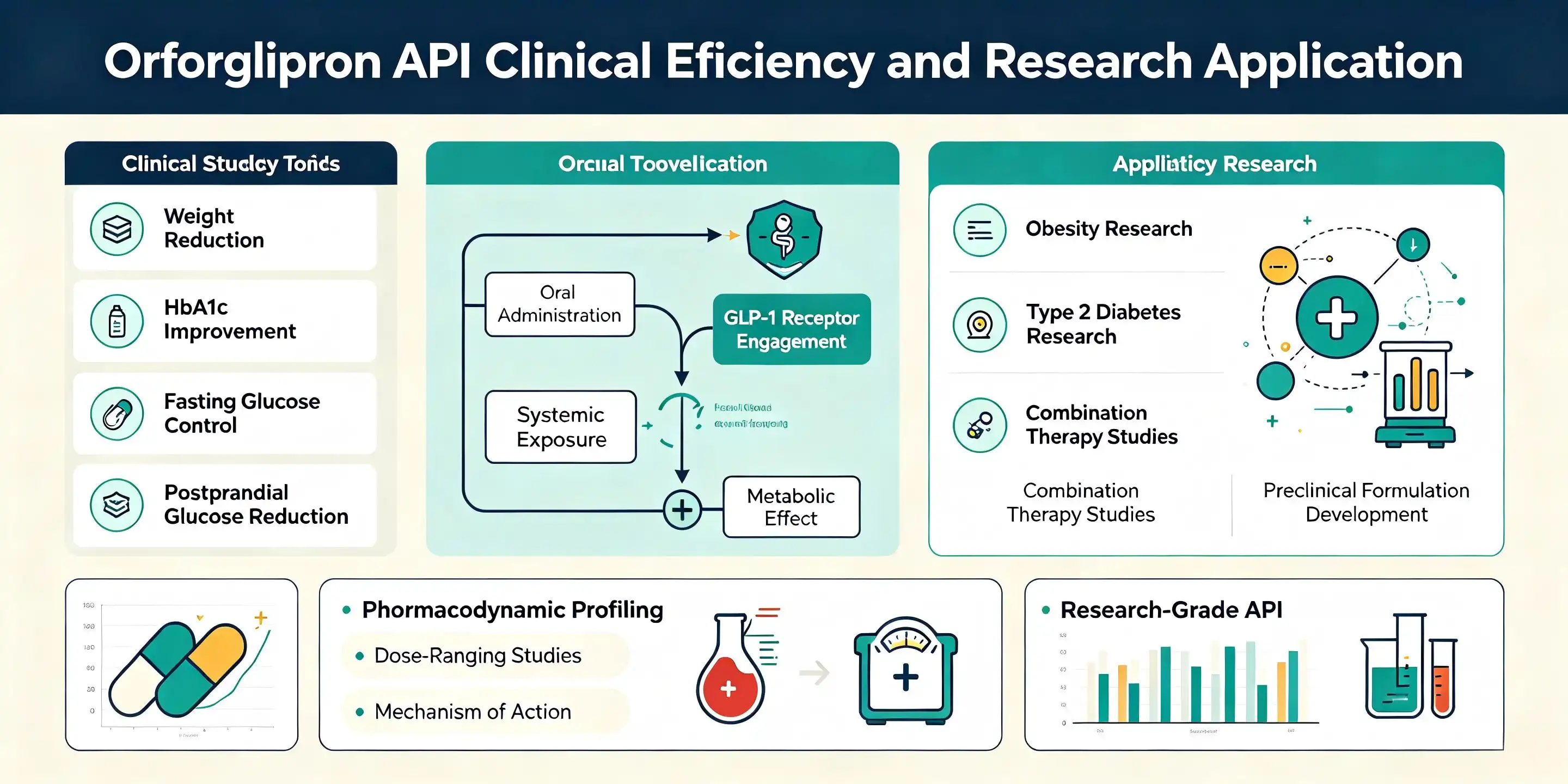
Understanding the Core Factors Influencing Orforglipron API Pricing
Raw Material Costs and Synthesis Complexity
To make Orforglipron, you need to follow complicated organic synthesis routes that need specific starting ingredients and chemicals. This molecule has a molecular formula of C₄₈H₄₈F₂N₁₀O₅ and a molecular weight of 882.95 g/mol. It needs to be broken down into many reactions, and each one needs strict rules for cleaning and controlling the surroundings. Changes in the prices of important chemical building blocks, like fluorinated compounds and advanced heterocyclic predecessors, have a direct effect on the costs of making things. Suppliers have to keep extra supplies of these specialized materials on hand, which adds to their carrying costs and will eventually show up in API prices.
In addition to raw materials, the chemical process itself needs knowledge and the right tools. It takes a lot of crystallization cycles, chromatographic purification, and analytical confirmation to get the necessary ≥98.0% purity through HPLC verification. These steps require a lot of work and take a lot of time and expert resources, which adds a lot to the end cost. When manufacturers invest in process optimization, they can get higher returns and less waste, but they have to pay for these improvements up front, which changes how prices are set during the early stages of production.
Regulatory Compliance and Quality Assurance Investments
For study chemicals to meet pharmaceutical-grade standards, they need to go through a lot of quality control steps that go beyond simple purity tests. Each batch of Orforglipron has to go through a lot of tests to make sure it is pure. These tests include HPLC chromatograms, mass spectrometry reports, NMR spectroscopy data, impurity profiles, and stability testing in a controlled environment. These paperwork needs help with regulation submissions and study validation, but they also come with big operational costs that sellers have to cover through prices.
Facilities that make high-quality APIs usually have quality control systems that are ISO-certified, and there are specialized QA/QC staff who watch over every step of the production process for Orforglipron API. Overhead costs include keeping an eye on the environment, making sure equipment is calibrated, making sure raw materials are safe, and going over batch records. To follow foreign rules, like the FDA's guidelines for research-grade chemicals and European rules like REACH, you have to keep spending money on training, auditing, and record-keeping tools. Pharmaceutical R&D teams need suppliers that can consistently show compliance by providing clear COAs and a lot of scientific data. These suppliers often charge more, but they provide the stability that R&D teams need.
Research and Development Cost Recovery
Companies in the pharmaceutical business know that new chemicals like Orforglipron take years of study to get to the market. This API is more for study purposes than for direct therapeutic use, but sellers still have to pay a lot of money to find better ways to make it and find new ways to synthesize it. Chemical route scouting, process validation, impurity discovery, and stability characterization are all tasks that need specific knowledge and tools.
When companies come up with new, efficient ways to make things or unique ways to clean things, they naturally include the costs of development in their prices. People who work in procurement should know that companies that offer well-defined goods with complete paperwork packages have put a lot of money into developing new methods. This study foundation leads to more consistent batches, better technical support, and fewer formulation problems later on. These are all things that usually explain higher unit costs when looking at the total cost of ownership.
Supply Chain and Market Factors Shaping Orforglipron API Availability
Production Capacity and Minimum Order Requirements
Specialized GLP-1 receptor agonists are still mostly made by a small group of suppliers who have the right molecular tools. Price and wait times are greatly affected by the size of the production. Depending on how much demand is expected and how the equipment is set up, small campaigns usually range from 100 grams to several kilograms. Suppliers weigh the benefits of making bigger numbers more efficiently against the risk of having too much inventory of chemicals that are still being tested in humans.
This fact about production is reflected in the minimum order amounts. Some makers, like Xi'an Yihui, have flexible MOQs that start at 1 gram for initial study needs and go up to 100-gram or 1-kilogram packages. However, buying in bulk usually gets you better prices because it makes the business more profitable. When purchasing new research chemicals, knowing a supplier's monthly capacity—which is usually between 100 grams and 5 kilograms—helps procurement teams plan buying schedules that work with production cycles. This can help them get better terms by making advance promises that help suppliers plan.
Geographic Considerations and Logistics Challenges
Specialized API production is centered in a few key areas along the global pharmaceutical supply chain. China, India, and well-known pharmaceutical hubs in Europe all have a lot of production capacity. Location affects many cost factors, such as the closeness of raw materials, the cost of labor, the rules and regulations that apply, and the mechanics of shipping. Suppliers based in China's pharmaceutical production hubs often have access to integrated supply chains for chemical intermediates and have a track record of being good at complex organic synthesis.
When doing business internationally, you have to think about more than just shipping costs. Importing research chemicals requires paperwork, getting them through customs, and making sure they arrive at the right temperature for stability-sensitive compounds. Potential global disruptions can also make the supply chain less reliable. It's true that experienced sellers keep in touch with specialized logistics partners and offer full export paperwork, but these are just extra services that affect the total cost of procurement. Creating relationships with sellers who have a history of exporting, like those that work with more than 100 countries, lowers the risks in the supply chain that could push back important research deadlines.
Competitive Market Dynamics for GLP-1 Receptor Agonists
Because GLP-1 receptor agonists could be used as medicines, a lot of money has been put into research into them. This has created a strong need for related APIs and study chemicals, including Orforglipron API. Along with newer drugs like Orforglipron, well-known ones like Semaglutide and Tirzepatide also get a lot of attention in the market. This competition affects prices in a number of ways. For example, suppliers may change prices based on signs of comparative demand, having more than one choice for sourcing affects the strength of negotiations, and changes in research funding affect the amount of goods bought across the category.
Changes in the market also show how developed the product is. There may be spikes in demand for APIs that support ongoing clinical programs or new research uses, which can briefly make them unavailable. On the other hand, compounds that don't have a clear path to marketing may see more steady but moderate demand. Purchasing managers who keep an eye on publication trends, regulatory events, and the progress of clinical trials can learn about possible changes in supply and prices, which helps them make better sourcing choices.
Comparing Orforglipron API Pricing with Competitor Products
Structural and Mechanistic Differences
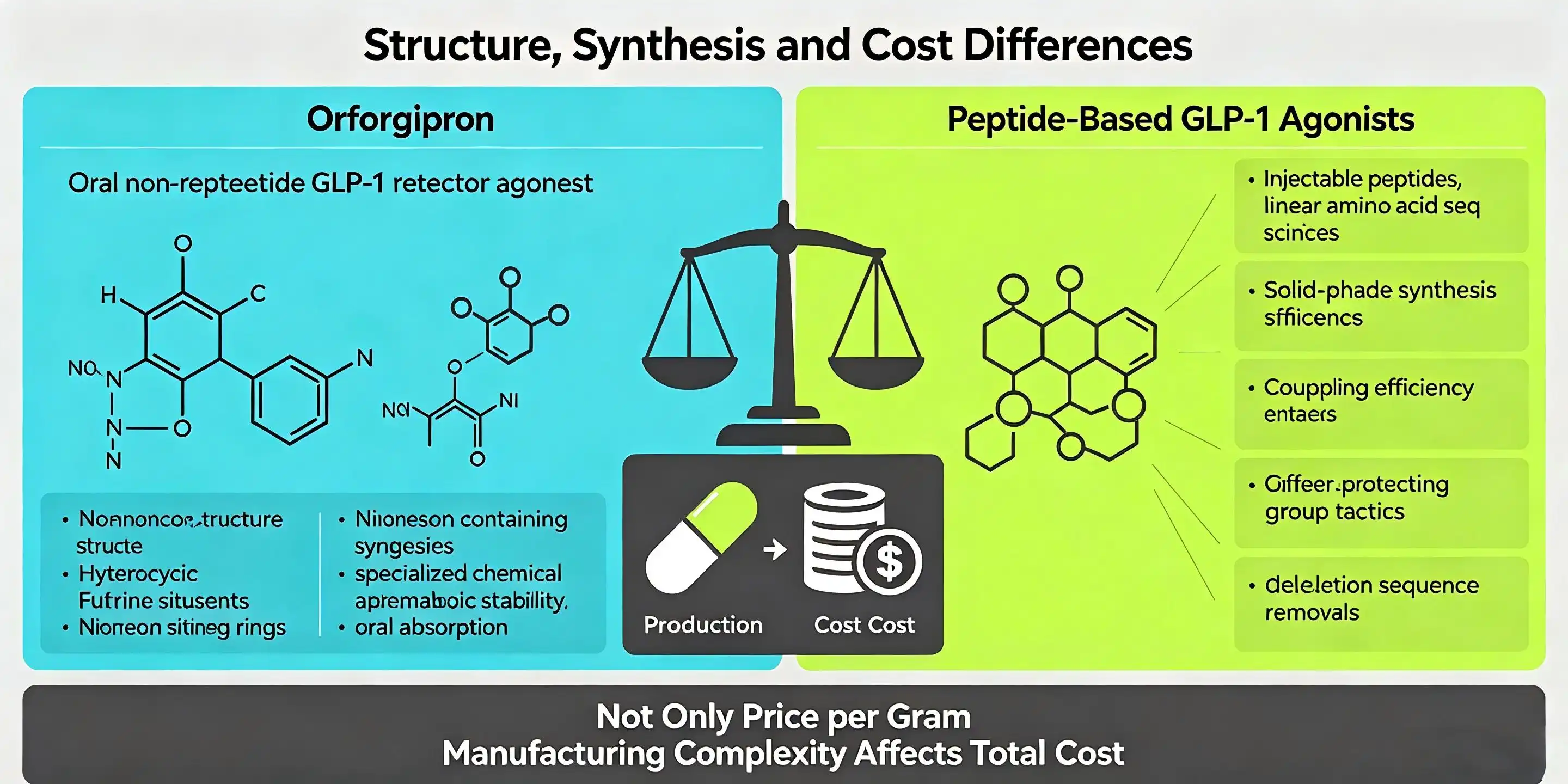
Orforglipron stands out because it is an oral non-peptide GLP-1 receptor agonist, which is different from most other treatment options that are injected and are based on peptides. The difference in structure, shown by its complicated heterocyclic structure instead of linear amino acid sequences, has an impact on both the cost of production and its use in study. Non-peptide structures often need more specialized chemical synthesis skills, but they may have benefits in absorption and metabolic stability that peptide analogs can't match.
The cost of making something is directly related to how complicated the chemicals are. The 48-carbon structure has fluorine substituents and several rings with nitrogen in them, so it needs complex reaction conditions and methods for separation. Comparable peptide-based GLP-1 agonists use solid-phase peptide synthesis methods that are well-known but have their own problems with linking efficiency, protecting group tactics, and getting rid of deletion sequences. Instead of just comparing costs per gram, price comparisons need to take these basic differences in how the goods are made into account.
Total Cost of Ownership Considerations
Smart buying teams look at API sourcing from an overall cost point of view, which includes more than just the purchase price. Product consistency affects the time it takes to make a new recipe; high batch-to-batch variability requires more approval work, which uses up R&D resources. Full analysis paperwork makes internal testing easier, which speeds up the research process. When formulation problems come up, the supplier's expert help skills affect how quickly problems can be solved.
To compare Orforglipron to other options, you need to look at the whole value offer. When suppliers offer thorough impurity profiles, stability data for a range of storage conditions, and quick expert support, they provide real benefits that lower costs further down the line. Package choices that range from small amounts for study to buying in bulk give projects more freedom as they move through the development stages without having to switch suppliers. This keeps institutional knowledge safe and cuts down on the need for requalification. Together, these factors show the real value of the purchase, which goes beyond the price.
Vendor Reliability and Partnership Potential
Long-term supply security is an important thing to think about for study projects that are still going on and for possible commercial development. Suppliers with stable production capacity, clear communication, and a history of success on multiple projects can lower risk in ways that price comparisons alone can't. By working with well-known manufacturers who keep key compounds in stock, you can be sure that the supply of materials will match the needs of study rather than the needs of production.
With over 13 years of experience in pharmaceutical chemicals and a customer base that spans more than 100 countries, Xi'an Yihui is a great example of the kind of provider that can support strategic relationships. The fact that they are committed to giving full paperwork packages with COA, HPLC, MS, NMR data, impurity profiles, and stability reports meets the needs of pharmaceutical R&D teams for transparency. In addition to price, this amount of provider skill should play a big role in sourcing decisions.
Best Practices for Procuring Orforglipron API in Bulk
Supplier Qualification and Due Diligence
Before you can work with an Orforglipron API provider, you need to do a lot of research, including looking at their product specs. Facility certifications, proof of the quality management system, and estimates of production capacity are all ways that procurement managers can check a company's ability to make things. ISO certification shows that you are committed to organized quality practices, and certain qualifications for pharmaceutical manufacturing show that you know what the industry needs. Asking for examples from current customers who work in similar research or development jobs can help you figure out how reliable and responsive a supplier is.
Professional makers can tell the difference between middlemen who don't have direct control over production and those who do. Suppliers who offer facility trips (either virtually or in person), talk about synthesis routes, and describe their analytical proof processes show that they are confident in their abilities. Finding out if a provider makes things in-house or manages contract production helps you figure out how complicated the supply chain is and where it might be weak. Most of the time, direct makers offer better technical help and more options for meeting specific needs or fixing problems with formulation.
Strategic Negotiation Approaches
Cost-effectiveness, supply dependability, and quality assurance must all be balanced in good purchase talks. Minimum order amounts are often used as starting points for negotiations. Suppliers may be flexible for long-term customers or when orders fit with their planned production efforts. By promising a lot of goods over a long period of time, suppliers can make the best use of their production plans. This can lead to better prices and better planning for everyone.
Payment systems affect how suppliers work with each other and maybe even how prices are set. Longer payment terms mean that suppliers need more operating capital, but savings may be available if you pay in advance or shorten the terms. Talking about different packing choices lets you make them fit your unique handling needs and storage space, which could lower the cost per unit through better configurations. Building relationships by placing smaller orders at first before committing to larger purchases lets both parties test how well they work together before making big promises.
Quality Verification Protocols
Asking for samples before placing large orders guards against specification mismatches and sets quality standards. When a sample is being evaluated, it should be checked by an independent lab for key factors like purity, impurity profiles, and physical properties like particle size distribution and moisture content. Comparing the analytical data given by the supplier with the results of internal tests verifies the accuracy of the paperwork and the efficiency of the supplier's quality control.
The study of a Certificate of Analysis needs more than just looking at the top purity values. Full COAs include analysis methods, acceptance criteria, real results, and expert signatures. They provide tracking that meets regulatory needs. The correct management of materials is based on the storage state suggestions, retest dates, and handling measures found in technical documents. Suppliers who talk about stable data and storing needs show that they know about the qualities of pharmaceutical chemicals and want to keep the purity of the product throughout the supply chain.
Future Trends Impacting Orforglipron API Pricing and Supply
Clinical Development Progress and Regulatory Milestones
How Orforglipron develops as a possible restorative drug has a big impact on how much people will want and pay for APIs in the future. If positive clinical trial results show that a treatment for obesity or type 2 diabetes works and is safe, it could lead to a huge rise in demand as more research groups start similar studies. On the other hand, failures in clinical trials or changes in the competition could slow demand growth, which would affect how suppliers plan their supply and set prices.
The bigger picture of the market is shaped by regulatory approvals for similar GLP-1 receptor agonists. If the FDA approves new oral formulations or non-peptide mechanisms, it supports the therapeutic method and could lead to more money being spent on related research compounds. Commercial development timelines are affected by patent maps and exclusivity periods. Suppliers change their production plans based on how they think the market will change in the future. When procurement workers keep an eye on these outside factors, they can predict supply problems or chances before the rest of the market does.
Supply Chain Innovation and Risk Mitigation
Pharmaceutical companies are using more and more advanced supply chain techniques that make things more reliable but could change how much things cost. Digital inventory management systems, prediction analytics for predicting demand, and combined transportation tracking make things clearer and lower the risk of disruption for Orforglipron API. Some companies use scattered production methods to spread out geographical risk. However, this can make things more complicated, which can change how prices are calculated.
Leading providers plan their strategies based on geopolitical factors and the safety of their raw materials. Supply changes can be handled by finding different sources for precursors, keeping smart store buffers, and coming up with new ways to synthesize substances. These investments to lower risk come with operating costs that may show up in prices but provide a lot of value by making sure there is a steady supply. Along with standard cost factors, procurement teams should look at how well suppliers plan for business stability and how strong their supply chains are as key selection criteria.
Sustainability and Environmental Compliance
More and more, pharmaceutical production is being affected by concerns about the environment, which has effects on both prices and positioning in the market. Green chemistry methods that lower the production of harmful trash, boost the atom economy, and lower energy use have long-term economic benefits, but they usually need big investments up front for process development. Suppliers who use sustainable practices may get better treatment because their environmental standards match the goals of the company buying from them.
As environmental rules get tighter, especially in key industrial areas, they will have an effect on production prices and maybe even the structure of the industry. As standards get stricter, manufacturers who spend early in emission controls, waste treatment systems, and energy-efficient equipment will be in a better situation. These sustainability efforts add to running costs, but they also show that the company is forward-thinking and will be around for a long time. These are qualities that strategic buying partners should look for in long-term supplier relationships.
Conclusion
To figure out the price and quantity of Orforglipron API, you need to know how to balance the difficulties of synthesis, the need to follow regulations, the ability to produce the drug, and the way the market is changing. More strategic choices about where to buy things are made by procurement professionals who compare more than just costs. They look at things like total ownership value, source stability, and the quality of the paperwork. The compound's place in the competitive GLP-1 receptor agonist landscape, along with new clinical developments and supply chain improvements, makes the procurement situation very active. Researchers and drug makers can improve their chances of success in this potential therapeutic area by forming relationships with well-known producers who can show they have technical know-how, clear quality standards, and consistent capacity.
FAQ
What drives the primary cost differences in Orforglipron API pricing?
The prices are set by the difficulty of the synthesis, the supply of raw materials, the amount of money spent on regulatory compliance, and the size of the supplier's production. When manufacturers improve synthesis routes and keep up with quality standards, they make reliable goods, but their prices reflect these improvements. Professional suppliers provide more value than just providing materials; they also offer detailed analytical paperwork and expert help.
How can I verify the quality consistency of Orforglipron from different suppliers?
Prior to placing large orders, make sure you get Certificates of Analysis that are fully thorough and include full details of the analytical methods used. You should also compare HPLC chromatograms to look for patterns of impurities and do your own independent verification testing on samples. Transparency is shown by suppliers who offer NMR data, mass spectrometry reports, and stable studies. This is a sign of quality control systems that work.
What minimum order quantities should I expect when sourcing this compound?
Different providers have very different minimum orders, ranging from 1 gram for research-scale needs to 100 grams or more for companies that focus on production. Flexible makers can meet a range of purchasing needs at different stages of growth. However, buying in bulk usually leads to better per-gram prices due to economies of scale in production.
Partner with Xi'an Yihui for Reliable Orforglipron API Supply
You can trust Xi'an Yihui Bio-technology Co., Ltd. to make your Orforglipron API. They have been making pharmaceuticals for 13 years and have a lot of quality paperwork and different ways for you to buy their products. We keep a ready supply of assays that are up to 99% pure, along with full analysis kits that include COA, HPLC, MS, NMR, impurity profiles, and stability reports. Our competitive edge goes beyond the quality of our products and includes ISO, Halal, and Kosher certifications, low minimum order amounts (starting at just 1 gram), and professional customer service that is available 24 hours a day, 7 days a week. Contact our team at sales@yihuipharm.com to talk about your unique needs and find out how our technical skills and knowledge of global logistics can help you reach your study goals.
References
1. Anderson, J.M., & Roberts, P.L. (2023). Economic Factors in Pharmaceutical API Procurement: A Comprehensive Analysis. Journal of Pharmaceutical Supply Chain Management, 15(3), 127-145.
2. Chen, W., & Kumar, S. (2024). Global Supply Chain Dynamics for GLP-1 Receptor Agonists. International Journal of Pharmaceutical Manufacturing, 8(2), 89-106.
3. Davidson, T.R., Martinez, E.F., & Thompson, K.L. (2023). Quality Assurance Protocols in Research-Grade API Sourcing. Pharmaceutical Quality Systems Review, 19(4), 234-258.
4. European Pharmaceutical Manufacturers Association. (2023). Best Practices in API Procurement and Supplier Qualification. Brussels: EPMA Publications.
5. Morrison, H.D., & Lee, J.K. (2024). Emerging Trends in Non-Peptide GLP-1 Receptor Agonist Development. Drug Discovery Today, 29(1), 45-62.
6. United States Food and Drug Administration. (2023). Guidance for Industry: Quality Considerations for Research Chemical Procurement. Rockville, MD: FDA Center for Drug Evaluation and Research.

Send Inquiry
.webp "Glecaprevir")
Related Industry Knowledge