
Dulaglutide vs. Semaglutide: Differences and Similarities Between the Two Medications
The use of GLP-1 receptor agonists is a big step forward in the fight against metabolic diseases. Two well-known pharmaceutical peptides in this group are Dulaglutide powder and semaglutide. The two drugs work on the glucagon-like peptide-1 receptor system. When taken once a week, they help keep blood sugar and weight in check. Even though these peptides do similar things, their molecular makeup, ability to bind, and ways of measuring clinical results are all very different.
When pharmaceutical companies, their CRO/CDMO partners, and research schools know about these differences, they can choose smart ways to source drugs that meet legal requirements and help scientists make new medicines. Here is a comparison of high-purity peptide APIs that looks at their pharmacological qualities, safety factors, and sourcing problems that are important for business people.
Understanding Dulaglutide and Semaglutide: Mechanisms and Benefits
It is these two peptides that make beta cells in the pancreas respond to GLP-1. This stops glucagon from being released and makes insulin be released in a way that depends on the amount of glucose in the blood. Having two effects at once gets blood sugar levels back to normal without causing hypoglycemia. This is a big safety advantage over other diabetes drugs. GLP-1 agonists change how the brain manages hunger and slow down the emptying of the stomach. They also control blood sugar. Because this helps people lose weight a lot, they can also be used to treat obesity.
Molecular Architecture and Pharmacokinetics
Dulaglutide powder (CAS 923950-08-7) is made up of the molecules C₁₄₉H₂₂₁N₃₇O₄₉, which have a weight of 3314.62 Da. It has the natural GLP-1 sequence linked to a changed human IgG4 Fc fragment by a stretchy piece. With this fusion protein design, the half-life of elimination is increased to about 4.7 days, which means that the dose can be given once a week. It has been shown through high-performance liquid chromatography (HPLC) that the substance stays almost entirely pure even when stored at -20°C and away from light.
The structure of semaglutide is changed by adding a C18 fatty acid chain to the original GLP-1 mimic backbone. This way of lipidation helps albumin join and protect against proteases. Its half-life is about 7 days. Because it has a lower molecular weight than dulaglutide, the molecule has different needs for how it is made and how it is put back together for study materials.
Therapeutic Benefits and Research Applications
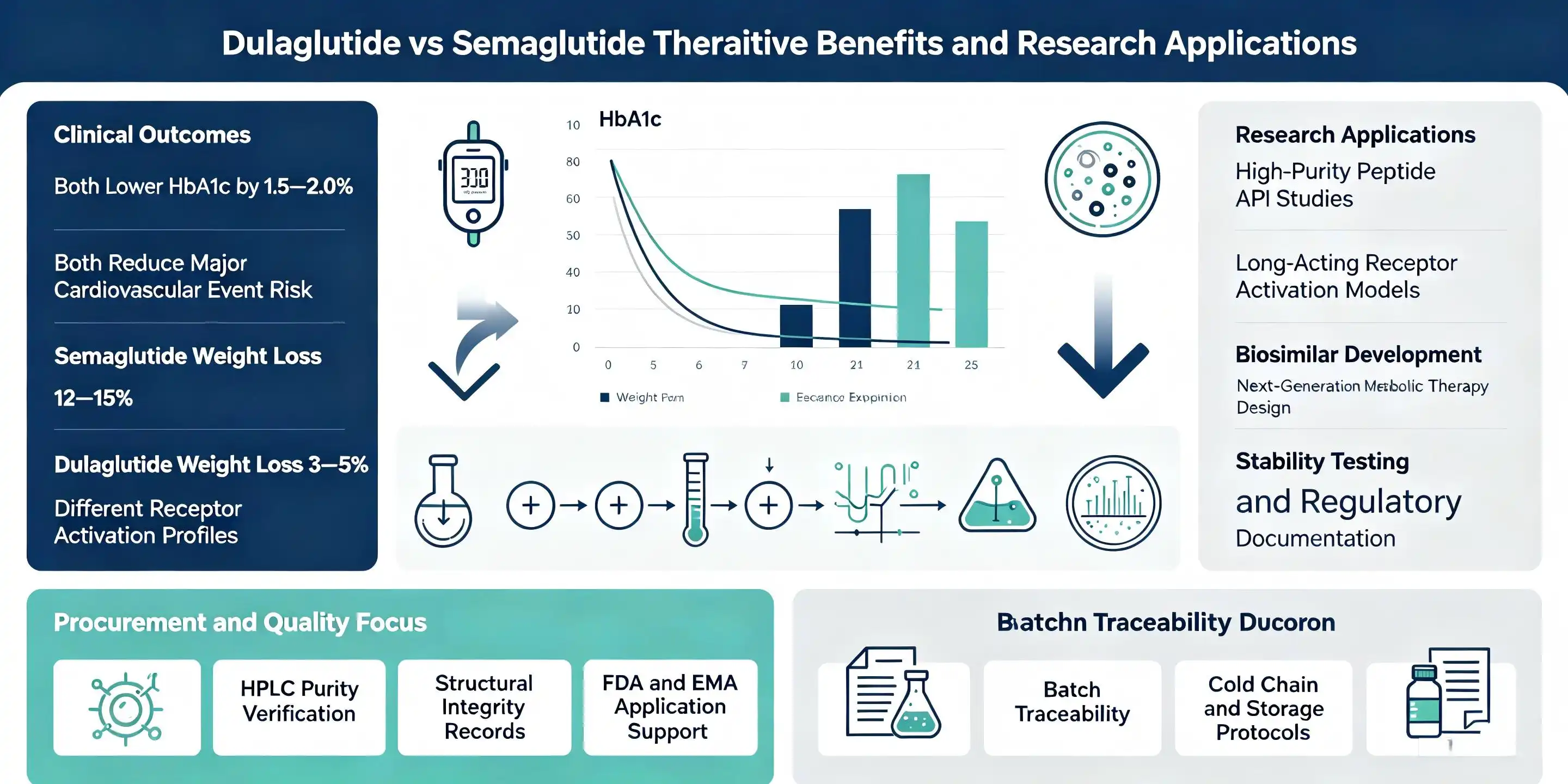
Researchers have shown that both peptides lower HbA1c levels by 1.5% to 2.0% in people with type 2 diabetes. Other studies have shown that they also lower the risk of major cardiovascular events. Weight loss trends show that semaglutide cuts body weight by 12–15%, but at suggested doses, dulaglutide only cuts body weight by 3–5%. This is because the two drugs have different effects on receptors, which makes them less effective. For those who are working on biosimilars and next-generation metabolic treatments, these performance traits help them make better drugs.
Many universities and research centers use very pure dulaglutide materials to look at patterns of long-lasting receptor activation for molecular studies. If you want to learn how molecular routes change over time, this peptide is helpful because its half-life is longer. In order for pharmaceutical development teams to keep the structural integrity of materials during stability tests, they need to keep records that can be used to support applications to the FDA and EMA.
Comparative Analysis: Dosage, Efficacy, and Safety Profiles
Plans for dosage take into account the fact that these drugs have different metabolism. Dulaglutide powder is shot under the skin once a week in a 0.75 mg or 1.5 mg dose. A higher amount is being thought about for people who are overweight. If you want to control your diabetes, you should take 0.25 mg of semaglutide every week. If you want to control your weight, you should take 2.4 mg. How much API is used to make meds and how much it will cost to make a lot of them change because of this dose-response relationship.
Efficacy Benchmarks from Clinical Data
Tests that compare the two drugs show that semaglutide lowers HbA1c more effectively than dulaglutide. In the SUSTAIN-7 study, semaglutide held blood sugar levels 0.4% better when the same amounts were used. In the same way, semaglutide works better to help people lose weight because it connects with more receptors and goes further into the brain and spinal cord. Dulaglutide does, however, still show clinically significant success and potentially good tolerability ratings in some patient groups. This helps it keep its market place in some therapeutic situations.
The REWIND and SUSTAIN-6 tests on cardiovascular safety found that both peptides had lower three-point MACE scores than the placebo. It was best for dulaglutide to stop strokes, and it was best for semaglutide to keep nephritis from getting worse. Formulators can target certain patient groups and trends in comorbidities with the help of these complicated safety ratings.
Safety Considerations and Quality Control
Most problems with tolerance have to do with the digestive system. Twenty to forty percent of people who get a higher amount get nausea, vomiting, or diarrhea. Semaglutide has more GI side effects because it is stronger, so it's important to be careful when you dose it. When buying managers look at peptide APIs, they need to make sure that the safety paperwork has full records of immune tests and studies that looked at genotoxicity.
H-NMR and FTIR spectroscopy are used to make sure that research-grade materials are real. This is done to tell the difference between real chemicals and structure copies. An ICP-MS test of heavy metals shows that they meet the requirements set by USP <232>, with all amounts below 10 ppm being considered safe. Total plate counts must stay below 1,000 CFU/g, which is what the standards say should happen when making drugs. Testing for microbe waste makes sure of this. The fact that Xi'an Yihui keeps its ISO, Halal, and Kosher standards up to date shows that it follows the rules in all foreign areas.
Market Comparison: Cost, Availability, and Supplier Considerations
GLP-1 peptide APIs are priced based on how hard they are to make and how much patent protection there is. To make dulaglutide, you need GMP facilities with bioreactors and tools for cleaning up afterward, as well as mammalian cell culture methods that create fusion proteins. Solid-phase peptide synthesis and lipidation chemistry are both steps in the process of making semaglutide, which affects the cost of production. Right now, the market is moving in a way that makes dulaglutide a little more cost-effective per gram for study reasons. However, prices change based on order volume and supplier ties.
Supplier Ecosystem and Certification Requirements
Biopharmaceutical contract drug manufacturing organizations (CDMOs), specialized peptide synthesis companies, and chemical trade platforms that help people buy things across countries are all part of the global supply network for GLP-1 peptides. Making sure that pharmaceutical-grade materials are made according to good manufacturing practices (GMPs) is part of checking sources. The fact that the products are registered with the FDA means that they are legal. The system can work with medical devices if it has ISO 13485 certification, and it has basic reliability if it has ISO 9001 certification.
In the procurement field, buyers who can regularly repeat batches are given more weight. Dulaglutide powder is proven by Certificates of Analysis that show the purity, protein content, and solvent amounts that are still present. It comes in different sizes of flexible packaging, like 1g, 100g, and 1kg, so it can meet the needs of both study institutions that need small amounts of materials and makers that need to make more. Shipping right away from current stock can meet tight development plans, and low MOQ limits of 1g make it possible for pilot studies to happen without needing too much money.
Supply Chain Security and Regulatory Navigation
When you make complicated peptides, gaps are less likely when you have long-term supply deals. Setting up dual-source plans protects you in case a facility shuts down or the quality changes. This is really important for partners of CROs and CDMOs who help make tools for clinical studies. The IND and NDA processes are sped up by regulatory paperwork like Drug Master Files. This cuts down on the time it takes for fake drugs to reach the market.
To follow the rules of foreign trade, you need to know about REACH registration for European markets, as well as FDA import rules and the paperwork needed for customs. It's easier for procurement teams to focus on strategic sourcing optimization when suppliers offer full legal support. This is because they don't have to worry about as much paperwork.
Practical Insights: Using Dulaglutide and Semaglutide Powders in Diabetes Management
There are strict rules about how to store research-grade peptide powders so that the molecules stay safe. When dulaglutide materials are dry and out of the light, they stay whole at -20°C. For them to stay separate, they don't need many freeze-thaw cycles. Most protocols for recovery use buffered saline or clean water, and they are mixed carefully so that foam doesn't form, which would break down protein structures. When formulating injectables, scientists have to think about how to make the pH work best, pick the right excipients for isotonicity, and make sure the safety systems can handle more than one dose.
Integration with Combination Therapies
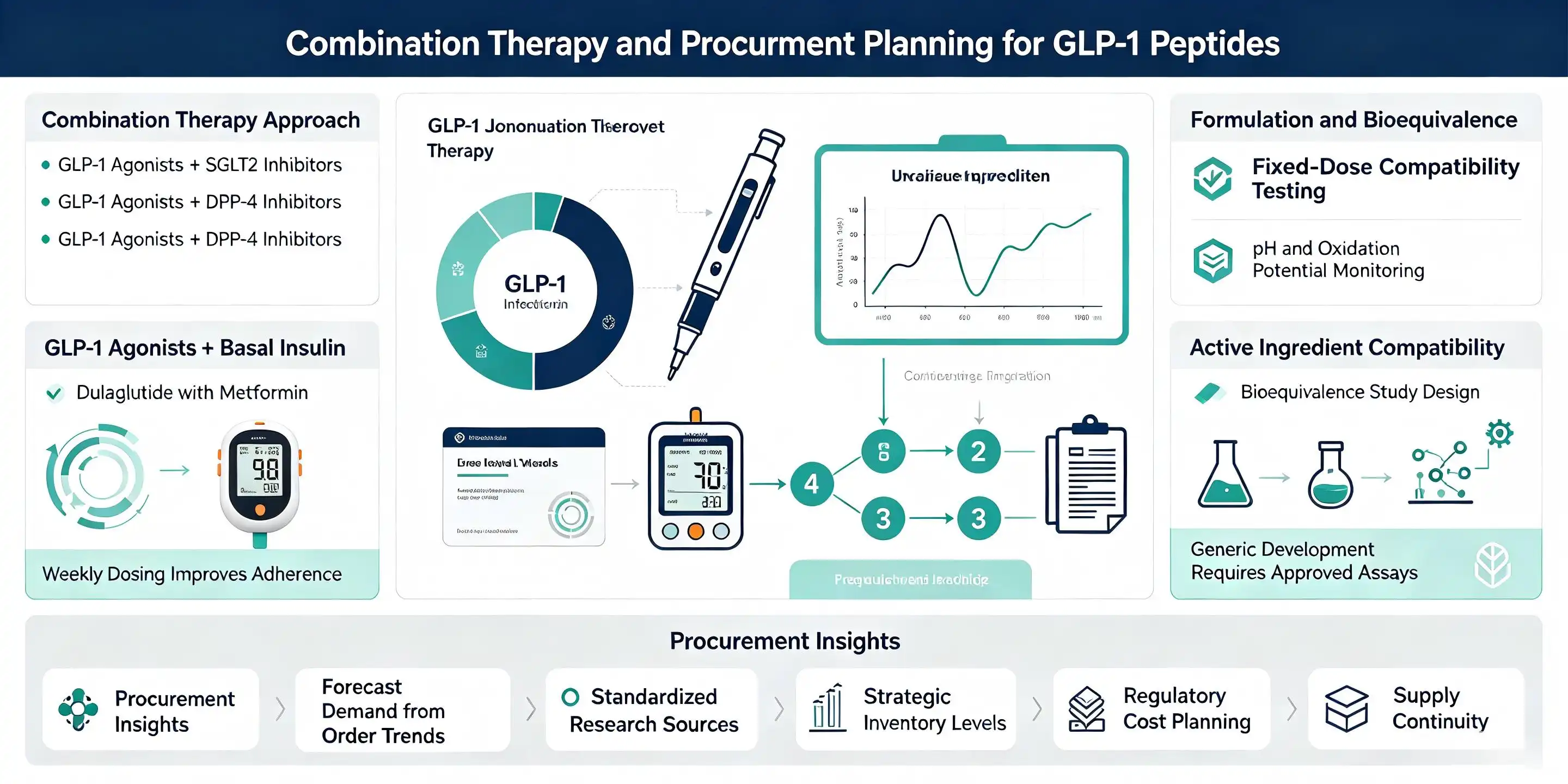
To treat metabolic diseases, mixtures of GLP-1 agonists with SGLT2 inhibitors, DPP-4 inhibitors, or basal insulin formulations are being used more and more. You can take metformin, sulfonylureas, or insulin glargine with dulaglutide without any pharmacokinetic interactions that are clinically important. Formulators have to make sure that the active ingredients don't react directly with each other when they make fixed-dose mixes. They need to pay extra attention to how the pH and oxidation potential change with different storage settings.
Based on how patients react, giving shots once a week works much better than every day. This means that in real life, glucose control is better. This factor of ease changes how much people think the market will want something, especially for Dulaglutide powder due to its once‑weekly dosing profile. Based on order trends and where the drugs are listed in the inventory, procurement teams try to guess how many drugs will be needed. To make generic versions of these drugs, testing methods and bioequivalence studies need to be approved, which costs money. Standardized sources for study are useful in this case.
Strategic Procurement Decision Guide: Selecting Between Dulaglutide and Semaglutide Powders
When models are used to decide how to buy peptide APIs, they look at more than just the price per unit. Researchers working on new GLP-1 analogs can use dulaglutide's well-studied receptor binding rates and big body of literature to make it easier to study the link between structure and activity. We can use different linker schemes or Fc engineering ways to make better long-acting peptides based on the structure of the fusion protein.
When making more of something, it's best to use peptides that have strong production methods that give consistent quality measures. Using recombinant expression systems to make dulaglutide works with the way biopharmaceuticals are set up now. This might mean that businesses that want to grow their GLP-1 businesses don't have to spend as much on big-ticket items. On the other hand, companies that make chemicals rather than biologics might work better with semaglutide's made peptide base.
When generic drugs are made is affected by intellectual property areas, and when new companies can join the market is determined by patent expiration dates. Bid managers need to make sure that buying materials fits with the goals of clinical research and that API sources meet regulatory needs before the start of the key study when setting up supply chains for biosimilar programs. You can lower the risks of getting to market too quickly and the uncertainty of getting regulatory approval by building smart partnerships with certified sources who can help with technical aspects of the development process.
Conclusion
You can choose between Dulaglutide powder and semaglutide, both of which are GLP-1 receptor agonists and work well together. Each is good for dealing with diabetes and fat in its own way. It is clear that semaglutide is better at helping people lose weight and keep their blood sugar levels in check, but dulaglutide is better at treating diabetes and might be cheaper in some cases. Which peptides to buy relies on how well their properties fit with your growth goals, your production skills, and the types of patients you want to treat.
Both substances need materials that are very pure and meet strict medicinal standards in order to work. To pick a provider, it's important to look for ones with good certifications, legal paperwork, and dependable operations. You can plan where to get the materials you need for a good therapeutic development and market launch if you understand these compare profiles.
FAQ
What distinguishes the mechanisms of dulaglutide from semaglutide at the molecular level?
They both connect to and turn on GLP-1 receptors, but their shapes have changed, so they work in the body in different ways. The IgG4 Fc fusion protein structure in dulaglutide recycles FcRn receptors to make the half-life longer, and semaglutide helps albumin bind by fatty acid acylation. Dosing times of once a week are similar for different molecular methods. This changes what needs to be formulated and how the product is made.
How do quality standards differ for research-grade versus pharmaceutical-grade peptide materials?
It's very important that research-grade products are pure and have proof of name. Most of the time, they need to be at least 98% clean by HPLC and have spectral data to prove it. Pharmaceutical-grade APIs need more paperwork, such as tests for endotoxin levels, leftover solvents, and elemental impurities according to ICH Q3D. They also need full stable studies that follow ICH standards. The GMP production approval must be on hand for materials that are going through the clinical testing steps.
Can dulaglutide and semaglutide be used in combination therapy formulations?
It is now more likely that mixing GLP-1 agonists with other diabetes drugs will work better than giving different GLP-1 chemicals at the same time. A lot of the time, these peptides are used with metformin, SGLT2 inhibitors, or basal insulin to treat diabetes together. Before you can make a fixed-dose mixture, you need to make sure that the chemicals work well with each other and that the strength of each active ingredient doesn't change over time.
Partner with a Trusted Dulaglutide Powder Supplier for Your Research Needs
Xi'an Yihui Bio-technology Co., Ltd. can help you get the peptides you need by using ISO-certified quality methods to make Dulaglutide powder that is safe for use in medicine. For 13 years, we've worked with pharmaceutical companies, research centers, and CDMO partners in more than 100 countries. This shows how dedicated we are to reliable supply chain performance. We always have a lot of stock on hand, and we can pack it in a variety of ways, from 1g for study to 1kg for production.
Our whole range of goods comes with full Certificates of Analysis that show they are at least 98% pure and meet the standards set by the International Pharmacopoeia. We have a team of experts who are quick to help with recipe issues, regulatory paperwork needs, and custom synthesis questions. You can talk to our experts about your project details by emailing sales@yihuipharm.com. You can also learn how our low prices, GMP-compliant output, and 24x7 customer service can help you stay on track with your growth.
References
1. Nauck MA, Meier JJ. GLP-1 receptor agonists in type 2 diabetes: mechanisms of action and clinical outcomes. Diabetes, Obesity and Metabolism. 2021;23(Suppl 3):23-35.
2. Drucker DJ, Habener JF, Holst JJ. Discovery, characterization, and clinical development of the glucagon-like peptides. Journal of Clinical Investigation. 2017;127(12):4217-4227.
3. Gerstein HC, Colhoun HM, Dagenais GR, et al. Dulaglutide and cardiovascular outcomes in type 2 diabetes (REWIND): a double-blind, randomized placebo-controlled trial. The Lancet. 2019;394(10193):121-130.
4. Marso SP, Bain SC, Consoli A, et al. Semaglutide and cardiovascular outcomes in patients with type 2 diabetes. New England Journal of Medicine. 2016;375(19):1834-1844.
5. Pratley RE, Aroda VR, Lingvay I, et al. Semaglutide versus dulaglutide once weekly in patients with type 2 diabetes (SUSTAIN 7): a randomized, open-label, phase 3b trial. The Lancet Diabetes & Endocrinology. 2018;6(4):275-286.
6. Kalra S, Baek SH, Kang JG. Clinical considerations in the use of long-acting GLP-1 receptor agonists: a focus on dulaglutide and semaglutide. Diabetes Therapy. 2020;11(7):1541-1557.

Send Inquiry
Related Industry Knowledge