
Does plecanatide powder cause weight gain?
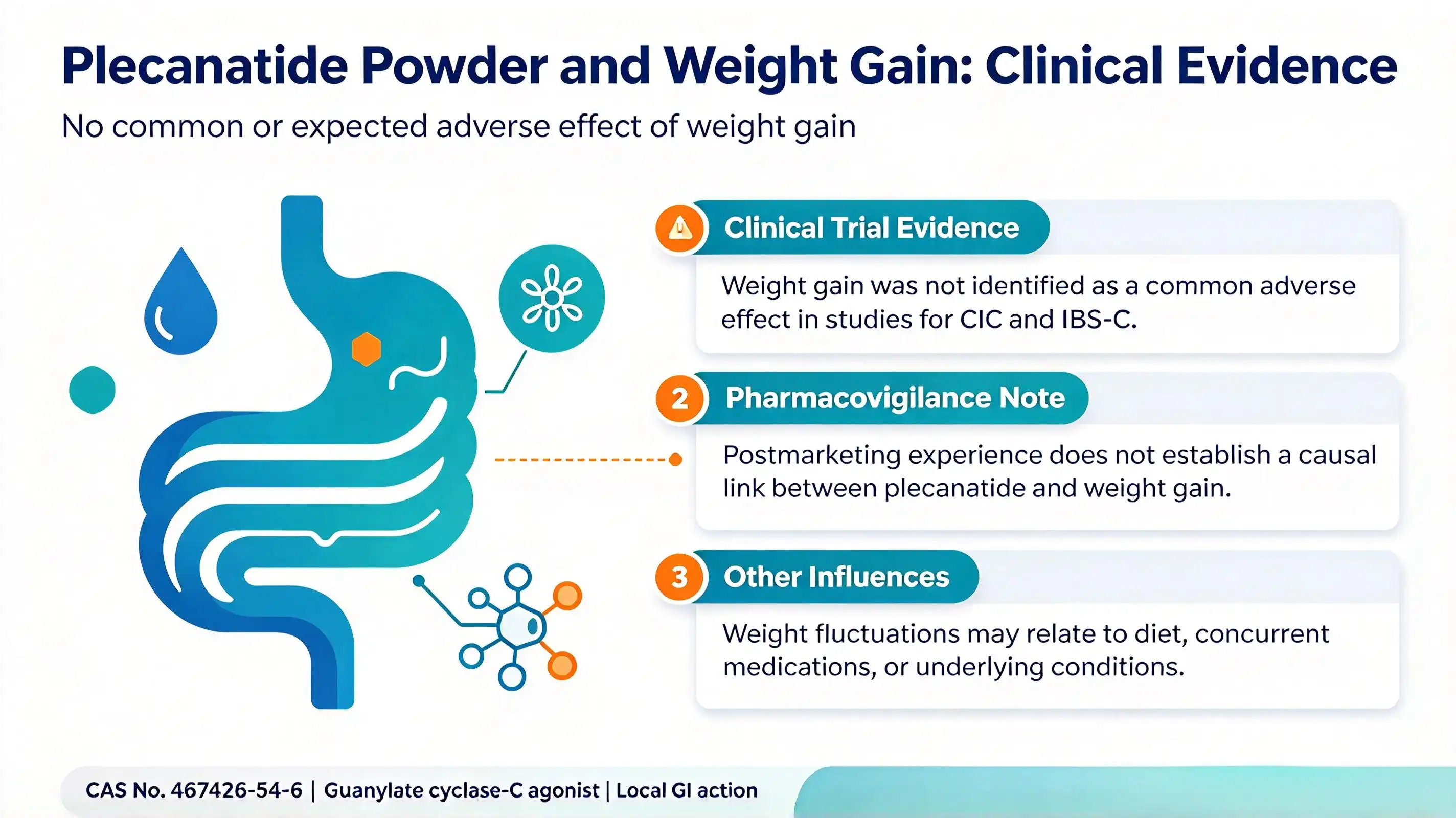
Clinical trials and pharmacovigilance data consistently show that plecanatide powder does not cause weight gain. The synthetic peptide, classified as a guanylate cyclase-C agonist with CAS No. 467426-54-6, acts locally in the gastrointestinal tract without systemic absorption that would affect metabolic pathways or appetite regulation. Studies evaluating this peptide for irritable bowel syndrome with constipation and chronic idiopathic constipation have not identified weight gain as a common or expected adverse effect. Any weight fluctuations observed in patients typically relate to underlying health conditions, dietary patterns, or concurrent medications rather than the therapeutic agent itself.
Understanding Plecanatide Powder and Its Mechanism of Action
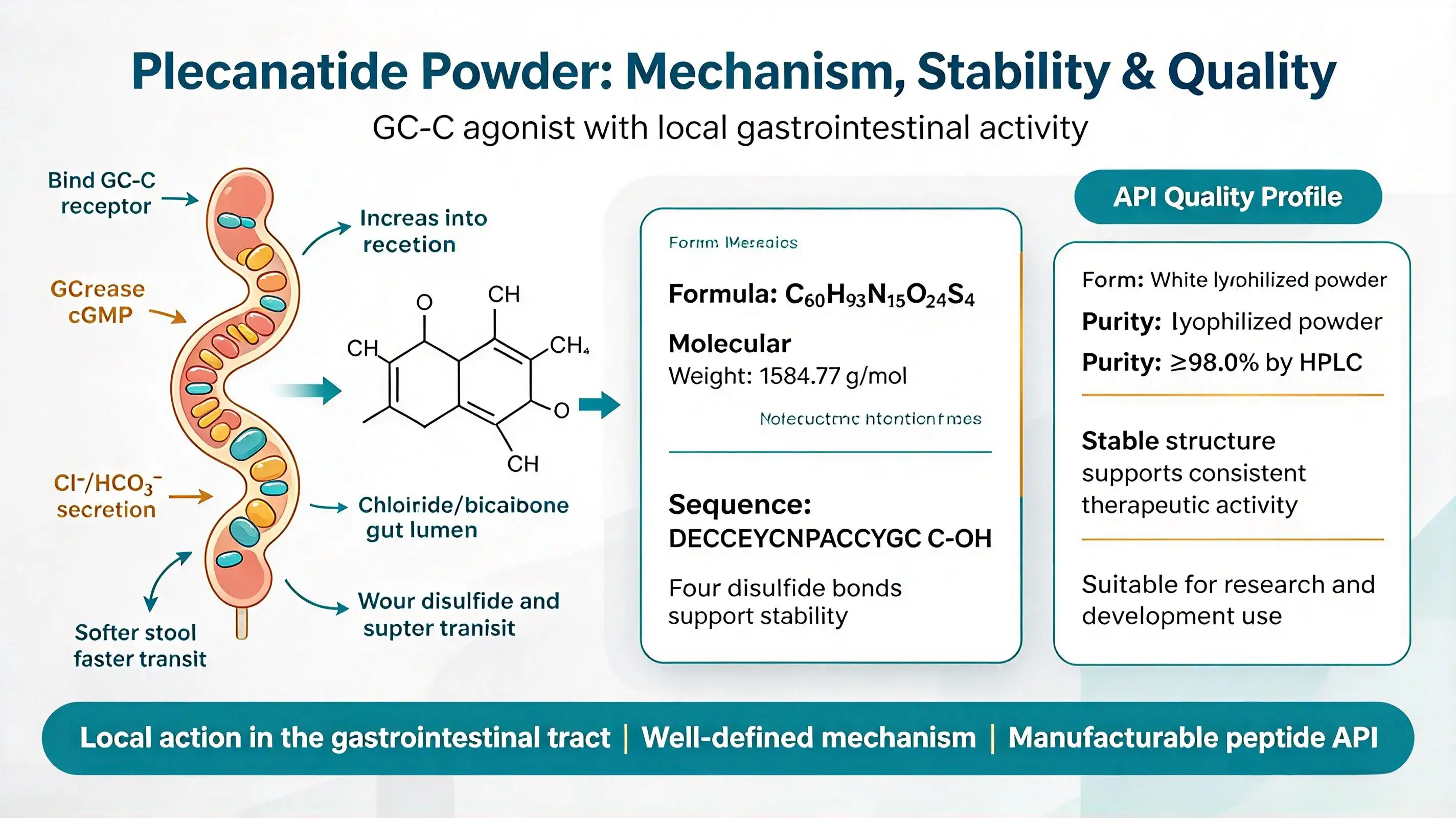
Plecanatide powder is a big step forward in the field of gastrointestinal medicine. This man-made peptide, which has the formula C₆₀H₉₃N₁₅O₂₄S₄ and a molecular weight of 1584.77 g/mol, acts like uroguanylin, an endogenous peptide that controls the balance of fluids in the gut. Knowing how this chemical works helps you understand its side effects and why worries about weight gain are false.
How GC-C Agonists Function in the Gut
The peptide only binds to guanylate cyclase-C receptors on the inner surface of intestine epithelial cells after being given. This binding starts a chain reaction inside the cells that raises the amounts of cyclic guanosine monophosphate. This makes the cells release chloride and bicarbonate into the intestine lumen. This creates an osmotic gradient that pulls water into the bowel. This makes stool softer and speeds up its movement through the colon. The compound stays in the digestive tract, where it does its healing work, because this mechanism doesn't depend on systemic circulation.
Clinical Evidence Supporting Efficacy
Several Phase III clinical studies have shown that this guanylate cyclase-C agonist greatly increases the number of bowel movements and decreases stomach pain in people who have conditions that cause constipation. The peptide's sequence is Asp-Glu-Cys-Cys-Glu-Tyr-Cys-Cys-Asn-Pro-Ala-Cys-Cys-Tyr-Gly-Cys-Cys-OH. It has four disulfide bonds that keep its structure stable, which means it can't be broken down by enzymes in the harsh environment of the gut. This steadiness makes sure that the therapeutic activity stays the same during the whole treatment time.
If people in charge of buying things are looking at this peptide for use in drug development, they should know that its white lyophilized powder form, which is ≥98.0% pure by HPLC, meets the high quality standards needed for both research uses and possible generic drug development. Because the compound is stable and its mechanism is well understood, it is a good choice for companies looking for reliable active pharmaceutical ingredients.
Investigating the Relationship Between Plecanatide Powder and Weight Gain
There is strong evidence that Plecanatide powder does not change body weight, as shown in regulatory submissions and post-marketing surveillance data. It is important to understand the pharmacokinetic profile when looking at possible side effects.
Pharmacokinetic Properties and Systemic Exposure
When taken by mouth, the peptide is not absorbed very well by the body. Pharmacokinetic studies show that in most cases, plasma concentrations stay below what can be measured. This means that the substance only works locally and doesn't get into the systemic circulation. This limited action is what keeps metabolic factors, like weight, from changing during treatment.
Hormonal cues like leptin and ghrelin, metabolic rate, and hypothalamic centers all work together to control weight in a complicated way. Since the guanylate cyclase-C agonist doesn't get through the intestinal barrier in large enough amounts, it can't affect the parts of the brain that control hunger or energy use. This basic pharmaceutical principle reassures both doctors and buying experts that worries about weight are not based on science.
Analysis of Clinical Trial Safety Data
A lot of safety data came from large studies that treated a lot of people for long amounts of time. It was always clear from adverse event reports that the most common side effects were digestive, especially diarrhea, which happened to about 5% of patients. People who took the peptide did not gain more weight than people who took a placebo. This shows that the peptide does not cause metabolic changes that would make fat build up.
When quality assurance managers look at source paperwork, they should make sure that the Certificate of Analysis reports show that the peptide content is at least 80%, the water content is at least 10%, and the acetate content is between 5% and 12.0%. These requirements, along with single impurity levels of less than 2.0%, make sure that the pharmaceutical-grade material meets safety and effectiveness standards set by the government without adding any variables that could change how well patients do.
Comparing Plecanatide Powder with Other Treatments Regarding Weight Effects
When procurement professionals compare different treatments for conditions related to constipation, they need to look at how safe they are. Figuring out how various processes connect to trends of side effects can help with making smart sourcing choices regarding Plecanatide powder.
Linaclotide: A Related GC-C Agonist
Linaclotide and this peptide both work by targeting guanylate cyclase-C receptors, which is how they work together. In the same way, clinical data for linaclotide show that it does not cause weight gain. The compounds are mostly different in their peptide sequence and how strong they are, but they both stay in the digestive tract. Both peptides are often needed by research institutions doing comparison studies. The minimum order quantity of 1g is low enough to meet the needs of small-batch research while still keeping costs low.
Lubiprostone: Alternative Mechanism
Lubiprostone works by opening chloride channels instead of stimulating guanylate cyclase-C receptors. Even though it works to relieve constipation, it has different side effects, some of which include feeling sick. Lubiprostone doesn't have any effects on weight either, which shows that treatments for constipation don't usually change body mass as long as their actions stay in the gut.
Osmotic and Stimulant Laxatives
Most traditional laxatives work by increasing osmotic pressure or speeding up the movement of the stomach. Like the peptide-based therapies, these substances don't make you gain weight. Any weight changes that people think they've noticed after taking laxatives are probably just changes in fluids and not real changes in fat or lean body mass. Knowing these differences helps R&D teams give accurate information about safety to clients and healthcare workers further down the line.
Finding high-purity peptides is very important for drug companies that are making generic versions or doing bioequivalence studies. Xi'an Yihui offers research-grade materials that are at least 95% pure by HPLC, which helps with the strict method development and stable testing programs that government agencies need.
Procurement Considerations for Plecanatide Powder in Global B2B Markets
When looking for medicinal peptides, you need to pay close attention to quality control, following the rules, and making sure the supply chain is reliable. When it comes to the Plecanatide powder market, buying managers need to think about certain things to make sure that product development and launch go smoothly.
Regulatory Compliance and Supplier Certification
GMP certification is the minimum standard for any company that wants to sell active pharmaceutical ingredients for medical use in humans. In addition to GMP, buying teams should make sure that sellers keep their FDA Drug Master Files up to date and provide full paperwork packages that include stability data, Certificates of Analysis, and Material Safety Data Sheets. When used in cosmetics or research, ISO certification shows that you are committed to quality management systems that make sure consistency from batch to batch.
Companies that want to sell in Europe need to make sure that their suppliers know about REACH rules and can provide the registration paperwork that is needed. The peptide's CAS number 467426-54-6 makes it easier for regulators to keep track of it and makes sure that crossing foreign lines goes smoothly for customs officials.
Pricing Strategies and Volume Considerations
The peptide comes in different sizes of packaging (1g, 100g, and 1kg), so buyers can choose the right size for their needs at any stage of growth. Minimum order amounts of 1g are good for early-stage study projects, but bulk supplies with negotiated price structures are needed for commercial-scale production. When purchasing things, managers should look at the total cost of ownership, which includes shipping costs, storage conditions, and any currency changes that might affect international deals.
Trading companies that serve more than one market often put price competitiveness first, but they can't skimp on quality or following the rules. A good buying process strikes a balance between minimizing costs and maximizing safety, making sure that the quality of the materials helps with later product registration and market acceptance.
Logistics and Cold Chain Management
Although the lyophilized powder form is very stable, it is still very important to store it properly. For long-term storage, the material should be kept at controlled temperatures, usually between 2°C and 8°C, and should be kept away from light and moisture. Logistics partners must show that they know how to handle pharmaceutical-grade peptides, which includes making sure that the temperature is monitored during transport and that customs procedures cause as few delays as possible.
When something is in stock, there are no worries about lead times for jobs that need to be done quickly. Companies that are working on tight development schedules or trying to meet sudden demand spikes can get a competitive edge from suppliers who can ship right away from existing stock.
Ensuring Safe and Effective Use: Dosage, Usage, and Monitoring
Even though this article is mostly about B2B procurement, knowing the clinical application guidelines can help procurement professionals understand quality standards and connect with R&D teams and clinical partners in a more meaningful way regarding Plecanatide powder.
Standard Dosing Protocols
The usual therapeutic amount of 3 mg once a day comes from clinical studies that found the best mix between effectiveness and tolerability. This dose schedule consistently relieves symptoms without having too many negative effects on the digestive system. Dosing for research purposes depends on the type of trial, the species, and the goals of the study. Suppliers should give us materials that are pure enough that we can repeat the experiments and figure out what they mean.
Patient Monitoring and Safety Surveillance
Healthcare workers keep an eye on their patients to see how the treatment is working and if there are any side effects, especially in the first few weeks of therapy. Even though weight gain isn't usually a problem, full monitoring picks up on any odd events that could mean there are problems with the product or that a patient is sensitive. Pharmacovigilance systems are strengthened and total product safety ratings are improved when suppliers, dealers, and end users share information with each other.
Long-Term Safety Considerations
Long-term safety statistics from months to years of treatment show that guanylate cyclase-C agonists have a good risk-benefit profile. Since there is no systemic exposure, there aren't many drug-drug interactions and the chance of off-target effects is low. Because of these qualities, the peptide is appealing for long-term treatment of conditions related to constipation. This supports continued market demand that helps everyone in the supply chain, from the manufacturer to the patient.
R&D teams developing combination products or modified-release formulas should consider how the delivery methods and excipients affect the stability and bioavailability of the peptides. Custom synthesis suppliers can help with formulation development by giving changed peptide sequences or conjugated forms that make therapeutic properties better.
Conclusion
Plecanatide powder does not make people gain weight, as shown by clinical trials, pharmacokinetic studies, and real-life use. Its method of action stays in the digestive tract, so it doesn't have any effects on metabolism or appetite control in the whole body. If procurement workers are looking for reputable sources of this pharmaceutical peptide, they should focus on suppliers who can show they follow good manufacturing practices (GMPs), do thorough analyses, and keep the supply chain open. Understanding the compound's safety profile, legal requirements, and quality specs helps the pharmaceutical, research, and biotechnology industries make smart buying choices that lead to successful product development and market entry.
FAQ
Does plecanatide affect metabolism or appetite?
The peptide doesn't change the metabolism or the signals that control hunger. Its effects are limited to intestinal epithelial cells, where it increases the release of fluids without changing the hormones that control hunger, fullness, or energy use. Metabolic parameters have not changed in clinical studies that looked for changes caused by treatment.
Can I source plecanatide for individual research projects?
This pharmaceutical peptide can only be used for research purposes in institutions and businesses. Individual consumers can't buy the material, which makes sure that the right checks are done and that the rules are followed. Material can be bought by research institutions, universities, and pharmaceutical businesses with minimum sales of 1g.
How does plecanatide compare to dietary fiber for constipation?
Plecanatide powder provides more reliable pharmacological effects than dietary fiber, which boosts active fluid production through receptor-mediated signaling while fiber uses mechanical effects. Both methods keep you from gaining weight, but the peptide is more useful for treating long-term problems when diet changes don't work.
What documentation should I request from suppliers?
Certificates of Analysis with HPLC chromatograms, peptide sequencing confirmation, impurity profiles, microbial tests results, Material Safety Data Sheets, and stability data should all be part of a complete purchase package. For applications that are controlled, you should ask for information about the Drug Master File and proof of GMP certification.
Partner with Xi'an Yihui for Premium Plecanatide Powder Supply
If you need to buy pharmaceutical-grade peptides that meet the highest quality standards, Xi'an Yihui Bio-technology Co., Ltd. is ready to help. We have been making Plecanatide powder for a long time and can offer you material that is 99% pure by assay and ≥98.0% pure by HPLC. We can also provide you with all the paperwork you need to support your regulatory submissions. Our ISO and GMP-certified production facilities show that we are dedicated to the high quality that purchasing managers and quality assurance professionals expect.
We know that relationships work best when they involve more than just supplying goods. Our expert team can help you with analysis methods, stability studies, and formulation problems, which will help your R&D projects move forward quickly. We can meet the needs of both early-stage study and commercial-scale manufacturing because we have products in stock and can package them in a variety of ways, ranging from 1g to 1kg.
Xi'an Yihui is a great partner for pharmaceutical companies, research institutions, and biotechnology firms around the world because our prices are competitive, our shipping times are reliable, and our customer service team is available 24 hours a day, seven days a week. Contact our team at sales@yihuipharm.com to talk about your unique needs and find out how our knowledge of pharmaceutical peptides can help your project succeed faster.
References
1. Shailubhai K, Comiskey S, Foss JA, et al. Plecanatide, an oral guanylate cyclase C agonist acting locally in the gastrointestinal tract, is safe and well-tolerated in single doses. Digestive Diseases and Sciences. 2013;58(9):2580-2586.
2. Miner PB, Koltun WD, Wiener GJ, et al. A randomized phase III clinical trial of plecanatide, a uroguanylin analog, in patients with chronic idiopathic constipation. American Journal of Gastroenterology. 2017;112(4):613-621.
3. Brenner DM, Fogel R, Dorn SD, et al. Efficacy, safety, and tolerability of plecanatide in patients with irritable bowel syndrome with constipation: results of two phase 3 randomized trials. American Journal of Gastroenterology. 2018;113(5):735-745.
4. Waldman SA, Camilleri M. Guanylate cyclase-C as a therapeutic target in gastrointestinal disorders. Gut. 2018;67(8):1543-1552.
5. Food and Drug Administration. Clinical Pharmacology and Biopharmaceutics Review for Plecanatide. Center for Drug Evaluation and Research. 2016.
6. Busby RW, Kessler MM, Bartolini WP, et al. Pharmacologic properties, metabolism, and disposition of plecanatide, a novel uroguanylin analog. Journal of Pharmacology and Experimental Therapeutics. 2013;344(1):196-206.

Send Inquiry
You may like
Related Industry Knowledge