
Does lanreotide raise blood sugar?
Lanreotide powder, a synthetic somatostatin analog (CAS No.: 108736-35-2), does influence blood glucose regulation through its modulation of insulin and glucagon secretion. Clinical observations reveal that while this pharmaceutical peptide primarily stabilizes hormone secretion, it can cause both hyperglycemia and hypoglycemia depending on individual metabolic conditions.
The effect varies significantly among patients, particularly those with pre-existing glucose metabolism disorders. For procurement managers evaluating peptide APIs, understanding these metabolic implications ensures informed sourcing decisions that align with therapeutic safety profiles and regulatory compliance standards essential for pharmaceutical and research applications.
Understanding Lanreotide and Its Pharmacology
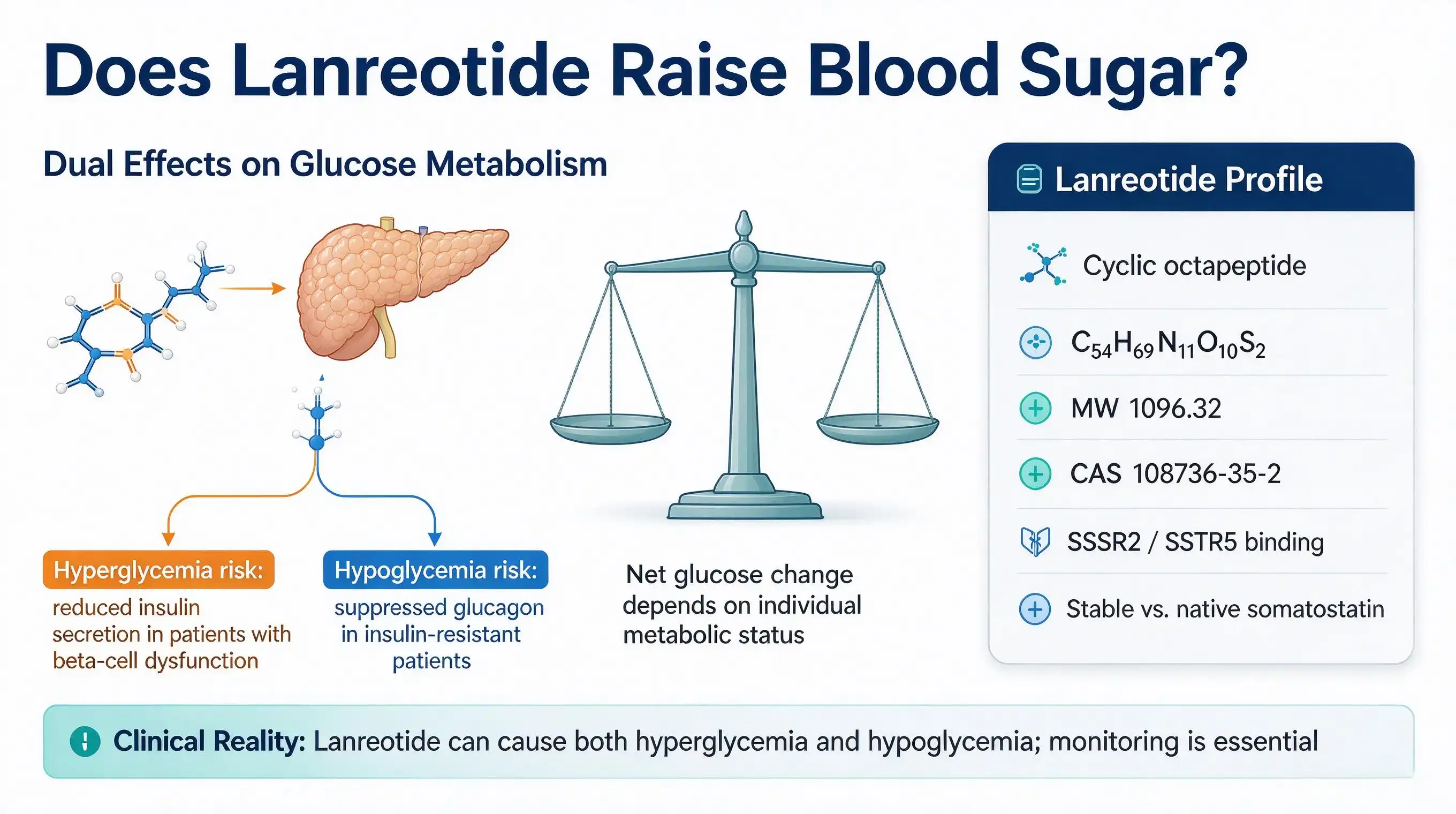
Lanreotide powder is a big step forward in somatostatin analog treatment. It meets important needs in treating acromegaly and neuroendocrine tumors. The cyclic octapeptide (molecular formula: C₅₄H₆₉N₁₁O₁₀S₂, molecular weight: 1096.32) binds preferentially to somatostatin receptor subtypes. This sets off a chain reaction of hormonal changes in the endocrine system. The order of the compound—D-β-Nal-Cys-Tyr-D-Trp-Lys-Val-Cys-Thr-NH₂—makes it more stable than native somatostatin. This increases its treatment window and makes it especially useful for research-grade uses.
Mechanism of Action and Receptor Interaction
Lanreotide powder's pharmacological profile is based on its strong ability to bind to somatostatin receptors (SSTR2 and SSTR5). This binding stops the pituitary gland from releasing growth hormone and changes the release of hormones from the pancreas at the same time. Inhibiting both insulin and glucagon, the compound creates a delicate balance that has a direct effect on glucose homeostasis. Unlike first-generation analogs, Lanreotide powder stays in the receptors for a longer time. This means that the therapeutic benefits last longer, but it also means that metabolic factors must be carefully watched during treatment routines.
Clinical Indications and Formulation Availability
Lanreotide powder is used by pharmaceutical companies and study institutions in a number of treatment areas. The white lyophilized powder form is very stable as long as it is kept cool, dry, and out of the light. There are strict quality standards for peptide drug development and neuroendocrine tumor research, and research-grade Lanreotide powder meets them. Its purity is ≥98.0% (HPLC) and its test value is 99%. Packaging options from 1g to 1kg can be used for both small-batch lab studies and larger-scale formulation development. This meets the needs of both CRO/CDMO operations and academic research departments.
Does Lanreotide Raise Blood Sugar? Scientific Insights and Clinical Evidence
The connection between taking Lanreotide powder and blood sugar levels is complicated, and buying experts need to know about it when they are looking for this pharmaceutical peptide. Controlled trials show that Lanreotide powder's impact on glycemia is different for each patient, depending on their baseline metabolic status and other medicines they are taking at the same time.
Dual Effects on Glucose Metabolism
Clinical pharmacologic tests show that Lanreotide powder can cause episodes of both high and low blood sugar. This dual effect is caused by the fact that it lowers both insulin and glucagon at the same time. When the pancreas works normally, the regulated suppression usually leads to a small net glucose change. But people whose beta cells don't work properly may have high blood sugar because their bodies don't make as much insulin.
On the other hand, people who are resistant to insulin may feel better because their bodies stop making too much glucagon. Because Lanreotide powder APIs are so complicated, procurement teams that source them have to provide detailed technical paperwork that helps formulators and doctors predict how the drug will react in the body.
Comparative Analysis with Similar Somatostatin Analogs
Comparing Lanreotide powder to octreotide and pasireotide, the latter two have worse glucose safety profiles. Higher rates of hyperglycemia are seen with pasireotide because it binds to a wider range of receptors, including SSTR5 more strongly than Lanreotide powder. Octreotide has moderate affects on glucose, so Lanreotide powder is the better choice for people who are more likely to develop diabetes.
When choosing suppliers, procurement managers who work with pharmaceutical clients need to keep these different safety profiles in mind. The choice of somatostatin analogs affects not only how well a treatment works, but also how long it takes to get approved by regulators and how often it needs to be monitored after it's been sold.
Long-Term Metabolic Considerations
Long-term Lanreotide powder treatment adds more metabolic factors to think about besides short-term glucose changes. Long-term clinical data shows that about 10 to 15 percent of patients develop glucose problems that don't go away and need to be fixed. Insulin resistance or progressive beta-cell dysfunction can happen after months of treatment that doesn't stop.
When quality assurance teams look at Lanreotide powder, they need to make sure that the supplier's paperwork includes stability data and degradation profiles. This is because the quality of the peptides directly affects the safety of metabolism. When making purchases, companies should give more weight to sellers who offer full COA paperwork, MSDS records, and batch-to-batch stability data that supports long-term clinical safety.
Safe Administration and Dosage Guidelines to Minimize Side Effects
Paying close attention to dosing guidelines and application methods is necessary to get the most out of Lanreotide powder treatment. These medical concerns directly affect the buying rules and quality standards for pharmaceutical-grade peptide powders.
Standard Dosing Regimens
For neuroendocrine tumors, the usual dose of Lanreotide powder is between 60 mg and 120 mg, injected deeply under the skin every 28 days. The starting dose is based on how bad the disease is and how well the patient can handle it. People who have problems with their glucose metabolism should be gradually increased the dose. Different concentrations and volumes may be needed for research purposes, so flexible sourcing arrangements are needed. Those in charge of buying things should make sure that the companies that sell Lanreotide powder can meet their specific formulation needs. These needs should include specific peptide concentrations and carrier compositions that match the research protocols of the institution.
Blood Glucose Monitoring Best Practices
Before starting Lanreotide powder therapy, clinical teams take baseline tests of glucose levels and keep an eye on patients regularly during treatment. Every three to four months, testing for fasting blood glucose and HbA1c is important for safety reasons. For research purposes using Lanreotide powder, labs need to set up parallel monitoring protocols to record metabolic effects during early studies. Suppliers that work with research institutions should give detailed advice on how to do the right math for dosing and how to reconstitute peptides in a way that keeps their biological activity and integrity throughout the duration of an experiment.
Procurement Considerations: Sourcing and Handling Lanreotide Powder
To get reliable Lanreotide powder supplies, suppliers must go through strict quality control and review methods. Pharmaceutical peptides are very specialized, which makes them hard to get. You need to know a lot about both technology and regulations in order to buy them.
Identifying Reputable Suppliers and Quality Verification
In addition to well-known drug companies, specialized peptide producers also make Lanreotide powder that is suitable for research and meets strict purity requirements. Purchasing teams should give more weight to sellers who can show that they are ISO certified, follow GMP, and have documented quality control methods. Lanreotide powder (C₅₄H₆₉N₁₁O₁₀S₂) is very difficult to synthesize and purify because it has a lot of different parts. This makes it necessary to have advanced peptide synthesis skills and chemical confirmation methods. As part of qualifying a supplier, sites should be inspected, references should be checked with current clients in the biotech and pharmaceutical industries, and the analytical methods used to measure purity should be confirmed.
Storage Stability and Shipping Protocols
Lanreotide powder needs to be kept in a controlled setting so that it stays effective throughout the supply chain. Storing sensitive amino acid residues at 2–8°C in containers that are sealed and out of the light stops them from oxidizing and breaking down. As part of international shipping rules, temperature monitoring devices and insulated packaging must be used to keep the cold chain intact. Contracts for buying things should include details about how to store them, how long they can be shipped, and what to do if the temperature changes. Buyers and sellers must agree on quality standards that include stability testing information, expiration dates, and retesting protocols that make sure the product is still good when it's delivered.
Pricing Dynamics and Order Flexibility
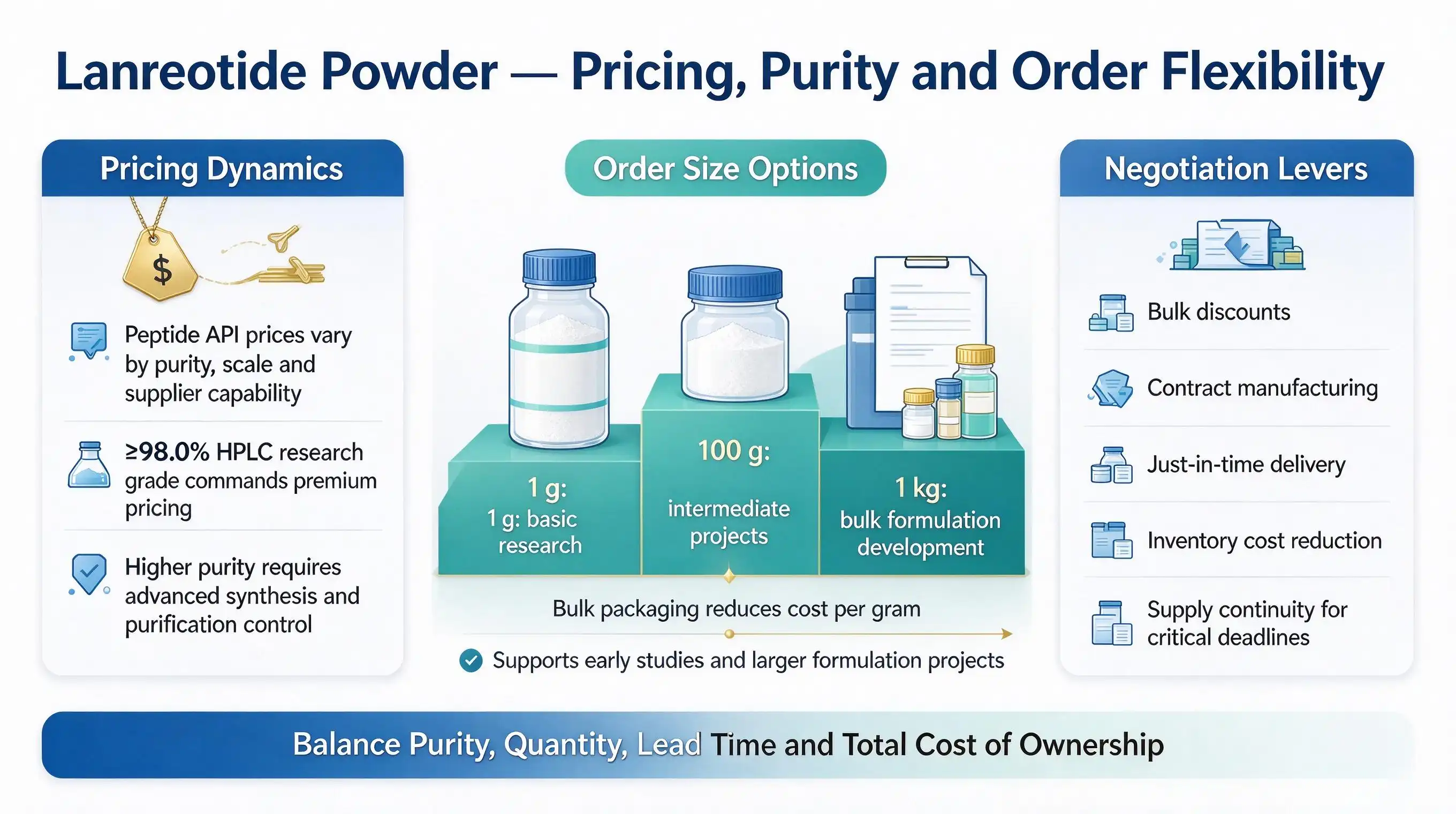
Prices for peptide APIs vary a lot depending on the purity requirements, the scale of the synthesis, and the supplier's abilities. Due to the technical difficulty of reaching such high purity levels, research-grade Lanreotide powder that is ≥98% pure costs more than lower-grade products. Minimum order quantities start at 1g, which is enough for basic research. For bigger projects, bulk packaging options (100g, 1kg) save money. During negotiations for purchases, people should look into options like bulk discounts, contract manufacturing, and just-in-time delivery that lower the cost of inventory while still making sure there is a steady supply for important study deadlines and business production plans.
Managing Risks and Side Effects for Procurement and Clinical Use
Risk management plans that cover a lot of areas protect both people and the money spent on buying Lanreotide powder supplies. Knowing the full safety picture helps prevent bad things from happening and makes sure that regulations are followed.
Common Adverse Events and Blood Sugar Disturbances
In addition to changes in glucose levels, Lanreotide powder therapy causes diarrhea, abdominal pain, and nausea in about 30 to 50 percent of patients. Changes in bile flow cause gallstones to form more quickly. Injection site reactions are still common, but they are usually not too bad. For procurement teams, knowing this profile of adverse events helps them choose which suppliers to work with, especially when it comes to choosing excipients and formulation buffers that could affect tolerability. When suppliers give formulators detailed information about formulations, they can find the best delivery systems that have the fewest side effects while still being effective.
Contraindications and Risk Mitigation Strategies
Lanreotide powder shouldn't be given to people who have serious kidney damage or who are known to be hypersensitive to somatostatin analogs. Careful benefit-risk analysis is needed during pregnancy and breastfeeding. When quality managers look at peptide suppliers, they should make sure that the manufacturing processes include endotoxin testing and sterility validation that are right for injectable formulations.
There must be acceptance standards in the procurement specs for impurities and breakdown products that could raise the risk of immunogenicity. Procurement teams, quality assurance offices, and clinical research directors work together to make sure that the Lanreotide powder they get meets all safety standards and rules set by the institution.
Conclusion
Lanreotide powder's effect on blood sugar is a practical issue that can be dealt with as long as the right patients are chosen and the drug is properly monitored. The balanced effects of the synthetic somatostatin analog on insulin and glucagon lead to unique metabolic reactions that need specific therapeutic monitoring. Pharmaceutical procurement professionals need to carefully evaluate suppliers, keep detailed quality records, and pay attention to cold chain logistics in order to find high-purity Lanreotide powder.
The compound is an important part of current peptide research packages because it has therapeutic value in neuroendocrine research and hormone control studies. Organizations can support new research while keeping patient safety standards high throughout the entire pharmaceutical development lifecycle by making procurement choices that balance quality assurance, legal compliance, and cost optimization.
FAQ
Is lanreotide safe for patients with diabetes?
People with diabetes can be given Lanreotide powder as long as they are closely watched by a doctor and their blood sugar levels are closely monitored. Because the peptide affects both insulin and glucagon, diabetes medications that are taken at the same time need to be changed in dose. When buying things for clinical research, procurement teams should make sure that sellers offer technical literature on how to take care of diabetic patients so that procedure creation can be done in a smart way.
How frequently should blood sugar be monitored during lanreotide therapy?
According to clinical guidelines, fasting glucose levels must be checked before treatment starts, once a week for the first month, and once a month after that. Long-term glucose control can be judged by checking HbA1c every three months. When Lanreotide powder is used in research, it should be monitored at the same time using both human and animal models.
What distinguishes lanreotide from octreotide regarding glucose effects?
Lanreotide powder is less likely to cause hyperglycemia than octreotide because their receptor binding profiles and metabolic qualities are different. Due to its extended-release makeup, Lanreotide powder suppresses hormones more steadily, which lowers changes in blood sugar. When buying somatostatin analogs for certain medicinal uses that need the safest metabolic profiles, these pharmacological differences help with the choice.
Partner with Xi'an Yihui for Premium Lanreotide Powder Supply
Xi'an Yihui Bio-technology Co., Ltd. is ready to help you get Lanreotide powder. They offer research-grade quality and reliable shipping around the world. Our medicinal peptide sources meet strict purity standards (≥98.0% HPLC, 99% assay) and come with full paperwork that meets GMP and FDA regulations, such as a COA, MSDS, and stability data. We've been working with pharmaceutical businesses, research institutions, and CRO/CDMOs in more than 100 countries for over 13 years, so we know how important it is to keep the supply chain safe and make sure that products are always the same.
Our flexible packing choices (1g, 100g, and 1kg) make it possible for research projects of any size, and our in-stock inventory means that we can deliver quickly to meet tight project deadlines. You can email our technical team at sales@yihuipharm.com or visit yihuipharm.com to talk about your specific needs, get detailed product specs, or set up sample packages that show how committed we are to quality as a reliable Lanreotide powder maker.
References
1. Colao A, Bronstein MD, Freda P, et al. Pasireotide versus octreotide in acromegaly: a head-to-head superiority study. Journal of Clinical Endocrinology & Metabolism, 2014, 99(3): 791-799.
2. Grozinsky-Glasberg S, Shimon I, Korbonits M, Grossman AB. Somatostatin analogues in the control of neuroendocrine tumours: efficacy and mechanisms. Endocrine-Related Cancer, 2008, 15(3): 701-720.
3. Lundin L, Norheim I, Landelius J, et al. Carcinoid heart disease: relationship of circulating vasoactive substances to ultrasound-detectable cardiac abnormalities. Circulation, 1988, 77(2): 264-269.
4. Melmed S, Bronstein MD, Chanson P, et al. A consensus statement on acromegaly therapeutic outcomes. Nature Reviews Endocrinology, 2018, 14(9): 552-561.
5. Plöckinger U, Albrecht S, Mawrin C, et al. Selective loss of somatostatin receptor 2 in octreotide-resistant growth hormone-secreting adenomas. Journal of Clinical Endocrinology & Metabolism, 2008, 93(4): 1203-1210.
6. Rubin J, Ajani J, Schirmer W, et al. Octreotide acetate long-acting formulation versus open-label subcutaneous octreotide acetate in malignant carcinoid syndrome. Journal of Clinical Oncology, 1999, 17(2): 600-606.

Send Inquiry
You may like
Related Industry Knowledge