
Does abaloparatide work?
Yes, abaloparatide is a good way to treat osteoporosis because it raises bone mineral density and lowers the risk of vertebral fractures. Clinical studies show that Abaloparatide powder, when used properly, helps bones grow by activating the PTH1 receptor system. This synthetic peptide analogue has been especially helpful for postmenopausal women with serious osteoporosis. It works in a way that is different from other antiresorptive treatments. Within months of starting treatment, the pharmaceutical-grade compound makes improvements in bone health that can be seen and felt.
Understanding Abaloparatide Powder: What Is It and How Does It Work?
Defining Abaloparatide from a Pharmaceutical Perspective
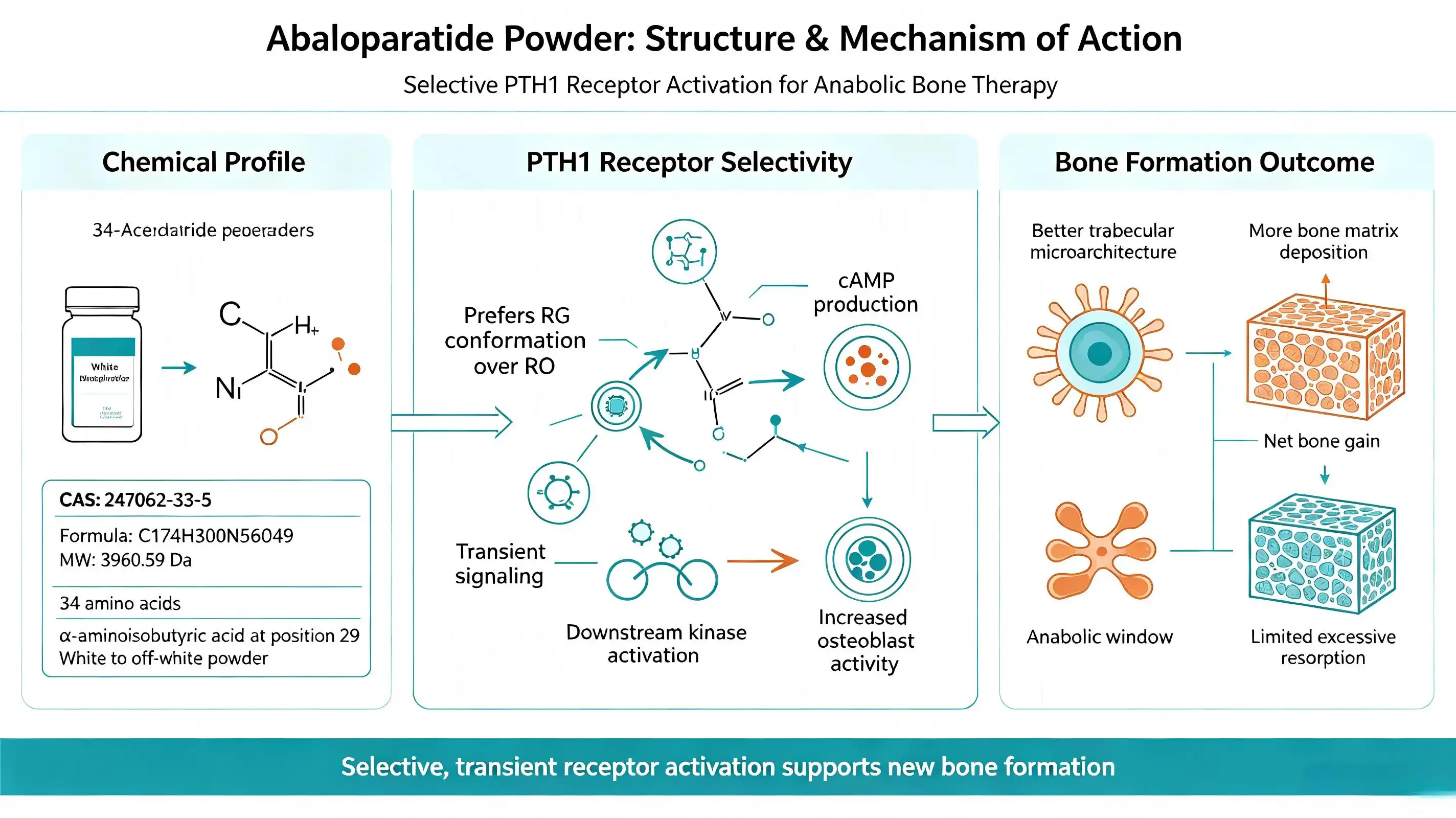
Abaloparatide is a synthetic peptide made up of 34 amino acids that was made just for anabolic bone therapy. The chemical is identified by the CAS number 247062-33-5 and has the formula C174H300N56O49. Its molecular weight is 3960.5896 Daltons. This pharmaceutical peptide is a white to off-white powder that stays stable when stored properly. This makes it useful for many research and clinical uses. The peptide sequence has a unique α-aminoisobutyric acid residue at position 29, which makes it physically different from a naturally occurring protein related to parathyroid hormone.
Molecular Mechanism and Receptor Activation
This peptide's healing effect depends on the fact that it activates the RG shape of the PTH1 receptor more than the RO shape. This selectiveness creates short-term signalling effects that boost osteoblast activity without causing too much bone loss. When the compound binds to receptors on bone-forming cells, it sets off a series of events inside the cell that include the production of cyclic AMP and the activation of downstream kinases.
These biochemical changes directly lead to better trabecular microarchitecture and more bone matrix deposition. The irregular stimulation pattern, on the other hand, causes an anabolic window that helps net bone gain, unlike continuous PTH exposure.
Applications in Osteoporosis Research and Clinical Settings
Pharmaceutical companies and research institutions use high-purity peptide material for many things, such as developing new drugs, improving formulations, and studying bone metabolism before it happens in humans. In finished dosage forms, the compound is an active pharmaceutical ingredient. It is also used as a standard in analytical laboratories. Researchers that study bone formation often use this material to look into the cellular processes that control skeletal anabolism.
This helps them understand how osteoblasts differentiate and minerals form in the bone. Researchers studying metabolic bone diseases can use pharmaceutical-grade materials that meet strict quality standards, such as being ≥98.0% pure by HPLC and having controlled impurity profiles.
Evaluating the Effectiveness: Does Abaloparatide Work for Osteoporosis?
Clinical Evidence Supporting Fracture Risk Reduction
Over 2,400 postmenopausal women with osteoporosis took part in the key ACTIVE study. Over 18 months, the treatment significantly lowered new vertebral fractures by 86% compared to the placebo group. The number of nonvertebral fractures dropped by 43% in the treatment group, showing that it effectively stopped a number of different types of fractures.
The lumbar spine's bone mineral density increased by about 11.2% and the total hip's bone mineral density increased by about 4.2%. These improvements were larger than those seen with many alternative treatments, and treatment with Abaloparatide powder directly contributed to these outcomes. These results strongly suggest that the peptide protects bones in a way that is clinically meaningful for people who are at a high risk of breaking them.
Safety Profile and Side Effect Considerations
According to data on treatment tolerability, the most common side effects are reactions at the injection site, episodes of hypercalcemia, and short-term dizziness caused by changes in blood pressure. Serious arterial events happened at rates that were about the same as in the control groups, but patients still need to be carefully screened. The compound has a boxed warning about a possible osteosarcoma risk based on toxicology studies in animals, but no cases in humans have been linked to treatment exposure.
During production, quality assurance methods help keep impurities that could affect safety ratings to a minimum. When purchasing managers look at this peptide, they should look at full toxicology reports and certificate of analysis data that say the peptide content is at least 80% and the water content is less than 10%.
Comparative Analysis with Teriparatide and Other Anabolic Agents
Head-to-head tests show that both peptides improve bone density, but different rates at which they bind to receptors lead to different clinical effects. The special RG-selective mechanism makes the anabolic effects stronger while the calcium level may rise less than with teriparatide. The length of treatment also varies, with set procedures and regulatory approvals backing certain administration times.
Cost-effectiveness analyses rely on how prices are set in each area, how insurance policies work, and how well the treatment works in the long run to avoid fractures. When making decisions about bulk purchases, you have to weigh data on effectiveness against supply chain reliability and quality certifications. How well the compound works with current pharmaceutical infrastructure and formulation technologies affects the total value propositions for generic makers and CROs building biosimilar pipelines.
Procurement Insights: How to Source Abaloparatide Powder with Confidence
Selection Criteria for Certified Manufacturers
To find reliable suppliers, you need to check a lot of compliance factors, such as ISO9001 certification for quality management systems and proof that they follow GMP. Manufacturers should give detailed certificates of analysis that show the HPLC is pure (≥98.0%), has no single impurities (≤2.0%), and has a controlled acetate content of 5.0% to 12.0%. Manufacturing credibility is established by traceability documentation that includes records of where the raw materials came from, how they were synthesised, and how consistent each batch was with the last.
Environmental certifications, such as REACH registration for European markets, and the right Drug Master File submissions for pharmaceutical applications are all part of regulatory compliance. Suppliers with HALAL and KOSHER certifications make the market more accessible to a wider range of customers who need to follow special rules.
Market Availability and Pricing Structures
There are mostly producers in China and India that make peptides, and their delivery networks reach all the way to North America and Europe. Supply capacity varies by maker. For example, well-known producers keep enough inventory on hand to support monthly production amounts of 100 kg. For study purposes, the smallest amount that can be ordered is usually 1g. For commercial development projects, the minimum order numbers rise to 5g, 10g, and 100g packages.
Prices depend on how complicated the peptide is, how pure it needs to be, and how much of it you order. You can get low prices by working directly with manufacturers. Depending on the size of the order and the history of the relationship with the customer, popular payment options are T/T (telegraphic transfer), letter of credit, or documents against acceptance.
The first step in the procurement process is to send a technical inquiry with information about the purity requirements, quantity needs, and delivery dates. Suppliers with a good reputation will reply with certificates of analysis, safety data sheets, and stability studies to back up promises of a two-year shelf life when stored properly. Sample requests let analysts check the product before placing large orders, which lets quality control teams confirm the specifications, and this is especially critical when sourcing Abaloparatide powder due to its stringent quality standards. Logistics coordination includes choosing the right shipping methods, such as DHL, FedEx, TNT, EMS, or, for larger amounts, freight forwarding.
Shipping may need to be temperature-controlled, even though the product is stable as a lyophilised powder. International shipments must come with regulatory paperwork packages that include business bills, packing lists, and compliance statements that talk about the import rules in the countries where the goods are going. Quality control is done at every step of the supply chain. Shipping can be tracked, and orders are usually delivered quickly—within one to three days from local warehouses or three to seven days for orders from other countries.
Practical Applications and User Experience: How to Use Abaloparatide Powder Effectively
Handling and Storage Best Practices
For long-term stability, storing materials properly starts with putting them away at -20°C. For regularly used stock, short-term keeping at 2–8°C is fine. To get the amounts you want, reconstitution processes need to be done in a sterile way using the right diluents that are listed in the formulation instructions. Handling should happen in controlled environments where peptides aren't exposed to too much light, moisture, or changes in temperature, which could damage their integrity.
The powder is used as a standard in analytical laboratories to make calibration solutions with great care for accuracy in both volume and weight. For research purposes, it's important to have consistent dosing plans that take peptide content percentages into account when figuring out molar concentrations.
Incorporation into Treatment Regimens and Research Protocols
In clinical settings, 80 micrograms are usually given every day through a subcutaneous injection. However, different dosing schedules may be used in research settings to look into mechanistic questions. Formulation scientists work with the raw powder to make stable liquid or lyophilised forms that can be used by patients. These forms contain ingredients that keep the medicine's effectiveness over time.
The compound is used in cell culture systems for preclinical bone formation studies that look at markers for osteoblast differentiation and mineralisation assays. The peptide is used on animal models of osteoporosis to test treatment theories and get pharmacokinetic data that helps with dose selection. Quality control tests make sure that each batch meets standards for identity using mass spectrometry sequencing and purity using analytical HPLC methods.
Contraindications and Safety Precautions
People who have bone metastases, skeletal malignancies, metabolic bone diseases other than osteoporosis, or unexplained elevations in alkaline phosphatase should not take this medicine. Pregnancy and breastfeeding are total contraindications because the drug may have effects on the foetus and is not known to be excreted in breast milk. Standard biosafety procedures should be followed by lab workers who handle the powder, such as wearing gloves, eye protection, and working in well-ventilated areas.
When getting rid of old things, institutions must follow their own rules for dealing with chemical waste and local environmental laws. Even though low immunogenicity profiles were seen in clinical studies, the risk assessment paperwork should still talk about the possibility of an allergic response. During clinical use, monitoring protocols include checking serum calcium levels and renal function tests on a regular basis to make sure patients stay safe during treatment courses.
Strategic Decision-Making: Is Abaloparatide the Right Choice for Your Portfolio?
Market Trends Driving Osteoporosis Treatment Demand
The global osteoporosis medicines market is still growing, thanks to an ageing population, rising fracture rates, and more people becoming aware of how important bone health is. Anabolic drugs are a special type of medicine used to treat serious osteoporosis when antiresorptive treatments don't work. Healthcare systems are becoming more aware of the economic value of preventing fractures, since hip and vertebral fractures cause a lot of hospitalisations and disability.
Next-generation bone anabolic agents are in the works as pharmaceuticals, but peptides that are already approved still have a big market share, and Abaloparatide powder remains a prominent example among them. As time goes on, distribution networks for speciality drugs keep getting better, making them easier to get in more places and in more healthcare settings.

Competitive Advantages for Portfolio Integration
Pharmaceutical companies looking for alternatives to existing PTH analogues can use the compound's unique mechanism to set their products apart. When suppliers offer high-purity materials with full paperwork, regulatory filings and development timelines can be shortened. Competitive price from well-known makers gives resellers and generic creators chances to make money.
Lead times are cut down and just-in-time inventory management strategies work better when there is ready stock in local warehouses. Certification portfolios that include ISO, HALAL, and KOSHER designations help businesses reach more customers and meet a wider range of needs. Getting technical help from suppliers who know what they're doing makes troubleshooting easier during formulation development and scale-up.
Future Developments and Innovation Prospects
Combination therapies that use anabolic agents and antiresorptive drugs to increase bone density and protect against fractures are being looked into by research projects. Transdermal patches and long-acting versions are two new delivery methods that could make it easier for patients to follow their treatment plans and adhere to it. The goal of biosimilar development projects is to make the market more competitive and lower the cost of medicine when patents run out.
Based on genetic markers or biomarker data, personalised medicine may be able to find groups of patients who will gain most from anabolic treatment. Manufacturing improvements that focus on making synthetic processes more efficient and improving the efficiency of cleaning should make the supply chain more cost-effective. Regulatory routes are still changing, with agencies tightening the rules for approving peptide therapeutics and setting up guidelines for approving biosimilars.
Conclusion
There is strong evidence that abaloparatide's unique bone-building mechanism makes it an effective treatment for osteoporosis. Clinical data shows that the substance lowers the chance of fractures and increases bone density, making it a good choice for treatment. Partnering with certified manufacturers who offer pharmaceutical-grade materials that meet strict quality standards is key to successful procurement, particularly when sourcing Abaloparatide powder for clinical or research use. Knowing the right way to handle, store, and use something guarantees the best results in both research and clinical settings. The compound's competitive position in the osteoporosis market opens up strategic possibilities for drug companies, research institutions, and wholesalers who want to build full bone health portfolios.
FAQ
What distinguishes this peptide from teriparatide in mechanism and application?
When it comes to how they work, the main difference is that this molecule primarily activates the RG signalling pathway, while teriparatide has less selective binding. This preference leads to short-term changes in calcium levels that are different from what teriparatide does. Similar subcutaneous administration routes are described in clinical application protocols, but dosing frequencies and approved treatment lengths are different. Both peptides help people with osteoporosis who have gone through menopause, but dosing choices are based on the specifics of each patient, such as their past treatment history and a list of all the things that shouldn't be taken. The requirements for buying things vary when it comes to molecular structure and manufacturing methods.
How can purchasers verify pharmaceutical grade and material authenticity?
The first step in verification is to look over the certificates of analysis that show the HPLC is pure (>98%) and the peptide content is high (>80%), which is in line with pharmaceutical standards. The mass spectrometry data should show that the molecular weight is right at 3960.5896, and the peptide sequence should fit the expected 34-amino acid structure. Credibility in manufacturing is established by supplier certifications such as ISO9001, GMP documentation, and records of regulatory compliance. Third-party analytical testing by separate labs adds another layer of trustworthiness. Asking for preservation samples lets you do reference testing in the future if you have questions about quality.
What storage conditions preserve material integrity during transit and warehousing?
For long-term keeping, temperatures at -20°C are best, but the lyophilised powder is stable enough at 2–8°C for shorter amounts of time. Desiccant materials and sealed cases should be used in packaging to keep wetness out. Temperature-controlled shipping keeps the cold chain intact while it's in transit, and monitoring devices keep track of exposure throughout delivery. Controlled environments should be kept in warehouses by controlling humidity and keeping track of temperature. The combination has a two-year shelf life as long as the storage instructions are followed exactly from production to use.
Partner with Xi'an Yihui for Reliable Abaloparatide Powder Supply
Xi'an Yihui Bio-technology Co., Ltd. can help you with your pharmaceutical research and development needs by giving you certified, high-purity Abaloparatide powder manufactured under strict quality controls. Our ISO9001, ISO22000, HACCP, HALAL, and KOSHER certifications show that we are dedicated to meeting foreign standards in a wide range of situations. We keep ready-to-ship items in local warehouses and can send orders within one to three days via DHL, FedEx, TNT, or other chosen carriers. This will cause as little damage as possible to your project schedules.
We have been a supplier of Abaloparatide powder to over 100 countries since 2010, so we know the technical needs and legal issues that procurement managers, research and development teams, and quality assurance professionals deal with every day. Our complete documentation packages come with certificates of analysis that prove the product is ≥98.0% pure by HPLC, full stability data, and regulatory support materials that make it easier to clear customs and get internal approvals. We offer competitive pricing and a range of flexible packaging options to meet the needs of all types of projects, from small research amounts starting at 1g to large orders of up to 100 kg per month.
Our technical team is available 24 hours a day, seven days a week to help customers with formulation questions, the transfer of analytical methods, and strategies for optimising the supply chain. You can email us at sales@yihuipharm.com or go to yihuipharm.com to ask for product details, price quotes, or review samples. Our 13 years of experience working with pharmaceutical peptides can help your osteoporosis research, drug development programs, or commercial manufacturing needs with the quality, dependability, and service your company deserves.
References
1. Miller PD, Hattersley G, Riis BJ, et al. Effect of Abaloparatide vs Placebo on New Vertebral Fractures in Postmenopausal Women With Osteoporosis: A Randomized Clinical Trial. Journal of the American Medical Association. 2016;316(7):722-733.
2. Leder BZ, O'Dea LS, Zanchetta JR, et al. Effects of Abaloparatide, a Human Parathyroid Hormone-Related Peptide Analog, on Bone Mineral Density in Postmenopausal Women with Osteoporosis. Journal of Clinical Endocrinology and Metabolism. 2015;100(2):697-706.
3. Varela A, Chouinard L, Lesage E, et al. One Year of Abaloparatide, a Selective Activator of the PTH1 Receptor, Increased Bone Formation and Bone Mass in Ovariectomized Rats Without Increasing Bone Resorption. Journal of Bone and Mineral Research. 2017;32(1):24-33.
4. Cosman F, Crittenden DB, Adachi JD, et al. Romosozumab Treatment in Postmenopausal Women with Osteoporosis After Abaloparatide: Results From the Phase 3 STRUCTURE Trial. Bone. 2020;130:115067.
5. Hattersley G, Dean T, Corbin BA, et al. Binding Selectivity of Abaloparatide for PTH-Type-1-Receptor Conformations and Effects on Downstream Signaling. Endocrinology. 2016;157(1):141-149.
6. Makras P, Polyzos SA, Papatheodorou A, et al. Abaloparatide for the Treatment of Osteoporosis: A Review of Clinical Efficacy and Safety. Maturitas. 2019;121:49-54.

Send Inquiry
You may like
Related Industry Knowledge