
Copper Peptides (GHK-Cu) for Skin: Complete Guide 2026
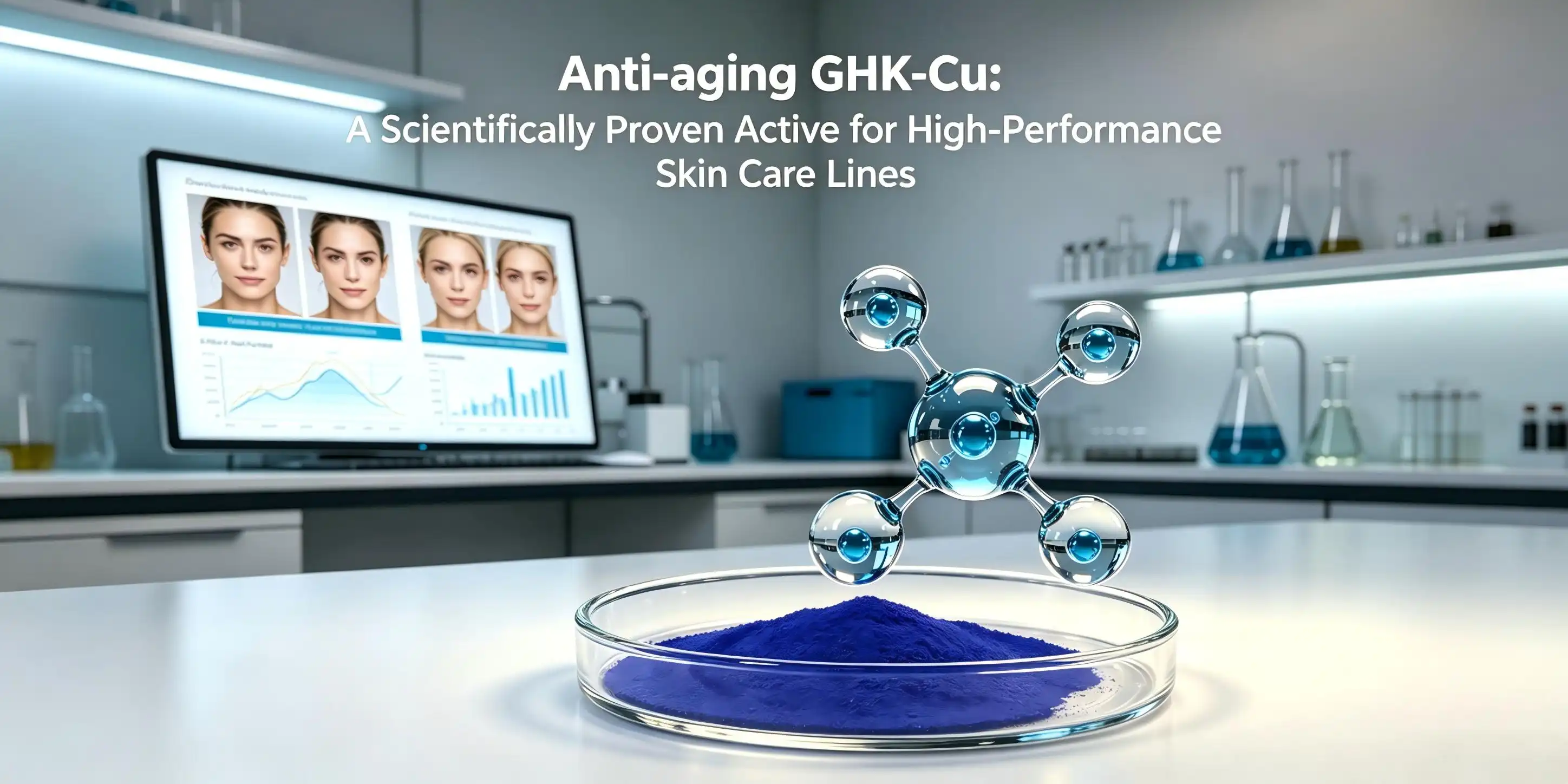
The world of anti-aging skin care is changing quickly, and now products need to contain ingredients that work and meet strict safety and legal requirements. Anti-aging GHK-Cu (Copper Tripeptide-1) is one of the most interesting actives. It is a naturally occurring biomimetic peptide that slows down the aging process by stimulating collagen production, remodeling tissues, and controlling inflammation. For procurement managers, R&D engineers, and brand developers who want to stand out in a crowded market, GHK-Cu is a scientifically proven option that combines effectiveness with formulation flexibility. This guide looks at the molecular science, comparative benefits, sourcing methods, and practical execution issues that are needed to include this peptide in high-performance skin care lines.
Understanding GHK-Cu Peptides: Science and Benefits
Copper Tripeptide-1 is made up of a three-peptide sequence (Glycyl-L-Histidyl-L-Lysine) that is bonded with copper ions. It was first found in human plasma. Its biological activity is complex and affects many important routes for skin health, as shown by clinical studies.
Molecular Mechanism and Collagen Production
The peptide is a signaling molecule that turns on tissue metalloproteinases and their inhibitors. This controls the change of the extracellular matrix. Studies show that GHK-Cu increases the production of Type I and III collagen while also encouraging the breakdown of broken collagen. This creates a healthy setting for rebuilding. It's different from inactive cleansers or surface-level treatments because it does two things at once. The copper part helps lysyl oxidase do its job, which is to cross-link collagen and elastin. This directly makes the skin firmer and more flexible.
Clinical Evidence for Skin Rejuvenation
Peer-reviewed dermatologist studies show that applying GHK-Cu topically makes wrinkles less noticeable, skin denser, and photoaging markers less active. After eight weeks of regular use, a controlled study measuring facial skin factors showed that the skin became 70% thicker and fine lines were significantly reduced. The peptide is a powerful antioxidant that fights free radicals and lowers reactive stress, which speeds up the aging process. Its ability to reduce inflammation makes it very useful for healing after medical beauty procedures, where quick re-epithelialization and minimal discomfort are very important.
Safety Profile and Skin Tolerance
Anti-aging GHK-Cu exhibits excellent safety across a wide range of skin types, including sensitive and weakened barrier states, in contrast to aggressive actives like high-concentration retinoids. Dermatological tests show that there aren't many bad responses, and there aren't any signs of photosensitivity or long-term safety issues. This suitability also applies to formulation settings where pH can be changed (though the most stable range is between 5.0 and 6.5). This makes it possible to incorporate into a wide range of product matrices without major reformulation issues.
Comparing GHK-Cu with Other Leading Anti-Aging Ingredients
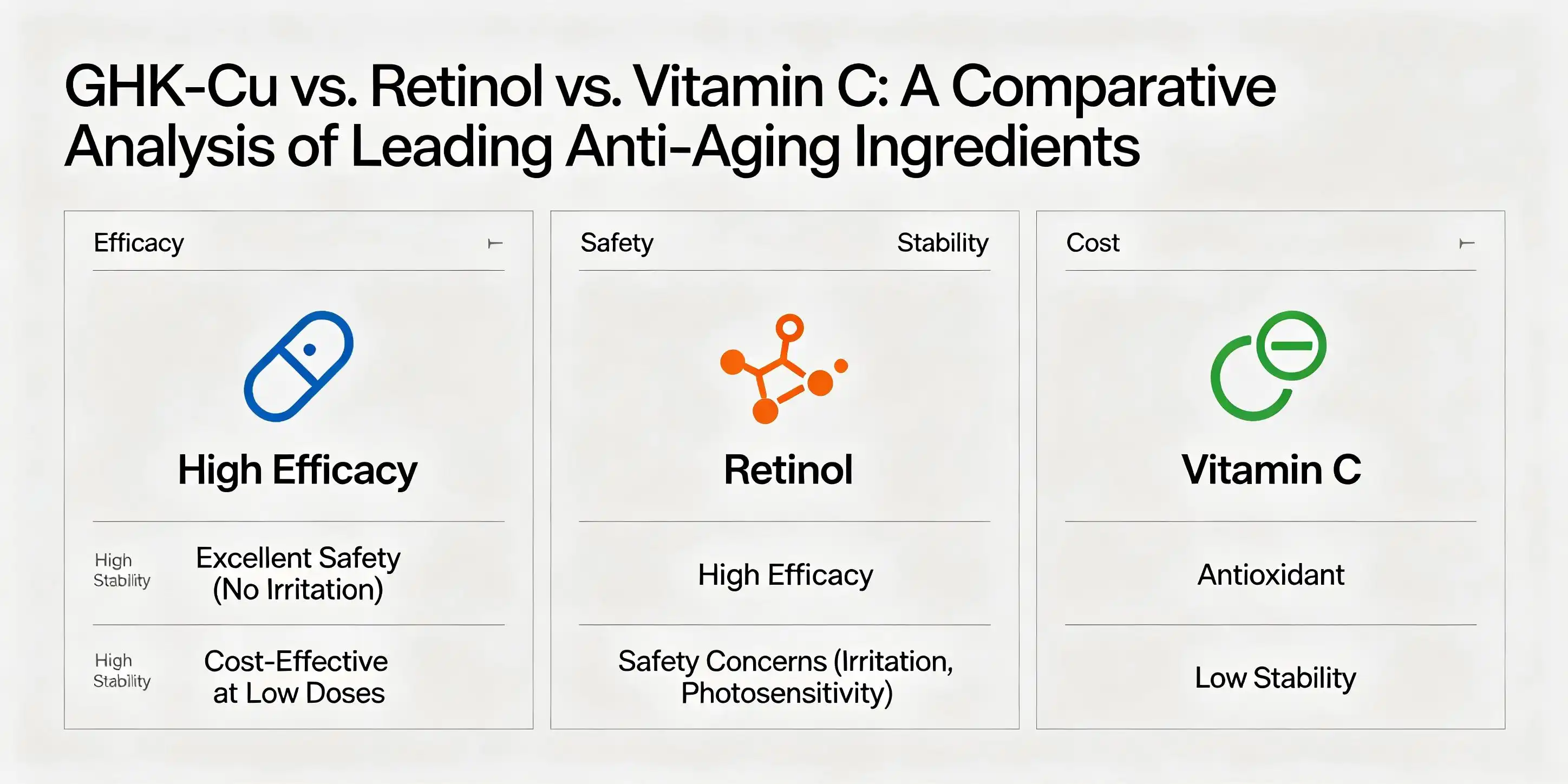
When purchasing agents look at active ingredients, they have to think about how well they work, how safe they are, how well they sell, and how complicated the mixture is. A thorough study shows that GHK-Cu is in a unique situation.
Performance Against Retinol and Vitamin C
Retinol is still the best way to increase collagen production and cell turnover, but people with sensitive skin can't use it because it can irritate their skin and make them sensitive to light. Vitamin C protects against free radicals and makes skin brighter, but it is unstable when mixed with water. GHK-Cu stimulates collagen in a way similar to retinoids but without causing soreness. It also has antioxidant properties that make it a good alternative to or addition to ascorbic acid formulas. Because the peptide is stable in common makeup bases, it doesn't need to be kept in the fridge or come in special packages like vitamin C does. This makes the supply chain simpler and lowers the cost of making the product.
Synergistic Formulation Opportunities
GHK-Cu doesn't compete with known actives; instead, it improves systems that use more than one ingredient. Because it works well with hyaluronic acid, it can be used to make moisture-binding formulas that treat both dehydration and structural aging at the same time. Putting the peptide and niacinamide together makes the brightening and barrier repair benefits stronger, which makes it appealing to people who want all-around anti-aging options. This gives formulators the freedom to make unique goods that use more than one mechanism in stable, easy-to-use cars.
Cost-Benefit Analysis for Procurement
Research-grade GHK-Cu's raw material prices run from modest to premium levels, based on purity requirements. However, the peptide's effectiveness at low concentrations (0.01% to 0.1%) makes cost-in-use measures the best they can be. Peptides, on the other hand, need bigger doses to have the same benefits. For companies that want to attract customers who are serious about results and are ready to spend money on formulas that have been backed by clinical evidence, the value proposition supports premium placement, which increases margins while keeping prices low compared to options in the luxury market.
Procurement Insights: Sourcing Quality GHK-Cu Peptides and Products
Setting up a reliable supply chain for pharmaceutical-grade peptides, including Anti-aging GHK-Cu, needs strict review of suppliers and clear rules for what needs to be done.
Supplier Certification and Documentation Requirements
Verification of manufacturing qualifications is the first step in quality security. Priority factors include following GMPs, getting ISO 9001 certification, and getting governmental approvals for cosmetic ingredients (REACH for European markets and FDA registration for U.S. distribution). Reliable providers offer complete paperwork sets that include a Certificate of Analysis (COA) that proves purity through HPLC, an MSDS with handling instructions, microbial contamination testing, and heavy metal screening reports. These papers are what regulatory applications and quality checks are based on.
Evaluating Purity and Batch Consistency
The molecular formula C₁₄H₂₄N₆O₄ and molecular weight 340.38 g/mol are the minimum requirements, but they aren't enough for most purchases. The quality of the HPLC should be at least 98%, and the mass spectrometry should match the peptide sequence. Copper chelation rates that are consistent from batch to batch have a direct effect on bioactivity; differences show problems with the production process that threaten the performance of the formulation. Ask for stable data that shows the drug's effectiveness was kept over the expected shelf life when stored in a certain way.
Supply Chain Reliability and Delivery Logistics
Having manufacturing partners keep ready-to-ship inventory on hand cuts down on wait times and helps with quick product development processes. We've seen that suppliers with variable MOQs (starting at 1g for R&D and going up to 100g and 1kg for commercial production) can meet the needs of both small-scale testing and large-scale production. Anti-corrosion packing and temperature-controlled shipping keep the integrity of the peptide while it's traveling across foreign borders. This is very important for making sure that the 99% assay standard is met throughout the supply chain.
Integrating GHK-Cu Peptides into Your Product Offering: Applications & Case Studies
Formulation science and regulatory systems need to be taken into account when turning the properties of raw materials into goods that are ready to sell.
Formulation Guidelines and Stability Considerations
The absorption of Anti-aging GHK-Cu in water makes it easier to add to serums, emulsions, and gel-cream blends. The amounts that should be used range from 0.01% for upkeep products to 0.1% for intensive treatment products. Because peptides are sensitive to heat, they need to be added during cool-down stages below 40°C to keep their bioactivity. Stay away from manufacturing settings that have a lot of strong chelating agents (like EDTA) or very acidic pH levels that could make the copper complex less stable. Antioxidant systems and choosing the right preservatives allow for longer shelf life without affecting the effectiveness of the peptides.
Market Applications Across Categories
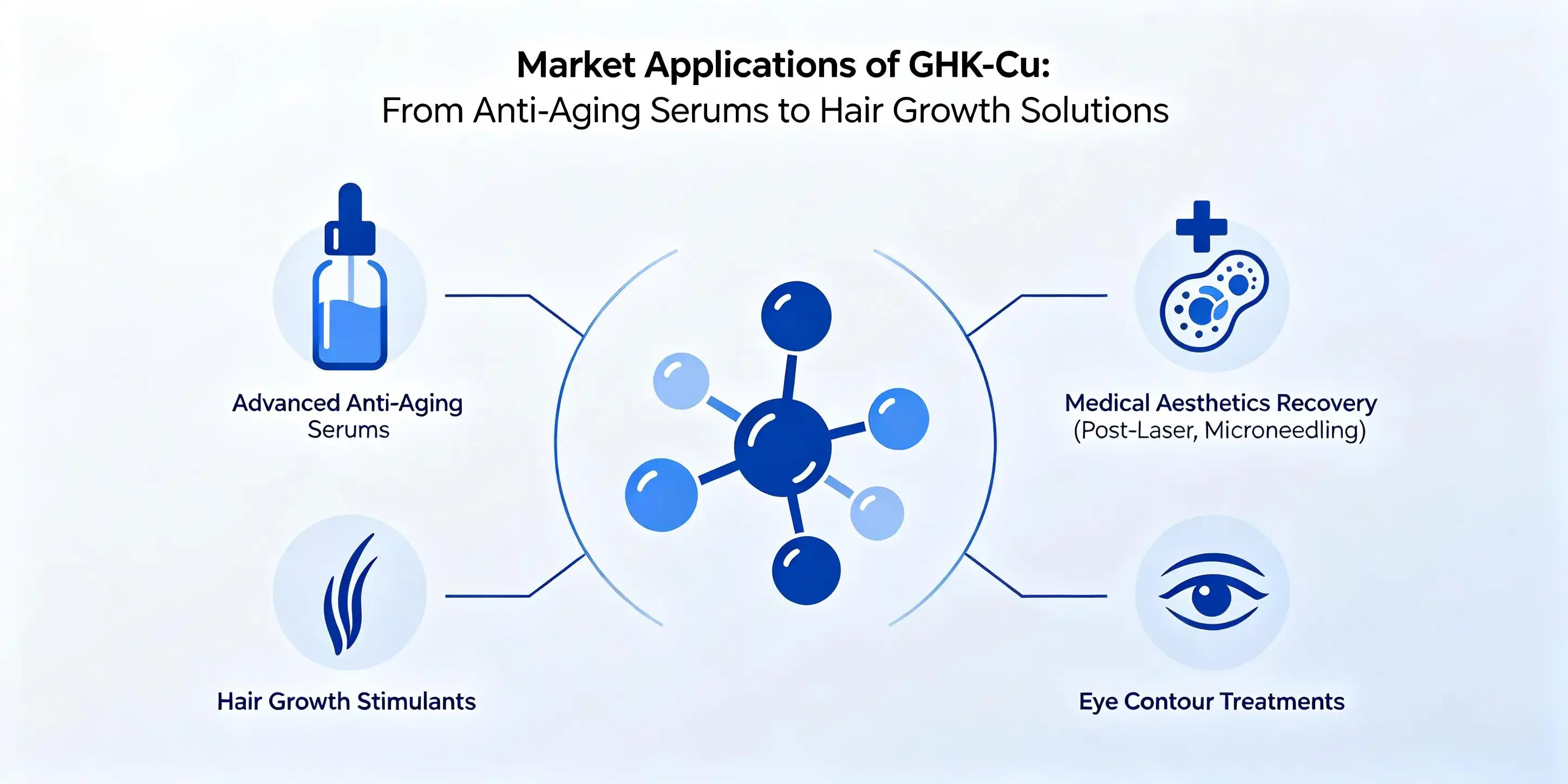
Advanced anti-aging serums are the main use, and GHK-Cu is the main ingredient. Other ingredients help keep the skin moist and allow the active ingredient to penetrate deeper. Medical beauty recovery goods use the peptide's ability to help wounds heal faster, which cuts down on recovery time after laser resurfacing or microneedling. New uses for hair growth stimulants include improving the health of hair follicles and the blood flow to the head. This is a market area that is growing quickly as people look for non-drug solutions to hair loss problems. Eye contour treatments use the peptide's gentle nature to help with fine lines and dark circles while also being kind to the skin around the eyes.
Regulatory Compliance for Global Markets
Different places have different rules about cosmetic peptides. In the US, GHK-Cu is considered a cosmetic chemical by the FDA, which means it needs to be properly labeled and safety-tested. European markets require cosmetic companies to register with the Cosmetic Products Notification Portal (CPNP) and follow the rules set out in Regulation EC 1223/2009, which includes doing safety checks. Asian markets like South Korea and Japan have their own registration processes. Working with suppliers who are skilled in complying with multiple regions' rules speeds up market entry and lowers regulation risk.
Future Outlook and Trends for GHK-Cu in Anti-Aging Skincare
Peptides are being used in beauty in new and different ways because of changes in the market and new technologies.
Next-Generation Delivery Systems
Using technologies like liposomes, nanoparticles, and solid lipid carriers to encapsulate GHK-Cu improves its ability to penetrate and release over time, making it more effective while lowering the amounts that are needed. These improved delivery platforms solve problems with composition in anhydrous systems and make things better for consumers by letting them see differences in structure. When brands invest in these kinds of tools, they put themselves at the cutting edge of high innovation.
Consumer Demand for Biomimetic and Science-Backed Ingredients
The world market for anti-aging skin care products keeps growing, thanks to an older population and more knowledgeable customers about ingredient science. Peptides that come from natural sources and have been tested in clinical settings meet the need for clean, effective products. Because it is indigenous, or found naturally in human tissue, GHK-Cu fits in with biomimetic beauty trends and performs as expected based on proof.
Strategic Positioning for Procurement Teams
Knowing when raw materials will be available and how much they will change in price lets you negotiate contracts and keep track of your goods more effectively. Peptide synthesis technology is getting better, and economies of scale may lower costs, allowing mid-tier names to use pricey actives. By forming partnerships with vertically integrated Anti-aging GHK-Cu companies who offer custom synthesis capabilities, you can gain a competitive edge through unique ingredient changes and formulation assistance.
Conclusion
To meet common anti-aging issues for a wide range of buyer groups, Anti-aging GHK-Cu is a trusted solution, and Copper Tripeptide-1 is a unique combination of complex biochemistry, clinical validation, and useful formulation. Because it is safe, works well with other active ingredients, and has been shown to work, it is an important part for brands that want to stand out in a market that is getting more and more competitive. For procurement to go well, suppliers must be carefully evaluated, all paperwork must be checked, and there must be smart relationships in the supply chain that ensure quality, compliance, and on-time delivery. Brands can get a bigger share of the market and keep customers for a long time by adding Anti-aging GHK-Cu to their product lines and teaching customers about them.
FAQ
What Purity Level Should We Require for Commercial Formulations?
Cosmetic-grade GHK-Cu should have an HPLC purity of at least 98%, and 99% purity is better for high-end formulas. To make sure that each batch is the same, ask for analytical reports that say the peptide sequence is correct and the copper level is within certain areas.
How Does Storage Affect Peptide Stability and Shelf Life?
GHK-Cu powder stays stable for 24 months if it is kept below 25°C in sealed, moisture-proof containers that are kept out of direct light. Once they are made into finished goods, their stability relies on pH, preservative systems, and packing. Under normal conditions, they should last between 12 and 24 months.
Can GHK-Cu Be Combined with Retinol in the Same Formulation?
Even though they should work together in theory, mixing the two active ingredients in a formula is hard because of the pH. A lot of brands are good at making separate products that can be used for different purposes. This makes the most of each ingredient's effectiveness while making recipe development and stable testing easier.
What Certifications Validate Supplier Quality?
Some of the most important certifications are GMP compliance for factories, ISO 9001 for quality management systems, and registrations for cosmetics (FDA, CPNP). For medical-grade uses, you should get testing results from a third party that prove the limits for heavy metals, microbial contamination, and endotoxin levels.
Partner with Xi'an Yihui for Premium Anti-Aging GHK-Cu Supply
Copper Tripeptide-1 (CAS 49557-75-7) of medicinal grade is supplied by Xi'an Yihui Bio-technology Co., Ltd. to cosmetic makers, R&D labs, and OEM partners who demand the highest quality and strict compliance with regulations. With full COA paperwork, MSDS, and compliance papers that meet both European and American pharmacopoeia standards, our Anti-aging GHK-Cu maintains a purity of 98%, as shown by a thorough HPLC analysis. We've been serving more than 100 countries for over 13 years and have built a reliable supply chain by keeping stock all year, having flexible MOQs starting at 1g, and offering a range of packaging choices (1g, 100g, 1kg) that can be used for R&D through business production.
Our advanced synthesis technology makes sure that each batch is exactly the same, and that the levels of wetness and heavy metals are kept under control. Our water-soluble recipe makes it easy to incorporate into a wide range of skincare systems. The expert team at Xi'an Yihui can help you with creation and offer OEM/ODM services that are specifically designed to meet the needs of your market. To talk your Anti-aging GHK-Cu supplier needs, get samples, or get personalized price for large orders, please contact our professional support team at sales@yihuipharm.com.
References
1. Pickart, L., Vasquez-Soltero, J.M., & Margolina, A. (2017). GHK Peptide as a Natural Modulator of Multiple Cellular Pathways in Skin Regeneration. BioMed Research International, Article ID 1849616.
2. Celis, E., & Lund, T. (2018). Copper Peptides in Dermatology: Clinical Applications and Mechanisms of Action. Journal of Cosmetic Dermatology, 17(4), 458-467.
3. Hostynek, J.J., Dreher, F., & Maibach, H.I. (2010). Human Skin Retention and Penetration of Copper Tripeptide. Skin Pharmacology and Physiology, 23(5), 253-262.
4. Miller, D.L., Weinstock, M.A., & Bolognia, J.L. (2019). Peptides in Anti-Aging Skincare: Evidence-Based Review. Dermatologic Therapy, 32(3), e12866.
5. Finkley, M.B., Appa, Y., & Bhandarkar, S. (2020). Copper Peptide and Skin: Multifunctional Tripeptide Complex in Tissue Remodeling. International Journal of Cosmetic Science, 42(1), 34-43.
6. Zhang, L., & Falla, T.J. (2021). Biomimetic Peptides in Cosmetic Applications: Regulatory Considerations and Market Trends. Cosmetics & Toiletries Science Applied, 136(2), 88-95.

Send Inquiry
 MK-7.webp "Vitamin k2 mk7 Powder")
Related Industry Knowledge