
Can I take linaclotide long-term?
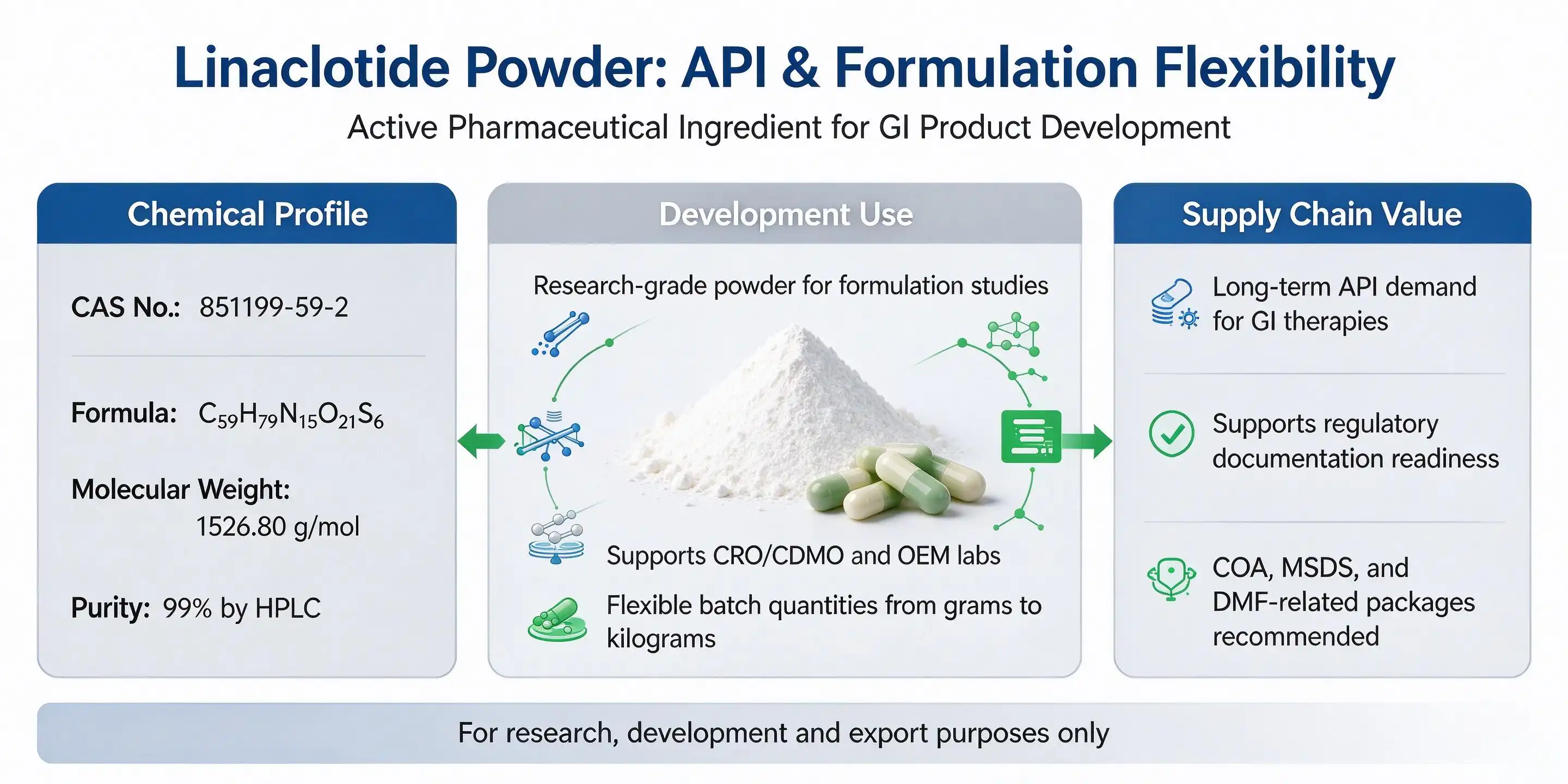
Linaclotide powder (CAS No.: 851199-59-2) is a synthetic pharmaceutical peptide with the molecular formula C₅₉H₇₉N₁₅O₂₁S₆ and a molecular weight of 1526.80 g/mol. Clinically, it treats irritable bowel syndrome with constipation (IBS-C) and chronic idiopathic constipation by activating guanylate cyclase-C receptors in the intestinal lining. The short answer is yes — linaclotide can be taken long-term under appropriate medical supervision. Multiple clinical trials confirm maintained efficacy and a manageable safety profile over extended treatment periods. For B2B procurement professionals sourcing this API, understanding its long-term viability directly shapes supply chain planning and client support strategies.
Understanding Linaclotide Powder and Its Uses
Chemical and Pharmacological Profile
Linaclotide powder is a man-made peptide that is made up of 15 amino acids. These are the building blocks: Cys-Cys-Glu-Tyr-Cys-Cys-Asn-Pro-Asp-Cys-Cys-Tyr-Gly-Cys-Cys. Three disulfide bonds hold it all together. Testing with HPLC shows that it is 99% pure, and it works in the gut as a GC-C agonist. It's a pretty safe choice for people who have had stomach problems for a long time because it doesn't get taken very well. Drug supply lines still need a lot of it because of this big reason why it's been recommended for a long time.
Clinical Indications and Patient Populations
A medicine called Linzess, which is approved by the FDA, is used to treat adults with IBS-C and chronic idiopathic constipation (CIC). The results of the clinical study by Chey et al., which lasted for 26 weeks, showed that there were statistically significant changes in the number of CSBMs and the scores for abdominal pain compared to the placebo group. Because of these results, pharmaceutical businesses that want to work in the field of gastroenterology will still need this API.
Powder vs. Capsule Formulations
A powder form of the peptide active pharmaceutical ingredient (API) is used before it is put into capsules to be taken by mouth. If B2B buyers get high-purity linaclotide powder, they have more choices when it comes to making amounts. This includes CRO/CDMO companies and OEM formulation labs. 145 mcg, 290 mcg, and 72 mcg are the most common amounts found in pills. If you use research-grade powder, you can try new formulations and change the amount in ways that you can't do with finished dosage forms.
Can Linaclotide Powder Be Taken Long-Term? An Evidence-Based Perspective
Clinical Trial Evidence Supporting Long-Term Use
This 26-week Phase III study published in The American Journal of Gastroenterology was very important. It showed that people who took linaclotide 290 mcg every day were able to control their symptoms, and the drug didn't lose its effectiveness over time. Another open-label extension study that went on for 52 weeks showed that the treatment worked and there were no major safety warnings. These numbers show that the demand for this API will stay the same over multi-year supply contracts. This gives pharmaceutical buying teams peace of mind.
Safety Profile and Risk Management
When people take linaclotide powder for a long time, diarrhea is the most common side effect. It happened to about 20% of patients in clinical studies, but it was usually dose-dependent and easy to deal with. Very bad things don't happen very often. Because the FDA knows how safe the medicine is for animals, they say that kids younger than six shouldn't take it. When QA/regulatory managers look at this API, these set safety parameters make it clear what risks they need to think about for supplier qualification and putting together product documentation.
Regulatory Perspective: FDA and EMA Guidance
The FDA and the EMA both agree that adults with IBS-C and CIC can take linaclotide for a long time. There are no rules about how long adults who are supposed to get treatment can get it. This is a safe place for people who work in business-to-business buying to get this pharmaceutical peptide and share it. A supplier is more likely to be ready for an audit if they give all the necessary paperwork, like a COA, an MSDS, and supporting papers for the DMF.
Comparing Linaclotide Powder with Other Treatment Forms and Competitors
Linaclotide vs. Plecanatide
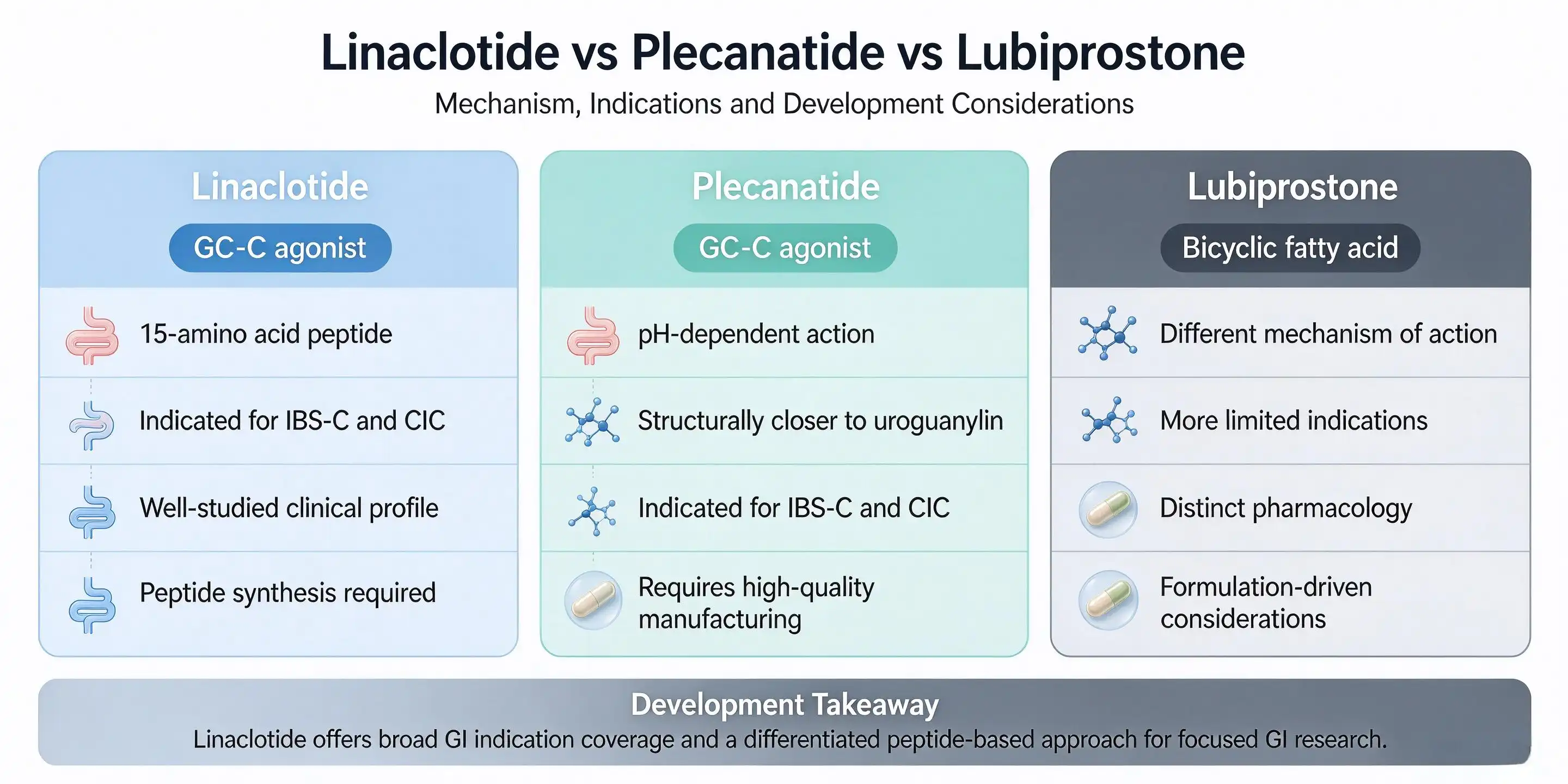
They are both GC-C agonists that are allowed for both CIC and IBS-C, but their structures are different. The way plecanatide works depends on pH and is more like the natural peptide uroguanylin, which is why some researchers think it has a stronger effect on the body. To get these molecules, they have to be made with chemicals that are safe for use in medicine and then put through strict quality checks. It is better known as linaclotide powder because it has been used in more studies and there is more written proof of its effectiveness.
Linaclotide vs. Lubiprostone
Because it doesn't work by activating GC-C receptors, lubiprostone is a type of bicyclic fatty acid. This is a totally different kind of machine. The conditions it can treat are not as broad as those that linaclotide can treat. People who are formulating drugs need to think about how each one works, how many uses it has, and how hard it is to get the API. It is harder to make linaclotide because it is a peptide, but its ability to target specific cells and tell them apart clinically makes it a good choice for focused drug studies in the digestive system.
Formulation Flexibility and Supply Chain Factors
The best way for formulators and CRO teams to do pre-clinical work and find the best dose of linaclotide is to buy it as a research-grade peptide powder instead of a finished drug. The different package sizes (1g, 100g, and 1kg) are good for various types of research, from screening in the early stages to developing new processes. When you compare API providers to distributors of finished goods, this level of flexibility is a clear buying benefit.
Procurement Considerations for Linaclotide Powder in B2B Markets
Supplier Qualification and Certifications
Teams in charge of buying things should make sure that any linaclotide API providers they look at are ISO certified, follow good manufacturing practices (GMPs), and have all the technical documents they need, like COAs, MSDSs, and chromatogram reports. When buying drugs and biotech, you must have these papers. They are the bare minimum for regulatory due diligence. If a supplier has their own HPLC testing tools and can keep track of batches as they move from one to the next, they can give better quality guarantee than wholesalers who only use testing done by other companies.
Here are the core procurement criteria B2B buyers typically prioritize when sourcing pharmaceutical peptides:
- Purity verification: Research-grade peptides that are going to be used in preparation processes must have a batch-specific COA that shows they are at least 98% pure by HPLC. It's hard to get the same clinical and testing results if the quality isn't stable.
- Documentation readiness: Full technical dossiers with MSDS, chromatogram reports, and sequence proof cut down on the time needed for regulatory review, helping QA teams maintain audit-ready records without chasing suppliers for missing files.
- Stock availability: Immediate dispatch from existing inventory eliminates the production lead-time risk that commonly disrupts CRO plans and delays project milestones in time-sensitive pharmaceutical research programs.
These criteria collectively reduce supply chain risk and protect research program timelines against avoidable disruptions.
Minimum Order Quantities and Pricing
The least amount of linaclotide powder that can be ordered from Xi'an Yihui is 1g. This means that it can be used for early tests without spending a lot of money. Things come in 100g and 1kg bags, so they can be used for both small test amounts and larger process development runs. Companies that do CRO/CDMO work, university labs, and pharmaceutical R&D teams usually buy things by making bigger purchases over time. This tiered MOQ structure works well with their habits.
Import/Export Compliance
Customs needs to put pharmaceutical peptides in the right category and keep track of them when they are shipped across borders. It will be easier to get goods through customs if US buyers make sure that the supplier gives them the right HS codes, export declarations, and any other certificates they need. It is easier to buy things and know that they will be delivered on time if you deal with a seller who has been in business for a while and has sent goods all over the world, such as to the US, Europe, Japan, and South Korea.
Best Practices for Handling and Storing Linaclotide Powder
Optimal Storage Conditions
Linaclotide powder should be kept at -20°C in a sealed container away from direct light and water to keep it safe. With this setting, the product will stay stable for as long as it is kept. Pharmaceutical stores should have systems that keep an eye on the temperature and dry storage places where a lot of goods can be kept. If a B2B dealer has this peptide in stock, they should handle it with the same care as other biological APIs that are sensitive to temperature changes.
Contamination Prevention in Handling
If you need to study or make something with linaclotide powder, you should do it in a lab or a laminar flow area and wear the right safety gear. If other peptides or excipients get into a sample, they can change how good it is, which can harm the study results. You can keep track of each batch from the time it is received until it is used. This helps with governmental paperwork and makes it easy to find the source of any quality issues right away.
Packaging and Labeling Standards
Each batch should be put in a sealed bag that has the batch number, production date, end date, purity grade, and CAS number (851199-59-2) well marked on the outside. Labeling that is done right also helps with the steps that follow, like giving information to patients and filing with regulators. B2B clients need to make sure that the extra packaging they send to pharmacy end-users meets the marking rules of the market where it will be sold.
Conclusion
Adults with IBS-C and long-term, unexplained constipation have been given permission by the government to take linaclotide for a long time. People who work in business-to-business sourcing will need to keep buying APIs because of this long-lasting treatment. To set up a reliable supply chain, you should start by picking a supplier whose linaclotide powder has been tested for purity, comes with full documentation, and is always in stock. When buying teams know about both the pharmacological profile and the buying landscape, they can make decisions that keep the business going and protect the quality of the product.
FAQ
Q1: Is linaclotide safe to take for more than six months?
A: For adults with IBS-C or CIC, linaclotide powder is safe and useful for longer than six months, according to several clinical studies, such as 52-week open-label extension trials. Most people still have diarrhea as a side effect, but it's usually easy to deal with by changing the amount.
Q2: What is the standard long-term dose of linaclotide?
A: People with IBS-C can take 290 mcg once a day without any problems. Most people should take 145 mcg of CIC once a day, but people who are sensitive can take 72 mcg instead. You should not eat for at least 30 minutes before your first meal of the day; this is when you should take each dose.
Q3: Does linaclotide lose effectiveness over time?
A: No signs of tachyphylaxis or loss of effectiveness over time have been seen in clinical trials that have been used for a long time. In long-term tests, patients always got better at going to the bathroom and rating their stomach symptoms.
Q4: What documentation does a B2B buyer need when sourcing linaclotide API?
A: A COA, an MSDS, an HPLC chromatogram, and records of how each batch was made should be given to buyers. These papers are needed to buy drugs in the EU and the US. Make sure they follow the rules.
Q5: Can linaclotide powder be used for research outside of finished drug formulations?
A: Yes. Research-grade linaclotide peptide is used to make new drugs, study gut receptors, and do pharmacologic analysis. It is intended for scientific research use only and cannot be sold to individuals.
Partner with Xi'an Yihui — Trusted Linaclotide Powder Supplier for B2B Research
Since 2010, Xi'an Yihui Bio-technology Co., Ltd. has sold pharmaceutical-grade APIs and peptides to customers in over 100 countries. Linaclotide powder (CAS 851199-59-2, test 99%, HPLC purity ≥98%) ships from stock in 1g, 100g, and 1kg packages that are easy to handle. Each box comes with a full COA and MSDS sheet. The company that makes our linaclotide powder is ISO-certified and has customer service staffed 24 hours a day, seven days a week. We are ready to help you with your next stage of study or shopping. Send us an email at sales@yihuipharm.com right away to get a price.
References
1. Chey, W. D., Lembo, A. J., Lavins, B. J., et al. (2012). Linaclotide for irritable bowel syndrome with constipation. New England Journal of Medicine, 366(17), 1623–1631.
2. Rao, S., Lembo, A. J., Shiff, S. J., et al. (2012). A 12-week, randomized, controlled trial with a 4-week randomized withdrawal period to evaluate the efficacy and safety of linaclotide in irritable bowel syndrome with constipation. The American Journal of Gastroenterology, 107(11), 1714–1724.
3. Quigley, E. M. M., Tack, J., Chey, W. D., et al. (2013). Randomised clinical trials: linaclotide phase 3 studies in IBS-C — a transatlantic comparison. Alimentary Pharmacology & Therapeutics, 37(3), 283–293.
4. U.S. Food and Drug Administration. (2012). Linzess (linaclotide) prescribing information. FDA Drug Approval Package.
5. Lacy, B. E., & Chey, W. D. (2011). Linaclotide: Guanylate cyclase-C agonist for treatment of IBS-C and chronic constipation. Expert Opinion on Pharmacotherapy, 12(11), 1761–1773.
6. Miner, P. B., Surowitz, R., Fogel, R., et al. (2013). Linaclotide, a novel guanylate cyclase-C agonist, is efficacious and well tolerated in a randomized, double-blind, placebo-controlled trial in patients with chronic idiopathic constipation. Alimentary Pharmacology & Therapeutics, 37(1), 49–61.

Send Inquiry
You may like
Related Industry Knowledge