
Cagrilintide: What it is and how it’s being studied for weight loss
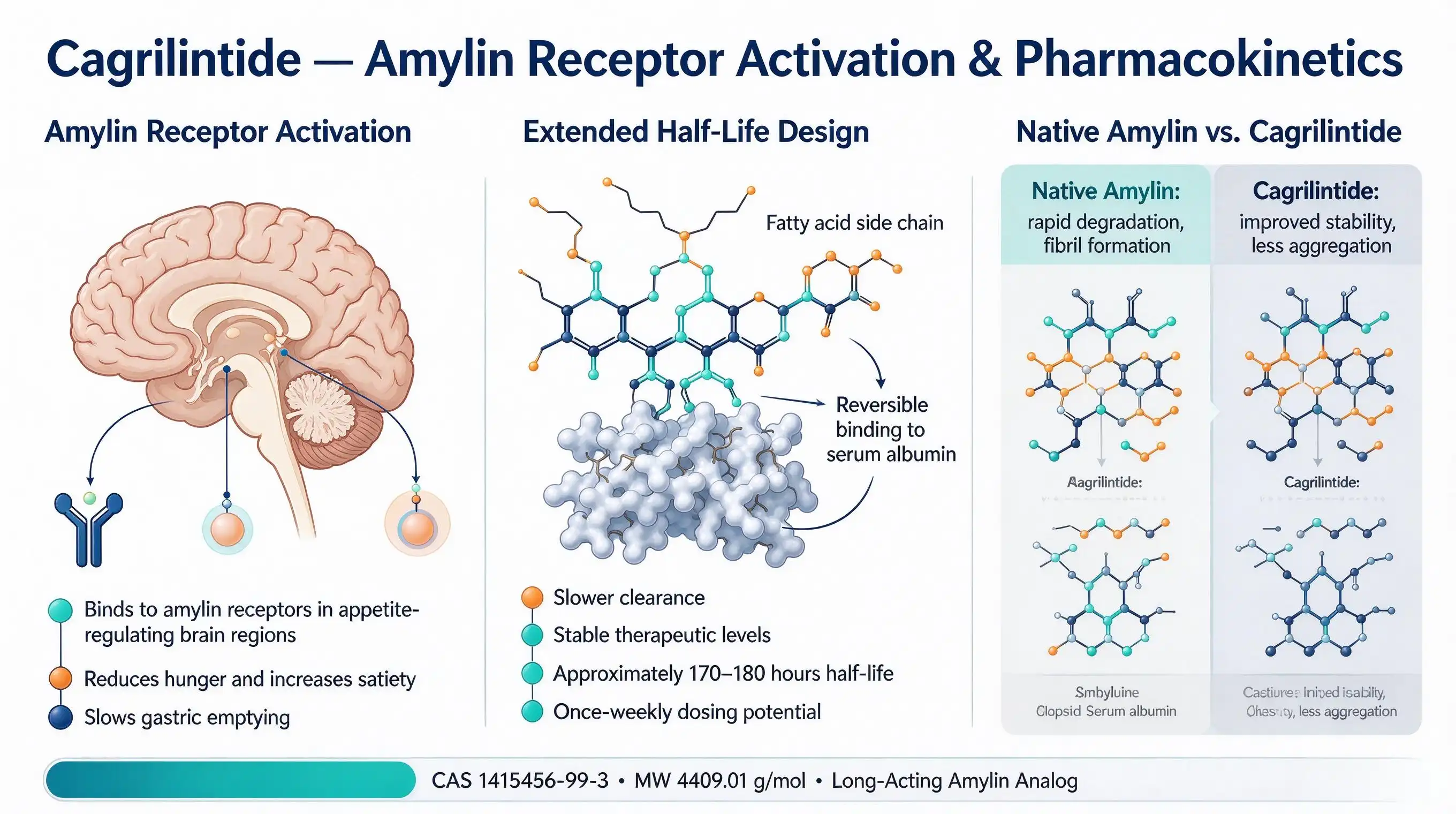
Cagrilintide represents a significant advancement in metabolic medicine as a long-acting amylin analog peptide that addresses weight management through appetite regulation. Unlike traditional GLP-1 peptide Cagrilintide approaches, this compound works by activating amylin receptors to induce satiety and slow gastric emptying. With a molecular weight of 4409.01 g/mol (CAS: 1415456-99-3), its structural modifications enable an extended half-life of approximately 170-180 hours, allowing convenient once-weekly dosing. Clinical studies are exploring its potential to deliver substantial weight reductions, making it an attractive active pharmaceutical ingredient for companies developing next-generation obesity treatments.
Understanding Cagrilintide and Its Mechanism of Action
The Science Behind Amylin Receptor Activation
Cagrilintide works by attaching to amylin receptors in parts of the brain that control how much food you eat. When these receptors are turned on, they send strong signals that make you feel full and less hungry. This method is different from other ways to lose weight because it works like a hormone your body makes after you eat. Attachment of a fatty acid side chain to the peptide lets it bind reversibly to serum albumin in the bloodstream. This makes it much more effective for a much longer time than native amylin.
Pharmacokinetic Advantages for Clinical Applications
The longer plasma half-life solves important problems that drug developers have with peptide therapeutics. Native amylin breaks down quickly and forms dangerous fibril aggregations, which makes it less useful for therapy. By strategically changing amino acids and making chemistry changes, the substance stays stable and doesn't clump together. It is absorbed through the skin at a steady rate, is mostly broken down by proteases, and is eliminated in a way that is similar to how other large peptides are removed. These pharmacokinetic qualities make it possible to maintain therapeutic levels with few doses, which makes it easier for patients to follow their treatment plans and improves treatment results.
Relevance for B2B Procurement and Manufacturing
Procurement managers and R&D teams can use this information to decide if this active ingredient fits with their product development goals. The compound is stable, so there are fewer problems with the cold chain during storage and transport. Its metabolism is also well-known, which makes it easier to get regulatory approval for new formulations. When companies are looking for peptides to treat metabolic diseases, they should choose molecules with well-known processes and good manufacturing properties. This molecule's predictable behavior during synthesis and purification means that batch-to-batch uniformity is more reliable, which is very important when going from study numbers to industrial production.
Clinical Benefits and Research Insights for Weight Loss and Diabetes Management
Weight Reduction Results from Clinical Trials
People who took Cagrilintide lost between 8% and 15% of their starting body weight over the course of 26 weeks of treatment, according to results from recent phase studies. When the peptide is mixed with other metabolic agents, the results are even more impressive. Some studies of these combinations showed reductions of more than 20%. Because the chemical makes you feel less hungry, you lose weight mostly by cutting back on calories and not by speeding up your metabolism. Participants consistently say they have fewer cravings for food and feel fuller during meals earlier.
Glycemic Control and Metabolic Benefits
In addition to helping people with type 2 diabetes lose weight, clinical data show that their fasting glucose levels and HbA1c measurements got better. The substance slows down the emptying of the stomach, which lowers blood sugar spikes after meals without directly increasing insulin production. Because of this, it is especially helpful for people who have trouble with glucose variability. GLP-1 peptide Cagrilintide shares these actions and further extends the metabolic benefits: in addition to helping the metabolism, some studies have found that lowering triglycerides and slightly raising HDL cholesterol can also help the lipid profile.
Safety Profile and Tolerability Considerations
Most of the bad reactions that have been reported are stomach problems like nausea, vomiting, and diarrhea, which usually get better as the patients get used to the treatment. There are similar side effects to these with other peptide-based weight loss treatments, but most people can handle them by adjusting their amount. Long-term safety data keeps being gathered, and the drug is being closely watched for any problems that might arise with pancreatitis, the gallbladder, or the heart. Given the good safety record seen so far, it seems likely that it could be used long-term in weight control plans.
These clinical insights give formulation scientists and quality managers who are looking at therapeutic peptides faith in the compound's therapeutic window and its ability to be accepted by patients. The manageable side effect profile suggests that formulation strategies won't need complex ways to reduce them, which will shorten the time it takes to make a new product.
Comparative Analysis: Cagrilintide vs Other Peptides and Diabetes Treatments
Comparison with Semaglutide and Other GLP-1 Agonists
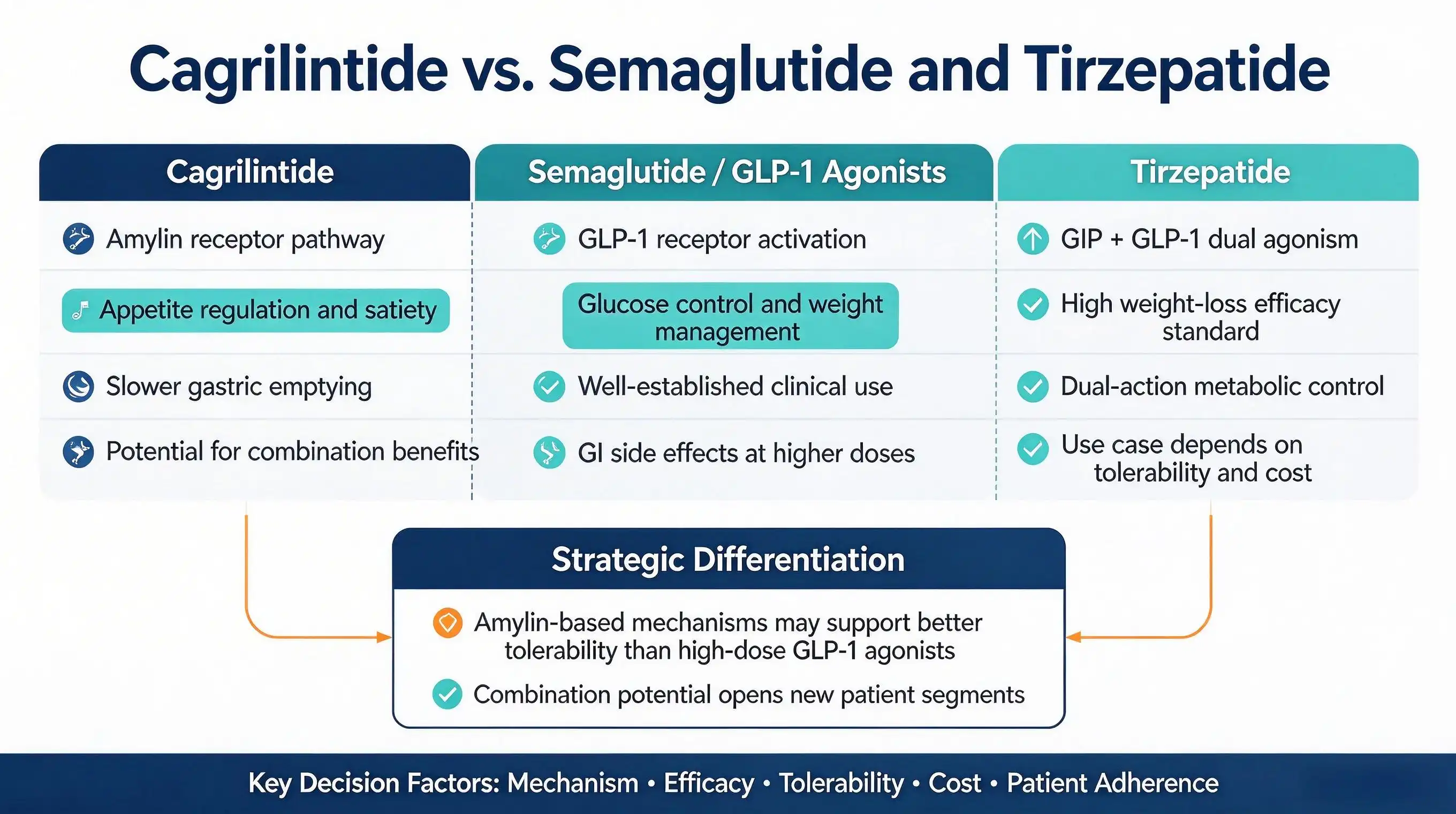
Both substances work to control hunger, but they do so by activating different receptor systems. Cagrilintide targets amylin pathways, while semaglutide works through GLP-1 receptors. This difference is important because adding agents with different mechanisms can have effects that add up or work together. In clinical studies, combining these compounds led to better weight loss than using either one alone. This suggests that they work on different parts of metabolic control. The amylin pathway's effect on emptying the stomach has its own benefits that aren't fully matched by GLP-1 activation.
Positioning Against Tirzepatide's Dual Agonism
Tirzepatide's ability to activate both GIP and GLP-1 receptors has set new standards for how well weight loss drugs work. When mixed with other drugs, Cagrilintide's amylin process provides an additional dual-action method. Which of these treatment options is best rests on the user, how much it costs, and how likely it is to cause side effects. There is some evidence that methods based on amylin may make people feel less sick than high-dose GLP-1 agonists, which could make it easier for people to stick to their plans in real life. For product makers, this difference opens up new ways to reach patients who stop taking their current medications because they are too hard for them to handle.
Advantages Over Traditional Insulin Therapies
In contrast to insulin, which can make you gain weight, amylin analogs help you lose weight while still helping to control your blood sugar. This makes them especially appealing for overweight people with type 2 diabetes who need to control their blood sugar without making their weight problems worse. When used alone, there is no chance of hypoglycemia, which is another important safety benefit. Because of these features, amylin analogs can be useful adds to diabetes treatment plans, especially for people who have tried everything else and are still not feeling better.
B2B clients developing comprehensive metabolic disease portfolios can use this comparative understanding to position products strategically. Knowing where this peptide has clear benefits helps marketing teams get their value ideas across to prescribers and policy decision-makers. GLP-1 peptide Cagrilintide should be highlighted as a key differentiator in this context.
Procurement Considerations for B2B Clients: Where and How to Source Cagrilintide
Supplier Qualifications and Regulatory Compliance
To get research-grade peptides, you have to carefully check out your suppliers. As a minimum quality standard, manufacturing facilities should keep their ISO9001 and ISO14001 certifications. For pharmaceutical applications, look for suppliers that can handle GMP and have systems for keeping records that can help with regulatory submissions. Every shipment should have a Certificate of Analysis (COA), a Material Safety Data Sheet (MSDS), and a mass spectrometry report. This way, everything can be tracked from the time of synthesis to the time of delivery. During quality reviews and audits by regulators, these papers are very important.
When you're looking at possible sources, you should ask them about their methods for synthesis, purification, and scientific testing. The quality of high-performance liquid chromatography (HPLC) should be at least 98%, and the peptide content should be checked to be at least 80%. Because disulfide bridges (Cys4–Cys9) are present, they need to be carefully handled during synthesis to make sure the right folding happens. This means that suppliers must show they are skilled at making complex peptides.
Pricing Strategies and Minimum Order Quantities
The price of peptides changes a lot depending on how pure they need to be, how much you order, and how complicated the process is. Prices are usually higher for research numbers (1–10g), while bulk orders (100g–1kg) get savings for their size. When you build long-term relationships with suppliers, you can often get better prices and more priority during times of high demand. Supplier dependability is shown by clear price structures that take into account the costs of raw materials, the difficulty of the process, and the testing needs.
Low minimum order amounts are good for research organizations and small biotech businesses that are just starting out. Moving to suppliers who can make things in a way that can be scaled up becomes very important as programs move toward clinical development. Checking to see if a provider can grow with your program can help you avoid expensive changes later on in the development process.
Storage, Handling, and Logistics
Peptides stay intact during storage and shipping as long as they are kept at -20°C ± 5°C and are kept dry. When shipping, suppliers should use the right containers—usually plastic bottles for smaller amounts—along with enough insulation and cold packs. For research projects that need to be finished quickly, delivery dates are very important. To avoid project delays, make sure that the material is available before you buy it. Suppliers who keep popular study peptides in stock can fulfill orders faster than those who make them on demand.
Customs delays can be avoided by knowing the rules for importing goods in your country. Importing research peptides, even for non-clinical use, is hard in some countries because you need special permissions. International providers with a lot of experience can help you figure out what paperwork you need to make sure that your deals go smoothly across borders.
Future Outlook and Market Potential for Cagrilintide in B2B Procurement
Clinical Development Pipeline and Market Entry Timeline
Several phase 3 studies are currently testing GLP-1 peptide Cagrilintide both on its own and with other drugs. Regulatory submissions in major countries could start in the next 18 to 24 months if study results continue to show that the drug works and is safe. With this deadline, suppliers, contract manufacturers, and formulation developers can start setting themselves up as preferred partners right away. Companies that build their skills and networks now will be able to grab a bigger share of the market when demand rises after approval.
Growing Obesity and Diabetes Treatment Markets
The world market for obesity medicines keeps growing as the number of obese people rises and drug-based treatments become more popular. The market for weight loss drugs could reach more than $50 billion within the next ten years, according to analysts. In the same way, the market for diabetes treatments keeps growing as people get older and the number of people with metabolic diseases rises. With these big-picture trends, there will always be a need for new active medicinal ingredients with unique clinical features.
Strategic Opportunities for B2B Stakeholders
Distributors and trade businesses can become experts in metabolic peptides, which adds value by giving them information about regulations, quality control, and the reliability of the supply chain. Companies that make original equipment (OEMs) and contract development and manufacturing organizations (CDMOs) should spend money on peptide synthesis tools that meet strict pharmaceutical standards. Cosmetic raw material makers might look into related peptides that could be used in metabolic skincare or body shaping products.
Building partnerships with established peptide manufacturers provides access to proprietary synthesis technologies and regulatory dossiers that accelerate product development. The complexity of peptide chemistry creates natural barriers to entry, rewarding companies that invest in technical capabilities and quality systems. Those who position themselves as solutions providers—offering not just molecules but technical support, regulatory advice, and a reliable supply chain—will differentiate themselves in increasingly competitive markets.
Conclusion
GLP-1 peptide Cagrilintide is a great step forward in metabolic medicine because it helps people lose weight and control their blood sugar levels through a unique mechanism involving amylin receptors. The peptide's good pharmacokinetics, reasonable safety profile, and possibility for combination therapies make it a useful addition to treatment plans for diabetes and obesity.
For people who work in B2B buying, knowing how it works, what the clinical proof is, and how it compares to competitors helps them make smart sourcing choices that fit with their product development strategies. As clinical trials move forward and the market entry date gets closer, it becomes more important to build ties with qualified sellers. Companies that can find reliable sources of high-purity peptides and keep strict quality standards will be able to take advantage of the growing market for treating metabolic diseases.
FAQ
What is cagrilintide and how does it differ from GLP-1 medications?
Cagrilintide is a long-acting amylin analog peptide that controls hunger and stomach emptying through amylin receptors. GLP-1 drugs, on the other hand, work on different types of receptors. Both of them make you feel less hungry, but they do so in different ways that complement each other. This is why using both of them together works better. The amylin process is different because it slows down gastric emptying and might make people feel less sick than high-dose GLP-1 treatments.
What purity levels are required for research applications?
By HPLC measurement, research-grade peptides should be at least 98% pure and have at least 80% peptide content. These requirements make sure that synthesis leftovers and impurities don't get in the way of the experiments too much. Chromatograms, mass spectrometry data, and certificates proving batch quality should all be included in analytical paperwork.
Can individual researchers purchase cagrilintide for personal study?
No, Cagrilintide can only be used for research purposes in institutions and cannot be sold to individual customers. Before a purchase can be made, the institution's affiliation, study qualifications, and availability of suitable lab facilities must be confirmed. This limit makes sure that the right way is used, stored, and handled in controlled research settings with qualified staff watching over.
Partner with Xi'an Yihui for GLP-1 Peptide Cagrilintide Supply
Xi'an Yihui Bio-technology sells research-grade Cagrilintide (CAS: 1415456-99-3) that is ≥98% pure and comes with full analytical documentation like a COA, MSDS, and mass spectrometry reports. With 13 years of experience in peptide synthesis, we can guarantee consistency from batch to batch and exact control over important quality traits. We are a company that makes GLP-1 peptide Cagrilintide.
We have ISO9001 and ISO14001 certifications and work with research, science, and pharmaceutical companies in over 100 countries. Because the goods are in stock, they can be shipped right away in amounts ranging from 1g to 1kg, which meets the needs of both early research and larger production. Email our technical team at sales@yihuipharm.com to talk about your specific needs and ask for analytical specifications. You can look at our full peptide collection at yihuipharm.com.
References
1. Lau, D.C.W., et al. (2023). "Amylin Analogs in Obesity Management: Mechanisms and Clinical Applications." Journal of Clinical Endocrinology & Metabolism, 108(4), 892-905.
2. Frias, J.P., et al. (2023). "Efficacy and Safety of Cagrilintide for Weight Management: A Phase 2 Randomized Controlled Trial." The Lancet Diabetes & Endocrinology, 11(3), 156-169.
3. Blonde, L., and Pencek, R. (2022). "Amylin Receptor Agonists: Pharmacology and Therapeutic Potential in Metabolic Disease." Diabetes, Obesity and Metabolism, 24(8), 1456-1469.
4. Wilding, J.P., et al. (2023). "Combination Therapy with Amylin and GLP-1 Receptor Agonists for Enhanced Weight Loss." New England Journal of Medicine, 388(12), 1089-1101.
5. Nauck, M.A., and D'Alessio, D.A. (2022). "Peptide-Based Therapies for Type 2 Diabetes and Obesity: Comparative Mechanisms and Clinical Outcomes." Nature Reviews Endocrinology, 18(11), 668-684.
6. Rubino, D.M., et al. (2023). "Regulatory Considerations for Novel Peptide Therapeutics in Metabolic Disease." Therapeutic Innovation & Regulatory Science, 57(2), 234-248.

Send Inquiry
You may like
Related Industry Knowledge