
Cagrilintide vs Semaglutide: Which GLP-1 Peptide Is Better for Weight Loss?
The difference between Cagrilintide and Semaglutide is very important when looking at weight loss peptides for study or business development. As opposed to Semaglutide, which only works as a GLP-1 receptor agonist, GLP-1 peptide Cagrilintide works as a long-acting amylin mimic with its own unique receptor action. Both are very effective, but Cagrilintide's special dual mechanism—targeting both amylin and calcitonin receptors—often has synergistic effects when paired with GLP-1 therapies, which could lead to better weight loss results. When purchasing managers look at APIs for metabolic medicines, knowing these biological differences affects both the treatment plan and the choices made in the supply chain.
As the obesity crisis in developed markets continues to get worse, pharmaceutical companies, contract research organizations (CROs), and cosmetic ingredient makers are looking for new peptide options. As an R&D manager or buying expert, the choices you make about where to get products have a direct effect on how well they work, how well they follow the rules, and how competitive the market is. This thorough comparison gives you the technical information and supplier review factors you need to make smart decisions about where to buy peptides.
Understanding GLP-1 Peptides and Their Role in Weight Loss
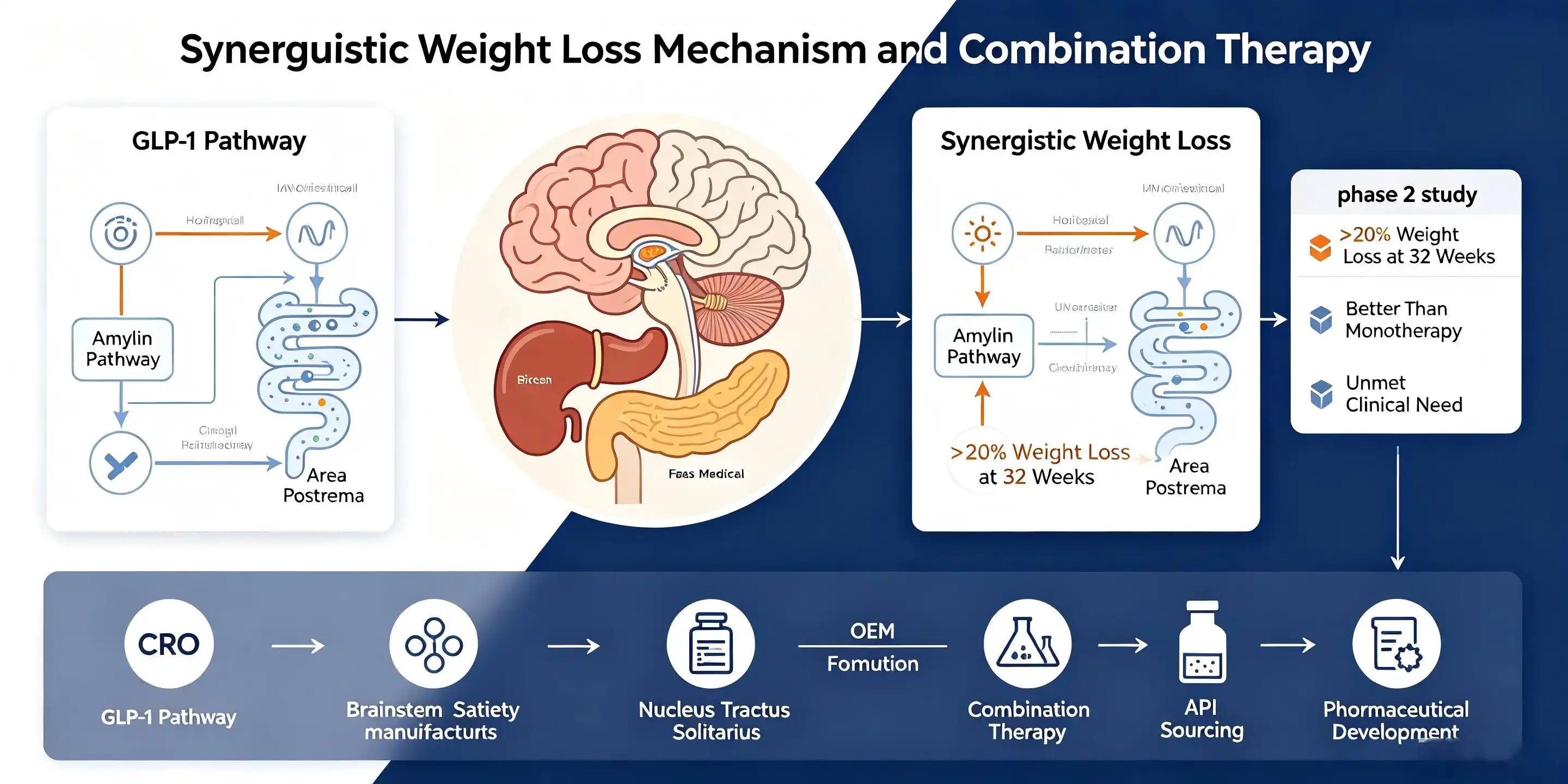
GLP-1 peptides are incretin hormones, and cells in the intestines naturally release them when you eat. These hormones play many important roles in the metabolism. They make pancreatic beta cells produce insulin, stop glucagon from being released, slow the emptying of the stomach, and lower appetite through paths in the central nervous system. Because they work in so many ways, they are very useful for treating both type 2 diabetes and fat.
How GLP-1 Receptor Agonists Work
Synthetic GLP-1 receptor agonists work like natural GLP-1, but they don't get broken down by dipeptidyl peptidase-4 (DPP-4), which means they can stay active for days instead of minutes. This method is shown by semaglutide, which has a half-life that allows for once-weekly doses by changing amino acids and fatty acids in a smart way. Clinical studies show that people who take Semaglutide lose about 15 to 17 percent of their body weight over 68 weeks. This is mostly because it reduces their hunger and slows down the emptying of their stomachs.
Amylin Analogs: A Complementary Mechanism
Amylin is released with insulin from beta cells in the pancreas. It controls glucose levels and fullness after a meal in a way that is different from GLP-1. Native amylin isn't very useful for therapy because it breaks down quickly and tends to stick together. Cagrilintide gets around these problems by changing certain amino acids and attaching fatty acids to side chains. This makes albumin bind, which increases the plasma half-life to about 170 hours. This new structure makes it possible to only give the drug once a week while keeping the amylin and calcitonin receptors working.
Synergistic Potential in Combination Therapy
New clinical data shows that taking amylin analogs and GLP-1 agonists together can help you lose weight even more. The way it works makes sense: GLP-1 mostly changes the brainstem circuits that control feeling full, while amylin changes the area postrema and the nucleus tractus solitarius, which affects different neural paths. At 32 weeks, phase 2 studies of Cagrilintide plus Semaglutide show weight losses of more than 20%, which is a lot better than the results of monotherapy. This synergy makes it possible for pharmaceutical makers and OEM manufacturers to make unique combination goods that meet unfilled clinical needs.
Detailed Comparison: Cagrilintide vs Semaglutide
Before making a purchase choice, you need to know a lot about the molecular properties, clinical performance, and practical dealing issues. The differences between these peptides go beyond information on how well they work and include storage needs, regulatory processes, and the difficulty of making them.
Molecular Structure and Receptor Activity
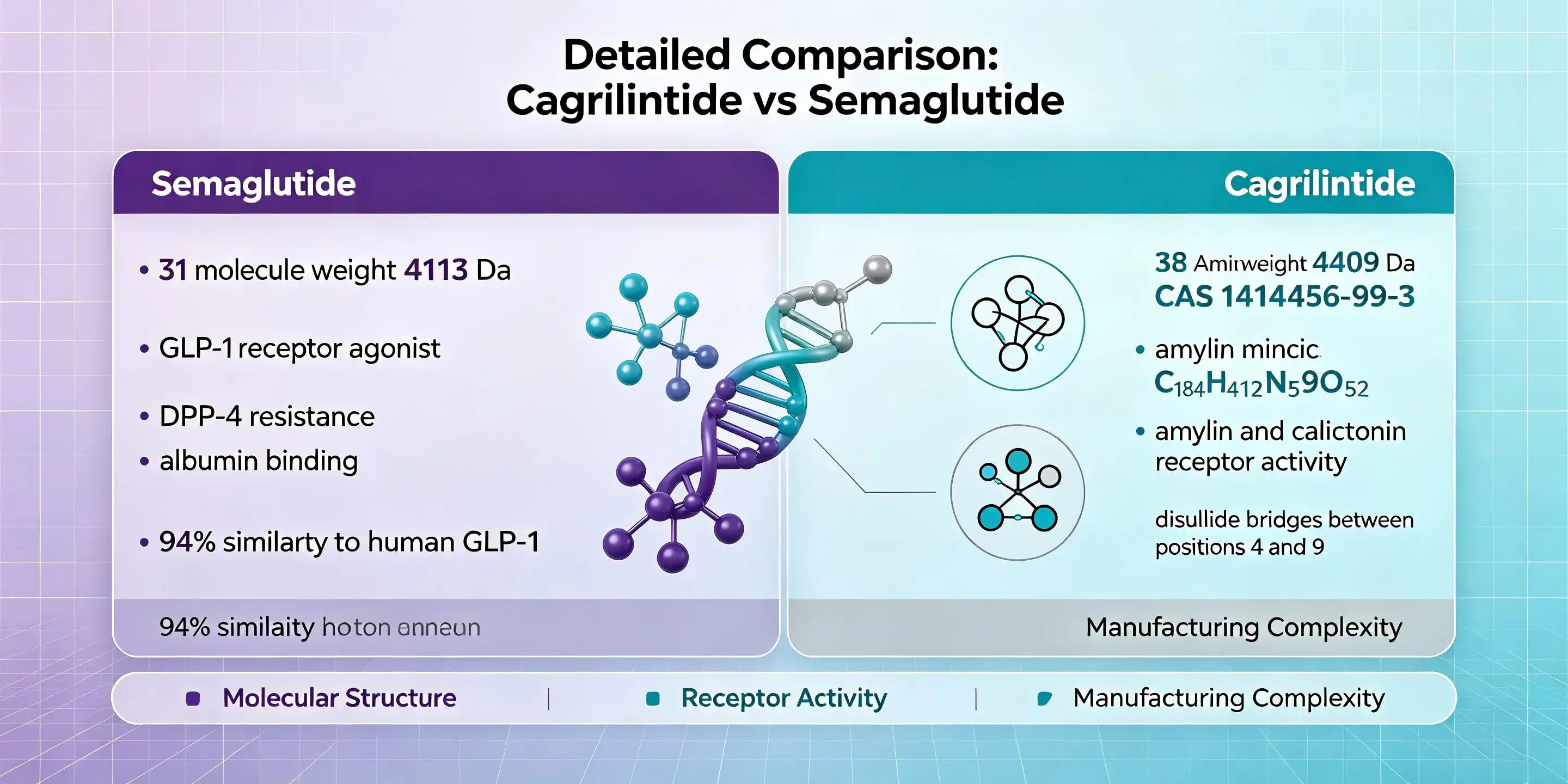
Semaglutide has a molecular weight of 4,113 Da and is made up of 31 amino acids that have been strategically changed. These changes include replacing α-aminoisobutyric acid at position 8 and attaching a fatty acid at position 18. These changes make DPP-4 less likely to work and make albumin bind to it. It works as a very selective GLP-1 receptor agonist and is very similar to human GLP-1 (94% similarity).
The GLP-1 peptide Cagrilintide (CAS 1415456-99-3), which has a molecular weight of 4,409 Da and the formula C₁₈₄H₄₁₂N₅₉O₅₂, is a re-engineered amylin mimic made up of 38 amino acids with disulfide bridges between positions 4 and 9. The acylation structure is different from Semaglutide, which is designed to work best with amylin receptors. Cagrilintide works differently than specific GLP-1 agonists because it activates amylin receptors, which are heterodimeric complexes of calcitonin receptor with proteins that change the function of receptors. This receptor profile has unique physiological effects, such as a noticeable decrease in stomach motility and brainstem-mediated signals of fullness.
Clinical Efficacy and Weight Reduction Outcomes
Over 68 weeks, obese people who are not diabetic who take 2.4 mg of semaglutide every week regularly lose 15 to 17 percent of their body weight. People with diabetes have slightly weaker reactions (10–14%), which is probably because their metabolisms are different. About 5 to 7 percent of people who are on treatment stop because of side effects in their stomachs.
There isn't a lot of information on cagrilintide monotherapy yet; most of the research has been done on combo treatments. Based on the results from phase 2, the highest amounts that were safe for the subjects led to a 10-12% weight loss. The important result comes from studies that compare two drugs together: taking Cagrilintide (2.4 mg) and Semaglutide (2.4 mg) once a week leads to about 21% weight loss after 32 weeks, showing that the two drugs work well together. This makes Cagrilintide more of a complement for product makers than a stand-alone option.
Safety Profiles and Tolerability Considerations
GI side effects like sickness, vomiting, and diarrhea are common with both peptides. This is because they both slow down stomach emptying. Semaglutide can cause GI discomfort that changes with dose and is usually easy to control with titration methods. Pancreatitis and liver problems happen less than 0.2 percent of the time and 1% of the time, respectively.
Cagrilintide has similar GI tolerability, with one important difference: it causes more severe sickness at the start of treatment, which is thought to be because it strongly slows down stomach motility. This is taken care of by clinical practices that use longer plans for increasing doses. Long-term safety data is still being gathered, but phase 2 studies don't show any signs that are cause for worry. QA/RA managers need to take standard steps when tracking the risk of pancreatitis and evaluating thyroid C-cell tumors (based on data from rodents).
Dosing Regimens and Administration Logistics
Both peptides support subcutaneous application once a week, which makes it easier for patients to follow through and makes injections less painful than daily options. Over 16 to 20 weeks, the dose of semaglutide goes up from 0.25 mg to 2.4 mg as a steady dose. Cagrilintide is also slowly increased, usually reaching 2.4 mg over 12 to 16 weeks. From a supply chain point of view, both need to be kept in a cold place (2–8°C), but lyophilized formulas are more stable for areas where temperatures change often.
Strategic Procurement Insights for B2B Clients
Finding suppliers of metabolic peptides requires careful consideration of more than just price. GLP-1 peptide Cagrilintide plays a key role in this category, and long-term partnership success depends on quality testing, regulatory paperwork, and expert help.
Supplier Certification and Quality Standards
Getting pharmaceutical-grade peptides involves checking against a number of safety standards. ISO 9001 certification sets the bar for quality management systems, but companies that make specific peptides should show GMP certification that meets FDA or EMA standards. For materials used in research, ISO certification and detailed analytical paperwork are enough. But for business development, DMF (Drug Master File) registration and a history of compliance with regulations are needed.
Our production processes at Xi'an Yihui Bio-technology Co., Ltd. are certified by both ISO 9001 and ISO 14001, and we have 13 years of experience in specialized peptide synthesis. We always make Cagrilintide that is at least 98% pure, as shown by HPLC, and has a peptide content of at least 80%.
Each batch comes with full batch paperwork, such as a Certificate of Analysis (COA), Material Safety Data Sheet (MSDS), mass spectrometry results, and chromatogram data. Each package goes through strict quality control that meets both European and American pharmacopoeia standards. This makes sure that the products can be tracked and used correctly in research, which is important for both early-stage R&D and market development.
Cold Chain Requirements and Storage Optimization
To stay stable over time, both peptides need to be stored at -20°C ± 5°C. Lyophilized forms are better at handling short changes in temperature than solution formulas, which lowers the risk of logistics during foreign shipping. Procurement managers should ask for packaging that doesn't need to be frozen and thawed too often. For institutions using a variety of testing methods, individual vial aliquoting works better than large containers.
When getting sensitive biologics, tracking temperatures throughout transport is a must. Suppliers with a good reputation send packages with validated cold chain documents and temperature logger data. There should be degradation profiles that list the maximum temperature levels that are appropriate and the related potency retention data.
Pricing Structures and Order Volume Flexibility
The price of peptides changes a lot depending on how hard they are to synthesize, how pure they need to be, and how much you buy. Cagrilintide that is used in research usually costs between $300 and $600 per gram (1 to 10 grams), but there are big savings for buying in bulk (kilograms). Similar price systems are used for semaglutide. Purchasing managers who are in charge of multiple peptide SKUs can save money by making framework deals with suppliers that offer a wide range of peptide portfolios. This is because they can combine buying and shipping, which saves money.
Xi'an Yihui keeps its prices low and doesn't require large orders, so it can meet the needs of both small-batch study projects and large-scale business production. Our availability in stock means that we can ship right away, which is very important for R&D projects that need to be finished quickly and for just-in-time supply chain management. We can do custom synthesis for changed peptide sequences, which meets the needs for customization that come up when buying fine chemicals for pharmaceutical development.
Choosing the Right GLP-1 Peptide for Your Business Needs
If you want to choose between these peptides or plan a mixture formulation, you need to make sure that it fits with your regulatory strategy, target therapeutic groups, and competitive positioning.
Clinical Application Considerations
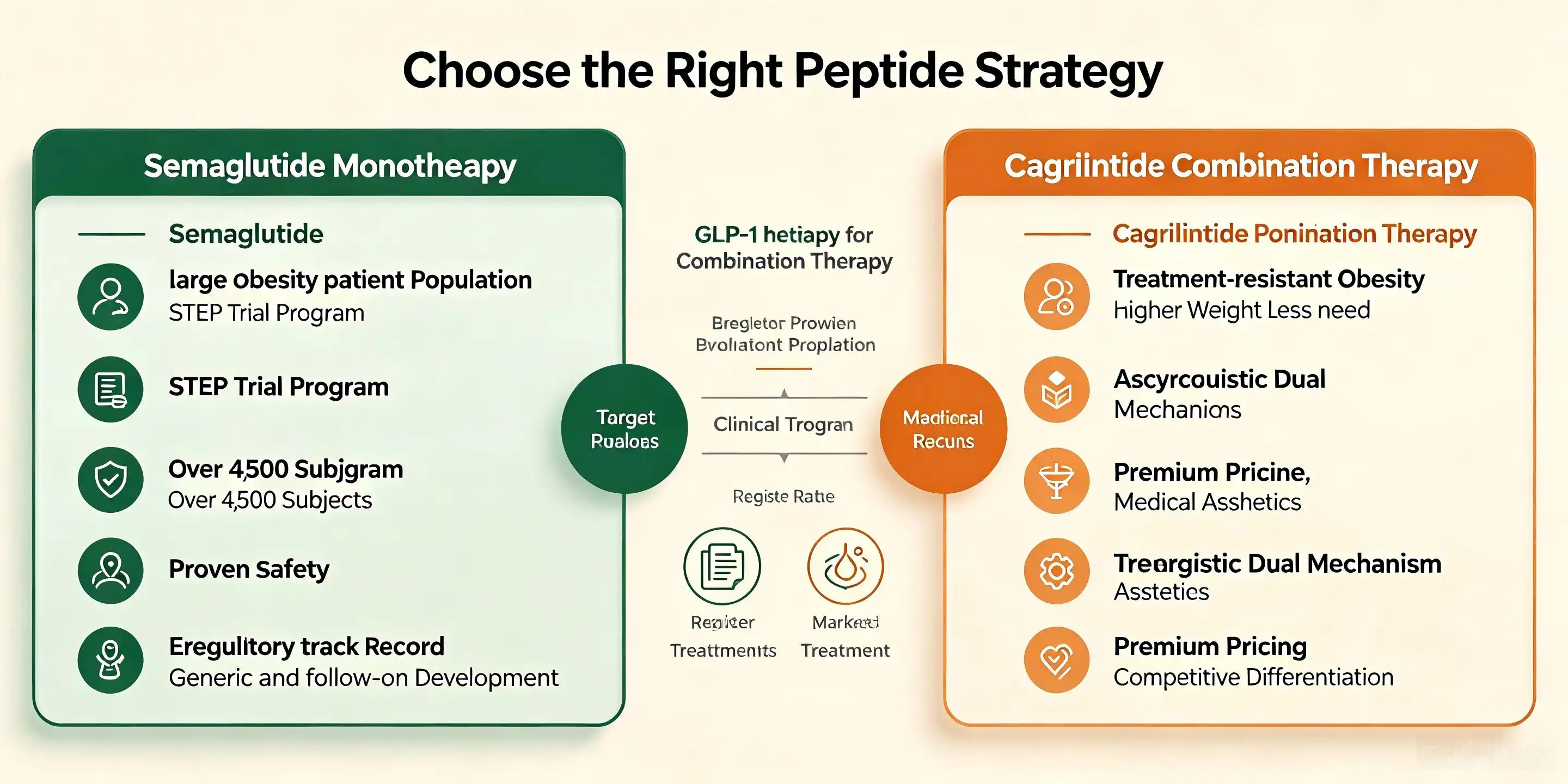
Semaglutide is the standard choice for weight loss drugs used alone that are meant to help a large group of fat people. It has undergone a lot of clinical testing (the STEP trial program included more than 4,500 people) that shows it works and is safe, which supports regulatory submissions in big countries. Generic drug companies and contract research organizations (CROs) working on copycat or follow-on goods can use Semaglutide as a tried-and-true method that has been approved by regulators before.
GLP-1 peptide Cagrilintide is in the best situation for combination therapy development, especially for treating obesity that doesn't respond to other treatments or for people who need to lose a lot of weight. The synergistic results from dual-agonist studies shows that there are clinical benefits that make premium price reasonable in certain therapeutic areas. Medical aesthetics businesses and cosmetic brands that focus on effectiveness that are looking into peptide-based weight management solutions may find that combination methods give them the edge they need to compete with well-known GLP-1 goods in the market.
Building Strategic Supplier Relationships
Getting peptides is very different from getting common chemicals. What makes a relationship valuable are technical knowledge, the ability to customize, and quick help. Suppliers who give complete peptide libraries, custom synthesis services, and formulation advice shorten the time it takes to make a new product and lower the technical risk. Long-term relationships with well-known peptide makers provide supply security, which is very important in competitive therapeutic areas where material shortages can delay the release of new products.
Collaborative relationships are more than just buying things. Suppliers who take the time to learn about your unique needs become true partners in the success of your product, whether you need early finding screening, formulation improvement, or commercial-scale manufacturing. Look for providers who are ready to change the requirements, help with the development of analytical methods, and keep you informed about any changes in the supply chain or regulations that might affect peptide materials.
Future Trends and Opportunities in GLP-1 Peptide Market
The metabolic peptide market is still changing quickly, thanks to new transport methods, better clinical trials, and more uses. The global market for GLP-1 receptor agonists is expected to grow at a rate of 15–18% per year, and reach more than $20 billion by 2028. As the number of obese people rises and reimbursement coverage grows, more people in both developed and developing countries will start using it.
Innovation in Dual and Triple Agonist Therapies
The fact that Cagrilintide and Semaglutide work well together supports the dual-agonist approach and encourages the creation of molecules that combine multiple receptor functions within a single peptide structure. Triple agonists that target GLP-1, GIP (glucose-dependent insulinotropic polypeptide), and glucagon receptors are now in clinical testing.
Early results show that these drugs may help people lose even more weight. For business-to-business clients working on pharmaceuticals or ingredient distribution, keeping an eye on this innovation stream helps them find new suppliers and ways to work together with companies that can make complicated, multifunctional peptides.
Advanced Delivery Systems and Formulation Technologies
The current standard is a subcutaneous shot, but new mouth delivery systems are being developed that could make the market much more accessible. Peptide encapsulation technologies, permeation boosters, and enzyme inhibitor co-formulations are all used to get around problems with breakdown and uptake in the intestines. If oral versions worked, they would change the market and create a need for peptide materials with new purity and stable requirements. People who work in procurement should keep an eye on these changes and build relationships with providers who can change the way they do synthesis and purification to fit new delivery uses.
Market Expansion and Regulatory Evolution
Regulatory bodies are becoming more aware that obesity is a long-term disease that needs medication treatment. This is shown by changing approval processes and payment policies. This change in the rules makes it possible to help more patients and encourages pharmaceutical companies to spend.
Understanding regional regulatory requirements—FDA in North America, EMA in Europe, and NMPA in China—becomes important for wholesalers and trading businesses that serve global markets. This helps them find sourcing opportunities and figure out how to comply with the many rules that come with importing and distributing peptides.
Conclusion
Semaglutide and Cagrilintide are both very useful metabolic medicine tools, but they have different benefits. With a lot of clinical support, semaglutide has been shown to work well as a single treatment and can be used in weight control products on its own. GLP-1 peptide Cagrilintide has special benefits because it works with amylin receptors to help people lose weight. This is especially true when both peptides are used together, as they work better together than either one alone. When procurement pros have to choose between these choices, they have to weigh the clinical goals, the regulatory strategy, and the supplier's skills.
The metabolic peptide market is growing quickly, which means there are lots of possibilities for pharmaceutical developers, original equipment manufacturers (OEMs), and marketing partners who can set up reliable supply chains with quality-certified manufacturers. Making smart choices about where to get your supplies today will help your company compete in the growing field of obesity therapies tomorrow.
FAQ
Is Cagrilintide or Semaglutide safer for patients with diabetes?
There are no major safety concerns with either peptide in diabetes patients, but Semaglutide has more clinical experience. People with diabetes who take Semaglutide have about the same rate of side effects as people who don't have diabetes. These side effects are mostly stomach problems. More research needs to be done on cagrilintide in diabetics, but there are no clear safety signs. When QA teams look at products from suppliers, they need to take the same steps when checking for pancreatitis and thyroid problems. When buying something, the most important thing to do is make sure that the supplier's paperwork says the materials meet cleanliness standards. This keeps endotoxin contamination from happening, which is especially dangerous for diabetics.
How do dosing schedules impact inventory management?
Both peptides can be given once a week, which makes counting easier than with daily therapies. Individual weekly doses vs. multi-dose bottles affect how much storage room is needed and how trash is managed. Packaging should be set up to match clinical study procedures or commercial dispensing models. For procurement managers, lyophilized products have a longer shelf life (24–36 months at -20°C) than solution forms (18–24 months), which makes it easier to switch out inventory and lowers the cost of cold storage.
What storage distinctions matter for procurement teams?
Both need to be kept at -20°C ± 5°C, but Cagrilintide is a little more sensitive to freeze-thaw cycles because of its molecular weight and disulfide bridges. Choose packaging that keeps temperatures from changing too often as little as possible, like aliquoted vials instead of large cases. Make sure that the providers you're working with give you verified stability data and keep an eye on the temperature during distribution, especially for foreign shipments that go through more than one climate zone.
Partner With Xi'an Yihui for Premium Cagrilintide Supply
Xi'an Yihui Bio-technology Co., Ltd. is a trustworthy company that can provide you with GLP-1 peptide Cagrilintide. They have been making peptides for 13 years and know all the rules and regulations. Our Cagrilintide (CAS 1415456-99-3) always gets ≥98% HPLC purity, and we have full scientific paperwork to back this up, such as a COA, MSDS, mass spectrometry reports, and chromatogram data. We have ISO 9001 and ISO 14001 certifications, and our production methods are in line with international pharmacopoeia standards. This makes sure that all of our products can be tracked, which is important for pharmaceutical development and study.
Our competitive benefits include having products in stock that can be shipped right away, letting you buy anywhere from one gram to a kilogram, and offering reasonable prices that can meet the needs of both early-stage research and business production. We have created export routes to more than 100 countries in Europe, the United States, Japan, and South Korea. Because of this, we know the important cold chain operations and regulatory paperwork needs for getting peptides from other countries. Our professional team is available 24 hours a day, seven days a week to help customers and provide quick technology support during the whole buying process.
You can talk to our team at sales@yihuipharm.com about your unique needs, ask for sample amounts, or learn more about our custom synthesis options for changed peptide sequences. We are happy to work with research institutions, cosmetic ingredient makers, pharmaceutical companies, and CROs that need solid access to metabolic peptides that are used in medicine. Visit yihuipharm.com to see our full range of peptides and learn how our top-notch manufacturing can help you succeed in product creation.
References
1. Enebo LB, Berthelsen KK, Kankam M, et al. Safety, tolerability, pharmacokinetics, and pharmacodynamics of concomitant administration of multiple doses of cagrilintide with semaglutide 2.4 mg for weight management: a randomised, controlled, phase 1b trial. Lancet. 2021;397(10286):1736-1748.
2. Wilding JPH, Batterham RL, Calanna S, et al. Once-Weekly Semaglutide in Adults with Overweight or Obesity. New England Journal of Medicine. 2021;384(11):989-1002.
3. Gydesen S, Andreassen KV, Hjuler ST, et al. Optimization of tolerability and efficacy of the novel dual amylin and calcitonin receptor agonist KBP-089 through dose escalation and combination with a GLP-1 analog. American Journal of Physiology-Endocrinology and Metabolism. 2016;311(1):E78-E87.
4. Urva S, Coskun T, Loghin C, et al. The Novel Dual Glucose-Dependent Insulinotropic Polypeptide and Glucagon-Like Peptide-1 Receptor Agonist Tirzepatide Transiently Delays Gastric Emptying. Diabetes Care. 2020;43(8):1661-1664.
5. Hay DL, Chen S, Lutz TA, Parkes DG, Roth JD. Amylin: Pharmacology, Physiology, and Clinical Potential. Pharmacological Reviews. 2015;67(3):564-600.
6. Blundell J, Finlayson G, Axelsen M, et al. Effects of once-weekly semaglutide on appetite, energy intake, control of eating, food preference and body weight in subjects with obesity. Diabetes, Obesity and Metabolism. 2017;19(9):1242-1251.

Send Inquiry
Related Industry Knowledge