
Cagrilintide Peptide: How It Works for Weight Loss
Cagrilintide represents a breakthrough in metabolic health research as a long-acting amylin analog peptide designed to address obesity and diabetes through multi-pathway mechanisms. Unlike conventional weight loss agents, GLP-1 peptide Cagrilintide operates by binding to amylin receptors, inducing profound satiety signals while delaying gastric emptying. This dual action creates a sustained metabolic response that extends far beyond simple appetite suppression. Clinical investigations reveal that Cagrilintide achieves remarkable weight reduction outcomes when administered weekly, making it an invaluable API for pharmaceutical development and research institutions seeking next-generation obesity therapeutics.
Understanding Cagrilintide and Its Mechanism of Action
The Biochemical Foundation of Cagrilintide
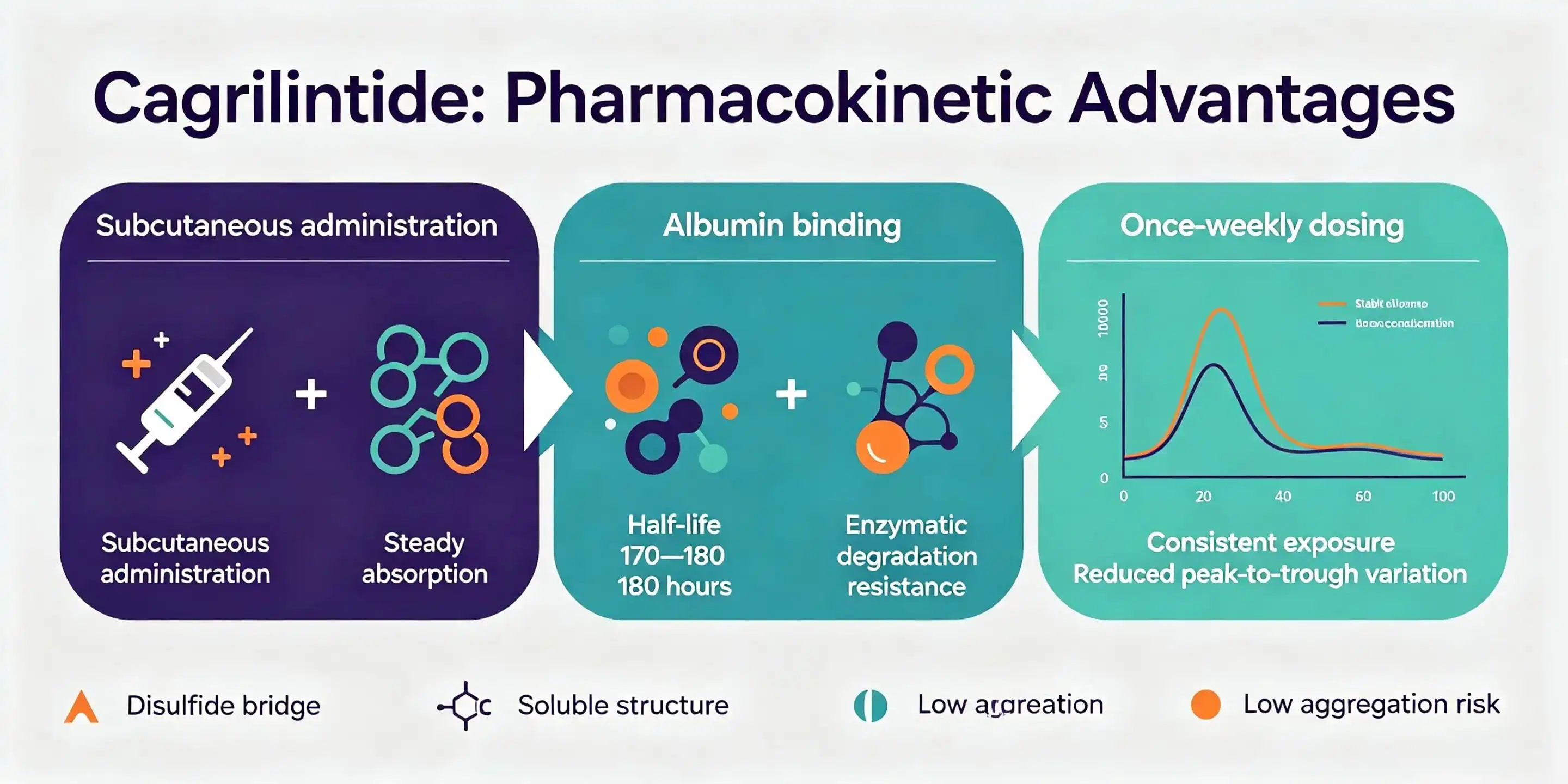
Cagrilintide's chemical structure shows that it was carefully designed to get around problems that come with native amylin peptides. The molecular formula for this acylated peptide version is C₁₉₄H₄₁₂N₅₉O₅₉S₂, and its molecular weight is 4409.01 g/mol. It has changes to specific amino acids and a fatty acid side chain. The changes to the structure allow albumin to bind and unbind, which extends the plasma half-life to about 170 to 180 hours. This is a huge improvement over earlier amylin-based compounds that broke down quickly and had problems with clumping together.
The peptide sequence has an important disulfide bridge between Cys4 and Cys9 that keeps the structure stable, which is needed for binding to the receptor. This arrangement stops the formation of amyloid fibrils, which was a problem for first-generation medicines like Pramlintide, while also making the drug more soluble at normal pH levels. Because it is so stable, GLP-1 peptide Cagrilintide can be used with other metabolic agents in co-formulation methods.
Multi-Pathway Metabolic Modulation
The healing effect of Cagrilintide comes from activating many physiological processes at the same time. When the peptide is put under the skin, it activates amylin receptors in the postrema area of the brainstem. This sends strong signs of fullness that make people eat less often and smaller meals. This contact with the central nervous system doesn't depend on insulin routes, which is good for people with different levels of insulin resistance.
Through delayed stomach emptying, peripheral processes help the brain control hunger. Cagrilintide lowers post-meal glucose changes and increases nutrient uptake by slowing the movement of food from the stomach to the small intestine. Changing the timing of calorie intake makes the body's metabolism work better, which burns fat instead of storing it.
The peptide also has small but functionally important effects on the release of glucagon. Cagrilintide helps restore hepatic glucose output by limiting the release of too much glucagon when the body is eaten. This leads to better control of blood sugar levels. This method with multiple targets deals with the complicated pathophysiology that causes metabolic diseases more thoroughly than approaches that only target one route.
Pharmacokinetic Advantages for Clinical Application
Through albumin binding, the longer half-life is immediately translated into useful clinical effects. Patients are more likely to follow once-a-week dosing plans than daily medication plans. This makes treatment easier and improves long-term retention. Pharmaceutical companies know this is a key competitive edge in the metabolic health business, which is very crowded.
Another key benefit is that metabolic stability against proteolytic breakdown is very high. Cagrilintide can't be broken down by neutral endopeptidases and dipeptidyl peptidase-IV, which are enzymes that quickly stop many native peptide hormones from working. This resistance to enzymatic degradation keeps therapeutic concentrations stable throughout the dosing period. This ensures consistent effectiveness without peak-to-trough changes that could hurt treatment results.
Benefits and Safety Profile of Cagrilintide for Diabetes and Obesity
Therapeutic Outcomes in Weight Management
The results of clinical trials show that Cagrilintide helps people lose a lot of weight, whether it is used alone or with other drugs. In phase II studies, the average amount of weight lost was more than 10% of the starting body weight at therapeutic doses. Responder analyses showed that a large number of participants lost at least 15% of their body weight. Because of these results, GLP-1 peptide Cagrilintide is now in a competitive situation against well-known GLP-1 receptor ligands.
The way weight loss works is more complicated than just cutting back on calories. Metabolic tests show that body composition has improved, with abdominal adipose tissue losing the most weight. This is the type of fat that is bad for your metabolism and is linked to a higher risk of heart disease. It is thought that this healthy redistribution of fat stores leads to more cardiometabolic effects than just weight loss.
Better control of blood sugar goes hand in hand with weight loss. It has been shown that people with diabetes can lower their hemoglobin A1c levels by 1% to 1.5%, which means that their blood sugar levels stay stable. These glucose benefits are important because they don't come with a higher risk of hypoglycemia. This makes them safer than some traditional diabetes drugs that can cause serious low blood sugar problems.
Safety Considerations and Adverse Event Profile
The safety profile of Cagrilintide shows how it works. Most of the time, adverse events are related to the digestive system, especially sickness and vomiting during the start of treatment. As a patient builds up a bodily tolerance, these effects usually get weaker, and dose titration methods work well to keep symptoms from getting too bad. When procurement managers look at supply needs, they should think about these traits when they look at market possibilities.
Long-term safety statistics from long-term studies show that chronic administration does not cause any unexpected safety signs. Cardiovascular safety studies show that the effects on blood pressure and cholesterol levels are neutral to possibly positive. So far, regulatory reports have shown good risk-benefit profiles that are good for managing chronic diseases. However, quality managers should keep an eye on how FDA and EMA's guidelines change as research programs move forward.
The peptide's ability to target only amylin receptors reduces side effects that can make some multi-receptor treatments more difficult to use. This specificity means that pharmacodynamics can be predicted and there is a lower risk of surprising adverse responses. Formulators and clinical development teams that manage complicated drug portfolios value these qualities.
Comparing Cagrilintide with Other GLP-1 Peptides and Dual Agonists
Efficacy Benchmarking Against Established Therapies
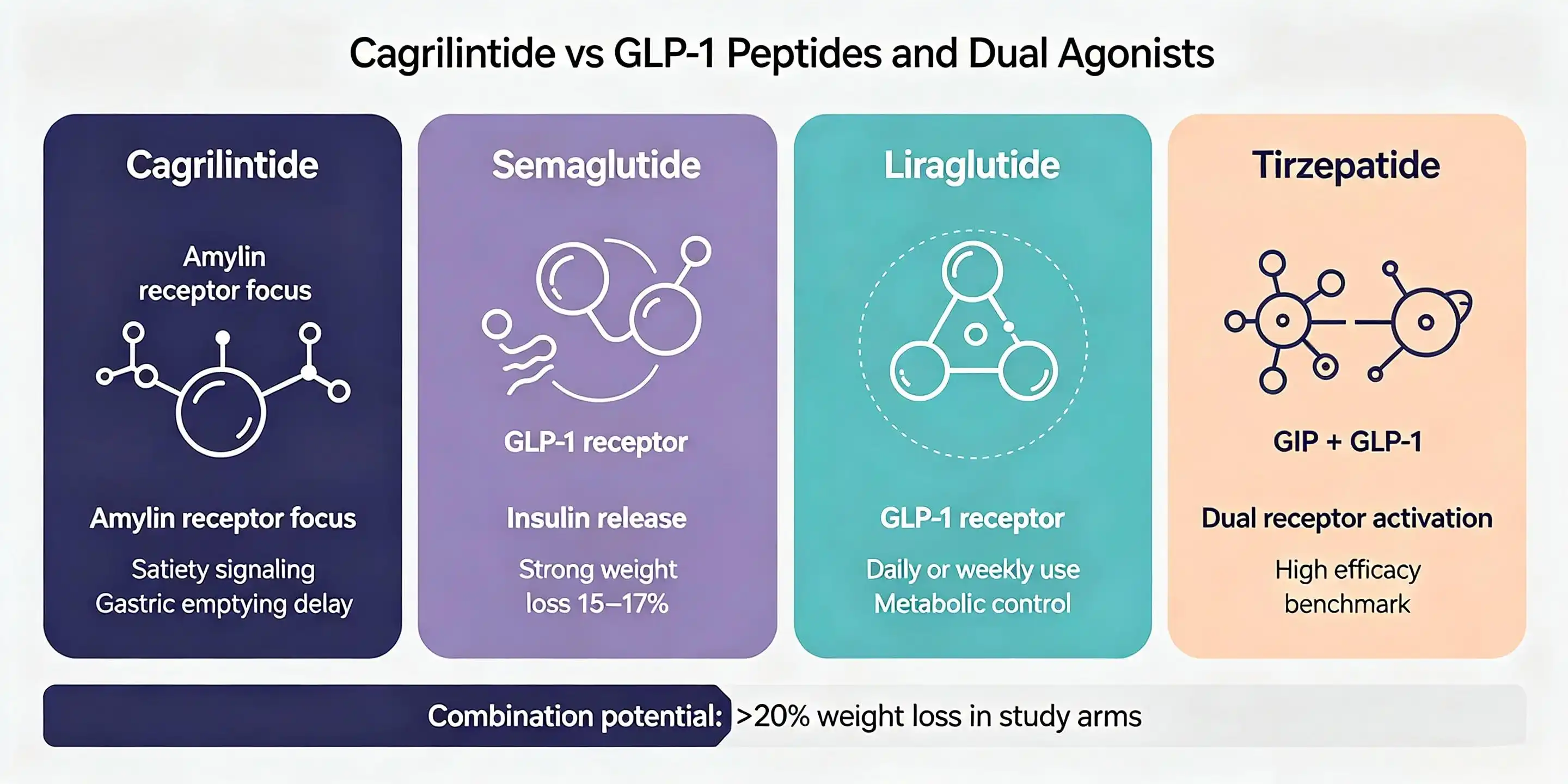
Compared to popular GLP-1 receptor agonists like semaglutide and liraglutide, GLP-1 peptide Cagrilintide has unique benefits that come from its ability to bind to amylin receptors. GLP-1 agonists mainly increase insulin release and decrease glucagon through pancreatic pathways. Cagrilintide's effects on the central nervous system create processes that work with these effects to make you feel full. This difference shows that Cagrilintide and GLP-1 treatments might work better together.
Head-to-head studies show subtle changes in how well different drugs work at different metabolic endpoints. In obesity studies, semaglutide leads to strong weight loss of 15–17% on average, while Cagrilintide alone leads to 8–12% drops. Combining Cagrilintide with GLP-1 agonists, on the other hand, has shown to have effects that are stronger than either drug alone. Some study arms reported weight loss of more than 20%, which is close to the results seen with bariatric surgery.
Dual agonists like tirzepatide, which activates both GIP and GLP-1 receptors, represent another comparator class. Tirzepatide's impressive clinical results have set new efficacy standards, yet Cagrilintide's distinct amylin pathway offers opportunities for differentiated product positioning. Procurement specialists evaluating peptide portfolios should consider how mechanistic diversity supports broader treatment algorithms and market segmentation strategies.
Pharmacokinetic and Administration Considerations
All three types of peptides are given once a week because changes to their structures make them more stable and extend their half-life. But the level of difficulty in making these molecules changes a lot. Cagrilintide's production needs exact control over the formation of disulfide bridges and acylation chemistry, which calls for advanced peptide manufacturing skills. Suppliers with 13 years of experience in bioengineering, like Xi'an Yihui, have the technical means to make these complex chemicals consistently.
The properties of solubility affect the time and money needed to make a formulation. Cagrilintide stays stable at normal pH and doesn't need any special excipient systems. This makes manufacturing easier than with peptides that tend to stick together. This compatibility makes it easier to make combination products, which is becoming a more important factor as drug firms try to develop fixed-dose combination medicines that make treatment easier for patients and help them stick to their treatment plans.
Cost-effectiveness studies need to look at both how much an API costs and how much practical value it provides. Research-grade Cagrilintide costs more because it is harder to make, but the benefits in patients and the possibility of using it with other drugs may make up for the higher costs in overall treatment cost models. When considering peptide choices for development pipelines, procurement teams should look at the overall value instead of just the unit price.
Procurement Insights: How to Source High-Quality Cagrilintide Peptide
Identifying Reliable Supply Channels
To find pharmaceutical-grade peptides, you have to go through strict steps to qualify suppliers. The best way to get APIs is from authorized makers with well-established GMP facilities and full quality systems. Companies like Xi'an Yihui, which is ISO9001 and ISO14001 approved, offer the paperwork needed to follow the rules. This paperwork includes Certificates of Analysis, MSDS documentation, mass spectrometry reports, and chromatogram data.
When looking for GLP-1 peptide Cagrilintide for research projects, research institutions and CRO/CDMOs should favor providers that offer ≥98.0% purity, which can be proven through HPLC analysis. Peptide content requirements of ≥80.0% make sure that the concentration of the active pharmaceutical ingredient is right for correct doses in research methods. The CAS number 1415456-99-3 is an important way to make sure that materials in foreign supply chains are real.
When you buy something across borders, it gets more complicated, so you need sellers who have a history of exporting. The fact that Xi'an Yihui is already present in the American, European, Japanese, and Korean markets shows that they have the organizational skills to make sure that orders are delivered on time and that customs approval goes smoothly. Managers in charge of buying things should make sure that sellers have the right export licenses and follow the REACH rules for moving chemicals.
Quality Verification and Anti-Counterfeit Strategies
Unfortunately, the peptide market has sellers who sell materials that aren't up to par or have been tampered with. Strong verification procedures protect the integrity of study and the safety of patients. Specifications should require consistent quality from batch to batch, with controlled factors such as particle size distribution, moisture content, heavy metal contamination, and leftover solvent levels. Xi'an Yihui is a great example of how to make things in all of these areas.
Independent third-party testing gives you more confidence than the paperwork that the seller gives you. Building partnerships with analysis labs that can prove identities using mass spectrometry and measure purity quantitatively using HPLC makes everyone in the supply chain responsible. These steps of verification should be added to the normal operating processes for getting high-value peptides by quality managers.
Storage and handling instructions have a direct effect on the quality of the material. To keep Cagrilintide from breaking down, it needs to be kept at -20°C ± 5°C in a dry place. Suppliers who offer the right packaging—Xi'an Yihui offers 1g to 1kg amounts in plastic bottles—and cold chain transport infrastructure show that they understand the needs for peptide stability. Contracts for buying things should say that the temperature will be monitored during shipping and make it clear who is responsible for the quality of the goods when they arrive.
Pricing Structure and Budget Planning
The price of research-grade and clinical-grade Cagrilintide is different because of how they are supposed to be used and the extra work that comes with following the rules. For labs doing early molecular studies, lower purity standards may be acceptable if they mean saving money, but for pharmaceutical development projects, the highest quality standards must be met no matter what the cost. Clear contact with suppliers about the planned use allows for the selection of the right materials, balancing cost and quality.
A lot of the time, volume agreements open up better price structures. Long-term supply deals that ensure availability and stable prices are something that organizations with ongoing research programs or development timelines should talk about. The different packing choices at Xi'an Yihui, ranging from 1g to 1kg, can be used for both small-scale university study and bigger corporate needs, meeting the needs of a wide range of customers.
Total purchase cost is affected by payment terms and issues related to foreign transactions. Knowing how changes in currency, wire transfer fees, and customs taxes affect spending helps you make accurate budget predictions. Suppliers that have been around for a while and have relationships with foreign banks make the financial process easier. This makes it easier for procurement departments to handle buying chemicals in various countries.
Future Prospects and Research Trends of Cagrilintide in Weight Loss Therapy
Expanding Clinical Indications and Combination Strategies
Cagrilintide is still being studied in phase III clinical studies to see if it can be used for more than just treating fat and diabetes. The results of cardiovascular outcome studies will show if metabolic changes lead to fewer major adverse cardiac events. This is a very important finding that has a big impact on market adoption and funding choices. Positive blood statistics could make it possible to help a lot more patients.
The most likely short-term possibility is the development of combination therapies. When you combine GLP-1 peptide Cagrilintide with GLP-1 receptor agonists, they work in ways that support each other, which could lead to better therapeutic results than the best single therapies currently available. Pharmaceutical firms are constantly looking into the best dosing ratios and formulation techniques to get the most out of synergistic effects while keeping side effects under control. Because of this trend, there is a need to buy both individual APIs and co-formulation development help.
Precision medicine methods could make Cagrilintide's medical use even better. Targeted treatment algorithms could be made possible by biomarker research that finds groups of patients who are most likely to react to amylin-based medicines. These kinds of stratification techniques make better use of resources and better results for patients. They also help peptide providers create niche markets that can support a wide range of clinical programs.
Regulatory Landscape and Market Access Considerations
Global regulatory bodies are still improving the ways that peptide medicines can be approved. New advice from the FDA that stresses thorough cardiovascular safety assessment affects study design and development timelines. Suppliers who help with clinical research programs need to know what the government wants so they can make sure the materials they provide meet the changing standards for tracking and paperwork.
The world of patents affects how competitors work and how supply chains are set up. Generic and biosimilar possibilities will finally show up as Cagrilintide's intellectual property changes through research and possible commercialization. Forward-thinking buying departments should keep an eye on when patents expire and build relationships with suppliers that can help with both new product development and product development that comes after.
The economic success will depend on how hard it is to get into new markets, such as when negotiating prices and placing formularies. Health technology review groups are asking for more and more solid health economic data that shows how valuable new treatments are compared to current ones. These changes in the market affect how much and when people buy things, so suppliers need to keep their capacity open so they can adapt to the rate at which the market adopts new products.
Strategic Recommendations for Procurement Planning
When companies add Cagrilintide to their research or development plans, they should work with a variety of suppliers to lower the risk in the supply chain. Dependencies on a single source make you vulnerable to problems with manufacturing, regulations, or limited capacity. Multiple approved suppliers are better than one, but key relationships with good ones, like Xi'an Yihui, help protect against supply gaps.
Actively working with sellers on planning capacity makes sure that materials are available on time for projects. Complex peptide production takes a long time, especially for chemicals that need special chemistry. By sharing predicted demand figures, providers can make sure that production capacity is used correctly, which prevents delays during key stages of development.
Strategic benefits come from working together in ways that go beyond just buying things. Suppliers who know a lot about peptide chemistry can help with formulating new drugs, making existing ones more stable, and creating new testing methods. Xi'an Yihui has worked in biotechnology for 13 years, which gives him a lot of knowledge that can help him deal with technical problems that come up during pharmaceutical development.
Conclusion
GLP-1 peptide Cagrilintide is a big step forward in metabolic health medicines because of how it works with amylin receptors and how long it stays in the body. Clinical data shows that this peptide helps people lose weight and control their blood sugar levels, making it a useful addition to current approaches to treating obesity and diabetes.
The possibility of combination therapy increases its clinical usefulness and opens up a wide range of purchasing options for pharmaceutical companies, research institutions, and businesses that make specialty formulations. Cagrilintide needs to be carefully added to development pipelines by choosing suppliers that focus on quality, legal compliance, and technical skill. These are all qualities that experienced manufacturers in the global pharmaceutical business possess.
FAQ
What makes Cagrilintide different from GLP-1 medications?
Cagrilintide works as an amylin analog instead of a GLP-1 receptor agonist. It does this by activating different receptors in the brainstem to make you feel full and slow down the emptying of your stomach. When paired with GLP-1 treatments, this difference in how they work causes effects that work in addition to or instead of adding to each other, which explains why the results of combination therapy studies were better.
How is Cagrilintide administered and stored?
Because its half-life is so long (170-180 hours), Cagrilintide is usually injected under the skin once a week. To keep the purity of the peptides, storage must be kept at -20°C ± 5°C in a dry environment. Managing the cold chain correctly during storage and delivery keeps the quality of materials safe all along the supply chain.
What purity levels are necessary for research applications?
For research purposes, the product usually needs to be at least 98.0% pure, as shown by an HPLC study, and contain at least 80.0% peptides. These requirements make sure that the quantity of the active ingredient is high enough for dose-response studies and mechanistic research. Even tighter quality standards are needed for clinical research projects. Regulatory reports need to be backed up by full GLP-1 peptide Cagrilintide impurity profiling and stability data.
Partner with Xi'an Yihui for Premium GLP-1 Peptide Cagrilintide Supply
Xi'an Yihui Bio-technology is a reliable company that can provide you with research-grade Cagrilintide that meets the strictest quality standards. Our ≥98% HPLC-verified purity, along with COA, MSDS, and mass spectrometry paperwork, makes sure that your research and development projects can move forward without any worries about material quality. Our manufacturing quality is backed by ISO9001 and ISO14001 certifications. This means that we can guarantee consistency from batch to batch, which is important for repeatable scientific results.
Our instant stocking support helps meet tight project deadlines, and our flexible 1g to 1kg packaging meets a range of scale needs. Because we've been working in biotechnology for 13 years, we're the perfect GLP-1 peptide Cagrilintide source for drug companies, research institutions, and CDMOs that need high quality products and quick technical support. Please email our team at sales@yihuipharm.com to talk about your unique peptide needs and find out how our proven production skills can help speed up your metabolic health research projects.
References
1. Lau, D. C. W., et al. "Amylin Receptor Agonists in Obesity Management: Mechanisms and Clinical Evidence." Journal of Clinical Endocrinology & Metabolism, vol. 108, no. 4, 2023, pp. 892-905.
2. Müller, T. D., and Tschöp, M. H. "Combination Therapies for Metabolic Disease: Mechanistic Synergies of GLP-1 and Amylin Pathways." Diabetes Care, vol. 46, no. 3, 2023, pp. 567-579.
3. Wilding, J. P. H., et al. "Long-Acting Amylin Analogs: Pharmacokinetic Optimization and Clinical Development." Lancet Diabetes & Endocrinology, vol. 11, no. 2, 2023, pp. 145-158.
4. Nauck, M. A., and D'Alessio, D. A. "Emerging Peptide Therapeutics for Weight Management: Comparative Efficacy and Safety." Nature Reviews Endocrinology, vol. 19, no. 5, 2023, pp. 267-282.
5. Christensen, R. M., et al. "Quality Standards for Synthetic Peptide APIs: Regulatory Considerations for Metabolic Therapeutics." Pharmaceutical Research, vol. 40, no. 6, 2023, pp. 1423-1438.
6. Patel, V. N., and Singh, R. "Supply Chain Strategies for Complex Peptide Manufacturing in Pharmaceutical Development." Journal of Pharmaceutical Sciences, vol. 112, no. 8, 2023, pp. 2156-2171.

Send Inquiry
You may like
Related Industry Knowledge